Best Bridging Aggregator for Solana
 by
by 
Top Solana Bridging Aggregators for Fast Cross-Chain Transfers
The rapid growth of the Solana ecosystem has transformed it into a premier hub for decentralized finance (DeFi), fast-moving memecoin markets, on-chain gaming, and real-time digital payments. As capital continuously rotates across different blockchain networks, the ability to seamlessly move assets from Ethereum, Base, Arbitrum, and BNB Chain into Solana has become an essential requirement for active participants.
Historically, moving funds across disjointed network architectures required navigating standalone, fragmented cross-chain bridges. This manual approach often subjected users to unpredictable fees, severe slippage, delayed finality, and heightened security risks.
Bridging aggregators address these friction points by consolidating multiple underlying protocols into a single, cohesive user experience. For anyone looking to deploy capital efficiently into the Solana ecosystem, utilizing a high-quality bridging aggregator is no longer just a convenience—it is a core strategy for optimizing transaction costs, execution speed, and capital safety.
What Is a Bridging Aggregator?
To understand the value of an aggregator, it helps to first differentiate between a standalone cross-chain bridge and a comprehensive aggregation protocol. A traditional cross-chain bridge operates as a single, isolated pipeline connecting specific networks using a dedicated verification mechanism. In contrast, a bridging aggregator functions as an intelligence and discovery layer built on top of multiple standalone bridges and decentralized exchange (DEX) routers.
| Standalone Bridge | Bridging Aggregator |
|---|---|
| Operates on a single protocol framework | Evaluates multiple cross-chain protocols simultaneously |
| Restricted to one predetermined route per transaction | Dynamic routing paths based on real-time data |
| Relies on its own native liquidity or message system | Consolidates and taps into multiple deep liquidity pools |
| Fixed fee structure and variable slippage profiles | Optimizes for the lowest fee and minimal price impact |
Rather than forcing a user to manually inspect various platforms to check which path offers the best rate or the fastest execution, the aggregator automatically evaluates the broader market layout. It calculates the optimal path using smart order routing techniques.
Modern aggregators increasingly utilize intent-based frameworks. In an intent-based architecture, instead of executing a rigid sequence of smart contract calls across multiple chains manually, the user simply signs an order specifying an explicit desired outcome (such as depositing a specific amount of USDC on Ethereum and receiving a corresponding amount of native SOL on Solana).
A competitive network of private liquidity providers, known as solvers or relayers, then competes to fulfill this intent directly on the destination chain using their own capital. This abstracts away the underlying technical complexities, eliminates the need for users to hold native gas tokens on intermediate chains, and significantly reduces execution times from minutes to mere seconds.
Why Solana Needs Bridging Aggregators
Solana possesses a fundamentally different architecture than Ethereum and its various Layer 2 scaling solutions. Because Solana is built on the Solana Virtual Machine (SVM) rather than the Ethereum Virtual Machine (EVM), it does not share a native cross-chain framework with mainstream rollup networks. This architectural divide makes the efficient consolidation of cross-chain liquidity critically important.
The influx of capital into Solana is driven by a diverse group of participants: retail investors chasing momentum in highly volatile memecoin markets, institutional DeFi traders rebalancing size across yield opportunities, and developers building multi-chain applications. These participants frequently face significant infrastructure bottlenecks when attempting to onboard capital directly:
-
Wrapped Asset Friction: Early bridging models relied heavily on lock-and-mint mechanisms, which took native tokens on an origin chain, locked them in a smart contract, and minted synthetic, wrapped equivalents on Solana. This fragmented liquidity, as a user could easily end up with non-fungible variations of the same asset that lacked trading volume on local decentralized exchanges.
-
Failed Transactions and Network Asymmetry: The sheer speed and low latency of Solana create a high standard for instant execution. When a cross-chain transfer takes thirty minutes or experiences an intermittent failure due to relayer delays on an external EVM chain, traders miss volatile market entries and time-sensitive arbitrage windows.
-
Complex Multi-Step UX: Onboarding through isolated systems typically requires a retail user to bridge stablecoins, wait for settlement, navigate to a local Solana DEX like Jupiter or Raydium, and perform subsequent swaps to acquire gas or target assets. Aggregators condense this multi-step journey into a unified, single-click transaction.
By resolving liquidity fragmentation and automating asset conversion during the transit phase, bridging aggregators bridge the operational gap between the SVM and EVM landscapes.
Key Features to Look for in a Solana Bridge Aggregator
When selecting an aggregation platform to route high-volume transactions into Solana, evaluating infrastructure features across several core vectors ensures safe and efficient execution.
Security Architecture and Vulnerability Mitigation
Cross-chain infrastructure represents one of the most targeted surfaces for smart contract exploits in the digital asset landscape. A robust aggregator must feature verified, multi-tiered smart contract audits from respected security firms.
Furthermore, the structural design of the underlying bridges matters immensely. Aggregators that route through zero-Total Value Locked (zero-TVL) or intent-based frameworks minimize systemic risk because they do not rely on massive, centralized liquidity pools that act as prime targets for exploits.
Breadth of Network Coverage
A premium aggregator must maintain active routing corridors across all dominant liquidity sources, including Ethereum mainnet, prominent Layer 2 environments like Base, Arbitrum, and Optimism, and highly active alternative layer-one networks such as BNB Chain and Avalanche.
Settlement Velocity
The time required for an asset to transition from origin confirmation to destination finality varies sharply between protocols. The best platforms optimize for low-latency settlement, utilizing optimistic validation frameworks or instant solver fulfillment models to reduce transfer times down to the scale of seconds.
Fee Transparency and Component Breakdown
A high-quality aggregator must provide comprehensive, upfront visibility into all transaction costs prior to signing. The total fee profile is composed of several layers:
-
Origin Gas Fees: The cost required to initiate the contract execution on the source network.
-
Protocol and Relayer Fees: Compensation for the infrastructure providers or solvers securing the transfer.
-
Destination Gas Abstraction: Fees deducted directly from the source asset to cover the local transaction costs on Solana, eliminating the requirement for users to pre-fund an empty wallet with SOL.
Liquidity Depth and Price Impact Minimization
For institutional traders and whales moving substantial volume, thin liquidity pools introduce severe slippage that can quickly erode the financial benefits of cheap routing. High-performance aggregators distribute large orders across multiple underlying pathways to prevent severe localized price distortion on destination decentralized exchanges.
Native Asset Provisioning
A premier aggregator prioritizes the delivery of clean, canonical, and universally accepted native assets on Solana—most notably native USDC via Circle Cross-Chain Transfer Protocol (CCTP) and native SOL—rather than leaving users with illiquid, legacy wrapped tokens.
Best Bridging Aggregators for Solana
The current cross-chain ecosystem features a selection of highly specialized protocols that excel across different use cases, balancing retail simplicity with advanced developer tooling.
LI.FI
LI.FI is a dominant business-to-business and developer-centric aggregation protocol that powers complex cross-chain routing across more than thirty distinct blockchain networks. By combining comprehensive bridge aggregation with advanced DEX connectivity, LI.FI constructs highly customized, multi-hop pathways that ensure users can swap any arbitrary asset on an EVM source chain and receive any targeted token on Solana in a single, atomic interaction.
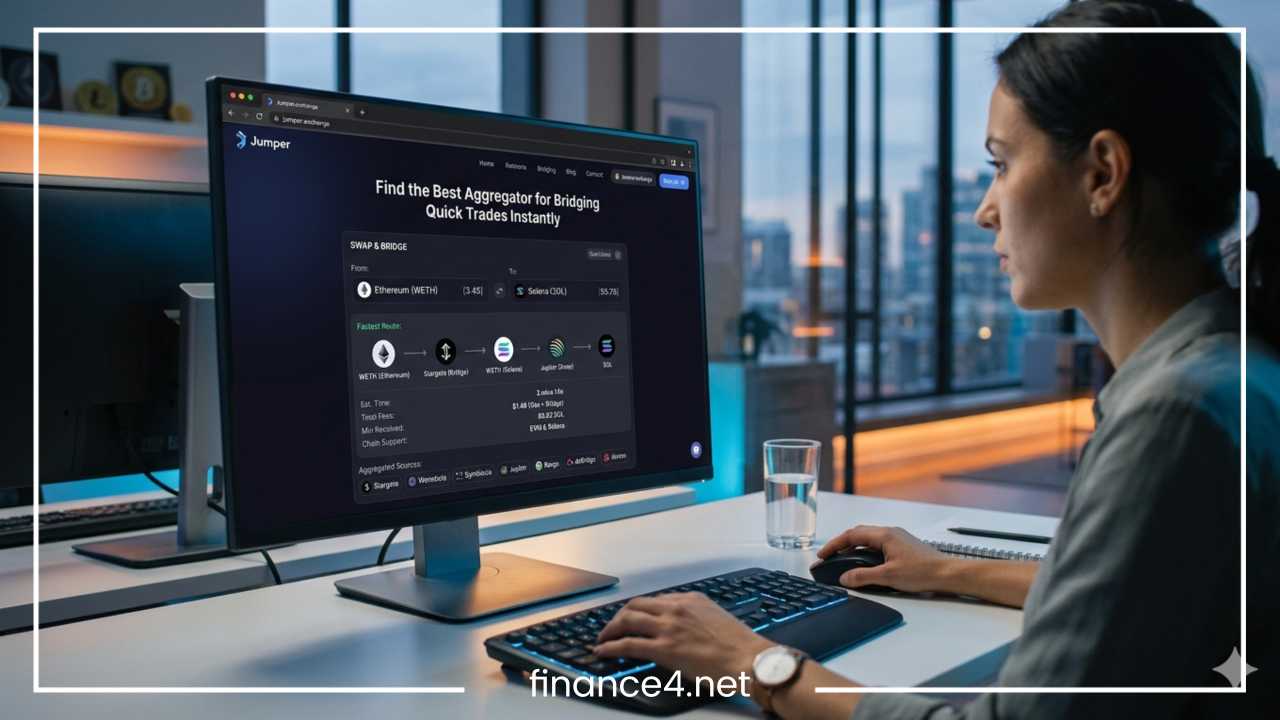
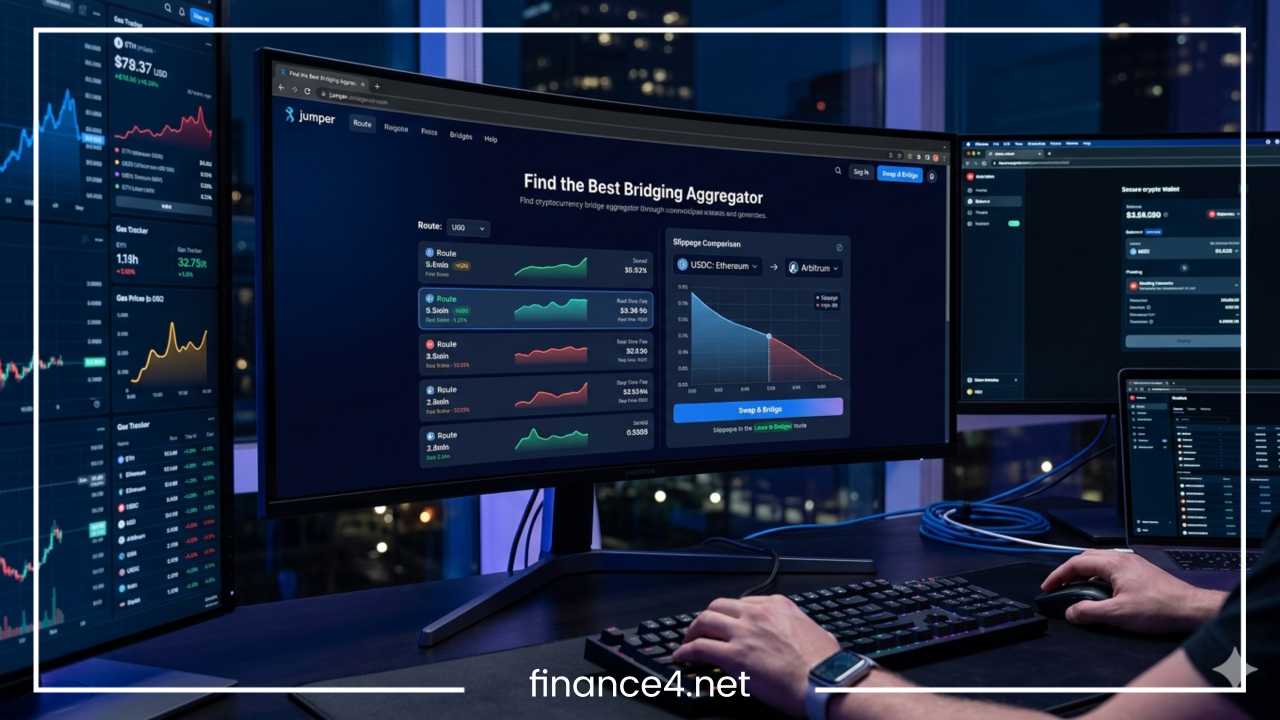
The platform is widely recognized for its consumer-facing interface, Jumper Exchange, which serves as a highly reliable multi-chain playground for power users and retail traders alike. Under the hood, LI.FI integrates a wide array of underlying bridges, allowing its algorithm to dynamically score paths based on the absolute cheapest cost or the maximum speed available at that exact second.
-
Pros: Deep any-to-any token routing capabilities; unmatched network and liquidity source coverage; enterprise-grade API and SDK integration options for decentralized applications.
-
Cons: The advanced developer-first approach can occasionally introduce slightly higher front-end quote latency while scanning dozens of complex routing combinations.
-
Ideal For: Power users requiring access to obscure long-tail assets, and DeFi developers seeking to embed comprehensive cross-chain functionality directly into their native application frontends.
Socket
Socket represents another highly modular infrastructure protocol focused heavily on the concept of chain abstraction. Through its popular user-facing application, Bungee Exchange, Socket focuses on providing developers and advanced retail traders with granular control over their cross-chain transactions.
Socket distinguishes itself by delivering highly detailed route metadata through its API. Instead of forcing a black-box routing decision onto the user, Socket exposes the precise steps, individual bridge components, and clear gas breakdowns for every available path. This architectural philosophy makes it a favored choice for platforms looking to build highly customized, embedded bridging user experiences.
-
Pros: Exceptional flexibility for custom developer configurations; clear transparency regarding individual underlying routing choices; efficient stablecoin corridors.
-
Cons: Smaller footprint regarding native Solana-specific localized features compared to platforms natively incubated within the SVM ecosystem.
-
Ideal For: Technical traders who want explicit control over the precise infrastructure components handling their funds, and developers seeking modular cross-chain building blocks.
Rango Exchange
Rango Exchange operates as a powerful multi-chain aggregator specifically optimized to bridge the structural divide between completely distinct non-EVM and EVM ecosystems. While many platforms struggle to maintain smooth performance when moving outside the comfort zone of traditional Ethereum rollups, Rango excels at coordinating trades between Bitcoin, Cosmos, Near, EVM chains, and Solana.
The user interface is built intentionally to streamline retail onboarding, removing the technical intimidation factor frequently associated with cross-chain interactions. Rango handles the heavy lifting of calculating complex multi-step conversions in the background, making it remarkably simple to transition from alternative non-EVM assets straight into Solana-based tokens.
-
Pros: Expansive cross-ecosystem routing extending far beyond simple EVM compatibility; highly intuitive, consumer-centric interface design.
-
Cons: Multi-hop routes across entirely distinct blockchain consensus models can occasionally result in slightly higher aggregate protocol fees.
-
Ideal For: Everyday retail users and multi-chain investors holding capital across highly diverse, non-EVM layer-one ecosystems.
Jupiter
Jupiter stands as the absolute foundational liquidity engine of the Solana ecosystem. While initially built and scaled as a Solana-native decentralized exchange aggregator, Jupiter has consistently expanded its architectural reach to incorporate comprehensive cross-chain swap functionalities.
Jupiter does not operate its own underlying cross-chain bridge infrastructure; instead, it applies its world-class aggregation model to the cross-chain landscape. The Jupiter interface queries premier cross-chain protocols, evaluates the competitive landscape, and pairs those external pipelines with its local, hyper-efficient routing engine to provide unparalleled execution pricing upon arrival on Solana.
-
Pros: Seamless integration with Solana’s deepest native liquidity pools; impeccable execution pricing for destination swaps; clean, trusted user interface.
-
Cons: Primarily focused on routing inbound and outbound from the perspective of Solana, rather than serving as a generalized EVM-to-EVM aggregator.
-
Ideal For: Dedicated Solana traders, ecosystem natives, and active DeFi participants who want to ensure their inbound cross-chain assets are instantly routed through the most efficient local trading paths available.
deBridge
deBridge is a high-performance cross-chain interoperability and messaging infrastructure network that has fundamentally altered the expectations for EVM-to-Solana transfer speeds. Through the deBridge Liquidity Network (DLN), the protocol bypasses the structural limitations of legacy, pool-based bridging frameworks entirely, utilizing an advanced intent-based architecture driven by a competitive global solver network.
Transactions routed through deBridge often achieve finality in under two minutes, with median settlement times frequently dipping below the ten-second mark under optimal conditions. Because the protocol operates on a zero-TVL framework, it eliminates the vast pools of locked capital that typically attract systemic smart contract exploits, offering a massive structural security advantage for large-scale transfers.
-
Pros: Blazing fast, low-latency settlement times; exceptionally low price impact due to a highly competitive solver bidding model; zero-TVL architecture provides superior systemic security.
-
Cons: Network coverage is tightly focused on primary, high-volume corridors rather than long-tail, obscure blockchain rollups.
-
Ideal For: Institutional desks, high-frequency traders, and whales moving substantial capital blocks who demand near-instant settlement alongside institutional-grade security.
Mayan Finance
Mayan Finance is a premier, Solana-native cross-chain swap auction protocol built directly on top of decentralized messaging rails. Mayan has captured significant volume by pioneering a highly efficient, auction-based execution model designed explicitly to maximize the final token output for users onboarding into the SVM environment.
When a user submits a cross-chain order through Mayan, the protocol initiates a rapid, localized on-chain auction where private solvers bid against one another to fulfill the order at the absolute best possible exchange rate. This competitive dynamic ensures that slippage is pushed down to the absolute mathematical minimum, rendering Mayan incredibly cost-effective for direct EVM-to-Solana stablecoin and asset conversions.
-
Pros: Outstanding, auction-optimized execution rates; simple, highly intuitive single-click user experience; natively optimized for the unique performance traits of Solana.
-
Cons: Highly specialized for corridors leading into or out of Solana, making it less suitable for generalized multichain operations that do not touch the SVM.
-
Ideal For: On-chain momentum traders, memecoin participants, and yield hunters who require the absolute cheapest transaction execution when moving funds between EVM networks and Solana.
Comprehensive Aggregator Comparison
To help determine the ideal platform for specific operational requirements, the following matrix breaks down the core structural attributes of the market’s leading aggregators.
| Aggregator | Core Network Focus | Architectural Approach | Average Settlement Velocity | Primary Target Audience |
|---|---|---|---|---|
| LI.FI | Over 30 EVM networks plus Solana | Multi-bridge and DEX routing aggregation | 3 to 8 minutes | Developers and multi-chain power users |
| Socket | Major EVM networks and Solana | Modular chain abstraction and route discovery | 3 to 10 minutes | Developers seeking custom route metadata |
| Rango Exchange | EVM, Solana, Bitcoin, and Cosmos | Multi-ecosystem cross-chain routing | 5 to 12 minutes | Retail users managing diverse asset classes |
| Jupiter | Solana-centric multi-chain corridors | Destination bridge and local DEX aggregation | 1 to 3 minutes | Dedicated Solana DeFi and memecoin traders |
| deBridge | Core EVM networks and Solana | Intent-based global solver network | 10 to 60 seconds | Whales, institutional desks, and speed-oriented traders |
| Mayan Finance | High-volume EVM networks and Solana | Decentralized cross-chain swap auctions | 12 to 45 seconds | Cost-sensitive traders looking for minimal slippage |
Security Risks of Cross-Chain Bridging
While bridging aggregators dramatically improve user experience, participating in cross-chain activity inherently introduces layers of technical risk that do not exist when trading within a single, isolated blockchain network. Understanding these risks allows users to implement effective capital preservation strategies.
Smart Contract Exploits and Code Vulnerabilities
Bridges are complex software systems managing high-stakes state transitions across distinct consensus environments. A vulnerability in how a bridge verifies signatures, processes proofs, or handles custody locks can allow malicious actors to drain the underlying capital. Aggregators mitigate this to a degree by allowing users to select highly audited paths, but the underlying protocol risk can never be entirely reduced to zero.
Validator and Multi-Signature Compromise
Many legacy or standalone bridges rely on a restricted set of external validators or multi-signature keys to verify that a deposit occurred on the origin network before releasing funds on the destination side. If a threshold of these private validator keys is compromised via social engineering or targeted cyberattacks, unauthorized transactions can be validated, leading to systemic insolvencies.
Wrapped Liquidity De-Pegging Risk
If a user utilizes a bridge that delivers a non-canonical, wrapped variation of an asset on Solana, that token’s value is entirely dependent on the safety of the origin chain’s locking contract. If the origin contract is drained, the wrapped token on Solana will lose its backing and de-peg completely, leaving the holder with an unredeemable asset.
Phishing and Interface Malice
Because cross-chain activity requires users to interact with multiple web applications and sign wallet permissions across different network formats, it serves as a frequent target for sophisticated phishing campaigns. Malicious actors clone popular aggregator interfaces to trick users into signing approvals that drain local assets.
Best Practices for Capital Protection
To maintain a high degree of safety when moving capital into Solana, adopt a strict operational framework:
-
Verify the Domain: Double-check browser URLs and access bridging aggregators exclusively through verified official links, institutional directories, or trusted project documentation.
-
Execute Test Transactions: Prior to routing substantial capital, execute a small, non-consequential test transaction to confirm wallet functionality, end-to-end routing times, and destination asset correctness.
-
Revoke Token Approvals: Regularly utilize contract allowance tools to revoke high-limit token permissions on origin EVM chains once your bridging transaction has successfully settled.
-
Favor Intent-Based and Native Paths: Prioritize routing through intent-based protocols like deBridge or Mayan, and select paths that utilize Circle CCTP for native, unwrapped stablecoin issuance.
How to Choose the Right Solana Bridge Aggregator
There is no singular best bridging aggregator that perfectly satisfies every unique profile; instead, the optimal choice depends heavily on user-specific priorities, transaction sizes, and technical expertise.
For Everyday On-Chain Beginners
Users who value a clean, straightforward interface that eliminates technical jargon should lean toward Rango Exchange or the user-facing Jumper Exchange (by LI.FI). These platforms handle the entire multi-hop process seamlessly, ensuring that a user can move from a basic asset on an EVM chain into a clean, usable asset on Solana without needing deep infrastructure knowledge.
For High-Frequency Traders and Speed Seekers
When chasing fast-moving market opportunities, capturing sudden arbitrage spreads, or entering time-sensitive positions, settlement velocity overrides all other metrics. Traders operating under these constraints should route their volume through deBridge or Mayan Finance. The intent-driven, solver-fueled fulfillment loops ensure capital lands in the destination Solana wallet within seconds.
For Capital Whales and Large Institutional Blocks
Participants moving substantial seven-figure blocks must prioritize structural security architecture alongside minimal price impact. For this profile, deBridge offers an ideal framework due to its zero-TVL design, which entirely eliminates pooled liquidity vulnerabilities. Alternatively, utilizing Mayan Finance ensures that its competitive on-chain auction framework forces solvers to squeeze out the best possible execution rate, preventing heavy losses to localized slippage.
For Protocol Developers and Integrators
Teams looking to build multi-chain decentralized applications, native cross-chain checkout experiences, or automatic yield-routing vaults require robust developer infrastructure. For this use case, LI.FI and Socket provide the market’s most sophisticated, enterprise-ready APIs and software development kits (SDKs), offering rich metadata, deep cross-chain analytics, and extensive customization options.
Future of Cross-Chain Bridging on Solana
The rapid evolution of interoperability architecture indicates that the traditional concept of bridging is undergoing a fundamental paradigm shift. The industry is moving decisively away from isolated, manual asset transfers and shifting toward a future defined by complete chain abstraction.
In this approaching landscape, the underlying differences between the SVM and EVM environments will be completely hidden behind intuitive user application layers. Users will no longer think about the specific network where their capital currently resides; instead, they will interact with unified interfaces that automatically coordinate cross-chain messaging, gas abstraction, and atomic execution entirely in the background.
This cross-chain future is heavily anchored in intent-based execution networks and advanced omnichain standards. Rather than managing multiple distinct browser wallet extensions, signing independent approvals across disjointed networks, and manually waiting for block confirmations, users will experience a fluid, chainless environment.
As Solana continues to solidify its position as a primary center for global on-chain economic activity, bridging aggregators will continue to evolve. They will transition from simple route-finding search utilities into highly sophisticated cross-chain orchestration engines, serving as the essential connective tissue that unites the broader decentralized financial ecosystem.
Final Thoughts
The explosive expansion of the Solana ecosystem has made efficient multi-chain capital mobility a vital component of any successful on-chain strategy. Navigating this landscape via standalone cross-chain bridges introduces unnecessary operational costs, severe execution friction, and concentrated structural risks.
By leveraging the advanced intelligence of bridging aggregators, market participants can eliminate these bottlenecks. Whether your personal operational framework prioritizes ultra-low-latency settlement speeds, minimal execution slippage, institutional-grade contract security, or developer-friendly API integration, selecting the ideal aggregator ensures your capital moves into Solana safely, cheaply, and efficiently.
Frequently Asked Questions
What is the best way to bridge USDC to Solana?
The absolute best way to bridge USDC to Solana is through an aggregator that supports the Circle Cross-Chain Transfer Protocol (CCTP). Unlike older, risky lock-and-mint mechanisms that give you a synthetic wrapped stablecoin, CCTP routes natively burn the USDC on your source chain (like Ethereum or Base) and mint real, official native USDC directly on Solana. Aggregators like Jupiter, Mayan Finance, and deBridge automatically look for these CCTP routes to ensure you get maximum security and the best dollar-for-dollar value without wrapped asset risk.
What is the cheapest way to bridge USDC to Solana?
The cheapest way to bridge USDC to Solana is by transferring your assets from a low-fee Layer 2 network like Base, Arbitrum, or Optimism rather than Ethereum mainnet. Using an auction-based bridge aggregator like Mayan Finance or an intent-based protocol like deBridge will ensure you secure the absolute lowest cost. These aggregators initiate rapid bidding wars among private liquidity solvers who compete to fulfill your order, resulting in rock-bottom gas fees, near-zero slippage, and optimal exchange rates.
What is the safest Solana bridge aggregator?
The safest Solana bridge aggregators are those that use a zero-Total Value Locked (zero-TVL) or intent-based execution framework, such as deBridge or LI.FI (via Jumper Exchange). Traditional bridges hold massive pools of locked capital on multiple chains, making them a top target for smart contract exploits. Zero-TVL aggregators and intent networks eliminate this structural risk entirely by utilizing private market makers (solvers) to fulfill your trade using their own capital, meaning there are no giant liquidity honeypots for hackers to target.
How do I bridge from Ethereum to Solana?
To bridge from Ethereum to Solana, follow these direct steps:
-
Open a trusted bridge aggregator interface like Jupiter, Jumper Exchange, or Mayan Finance.
-
Connect your Ethereum-compatible wallet (like MetaMask or Rabby) and your Solana-native wallet (like Phantom or Solflare) to the same interface.
-
Select Ethereum as your source network and specify the asset you wish to send (such as ETH or USDC).
-
Choose Solana as your destination network and select the token you wish to receive (such as native SOL or native USDC).
-
Review the automated quote to evaluate the speed, gas fees, and final token output.
-
Confirm the transaction and sign the approval in your Ethereum wallet. The aggregator will handle the cross-chain conversion behind the scenes and deposit the native assets directly into your Solana wallet.
Why is my cross-chain bridge swap to Solana taking so long?
Cross-chain transaction delays are almost always caused by congestion on the origin network rather than Solana itself. When you initiate a swap, the source chain (especially Ethereum mainnet during peak trading hours) requires a specific number of block confirmations before it safely releases the data packet to the bridge network. If you want to bypass these structural wait times, routing your transactions through intent-based aggregators can cut your settlement time down from thirty minutes to under sixty seconds because private solvers fund your destination swap before the source chain fully finalizes.