Best Aggregator for Bridging Multi-Chain Stablecoins
 by
by 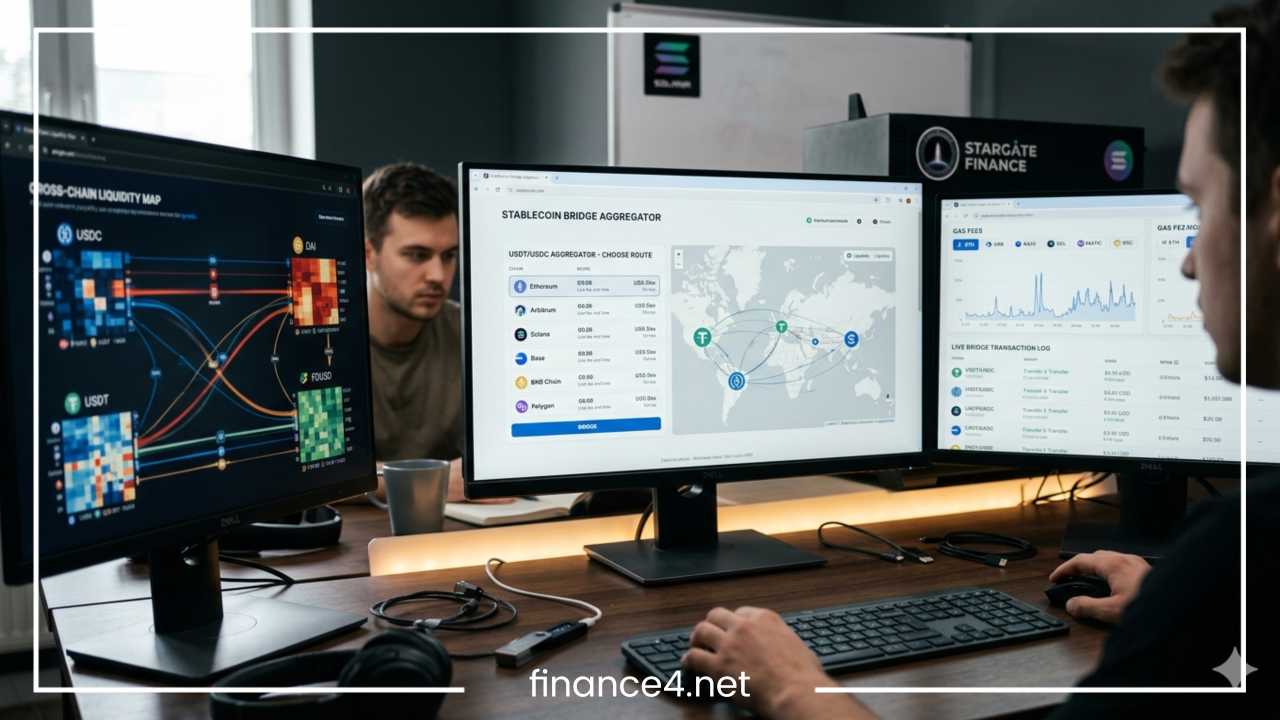
Best Aggregator for Bridging Multi-Chain Stablecoins | Guide
The decentralized finance landscape has evolved from a single-chain environment dominated by Ethereum into a sprawling, vibrant ecosystem of Layer 1 networks, Layer 2 scaling solutions, and specialized app-chains. As developers build unique applications across these diverse environments, capital must flow freely between them. Stablecoins—primarily USDT, USDC, DAI, and FDUSD—serve as the primary vehicle for this capital movement. They represent the lifeblood of liquidity, accounting for the vast majority of transactional volume across the decentralized web.
However, this multi-chain expansion has introduced a significant challenge: fragmented liquidity. Instead of a unified pool of capital, stablecoin liquidity is now split across dozens of isolated networks. A user might hold USDC on Ethereum but need to deploy it into a yield farming protocol on Arbitrum, purchase an NFT on Base, or interact with a decentralized exchange on Solana, BNB Chain, or Polygon. Moving these assets efficiently is no longer as simple as sending a standard transaction.
This friction created the cross-chain bridging industry. Initially, users relied on native, standalone bridges to move their assets. While these platforms made cross-chain transfers possible, they forced users to navigate a complex, inefficient, and often risky environment. To solve these core inefficiencies, the DeFi ecosystem developed a more sophisticated infrastructure layer: the bridge aggregator. Much like travel search engines revolutionize travel by scanning hundreds of airlines to find the best flight, bridge aggregators scan the entire cross-chain landscape to find the most efficient route for your capital. This guide provides a comprehensive analysis of the best aggregators for bridging multi-chain stablecoins, exploring how they work, why they are essential, and which platforms stand out as the market leaders.
What Is a Stablecoin Bridge Aggregator?
To fully understand a bridge aggregator, it is helpful to contrast it with other common infrastructure pieces in the decentralized finance space.
Bridges are standalone protocols that move assets between two or more specific blockchains. They operate using various mechanisms, such as lock-and-mint, burn-and-mint, or localized liquidity pools. A single bridge has its own set of smart contracts, its own security model, and its own capped liquidity. If a bridge runs out of USDC on Arbitrum, it cannot fulfill transfers to that chain without charging exorbitant slippage or forcing users to wait for liquidity rebalancing.
DEX aggregators operate entirely within a single blockchain. Their primary job is to split an order across multiple decentralized exchanges on that specific network to give the user the best possible price and the lowest slippage for a token swap. They do not move assets across chains.
Bridge aggregators combine the concepts of cross-chain bridging and asset aggregation. A bridge aggregator does not maintain its own cross-chain liquidity pools or validate cross-chain messages directly. Instead, it sits on top of dozens of standalone bridges and decentralized exchanges. When a user requests a cross-chain transfer, the aggregator acts as an intelligent meta-routing engine. It simultaneously queries every connected bridge and DEX to discover every possible path from the source asset to the destination asset.
By doing so, bridge aggregators automatically optimize the entire transfer process:
-
Route Comparison: They analyze every available bridge to find the one offering the most efficient path.
-
Fee Optimization: They calculate gas costs, bridge fees, and swap fees across multiple routes, presenting the most cost-effective option.
-
Slippage Reduction: For large stablecoin transfers, they can route capital through paths with the deepest liquidity, preventing dramatic price impact.
-
Speed Improvements: They display estimated transaction completion times, allowing users to choose between a cheaper, slower route or a more expensive, rapid transfer.
-
Liquidity Aggregation: They eliminate the siloed nature of individual bridges by treating the entire web of cross-chain protocols as a single, unified liquidity network.
Consider a practical example: a user wants to bridge 10,000 USDC from Ethereum to Base, or move 5,000 USDT from Arbitrum to BNB Chain. Without an aggregator, the user would need to manually open five different bridge tabs, input their transaction parameters, calculate the gas fees on both sides, check the current liquidity depth of each bridge to ensure they will actually receive their tokens, and manually execute the trade. A bridge aggregator performs this entire operation in milliseconds, presenting the optimal path within a single user interface. Leading protocols providing this framework include LI.FI, Socket, Rango, Bungee, and Relay, which power the back-end infrastructure for hundreds of popular decentralized applications.
Why Users Need Multi-Chain Stablecoin Aggregators
Navigating the cross-chain landscape manually presents severe pain points for retail users, enterprise treasuries, and institutional traders alike. The core issues stem from the inherent complexity of interacting with unaligned blockchain architectures.
High gas fees are a constant burden, particularly when interacting with the Ethereum mainnet. A manual cross-chain transfer often requires multiple steps: swapping an asset on a source chain DEX, depositing it into a bridge, paying the bridge relayer fee, and occasionally claiming the asset manually on the destination chain. Each step incurs a transaction fee. Bridge aggregators combat this by bundling transactions, leveraging optimized smart contracts, and selecting routes that minimize gas consumption.
Fragmented liquidity causes severe slippage issues during large stablecoin transfers. Even though stablecoins are pegged to a dollar, a large transaction on a bridge with shallow liquidity can cause the received value to drop significantly below the peg. If a bridge pool is unbalanced, a user trying to move a large sum of USDT might suffer a one percent or two percent loss simply due to price impact. Aggregators mitigate this by identifying paths with deep liquidity or splitting transactions across multiple protocols.
The manual comparison of bridges is not just time-consuming; it is economically inefficient. The crypto markets move rapidly, and bridge fees fluctuate based on network congestion and pool balances. An optimal bridge route at noon might be the most expensive route by two in the afternoon. Expecting a user to continuously audit these variables manually is unrealistic.
Furthermore, moving assets manually across chains introduces significant security and operational risks. Copying and pasting addresses across multiple platforms, interacting with unfamiliar smart contracts, and mistakenly utilizing untrusted or low-liquidity bridges can result in a permanent loss of funds.
The need for automated multi-chain stablecoin aggregation is driven by several primary use cases across the crypto ecosystem:
-
Stablecoin Arbitrage: Traders exploit minor price discrepancies of stablecoins across different chains. To lock in profits, they must move capital across networks instantly before the market corrects.
-
Yield Farming: DeFi yield opportunities fluctuate constantly. When a new lending protocol on Polygon or Arbitrum offers a high yield on USDC, capital allocators must migrate their stablecoin reserves rapidly to capture the yield.
-
Treasury Management: Decentralized Autonomous Organizations (DAOs) and web3 enterprises hold large stablecoin reserves. They use aggregators to rebalance their treasuries across multiple networks without exposing their corporate funds to unnecessary slippage or high overhead costs.
-
Cross-Chain Payments: Merchants and service providers operating across multiple networks require tools that accept stablecoins on chain A and deliver them cleanly to chain B without forcing the merchant to handle complex manual conversions.
Ultimately, without aggregators, the decentralized web remains fragmented and difficult to navigate. Aggregators turn a highly complex multi-step technical process into a seamless, single-click user experience.
How Bridge Aggregators Work
The internal mechanics of a bridge aggregator rely on a highly sophisticated infrastructure layer that coordinates data fetching, route computation, and cross-chain execution. To appreciate the value they provide, it is useful to look at the exact step-by-step lifecycle of a typical cross-chain stablecoin transfer managed by an aggregator.
First, the user connects their wallet to the aggregator’s interface and selects the source chain, the destination chain, the specific stablecoin they wish to send, and the stablecoin they want to receive.
Second, the aggregator’s routing engine springs into action. It executes thousands of simultaneous on-chain queries via Remote Procedure Call (RPC) nodes across every supported blockchain. The aggregator pulls real-time data regarding gas costs on both the source and destination networks, available liquidity in the pools of every integrated bridge, current asset exchange rates, and protocol-specific transaction fees.
Third, the aggregator inputs this data into its proprietary routing algorithm. The algorithm treats the various bridges and decentralized exchanges as nodes in a graph network. It computes every viable permutation to move the tokens from the starting point to the finish line. It evaluates direct routes as well as complex, multi-hop routes. The aggregator then scores these paths based on user preferences, typically categorizing them by the cheapest route or the fastest route.
Fourth, once the user selects their preferred route and signs the transaction, the aggregator executes the transfer. It sends the user’s funds to its own optimized meta-router smart contract. This contract programmatically manages the interaction with the underlying liquidity sources, third-party bridges, or messaging protocols.
Fifth, the infrastructure monitors the transaction as it moves across networks, handles the cross-chain messaging validation, and ensures the proper delivery of the target stablecoins directly into the user’s wallet on the destination blockchain.
To achieve this level of automation, aggregators tap into several underlying technologies:
Routing Algorithms
These are advanced mathematical formulas designed to solve shortest-path and maximum-flow network problems. They calculate how to get an asset from one network to another while sustaining the lowest total damage from fees and slippage.
Liquidity Pools
Aggregators interface directly with automated market makers (AMMs) on both sides of the transaction. If a user wants to bridge an obscure asset or if a direct stablecoin route lacks liquidity, the aggregator uses local liquidity pools to convert the asset into a highly liquid stablecoin before sending it across the bridge.
Intents-Based Bridging
This represents a major architectural shift in cross-chain design. Instead of routing a transaction through a rigid, slow smart contract pipeline, the user simply expresses an intent. Specialized off-chain actors, known as solvers, market makers, or fillers, compete to fulfill this intent immediately using their own capital. The filler provides the funds to the user on the destination chain almost instantly, and the underlying protocol handles the settlement and reimbursement between the filler and the user on the source chain later. This eliminates the need for users to wait for traditional block confirmations.
Messaging Protocols
When actual assets are not transferred directly via liquidity pools, aggregators rely on generalized cross-chain messaging protocols such as LayerZero or Wormhole. These protocols pass secure data packets between blockchains, verifying that an action took place on the source chain so that a corresponding action can be authorized on the destination chain.
Atomic Swaps and Native Issuance
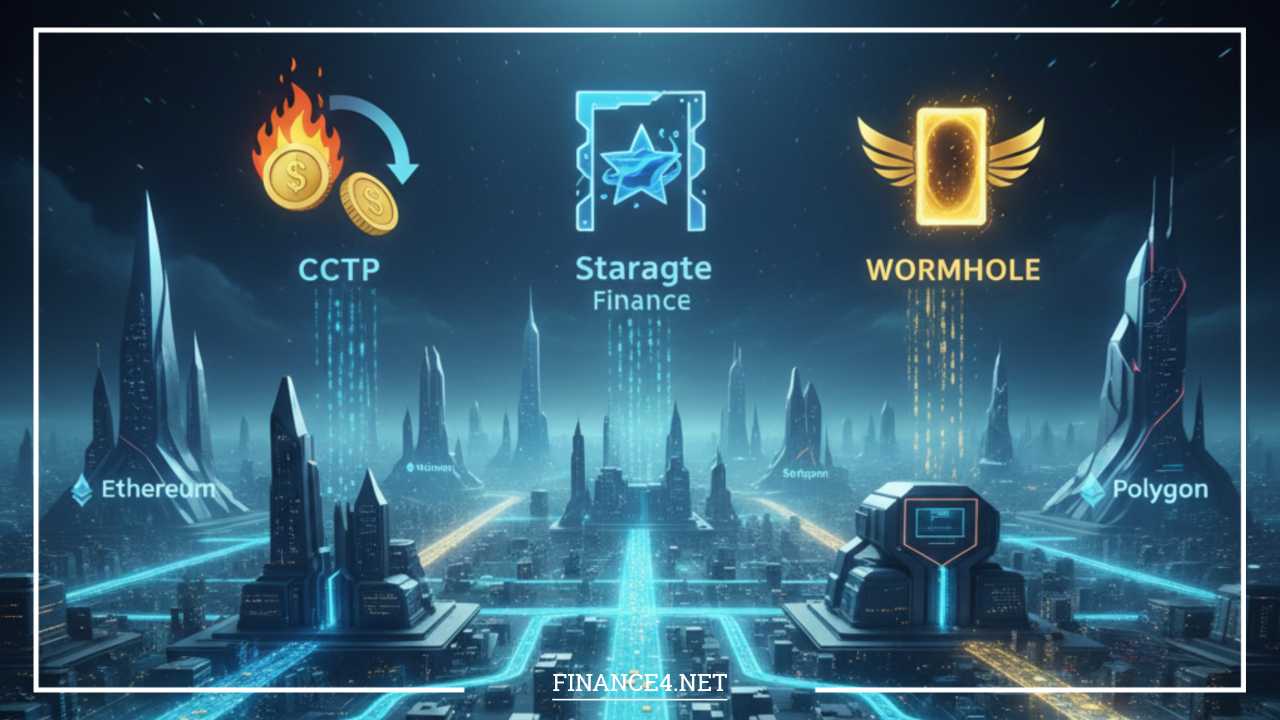
Aggregators also plug directly into native issuance rails like Circle’s Cross-Chain Transfer Protocol (CCTP) or Stargate Finance. CCTP allows USDC to be natively burned on a source chain and minted on a destination chain, completely eliminating the systemic security risks associated with traditional wrapped assets.
Key Features to Look for in a Stablecoin Bridge Aggregator
When choosing an aggregator for your stablecoin operations, you should look for several core features to ensure your capital is handled safely, quickly, and cost-effectively.
Supported Chains
The utility of an aggregator is directly proportional to its network coverage. A great platform must bridge assets between primary EVM networks (Ethereum, Arbitrum, Optimism, Base, Polygon, BNB Chain) as well as prominent non-EVM environments like Solana, Sui, and the Cosmos ecosystem.
Stablecoin Support
The aggregator must support a diverse range of stablecoins. While USDC and USDT are non-negotiable requirements, top-tier aggregators also offer seamless routing for decentralized alternatives like DAI, native ecosystem options like FDUSD, and yield-bearing or over-collateralized stablecoins.
Speed
A good aggregator provides transparent, accurate estimates of transaction times for each route. The interface should clearly highlight which paths rely on instant intents-based fulfillment and which paths depend on traditional messaging protocols that may require ten to twenty minutes to clear finality.
Security Audits
Because aggregators interact with multiple smart contracts, their codebase must be subjected to regular, rigorous external audits by top-tier web3 security firms. A transparent platform will maintain a public directory of its security assessments and historical audit logs.
Lowest Fees
The protocol should feature a highly optimized fee structure. It must clearly break down exactly where your money is going: network gas fees on the source chain, destination gas execution costs, underlying bridge protocol fees, and any nominal service fee charged by the aggregator itself.
Slippage Optimization
For large volume traders, advanced slippage controls are vital. The aggregator must allow users to customize their maximum acceptable slippage tolerance, protecting them from market volatility or predatory front-running during the cross-chain transit window.
MEV Protection
Maximal Extractable Value (MEV) bots heavily target cross-chain transactions. When a large stablecoin swap occurs, these bots can sandwich the trade, causing the user to receive significantly fewer tokens. Excellent aggregators implement MEV-protected routing paths or partner with private RPC networks to keep user transactions hidden from public mempools until they are permanently executed.
UI/UX and Mobile Compatibility
A chaotic, confusing interface leads to costly mistakes. The best aggregators feature intuitive, clean dashboards that guide the user smoothly through the setup, execution, and tracking phases of a transfer. Furthermore, full mobile responsiveness is essential for managing assets on the go via decentralized Web3 mobile browser wallets.
API Support
For developers and automated trading desks, comprehensive developer documentation, software development kits (SDKs), and reliable APIs are mandatory features. This allows protocols to integrate the aggregator’s powerful cross-chain routing architecture directly into their own third-party decentralized applications.
Non-Custodial Architecture
Under no circumstances should a bridge aggregator take custody of user funds. The platform must operate purely as a stateless routing infrastructure layer. Your assets must move safely from your wallet, through the audited smart contracts, and directly back into your wallet, maintaining your absolute self-sovereignty over your private keys throughout the entire lifecycle.
Best Aggregators for Bridging Multi-Chain Stablecoins
To help you choose the right platform for your specific DeFi needs, we have compiled a comprehensive breakdown of the leading stablecoin bridge aggregators actively dominating the decentralized finance space.
LI.FI
LI.FI stands out as one of the most robust, developer-centric routing engines in the entire cross-chain industry. It functions as a powerful middle-tier infrastructure piece, combining cross-chain bridges with decentralized exchanges across all major EVM and non-EVM ecosystems.
-
Supported Chains: Over 20 networks including Ethereum, Arbitrum, Optimism, Base, Solana, Polygon, Avalanche, and BNB Chain.
-
Strengths: Unparalleled routing depth, highly customizable APIs for developers, exceptional MEV protection, and multi-hop swapping capabilities that allow users to transition from any source asset into any destination asset in a single transaction.
-
Weaknesses: The underlying developer interface can be complex, and because it aggregates so many protocols, unchecking unpolished or newer bridges requires manual user configuration.
-
Fees: LI.FI passes through the native fees of the underlying bridges and gas networks, adding a tiny, highly competitive service fee depending on the integration type.
-
Ideal Users: Advanced DeFi traders, enterprise integrations, and web3 developers seeking to embed cross-chain capabilities directly into their application frontends.
Socket
Socket is a highly sophisticated, modular interoperability protocol that powers cross-chain data and asset transfers. It does not look at bridging as a simple asset transfer; it views it as a unified communication layer. Socket enables developers to build applications where smart contracts on one chain can seamlessly interact with liquidity on completely different chains.
-
Supported Chains: All major EVM Layer 1 and Layer 2 platforms, with an aggressive focus on the expanding Ethereum rollup ecosystem.
-
Strengths: Incredible capital efficiency, highly modular architecture that lets developers select specific security layers, and an incredibly fast routing engine optimized for stablecoin pairs.
-
Weaknesses: Focuses primarily on EVM-compatible systems, offering fewer direct options for non-EVM environments like Solana or Cosmos.
-
Fees: Highly transparent, dynamically optimized fee structures that prioritize minimizing gas costs during times of high network congestion.
-
Ideal Users: Institutional application developers and protocols looking for deep, white-labeled cross-chain infrastructure.
Bungee
Bungee is a premier, retail-facing bridge application built directly on top of the Socket routing infrastructure. It was specifically designed to solve the friction points of retail cross-chain asset migration, presenting a clean, beautifully optimized interface for everyday crypto users.
-
Supported Chains: Ethereum, Arbitrum, Optimism, Base, Polygon, Avalanche, BNB Chain, and other prominent EVM rollups.
-
Strengths: Exceptional ease of use, a highly valuable feature called Refuel that allows users to buy gas tokens on the destination chain using their source stablecoins, and crystal-clear breakdowns of the cheapest versus fastest available routes.
-
Weaknesses: Inherits Socket’s structural limitation regarding non-EVM environments, making it less ideal for users heavily active on Solana or Sui.
-
Fees: Zero added platform fees for basic bridging operations; users pay only the pure gas and underlying bridge fees.
-
Ideal Users: Daily retail DeFi participants who require a simple, fast, and intuitive dashboard to shuffle stablecoins across Layer 2 scaling networks.
Rango Exchange
Rango Exchange operates as a massive multi-chain DEX and bridge aggregator specifically engineered to conquer ecosystem fragmentation. It breaks down the barriers between isolated blockchain structures, bridging the gap between EVM networks, Cosmos, Bitcoin, Solana, and Tron.
-
Supported Chains: Over 50 major blockchains covering EVM networks, Solana, Cosmos, Osmosis, Bitcoin, Tron, Thorchain, and near-universal cross-chain networks.
-
Strengths: Incredible cross-ecosystem coverage, making it one of the few places where a user can directly route a stablecoin from a Cosmos app-chain over to an Ethereum Layer 2 in a single click.
-
Weaknesses: Due to the massive scope of cross-ecosystem transactions, complex multi-hop routes can occasionally take longer to finalize compared to pure, localized EVM aggregators.
-
Fees: Includes standard underlying bridge and network gas fees along with a small, transparent aggregation fee for managing highly complex cross-ecosystem routing.
-
Ideal Users: Multi-chain power users and cross-chain portfolio managers who operate extensively outside the traditional Ethereum Virtual Machine ecosystem.
Relay Protocol
Relay Protocol specializes in ultra-fast, low-cost cross-chain executions, optimizing the movement of capital across the decentralized landscape by eliminating unnecessary intermediate transactions.
-
Supported Chains: Major EVM networks including Ethereum, Arbitrum, Optimism, Base, Polygon, and Avalanche.
-
Strengths: Extreme transaction speed, incredibly low operational overhead, and a highly streamlined interface focused on rapid deployment.
-
Weaknesses: Offers a smaller catalog of integrated networks and standalone bridges compared to massive infrastructure giants like LI.FI.
-
Fees: Highly optimized to reduce intermediate gas expenditures, making it incredibly cost-effective for standard, recurring stablecoin transfers.
-
Ideal Users: High-frequency traders and yield farmers who prioritize raw transactional speed and execution cost above all else.
Jumper Exchange
Jumper Exchange represents the flagship, retail-facing frontend interface powered directly by the underlying LI.FI routing architecture. It brands itself as the ultimate gateway for cross-chain liquidity, offering a high-performance experience for retail crypto enthusiasts.
-
Supported Chains: Extensive coverage of over 20 networks, mirroring the deep technical backend library of LI.FI.
-
Strengths: Access to the most advanced multi-chain routing engine in the industry inside a beautiful dashboard, robust stability, built-in security features, and native support for non-EVM environments like Solana.
-
Weaknesses: The immense density of choices and data points can occasionally feel overwhelming to complete crypto novices.
-
Fees: Clear, upfront fee presentation with zero hidden costs, offering direct pass-through pricing from underlying infrastructure routes.
-
Ideal Users: Active crypto traders and liquidity providers who want the absolute best prices, the deepest routing options, and a reliable interface.
Across Protocol
While Across Protocol operates as a standalone bridge, it functions similarly to an aggregator through its open market of competitive fillers and intent-driven architecture. It leverages a network of sophisticated solvers to fulfill user transfers instantly.
-
Supported Chains: Ethereum, Arbitrum, Optimism, Base, Polygon, and major high-performance rollups.
-
Strengths: Unmatched speed for supported assets, incredible gas efficiency, and an architectural model that practically eliminates slippage for multi-million dollar stablecoin transfers.
-
Weaknesses: Asset selection is primarily restricted to high-volume blue-chip assets like USDC, USDT, ETH, and WBTC, offering less support for newer stablecoins.
-
Fees: Remarkably low fees, as decentralized solvers actively compete against each other to offer the cheapest possible execution rates to the user.
-
Ideal Users: High-volume traders, whales, and institutions seeking to move large blocks of stablecoins across major Layer 2 networks with absolute minimum price impact.
Stargate Finance
Stargate Finance is a prominent liquidity transport layer built on top of LayerZero’s cross-chain messaging infrastructure. It is a fundamental routing destination for aggregators due to its deep pools of native assets.
-
Supported Chains: Ethereum, Arbitrum, Optimism, Base, BNB Chain, Avalanche, Polygon, and Metis.
-
Strengths: Deep native stablecoin liquidity pools, instant guaranteed finality (a transaction can never fail on the destination chain due to lack of liquidity once approved on the source), and zero reliance on risky wrapped asset structures.
-
Weaknesses: Because it relies on traditional cross-chain messaging verification rather than intents-based solvers, transfers can take several minutes to completely clear.
-
Fees: Charges a predictable, standard protocol fee of approximately 0.06 percent for direct pool-to-pool transfers, alongside native network gas costs.
-
Ideal Users: Users moving mid-to-high volume stablecoin amounts who demand guaranteed execution finality and absolute security peace of mind.
Comparison Table
The following table provides a quick, structured reference to compare the core characteristics of the market-leading cross-chain platforms:
| Aggregator | Chains Supported | Fees | Speed | Best For |
| LI.FI | Over 20 (EVM + Non-EVM) | Low (Pass-through + Small Service Fee) | Highly Variable (Fastest Routes Available) | Developer Integrations & Complex Swaps |
| Socket | Major EVM Networks | Optimized (Minimizes Gas Footprint) | Fast (Rollup Optimized) | B2B Infrastructure & Custom Rollup Systems |
| Bungee | Major EVM Networks | Very Low (Zero Added Retail Markup) | Fast (Includes Refuel Features) | Everyday Retail Users Shuffling Layer 2 Gas |
| Rango Exchange | Over 50 (EVM, Cosmos, Solana, Bitcoin) | Moderate (Based on Route Complexity) | Variable (Dependent on Ecosystem Hops) | Broad Multi-Chain & Non-EVM Power Users |
| Relay Protocol | Core EVM Networks | Optimized (Focuses on Low Cost) | Ultra-Fast | Speed-Prioritized Yield Migrations |
| Jumper Exchange | Over 20 (EVM + Solana) | Low (Transparent Infrastructure Cost) | Fast to Instant (Uses Intent Options) | Professional Retail Traders Demanding Best Execution |
| Across Protocol | Major EVM & L2 Rollups | Extremely Low (Competitive Solver Market) | Near-Instant (Intent-Driven) | Whale Transfers & High-Volume Stablecoin Volume |
| Stargate Finance | Core EVM Networks | 0.06% Protocol Fee + Network Gas | Moderate (3 to 5 Minutes Average) | Guaranteed Finality & Native Asset Assurance |
Security Risks of Cross-Chain Stablecoin Bridging
While bridge aggregators offer immense economic efficiency, cross-chain communication remains one of the most structurally complex and highly targeted vectors in the web3 landscape. Users must appreciate the security dynamics of the infrastructure they interact with.
Smart contract exploits are the primary threat vector. A bridge aggregator works by interacting with multiple external smart contracts. If an underlying standalone bridge integrated by the aggregator contains a hidden vulnerability or code flaw, an attacker can drain that specific bridge’s liquidity pools. While an aggregator itself may be fully audited, it cannot magically retroactively protect funds that are actively passing through an underlying protocol at the exact moment it experiences a hack.
Historically, the blockchain industry has witnessed devastating bridge security breaches, including prominent network exploits, specific bridge vulnerabilities, and protocol attacks. These incidents collectively resulted in the theft of over a billion dollars in crypto assets. These hacks generally target the underlying validator sets or consensus mechanisms of standalone bridges—such as compromising the private keys of multisig validators—rather than the code of the aggregators themselves.
Another prominent risk involves fake wrapped assets. When moving stablecoins across traditional bridges, users often receive a wrapped version of an asset rather than the official, native token issued directly by the core foundation. If the underlying bridge loses its collateral backing, these wrapped stablecoins can permanently lose their dollar peg, becoming completely worthless. This is why modern aggregators place an immense priority on routing via native issuance avenues like Circle’s CCTP or intents-based filler mechanisms that deliver actual, native assets directly to the destination wallet.
Finally, phishing vectors present a major risk to retail users. Malicious actors frequently deploy highly accurate clones of popular aggregator frontends, promoting them via compromised social media accounts or fraudulent search engine advertisements. If a user unknowingly connects their wallet to a counterfeit website and signs a malicious transaction approval, hackers can completely drain their entire stablecoin balances instantly.
To protect user capital, reputable aggregators employ multiple defense layers:
-
Multi-Firm Security Audits: Continuous, independent code reviews conducted by separate auditing institutions.
-
Active Bug Bounties: Massive financial rewards offered to ethical white-hat hackers who identify and privately disclose security flaws before they can be exploited by malicious actors.
-
Decentralized Validation Networks: Rejecting centralized multisig control in favor of robust, highly distributed cryptographically secure validation networks.
-
Emergency Circuit Breakers: Programmatic monitoring tools that can automatically pause transactions or disable specific underlying bridge routes if anomalous asset outflows or exploits are detected on a connected network.
Best Practices for Bridging Stablecoins Safely
To ensure your funds remain secure when migrating stablecoins across networks, implement the following strict operational habits:
First, always manually double-check and verify your destination chain and wallet address. Ensure the receiving wallet is fully compatible with the network you are sending funds to. For example, if you are sending stablecoins to a centralized crypto exchange account, make absolutely certain that the exchange explicitly supports deposits on that specific Layer 2 network. Sending assets to an unsupported exchange address can lead to a long, painful retrieval process or a permanent loss of funds.
Second, ensure you are interacting exclusively with the official, verified web URLs of your chosen bridge aggregators. Bookmark the official domains of platforms like Jumper, Bungee, or Rango. Avoid clicking on sponsored links at the top of search engine result pages, as these are frequently deployed by phishing networks.
Third, whenever you are moving a substantial volume of capital, always execute a small test transaction first. Send a nominal amount—such as ten or twenty dollars—and verify that the funds successfully arrive in your destination wallet as intended. Only after confirming the path is clear and operational should you proceed to route the remainder of your capital.
Fourth, closely audit the available liquidity pool depth and the estimated slippage calculation presented by the interface prior to approving a transaction. If an aggregator warns you that a specific route will result in a high price impact or negative return, cancel the operation and select an alternative routing path with deeper capital reserves.
Fifth, keep a close eye on the asset contract standards. Strive to prioritize routes that deliver native stablecoins over wrapped variations whenever possible. Native tokens are inherently safer, carry zero wrapped-smart-contract counterparty risk, and enjoy universal acceptance across decentralized finance applications.
Future of Multi-Chain Stablecoin Aggregation
The cross-chain stablecoin ecosystem is moving rapidly away from manual, complex configurations toward an era of absolute frictionless interoperability. As the underlying infrastructure matures, several transformative trends are actively redefining how capital moves across the decentralized web:
Chain Abstraction
This represents the ultimate end-game for the crypto user experience. In a chain-abstracted world, the concept of separate blockchains becomes completely invisible to the end user. You will no longer need to manually know whether your stablecoins are on Ethereum, Arbitrum, or Base. The application frontend will simply display your aggregate stablecoin balance, and behind the scenes, integrated bridge aggregators will dynamically source, swap, and route the required liquidity across multiple networks instantly on your behalf.
Intent-Based Frameworks
The transition from structural smart contract routing to intent-based execution models is accelerating. By relying on highly capitalized, off-chain solver networks that compete in an open marketplace to fulfill user desires instantly, bridging times are dropping from ten minutes down to mere seconds, with structural slippage compressed close to zero.
Account Abstraction and Gasless Bridging
Historically, to bridge a stablecoin from a source network, you were required to hold the native gas token of that specific blockchain. Account abstraction eliminates this friction entirely. Advanced aggregators are deploying features that allow users to pay for cross-chain transaction gas costs directly using the very stablecoins they are bridging, removing the need to manage dozens of volatile native gas token balances across multiple networks.
Unified Liquidity and Omnichain Finance
Through technologies like LayerZero’s Omnichain Fungible Tokens (OFTs) and widespread native Circle CCTP integration, stablecoins are becoming inherently native to all chains simultaneously. Aggregators will increasingly transition from managing complex liquidity swaps to directing frictionless native burning and minting pathways worldwide.
As institutional adoption scales and multi-chain frameworks expand, stablecoin bridge aggregators will firmly solidify their position as the mandatory, foundational routing infrastructure layer powering the future of global decentralized finance.
Final Thoughts
Multi-chain stablecoin bridge aggregators have evolved from a luxury convenience tool into an absolute, mandatory foundation for anyone navigating the modern decentralized finance landscape. By eliminating the siloed nature of isolated blockchains, these powerful routing engines systematically save users time, compress transactional overhead costs, shield capital from predatory slippage, and dramatically simplify the cross-chain experience.
Whether you are a retail user seeking the clean simplicity of Bungee or Jumper Exchange, an advanced trader leveraging the cross-ecosystem capabilities of Rango, or a whale demanding the institutional efficiency of Across Protocol, the golden rule remains identical: always compare your routing paths, prioritize thoroughly audited non-custodial systems, and closely inspect slippage metrics prior to executing your trades. As the digital asset industry marches toward complete chain abstraction, the underlying platforms highlighted in this guide will continue to serve as the premier gateways for global, borderless liquidity.
Frequently Asked Questions
What is the cheapest crypto bridge aggregator for stablecoins?
The cheapest option varies dynamically based on live network congestion, but intent-based aggregators like Across Protocol, Bungee, and Jumper Exchange (powered by LI.FI) consistently offer the lowest fees. Because these platforms utilize off-chain solver networks that compete to fulfill your order, they cut out intermediate smart contract interactions, minimizing source and destination gas fees. Always check quotes on a retail frontend like Bungee to compare live route costs before execution.
How do I bridge USDC from Ethereum to Base instantly?
The fastest way to move USDC from Ethereum mainnet to Base is through an intent-based aggregator like Relay Protocol or Jumper Exchange. While the official Base canonical bridge can take significant time to finalize one-way paths (and up to seven days for withdrawals), intent-based systems use liquidity providers to drop native USDC into your Base wallet in under three seconds. You simply connect an EVM wallet, select USDC on Ethereum, choose Base as the destination, and confirm the transaction.
Can I bridge stablecoins between EVM chains and Solana?
Yes. Multi-chain aggregators like Rango Exchange and Jumper Exchange seamlessly bridge stablecoins between EVM networks and non-EVM environments like Solana. They achieve this by aggregating cross-chain protocols like Wormhole or native issuance channels like Circle’s Cross-Chain Transfer Protocol (CCTP), which securely burns USDC on an EVM source chain and mints it natively on Solana without requiring risky wrapped tokens.
What is the difference between a cross-chain swap and a standard crypto bridge?
A standard crypto bridge only moves the exact same asset between different blockchains (e.g., sending USDC on Ethereum to receive wrapped USDC on Polygon). A cross-chain swap protocol combines bridging with decentralized exchange (DEX) aggregation. This allows you to swap Asset A on Chain X directly into Asset B on Chain Y (e.g., swapping USDT on Arbitrum to receive DAI on Base) in a single, automated transaction.
How do I avoid high gas fees when bridging USDT or USDC?
To avoid high gas costs, try to initiate your transfers from high-performance Layer 2 networks like Arbitrum, Optimism, or Base rather than the Ethereum mainnet. Additionally, use aggregators that feature “gas abstraction” or “refuel” options (such as Bungee). These features allow you to pay all cross-chain transaction fees using the stablecoin you are bridging, saving you from needing to buy and hold separate native gas tokens on multiple destination chains.