Cross-Chain Game Assets with Universal ID
 by
by 
Cross-Chain Game Assets with Universal ID: Unlocking the Metaverse’s True Potential
The advent of blockchain technology has ushered in a new era for the gaming industry, fundamentally altering the relationship between players and their digital possessions. No longer are in-game items merely lines of code controlled by centralized servers; they are now true digital assets, owned and controlled by the players themselves. This paradigm shift, driven by the immutability and transparency of blockchain, has ignited discussions about genuine asset ownership and persistent player identity within virtual worlds. However, despite these advancements, the burgeoning blockchain gaming landscape faces a significant hurdle: fragmentation. Game assets and player identities are often siloed within individual blockchain ecosystems, limiting their utility and hindering a truly interconnected gaming experience.
This article delves into a transformative solution: cross-chain game assets coupled with a universal ID. This powerful combination promises to dismantle the existing barriers, enabling players to seamlessly carry their digital identities and valuable assets across diverse virtual realms, thereby unlocking the metaverse’s true potential.
Background: Blockchain Gaming and Digital Assets
Blockchain-based game assets, primarily in the form of Non-Fungible Tokens (NFTs) and fungible tokens, are the cornerstone of this new gaming economy. NFTs represent unique, verifiable digital items such as skins, weapons, land plots, or even entire characters, granting immutable ownership to the player. Fungible tokens, on the other hand, often serve as in-game currencies or governance tokens, facilitating transactions and decentralized decision-making within game ecosystems. The benefits of integrating blockchain into gaming are profound: genuine ownership, enabling players to truly possess and resell their in-game items; enhanced scarcity, as the verifiable supply of assets can be programmatically limited; and unparalleled transparency, allowing anyone to inspect the history and provenance of digital assets.
Despite these advantages, the current landscape of blockchain gaming is largely characterized by isolated ecosystems. Many prominent blockchain games are built on specific chains like Ethereum, Solana, Polygon, or Avalanche. While each chain offers unique advantages in terms of transaction speed, cost, and developer tools, this isolation creates significant limitations. Players often find their valuable assets locked within the confines of a single game or blockchain, unable to be transferred or utilized in other virtual environments. This impact of these siloed ecosystems is twofold: for players, it restricts the utility and liquidity of their hard-earned assets, leading to a fragmented and often frustrating experience. For developers, it limits the potential player base and hinders the creation of a truly interconnected and expansive metaverse.
Cross-Chain Interoperability
Cross-chain interoperability is the ability for different blockchain networks to communicate and exchange data and assets with each other. It is a critical enabler for the future of decentralized applications and, particularly, for the vision of a truly interconnected metaverse. Without it, the blockchain landscape remains a collection of isolated islands, unable to leverage the collective power of diverse ecosystems.
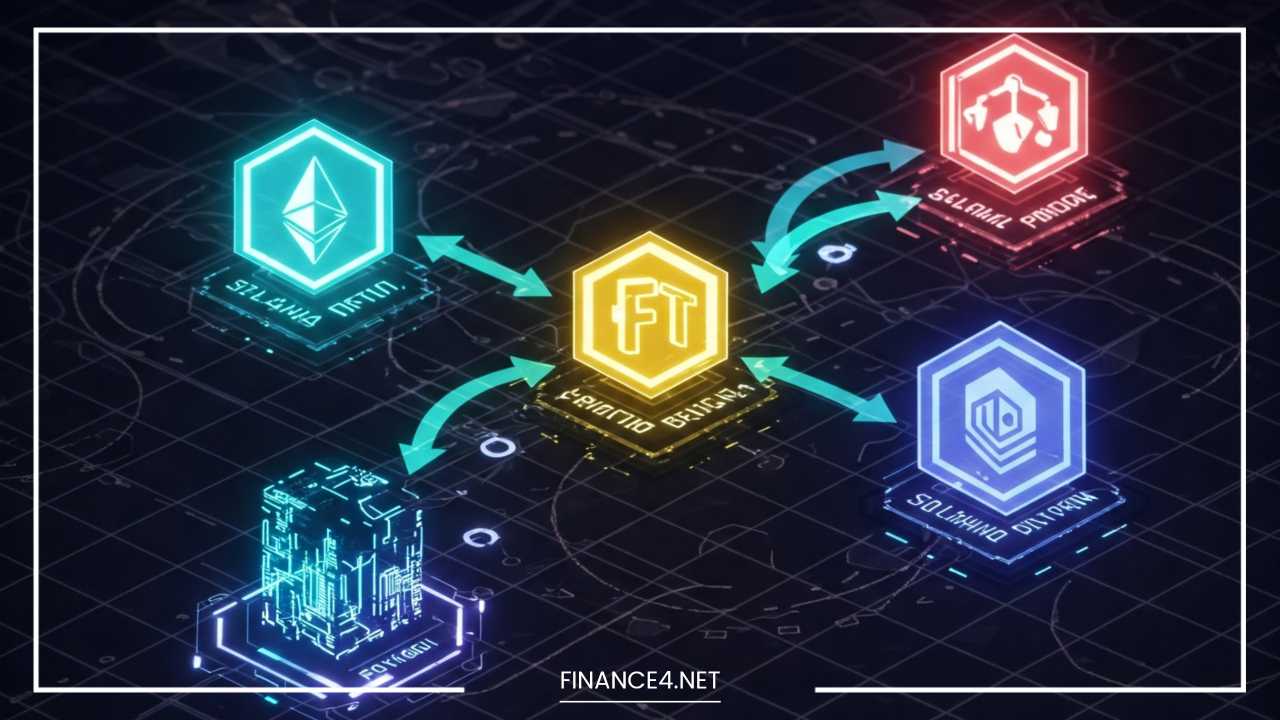
Various approaches are being developed to achieve cross-chain interoperability. One prominent method involves bridges, which are protocols that connect two disparate blockchains, allowing assets and data to be transferred between them. Examples include Wormhole, which facilitates asset transfers across multiple prominent blockchains like Solana, Ethereum, and Binance Smart Chain, and LayerZero, which aims to provide a generalized messaging layer across chains. While bridges offer a practical solution, they introduce their own set of challenges, particularly concerning security. The centralized or semi-centralized nature of some bridge designs makes them potential targets for exploits, as evidenced by numerous high-profile hacks.
Another approach focuses on interoperable standards and architectures. Projects like Cosmos with its Inter-Blockchain Communication (IBC) protocol and Polkadot with its parachain architecture are building frameworks where multiple blockchains can natively connect and communicate within a unified network. IBC allows independent blockchains to exchange tokens and data in a trustless and secure manner, while Polkadot’s parachains are specialized blockchains that can seamlessly integrate into its relay chain, benefiting from shared security and interoperability. These approaches offer a more secure and natively integrated solution compared to external bridges, but they often require significant architectural commitments from participating chains.
Despite the promise, achieving robust cross-chain interoperability faces considerable challenges. Security remains paramount; ensuring the integrity of assets and data during cross-chain transfers is a complex engineering feat. Complexity is another hurdle, both for developers implementing these solutions and for users navigating the various protocols and interfaces. Finally, the user experience (UX) often suffers due to the technical intricacies involved in cross-chain operations, making it less accessible for mainstream users. Overcoming these challenges is crucial for the widespread adoption of cross-chain game assets.
The Concept of Universal ID
In the context of gaming and Web3, a universal ID represents a persistent, verifiable digital identity that transcends individual games, platforms, and even blockchain networks. It’s a foundational element for a truly interconnected metaverse, allowing players to carry their reputation, achievements, and unique personas across diverse virtual experiences.
To understand the significance of a universal ID, it’s helpful to compare it to existing Web2 identities. Platforms like Steam, Xbox Live, and PlayStation Network provide users with distinct IDs and profiles, but these are largely siloed within their respective ecosystems. Your Steam achievements and reputation don’t seamlessly transfer to your Xbox Live profile, nor do they extend to your in-game progress in a non-platform specific title. A universal ID, however, aims to break down these barriers, creating a unified digital presence for players in the decentralized web.
Several emerging frameworks and protocols are working towards establishing universal ID solutions in Web3. Ethereum Name Service (ENS), for example, provides human-readable names (e.g., “yourname.eth”) that resolve to Ethereum addresses, serving as a simplified and memorable identifier for users across various DApps. While primarily focused on addresses, ENS lays the groundwork for a more comprehensive identity layer. Decentralized Identifiers (DIDs) are a W3C-standardized type of globally unique identifier that are cryptographically verifiable and controlled by the individual, not a centralized entity. DIDs can be anchored to various blockchains and serve as the basis for self-sovereign identity, allowing users to manage their own digital credentials and share them selectively. Projects like Lens Protocol and standards like ERC-725 (a standard for self-sovereign identity) build upon these concepts, aiming to create social graphs and identity layers that are portable and composable across the Web3 ecosystem. Lens Protocol, for instance, focuses on decentralized social media, where a user’s profile and content are owned by them and can be accessed by various applications built on the protocol.
The importance of a universal ID cannot be overstated. For players, it enables a persistent reputation, where their in-game achievements, contributions, and community standing are recognized and carry weight across different games and platforms. It fosters a true cross-game identity, allowing players to build a consistent persona regardless of the virtual world they inhabit. Furthermore, a universal ID can significantly contribute to anti-fraud measures by providing a more robust and verifiable identity layer, making it harder for malicious actors to create multiple fake accounts or engage in illicit activities. By creating a unified and verifiable digital self, a universal ID empowers players and enhances the overall security and integrity of the decentralized gaming landscape.
Cross-Chain Game Assets in Practice
The dream of owning a digital sword NFT in one game and being able to wield it in another, entirely different game, on a different blockchain, is swiftly moving from concept to reality through the power of cross-chain game assets. This portability is crucial for realizing the full potential of digital ownership in the metaverse.
Making assets portable across chains typically involves a combination of bridging mechanisms and standardized asset representations. When an asset, say an ERC-721 sword NFT on Ethereum, needs to be used on Polygon, it can be “wrapped” or “locked” on the source chain, and a corresponding representation is minted on the destination chain. This “wrapped” asset on Polygon can then be used in games built on that network. When the player wishes to move it back to Ethereum, the wrapped asset is burned on Polygon, and the original asset is unlocked on Ethereum. More advanced solutions involve state proofs and zero-knowledge technologies to verify the existence and ownership of assets across chains without relying on a centralized intermediary.
The foundation for these portable assets lies in widely adopted standards like ERC-721 (for unique, non-fungible tokens) and ERC-1155 (for multi-token contracts, allowing for both fungible and non-fungible assets within a single contract). Extensions to these standards are emerging that specifically address cross-chain compatibility, such as defining metadata conventions that allow assets to be interpreted consistently across different game engines and environments. This ensures that a sword NFT, when transferred, retains its visual attributes, statistics, and functionalities regardless of the blockchain it resides on.
The practical implementation of cross-chain assets is increasingly facilitated by multi-chain wallets and asset managers. Wallets like MetaMask (with its support for various EVM-compatible networks), Phantom (popular for Solana and its ecosystem), and Sequence (which offers a more user-friendly, abstracted experience for Web3 interactions) are evolving to provide seamless access and management of assets across a multitude of blockchains. These wallets abstract away much of the underlying complexity, allowing users to view, send, and receive their cross-chain game assets from a single interface. This user-centric approach is vital for mass adoption, as it simplifies the often-intimidating process of interacting with different blockchain networks and managing diverse digital inventories. As these technologies mature, the vision of truly interoperable and universally usable game assets inches closer to becoming a pervasive reality.
Universal ID Integration in Games
Integrating universal IDs into games is a pivotal step towards creating a cohesive and persistent player experience across the decentralized gaming landscape. Developers can leverage these robust identity frameworks to unlock new possibilities for progression, community building, and personalized gameplay.
One of the primary ways developers can integrate universal IDs is by utilizing them as the foundation for identity-linked progression and achievements. Instead of a player’s progress being tied solely to a specific game’s internal database, their universal ID can serve as a persistent record of their accomplishments across various titles. Imagine a “master gamer score” that accumulates across different blockchain games, showcasing a player’s dedication and skill regardless of the specific genre or platform. Similarly, unique achievements earned in one game could unlock cosmetic items or special abilities in another, fostering a sense of continuity and rewarding long-term engagement within the broader Web3 gaming ecosystem.
Furthermore, universal IDs can power unified login and credential systems. Instead of requiring players to create separate accounts and remember unique login details for every blockchain game they play, a universal ID can act as a single sign-on mechanism. This not only streamlines the user experience but also enhances security by reducing the surface area for credential compromise. Developers can integrate with universal ID frameworks like Decentralized Identifiers (DIDs) or leverage protocols like Lens Protocol to authenticate users, fetch their verifiable credentials, and grant them access to game features based on their established Web3 identity.
Several emerging examples and ecosystems are already demonstrating the power of universal ID integration. Ready Player Me, while primarily focused on interoperable avatars, is a testament to the desire for a persistent player identity across virtual worlds. Users can create a single avatar and use it across a growing number of supported games and applications, demonstrating the potential for visual identity portability. Fractal ID is another example, providing a decentralized identity solution for Web3, which can be integrated into games for user verification and reputation building. Myria, an Ethereum Layer 2 scaling solution for gaming, emphasizes an interconnected ecosystem where player IDs and assets are designed for seamless movement and interoperability across games built on their platform. These examples highlight a growing trend towards a more unified and player-centric approach to identity in the decentralized gaming space, paving the way for truly persistent and interconnected virtual lives.
Benefits and Opportunities
The convergence of cross-chain game assets and universal IDs presents a multitude of compelling benefits and opens up vast opportunities for both players and developers, fundamentally reshaping the future of digital entertainment.
For players, the advantages are transformative:
- Seamless Experience Across Games/Chains: No longer will players be confined to isolated game worlds. Their universal ID acts as a passport, allowing them to effortlessly move between different games and blockchain networks, carrying their identity and progress with them. This eliminates the friction of creating new accounts and learning new interfaces for every title.
- Long-Term Identity and Reputation: A universal ID fosters a persistent digital persona. Players can build a verifiable reputation based on their in-game achievements, ethical conduct, and contributions across multiple games. This accumulated identity can lead to unique social interactions, exclusive content, and even influence within decentralized autonomous organizations (DAOs) governing game ecosystems.
- Real Ownership of Portable Assets: The true value of blockchain gaming lies in verifiable ownership. With cross-chain capabilities, a player’s legendary sword, rare armor, or unique character skin is no longer tethered to a single game. These assets become truly portable, allowing players to utilize them in different virtual environments, trade them on broader marketplaces, or even display them in personal metaverse spaces, maximizing their utility and unlocking unprecedented liquidity.
For developers, the opportunities are equally enticing:
- Shared Player Base: By supporting universal IDs and cross-chain assets, developers tap into a larger, more engaged player base. Players who have already invested time and effort into building their Web3 identity and acquiring valuable assets are more likely to explore new games that recognize and leverage their existing digital footprint. This reduces user acquisition costs and fosters community growth.
- Asset Liquidity and Monetization: Cross-chain compatibility dramatically increases the liquidity of in-game assets. Players can more easily buy, sell, and trade their items across different marketplaces, leading to a healthier secondary economy. Developers can benefit from transaction fees on these trades and explore new monetization models based on asset utility across multiple titles.
- Composability of Identity and Inventory: The ability to access a player’s universal ID and their complete cross-chain inventory opens up new avenues for game design. Developers can create dynamic gameplay experiences that react to a player’s reputation, their existing assets, or even their social connections forged across different Web3 platforms. This fosters true composability, where elements from disparate games and protocols can be seamlessly combined to create richer and more integrated experiences.
In essence, cross-chain game assets with universal ID move beyond mere digital ownership to create a truly interconnected and vibrant metaverse, benefiting both the creators and the consumers of digital experiences.
Risks and Challenges
While the vision of cross-chain game assets and universal IDs is compelling, its realization is not without significant risks and challenges that require careful consideration and robust solutions.
One of the most paramount concerns is security with bridges and universal IDs. Cross-chain bridges, by their very nature, introduce new attack vectors. They often involve locking assets on one chain and minting wrapped versions on another, requiring trust in the bridge’s security mechanisms. Vulnerabilities in these smart contracts or the underlying infrastructure can lead to catastrophic losses, as evidenced by numerous multi-million dollar bridge hacks. Similarly, universal ID frameworks, if compromised, could expose vast amounts of personal and sensitive information, leading to identity theft or reputational damage. Ensuring the cryptographic security of DIDs, the robustness of their underlying distributed ledger technology, and the secure implementation of identity resolvers are critical.
Another significant challenge is Sybil attacks and identity spoofing. While universal IDs aim to provide verifiable identity, the decentralized nature of Web3 also presents opportunities for malicious actors to create numerous fake identities (Sybil attacks) to manipulate systems, influence governance, or engage in illicit activities. Robust identity verification mechanisms, reputation systems, and potentially even proof-of-humanity solutions will be necessary to mitigate these risks and ensure the integrity of the universal ID ecosystem.
Asset compatibility across different engines and games poses a practical hurdle. Even if a sword NFT can be moved from one blockchain to another, its visual representation, statistics, and in-game functionality might not translate seamlessly across different game engines (e.g., Unreal Engine, Unity) or even different games built with the same engine but distinct art styles and mechanics. Standardizing asset metadata, rendering pipelines, and even game logic interpretation will be crucial for true visual and functional interoperability, requiring significant collaboration among developers and potentially the creation of meta-standards.
Finally, regulatory uncertainty looms over the entire blockchain and digital asset space. The classification of game assets (as securities, collectibles, or something entirely new) varies across jurisdictions and is still evolving. This ambiguity can create legal complexities for developers issuing and managing cross-chain assets, and for players engaging in their trade. The decentralized and borderless nature of these technologies further complicates regulatory oversight, necessitating international cooperation and clearer legal frameworks to ensure the long-term viability and mainstream adoption of cross-chain gaming. Addressing these risks proactively through robust technical solutions, community-driven governance, and engagement with regulatory bodies will be essential for the success of this transformative vision.
Future Outlook
The convergence of cross-chain game assets and universal IDs is not an isolated development but rather a foundational layer for the unfolding metaverse. Looking ahead, several powerful technological trends are poised to enhance and accelerate this integration, shaping the future of digital interaction.
The role of AI, VR, and the broader metaverse in enhancing cross-chain gaming is profound. AI can be leveraged to create dynamic, adaptive game worlds that respond to a player’s universal ID and their cross-chain asset inventory, generating personalized quests, narratives, and social interactions. Virtual Reality (VR) and Augmented Reality (AR) will provide immersive interfaces for experiencing these interconnected worlds, allowing players to physically “wear” their cross-chain avatars and interact with their portable assets in highly realistic environments. The metaverse, envisioned as a persistent, interconnected network of 3D virtual worlds, is the ultimate beneficiary of universal IDs and cross-chain assets, as it fundamentally relies on the ability for users to seamlessly carry their digital identity and possessions across different experiences within this vast digital expanse.
The continuous development of standards and protocols is crucial. As more developers recognize the value of interoperability, there will be a concerted effort to refine existing standards (like ERC-721 and ERC-1155) and create new ones that specifically address cross-chain asset semantics, universal ID authentication, and shared game logic. Initiatives focusing on decentralized identity, verifiable credentials, and secure multi-chain communication will continue to mature, providing more robust and user-friendly frameworks for game integration. The rise of zero-knowledge proofs and homomorphic encryption could further enhance privacy and security for universal ID systems, allowing users to prove attributes about themselves without revealing the underlying data.
Ultimately, the trajectory points towards a future where Web3 identity might entirely replace traditional gamer tags and inventories. Imagine a world where your digital achievements, social connections, and prized in-game possessions are not tied to a specific platform like Steam or Xbox Live, but rather are an integral part of your self-sovereign universal ID. This Web3 identity would serve as your persistent digital persona across all virtual worlds, allowing for unprecedented personalization, cross-game social interaction, and true ownership of your digital life. This shift represents a fundamental re-imagining of how we interact with and perceive digital content, moving from platform-centric experiences to a truly player-centric and interconnected digital realm.
Final Thoughts
The journey towards a truly interconnected metaverse, where digital identity is persistent and assets are universally portable, hinges critically on the widespread adoption of cross-chain game assets and universal IDs. We have explored the foundational shift blockchain brings to gaming, empowering players with genuine ownership, and the limitations imposed by siloed ecosystems. Cross-chain interoperability, facilitated by bridges and integrated standards, promises to dismantle these barriers, enabling seamless asset movement. Crucially, the concept of a universal ID—a persistent, verifiable digital identity akin to Web2 IDs but self-sovereign—is the key to unlocking a unified player experience, allowing for persistent reputation, cross-game identity, and enhanced security.
In practice, the combination of these technologies empowers players to truly own and utilize their digital possessions across diverse games and chains, while providing developers with a shared player base and new monetization avenues. While challenges like security vulnerabilities in bridges, the threat of Sybil attacks, asset compatibility issues, and regulatory uncertainty remain, the continuous evolution of standards, protocols, and innovative solutions promises to overcome these hurdles. The future outlook paints a vibrant picture where AI, VR, and the metaverse are intrinsically linked with robust Web3 identities, ultimately replacing traditional gamer tags and inventories with a truly player-owned and interconnected digital existence.
The successful realization of this vision demands a collective effort. It calls for continued standardization across the blockchain and gaming industries to ensure seamless interoperability. It necessitates collaboration among developers, platform providers, and community members to build robust and secure infrastructure. And most importantly, it requires widespread developer adoption, integrating these transformative technologies into their games to create truly decentralized, interconnected, and player-centric experiences. The future of gaming is not just about owning digital items; it’s about owning your entire digital self and the experiences built around it, unbound by the limitations of individual platforms.