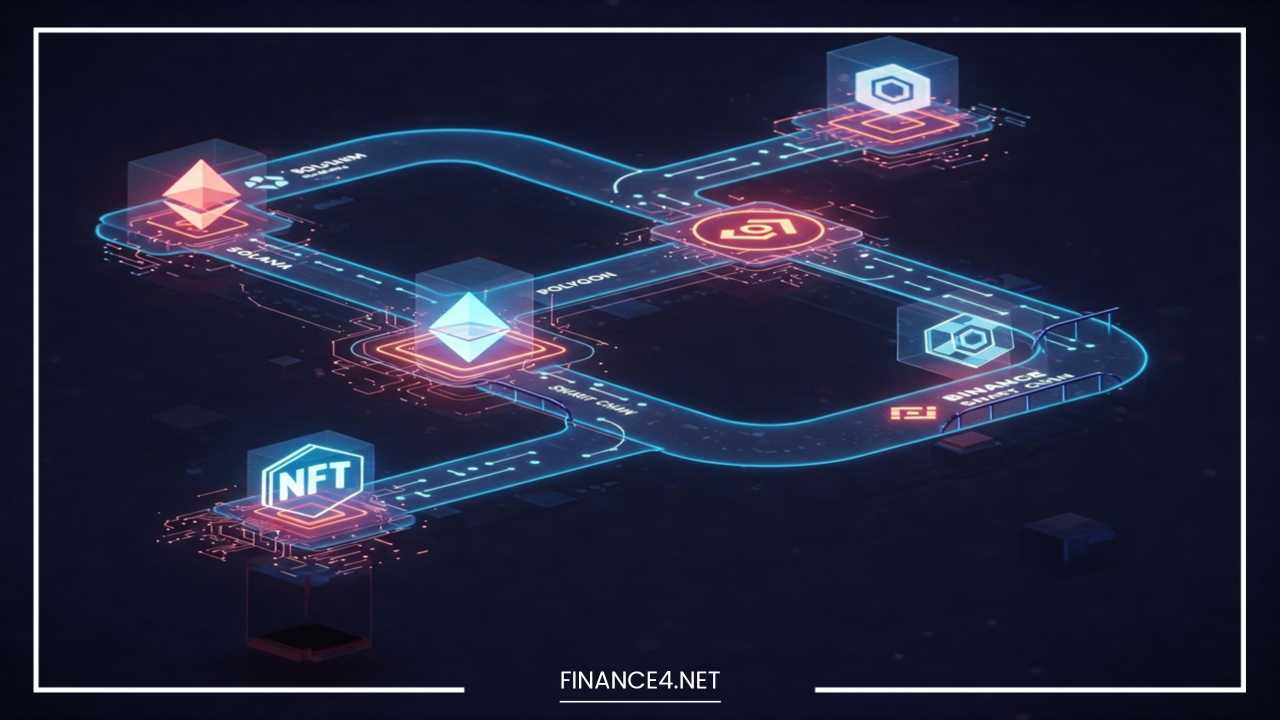
Guide to Bridging NFTs Between Chains
 by
by 
Navigating the Digital Archipelago: Your Comprehensive Guide to Bridging NFTs Between Chains
The world of Web3 is rapidly evolving beyond a single dominant blockchain. While Ethereum arguably remains the bedrock of the NFT revolution, vibrant ecosystems have sprung up on Solana, Polygon, Avalanche, Binance Smart Chain, Flow, and many others.
Each chain offers unique advantages – lower fees, faster transactions, specialized dApps, or access to specific communities and marketplaces.
This proliferation of chains, while fostering innovation, creates a significant challenge: interoperability. Assets, including your precious Non-Fungible Tokens (NFTs), are typically confined to the chain they were minted on.
This is like having a valuable collectible stored in a vault in one country but wanting to display or trade it in another, requiring a complex and secure method of transfer.
This is where NFT bridging comes in. Bridging is the process that allows you to transfer the representation or ownership rights of an NFT from one blockchain network to another. It’s a critical technology enabling a more fluid, interconnected digital asset landscape.
But unlike simply sending cryptocurrency from one exchange to another, bridging NFTs involves unique complexities due to their non-fungible nature.
This guide will delve deep into what NFT bridging is, why you might need it, how it works, the different types of bridges available, the step-by-step process, and critically, the risks involved and how to navigate them safely.
The Isolated Islands: Understanding the Need for Bridging
Imagine each blockchain as an independent island in a vast digital archipelago. Each island has its own rules, currency (native token), inhabitants (users), and unique structures (smart contracts and dApps).
Historically, there were no inherent pathways connecting these islands. An NFT minted on Ethereum simply didn’t exist on Polygon or Solana, and vice-versa.
This isolation creates several limitations for NFT holders and creators:
- Limited Liquidity and Market Access: An NFT listed on an Ethereum-centric marketplace like OpenSea is primarily accessible to users on Ethereum. If a potential buyer or a more active market exists on, say, Flow (home to NBA Top Shot), the seller on Ethereum is locked out unless they can move the NFT.
- High Transaction Costs: Minting, listing, and trading NFTs on chains with high gas fees (like Ethereum during peak times) can be prohibitively expensive. Bridging can allow users to move their NFTs to chains with lower fees for more cost-effective interactions.
- Accessing Chain-Specific Utility: Some NFTs offer utility within dApps or games specific to a particular blockchain. To participate in that ecosystem, you need your NFT on the correct chain.
- Diversification and Exploration: Users might want to explore new communities, dApps, or investment opportunities on different chains without having to sell and repurchase their assets.
- Consolidation: A collector might hold NFTs across multiple chains and wish to consolidate them onto a single chain for easier management or display.
Bridging provides the essential infrastructure to connect these isolated islands, allowing assets to flow more freely and enabling a truly multi-chain experience.
Beyond Fungibility: The Nuances of Bridging Non-Fungible Assets
Bridging fungible tokens (like ETH, BTC, or stablecoins) involves locking the original token on one chain and minting an equivalent wrapped token on another, or utilizing liquidity pools. This works because one unit of ETH is identical and interchangeable with any other unit of ETH.
NFTs are different. Each NFT is unique, possessing distinct metadata, history, and potentially individual value.
You can’t simply “wrap” a collection of identical NFTs. When you bridge an NFT, you are not transferring the exact same digital bits from one chain to another in the way you might move a file. Instead, you are transferring the representation or control of that unique digital asset.
This fundamental difference shapes the mechanisms used in NFT bridging, primarily relying on sophisticated smart contracts and often, trusted intermediaries or decentralized networks to verify the asset’s status on the source chain and facilitate its appearance on the destination chain.
How Does NFT Bridging Work? The Underlying Mechanisms
The core concept behind most NFT bridging mechanisms involves a combination of locking, burning, and minting processes orchestrated by smart contracts and supporting infrastructure like oracles and relayers. There isn’t a single universal method, but the two most common approaches are:
-
Lock and Mint (Wrapped NFTs):
- Process:
- The user initiates a bridging request via a bridge’s platform or smart contract.
- The original NFT on the source chain (Chain A) is transferred into a secure smart contract controlled by the bridge. This effectively locks the NFT, preventing it from being traded or used on Chain A.
- Information about the locked NFT (its token ID, contract address, metadata link, owner) is securely communicated to the destination chain (Chain B). This communication often involves oracle networks or decentralized relayers who verify the locking event on Chain A.
- On Chain B, the bridge’s smart contract mints a new NFT. This new NFT is typically a “wrapped” or “representative” version of the original. It points back to the original locked NFT on Chain A and carries the same metadata and properties.
- The newly minted wrapped NFT on Chain B is sent to the user’s wallet address on Chain B.
- To Move Back: To bring the NFT back to Chain A, the user initiates a request on the bridge on Chain B. The wrapped NFT on Chain B is burned (destroyed). The burning event is verified and communicated back to Chain A, triggering the release of the original NFT from the locking contract, sending it back to the user’s wallet on Chain A.
- Analogy: Imagine putting your valuable painting in a secure, trusted storage unit in one city (Chain A) and receiving a certified, identical replica in another city (Chain B) that proves you own the original. You can display or trade the replica, but the original is held safe. To get the original back, you must return the replica and prove its destruction.
- Pros: The original NFT is preserved on its native chain, maintaining its original contract address and history there. This can be important for provenance or platform compatibility on the original chain.
- Cons: The user effectively holds two representations (the locked original and the wrapped version). If the bridge’s smart contract is compromised, the locked original could be at risk. The wrapped NFT’s acceptance and utility depend on the ecosystem of Chain B recognizing and supporting the wrapped version.
- Process:
-
Burn and Mint:
- Process:
- The user initiates a bridging request.
- The original NFT on the source chain (Chain A) is sent to a burn address or a smart contract that effectively destroys the NFT, removing it from circulation on Chain A.
- The event of the NFT being burned on Chain A is verified and communicated to the destination chain (Chain B) via secure cross-chain communication channels (oracles, relayers).
- On Chain B, the bridge’s smart contract mints a completely new NFT. This new NFT has the same metadata (image, properties, name) as the original, but it is a new token on Chain B, with a different contract address and token ID.
- The newly minted NFT on Chain B is sent to the user’s wallet address on Chain B.
- To Move Back: To bring the NFT back to Chain A, the user initiates a request on the bridge on Chain B. The NFT on Chain B is burned. This burning event is verified and communicated back to Chain A, triggering the minting of a new NFT on Chain A that replicates the burned one.
- Analogy: Imagine legally destroying the certificate of ownership for your painting in one country (Chain A) and being issued a brand new, identical certificate of ownership in another country (Chain B) after verifying the destruction. To move it back, you destroy the certificate in Country B and get a new one in Country A.
- Pros: Simpler model in terms of representation (only one version exists at a time on either chain). Can sometimes result in a more “native” feel on the destination chain as it’s a new token there.
- Cons: The original NFT on the source chain is permanently destroyed, losing its original contract address, token ID, and potentially some provenance associated with that specific token instance. This might affect compatibility with some legacy platforms or specific dApps on the original chain.
- Process:
The Supporting Cast: Oracles and Relayers
Both models rely heavily on secure and reliable cross-chain communication. This is where Oracles and Relayers come in:
- Oracles: These are decentralized services or networks that provide external data to smart contracts. In bridging, they observe events on one blockchain (like an NFT being locked or burned) and securely feed that information to a smart contract on another blockchain. They act as trust-minimized reporters of facts happening on different chains.
- Relayers: These are entities (individuals, servers, decentralized networks) responsible for monitoring events on one chain and submitting transactions on another chain based on those events. They “relay” the information and execute the necessary actions (like minting or releasing an NFT) on the destination chain once the oracle has verified the event on the source chain.
The security and decentralization of the oracle and relayer networks are critical to the overall trustlessness and safety of the bridge. A compromised oracle or relayer network can lead to forged verification and potentially loss of assets.
Types of NFT Bridges: Architecture and Trust Models
NFT bridges can also be categorized based on their underlying architecture and the level of trust required from the user:
-
Centralized Bridges:
- Description: Operated by a single entity or a small, trusted group. When you bridge an NFT, you send it to a wallet or contract controlled by this central operator on the source chain. The operator then manually or semi-automatically mints or transfers the equivalent NFT on the destination chain from their own reserves or minting capabilities.
- Trust Model: Require high trust in the central operator. You are relying on them to not steal your assets, to perform the transfer promptly and correctly, and to maintain the security of their systems.
- Pros: Can be faster and simpler to use as they abstract away much of the technical complexity. May support a wider range of assets or chains quickly.
- Cons: Single point of failure. If the central entity is hacked, goes offline, or acts maliciously, assets can be lost or frozen. Goes against the decentralized ethos of blockchain.
-
Decentralized/Trustless Bridges:
- Description: Rely on distributed networks of validators, multi-party computation (MPC), or complex cryptographic proofs to verify and execute cross-chain transfers without a single point of control. The process is governed by smart contracts and the consensus mechanisms of the bridge protocol itself.
- Trust Model: Trust is distributed across the network participants and the security of the underlying cryptographic proofs and smart contracts. Requires less trust in any single entity, but more trust in the code and the decentralization of the network.
- Pros: More resilient to single points of failure. Theoretically more secure and censorship-resistant due to decentralization. Aligned with blockchain principles.
- Cons: Can be more complex to build and use. Often involve higher transaction fees (to pay validators/network participants). Development is ongoing, and vulnerabilities can still exist in smart contracts or consensus mechanisms. Performance can sometimes be slower than centralized options.
-
Specific Protocol Bridges: Some blockchain protocols are designed with interoperability in mind (e.g., Polkadot, Cosmos) or have developed specific standards and bridges to connect their ecosystem (e.g., bridges between Ethereum L2s and L1). These often use custom mechanisms optimized for their specific architecture.
-
Marketplace Integrated Bridges: Some large NFT marketplaces offer built-in bridging features, allowing users to move NFTs between chains supported by the platform directly within the marketplace interface. These might utilize their own bridging technology or integrate with third-party bridge protocols.
The Bridging Process: A Step-by-Step Walkthrough
While the exact steps can vary slightly depending on the bridge and the chains involved, the general process for bridging an NFT usually follows these stages:
- Choose Your Bridge: This is the most critical first step. Research different bridges that support the source and destination chains you need. Consider their reputation, security audits, fees, speed, and user interface. Look for bridges specifically designed for NFTs, as general token bridges may not be compatible.
- Connect Your Wallets: Access the bridge’s website or application. You will typically need to connect your Web3 wallet (like MetaMask, Phantom, etc.) to the platform. Ensure your wallet is set to the source chain first. You may also need to connect a separate wallet instance or configure your existing wallet for the destination chain. Double-check that both wallets are connected correctly and control the addresses where your NFT currently resides and where you want it to arrive.
- Select the NFT to Bridge: The bridge interface should display the NFTs in your connected wallet on the source chain that are eligible for bridging. Select the specific NFT you wish to transfer. Some bridges might only support specific NFT collections initially.
- Specify Destination Chain and Address: Clearly indicate the blockchain network you want to bridge your NFT to. Confirm the destination wallet address. Crucially, ensure this is an address you control on the destination chain. Sending to an incorrect address on another chain will likely result in permanent loss of your asset.
- Review Transaction Details and Fees: The bridge will provide a summary of the transaction, including the NFT being bridged, the source and destination chains, and the associated fees. Fees can include:
- Gas Fees: For transactions on both the source and destination chains (locking/burning on source, minting/transferring on destination). These vary based on network congestion.
- Bridge Fees: A service fee charged by the bridge protocol or operator for facilitating the transfer. This might be a percentage of the NFT’s value (though less common for NFTs) or a fixed fee.
- Relayer/Oracle Fees: Costs associated with the infrastructure that verifies and relays the transaction across chains.
- Review these fees carefully as they can sometimes be significant, especially for lower-value NFTs.
- Approve the Transaction: Before the bridge can interact with your NFT, you need to grant permission via your wallet. This usually involves an “approve” transaction, authorizing the bridge’s smart contract to interact with the specific NFT contract or the specific token ID you are bridging. This also incurs a gas fee.
- Initiate the Bridging Process: Once approval is granted, you will confirm the main bridging transaction. This sends your NFT to the bridge’s smart contract (for locking/burning) on the source chain. This also incurs a gas fee.
- Wait for Confirmation and Cross-Chain Verification: This is often the longest part of the process. The transaction on the source chain needs to be confirmed by the network. Then, the bridge’s off-chain infrastructure (oracles, relayers, validators) must detect and verify this event. This verification process can take minutes or even longer, depending on the bridge’s design and network conditions.
- Receive the NFT on the Destination Chain: Once the cross-chain verification is complete, the bridge’s smart contract on the destination chain will be triggered to mint or release the NFT. This transaction is executed on the destination chain and requires gas fees there. Once this transaction is confirmed, the bridged (wrapped or new) NFT will appear in your wallet on the destination chain.
- Verify the Bridged NFT: Check your wallet and potentially a block explorer on the destination chain to confirm you have received the NFT. Compare its details (metadata, image) to the original. If it’s a wrapped NFT, check the bridge’s interface to confirm it’s correctly linked to the locked original.
Risks and Challenges of NFT Bridging: Proceed with Caution
While incredibly useful, NFT bridging is not without significant risks. The complexity of interacting with multiple blockchains and relying on intermediary protocols introduces potential vulnerabilities. It is paramount to understand these risks before attempting to bridge your valuable assets:
- Smart Contract Risk: Bridges are powered by smart contracts. Bugs, vulnerabilities, or exploits in these contracts can lead to assets being permanently locked, stolen, or incorrectly transferred. Historically, bridge hacks have been one of the largest sources of losses in the crypto space.
- Bridge Security and Hacks: The infrastructure supporting the bridge (oracles, relayers, validators) is a prime target for attackers. If this infrastructure is compromised, attackers could potentially forge cross-chain messages, allowing them to mint unauthorized NFTs or unlock locked assets. Centralized bridges face the risk of their central entity being hacked.
- Trust Assumptions: Even “decentralized” bridges may have trust assumptions. Understand the bridge’s architecture: Are you trusting a set of validators? A multi-sig wallet with a few key holders? A specific oracle network? Research the reputation and security practices of the team and network behind the bridge.
- Loss of Originality/Provenance (Burn and Mint): With the “Burn and Mint” model, your original NFT on the source chain is destroyed. While a new, identical one is created, some collectors or platforms may value the provenance and history tied to the original token ID and contract address on the native chain. Bridging via burn/mint permanently severs this link.
- NFT Compatibility Issues: Not all NFTs are designed to be easily bridged. Complex NFTs with integrated utility (like staking, in-game items with dynamic properties) might lose some or all of their functionality when bridged to another chain, especially if the destination chain’s ecosystem doesn’t support the original contract’s features. Wrapped NFTs might not be recognized by all dApps or marketplaces on the destination chain.
- Liquidity and Marketplace Support: Just because you can bridge an NFT to a new chain doesn’t guarantee there’s a market or demand for it there. Research the marketplaces and communities on the destination chain before bridging, especially if your goal is to sell.
- Transaction Costs and Slippage: While bridging might enable lower fees for subsequent interactions on the destination chain, the bridging process itself can be expensive due to gas fees on both chains and bridge service fees. Be aware of the total cost before initiating a transfer.
- Transaction Failure and Recovery: Bridging is a multi-step process involving multiple chains and off-chain components. Transactions can fail at various stages due to network congestion, smart contract errors, or oracle issues. Recovering assets from a failed or stuck bridging transaction can be complex, time-consuming, and sometimes impossible without robust bridge support.
- Regulatory Uncertainty: The regulatory landscape for crypto and NFTs is still evolving. Bridging adds another layer of complexity that regulators are still grappling with. Future regulations could potentially impact the legality or functionality of certain bridges.
- User Error: Sending NFTs to the wrong chain, an incorrect address, or misunderstanding the bridge’s interface are common user errors that can lead to irreversible loss of assets. Double-check everything before confirming transactions.
Choosing the Right NFT Bridge: Due Diligence is Key
Given the risks, selecting a reliable and secure NFT bridge is paramount. Here are key factors to consider:
- Security Track Record and Audits: Research the bridge’s history. Have there been previous exploits or security incidents? Have their smart contracts been audited by reputable third-party security firms? Look for publicly available audit reports.
- Supported Chains and NFT Compatibility: Ensure the bridge supports both the source and destination chains you need. Verify that it supports the specific NFT collection you intend to bridge. Some bridges are universal, while others specialize in certain chains or types of assets.
- Mechanism (Lock/Mint vs. Burn/Mint): Understand how the bridge works and the implications for your NFT’s provenance. Decide if preserving the original token ID is important to you.
- Fees: Compare the total cost of bridging across different platforms, including gas and service fees.
- Speed and Reliability: Look for user reviews or bridge statistics regarding typical transaction times and success rates.
- User Interface and Ease of Use: A clear, intuitive interface reduces the risk of user error.
- Decentralization Level: Assess the bridge’s architecture. Is it truly decentralized, or does it rely on centralized components? Understand the trust assumptions.
- Team and Reputation: Who is behind the bridge? Do they have a known and reputable team? Is there active development and community support?
- Insurance or Recovery Mechanisms: Some bridges are exploring insurance pools or shared security models to cover potential losses, though this is still relatively new in the NFT bridging space.
- Community Feedback: Look for discussions and reviews in crypto communities (Twitter, Discord, Reddit) regarding user experiences with specific bridges.
The Future of NFT Bridging and Interoperability
The current state of NFT bridging, while functional, is often fragmented and carries significant risk. However, the demand for cross-chain interoperability is only growing. The future of NFT bridging is likely to see:
- More Seamless User Experiences: Abstraction of the underlying complexities, making bridging feel more like a native transfer.
- Improved Security Models: Development of more robust decentralized security mechanisms, perhaps involving advanced cryptography (like zero-knowledge proofs) or shared security protocols across multiple chains.
- Standardization: Emergence of industry standards for cross-chain NFT representations and communication protocols, making assets more universally compatible.
- Native Cross-Chain Assets: Protocols are being developed (e.g., LayerZero, Wormhole’s vision for xApps) that aim to enable assets to exist and be controlled natively across multiple chains without needing traditional lock-and-mint or burn-and-mint bridges. This is a complex challenge but represents a significant step towards true interoperability.
- Increased Bridge Aggregators: Platforms that allow users to find the best bridge for their needs across different protocols, comparing fees, speed, and security.
Final Thoughts: Bridging the Gap, One NFT at a Time
NFT bridging is a powerful capability that unlocks new possibilities for digital asset holders and creators in a multi-chain world. It allows for greater liquidity, access to diverse ecosystems, and the potential for reduced transaction costs.
However, the technology is still relatively nascent and carries substantial risks, particularly related to security and smart contract vulnerabilities.
Approaching NFT bridging requires careful research, due diligence, and a thorough understanding of the process and the potential pitfalls.
Before you bridge your valuable NFTs, take the time to:
- Understand the “Why”: Be clear on your goal for bridging.
- Research the “How”: Familiarize yourself with the different mechanisms and their implications.
- Vet the “Who”: Choose a reputable bridge with a strong security track record and audits.
- Mind the “Risks”: Be acutely aware of the potential for loss and the trust assumptions involved.
- Double-Check Everything: Pay meticulous attention during the bridging process to avoid user errors.
As the Web3 space matures, the technology behind NFT bridging will undoubtedly become more secure, efficient, and user-friendly.
But for now, navigating the digital archipelago with your NFTs requires caution, knowledge, and a healthy respect for the sea of possibilities and perils that lie between the chains. Bridge wisely.