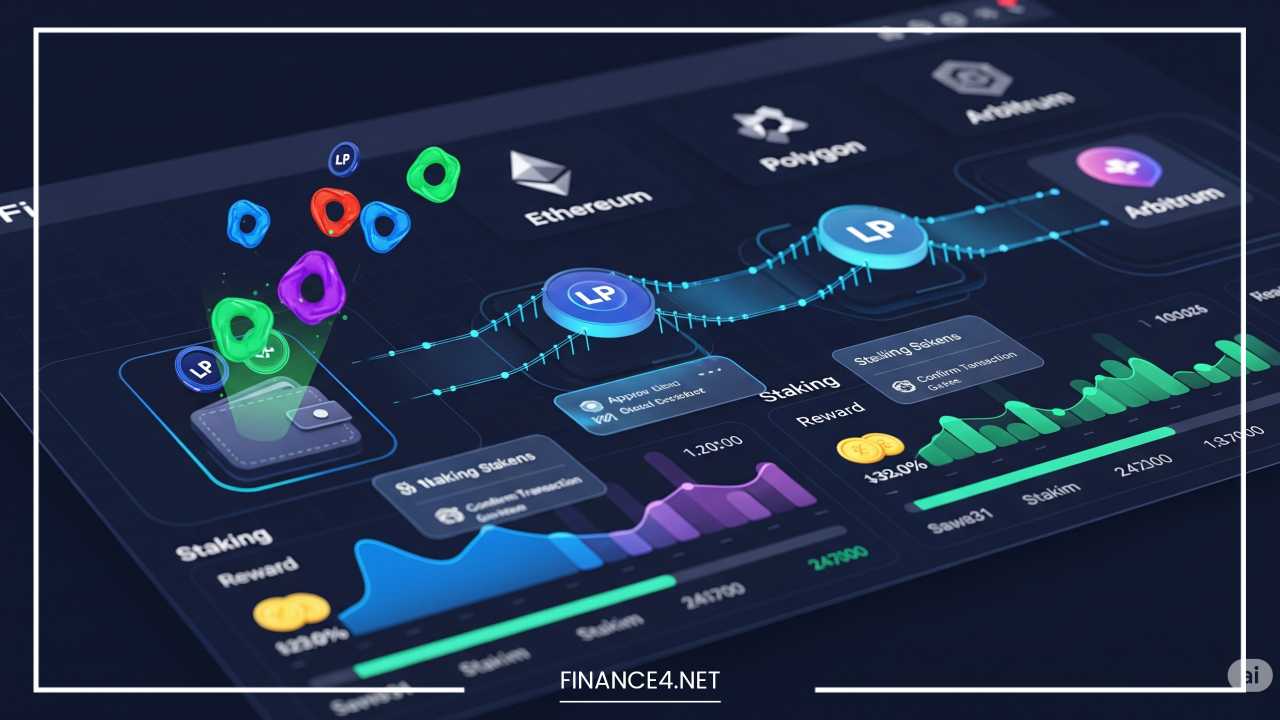
How to Stake in a Multi-Chain Aggregator Vault
 by
by 
How to Stake in a Multi-Chain Aggregator Vault
The decentralized finance (DeFi) landscape has revolutionized the way individuals interact with financial services, offering unprecedented opportunities for earning passive income. At the heart of this revolution lies staking, a mechanism that allows users to lock up their cryptocurrency to support blockchain networks and, in return, earn rewards. As the DeFi ecosystem expands across numerous blockchains, the complexity of navigating these diverse environments grows. This is where multi-chain aggregator vaults emerge as powerful tools, simplifying the process and maximizing returns for users.
This article aims to be a comprehensive guide, walking you through the intricacies of staking in a multi-chain aggregator vault. We will delve into what these innovative platforms are, explore the benefits they offer, differentiate between staking and yield farming, and provide a step-by-step guide to get you started. Furthermore, we’ll discuss critical considerations before you stake and present strategies to maximize your returns, ultimately offering a glimpse into the exciting future of multi-chain aggregation in Web3.
What is a Multi-Chain Aggregator Vault?
A multi-chain aggregator vault is a sophisticated DeFi protocol designed to optimize returns by automatically deploying users’ assets across various yield-generating opportunities on multiple blockchain networks. Essentially, it acts as a smart contract-driven intermediary, pooling user funds and strategically allocating them to different decentralized applications (dApps) and protocols, such as lending platforms, liquidity pools, and staking mechanisms, wherever the highest yields are available. The “multi-chain” aspect signifies its ability to operate across different blockchain ecosystems (e.g., Ethereum, Binance Smart Chain, Polygon, Avalanche, etc.), seamlessly moving assets to capitalize on the best opportunities regardless of the underlying chain.
The core operation of a multi-chain aggregator vault involves:
- Fund Aggregation: Users deposit their tokens (often stablecoins or major cryptocurrencies) into the vault.
- Strategy Execution: The vault’s smart contracts execute pre-programmed strategies to find and participate in the highest-yielding DeFi protocols across various supported blockchains. This might involve lending assets on one chain, providing liquidity on another, or staking tokens on yet another.
- Yield Optimization: The vault continuously monitors interest rates, gas fees, and other market conditions across integrated protocols and chains. It automatically rebalances and shifts funds to maintain optimal returns, removing the need for users to manually track and move their assets.
- Reward Distribution: The earned yields, after deducting platform fees, are distributed proportionally to the vault participants.
The benefits of utilizing a multi-chain aggregator vault are significant:
- Increased Liquidity: By pooling funds, these vaults can access larger liquidity pools across various chains, enabling more efficient trades and higher capacity for yield generation.
- Access to More Assets and Opportunities: Users gain exposure to a wider array of assets and DeFi protocols that might be exclusive to certain blockchains, without having to bridge assets manually or manage multiple wallets on different chains.
- Higher Yield Opportunities: The primary draw of these vaults is their ability to dynamically seek out and capitalize on the highest Annual Percentage Yields (APYs) available across the multi-chain landscape. This automated optimization often outperforms what individual users could achieve on their own.
- Diversification: Spreading investments across various protocols and chains inherent in the vault’s strategy helps to mitigate risks associated with a single protocol failure or market downturn on a specific blockchain.
- Reduced Gas Fees: By batching transactions and optimizing routes, some aggregators can help reduce the impact of high gas fees, especially on congested networks like Ethereum, by distributing the cost among multiple users.
- Simplicity and Automation: The complexity of managing multiple DeFi positions across different chains is abstracted away, offering a streamlined, “set-and-forget” approach for users.
Examples of prominent multi-chain aggregator platforms include Yearn Finance, one of the pioneers in yield aggregation, which offers various “vaults” that deploy assets to different lending and liquidity protocols. Other notable aggregators like 1inch (primarily a DEX aggregator that also offers yield farming opportunities), ParaSwap, and Zapper (a DeFi portfolio manager with integrated yield opportunities) exemplify how these platforms consolidate assets and liquidity across diverse chains to provide optimized services.
Understanding Staking and Yield Farming
To fully grasp the mechanics of multi-chain aggregator vaults, it’s crucial to understand the fundamental concepts of staking and yield farming, as these are the primary activities the vaults engage in to generate returns.
Staking Explained
Staking, in its simplest form, involves locking up a certain amount of cryptocurrency in a wallet or a smart contract to support the operations of a blockchain network. This mechanism is most commonly associated with Proof-of-Stake (PoS) consensus mechanisms, where token holders “stake” their tokens to become validators or delegate their tokens to validators. Validators are responsible for verifying transactions, creating new blocks, and maintaining the security and integrity of the blockchain. In return for their participation and contribution to network security, stakers receive rewards, typically in the form of newly minted tokens or transaction fees.
The role of staking in the DeFi ecosystem is multifaceted:
- Network Security: Staking incentivizes token holders to act honestly and secure the network, as malicious behavior can result in the loss of their staked assets (slashing).
- Decentralization: By distributing the power of validation among many stakers, PoS aims to achieve greater decentralization compared to Proof-of-Work (PoW) systems (like Bitcoin’s mining).
- Passive Income: For individual users, staking offers a way to earn passive income on their crypto holdings without actively trading.
Yield Farming vs. Staking
While often used interchangeably, staking and yield farming have distinct characteristics:
- Staking: Primarily focuses on locking up tokens to secure a blockchain network (PoS) or to gain governance rights within a protocol. Rewards are typically generated directly from the protocol or network for participation.
- Yield Farming: A broader term referring to the practice of leveraging various DeFi protocols to earn the highest possible returns on cryptocurrency holdings. This often involves providing liquidity to decentralized exchanges (DEXs) or lending protocols, and in return, receiving a portion of the trading fees or interest, along with additional governance tokens as incentives (known as “liquidity mining”).
Multi-chain aggregator vaults can incorporate both staking and yield farming strategies. For instance, a vault might stake a portion of its pooled assets on a PoS blockchain for network rewards, while simultaneously deploying another portion to a liquidity pool on a DEX for yield farming rewards. The aggregator’s intelligence lies in identifying the most profitable combination of these strategies across different chains.
Rewards and Risks
The allure of staking and yield farming lies in the potential rewards:
- Staking Tokens: Earning more of the staked cryptocurrency.
- Governance Tokens: Receiving tokens that grant voting rights in the decentralized autonomous organization (DAO) governing the protocol. These tokens can also have monetary value.
- Passive Income: A consistent stream of returns on your crypto assets.
However, these opportunities come with inherent risks:
- Impermanent Loss (IL): A significant risk primarily associated with providing liquidity for yield farming. IL occurs when the price ratio of the tokens you deposited into a liquidity pool changes from when you initially deposited them. If one token significantly outperforms the other, you may end up with a lower dollar value of assets than if you had simply held the tokens outside the pool. Aggregator vaults attempt to mitigate this through dynamic rebalancing and sophisticated strategies, but it’s not entirely eliminated.
- Smart Contract Vulnerabilities: DeFi protocols, including aggregator vaults, are built on smart contracts. Bugs, exploits, or hacks in these contracts can lead to the loss of user funds. It’s crucial to choose platforms that have undergone rigorous security audits.
- Platform Risk: The risk associated with the specific platform itself, including its operational stability, team integrity, and potential for mismanagement or “rug pulls” (where developers abandon a project and steal user funds).
- Market Volatility: The value of your staked or farmed assets can fluctuate significantly with market conditions, impacting the overall dollar value of your returns.
- Liquidity Risk: Some staking or farming protocols might have lock-up periods, meaning your funds are inaccessible for a certain duration, or there might be insufficient liquidity to withdraw your assets quickly.
Step-by-Step Guide on How to Stake in a Multi-Chain Aggregator Vault
Staking in a multi-chain aggregator vault, while conceptually complex, is made relatively straightforward by the platforms themselves. Here’s a step-by-step guide to help you navigate the process:
1. Prerequisites
Before you begin, ensure you have the following:
- A Compatible Cryptocurrency Wallet: MetaMask is the most widely used and recommended wallet for interacting with DeFi protocols on various EVM-compatible chains (Ethereum, Polygon, BSC, Avalanche, etc.). Other popular options include Trust Wallet, Coinbase Wallet, or hardware wallets like Ledger or Trezor (which integrate with MetaMask).
- Some Basic Cryptocurrency: You’ll need cryptocurrency to deposit into the vault. This could be stablecoins (like USDT, USDC, DAI) for lower volatility or other major cryptocurrencies (like ETH, BTCB, BNB) depending on the vault’s supported assets. Ensure you have enough of the native token of the blockchain you are starting on to cover initial gas fees (e.g., ETH for Ethereum, MATIC for Polygon, BNB for Binance Smart Chain).
- Understanding of Gas Fees: Gas fees are transaction costs on blockchain networks. They vary significantly depending on network congestion and the complexity of the transaction. Be prepared for these fees, especially on Ethereum, which can be high.
2. Choosing a Platform
This is a critical step. Research is paramount. Consider the following factors:
- Supported Chains: Does the aggregator support the blockchains where you hold your assets or where you wish to participate?
- APYs (Annual Percentage Yields): While high APYs are attractive, don’t solely chase the highest number. Evaluate if the APY is sustainable and understand the underlying strategies generating it.
- Security and Audits: Only use platforms that have undergone multiple, reputable smart contract audits. Look for public audit reports. Community trust and a proven track record are also strong indicators.
- Reputation and Community: A strong, active community and positive reputation often signify a reliable platform.
- Fees: Understand the platform’s fee structure (management fees, performance fees, withdrawal fees).
- User Interface (UI): A user-friendly interface makes the process smoother.
Examples of platforms to explore include Yearn Finance (for comprehensive yield aggregation) and potentially integrated features within DEX aggregators like 1inch or portfolio managers like Zapper, which might offer direct staking or vault access.
3. Connecting Your Wallet
Once you’ve chosen a platform:
- Visit the Official Website: Always double-check the URL to ensure you are on the legitimate platform and not a phishing site.
- Click “Connect Wallet”: This button is usually prominently displayed on the top right corner of the website.
- Select Your Wallet: Choose your preferred wallet (e.g., MetaMask). Your wallet will prompt you to connect.
- Approve Connection: Confirm the connection request in your wallet. The platform will then display your wallet address and balance.
- Switch Networks (if necessary): If the vault you want to use is on a different blockchain than your current wallet network, the platform or your wallet might prompt you to switch. For example, if you’re on Ethereum and want to use a Polygon vault, you’ll need to switch your MetaMask to the Polygon network.
4. Selecting the Vault
- Browse Vaults/Strategies: The platform will typically have a section dedicated to different vaults or yield strategies.
- Understand Vault Details: Click on a vault to view its details. This will include:
- Supported Assets: Which tokens can be deposited.
- APY/APR: The estimated annual return.Underlying Protocols/Strategies: Where the vault is deploying funds (e.g., Aave, Compound, Curve, Uniswap).
- Risk Level: Some platforms provide a risk assessment.
- Fees: Any specific fees associated with that vault.
- Total Value Locked (TVL): A higher TVL often indicates more trust and liquidity.
5. Deposit Process
Once you’ve chosen a vault:
- Enter Deposit Amount: Specify the amount of the supported token you wish to deposit.
- Approve Token (First Time Only): For your first deposit of a particular token into a smart contract, you will need to “approve” the contract to spend your tokens. This is a separate transaction and will incur a small gas fee. This is a security measure.
- Confirm Deposit: After approval, click the “Deposit” or “Stake” button.
- Confirm Transaction in Wallet: Your wallet will pop up, asking you to confirm the transaction and showing the estimated gas fee. Review the details carefully.
- Adjust Gas Fees (Optional but Recommended): On some networks, especially Ethereum, you might be able to manually adjust the gas price (Gwei) to potentially save on fees, but setting it too low can result in a failed or pending transaction. Most wallets offer “Slow,” “Average,” and “Fast” options. For critical transactions, “Average” or “Fast” is usually recommended.
6. Understanding Gas Fees
Gas fees are a crucial aspect of interacting with blockchain networks. They are payments made by users to compensate for the computational power required to process and validate transactions.
- Ethereum: Known for its often-high and volatile gas fees due to network congestion. Tools like Etherscan’s Gas Tracker can help you monitor current gas prices.
- Layer 2 Solutions (e.g., Polygon, Arbitrum, Optimism): These networks are designed to offer significantly lower gas fees and faster transactions compared to Ethereum mainnet. Multi-chain aggregators leverage these for cost-efficiency.
- Other Blockchains (e.g., Binance Smart Chain, Avalanche): Generally have much lower gas fees than Ethereum.
To minimize gas fees, consider:
- Transacting during off-peak hours: When network congestion is lower.
- Utilizing Layer 2 solutions: If the platform supports them, as they offer much cheaper transactions.
- Batching transactions: While aggregator vaults handle this for you, understanding its benefit is important.
7. Confirming the Transaction
- Transaction Hash: After confirming in your wallet, the platform will usually provide a transaction hash (TxID).
- Block Explorer: You can copy this hash and paste it into a block explorer for the relevant blockchain (e.g., Etherscan for Ethereum, PolygonScan for Polygon, BSCScan for Binance Smart Chain) to monitor the transaction’s status. It will show as “pending” until confirmed.
- Confirmation: Once confirmed, your funds will be in the vault, and you will start earning rewards.
8. Monitoring Staking Rewards
- Platform Dashboard: Multi-chain aggregator platforms typically have a dashboard where you can track your deposited assets, accumulated rewards, and overall performance.
- Claiming Rewards: Some vaults automatically compound rewards back into the vault, while others require you to manually claim them. Be aware of any claim fees.
- Tracking Performance: Regularly check the APY and the performance of the vault. Market conditions can change rapidly, affecting returns.
Key Considerations Before Staking
Before committing your funds to a multi-chain aggregator vault, it’s imperative to conduct thorough due diligence and understand the associated risks.
1. APY vs. Risk
The Annual Percentage Yield (APY) displayed by a vault is a projection and not a guarantee. It’s crucial to understand that higher APYs often correlate with higher risks. A vault promising exorbitant returns might be employing highly aggressive strategies or be susceptible to greater market volatility. Always look beyond the headline APY and investigate:
- Source of Yield: How are the returns being generated? Is it from lending interest, trading fees, or newly minted tokens?
- Underlying Protocols: What protocols is the vault interacting with? Research their security and track record.
- Historical Performance: While past performance doesn’t guarantee future results, it can offer insights into the vault’s stability and consistency.
2. Impermanent Loss (IL)
As mentioned, Impermanent Loss is a significant concern for liquidity providers. While multi-chain aggregator vaults aim to mitigate IL through dynamic rebalancing and sophisticated strategies, they cannot eliminate it entirely. If the vault is heavily involved in providing liquidity to volatile token pairs, you are exposed to this risk. Understand that if the relative prices of the assets in the liquidity pool diverge significantly, you may withdraw less value in dollar terms than you initially deposited, even if you earned staking rewards. Staking stablecoins in liquidity pools can reduce IL risk, but it’s not zero (e.g., if a stablecoin de-pegs).
3. Smart Contract Risks
DeFi operates on smart contracts, which are lines of code. Any flaw, bug, or vulnerability in these contracts can be exploited by malicious actors, leading to the loss of all funds within the contract. This is arguably the most significant risk in DeFi. To mitigate this:
- Audits: Prioritize platforms that have been audited by multiple reputable third-party security firms (e.g., CertiK, PeckShield, ConsenSys Diligence). Look for public audit reports and check for any critical findings that were not remediated.
- Bug Bounties: Projects that offer bug bounties demonstrate a commitment to security by incentivizing ethical hackers to find and report vulnerabilities.
- Decentralization: While aggregators pool funds, the more decentralized the underlying protocols they interact with, the less reliant they are on a single point of failure.
4. Lock-up Periods and Fees
Before depositing, ascertain if the chosen vault has any lock-up periods. Some staking or vault protocols require your assets to be locked for a specific duration, during which you cannot withdraw them without penalty. This can impact your liquidity if you need access to your funds quickly.
Also, be aware of all fees involved:
- Deposit Fees: A small fee charged upon depositing into the vault.
- Withdrawal Fees: A fee charged when you take your assets out of the vault.
- Management Fees: An annual fee on the total assets managed by the vault.
- Performance Fees: A percentage of the profits generated by the vault.
These fees can significantly impact your net returns, so always factor them into your calculations.
Strategies for Maximizing Returns
While multi-chain aggregator vaults automate yield optimization, there are still strategies you can employ to further maximize your returns and manage risk effectively.
1. Asset Diversification
Don’t put all your eggs in one basket. Instead of staking all your capital in a single vault or token, consider diversifying your assets across:
- Multiple Vaults: Even on the same platform, different vaults employ different strategies and may have varying risk profiles.
- Different Multi-Chain Aggregators: Spreading your funds across several reputable aggregators can reduce platform-specific risk.
- Various Asset Types: While stablecoins offer stability, allocating a portion to blue-chip cryptocurrencies (ETH, BNB) in vaults that utilize them can offer higher potential growth, albeit with increased volatility.
2. Reinvesting Rewards (Compounding)
Many multi-chain aggregator vaults automatically compound your rewards, reinvesting them back into the vault to generate even more returns. This is a powerful strategy for maximizing long-term gains, similar to compound interest in traditional finance. If a vault doesn’t auto-compound, consider regularly claiming and re-depositing your rewards (mindful of gas fees) to leverage this effect.
3. Exploring Cross-Chain Opportunities
The very nature of multi-chain aggregators is to leverage opportunities across different blockchains. For savvy users, this means actively looking for new chains gaining traction or existing chains offering temporary high incentives. While the aggregator handles the movement, understanding the broader landscape of cross-chain DeFi can help you identify aggregators that are best positioned to capture these opportunities. Look for vaults that are agile in shifting strategies to capitalize on emerging high-yield farms on new chains.
4. Choosing Stablecoins for Predictable Returns
For users with a lower risk tolerance, staking stablecoins (e.g., USDT, USDC, DAI, BUSD) in multi-chain aggregator vaults can provide more predictable and less volatile returns. While the APY might be lower than highly volatile asset pairs, stablecoins mitigate impermanent loss and protect your principal from significant market downturns, offering a more conservative approach to passive income.
5. Risk Management
Beyond diversification, active risk management is crucial:
- Understand Your Risk Tolerance: Don’t invest more than you can afford to lose. DeFi is still a nascent and high-risk environment.
- Stay Informed: Keep abreast of news and developments related to the platforms and protocols you are using. Monitor market conditions and potential exploits.
- Set Stop-Loss Limits (Conceptually): While you can’t set traditional stop-loss orders in a vault, conceptually, have a predefined point at which you would withdraw your funds if market conditions or platform performance deteriorate.
- Consider DeFi Insurance: Some platforms (like Nexus Mutual) offer decentralized insurance for smart contract exploits. While not foolproof, this can provide an additional layer of protection for a fee.
- Regularly Review Performance: Don’t just set it and forget it for months. Periodically check the performance of your chosen vault, the underlying strategies, and the overall market sentiment.
Future of Multi-Chain Aggregator Vaults
The evolution of multi-chain aggregator vaults is intrinsically linked to the broader advancement of the DeFi ecosystem and the ongoing quest for greater interoperability and scalability within Web3.
1. Evolution of Multi-Chain Aggregation
The importance of multi-chain aggregators is set to grow exponentially. As more Layer 1 blockchains and Layer 2 scaling solutions emerge, the DeFi landscape becomes increasingly fragmented. Aggregators will become indispensable tools for users seeking to navigate this complexity, offering a unified access point to optimize yields across a multitude of chains. They will continue to evolve from simple yield optimizers to more sophisticated financial instruments, potentially incorporating advanced risk management features and personalized investment strategies.
2. Technological Innovations
Future developments will likely focus on enhancing several key areas:
- True Interoperability: Seamless cross-chain communication and asset transfers without the need for cumbersome bridging solutions will further empower aggregators to move funds with greater efficiency and lower cost. Protocols like LayerZero and Chainlink’s Cross-Chain Interoperability Protocol (CCIP) are paving the way for this.
- Scalability Solutions: Continued advancements in Layer 2 technologies and alternative Layer 1s will drive down transaction costs and increase transaction throughput, making multi-chain staking more accessible and profitable for a wider range of users, regardless of capital size.
- AI and Machine Learning Integration: We may see the integration of AI and machine learning algorithms to predict optimal yield strategies, anticipate market shifts, and dynamically adjust vault allocations with even greater precision, moving beyond pre-programmed strategies.
- Enhanced User Experience: As the technology matures, user interfaces will become even more intuitive, onboarding new users to DeFi staking with minimal friction.
3. The Role of Staking in Web3
Staking is poised to play an even more significant role in the future of Web3 and decentralized finance. Beyond merely securing PoS networks, staking will likely expand to encompass:
- Decentralized Identity (DID): Staking tokens to secure your digital identity and data sovereignty.
- Decentralized Autonomous Organizations (DAOs): Staking for enhanced governance participation and voting power in increasingly complex decentralized organizations.
- Gaming and Metaverse Economies: Staking in-game assets or virtual land to earn rewards within decentralized virtual worlds.
- Content Creation and Curation: Staking tokens to incentivize quality content and curation in decentralized social media and content platforms.
Multi-chain aggregator vaults, by providing efficient and optimized access to these diverse staking opportunities, will be at the forefront of enabling users to participate in and benefit from the burgeoning Web3 economy. They will continue to democratize access to sophisticated DeFi strategies, allowing individuals to earn passive income and contribute to the security and growth of decentralized networks.
Final Thoughts
Staking in a multi-chain aggregator vault represents a powerful evolution in decentralized finance, offering users a streamlined and optimized approach to earning passive income across diverse blockchain ecosystems. We’ve explored the core concept of these vaults as intelligent fund managers, dynamically deploying assets to the highest-yielding opportunities while abstracting away much of the underlying complexity.
To recap, the process involves selecting a reputable platform, connecting your crypto wallet, choosing a suitable vault, depositing your desired assets (after approving the token), confirming the transaction with an awareness of gas fees, and then monitoring your growing rewards. However, it is paramount to approach this with caution and informed decision-making. Always prioritize security by opting for audited platforms, understand the potential impact of impermanent loss, and be fully aware of any lock-up periods or associated fees.
To maximize your returns and mitigate risks, consider diversifying your assets across different vaults, consistently reinvesting your rewards to leverage the power of compounding, actively exploring new cross-chain opportunities, and opting for stablecoins for more predictable returns if stability is your priority. Remember that risk management is an ongoing process, requiring continuous research and vigilance.
The future of multi-chain aggregator vaults is bright, promising increased interoperability, technological innovations, and a central role in the expanding Web3 landscape. They are set to empower even more individuals to participate in decentralized finance and contribute to the robust security of blockchain networks.
As you embark on your staking journey in a multi-chain aggregator vault, remember that knowledge is your most valuable asset. Research platforms thoroughly, evaluate the risks meticulously, and stay informed about the ever-evolving DeFi space. Your diligent approach will undoubtedly pave the way for a more rewarding and secure experience in the world of decentralized finance. Now, take action and explore the possibilities that multi-chain aggregation offers for your crypto portfolio!