NFT-Based Loot Boxes with On-Chain RNG
 by
by 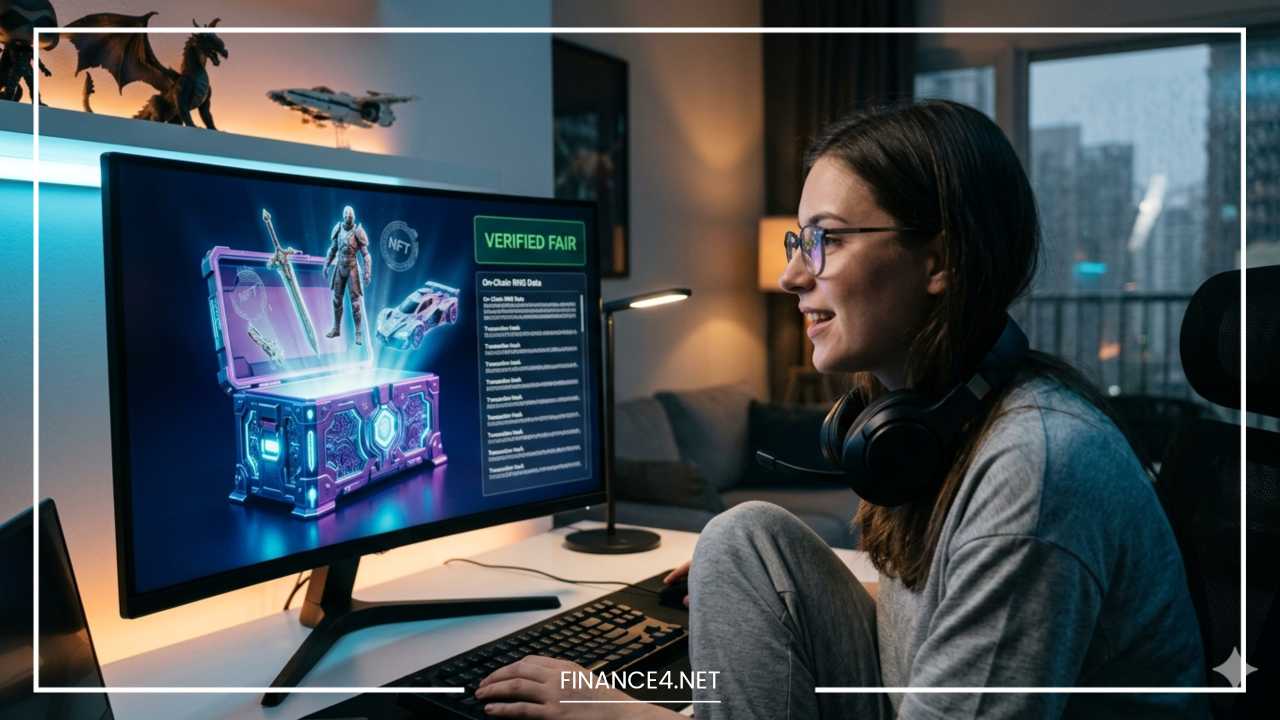
NFT-Based Loot Boxes with On-Chain RNG: The Future of Transparent Digital Rewards
The intersection of blockchain technology and the global gaming industry has birthed a new paradigm for digital assets: the Non-Fungible Token (NFT). While NFTs initially gained mainstream attention through high-profile digital art sales, their most profound utility lies in their ability to represent unique, verifiable, and tradable in-game assets. As the “Play-to-Earn” and “Play-and-Earn” models evolve, developers are increasingly looking toward sophisticated distribution mechanisms to engage players and sustain in-game economies. Among these, the loot box—a randomized reward container—remains one of the most effective, albeit controversial, tools in a game designer’s arsenal.
Traditionally, loot boxes have been shrouded in opacity. Players purchase a “crate,” “pack,” or “chest” with the hope of receiving a rare item, yet they must rely entirely on the developer’s word regarding the actual probability of success. This lack of transparency has led to significant global controversies, ranging from accusations of predatory monetization to full-scale regulatory bans in countries like Belgium and the Netherlands. The fundamental issue is a breakdown of trust; without access to the underlying code, a player cannot distinguish a fair game of chance from a rigged system designed to maximize “whale” spending.
Enter the NFT-based loot box powered by on-chain Random Number Generation (RNG). By moving the logic of chance and the assets themselves onto a public ledger, developers can offer a system that is provably fair, immutable, and truly owned by the player. This transformation turns a “black box” mechanic into an open, auditable economy. This article explores the technical architecture, psychological implications, and systemic advantages of combining NFTs with on-chain randomness, providing a comprehensive guide to how this synergy transforms digital rewards from a matter of faith into a matter of math.
Background Concepts
1. NFTs and Their Role in Gaming
Non-Fungible Tokens are cryptographic assets on a blockchain with unique identification codes and metadata that distinguish them from each other. Unlike cryptocurrencies like Bitcoin, which are fungible (one BTC is always equal to another), an NFT is one-of-a-kind. In the context of gaming, this allows for the creation of digital items—skins, weapons, characters, or virtual land—that have a finite supply and a verifiable history of ownership.
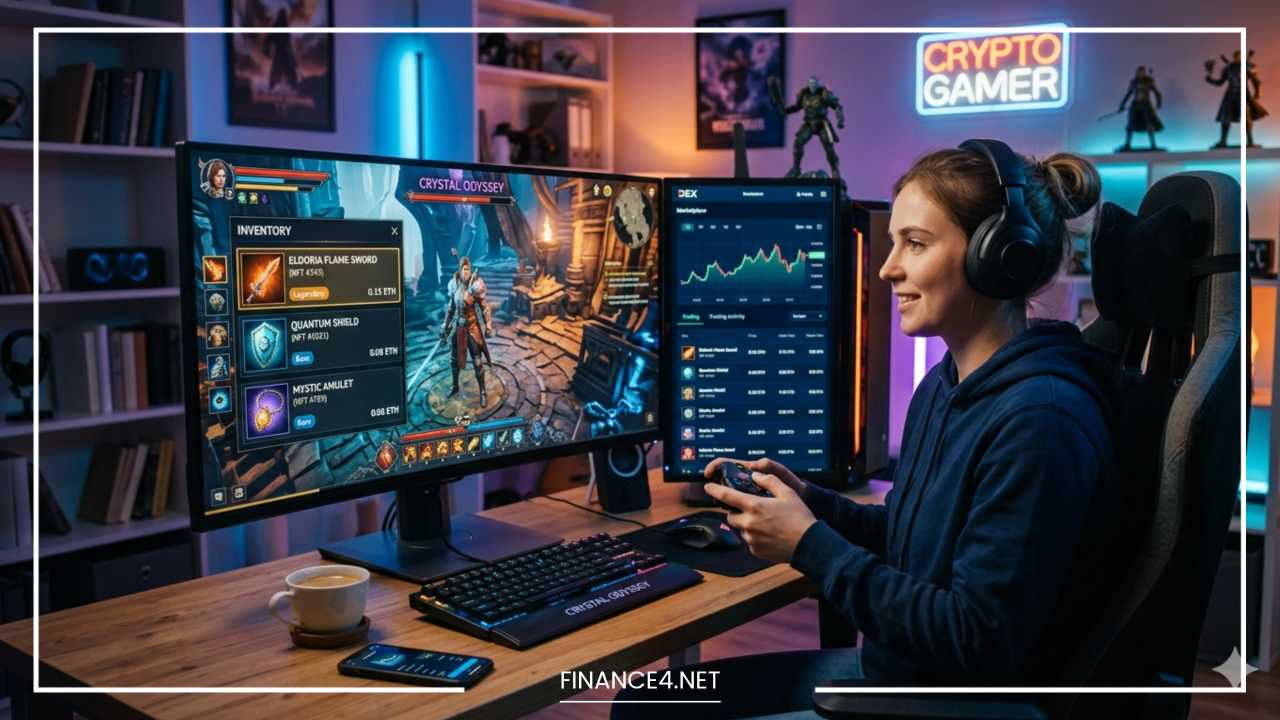
The shift from traditional database-entry items to NFTs means that players truly own their assets. In traditional gaming, if a studio shuts down its servers or bans an account, the player’s “property” disappears instantly. With NFTs, the asset lives in the player’s private wallet. Furthermore, these assets can be traded on secondary markets without the game developer acting as a middleman for every transaction. This grants the items “real-world” value, as their scarcity and utility can be appraised by a global market of buyers and sellers.
2. Loot Boxes in Gaming
Loot boxes are virtual items that can be redeemed to receive a randomized selection of further virtual items. They have become a staple of modern gaming monetization, particularly in “Free-to-Play” titles. The psychological hook of the “variable ratio reward schedule”—a concept pioneered by B.F. Skinner—is what makes them so engaging. The uncertainty of the reward creates a dopamine response that keeps players returning.
However, the traditional model faces a significant “trust deficit.” Because the code generating the result lives on a private, centralized server, players have no way to verify if the advertised 1% drop rate for a “Legendary” item is actually being honored. There is also the risk of “dynamic odds,” where a game might secretly lower the drop rates for a player who is known to spend heavily, or increase them for a returning player to “hook” them back in. NFT loot boxes solve this by making the “opening” event a blockchain transaction. The contents are minted or transferred based on logic that is visible to anyone, transforming the loot box into a verifiable secondary market commodity.
3. Random Number Generation (RNG)
RNG is the engine of variety in gaming. It determines everything from the damage range of a sword to the weather patterns in an open-world simulation. In a traditional centralized game, RNG is “off-chain,” generated by the game’s local software or server. While efficient, off-chain RNG is susceptible to manipulation or simple bugs that are impossible for the user to detect.
On-chain RNG refers to randomness generated and verified within the blockchain ecosystem. The challenge is that blockchains are deterministic by design; for a network to reach consensus, every node must process the same data and reach the same conclusion. True randomness is, by definition, non-deterministic. If a smart contract simply used the “block timestamp” as a source of randomness, a malicious miner could manipulate the time of their block to ensure they win the loot box. Creating a system where a smart contract can access a random value without compromising the network’s integrity is the technical hurdle that on-chain RNG mechanisms aim to solve.
On-Chain RNG Mechanisms
To implement a fair loot box, a developer must ensure that the “roll of the dice” cannot be predicted or manipulated by the player, the miner, or even the developer themselves. Several methods have emerged to achieve this.
1. Verifiable Random Functions (VRF)
The gold standard for on-chain randomness is the Verifiable Random Function (VRF). A VRF is a cryptographic primitive that takes a set of inputs and produces a random-looking output along with a proof of authenticity. This proof can be verified by anyone to ensure the output was generated correctly without tampering. In a loot box scenario, the VRF ensures that the outcome was not decided until the moment of the request and that no party could have known the result in advance.
2. Oracles and Chainlink VRF
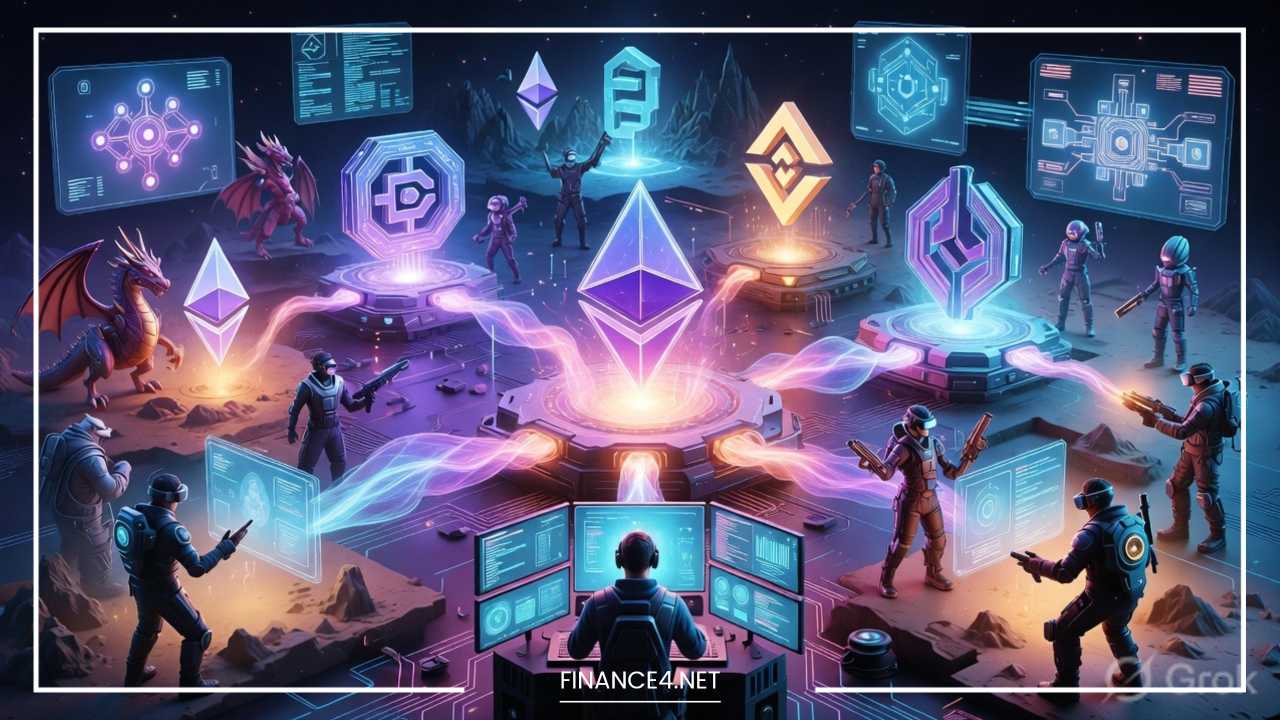
Because a blockchain cannot safely generate a truly random number internally, many projects use decentralized oracle networks. Chainlink VRF is the most prominent example. When a player opens a loot box, the smart contract sends a request for randomness to the oracle network. The oracle generates a random number off-chain and submits it back to the blockchain along with a cryptographic proof. The smart contract only accepts the number if the proof matches the request, ensuring the result is both random and tamper-proof. This “request-response” cycle is the backbone of modern decentralized gaming.
3. Commit-Reveal Schemes
A more “native” but complex method is the Commit-Reveal scheme. In this setup, multiple parties (such as the player and the game server) commit to a secret value by submitting its hash to the blockchain. Once all hashes are “committed,” the parties reveal their original values. These values are then combined to create a random seed. While this removes the need for an external oracle, it is often slower and can be disrupted if one party refuses to reveal their value after seeing that the combined result would be unfavorable to them.
4. Advantages over Off-Chain RNG
The primary advantage is auditability. A player who feels “unlucky” can check the smart contract to see every single roll ever made. If the contract states a 5% drop rate and the historical data shows exactly a 5% distribution over 100,000 opens, the fairness is mathematically proven. Furthermore, on-chain RNG prevents “insider trading.” In traditional games, developers or employees could theoretically gift themselves high-value items or manipulate the RNG for specific accounts. On a blockchain, such actions would be immediately visible to the public.
NFT-Based Loot Boxes Architecture
Building a functional NFT loot box system requires a sophisticated interplay between smart contracts, metadata standards, and random logic.
1. Smart Contract Design
The architecture usually involves three main components:
-
The Loot Box (Factory) Contract: This manages the minting and sale of the boxes. It tracks ownership and handles the payment logic (e.g., accepting ETH or a native game token).
-
The RNG Integration: This is the bridge to the VRF. It manages the unique “request IDs” to ensure that one random number corresponds to exactly one opening event.
-
The Minting Engine: Once the random number is received, this contract calculates the result based on a “loot table” and triggers the minting of a new NFT or the transfer of an existing one to the player’s wallet.
2. Reward Tiers and Probabilities
Developers must define a “weighting” system within the smart contract. For example:
-
Common (Weight 7000): 70% chance.
-
Rare (Weight 2000): 20% chance.
-
Epic (Weight 900): 9% chance.
-
Legendary (Weight 100): 1% chance.
By hard-coding these weights into a public smart contract, the developer provides an “on-chain guarantee” of the odds. This is a significant shield against claims of predatory practices, as the developer literally cannot change the odds once the contract is deployed and “locked” or “renounced.”
3. Interoperability and Standards (ERC-721 vs. ERC-1155)
The choice of token standard is vital for the loot box economy.
-
ERC-721: Each token is unique. This is ideal for high-value, one-of-a-kind items like a “First Edition” character.
-
ERC-1155: This is often called the “Multi-Token Standard.” It is highly efficient for loot boxes because it allows for the batch minting of many items in a single transaction. For example, a loot box could contain 50 gold coins (fungible) and 1 magic sword (non-fungible). ERC-1155 handles this in a way that significantly saves on gas fees compared to minting multiple ERC-721 tokens.
Use Cases and Examples
1. Gaming: Skins, Weapons, and Characters
In the current Web3 gaming landscape, loot boxes often take the form of “starter packs.” In a tactical RPG, a player might buy a loot box that contains three random heroes. On-chain RNG ensures that the distribution of “Legendary” heroes across the entire player base remains exactly as promised. This creates a fair competitive environment where no player can claim the system was biased against them.
2. Art and Collectibles
Digital art collectives use loot box mechanics for “blind mints.” A user pays a flat fee to mint an NFT from a collection of 10,000 pieces. However, the specific artwork is not revealed until a later date. On-chain RNG ensures the rarest pieces in the collection aren’t “sniped” by insiders who might otherwise use their knowledge of the metadata to mint at the exact moment a rare item is up.
3. Real-World Tie-ins
A luxury brand could sell “Mystery Boxes” as NFTs. Opening the box might reveal a digital wearable for a metaverse, but a small percentage of boxes could contain a “Redemption Token” for a physical, limited-edition product. The blockchain provides a permanent, public record that the physical items were distributed fairly among the community.
Advantages and Challenges
1. Advantages
-
Provable Fairness: “Math is the law.” This transparency builds immense community trust, which is the most valuable currency in modern gaming.
-
Secondary Market for Luck: Unopened loot boxes can themselves be NFTs. If a collection is nearly sold out and many “Legendary” items haven’t been found yet, the market price of the unopened boxes will naturally rise, allowing players to profit from the “potential” without even opening the box.
-
True Scarcity: Players can see exactly how many rare items have been minted. If the total supply of a “Mythic Dragon” is limited to 10, and 9 have been found, the race for the 10th creates organic excitement and value.
2. Challenges
-
Regulatory Scrutiny: Because NFT items often have a secondary market value (they can be sold for crypto/cash), loot boxes are frequently classified as gambling. Developers must navigate a complex web of international laws.
-
Gas Fees and Scalability: On a congested network, the transaction fee to “open” a box might be $20, while the item inside is only worth $2. This necessitates the use of Layer-2 scaling solutions (like Polygon or ImmutableX) to keep the experience affordable.
-
Latency: On-chain RNG is not instantaneous. A player might have to wait 30 seconds for the VRF to return the result. In a high-speed gaming environment, this “reveal delay” can be a friction point for user experience.
Regulatory and Ethical Considerations
The ethical design of loot boxes is a primary concern for the industry’s longevity. Transparency is the first step, but it is not a cure-all for the potential for addictive behavior. Responsible developers are now implementing features directly into the smart contracts to protect users:
-
Pity Timers: A contract can track how many “Common” items a user has received in a row. If they reach a certain threshold, the RNG logic can be programmed to guarantee a “Rare” or “Epic” item on the next roll.
-
Self-Exclusion: Smart contracts can allow players to “opt-out” or set spending limits on loot boxes for their own wallet address, providing a decentralized version of responsible gambling tools.
-
Disclosure: Unlike traditional games that hide odds in fine print, NFT loot box interfaces can pull live data directly from the contract to show the player exactly what their chances are at that very second.
Future Trends and Innovations
1. Layer-2 and Gas-Free Openings
The future of NFT loot boxes lies in “frictionless” interaction. Using “Meta-Transactions,” developers can pay the gas fees on behalf of the player. This allows the player to click “Open” and see their reward immediately, while the complex blockchain heavy-lifting happens in the background.
2. AI-Assisted Loot Tables
Artificial Intelligence could be used to analyze the secondary market prices of NFTs and suggest adjustments to the “loot table” weights for future box releases. This ensures the game’s economy remains stable and that “Legendary” items remain appropriately valuable relative to the player base’s growth.
3. Cross-Game Interoperability
Imagine a “Multiverse Loot Box.” Because the RNG and the assets are on-chain, a single box could contain items for three different games developed by different studios. A random number is generated once, and it triggers a “mint” across three different contracts, giving the player a “cross-platform starter kit.”
4. Social Looting
“Community Crates” are a rising trend where a group of players pools their resources to buy a massive loot box. The on-chain RNG determines the distribution of the rewards among the contributors based on their percentage of the pool, ensuring a fair split of a “Jackpot” event.
Final Thoughts
NFT-based loot boxes with on-chain RNG represent a fundamental shift in how digital rewards are perceived and delivered. By replacing “trust us” with “verify us,” developers can create engaging, randomized experiences that respect the player’s intelligence and financial investment. While the technology is still maturing and regulatory hurdles remain significant, the move toward transparency is an essential evolution for the gaming industry.
The ultimate goal of this technology is to foster a “Fair Play” economy. In this future, the thrill of the “reveal” is not a source of anxiety or suspicion but a celebrated part of a transparent, player-owned digital world. By leveraging VRFs, smart contracts, and decentralized standards, we are moving toward a gaming landscape where the “house” doesn’t just win—it plays fair, in plain sight, for everyone to see. Responsible innovation in this space today will ensure that the virtual economies of tomorrow are built on a foundation of cryptographic integrity rather than corporate opacity.