NFT Forging: Merging Multiple NFTs Into One
 by
by 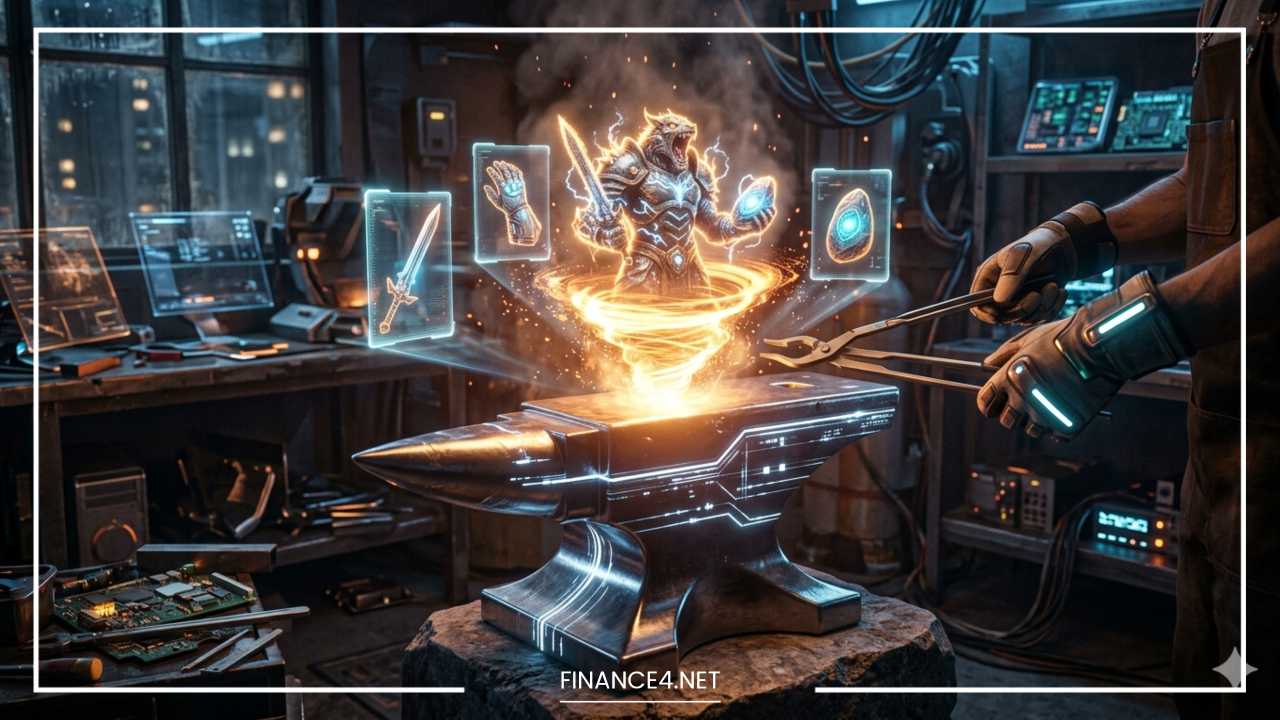
NFT Forging: Merging Multiple NFTs Into One | Guide & Tips
The digital asset landscape is no longer just about buying and holding a single image or video. As the ecosystem matures, collectors and creators are looking for deeper ways to interact with their portfolios. Enter NFT Forging, a process that allows users to combine multiple non-fungible tokens into a single, more complex, or rarer asset.
Whether you are looking to increase the utility of your gaming items, create a high-value “super-asset,” or simply clean up a cluttered wallet, forging is becoming a central pillar of Web3 strategy. This guide explores how merging works, why it is gaining traction, and how you can safely forge your own digital path.
What is NFT Forging
At its core, a Non-Fungible Token (NFT) is a unique digital identifier recorded on a blockchain. While the first wave of NFTs focused on static collectibles—essentially digital trading cards or art pieces—the current era is defined by “dynamic” and “composable” assets.
NFT Forging, also known as NFT merging, crafting, or synthesis, is the process of taking two or more separate NFTs and combining them through a smart contract to create a new, singular token. This isn’t just a visual trick; it is a fundamental change in the blockchain’s ledger.
In many cases, the original NFTs are “burned.” In blockchain terminology, burning means sending a token to a “null address” (like 0x000…) where it can never be retrieved, effectively removing it from the total supply. In exchange for this sacrifice, the smart contract mints a new, often superior, NFT for the user. In other setups, the original NFTs are “nested” or “escrowed” inside a parent NFT, creating a bundle that can be traded as a single unit while maintaining the ability to “unforge” or disassemble them later.
The Hook: Why Forging Matters
For creators, forging is a powerful tool to drive long-term engagement and reward loyal holders. For collectors, it offers a strategic path toward rarity. Instead of owning ten common items that struggle to find buyers, a collector might forge them into one “Legendary” item that carries higher market prestige, exclusive utility, or enhanced aesthetic appeal. This mechanic transforms the act of collecting from a passive hobby into a strategic game of resource management.
Why Merge NFTs?
The decision to merge NFTs often comes down to four primary drivers: value appreciation, management efficiency, creative expression, and functional utility.
Enhanced Value and Rarity
The most common reason for forging is the pursuit of digital scarcity. Markets generally reward rarity over volume. If a project allows you to merge five “Common” tokens to create one “Epic” token, the supply of the Epic version is naturally capped by the availability of the lower-tier items.
This deflationary mechanic is a favorite among economists in the NFT space. It helps stabilize a “floor price” (the lowest price for an item in a collection) because users are constantly removing lower-tier items from the market to create higher-tier ones. Consequently, the forged asset often commands a premium price that exceeds the combined value of its individual parts.
Streamlined Management and “Wallet Zen”
Collectors with hundreds of assets often face “wallet fatigue.” Scrolling through pages of low-value airdrops or duplicate items can be overwhelming. Merging allows users to consolidate their holdings. Instead of managing dozens of individual metadata entries, a user can hold a single “Master” NFT that represents their entire collection or a specific set of achievements. This is particularly useful for institutional collectors or those managing large-scale digital galleries.
New Creative Possibilities
Forging isn’t just for gamers or investors. Digital artists are using merging to create evolutionary art. For example, an artist might release a “Background” NFT and a “Character” NFT as separate drops. Only by forging them can the collector reveal the completed scene. This allows for a layered storytelling approach where the collector becomes an active participant in the creative process.
Case Studies in Forging
-
Gaming (Play-to-Earn): In many blockchain-based RPGs, players must collect “Raw Material” NFTs (like wood, iron, or magical essence). These have little value on their own but can be forged into “Weapon” or “Armor” NFTs that allow the player to access higher-level content.
-
Profile Pictures (PFPs): Several top-tier projects have released “Mutants” or “Altered” states. By owning a base character and a “consumable” NFT (like a serum or a potion), holders can forge a new version of their character with updated traits.
-
Financial NFTs: Some platforms allow users to “nest” interest-bearing tokens inside an NFT. By merging a financial basket—such as a mix of stablecoins and governance tokens—into a single collectible, the user creates a “smart” asset that grows in value independently of the market price of the art.
How NFT Forging Works
Forging might feel like digital alchemy, but it is powered by rigorous, transparent code. Understanding the underlying mechanics helps you evaluate the “fairness” of a forging contract and avoid costly mistakes.
The Role of Smart Contracts
A smart contract is the “blacksmith” in this scenario. It is a self-executing piece of code that defines the rules of the forge. When you initiate a merge, the following sequence usually occurs:
-
Validation: The contract checks your wallet to ensure you own the required NFTs.
-
Escrow/Burn: The contract either “locks” the original NFTs in its code or “burns” them by sending them to an inaccessible address.
-
Minting: The contract executes a
mintfunction, creating a brand-new NFT with a unique Token ID. -
Metadata Assignment: The contract assigns traits to the new NFT based on the “recipe” or a random generation algorithm.
Metadata Combination and Logic
The most complex part of forging is handling metadata. Metadata contains the names, descriptions, and image links of an NFT.
-
Additive Merging: The new NFT inherits traits from all parents. If you merge a “Sword” and a “Shield,” the resulting NFT metadata will list both items in its attributes.
-
Transformative Merging: The parents are destroyed to create something entirely different. This often involves “RNG” (Random Number Generation) to determine the rarity of the new item.
-
Sequential Merging: This requires NFTs to be merged in a specific order to “level up” an asset’s stats or appearance over time.
Token Standards (ERC-721 vs. ERC-1155)
-
ERC-721: This is the standard for unique, 1-of-1 tokens. Forging usually involves burning two ERC-721s to mint a third. This is more “gas-intensive” (expensive) because each token is handled individually.
-
ERC-1155: Known as the “Multi-Token” standard, this is highly efficient for forging. It allows for “semi-fungible” items (like 500 identical iron ingots). You can burn 100 iron ingots in a single transaction to forge one “Steel Blade,” significantly saving on transaction fees.
Step-by-Step Guide to Merging NFTs
Forging is almost always a permanent, irreversible action. Once tokens are burned, they are gone from the blockchain forever. Follow this meticulous guide to ensure your forge is successful.
Step 1: Choosing Your “Ingredients”
Not all NFTs are forgeable. You must check the project’s official documentation or Discord “Announcements” channel to see which collections are compatible.
-
Check Requirements: Does the forge require specific traits? (e.g., “Only NFTs with Blue Hats can be merged”).
-
Check Quantities: Ensure you have the exact number of tokens required. Many users fail because they are one “Common” item short.
Step 2: Selecting the Forge Platform
Most reputable projects host their own “Forge” or “Crafting” portal on their official website.
-
Creators: If you are building your own forge, platforms like Manifold, Thirdweb, or Metaplex provide ready-to-use smart contract templates for “Burn-to-Redeem” mechanics.
-
Collectors: Always verify the URL. Scammers often create fake forging sites to steal your assets.
Step 3: Granting Permissions (The “Approval” Phase)
Before the contract can take your NFTs, you must give it “Permission.” Your wallet (MetaMask, Phantom, etc.) will prompt you to “Approve” the contract’s access to a specific collection.
-
Safety Tip: Be wary of “Set Approval For All” requests unless you are 100% sure of the site’s legitimacy. This permission allows the site to move any NFT from that collection out of your wallet.
Step 4: Executing the Transaction
Once approved, you will click the “Forge” button. This triggers the actual blockchain transaction.
-
Gas Fees: You will need to pay a network fee (Gas) in the native currency (ETH, SOL, MATIC). These fees can spike during busy times.
-
The Wait: Depending on the blockchain’s congestion, the forge could take anywhere from a few seconds to several minutes to finalize.
Step 5: Verifying the Outcome
After the transaction is confirmed:
-
Check Your Wallet: The old NFTs should be gone, and a new one should appear.
-
Check Marketplace Metadata: Go to a site like OpenSea or Magic Eden. It may take a few minutes for the marketplace to “refresh” and show the new image and traits.
-
Verify Rarity: Use tools like Rarity.tools or the project’s own checker to see where your new forged asset ranks in the ecosystem.
Benefits and Opportunities
Forging is more than just a novelty; it is a financial and social strategy that provides several advantages.
Investment and “Floor Sweeping”
Forging creates a natural incentive for investors to “sweep the floor” (buy the cheapest items in a collection). This buying pressure benefits everyone in the community by raising the overall valuation of the project. Furthermore, forged items often represent a “distilled” value that is more attractive to high-end whales who don’t want to deal with bulk inventory.
Deep Gamification
In the world of blockchain gaming (GameFi), forging is the primary way players progress. It introduces “Game Theory” into the ownership experience. Players must constantly calculate the Opportunity Cost: Is it better to sell three “Iron Swords” now for immediate profit, or spend the gas and time to forge them into a “Titanium Claymore” that might sell for five times the price later?
Community and Collaboration
Forging can be a social event. “Cooperative Forging” is an emerging trend where two different users must contribute an NFT each to a shared vault to forge a single asset, with the rewards being split or shared. This encourages networking and community building within the Web3 space.
Risks and Challenges
While the upside is high, the “Forge” can be a dangerous place for the unprepared.
The “Permanent Loss” Risk
If a smart contract is poorly coded or contains a bug, the “Burn” might work, but the “Mint” might fail. This could result in your original NFTs being destroyed without you receiving the new one. Always look for projects that have had their code audited by reputable firms like ConsenSys or CertiK.
Value Dilution and Inflation
If a project makes forging too easy, the “Rare” items become common. This is known as “Rarity Inflation.” If everyone has a “Legendary” sword, the “Legendary” tag loses its market power. Investors should look for projects with “Hard Caps” on how many forged items can exist.
Liquidity Traps
Liquidity refers to how easily you can sell an asset. It is often much easier to sell ten items for $100 each than it is to sell one item for $1,000. By merging your assets, you are moving into a “Thinner Market.” You might have a more valuable asset on paper, but it might take weeks or months to find a buyer willing to pay that premium.
Marketplace Desync
Because forging often changes metadata dynamically, marketplaces sometimes fail to update. You might try to sell your “Level 2” character, but the marketplace still shows it as “Level 1.” This “Metadata Desync” can lead to disputes with buyers or missed sales opportunities.
Best Practices and Tips
To become a master of the forge, follow these professional-grade tips:
-
DYOR (Do Your Own Research): Read the project’s “Whitepaper” specifically regarding the “Burn Mechanics.” Is the supply truly decreasing, or are the tokens just being moved to a developer wallet?
-
Check the “Secondary Market” First: Before you forge, check if someone is already selling the forged version for less than the cost of the ingredients plus gas. Sometimes, it is cheaper to just buy the forged item directly.
-
Understand Provenance: Some collectors value the “History” of an NFT. A forged NFT that was created using “Low Serial Number” parents might be more valuable than one made with random ones.
-
Test with “Dust”: If the platform allows it, try merging low-value “dust” (cheap, unimportant NFTs) first to ensure you understand the wallet prompts and gas costs.
-
Don’t “FOMO” Into Forging: Forging seasons often happen during hype cycles. Prices for “Ingredients” skyrocket during these times. Often, the best strategy is to buy the ingredients when nobody is talking about forging and hold them until the forge opens.
The Future of NFT Forging
As we look toward the horizon, forging is set to become even more sophisticated, moving beyond static JPEGs and into the realms of utility and identity.
AI-Enhanced Forging
The next generation of forging will likely involve Generative AI. Instead of a fixed recipe, a user might merge two NFTs, and an AI model will “dream” a new asset based on the combined prompts of the parents. This ensures that every forged asset is truly a 1-of-1, even within a specific rarity tier.
Cross-Collection Forging (Interoperability)
The “Holy Grail” of Web3 is interoperability. In the future, you might be able to forge a “Hat” from Project A onto a “Character” from Project B. This “Cross-Collection Forging” would require universal standards but would exponentially increase the utility of every NFT in your wallet.
Metaverse Integration
In virtual worlds, forging will be a physical act. You might take your digital materials to a virtual “Blacksmith” shop in a metaverse world, pay a small fee in a native token, and watch the forging happen in real-time 3D. This adds a layer of immersion that bridges the gap between digital assets and traditional gaming experiences.
Final Thoughts
NFT forging represents a significant shift in the digital economy. It moves us away from a world of static, “dead” assets and into a world of dynamic, evolving ecosystems. By merging NFTs, collectors can consolidate value, creators can drive engagement, and the entire market can benefit from reduced supply and increased scarcity.
However, the forge is not without its flames. The risks of smart contract failure, liquidity traps, and market volatility mean that every participant must act with caution.
The Key Takeaway: Forging is a tool, not a guarantee of profit. Use it to enhance your collection’s utility and beauty, but always keep an eye on the underlying code and the broader market trends. As the technology matures, those who understand the “Art of the Merge” will be the ones best positioned to lead the next wave of digital ownership.