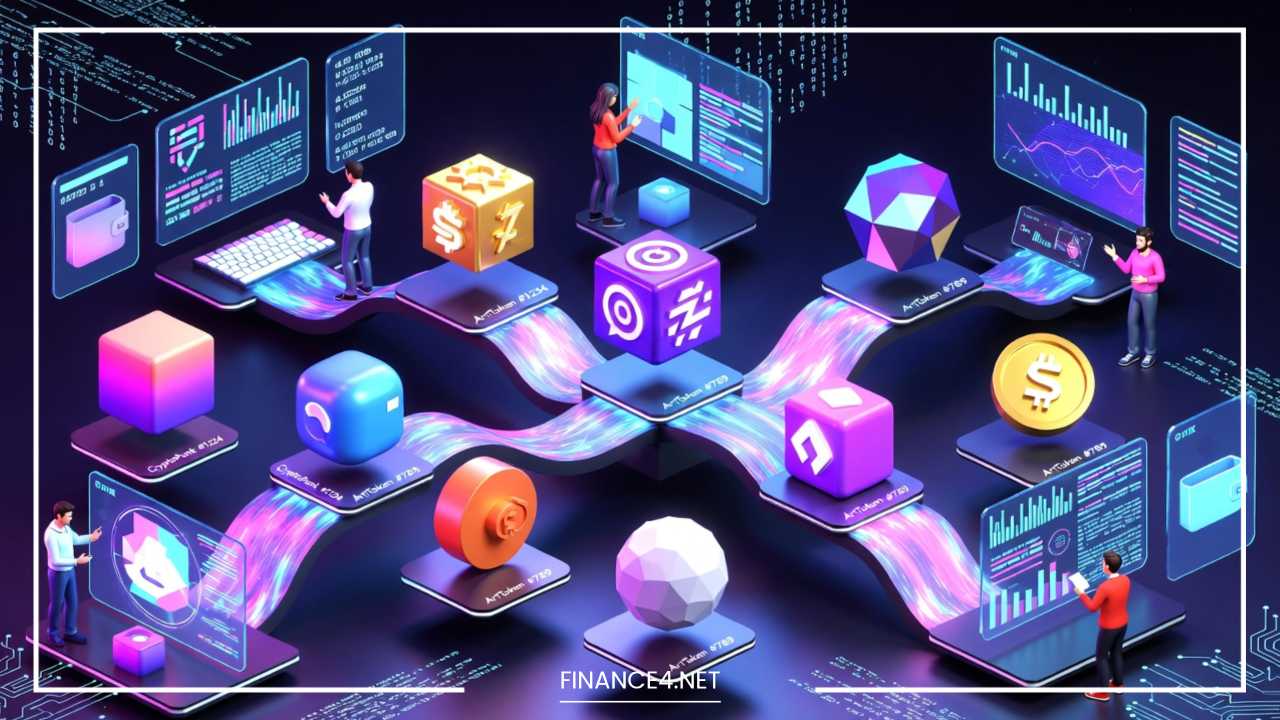
Top NFT Bridging Solutions for Multi-Chain Expansions
 by
by 
Top NFT Bridging Solutions for Multi-Chain Expansions | Best Cross-Chain Tools
The burgeoning world of Non-Fungible Tokens (NFTs) has fundamentally reshaped our understanding of digital ownership, artistry, and community. From digital art to virtual real estate, gaming assets, and decentralized identities, NFTs have captured the imagination of millions, creating vibrant new economies. However, as the NFT ecosystem continues its explosive growth, a critical challenge has emerged: the inherent isolation of assets on their native blockchains. An NFT minted on Ethereum, for instance, traditionally remained confined to Ethereum, unable to seamlessly interact with applications or users on other networks like Solana, Polygon, or Avalanche.
This fragmentation limits liquidity, stifles innovation, and creates a siloed user experience. The solution lies in NFT bridging, a revolutionary technology that enables the secure and efficient transfer of NFTs across disparate blockchain networks. As the industry matures, the importance of robust multi-chain interoperability cannot be overstated, paving the way for broader adoption, enhanced utility, and unparalleled flexibility for users and creators alike. This article will delve into the intricacies of NFT bridging, explore the challenges it addresses, highlight key features to consider, and provide an in-depth analysis of the leading solutions driving the multi-chain expansion of NFTs.
Understanding NFT Bridging
At its core, NFT bridging is the process of moving a non-fungible token from one blockchain to another. While the concept might seem straightforward, it’s significantly more complex than bridging fungible tokens (like ETH or USDC). When you bridge an NFT, you’re not simply transferring a value; you’re transferring a unique digital asset with specific metadata, ownership history, and often, associated utilities.
The most common mechanism for NFT bridging involves a “lock and mint” or “burn and mint” process. In a “lock and mint” scenario, the original NFT is locked in a smart contract on the source chain, and a wrapped or “bridged” version of that NFT is minted on the destination chain. This wrapped NFT typically retains all the essential metadata of the original. When the user wishes to bridge back, the wrapped NFT on the destination chain is burned, and the original NFT on the source chain is unlocked. The “burn and mint” approach, often seen in omnichain NFT standards, involves burning the NFT on the source chain and then minting an identical NFT on the target chain, ensuring the overall supply remains consistent.
Why bridging is essential for NFTs:
- Liquidity Expansion: Confining NFTs to a single blockchain restricts their market and potential buyers. Bridging opens up NFTs to diverse marketplaces and communities across different chains, significantly increasing their liquidity and potential for price discovery. A blue-chip NFT on Ethereum, for example, could gain exposure to the high-volume trading environments of Solana or BNB Chain.
- Cross-Chain Utility and Exposure: NFTs often have utility within specific applications, games, or metaverses. Bridging allows these utilities to extend beyond their native chain. A gaming NFT could be used in a game built on Polygon, even if it was originally minted on Ethereum, or a digital art piece could be displayed in a metaverse hosted on Avalanche. This unlocks new possibilities for creators and enhances the value proposition for holders.
- Reduced Reliance on a Single Blockchain’s Ecosystem: Relying solely on one blockchain carries inherent risks, including network congestion, high gas fees, and potential single points of failure. Bridging offers a decentralized alternative, allowing users to move their assets to more efficient or cost-effective chains as needed, providing greater flexibility and resilience. This also empowers projects to tap into different communities and developer ecosystems.
Challenges in NFT Bridging
Despite its immense promise, NFT bridging is not without its complexities and risks. Developers and users must navigate several significant hurdles to ensure secure and seamless cross-chain transfers.
- Technical Complexity:
- Metadata and Ownership Preservation: NFTs are defined by their unique metadata (image, description, properties, etc.) and their immutable ownership record. Ensuring this metadata is accurately and securely transferred or replicated across different blockchain architectures is a significant technical challenge. Different chains may have varying standards for metadata storage (e.g., IPFS links, on-chain storage), requiring sophisticated translation and verification mechanisms.
- Smart Contract Differences: Blockchains operate with different virtual machines, programming languages, and smart contract standards. Bridging requires intricate smart contracts on both the source and destination chains that can communicate effectively, lock/unlock or burn/mint assets, and verify transactions securely across these disparate environments.
- Security Risks:
- Bridge Hacks and Exploits: Cross-chain bridges, due to the substantial value of assets locked within them, are prime targets for malicious actors. Vulnerabilities in smart contracts, compromised validator networks, or flawed cryptographic mechanisms can lead to devastating exploits, as evidenced by numerous high-profile bridge hacks in the DeFi space.
- Custodial vs. Non-Custodial Bridging: The security model of a bridge is paramount. Custodial bridges involve users entrusting their assets to a centralized entity, introducing a single point of failure and counterparty risk. Non-custodial bridges, which rely on decentralized validator networks, multi-party computation (MPC), or zero-knowledge proofs, offer greater security by minimizing trust assumptions but are often more complex to implement and operate.
- User Experience:
- Gas Fees and Long Wait Times: Bridging transactions can incur substantial gas fees, especially on congested networks like Ethereum. Furthermore, the multi-step process of locking, verifying, and minting can lead to significant wait times, impacting user satisfaction.
- Interface Complexity: Many bridging solutions present a steep learning curve for average users, with complex interfaces, technical jargon, and a lack of clear instructions. A smooth, intuitive user experience is crucial for broader adoption.
Key Features to Look for in NFT Bridges
When evaluating NFT bridging solutions, several key features distinguish robust and reliable platforms from less secure or efficient ones.
- Interoperability with Multiple Major Chains: A top-tier NFT bridge should support a wide array of popular blockchains, including but not limited to Ethereum, Solana, BNB Chain, Polygon, Avalanche, Arbitrum, Optimism, and other EVM-compatible networks. The more chains a bridge connects, the greater the flexibility and market access it offers.
- Trustless Mechanisms: Prioritizing trustless or highly decentralized bridging mechanisms is crucial for security. Solutions leveraging technologies like zero-knowledge rollups (zk-rollups), optimistic bridges, or robust decentralized validator networks minimize reliance on centralized authorities and reduce the attack surface.
- Support for Metadata and On-Chain Storage: The integrity of an NFT hinges on its metadata. A reliable bridge must ensure that all associated metadata (images, videos, attributes, links, etc.) is preserved and correctly replicated on the destination chain. Solutions that support decentralized storage solutions like IPFS for metadata are preferable.
- Developer and Community Support: A thriving ecosystem around a bridge indicates its long-term viability. Look for platforms with active developer communities, comprehensive documentation, readily available SDKs, and responsive customer support. This facilitates easier integration for NFT projects and provides assistance for users.
- Security Audits and Bug Bounties: Reputable bridges undergo rigorous smart contract audits by independent third-party security firms. Participation in bug bounty programs demonstrates a commitment to identifying and fixing vulnerabilities.
- Cost-Effectiveness and Speed: While security is paramount, the efficiency of bridging is also a critical factor. Solutions that offer competitive transaction fees and reasonable bridging times enhance the user experience.
Top NFT Bridging Solutions
The landscape of NFT bridging is evolving rapidly, with several innovative solutions emerging to tackle the challenges of cross-chain interoperability. Here’s a breakdown of some of the leading platforms:
LayerZero (Stargate + NFT Module)
- Overview: LayerZero is an omnichain interoperability protocol designed to enable lightweight message passing across various blockchains. It’s not a bridge in itself, but a foundational infrastructure that allows developers to build cross-chain applications, including NFT bridges. Its “Omnichain Non-Fungible Token” (ONFT) standard specifically addresses NFT transfers.
- Supported Chains: Extensive, covering a wide range of EVM and non-EVM chains due to its generalized messaging capabilities (e.g., Ethereum, Polygon, Arbitrum, Optimism, BNB Chain, Avalanche, Fantom, Aptos, Solana, etc., via third-party integrations or direct deployment).
- Unique Features:
- Generalized Message Passing: Allows for arbitrary data transfer, not just assets, enabling complex cross-chain logic.
- ONFT Standard: Facilitates native NFT transfers without asset wrapping or middle chains, offering a “burn and mint” mechanism for true omnichain NFTs.
- Configurable Security: Projects can customize their security stack by choosing different Oracle and Relayer combinations, offering flexibility.
- Pros: Highly flexible and customizable for developers; enables true omnichain NFTs; strong security model with configurable trust assumptions.
- Cons: Not a direct user-facing bridge for all NFTs; requires developers to integrate the standard; gas fees can still be a factor.
- Use Cases: Omnichain NFT collections, cross-chain gaming assets, unified metaverse experiences.
Wormhole
- Overview: Wormhole is a generic message-passing protocol that connects multiple high-value blockchains. It enables cross-chain transfers of tokens, NFTs, and arbitrary data through a decentralized network of “Guardians.” Portal Bridge is the primary user-facing interface for Wormhole’s bridging capabilities, especially for NFTs.
- Supported Chains: Broad support including Ethereum, Solana, Polygon, Avalanche, BNB Chain, Fantom, Arbitrum, Optimism, Celo, Klaytn, and many more.
- Unique Features:
- Guardian Network: A set of 19 independent validators (Guardians) observe and verify events on connected chains.
- Native Token and NFT Bridging: Supports both fungible token and NFT transfers.
- Speed: Designed for fast message passing, particularly beneficial for high-throughput chains like Solana.
- Pros: Highly decentralized guardian network; wide range of supported chains; relatively fast transaction times.
- Cons: Has experienced security incidents in the past (though rectified and security measures enhanced); reliance on the integrity of the Guardian set.
- Use Cases: Bridging NFTs between Solana and EVM chains, cross-chain gaming, general asset transfer.
Multichain (formerly Anyswap)
- Overview: Multichain is a cross-chain router protocol that provides bridging services for various tokens and NFTs across numerous blockchains. It uses a Secure Multi-Party Computation (MPC) network to facilitate transfers.
- Supported Chains: Extensive, including Ethereum, BNB Chain, Polygon, Fantom, Avalanche, Arbitrum, Optimism, Cronos, and many others.
- Unique Features:
- MPC Network: Relies on a decentralized network of MPC nodes for transaction signing and verification.
- AnyCall: A generic cross-chain messaging protocol built on Multichain, enabling more complex cross-chain dApp interactions.
- Pros: Wide network support; supports a variety of token standards; has a long operational history.
- Cons: Has faced security challenges and a period of uncertainty due to team issues; MPC model has had criticisms regarding its decentralization.
- Use Cases: General cross-chain NFT transfers, connecting various DeFi and NFT ecosystems.
deBridge
- Overview: deBridge is a cross-chain interoperability and liquidity protocol that enables the secure transfer of assets and messages between different blockchains. It aims to provide deep liquidity and guaranteed rates for cross-chain swaps and transfers, including NFTs.
- Supported Chains: Connects major EVM chains like Ethereum, Arbitrum, Optimism, Polygon, BNB Chain, Avalanche, and Base.
- Unique Features:
- Guaranteed Rates: Focuses on providing reliable and predictable transaction outcomes.
- Liquidity Pooling: Utilizes a liquidity pool model for fungible tokens, and a robust messaging layer for NFTs.
- Secure Infrastructure: Emphasizes high security and reliability for cross-chain operations.
- Pros: Strong focus on security and reliability; good user experience for transfers; expanding network support.
- Cons: Still growing its ecosystem compared to some larger players; primarily EVM-focused for direct integrations.
- Use Cases: Secure and efficient NFT transfers across EVM chains, powering cross-chain dApps.
Axelar
- Overview: Axelar is a decentralized interoperability network that connects blockchain ecosystems, applications, and users. It provides a secure, universal way to transfer assets and call smart contracts across any blockchain. Axelar’s General Message Passing (GMP) is key to its NFT bridging capabilities.
- Supported Chains: Extensive, connecting dozens of chains including Ethereum, Cosmos, Polygon, Avalanche, Fantom, Moonbeam, and more.
- Unique Features:
- General Message Passing (GMP): Allows developers to build dApps that can execute arbitrary logic on connected chains, not just asset transfers. This is crucial for nuanced NFT interactions.
- Proof-of-Stake Consensus: Secured by a decentralized network of validators.
- Interchain Token Service (ITS): A tool built on Axelar that aims to maintain fungibility and properties of tokens, allowing them to move easily across chains.
- Pros: Highly programmable and flexible for developers; robust security model; broad chain support.
- Cons: Can be more technically involved for simple NFT transfers; higher overhead for general message passing.
- Use Cases: Cross-chain NFT games, DeFi protocols interacting with NFTs on different chains, truly composable omnichain applications.
XP.network
- Overview: XP.network positions itself as a powerful multichain NFT bridge designed for simplicity and extensive blockchain support. It aims to make NFTs truly chain-agnostic.
- Supported Chains: One of the most comprehensive lists, supporting over 25 chains including Ethereum, BNB Chain, Polygon, Avalanche, Arbitrum, Optimism, Solana, Elrond, Algorand, Fantom, Tron, VeChain, and more.
- Unique Features:
- Wide Chain Compatibility: Offers perhaps the broadest range of supported chains for NFTs.
- Embeddable Widget: Provides a convenient widget for dApps and marketplaces to easily integrate NFT bridging into their platforms.
- Explorer for Cross-Chain Transactions: Offers a dedicated explorer to track the origin, destination, and status of bridged NFTs.
- Pros: Unrivaled chain support; user-friendly interface; convenient for developers with its widget and API.
- Cons: As a newer player, long-term security track record is still building compared to more established protocols.
- Use Cases: Bridging NFTs across obscure or less common chains, dApps wanting a simple integration for multi-chain NFTs, making any NFT collection omnichain.
Router Protocol
- Overview: Router Protocol is a cross-chain communication infrastructure that enables seamless and secure transfer of assets and information across various blockchain networks. It focuses on facilitating interoperability for both fungible tokens and NFTs.
- Supported Chains: Connects a growing number of EVM chains and plans to expand to non-EVM chains (e.g., Ethereum, BNB Chain, Polygon, Arbitrum, Optimism, Avalanche, Base, etc.).
- Unique Features:
- Cross-Chain Intent Framework (CCIF): Aims to simplify complex cross-chain interactions for users by abstracting away underlying bridge mechanisms.
- Router Nitro: A messaging framework designed for fast and low-cost cross-chain communication.
- Native Cross-Chain Swaps: Facilitates direct swaps of tokens across different chains.
- Pros: Focus on user experience and simplified interactions; strong technical foundation for future scalability.
- Cons: Still building out its full suite of features and integrations; may be less battle-tested for NFTs specifically compared to some older solutions.
- Use Cases: Cross-chain NFT marketplaces, gaming platforms requiring seamless asset movement, DeFi applications leveraging NFTs.
ChainPort
- Overview: ChainPort is a permissionless blockchain bridge that allows users to port tokens and NFTs across various networks. It emphasizes high security and speed for cross-chain transfers.
- Supported Chains: Supports major EVM chains like Ethereum, BNB Chain, Polygon, Avalanche, Fantom, Arbitrum, Optimism, and more.
- Unique Features:
- Multi-Sig Wallet Security: Employs multi-signature wallets for securing locked assets.
- Fast Transactions: Aims for quick bridging times.
- Audited Contracts: Regularly audits its smart contracts to ensure security.
- Pros: Focus on security; relatively fast; straightforward user interface.
- Cons: Primarily focused on fungible tokens, NFT support is a more recent addition and may not be as feature-rich as dedicated NFT bridges.
- Use Cases: Bridging NFT collections primarily within the EVM ecosystem.
Portal Bridge (via Wormhole)
- Overview: While already mentioned under Wormhole, it’s worth highlighting Portal Bridge as the primary user-facing application for bridging tokens and NFTs via the Wormhole protocol. It provides a simple interface for users to execute cross-chain transfers.
- Supported Chains: As per Wormhole, extensive support for both EVM and non-EVM chains.
- Unique Features: User-friendly interface for Wormhole’s robust infrastructure.
- Pros: Leverages Wormhole’s decentralized security and wide chain support; intuitive for users.
- Cons: Inherits any risks associated with the underlying Wormhole protocol.
- Use Cases: Direct user bridging of NFTs and tokens between any Wormhole-supported chains.
Polkadot & Kusama’s XCMP (Cross-Chain Message Passing)
- Overview: Polkadot and Kusama are unique in their approach to interoperability. Instead of external bridges, they offer native cross-chain communication within their ecosystem through XCM (Cross-Consensus Message Format) and XCMP (Cross-Chain Message Passing). Parachains (individual blockchains within the Polkadot/Kusama ecosystem) can natively communicate and transfer assets, including NFTs, without external bridges.
- Supported Chains: All parachains connected to the Polkadot and Kusama Relay Chains.
- Unique Features:
- Native Interoperability: No external bridge is needed; communication is built into the protocol.
- Shared Security: All parachains benefit from the Relay Chain’s shared security model.
- Generalized Message Passing: Allows for complex interactions between parachains, not just asset transfers.
- Pros: Inherently secure due to shared security; highly flexible for developers building cross-chain applications within the ecosystem; true native interoperability.
- Cons: Interoperability is currently limited to parachains within the Polkadot/Kusama ecosystem (though bridges to external chains exist, like Moonbeam’s connection to Ethereum); requires projects to build on Polkadot/Kusama.
- Use Cases: Building multi-chain NFT marketplaces within the Polkadot ecosystem, cross-chain gaming, sovereign digital identity solutions.
Case Studies / Real-World Applications
The impact of NFT bridging is becoming increasingly evident in the broader crypto landscape.
- Axie Infinity (Ronin Bridge): While a proprietary bridge, the Ronin Bridge for Axie Infinity demonstrated the critical need for application-specific bridging to scale NFT-based games. By allowing players to move their Axies and SLP tokens to a dedicated sidechain, it drastically reduced gas fees and increased transaction speed, making the game economically viable for millions of players. This, in turn, fueled massive liquidity and adoption for their NFTs.
- Decentraland & The Sandbox (Multi-Chain Land Sales/Portals): While not direct “bridging” in the general sense, prominent metaverse projects like Decentraland and The Sandbox have explored or implemented ways for users to access or “port” their land NFTs or avatars between different environments or even to different chain layers. For example, some projects are looking into how assets acquired on one chain (e.g., Polygon for cheaper transactions) can be represented or utilized within an Ethereum-based metaverse.
- NFT Collections Expanding Reach: Many popular NFT collections initially launched on Ethereum have leveraged bridges (often through LayerZero’s ONFT standard or Wormhole) to expand their presence to other chains like Solana or Avalanche. This allows new communities to access the collection, increases trading volume on different marketplaces, and exposes the project to a wider audience, leading to increased liquidity and overall market value.
These examples highlight how bridging solutions are not just technical marvels but crucial drivers of liquidity, market access, and community growth for NFT projects. Lessons learned from these early applications emphasize the importance of robust security, user-friendliness, and a clear utility proposition for the bridged assets.
Future of NFT Interoperability
The journey of NFT interoperability is far from over; in fact, it’s just beginning to accelerate. The future promises even more sophisticated and seamless solutions:
- Modular Chains and App-Chains: The rise of modular blockchain architectures and application-specific blockchains (app-chains) will naturally foster a need for highly efficient and secure cross-chain communication. These specialized chains, often optimized for specific use cases like gaming or DeFi, will rely heavily on advanced bridging solutions for liquidity and user access.
- Intent-Based Bridging: Future bridging solutions may move towards “intent-based” models, where users simply express their desired outcome (e.g., “I want to use my Ethereum NFT in this Solana game”), and the underlying infrastructure intelligently routes and executes the necessary cross-chain transactions without the user needing to understand the technical complexities.
- AI-Driven Routing and Optimization: Artificial intelligence could play a role in optimizing bridge routes, minimizing fees, and predicting network congestion to provide the most efficient and cost-effective bridging experience.
- Role of Standards: The development and adoption of universal cross-chain NFT metadata standards (beyond existing per-chain standards like OpenSea’s for EVM or Metaplex for Solana) are crucial. EIPs like ERC-5169, which proposes a common interface for cross-chain message execution, are steps in the right direction, aiming to standardize how NFTs can “talk” to dApps on other chains.
- Speculative Developments:
- Web3 Gaming: True interoperable gaming assets that can move seamlessly between different games and metaverses will unlock unprecedented player ownership and economic models.
- Metaverse: As metaverses become more interconnected, NFTs representing virtual land, avatars, and digital goods will require robust bridging to enable truly immersive, multi-platform experiences.
- Digital ID: NFTs could evolve into decentralized digital identities or credentials, and bridging these across various platforms will be essential for secure and verifiable online interactions.
Final Thoughts
NFT bridging solutions are not merely technical conveniences; they are foundational pillars for the widespread adoption and flourishing of the non-fungible token ecosystem. By breaking down the silos between blockchains, these innovative protocols unlock unprecedented liquidity, foster cross-chain utility, and provide users and creators with unparalleled flexibility. While challenges related to technical complexity, security, and user experience persist, the continuous evolution of solutions like LayerZero, Wormhole, Axelar, and XP.network demonstrates the industry’s commitment to overcoming these hurdles.
For users, understanding the nuances of different bridges – their security models, supported chains, and fee structures – is paramount. For developers, choosing the right bridging infrastructure can determine the scalability and reach of their NFT projects. As we look towards a future of interconnected digital economies, Web3 gaming, and expansive metaverses, the importance of robust, secure, and user-friendly NFT bridging solutions will only continue to grow, paving the way for a truly interoperable and accessible blockchain landscape. Embracing this multi-chain expansion is not just an option but a necessity for the future of NFTs.