Bridging NFTs to Different Blockchains
 by
by 
Bridging NFTs to Different Blockchains: Unlocking the Multi-Chain Metaverse
The world of Non-Fungible Tokens (NFTs) has exploded, revolutionizing digital ownership, art, gaming, and much more. From unique digital artworks selling for millions to in-game assets providing tangible value, NFTs have carved out a significant niche in the burgeoning Web3 ecosystem.
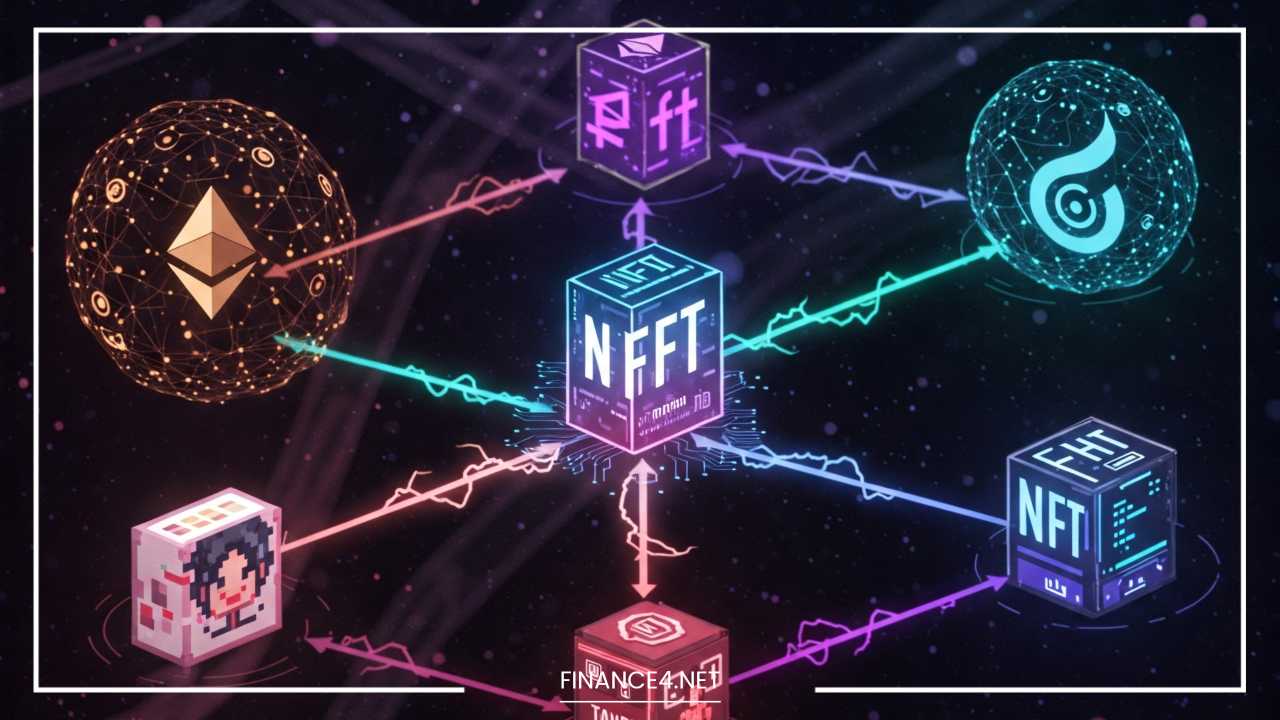
However, a fundamental challenge persists: the inherent isolation of NFTs to their native blockchains. An NFT minted on Ethereum traditionally remains on Ethereum, unable to seamlessly interact with applications or users on, say, Solana, Polygon, or Avalanche. This “blockchain balkanization” hinders true interoperability, limiting the potential of NFTs and the broader metaverse.
This article delves into the critical need for bridging NFTs across different blockchains, exploring the innovative solutions emerging to overcome these limitations, and examining the profound implications for the future of digital assets and the decentralized web.
The Siloed Landscape: Why Bridging is Essential
Imagine a world where your digital identity, your prized possessions, or even your in-game achievements are confined to a single platform, unable to be moved, traded, or utilized elsewhere. This is the current reality for many NFTs. While a blockchain offers unparalleled security and immutability for the assets it hosts, the lack of seamless communication between these independent networks creates several roadblocks:
- Limited Liquidity and Market Reach: An NFT on a less popular blockchain might struggle to find buyers or sellers compared to one on a high-traffic network like Ethereum. Bridging opens up access to a wider pool of potential collectors and markets, increasing liquidity and price discovery.
- Restricted Utility and Composability: The true power of NFTs lies in their potential for composability – the ability to combine and build upon existing NFTs to create new experiences. If an NFT representing a character in one game cannot be used in another game on a different blockchain, its utility is significantly curtailed. Cross-chain functionality unlocks richer applications and innovative use cases, particularly in the burgeoning metaverse.
- High Transaction Costs and Network Congestion: Popular blockchains like Ethereum can suffer from high gas fees and network congestion during peak times. This can make minting, trading, and even holding NFTs prohibitively expensive for many users. Bridging allows users to move their NFTs to more cost-effective or faster chains for certain operations, offering flexibility and choice.
- Fragmented User Experience: For users, navigating multiple blockchains with different wallets, interfaces, and transaction processes is a cumbersome experience. Interoperability streamlines this, moving towards a more unified and user-friendly Web3 environment.
- Developer Constraints: Developers building dApps or games that leverage NFTs are often forced to choose a single blockchain, limiting their audience and the potential functionalities of their projects. Cross-chain capabilities empower developers to build more expansive and interconnected experiences.
The imperative for bridging NFTs is clear: to unlock their full potential, foster a truly interconnected Web3, and pave the way for a seamless, multi-chain metaverse where digital assets can flow freely and gain enhanced utility.
Mechanisms for Bridging NFTs: A Technical Deep Dive
Several ingenious solutions are being developed and implemented to facilitate the movement of NFTs across different blockchains. These mechanisms vary in their technical complexity, security models, and trust assumptions.
1. Wrapped NFTs (WNFTs)
One of the most common and conceptually straightforward approaches is the use of “wrapped” NFTs. This mechanism involves locking the original NFT on its native blockchain and minting an equivalent “wrapped” version on the target blockchain.
How it works:
- Locking: The original NFT is deposited into a smart contract on its source chain. This contract acts as a custodian, holding the NFT in escrow.
- Minting: Upon successful deposit, a new, corresponding NFT (the “wrapped” NFT) is minted on the destination blockchain. This wrapped NFT represents the locked original and inherits its unique properties and ownership.
- Unwrapping: To retrieve the original NFT, the wrapped NFT on the destination chain is burned, and the original NFT is released from the escrow contract on the source chain.
Advantages:
- Relatively simple to implement for developers.
- Maintains the original NFT’s uniqueness and ownership.
- Enables the wrapped NFT to be traded and utilized within the ecosystem of the target blockchain.
Disadvantages:
- Requires a trusted third party or a robust smart contract to manage the locking and unlocking process, introducing a potential point of failure or attack vector if not meticulously audited.
- The wrapped NFT is essentially a derivative; the original NFT remains locked.
Example: WETH (Wrapped Ethereum) is a similar concept for fungible tokens, allowing Ethereum to be used in DeFi protocols that require ERC-20 compatibility. For NFTs, projects like Wrapped Cryptopunks allowed Cryptopunks (originally ERC-721) to be wrapped and traded on platforms that supported ERC-20-like functionalities for fractionalization.
2. NFT Bridges
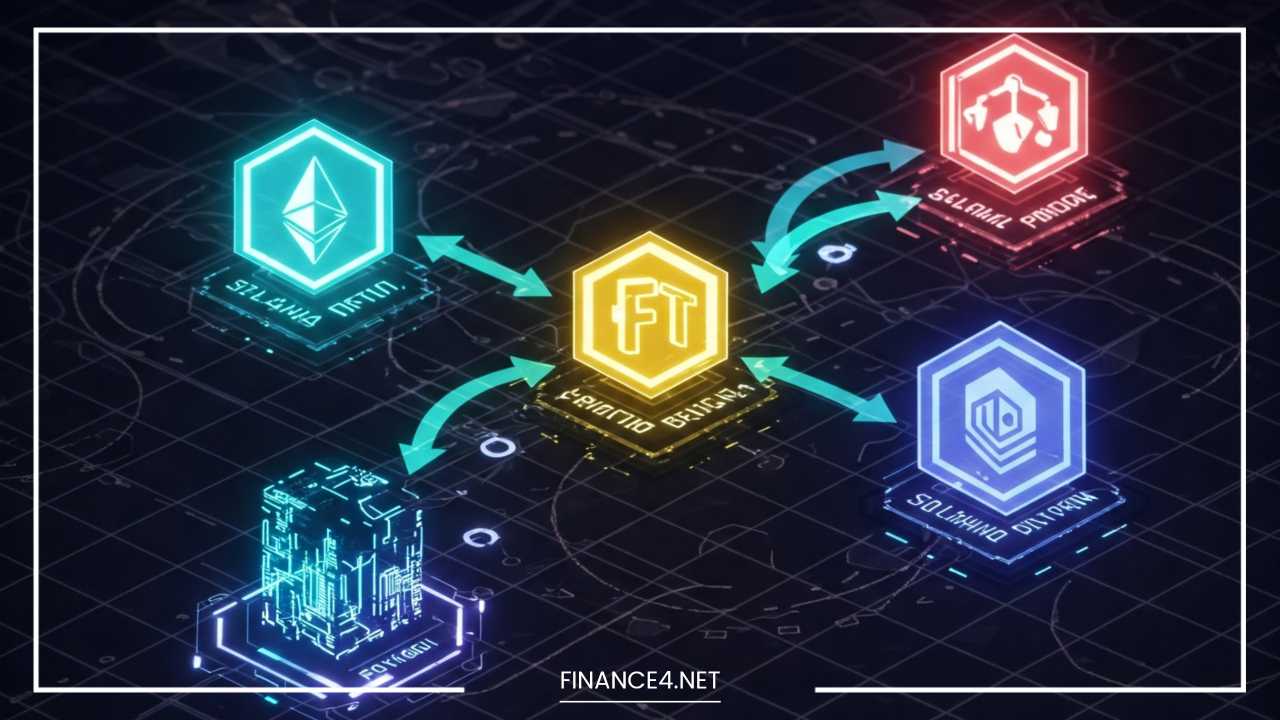
NFT bridges are dedicated protocols or dApps designed specifically to facilitate cross-chain transfers of NFTs. They are more sophisticated than simple wrapping mechanisms and often involve a combination of smart contracts, relayers, and oracles to ensure secure and verified transfers.
Types of NFT Bridges:
- Centralized Bridges: These bridges rely on a central entity or a consortium of validators to manage the transfer of NFTs. While they can be faster and simpler to use, they introduce a significant trust dependency and are vulnerable to single points of failure or malicious actors.
- Decentralized Bridges (Trustless Bridges): These bridges aim to minimize trust assumptions by using cryptographic proofs, multi-party computation (MPC), or other decentralized mechanisms to verify and execute cross-chain transactions. They are generally more secure but can be more complex to build and operate.
How they work (general process):
- Initiation: A user initiates a transfer request for their NFT on the source chain.
- Lock/Burn: The NFT on the source chain is either locked in a smart contract or burned.
- Verification: Relayers or oracles monitor the source chain for the lock/burn event and relay this information to the target chain.
- Minting/Unlocking: Once verified, a new corresponding NFT is minted on the target chain, or an existing locked NFT is unlocked.
Key Components of Bridges:
- Smart Contracts: Crucial for managing the locking, minting, and burning processes on both chains.
- Relayers: Off-chain entities that monitor events on one blockchain and relay them to another.
- Oracles: Provide external data to smart contracts, often used to verify the state of one blockchain to another.
- Validators/Guardians: In some decentralized bridge designs, a set of validators or guardians collectively secure the bridge and sign off on cross-chain transactions.
Security Implications of Bridges:
NFT bridges, due to their role as custodians of locked assets, have historically been prime targets for exploits. Vulnerabilities can arise from:
- Smart Contract Bugs: Flaws in the bridge’s smart contract code can lead to asset loss.
- Centralization Risks: Centralized bridges are susceptible to single points of failure, hacks, or censorship.
- Relayer/Oracle Compromise: If relayers or oracles are compromised, they could relay false information, leading to fraudulent minting or unlocking of NFTs.
- Front-running Attacks: Malicious actors could exploit transaction ordering to manipulate bridge operations.
Robust security audits, bug bounties, and decentralized governance models are critical for mitigating these risks.
3. Interoperability Protocols and Frameworks
Beyond dedicated bridges, broader interoperability protocols aim to create a more integrated blockchain ecosystem where assets and data can move freely.
-
Cosmos IBC (Inter-Blockchain Communication Protocol): IBC is a protocol for sovereign blockchains to communicate and exchange data. It allows different Cosmos-SDK based blockchains (zones) to transfer tokens and messages in a trust-minimised way. For NFTs, IBC enables the secure transfer of unique assets between interconnected chains, treating them as “path-dependent” tokens that retain their identity across chains. This is a powerful step towards a truly multi-chain NFT future.
-
Polkadot Parachains: Polkadot is designed as a “blockchain of blockchains,” where various specialized blockchains (parachains) can connect to a central Relay Chain. Parachains are inherently interoperable, allowing seamless communication and asset transfers, including NFTs, between them. This shared security model and built-in interoperability make Polkadot a strong contender for facilitating cross-chain NFT experiences, particularly for gaming and metaverse projects.
-
LayerZero: LayerZero is an “omnichain” interoperability protocol that aims to be a foundational layer for communication between all blockchains, whether they are Layer 1s or Layer 2s. Instead of relying on expensive on-chain light nodes or less secure middle chains, LayerZero uses Ultra-Light Nodes, blockchain endpoints, decentralized third-party oracles (like Chainlink), and relayers to enable direct, secure cross-chain communication. This architecture allows developers to build truly interconnected dApps that can send and receive messages (including NFT transfers) across various networks.
-
Chainlink Cross-Chain Interoperability Protocol (CCIP): Chainlink’s CCIP is a secure messaging system that allows developers to build cross-chain applications, including those involving NFTs. Leveraging Chainlink’s robust oracle networks, CCIP aims to provide secure and tamper-proof interactions between different chains, addressing a critical need for reliable and verifiable cross-chain data transfer.
4. Atomic Swaps for NFTs
Atomic swaps allow for the direct, peer-to-peer exchange of assets between different blockchains without the need for a trusted third party. While more commonly discussed for fungible cryptocurrencies, the concept can be extended to NFTs.
How it works:
Atomic swaps for NFTs typically leverage Hash Time-Locked Contracts (HTLCs). Both parties to the swap commit their NFTs to smart contracts with specific conditions:
- Hashlock: One party generates a secret and a hash of that secret. They lock their NFT with a smart contract that can only be unlocked by revealing the secret.
- Timelock: The second party uses the hash provided by the first party to lock their NFT. This contract also has a timelock, meaning if the secret isn’t revealed within a certain timeframe, their NFT is returned.
- Exchange: To claim the second party’s NFT, the first party must reveal their secret. This revelation then allows the second party to claim the first party’s NFT. If either party fails to reveal the secret or claim their NFT within the timelock, the transaction is reversed, ensuring that neither party can lose their asset without receiving the other.
Advantages:
- Trustless: Eliminates the need for intermediaries, enhancing security and decentralization.
- Atomic: Guarantees that either both NFTs are exchanged or neither is, preventing partial or failed transactions.
Disadvantages:
- Complexity: More technically challenging to implement and coordinate between parties, especially for non-standard NFTs.
- Liquidity: Requires direct matching between buyers and sellers, which can be challenging for illiquid NFT markets.
- Scalability: Less suitable for large-scale, automated cross-chain NFT transfers compared to bridges.
Use Cases and the Future of Interoperable NFTs
The ability to bridge NFTs across blockchains unlocks a plethora of exciting use cases, paving the way for a more dynamic and interconnected Web3:
- Cross-Game Assets: Imagine owning a unique sword in one blockchain game and being able to use it, or a visually equivalent representation of it, in another game on a different chain. This enhances the value and utility of in-game NFTs, creating persistent digital identities and inventories across virtual worlds.
- Metaverse Interoperability: The vision of a truly open metaverse, where users can seamlessly traverse different virtual environments with their digital identities and assets, hinges on cross-chain NFT capabilities. Your avatar, virtual land, or wearable could be portable across various metaverse platforms.
- Enhanced NFT Lending and Staking: By bridging NFTs to chains with robust DeFi ecosystems, users could potentially lend their valuable NFTs as collateral or stake them to earn rewards, unlocking new financial applications for non-fungible assets.
- Broader Marketplaces and Auction Houses: Cross-chain NFT marketplaces would allow users to list and trade NFTs from any supported blockchain, increasing liquidity and offering a wider selection to buyers. This would break down the silos of existing chain-specific marketplaces.
- Fractionalized NFT Ownership: Bridging could facilitate the fractionalization of high-value NFTs across different chains, making them more accessible to a wider range of investors and fostering new forms of collective ownership.
- Supply Chain and Identity Management: NFTs can be used for tracking goods in supply chains or representing digital identities. Cross-chain capabilities would enable these digital records to be verified and transferred across different blockchain networks, improving efficiency and transparency.
- Decentralized Autonomous Organizations (DAOs) and Governance: NFTs representing membership or voting rights in DAOs could be bridged to different chains, allowing for more flexible and inclusive governance structures.
The future of interoperable NFTs is inextricably linked to the evolution of Web3. As blockchain technology matures and cross-chain solutions become more robust and user-friendly, we will witness a paradigm shift in how we perceive and interact with digital assets. The emphasis will shift from isolated blockchain ecosystems to a fluid, interconnected network where NFTs serve as universal digital passports and possessions.
Challenges and Considerations
Despite the promising advancements, bridging NFTs to different blockchains is not without its challenges:
- Security Risks: As highlighted earlier, bridges are complex systems and remain attractive targets for attackers. The security of these systems is paramount and requires continuous auditing, monitoring, and improvement.
- User Experience and Complexity: While the goal is to simplify, the underlying technicalities of cross-chain transactions can still be daunting for average users. Intuitive user interfaces and clear explanations are crucial for wider adoption.
- Standardization: While ERC-721 and ERC-1155 are dominant standards on Ethereum, broader standardization across different blockchain ecosystems is necessary for true plug-and-play interoperability.
- Scalability of Bridges: As the volume of cross-chain NFT transfers increases, the underlying infrastructure of bridges must be able to handle the load efficiently and cost-effectively.
- Trust Assumptions: While decentralized bridges aim to minimize trust, some level of trust in the underlying cryptography, smart contract code, or validator sets may still be present. Understanding these trust assumptions is important for users.
- Regulatory Uncertainty: The evolving regulatory landscape for cryptocurrencies and NFTs also impacts cross-chain activities. Clearer guidelines are needed to ensure compliance and foster innovation.
Final Thoughts
Bridging NFTs to different blockchains is a critical step towards realizing the full potential of non-fungible tokens and building a truly interconnected Web3. The existing siloed nature of blockchain networks limits liquidity, utility, and user experience. However, with the emergence of wrapped NFTs, sophisticated NFT bridges, and foundational interoperability protocols like Cosmos IBC, Polkadot, and LayerZero, the barriers are slowly being dismantled.
As these technologies mature and become more secure and user-friendly, we can anticipate a future where NFTs are not confined to a single digital island but can freely traverse the vast ocean of the multi-chain metaverse. This will unlock unprecedented creativity, foster new economic models, and empower users with true ownership and portability of their digital identities and assets. The journey to a seamlessly interoperable NFT ecosystem is ongoing, but the progress made so far paints a vibrant picture of a decentralized future where digital assets are truly limitless.