How to Swap NFTs via Direct Peer-to-Peer
 by
by 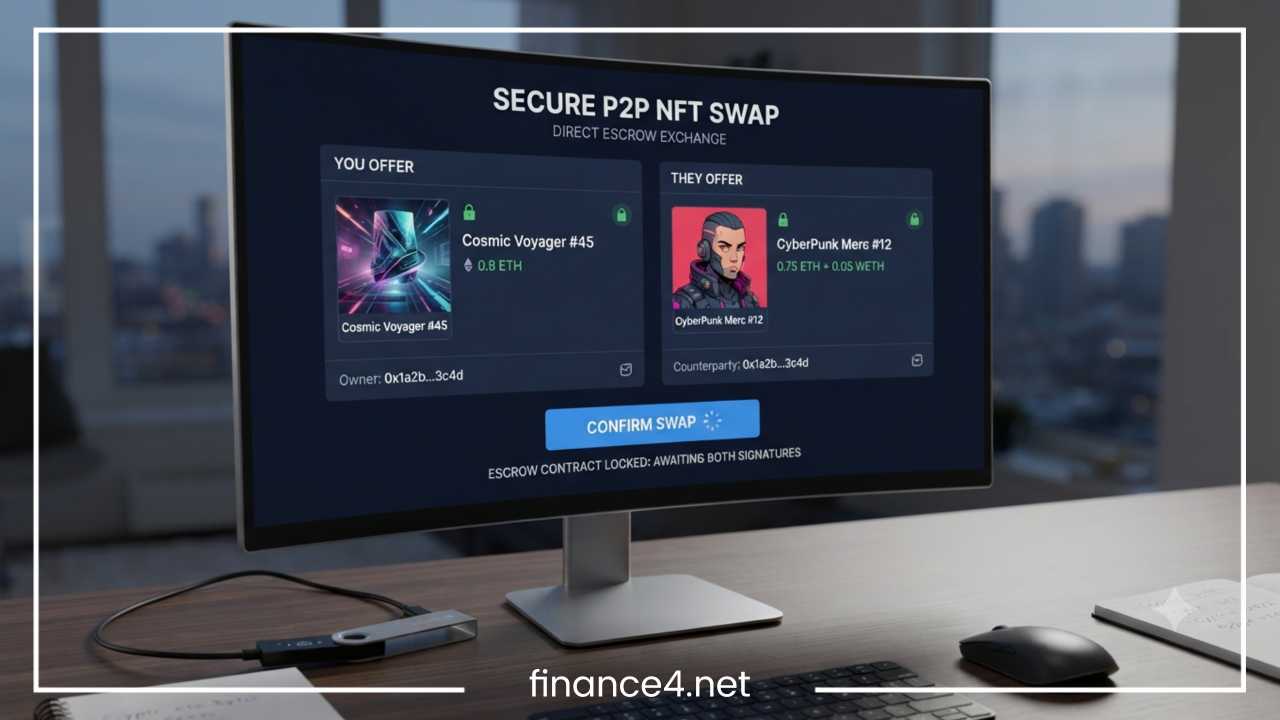
How to Swap NFTs via Direct Peer-to-Peer | Secure P2P NFT Trading
The non-fungible token ecosystem has matured rapidly, evolving from a speculative digital art market into a diverse landscape of gaming assets, virtual land, utility passes, and digital collectibles. As the variety and utility of these assets have expanded, so too have the mechanisms for trading them. While central marketplaces have historically dominated transaction volume, a major paradigm shift is underway toward decentralized, direct peer-to-peer trading.
An NFT swap represents a direct, wallet-to-wallet exchange of digital assets between two parties without relying on an open-market buyer or a centralized listing system. Instead of selling a digital asset for cryptocurrency and then using those funds to purchase another asset, collectors are increasingly opting to trade assets directly. This strategy effectively bypasses traditional marketplace friction, reduces overall overhead, and opens new channels for creative negotiation.
The growing demand for a trustless NFT swap protocol stems from a collective desire for greater control, lower costs, and enhanced privacy. Traditional platforms frequently impose heavy creator royalties and service fees, which can erode the value of high-tier trades. Direct peer-to-peer NFT trading provides an alternative framework where two willing participants can agree on custom terms, exchange assets simultaneously, and retain the full value of their collectibles.
This comprehensive guide explores the mechanics of direct NFT exchange, dissecting how trustless architectures work, the inherent benefits, potential security vulnerabilities, and a practical step-by-step roadmap to executing swaps safely. Whether you are looking to trade profile pictures, virtual real estate, or in-game assets, understanding the nuances of blockchain NFT trading security is vital to navigating this expanding frontier.
What Is a Peer-to-Peer NFT Swap?
A peer-to-peer NFT swap is a specialized cryptographic transaction wherein two independent cryptocurrency wallets exchange non-fungible tokens or a combination of tokens and fungible cryptocurrency directly with one another. Unlike standard marketplace listings where an asset is placed on a public order book waiting for an unknown buyer to fulfill the asking price in crypto, a P2P swap is a targeted, pre-negotiated arrangement.
In a direct wallet-to-wallet NFT transfer, the trade occurs via a single atomic transaction. The term “atomic” implies that the execution is binary: either both sides of the trade fulfill their criteria simultaneously, or the entire transaction fails completely, ensuring neither party can walk away with an asset without relinquishing their promised counter-asset. This eliminates the need for an intermediary clearinghouse, escrow agent, or traditional web3 marketplace to act as a middleman.
The key structural difference between a P2P swap and a traditional marketplace lies in the execution path. Marketplaces operate on aggregated listing models, relying on shared liquidity pools, public storefronts, and rigid smart contracts designed to deduct standard marketplace fees upon every successful sale. A direct NFT exchange cuts through this infrastructural layer by establishing a private, deterministic channel between two specific cryptographic addresses.
Use Cases for P2P NFT Swaps
-
Trading Within a Specific Collection: A collector holding a specific profile picture asset might want to swap it for another asset within the exact same collection because they prefer the visual traits, rarity tiers, or aesthetic properties of the counterparty’s token.
-
Cross-Collection Bartering: A trader can offer a high-value piece of metaverse land in exchange for a bundle consisting of multiple gaming assets and a specific amount of native cryptocurrency.
-
Consolidation and Upgrading: Users frequently leverage P2P swaps to bundle several lower-tier, highly liquid digital assets to trade up for a single, rare, blue-chip asset held by another collector.
-
Private Institutional Over-the-Counter Trades: High-net-worth collectors or decentralized autonomous organization treasuries routinely execute large-scale, private over-the-counter transfers directly to avoid causing sudden floor-price fluctuations on public marketplaces.
How NFT Swapping Works
The underlying architecture of peer-to-peer NFT trading relies fundamentally on specialized smart contracts, cryptographic wallet signatures, and deterministic escrow logic. To ensure security without an intermediary, the system must guarantee that no digital asset changes hands unless the precise conditions specified by both traders are met simultaneously.
At the core of this operation is the NFT smart contract interaction. Decentralized swap platforms utilize open-source protocols that act as impartial code-driven escrows. When a user initiates a swap, they generate a highly structured message containing the specific parameters of the trade: their wallet address, the precise smart contract address and token identification number of the asset they are offering, the contract address and token identification number of the asset they expect in return, and an expiration timestamp.
This message is then signed locally using the initiator’s private key via their digital wallet. This cryptographic signature proves ownership of the asset and irrevocably authorizes the swap protocol’s smart contract to transfer the specified asset, but only if the exact counter-asset is delivered at the exact same moment. The signed offer is typically transmitted to the counterparty via a secure link generated by the underlying swap platform.
When the counterparty receives the link, they review the terms. If satisfied, they sign a corresponding transaction that triggers the execution function of the swap smart contract. The contract reads both digital signatures, verifies that the assets specified are present in both wallets, checks that all required token approvals have been granted, and executes the transfer in a single block validation step. If either wallet lacks the correct asset or fails to provide the proper cryptographic signature, the transaction is rejected by the blockchain network, and no assets move.
The General P2P NFT Swapping Workflow
-
Connect Wallet: The initiating user connects their digital wallet to a reputable, decentralized peer-to-peer trading protocol.
-
Choose NFT: The user selects the specific digital asset from their connected wallet inventory that they wish to trade away.
-
Create Swap Offer: The user defines the parameters of the desired trade by inputting the asset details or wallet address of the counterparty, along with any required complementary cryptocurrency.
-
Counterparty Reviews: The recipient accesses the generated secure trading interface to inspect the incoming offer, checking asset metadata and contract authenticity.
-
Sign Transaction: Both parties cryptographically sign the specific state change, authorizing the platform’s protocol to interact with their tokens.
-
Smart Contract Executes: The underlying network smart contract validates the parameters, enforcing the atomic trade rules.
-
NFTs Exchanged: The assets are routed simultaneously to their respective new destination wallets, completing the wallet-to-wallet NFT transfer.
Benefits of Direct NFT Swaps
Embracing direct peer-to-peer NFT trading provides clear structural, economic, and strategic advantages for collectors looking to maximize the value of their web3 portfolios.
Save on Marketplace Fees
Standard commercial platforms place a considerable burden on active traders by charging platform service fees on every successful transaction. When combined with creator royalties, these costs can swallow a significant portion of an asset’s total value. Direct peer-to-peer trading typically avoids marketplace service premiums entirely. Traders only pay the mandatory network gas fees for NFT swaps, keeping the intrinsic value of their portfolio intact.
Avoid Selling and Rebuying
In traditional marketplace environments, bartering requires a multi-step liquidation process. A collector must list their asset, wait for a buyer to purchase it with cryptocurrency, pay marketplace fees, accept the risk of currency volatility while holding the liquid funds, and then search for the target asset to buy. Direct swapping allows users to convert one asset into another instantly in a single transaction, bypassing the complex, tax-triggering, multi-step liquidation loop.
Instant Asset Exchange
Because P2P swaps utilize atomic smart contracts, the exchange happens instantly within a single block confirmation. There is no waiting period where one party holds funds while the other ships an asset, nor is there any reliance on third-party escrow settlement timeframes. The moment the second signature is validated on the blockchain network, the assets update their ownership state across the ledger simultaneously.
Better Negotiation
Direct swapping fosters a more communicative, personalized trading ecosystem. Instead of interacting with static price walls on an order book, collectors can engage in fluid, nuanced negotiations. Traders can easily propose complex combinations—such as combining multiple low-tier assets with a fractional amount of stablecoins or native utility tokens—to strike custom, mutually satisfying deals that standard marketplace mechanics cannot support.
Trade Rare Collectibles Directly
For highly illiquid, ultra-rare digital collectibles, finding an open-market buyer willing to pay an accurate valuation in raw cryptocurrency can take months. Direct swapping opens up the unique possibility of asset-for-asset value alignment. Two collectors holding rare assets of similar perceived value can trade directly, satisfying their individual curatorial preferences without forcing either party to source massive amounts of liquid capital first.
Privacy Advantages
Using a dedicated P2P NFT swap protocol can offer enhanced transaction privacy. Instead of blasting an asset to a public, high-profile marketplace storefront where bots and automated tracking scripts monitor price drops and listing shifts, a peer-to-peer arrangement can be arranged completely over private communication channels. The final atomic trade is executed quietly between two cryptographic addresses, minimizing public visibility until the transaction settles on-chain.
Risks of Peer-to-Peer NFT Trading
While the technical architecture of atomic smart contracts provides structural protection against simple non-payment, direct peer-to-peer NFT trading exposes participants to an array of highly sophisticated social engineering tactics, counterfeits, and security risks.
Scam NFTs
The permissionless nature of blockchain technology implies that anyone can deploy a smart contract and mint a digital asset with any image, name, or trait description they desire. Malicious actors frequently mint tokens that visually mimic high-value collections. In a P2P swap scenario, a scammer may offer a token that appears completely identical to a premium asset on the surface but is actually an entirely worthless token originating from a fraudulent smart contract.
Fake Collections
Scammers go beyond individual asset counterfeiting by spinning up entire fraudulent collection architectures. They copy the metadata, descriptions, names, and imagery of prominent, verified projects, then deploy them on alternative or identical networks. Unwary traders looking quickly at an incoming swap offer can easily mistake a token from a fake collection for an authentic piece if they fail to perform rigorous contract verification.
Wallet Phishing
Because direct swapping requires users to connect their digital wallets to platforms and sign cryptographic messages, it serves as a highly effective vector for wallet phishing operations. Attackers set up elaborate, pixel-perfect replicas of popular P2P trading platforms. When a victim attempts to initiate or accept a swap on these fraudulent sites, they inadvertently sign a malicious approval transaction that grants the attacker full permission to drain all assets from their wallet.
Counterparty Fraud
While the smart contract prevents a counterparty from taking your asset without delivering theirs, it cannot prevent deceptive negotiation tactics. Bad actors routinely utilize high-pressure tactics across social media platforms, Discord direct messages, or messaging apps to manipulate targets. They might alter the terms of the link at the very last second, substituting a slightly modified token ID or removing an agreed-upon cryptocurrency component right before the victim signs.
Smart Contract Vulnerabilities
Every decentralized NFT swap protocol relies completely on the integrity of its underlying code. If a swap platform utilizes smart contracts that have not been comprehensively audited, or if they contain subtle logical edge cases, attackers can exploit those vulnerabilities. Such exploits can result in locked assets, asymmetric trades where one side fails to deliver but still extracts the target token, or systemic protocol-wide asset drainage.
Incorrect Wallet Addresses
Direct P2P trading requires explicit destination formatting. If a user manually inputs a counterparty’s wallet address incorrectly during the initialization phase of a trade, or if they succumb to clipboard-hijacking malware that alters copied blockchain addresses, the swap offer could be routed to an inaccessible or malicious destination. Once an atomic signature is pushed on-chain to the wrong address, the action is completely irreversible.
Price Volatility
NFT assets are highly volatile and illiquid. During the time it takes to negotiate a complex peer-to-peer swap, draft the cryptographic terms, and execute the transaction on-chain, the market dynamics of the underlying assets can shift drastically. A sudden drop in the floor price of one of the collections involved in the swap can immediately render a previously balanced trade highly unfavorable to one of the participants.
How to Swap NFTs Securely (Step-by-Step)
Executing a successful, secure peer-to-peer trade requires a meticulous, systematic approach. Following a strict verification protocol minimizes the risk of human error and insulates your digital assets from exploitation.
Step 1: Verify NFT Authenticity
Never rely purely on the visual image or name displayed within a website’s trading interface. You must manually inspect the underlying blockchain metadata. Request the exact smart contract address of the asset being offered by your counterparty. Cross-reference this long-form alphanumeric address against verified block explorers, official project documentation, or primary marketplace listings to ensure it matches the authentic collection contract perfectly down to every single character.
Step 2: Research the Other Trader
Before executing any transactions, conduct basic due diligence on the individual with whom you are bartering. Review their public wallet history using an online block explorer. Analyze their previous transaction patterns: Do they have a history of clean, verifiable peer-to-peer interactions, or does their wallet interact heavily with unverified protocols or known high-risk addresses? Be exceptionally wary of newly created accounts or individuals who aggressively push for an immediate transaction without giving you time to think.
Step 3: Use a Trusted Swap Platform
Always ensure that the platform facilitating the direct trade is an established, audited, and decentralized P2P NFT marketplace or swap engine. Avoid obscure, unverified, or highly experimental applications recommended exclusively by the counterparty. Ensure the URL of the platform is entered correctly, and check that the platform uses open-source, non-custodial smart contracts that allow you to maintain complete ownership of your keys throughout the entire duration of the swap process.
Step 4: Review Smart Contract Permissions
When you connect your wallet to a swap platform to create or accept an offer, the platform will prompt you to approve its smart contract to interact with your digital assets. Read the prompt inside your wallet interface carefully. Never sign an unrestricted “Approve All” transaction if you are only attempting to trade a single asset. Ensure that the approval is strictly limited to the precise token ID and contract address required for that specific trade.
Step 5: Double-Check Wallet Addresses
Before authorizing the final transaction, perform a rigorous review of every single cryptographic address visible in the order summary. Manually verify the first six and last six characters of your own wallet address, the counterparty’s wallet address, and the target asset contract addresses. Ensure that no malicious clipboard alteration has occurred and that the assets will flow precisely to the intended parties upon block confirmation.
Step 6: Confirm Transaction Details
Take a breath and complete a comprehensive final review of the swap dashboard. Verify that the asset you are receiving matches the exact token ID you negotiated. Look closely at the fungible token fields to ensure that decimals have not been manipulated (e.g., ensuring an offer reads as 1.0 ETH rather than 0.1 ETH or an equivalent wrapped token variant). Ensure the expiration timestamp on the swap offer is long enough to prevent the transaction from hanging in an uncertain state due to sudden network congestion.
Step 7: Track Confirmation
Once you click the final sign button within your digital wallet, monitor the execution path using a dedicated blockchain network explorer. Paste your transaction hash into the search bar to watch its status shift from pending to successful. Confirm that the target NFT has officially landed in your secure wallet inventory, and verify that the assets you traded away have been successfully routed out, marking the definitive, clean completion of your secure NFT swap.
Security Best Practices for P2P NFT Trading
Maintaining an airtight security posture requires a permanent commitment to defensive habits. Incorporating these fundamental best practices into your daily routine drastically reduces your exposure to advanced digital asset threats.
-
Use Hardware Wallets: Always store your highly valued digital assets on a physical hardware wallet. A hardware wallet keeps your private keys completely isolated from internet-connected devices, ensuring that even if you accidentally visit a malicious swap site, an attacker cannot extract your assets without a physical button press on the cold device.
-
Never Share Seed Phrases: Your secret recovery phrase or private key controls absolute access to your entire digital fortune. No legitimate swap platform, support representative, or community moderator will ever ask for this information under any circumstances. Anyone requesting it is actively attempting to defraud you.
-
Revoke Unnecessary Approvals: Over time, the cumulative smart contract permissions you grant to various trading protocols can create a latent security risk. Periodically utilize token approval revocation tools to completely wipe out old, unused permissions, ensuring that historic protocol hacks cannot impact your current wallet contents.
-
Enable Wallet Security Features: Leverage modern wallet configurations, such as transaction simulation tools and multi-factor transaction validation. Simulation software provides a visual preview of exactly which assets will enter and leave your wallet before you sign, exposing hidden drainer scripts in real time.
-
Avoid Public Wi-Fi: Never initiate, sign, or negotiate peer-to-peer digital asset swaps while connected to unencrypted public Wi-Fi networks. Attackers can easily orchestrate man-in-the-middle exploits on public networks to intercept your traffic, manipulate web fields, or serve up altered trading links.
-
Beware of Fake Discord Moderators: The negotiation phase of P2P swaps often occurs within community channels. Scammers frequently masquerade as official project staff, middleman escrows, or platform support personnel, offering custom trading links designed to extract your assets via malicious contracts.
-
Watch for Phishing Links: Always navigate directly to swap platforms via bookmarked links or verified aggregate listings. Never click direct links sent to you via social media direct messages, anonymous emails, or comment sections, as these are overwhelmingly designed to route users to malicious lookalike web domains.
-
Verify Collection Contract Addresses: Treat every incoming swap proposal as an unverified hazard until you personally extract the contract hash and trace its lineage directly back to the primary deployment block on the ledger. Verification is your absolute shield against counterfeit asset injection.
Direct NFT Swaps vs. NFT Marketplaces
Understanding the fundamental trade-offs between utilizing an open commercial platform and executing a targeted peer-to-peer swap is crucial for optimizing your transactional efficiency.
| Feature | Direct P2P Swap | NFT Marketplace |
| Fees | Zero platform fees; traders are responsible exclusively for standard network gas fees. | High overhead; typically includes platform service fees along with creator royalty cuts. |
| Speed | Instantaneous; settled atomically in a single block transaction upon mutual signature validation. | Variable; depends entirely on finding an open-market buyer willing to pay the listing price. |
| Flexibility | Extremely high; enables highly customizable asset-for-asset and multi-token bundle combinations. | Rigid; structurally limited to single-item listings priced in specific, platform-approved base currencies. |
| Negotiation | Fluid and direct; occurs across private communication channels with highly customized terms. | Non-existent or algorithmic; limited to basic static offers or automated bidding queues. |
| Security | Highly dependent on user verification habits to isolate counterfeits and phishing links. | Structured environment with built-in verification badges and curated smart contract safeguards. |
| Liquidity | Low; requires manually locating a specific counterparty interested in your exact asset inventory. | High; aggregates thousands of active global buyers and sellers on an open, public order book. |
| Price Discovery | Subjective; dictated completely by the immediate mutual agreement of the two individual traders. | Transparent; established dynamically by global market supply, demand, and public floor price tracking. |
Types of NFTs You Can Swap
The structural architecture of modern peer-to-peer swap contracts allows for the direct exchange of virtually any tokenized asset built upon standard blockchain token specifications, including ERC-721, ERC-1155, and their multi-chain equivalents.
Art NFTs
Digital artwork, ranging from one-of-a-kind fine art editions to generative masterpieces, is highly suited for direct swapping. Collectors often leverage peer-to-peer channels to swap art pieces of equivalent cultural stature or to trade individual works by a specific digital artist without incurring heavy marketplace platform deductions.
Gaming NFTs
Modern web3 gaming ecosystems utilize unique digital tokens to represent vital in-game assets, such as weapons, armor, active character skins, and experienced avatars. Players frequently turn to P2P trading platforms to exchange items they no longer need for specialized gear held by other players, enabling direct, cross-game, or intra-game bartering.
Metaverse Land
Virtual real estate within decentralized digital worlds represents highly valuable, illiquid real estate. Because buying land requires immense amounts of liquid cryptocurrency, investors frequently utilize P2P swaps to trade specific parcels of land directly for alternative plots, or to trade land bundles for high-tier profile pictures and liquid stablecoins.
Profile Picture Collections
Commonly referred to as PFPs, these massive generative collections serve as digital identities across social platforms. PFP trading is a primary driver of P2P swap volume, as collectors constantly look to fine-tune their online aesthetics by swapping existing tokens for alternative variants with preferred visual traits, colors, or rarity parameters.
Music NFTs
Tokenized audio tracks, complete albums, and digital concert access passes form a rapidly expanding niche. Music enthusiasts leverage peer-to-peer networks to trade rare audio editions, early artist releases, and exclusive audio-visual bundles, connecting directly with fellow collectors who share precise musical curation tastes.
Domain NFTs
Decentralized naming services convert complex, long-form cryptographic wallet addresses into human-readable digital domains. These domains act as primary web3 identities. Traders frequently swap high-demand, short-form alphanumeric domains directly, bartering premium naming rights for alternative valuable digital assets.
Membership NFTs
Many decentralized organizations, private clubs, and educational platforms gate access using tokenized membership passes. These tokens function as active keys to private digital spaces. Collectors look to swap out of groups whose utility they have fully utilized and transition directly into alternative organizations by swapping keys with other members.
Utility NFTs
Tokens that offer real-world redemption rights, future product allocations, continuous software access, or structural staking multipliers fall under the utility umbrella. P2P swapping provides a clean framework for businesses and active power users to exchange functional digital tools directly based on current operational requirements.
Wallets Commonly Used for NFT Swapping
Your digital wallet serves as your absolute gateway to the web3 ecosystem, acting as both your asset repository and your cryptographic signing terminal. Choosing the correct configuration is paramount to maintaining a secure NFT swap workflow.
When evaluating a digital wallet for active peer-to-peer trading, multi-chain support is a crucial factor. The modern ecosystem is highly fragmented across distinct blockchain architectures. A wallet that can seamlessly manage assets across diverse layers allows you to participate in swaps across multiple ecosystems without forcing you to maintain separate software instances.
Hardware wallet compatibility is another non-negotiable security control. An optimal setup involves using a software wallet interface that acts as a visual front-end while anchoring all critical private key operations inside a connected hardware device. This setup ensures you get the ease of use provided by modern browser extensions alongside the uncompromised physical protection of cold storage.
Furthermore, premium wallets provide comprehensive, built-in NFT management features. This includes the ability to native-view token metadata, check collection floor values, track accurate trait attributes, and easily view existing token smart contract allowances directly within the wallet settings. Advanced wallets also integrate proactive security alerts, warning users when a web page is attempting to trigger a high-risk signature or an unverified asset approval.
Blockchain Networks That Support NFT Swaps
Peer-to-peer trading flourishes across multiple distinct layer-1 and layer-2 blockchain networks, each presenting distinct economic frameworks, speeds, and transaction parameters.
Ethereum
As the foundational home of the non-fungible token movement, Ethereum hosts the absolute highest volume of blue-chip historical digital collectibles. The network offers unparalleled decentralized security and architectural longevity. However, Ethereum is subject to significant network congestion, resulting in highly expensive gas fees for NFT swaps during periods of peak transactional demand.
Polygon
Operating as a premier layer-2 scaling solution for Ethereum, Polygon provides incredibly fast block finality alongside nominal transaction costs. It serves as a major hub for mass-market digital collectibles, gaming economies, and prominent corporate brand loyalty rewards, making it a highly efficient environment for high-frequency P2P bartering.
Solana
Utilizing a highly unique proof-of-history consensus mechanism, Solana delivers ultra-high throughput and microscopic transactional overhead. The Solana digital asset ecosystem is massive, featuring highly liquid profile picture projects and gaming assets. Swaps here execute almost instantaneously, costing fractions of a cent in network fees.
BNB Chain
Highly optimized for smart contract performance, the BNB Chain offers an affordable, high-speed ecosystem for digital assets. It heavily accommodates large-scale gaming applications and decentralized finance-linked collectibles, appealing directly to traders looking for low gas overhead and broad cross-chain bridges.
Base
Developed as a secure Ethereum layer-2 network, Base has rapidly grown into a prominent hub for consumer-facing decentralized applications and culture-driven digital collectibles. It combines the absolute security guarantees of Ethereum with substantially reduced operational costs and high transaction processing speeds.
Avalanche
Featuring a highly unique multi-chain subnet architecture, Avalanche provides robust security, lightning-quick finality, and high transactional scalability. Its digital asset footprint focuses heavily on institutional art tokenization, independent gaming ecosystems, and custom culture rewards, ensuring clean, isolated peer-to-peer processing paths.
Arbitrum
As an optimistic rollup scaling layer, Arbitrum is designed to drastically boost Ethereum’s throughput while inheriting its absolute security layer. It hosts a deeply dedicated community of gaming projects, decentralized financial ecosystems, and independent digital art platforms, offering excellent computational capacity for complex multi-token swapping protocols.
Common Mistakes to Avoid
Even the most seasoned blockchain participants can succumb to traps if they allow complacency to compromise their verification discipline. Being cognizant of these classic pitfalls is your best defense.
-
Trading with Anonymous Users: While pseudonymity is a core pillar of web3 culture, executing high-value peer-to-peer swaps with completely anonymous individuals across social channels requires maximum alertness. If a counterparty has zero historical reputation, an unverified social footprint, or zero visible on-chain trading history, proceed with extreme caution.
-
Ignoring Contract Permissions: Clicking through wallet confirmation screens without reading the actual payload state is a recipe for disaster. Failing to inspect whether a protocol is requesting permission to access a single item or your entire digital collection can leave your wallet completely open to total asset drainage via hidden exploitation scripts.
-
Accepting Fake NFTs: Failing to extract and analyze the raw smart contract address of an incoming asset is the most common way traders end up holding worthless counterfeits. Scammers rely completely on the fact that busy or excited users will only look at the token’s visual thumbnail image before signing the exchange.
-
Not Checking Floor Price: Market dynamics move at a breakneck pace. Neglecting to review the real-time, public marketplace floor valuation of both your own asset and the counterparty’s asset immediately prior to execution can cause you to inadvertently lock yourself into a financially lopsided trade.
-
Rushing Transactions: Malicious actors deliberately inject high levels of artificial urgency into negotiations, claiming that a deal must happen immediately or they will walk away. This behavioral manipulation is intended to make you bypass standard step-by-step verification, driving you to sign a malicious contract out of fear of missing out.
-
Using Unofficial Websites: Clicking sponsored links at the top of web search engines or following unverified links shared in public chats frequently routes users to sophisticated phishing clones. Always navigate to your preferred swap protocol via verified direct entry vectors or bookmarked resources.
-
Falling for “Support Staff” Scams: If an issue arises during a peer-to-peer trade, never accept assistance from individuals who proactively message you claiming to be platform support staff or community moderators. These accounts are systematically faked to extract your private keys or lead you to malicious recovery sites.
Final Thoughts
Direct peer-to-peer NFT trading represents a critical evolutionary leap in how collectors interact with digital assets, offering a compelling alternative to centralized, high-fee marketplaces. By leveraging trustless NFT swap protocols, participants can engage in flexible asset negotiations, execute direct wallet-to-wallet transfers, and keep the full value of their collectibles within their portfolios by completely eliminating excessive third-party service overhead.
However, the absolute autonomy provided by decentralized peer-to-peer environments places the entire responsibility of transaction safety squarely onto the shoulders of the individual user. The threat landscape is highly active, characterized by deceptive counterfeiting operations, social engineering tactics, and sophisticated phishing scripts designed to exploit human oversight.
Ultimately, achieving long-term success in the direct swap landscape requires balancing strategic negotiation with rigorous technical verification. By utilizing audited non-custodial tools, cross-referencing collection contract addresses, securing your assets behind hardware wallet infrastructure, and refusing to succumb to artificial conversational urgency, you can confidently navigate peer-to-peer markets and trade digital collectibles securely.
Frequently Asked Questions
What is the safest platform to swap NFTs via direct peer-to-peer?
The safest method involves using established, audited, and non-custodial smart contract protocols rather than handling transfers manually or via direct messages. Trusted platforms use atomic swap architectures, meaning the transaction only executes if both parties cryptographically sign and fulfill the exact agreed-upon asset requirements simultaneously. Always verify the platform’s URL and smart contract logic before connecting your wallet.
How do I avoid fake collections during a direct NFT exchange?
To prevent accepting counterfeit assets, never rely on the visual thumbnail, name, or properties shown in a user interface. Request the raw smart contract address of the counterparty’s asset and manually cross-reference it against verified block explorers or the official project documentation. If the alphanumeric contract address does not match the authentic deployment address exactly, the asset is a fraudulent copy.
What are the standard gas fees for NFT swaps on Ethereum versus Layer-2 networks?
Gas fees for NFT swaps depend entirely on network congestion and the underlying blockchain architecture. While Ethereum layer-1 provides high security, its complex smart contract interactions can result in expensive transaction fees during peak hours. In contrast, layer-2 networks like Polygon, Base, and Arbitrum, or alternative layer-1 chains like Solana, process the identical atomic swap logic for a fraction of the cost, usually settling for mere pennies.
Can I execute a secure NFT swap involving a mix of tokens and cryptocurrency?
Yes, advanced peer-to-peer trading protocols allow for highly customizable trade configurations. You can bundle multiple non-fungible tokens from different collections and supplement the trade with a specific amount of fungible cryptocurrency (such as ETH, SOL, or stablecoins) within a single atomic transaction. The underlying smart contract ensures that no assets change hands unless the complete bundle criteria on both sides are satisfied.
How does a trustless NFT swap protocol protect against counterparty fraud?
A trustless swap protocol utilizes deterministic escrow smart contracts to remove the need for mutual trust between traders. Instead of one person sending their asset first and hoping the other person reciprocates, the contract holds both assets in a temporary, code-governed state. It verifies the cryptographic signatures of both wallets and triggers the simultaneous, binary exchange of ownership within a single block validation. If any condition is altered or unmet, the transaction completely reverts.