How to Create Multi-Chain NFT Loot Boxes
 by
by 
How to Create Multi-Chain NFT Loot Boxes
The digital landscape is constantly evolving, with Non-Fungible Tokens (NFTs) and the broader Web3 ecosystem at the forefront of innovation. Among the many applications, the fusion of NFTs with traditional gaming mechanics like loot boxes presents a compelling new frontier. This article delves into the intricacies of creating multi-chain NFT loot boxes, a concept that promises to expand reach, enhance user experience, and unlock unprecedented flexibility for creators and collectors alike.
NFTs have revolutionized digital ownership, transforming everything from art and music to in-game assets and virtual land into verifiable, unique, and tradable digital items. Their popularity stems from the inherent scarcity, transparency, and provable ownership that blockchain technology affords. In the gaming world, NFTs are particularly impactful, enabling true ownership of in-game items, fostering robust secondary markets, and empowering players with new forms of agency.
Loot boxes, a well-established mechanic in video games, offer players a randomized selection of in-game items. Traditionally, these items are confined within the game’s ecosystem, lacking true ownership or interoperability outside of it. However, when combined with NFTs, loot boxes transcend these limitations. NFT loot boxes, therefore, are digital containers whose contents are unique, verifiable NFTs, unveiled upon opening. This not only introduces an exciting element of chance but also grants players true ownership of the digital assets they acquire.
The concept of “multi-chain” takes this innovation a step further. While many NFT projects reside on a single blockchain, limiting their reach and potential, multi-chain NFT loot boxes operate across multiple blockchain networks. This offers a multitude of benefits: wider audience reach by tapping into diverse blockchain communities, enhanced scalability by distributing network load, greater flexibility in choosing platforms with optimal gas fees, and increased user engagement across a broader Web3 landscape. By embracing a multi-chain approach, creators can ensure their NFT loot boxes are accessible and valuable to a much larger pool of enthusiasts, fostering a more inclusive and interconnected digital economy.
What Makes a Loot Box “NFT”
The distinction between a traditional digital loot box and an “NFT” loot box lies fundamentally in the characteristics of Non-Fungible Tokens themselves. Understanding these characteristics is crucial to grasping the power and appeal of this new paradigm.
At its core, an NFT is a unique digital asset stored on a blockchain, representing ownership of a particular item or piece of content. Unlike fungible cryptocurrencies (like Bitcoin or Ethereum) where each unit is interchangeable, every NFT possesses a distinct identity, making it non-interchangeable. This uniqueness is guaranteed by the blockchain’s cryptographic security and immutable ledger. Ownership of an NFT is transparently recorded on the blockchain, providing undeniable proof that a specific person or wallet controls that asset. This inherent scarcity and verifiable ownership are what drive much of the NFT market’s appeal.
In the context of loot boxes, the traditional model involves an in-game mechanism where players purchase or earn a box, and upon opening, receive a random assortment of virtual items. The contents are typically determined by a predefined probability distribution, offering a mix of common, uncommon, rare, and legendary items. The incentive structure is built around the thrill of randomness and the desire to obtain highly sought-after, valuable items. However, these traditional items are usually locked within the game’s ecosystem, controlled by the game developer, and lack true player ownership.
This is where the power of NFTs transforms the loot box concept. When the contents of a loot box are NFTs, several critical advantages emerge:
- Transparency and Verifiability: The entire process, from the minting of the NFTs that populate the loot boxes to the opening mechanism, can be recorded on the blockchain. This offers an unparalleled level of transparency. Users can verify the total supply of a particular NFT, its rarity, and even the history of its ownership. This eliminates the “black box” nature of traditional loot boxes, where players must simply trust the developer’s stated probabilities.
- True Ownership: Unlike traditional in-game items, NFTs truly belong to the player. Once an NFT is obtained from a loot box, it resides in the player’s blockchain wallet. This means players have complete control over their assets. They can hold them, trade them on secondary marketplaces, display them in digital galleries, or even use them in other compatible decentralized applications (dApps). This ownership transcends the boundaries of the original game or platform.
- Immutability: The information encoded within an NFT, including its metadata and the record of its creation and transfers, is immutable. This means it cannot be altered or deleted, providing a persistent and reliable record of the asset’s existence and characteristics. This immutability contributes to the long-term value and trustworthiness of the digital items acquired from NFT loot boxes.
By leveraging these NFT characteristics, loot boxes evolve from a mere in-game mechanic into a robust, player-centric system that fosters trust, empowers ownership, and creates a vibrant secondary market for digital collectibles.
Key Elements of Multi-Chain Loot Boxes
The concept of “multi-chain” is pivotal to the evolution of NFT projects, and particularly impactful for NFT loot boxes. For a project to be multi-chain means that its core functionalities, assets, or a significant portion of its operations are not confined to a single blockchain network, but rather distributed across or interoperable with several. This is increasingly important for both users and creators as the blockchain ecosystem diversifies and matures.
What is Multi-Chain?
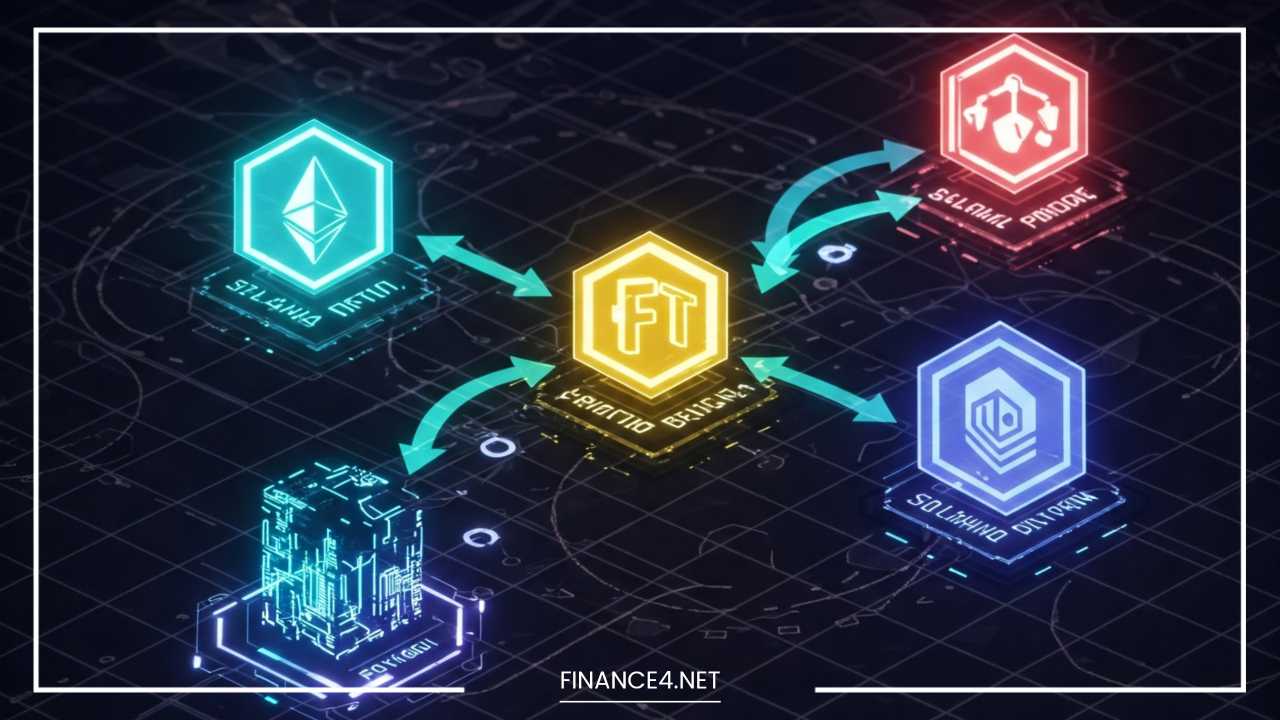
Multi-chain implies that the NFT loot boxes, or the NFTs they contain, can exist, be transacted, or be otherwise engaged with on more than one blockchain. This doesn’t necessarily mean the same NFT exists simultaneously on multiple chains in its original form, but rather that mechanisms are in place to allow for seamless interaction and value transfer across different networks. This could involve bridging assets, having native deployments on multiple chains, or utilizing cross-chain communication protocols.
Supporting Blockchains
The world of NFTs is no longer solely dominated by Ethereum. While Ethereum remains a cornerstone, its high gas fees and network congestion have spurred the development and adoption of alternative blockchains. For multi-chain NFT loot boxes, supporting a variety of popular blockchains is crucial for reaching a broad audience and optimizing for different user preferences. Key blockchains to consider include:
- Ethereum (ETH): The pioneer in smart contracts and NFTs, offering robust security and a vast developer ecosystem. Ideal for high-value, collectible NFTs where gas fees are less of a deterrent.
- Binance Smart Chain (BSC): A popular alternative to Ethereum, known for its lower transaction fees and faster block times. Attracts a large user base, particularly in gaming and DeFi.
- Polygon (MATIC): A Layer 2 scaling solution for Ethereum, offering significantly reduced gas fees and increased transaction speeds while leveraging Ethereum’s security. Highly popular for gaming and dApps seeking scalability.
- Solana (SOL): A high-performance blockchain known for its incredibly fast transaction speeds and low costs. Gaining significant traction in the NFT space, especially for projects requiring high throughput.
- Avalanche (AVAX), Flow (FLOW), Immutable X (IMX): Other emerging or specialized blockchains offering unique advantages in terms of performance, specific use cases (like gaming-focused chains), or developer tooling.
Wallet Support
To facilitate user interaction with multi-chain NFT loot boxes, integration with a range of popular multi-chain compatible wallets is essential. Users should be able to seamlessly connect their preferred wallet, regardless of the underlying blockchain. Examples include:
- MetaMask: The most widely used browser extension wallet, supporting Ethereum, BSC, Polygon, and many other EVM-compatible chains.
- Phantom: The leading wallet for the Solana ecosystem, offering a smooth user experience.
- WalletConnect: A protocol that enables dApps to connect to numerous mobile wallets.
- Coinbase Wallet, Trust Wallet: Other popular options that support a variety of blockchains.
Benefits of Multi-Chain Loot Boxes
Embracing a multi-chain strategy for NFT loot boxes yields significant advantages for both creators and users:
- Broader Audience Reach: By deploying or enabling access across multiple blockchains, projects can tap into diverse communities that may prefer specific chains due to lower costs, faster transactions, or existing asset holdings. This dramatically expands the potential user base beyond a single blockchain’s ecosystem.
- Interoperability: Multi-chain capabilities foster true interoperability within the Web3 space. NFTs acquired from loot boxes on one chain might be usable or tradable on another, provided the necessary bridging or compatibility mechanisms are in place. This enhances the utility and liquidity of the digital assets.
- Reduced Costs: Different blockchains have varying gas fee structures. By operating multi-chain, creators can offer users the flexibility to choose a chain with lower transaction costs for minting or opening loot boxes, making the experience more accessible and affordable, especially for frequent interactions.
- Future Scalability: As the NFT space continues to grow, reliance on a single blockchain can lead to congestion and increased costs. A multi-chain approach offers inherent scalability by distributing the load across multiple networks. This prepares projects for future growth and ensures a smoother user experience even under high demand. It also provides a hedge against potential issues or limitations on any single chain.
In essence, multi-chain NFT loot boxes are a strategic move towards a more inclusive, efficient, and resilient decentralized ecosystem, maximizing exposure and utility for all participants.
Step-by-Step Guide to Creating Multi-Chain NFT Loot Boxes
Creating multi-chain NFT loot boxes is a complex but rewarding endeavor, requiring a blend of smart contract development, cross-chain communication, and user interface design. This section breaks down the process into actionable steps.
a. Choosing the Right Smart Contract Platform
The foundation of your multi-chain NFT loot box project lies in selecting the appropriate blockchain platforms for deployment. This decision hinges on several factors:
- Ethereum: As the pioneering smart contract platform, Ethereum offers unparalleled security, a mature ecosystem, and the largest developer community. It’s excellent for high-value NFTs and projects where security and decentralization are paramount. However, high gas fees and network congestion can be a significant drawback for frequent transactions or large-scale minting.
- Binance Smart Chain (BSC): BSC is an EVM-compatible blockchain offering significantly lower transaction fees and faster block times than Ethereum. It has a large user base, particularly in the GameFi and DeFi sectors, making it a strong contender for projects targeting a broad audience with more frequent interactions.
- Polygon (MATIC): As an Ethereum Layer 2 scaling solution, Polygon offers drastically reduced gas fees and faster transactions while inheriting Ethereum’s security. It’s highly popular for gaming, NFTs, and dApps seeking scalability without fully abandoning the Ethereum ecosystem.
- Solana (SOL): Known for its high throughput and extremely low transaction costs, Solana is a strong choice for projects requiring very fast and frequent interactions, such as real-time gaming elements or massive NFT drops. Its developer ecosystem is growing rapidly, though it uses a different programming model (Rust) compared to EVM chains (Solidity).
- Other considerations: Explore specialized chains like Immutable X (Layer 2 for Ethereum, optimized for NFTs and gaming with zero gas fees), Avalanche (EVM compatible, fast, and scalable with subnets), or Flow (designed specifically for NFTs and DApps).
Why interoperability is important: For multi-chain loot boxes, true interoperability means that NFTs minted on one chain might be bridged or recognized on another, or that the loot box mechanism itself can be accessed from different networks. Choosing platforms with established bridging solutions or those that are EVM-compatible simplifies cross-chain development.
b. Designing the Loot Box Mechanism
The core logic of your loot box system needs careful design to ensure fairness, excitement, and proper distribution of NFTs.
- Loot Box Structure: Contents and Rarity Distribution:
- Determine the types of NFTs that can be contained within the loot boxes (e.g., character skins, weapons, digital art, exclusive access passes).
- Define rarity tiers for each NFT (e.g., Common, Uncommon, Rare, Epic, Legendary).
- Assign probabilities for each rarity tier within the loot box. This is crucial for user expectation and perceived value. For example, a “Legendary” item might have a 0.5% chance, while a “Common” item has a 50% chance.
- Designing Randomized Rewards (ERC-1155 or ERC-721):
- ERC-721: Ideal for truly unique, one-of-a-kind NFTs (e.g., a specific legendary character). Each ERC-721 token has a unique ID.
- ERC-1155: Suitable for semi-fungible tokens, where multiple identical copies of an NFT can exist (e.g., 100 copies of an “Epic Sword”). This standard is more gas-efficient for batch transfers and can represent both fungible and non-fungible assets, making it versatile for loot box contents.
- Your smart contract will need to implement logic to select a random NFT based on the predefined rarity distribution and then mint or transfer it to the user’s wallet upon opening the loot box.
- Smart Contract Considerations: Minting, Distribution, and Metadata Storage:
- The smart contract will be responsible for minting the NFTs that will populate the loot boxes. These NFTs can be pre-minted and held in a contract pool, or minted on demand when a loot box is opened.
- The contract will manage the distribution of loot boxes themselves (if they are also NFTs) and the contents upon opening.
- Metadata for each NFT (name, description, image URL, attributes, rarity) is crucial. This is often stored off-chain on decentralized storage solutions like IPFS (InterPlanetary File System) or Arweave, with the NFT’s tokenURI pointing to this metadata.
c. Developing for Multi-Chain Compatibility
Achieving true multi-chain functionality for NFT loot boxes often involves leveraging cross-chain technologies.
- Understanding Cross-Chain Technology:
- Bridges: Blockchain bridges allow assets (and sometimes data) to be transferred between different blockchain networks. For example, an NFT minted on Ethereum could be “wrapped” and moved to Polygon, becoming a Polygon-native wrapped NFT while the original is locked on Ethereum.
- Wrapped Tokens: A wrapped token is a cryptocurrency token pegged to the value of another cryptocurrency. In the context of NFTs, a wrapped NFT on Chain B represents an original NFT locked on Chain A.
- Native Deployment: Alternatively, you might choose to deploy separate instances of your NFT collection and loot box smart contracts on each desired blockchain. This requires managing multiple deployments but offers native asset functionality on each chain.
- How to Deploy and Interact with NFTs Across Multiple Blockchains:
- If using bridges, you’ll need to integrate with existing bridge protocols or consider developing your own if a highly specialized solution is required. Users would deposit an NFT on Chain A to receive a wrapped version on Chain B.
- For native deployments, the challenge is ensuring a consistent user experience and potentially synchronizing data or supply across chains, though direct interaction is simpler on each specific chain.
- Best Practices for Multi-Chain Integration:
- Handling Different Network Standards: While EVM-compatible chains (Ethereum, BSC, Polygon) largely use ERC-721 and ERC-1155, chains like Solana have their own token standards (SPL tokens). Your front-end and backend logic must account for these differences.
- Security: Cross-chain operations introduce new security vectors. Rigorous auditing of bridge contracts and cross-chain communication protocols is paramount.
- User Experience: Abstract away as much of the underlying multi-chain complexity as possible from the user. They should ideally have a seamless experience, choosing their preferred chain without needing deep technical knowledge of bridging.
d. Smart Contract Coding and Deployment
This is the technical heart of your project.
- Basics of Smart Contract Development for NFTs:
- Solidity (for EVM chains): The primary language for writing smart contracts on Ethereum, BSC, Polygon, and other EVM-compatible networks.
- Rust (for Solana): The language used for developing programs (smart contracts) on Solana.
- You’ll need to define your NFT contracts (ERC-721 or ERC-1155) and a separate loot box contract that handles the opening mechanism, randomness, and transfer of NFTs.
- Multi-Chain Smart Contract Development Tools:
- Hardhat: A popular Ethereum development environment that allows for easy compilation, testing, and deployment of Solidity contracts. Excellent for multi-chain EVM deployments by simply configuring different network connections.
- Truffle: Another widely used development framework for EVM-compatible blockchains, offering similar functionalities to Hardhat.
- Remix IDE: A web-based IDE for developing and deploying Solidity contracts, useful for quick prototyping and learning.
- Anchor (for Solana): A framework for Solana program development, simplifying the creation of secure and robust applications on Solana.
- Testing the Contract on Testnets: Before deploying to mainnet, thoroughly test your smart contracts on relevant testnets (e.g., Sepolia for Ethereum, Mumbai for Polygon, Devnet for Solana). This allows you to identify and fix bugs without incurring real gas fees.
- Deployment on Multiple Blockchains:
- Use your chosen development framework (Hardhat, Truffle, Anchor) to deploy your smart contracts to each target blockchain’s mainnet.
- Ensure each deployment has distinct contract addresses and that these are correctly configured in your front-end application.
- Example Pseudocode for a Simplified Loot Box Contract (Solidity):
Solidity
// Simplified ERC-721 NFT Contract (Loot Item)
contract LootNFT is ERC721Enumerable, Ownable {
    // ... standard ERC721 functions ...
    function mint(address to, uint256 tokenId, string memory uri) public onlyOwner {
        _safeMint(to, tokenId);
        _setTokenURI(tokenId, uri);
    }
}

// Simplified Loot Box Contract
contract LootBox is Ownable {
    LootNFT public lootNFT; // Address of the deployed LootNFT contract
    uint256[] public rareItemIds;
    uint256[] public commonItemIds;
    // ... more rarity tiers ...

    mapping(uint256 => bool) public isLootBoxOpen; // Track opened boxes

    constructor(address _lootNFTAddress) {
        lootNFT = LootNFT(_lootNFTAddress);
    }

    // Function to set items for different rarities
    function setRareItems(uint256[] memory _itemIds) public onlyOwner {
        rareItemIds = _itemIds;
    }
    // ... similar functions for other rarities ...

    // Function to open a loot box and get a random NFT
    function openLootBox(uint256 lootBoxId) public {
        require(!isLootBoxOpen[lootBoxId], "Loot box already opened");
        // Placeholder for real randomness (e.g., Chainlink VRF)
        uint256 randomNumber = block.timestamp % 100; // DO NOT USE IN PRODUCTION

        uint256 itemIdToMint;
        if (randomNumber < 5) { // 5% chance for rare
            itemIdToMint = rareItemIds[randomNumber % rareItemIds.length];
        } else { // 95% chance for common
            itemIdToMint = commonItemIds[randomNumber % commonItemIds.length];
        }

        lootNFT.mint(msg.sender, itemIdToMint, "ipfs://some_uri/"); // Mint/transfer to opener
        isLootBoxOpen[lootBoxId] = true;
    }

    // ... functions to deposit pre-minted NFTs into the contract for distribution ...
}
Note: The random number generation in the
openLootBoxpseudocode (block.timestamp % 100) is highly insecure and should NEVER be used in a production environment. Real-world solutions require provably fair randomness like Chainlink VRF, discussed later.
e. Creating a User-Friendly Interface
A well-designed front-end is crucial for user adoption and a smooth multi-chain experience.
- Front-End Integration: Designing the UX/UI:
- The user interface should be intuitive and clearly guide users through the process of connecting wallets, purchasing/acquiring loot boxes, and opening them.
- Visual appeal and responsiveness are key.
- Consider displaying rarity probabilities and potential loot items clearly.
- Wallet Integration and Connecting Users’ Multi-Chain Wallets:
- Implement popular wallet connection libraries (e.g.,
web3-react,wagmi,ethers.js,@solana/wallet-adapter) to allow users to connect MetaMask, Phantom, WalletConnect, etc. - Your UI should allow users to easily switch between different blockchain networks within their connected wallet.
- Implement popular wallet connection libraries (e.g.,
- Ensuring Smooth Interactions for Users:
- Network Switching: Prompt users to switch to the correct network if they are connected to the wrong one for a specific transaction.
- Transaction Status: Provide clear feedback on transaction status (pending, confirmed, failed).
- Error Handling: Gracefully handle errors and provide helpful messages to users.
- Gas Fee Estimates: Display estimated gas fees before a transaction is confirmed.
- Best Practices for Security and UX:
- Clear Permissions: Clearly explain what permissions your dApp requires from the user’s wallet.
- Secure Coding: Follow secure coding practices for your front-end to prevent XSS, CSRF, and other web vulnerabilities.
- Responsive Design: Ensure your interface works seamlessly across various devices (desktop, mobile).
- Feedback Loops: Provide visual and textual feedback for every user action.
By meticulously following these steps, you can build a robust and engaging multi-chain NFT loot box system that provides a seamless and exciting experience for your users.
Handling Randomness and Fairness in Loot Boxes
The integrity of any loot box system, especially one involving valuable NFTs, hinges on the verifiable fairness of its randomness. Users must trust that the outcomes are genuinely random and not manipulated. On the blockchain, achieving true, provably fair randomness is a unique challenge.
Random Number Generation (RNG) in Blockchain
Blockchains are deterministic by nature, meaning every node must arrive at the same outcome for a transaction to be valid. This determinism makes truly random number generation on-chain difficult using traditional methods. Simply using block hashes or timestamps for randomness is highly susceptible to manipulation by miners or validators who could choose not to include a block that would produce an unfavorable outcome for them (a front-running attack).
To overcome this, specialized solutions are employed:
- Chainlink VRF (Verifiable Random Function): This is the most widely adopted and secure method for provably fair randomness on EVM-compatible blockchains. Chainlink VRF uses cryptographic proofs to ensure that the random numbers generated are tamper-proof and unbiased. When a smart contract requests a random number, Chainlink’s oracle network generates it off-chain and then submits it back to the contract, along with a cryptographic proof that verifies its integrity. The contract can then verify this proof on-chain, ensuring the randomness is genuine.
- Oracles: Beyond Chainlink VRF, other oracle networks can provide external, verifiable random data to smart contracts. These typically involve multiple independent sources to prevent single points of failure or manipulation.
- Other Methods (Less Common/More Complex): Some projects explore commit-reveal schemes, where users commit to a random seed, and then reveal it later after a block has been mined, but these can be more complex to implement and manage. Others might use a verifiable delay function (VDF) or a decentralized network of randomness beacons.
Fairness and Transparency
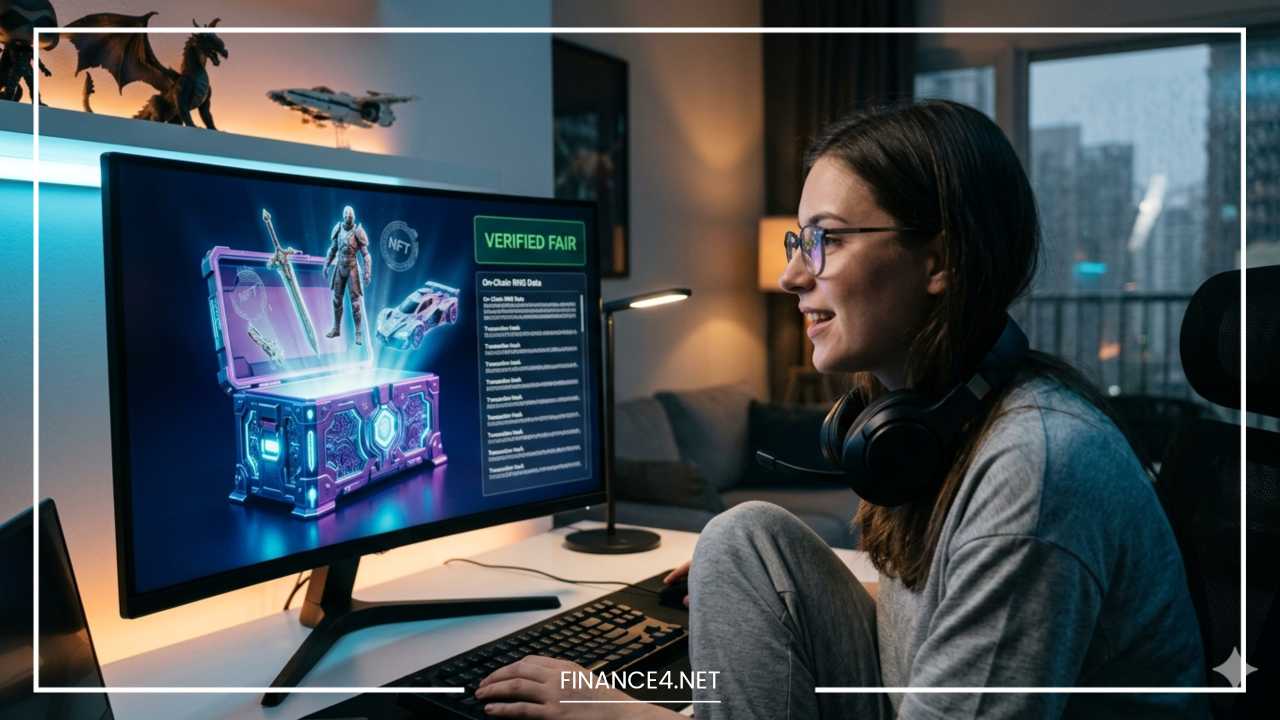
Provably fair mechanics are absolutely critical for user trust in NFT loot boxes. If users suspect the randomness is rigged, the entire project’s credibility will crumble. By using solutions like Chainlink VRF, you can demonstrate to your users that:
- The probabilities are truly random: The system isn’t biased towards certain outcomes or manipulated by the project creators.
- The process is transparent: The cryptographic proofs allow anyone to verify the randomness of each outcome on the blockchain.
- There’s no pre-determination: Users can be confident that the contents of their loot box are determined at the moment of opening, not beforehand.
This transparency and verifiable fairness build a strong foundation of trust, encouraging greater participation and a more positive community experience.
Ensuring Randomness Across Multiple Chains
Maintaining fairness in a multi-chain environment introduces additional considerations.
- Chain-Specific VRF Integrations: If you deploy your loot box contract natively on multiple EVM chains (e.g., Ethereum, Polygon, BSC), you would integrate Chainlink VRF (or a similar solution) on each of those chains. Chainlink VRF operates independently on each supported network.
- Cross-Chain Randomness: If your primary loot box logic resides on one chain, and you’re using bridges to bring NFTs or data across, you would still rely on the randomness generated on the chain where the core logic executes. The integrity of the bridge then becomes crucial for maintaining fairness across chains.
- Solana’s Approach: For Solana, specific randomness solutions exist, or you might rely on off-chain verifiable randomness sources that feed data to your Solana programs.
Regardless of the multi-chain architecture, the principle remains the same: the mechanism for generating random outcomes must be cryptographically secure, transparent, and verifiable by anyone. This commitment to provable fairness is a cornerstone of building a successful and trusted multi-chain NFT loot box ecosystem.
Monetization Strategies for Multi-Chain NFT Loot Boxes
A well-designed multi-chain NFT loot box system isn’t just about technology; it’s also about sustainable economic models. Effective monetization strategies are essential to fund development, attract users, and create long-term value.
Revenue Streams
Several avenues exist for generating revenue from multi-chain NFT loot boxes:
- Direct Sale of Loot Boxes: This is the most straightforward revenue stream. Users purchase loot boxes directly from your platform using cryptocurrency (e.g., ETH, MATIC, BNB, SOL, or a project-specific token). Pricing can vary based on rarity tiers of the loot boxes themselves (e.g., premium boxes with higher chances of rare NFTs) or limited-edition drops.
- Transaction Fees: While not always directly from loot box sales, platforms can implement small transaction fees on secondary market sales of the NFTs acquired from loot boxes. These royalties are often enforced at the smart contract level (e.g., ERC-2981 royalty standard).
- Royalties on Secondary Sales: A significant advantage of NFTs is the ability to programmatically enforce creator royalties on every subsequent sale of an NFT on secondary marketplaces. This means if an NFT opened from your loot box is sold by a user, a predetermined percentage of that sale (e.g., 5-10%) automatically returns to the project’s treasury. This provides a continuous passive income stream as your NFTs gain value and trade volume.
- Subscription Models/Battle Passes: For ongoing gaming ecosystems, a subscription or battle pass model could grant users access to exclusive loot box drops or discounted prices.
- Staking Rewards: Users might be able to stake your project’s native token (if applicable) to earn access to special loot box mints or other benefits.
Incentives for Users
Monetization goes hand-in-hand with user incentives. Why will users want to participate and spend their crypto on your loot boxes?
- The Thrill of the “Unboxing”: The inherent excitement of opening a randomized package with the potential for high-value items is a powerful psychological incentive, mirroring traditional gaming loot boxes.
- Potential for High-Value Loot: The possibility of acquiring rare, unique, and highly sought-after NFTs with significant market value drives participation. Users are incentivized by the potential for a positive return on their investment.
- Utility and Scarcity: NFTs within loot boxes should ideally offer some form of utility within a game, metaverse, or a broader ecosystem (e.g., in-game advantages, access to exclusive content, staking benefits). Combined with verifiable scarcity, this utility enhances their perceived and actual value.
- Limited-Time Drops and Exclusivity: Scarcity and urgency can be powerful drivers. Announcing limited-time loot box drops or exclusive editions can create FOMO (Fear Of Missing Out) and encourage immediate participation.
- Community and Collectibility: Being part of a community that collects and trades your NFTs, and the desire to complete sets or acquire specific rare items, are strong motivators.
Partnerships and Branding
Collaborations can significantly amplify your project’s reach and appeal.
- Collaboration with Artists: Partnering with renowned digital artists to create unique NFT collections for your loot boxes can attract art collectors and add significant prestige.
- Game Developers: Integrating your NFT loot boxes with existing or new blockchain games creates immediate utility for the NFTs and draws in gaming communities. The loot boxes could contain in-game assets, character skins, or even early access passes.
- Other NFT Projects: Cross-promotional partnerships with established NFT collections can introduce your project to new audiences and vice-versa. This could involve special branded loot boxes containing NFTs from both projects.
- Brand Collaborations: Mainstream brands are increasingly entering the NFT space. Collaborating with non-endemic brands for branded loot boxes (e.g., containing digital collectibles of their products) can introduce NFTs to a wider consumer base.
By strategically combining these revenue streams, user incentives, and partnership opportunities across multiple chains, you can build a vibrant and sustainable ecosystem around your NFT loot boxes.
Legal and Regulatory Considerations
Navigating the legal and regulatory landscape surrounding NFT loot boxes, especially across multiple jurisdictions, is crucial for long-term viability and avoiding potential pitfalls. This is a rapidly evolving area, and consulting legal professionals specializing in blockchain and gaming law is highly recommended.
Intellectual Property (IP)
- Ownership Rights: Clearly define who owns the intellectual property rights to the artwork, designs, and underlying code of the NFTs distributed through your loot boxes. Typically, the creator retains IP, while the NFT holder receives ownership of the specific digital asset and a license for personal use or display.
- Content Licensing: If your loot boxes contain NFTs that feature third-party IP (e.g., characters from a game, branded items), you must have explicit licensing agreements in place with the IP owners. Failure to do so can lead to severe legal consequences.
- Derivative Works: Consider how you will handle derivative works created by NFT holders. Will they be allowed to create and monetize fan art or other creations based on your NFTs? This should be clearly outlined in your terms of service.
Regulation of Loot Boxes
The legal status of loot boxes is a contentious and evolving issue globally, with some jurisdictions classifying them as a form of gambling. The NFT aspect adds another layer of complexity.
- Gambling Laws:
- Definition: Many jurisdictions define gambling as offering a prize of value, where the outcome is determined by chance, and consideration (money) is paid to participate. NFT loot boxes often fit this description.
- Jurisdictional Differences: Regulations vary wildly. Countries like Belgium and the Netherlands have effectively banned or heavily restricted loot boxes in video games. Other countries are actively reviewing their stance.
- Blockchain’s Impact: The verifiability and tradability of NFTs obtained from loot boxes (unlike traditional in-game items) might push them further into the realm of regulated gambling in some interpretations.
- Consumer Protection Laws: Even if not classified as gambling, consumer protection laws regarding fair play, transparency, and deceptive practices apply. Clear disclosure of probabilities, terms of service, and privacy policies is essential.
- Securities Laws: In some instances, if the NFTs within loot boxes are deemed to represent an investment expectation or a share in a common enterprise, they could potentially be classified as securities, triggering stringent regulatory requirements. This is less likely for pure collectibles but becomes a risk if there are promises of profit or significant passive income tied to the NFTs.
Compliance
Ensuring your multi-chain NFT loot box project complies with applicable laws requires a proactive approach:
- Jurisdictional Analysis: Understand the laws in all target jurisdictions where you plan to market and sell your loot boxes. This includes the laws of your operating base and the countries where your users reside.
- Age Restrictions: Implement robust age verification mechanisms to prevent minors from participating, especially if there’s any ambiguity regarding gambling laws.
- Transparency: Clearly disclose the probabilities of receiving different rarity NFTs, the value of the NFTs, and the terms and conditions of purchase.
- KYC/AML (Know Your Customer/Anti-Money Laundering): While challenging in a decentralized environment, consider the implications of AML regulations, especially if your project handles significant amounts of value or involves fiat on/off-ramps.
- Terms of Service and Privacy Policy: Draft comprehensive legal documents that clearly outline user rights, responsibilities, data handling, and dispute resolution.
- Legal Counsel: Engage legal counsel with expertise in blockchain, NFTs, and gambling law from the outset. This is not an area to cut corners on, as regulatory enforcement is increasing globally.
Given the nascent and fluid nature of blockchain regulation, continuous monitoring of legal developments and adapting your project’s practices accordingly will be an ongoing necessity.