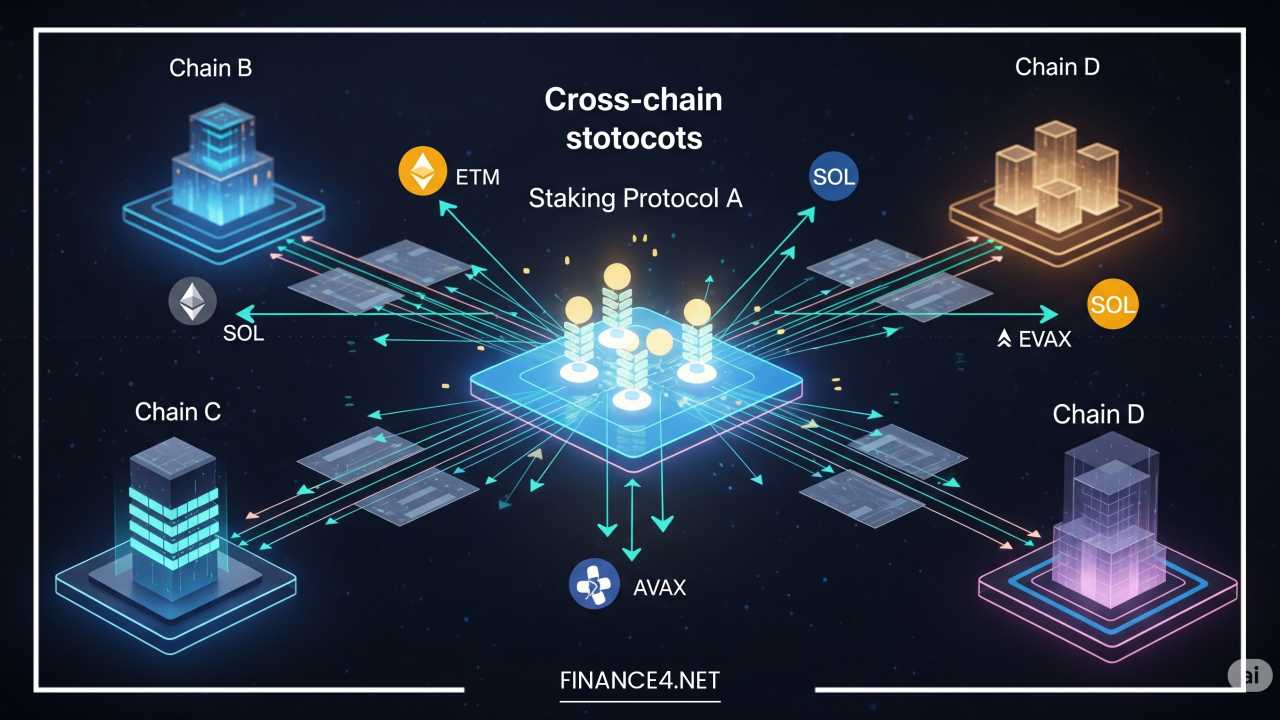
How to Create Bridging-Based Derivative Products
 by
by 
How to Create Bridging-Based Derivative Products | Step-by-Step Guide
1. Introduction
The decentralized finance (DeFi) landscape, along with traditional finance’s increasing embrace of blockchain technology, continues to evolve at an unprecedented pace. Among the most transformative innovations are bridging protocols, which enable the seamless transfer of assets and data across disparate blockchain networks. This interoperability has unlocked a new frontier for financial instruments: bridging-based derivative products. These sophisticated tools leverage the power of cross-chain asset movement to create synthetic representations or direct derivatives of underlying assets residing on different blockchains, offering unprecedented flexibility, liquidity, and hedging opportunities.
Bridging-based derivative products address a critical need in an increasingly fragmented digital asset ecosystem. Imagine wanting to trade options on Bitcoin (BTC) but needing to do so on a Solana-based decentralized exchange (DEX) for its low fees and high throughput. Or perhaps an institution wants exposure to Ethereum (ETH) without directly holding the native asset on the Ethereum mainnet, opting instead for a wrapped version on a Layer 2 solution or another chain. Bridging protocols make these scenarios possible, and derivatives built atop these bridged assets amplify their utility, allowing for advanced financial strategies previously confined to single-chain environments. This article will delve into the intricacies of creating such products, covering everything from fundamental concepts and technical underpinnings to the step-by-step development process, critical challenges, and the promising future of this nascent but rapidly expanding sector.
2. Understanding Bridging and Derivatives
To grasp the essence of bridging-based derivatives, it’s crucial to first understand their foundational components individually.
2.1 What is Bridging in Finance/Blockchain?
At its core, bridging in the context of blockchain refers to the technology and protocols that facilitate the transfer of assets, data, and even smart contract calls between two otherwise incompatible blockchain networks. Historically, blockchains operated as isolated silos, making it difficult to move value or information between them. Bridging solves this “interoperability problem.”
The primary use case for bridging is the transfer of crypto assets. For instance, a user might want to move Wrapped Bitcoin (WBTC) from Ethereum to Polygon to participate in DeFi activities with lower transaction costs. This involves a bridge locking the original WBTC on Ethereum and minting an equivalent amount of WBTC on Polygon. Beyond asset transfers, bridges are increasingly used for cross-chain liquidity provision, enabling users to access deeper liquidity pools across multiple chains. They also facilitate cross-chain arbitrage, allowing traders to exploit price discrepancies for the same asset on different networks. Furthermore, the concept of “omnizachain” or “multichain” applications, heavily reliant on underlying bridging infrastructure like LayerZero or Wormhole, is gaining traction, promising a future where applications can exist and operate seamlessly across numerous chains without users needing to manually bridge assets.
2.2 What Are Derivative Products?
Derivative products are financial contracts that derive their value from an underlying asset, group of assets, or benchmark. They do not involve the direct exchange of the underlying asset itself but rather represent a claim or obligation related to its future price movement. Derivatives are widely used for hedging (reducing risk exposure), speculation (profiting from anticipated price changes), and arbitrage (exploiting price differences across markets).
The basic types of derivative products include:
- Futures Contracts: Agreements to buy or sell an asset at a predetermined price on a specific future date.
- Options Contracts: Give the holder the right, but not the obligation, to buy (call option) or sell (put option) an asset at a specified price (strike price) on or before a certain date.
- Swaps: Agreements between two parties to exchange financial instruments, cash flows, or payments for a certain period. Common types include interest rate swaps and currency swaps.
- Synthetic Assets: Recreations of real-world assets or other cryptocurrencies on a different blockchain, often collateralized by stablecoins or other crypto assets. They mimic the price movements of the underlying asset without requiring direct ownership or transfer of the original asset.
The value of these derivatives is intrinsically linked to the performance of their underlying assets. For example, a Bitcoin future’s price will fluctuate in tandem with Bitcoin’s spot price, albeit with a premium or discount based on market expectations.
2.3 Bridging-Based Derivatives: Combining the Two
Bridging-based derivatives represent a powerful synergy of these two concepts. They are derivative products where the underlying asset, or the collateral backing the derivative, exists on a different blockchain than where the derivative contract is executed. In essence, a bridging protocol brings the “economic exposure” of an asset from one chain to another, where a derivative protocol can then be built on top of it.
Consider these illustrative examples:
- Synthetic ETH on Solana: A user on Solana wants exposure to Ethereum’s price movements but doesn’t want to incur Ethereum’s gas fees. A bridging-based derivative platform could allow them to mint a “synthetic ETH” token on Solana, collateralized by Solana’s native SOL token or a Solana-based stablecoin. The value of this synthetic ETH would be pegged to the actual ETH price, with its stability maintained through oracle feeds and liquidation mechanisms. The underlying “bridging” aspect here is implicit, as the synthetic asset’s price parity relies on real ETH’s availability and price on its native chain, which in turn might be facilitated by cross-chain price feeds.
- Bridged BTC Options on Arbitrum: A more direct example involves an option contract on Wrapped Bitcoin (WBTC) that has been bridged from Ethereum to Arbitrum. The options contract itself would live and execute on Arbitrum, leveraging its lower transaction costs. However, the underlying asset, WBTC, originated from Bitcoin and then was wrapped on Ethereum before being bridged to Arbitrum. This allows for sophisticated options strategies on BTC using the efficiency of a Layer 2 network.
The innovation lies in unlocking the capital efficiency and trading opportunities that arise when assets can traverse blockchain boundaries and then be utilized within advanced financial structures.
3. Market Demand & Use Cases
The emergence and increasing sophistication of bridging-based derivative products are not merely technological feats; they are a direct response to tangible market demands and unlock a plethora of compelling use cases within both the nascent DeFi ecosystem and the evolving landscape of digital asset finance.
3.1 Why Do We Need Bridging-Based Derivatives?
The fundamental drivers for the demand for bridging-based derivatives stem from the limitations of single-chain finance and the inherent benefits of cross-chain interoperability:
- Cross-Chain Financial Products: As the blockchain ecosystem fragments across numerous Layer 1s and Layer 2s, users and institutions seek integrated financial experiences. They want to access liquidity and utilize assets across chains without the cumbersome process of native asset transfers and associated fees. Bridging-based derivatives allow for a unified trading environment, where exposure to assets from any chain can be gained on a preferred, often more efficient, chain.
- Hedging Across Chains: A portfolio might hold assets on multiple chains. Traditional hedging instruments often require moving assets to a centralized exchange or a specific chain. Bridging-based derivatives enable sophisticated cross-chain hedging strategies. For example, a user holding a significant amount of AVAX on Avalanche could potentially hedge their price risk using a derivative product on Polygon that tracks AVAX’s price, without needing to bridge the AVAX itself.
- Speculation with Enhanced Efficiency: Traders are constantly seeking environments with high throughput and low transaction costs. Bridging-based derivatives allow speculators to bet on the price movements of assets located on high-fee or congested chains (like Ethereum mainnet) by executing trades on faster, cheaper chains (like Optimism or Base) where the derivative product resides. This significantly reduces the cost of frequent trading.
- Liquidity Enhancement and Capital Efficiency: By enabling assets to be “represented” on multiple chains, bridging-based derivatives enhance overall market liquidity. Capital locked on one chain can effectively be used as collateral or underlying for derivatives on another, thereby increasing capital efficiency. This is particularly relevant for less liquid assets or chains, as it opens them up to broader markets.
- Access to Diversified Underlying Assets: A user on a specific blockchain might only have access to a limited set of native assets. Bridging-based derivatives expand this universe by allowing exposure to assets from any blockchain that can be bridged, even if synthetically. This broadens investment and trading opportunities.
3.2 Real-World or DeFi Examples
The conceptual demand is being met by concrete implementations in the market:
- RenBTC Options on Ethereum (Historical Context): While RenBTC, a trustless Bitcoin bridge, has faced some challenges and evolved, its early adoption on Ethereum demonstrated the viability of bridging assets for DeFi. Platforms built on Ethereum offered options and futures on RenBTC, allowing users to gain leveraged or hedged exposure to Bitcoin’s price directly within the Ethereum ecosystem. This highlighted the initial promise of using a wrapped, bridged asset as the underlying for derivative instruments.
- Wormhole-backed Synths (e.g., Sol-Wrapped ETH): The Wormhole bridge, despite a significant exploit in 2022 (which it successfully recapitalized from Jump Crypto), has been instrumental in facilitating cross-chain asset transfers, particularly between Solana and Ethereum Virtual Machine (EVM) chains. While not always direct “derivatives” in the traditional sense, projects have used Wormhole-wrapped assets (like
wETHon Solana orwSOLon Avalanche) as the underlying for synthetic assets or as collateral in lending protocols, effectively allowing exposure to foreign chain assets. For instance, a protocol could offer an “ETH” synthetic on Solana, collateralized by Solana assets, whose price is continuously updated via oracles tracking the price of ETH that arrived on Solana via Wormhole. - LayerZero-based Synthetic Derivatives and Omnichain Future Contracts: LayerZero, a prominent interoperability protocol, focuses on generalized message passing, which can be leveraged for highly sophisticated cross-chain applications. Rather than just bridging assets, LayerZero allows for “omnizachain” smart contracts that can operate across multiple chains. This paves the way for truly cross-chain derivative contracts. Imagine a futures contract for a basket of assets, where the assets are natively on different chains, but the single futures contract can be settled on a chain chosen by the user, with price feeds aggregated across the chains using LayerZero’s messaging capabilities. Protocols building on LayerZero are exploring “omnichain” perpetual futures or options that can be minted, traded, and settled seamlessly across various EVM and non-EVM chains, representing a significant leap in capital efficiency and user experience.
- Bridged Token as Collateral for Lending/Borrowing: While not a derivative product itself, the use of bridged assets as collateral for lending and borrowing protocols forms a crucial part of the bridging-based finance ecosystem. For example, a user could bridge USDC from Ethereum to Arbitrum, then use that Arbitrum-USDC as collateral to borrow a different asset on Arbitrum, or even to mint a synthetic asset that tracks the price of something else. This indirectly creates derivative-like exposure or leverage.
The demand is clear: users want to leverage the unique advantages of different blockchain environments while maintaining exposure and flexibility with their assets, regardless of their native chain. Bridging-based derivatives are the answer to this complex, multi-chain financial landscape.
4. Technical Foundations
The creation of bridging-based derivative products requires a robust technical stack that intertwines bridging infrastructure, smart contract logic, and reliable oracle services. Understanding these foundational components is critical for successful development.
4.1 Key Components Needed
- Bridging Protocol: This is the bedrock. A reliable and secure bridging protocol is essential to move or represent assets across different blockchains. Examples include:
- Wormhole: A generic message-passing protocol that allows developers to build cross-chain applications, including asset bridges. It supports a wide range of chains (EVM and non-EVM).
- LayerZero: An omnichain interoperability protocol that enables lightweight message passing between blockchains, crucial for building truly composable cross-chain applications.
- zkBridge: A trustless, ZKP-based cross-chain bridge emphasizing security and minimal trust assumptions.
- Native Bridges: Some ecosystems have their own official bridges (e.g., Polygon Bridge, Optimism Bridge) which are typically more secure but limited to specific source/destination chains.The choice of bridge impacts trust assumptions, supported chains, and the underlying mechanism of asset transfer.
- Smart Contracts or Centralized Infrastructure for Derivatives:
- Decentralized (DeFi): The core logic for derivative products (e.g., options contracts, perpetual futures, synthetic asset minting/burning) is encapsulated in smart contracts. These contracts define the rules for collateralization, liquidation, settlement, pricing, and user interactions. They must be immutable, transparent, and auditable.
- Centralized (CeFi): In some cases, a centralized entity might manage the derivative creation and trading, holding the bridged assets in custody and managing the derivative exposure off-chain. While offering higher throughput and familiar interfaces, this introduces counterparty risk. This article primarily focuses on the decentralized approach given its relevance to bridging in a blockchain context.
- Oracle Integrations: Oracles are indispensable for bringing off-chain (or cross-chain) data onto the blockchain where the derivative contract lives. For bridging-based derivatives, this primarily means:
- Price Feeds: Providing the real-time price of the underlying asset (e.g., the current market price of native ETH if you’re building a synthetic ETH on Solana).
- Settlement Prices: Delivering the final price at which a derivative contract is settled.
- Volatility Data: For options pricing, volatility feeds are crucial.Leading oracle solutions like Chainlink, Pyth Network, and RedStone Oracles are paramount due to their decentralization, robustness, and ability to deliver high-frequency data across numerous chains.
4.2 Bridging Logic
The underlying mechanism by which assets are moved or represented across chains is critical:
- Lock-and-Mint: This is the most common model. The original asset is “locked” in a smart contract on the source chain, and an equivalent wrapped or synthetic version of that asset is “minted” on the destination chain. For example, when BTC is wrapped into WBTC on Ethereum, the BTC is locked in a custodian, and WBTC is minted. If this WBTC is then bridged to Arbitrum, the WBTC on Ethereum is locked in a bridge contract, and a new
arbWBTCis minted on Arbitrum. This ensures that the total supply of the asset remains consistent across chains. - Burn-and-Release: This method is often used for native tokens that are burned on the source chain and then released (or minted) on the destination chain. While less common for general-purpose asset bridging, it’s conceptually similar to the lock-and-mint in terms of maintaining supply parity.
- Native Token Bridging (Canonical Bridging): Many Layer 2 solutions have their own “canonical” bridges (e.g., Optimism Bridge for ETH). When ETH is sent from Ethereum to Optimism, it’s effectively locked on Ethereum and minted as
opETHon Optimism. ThisopETHis considered canonical because it’s directly backed 1:1 by the underlying ETH on the mainnet, with security often tied to the L2’s rollup mechanism.
Maintaining value parity between the original asset and its bridged counterpart is paramount. Any deviation can create arbitrage opportunities but also destabilize the derivative product built upon it.
4.3 Risk Management Layer
A robust risk management framework is non-negotiable for any derivative product, and especially for those involving bridging:
- Collateralization: Most decentralized derivative products require collateral to back the outstanding positions. For bridging-based derivatives, this collateral could be the bridged asset itself (e.g.,
wETHon Solana backing a synthetic ETH position) or a different asset on the derivative’s native chain (e.g., USDC on Polygon backing a BTC options contract). Proper collateralization ratios and dynamic adjustments are essential to absorb price fluctuations. - Liquidation Mechanisms: When a user’s collateral value falls below a predetermined threshold (e.g., due to adverse price movements of the underlying or the collateral itself), their position must be liquidated. This involves selling off the collateral to cover the debt and prevent the protocol from incurring bad debt. Efficient and fair liquidation mechanisms (e.g., automated liquidation bots, decentralized liquidation auctions) are crucial to maintain solvency.
- Price Oracles (Chainlink, Pyth, RedStone): As mentioned, reliable price feeds are fundamental.
- Chainlink: Known for its highly decentralized network of independent nodes, aggregating data from multiple sources to provide robust and tamper-resistant price feeds. It’s widely adopted across DeFi.
- Pyth Network: Specializes in high-frequency, first-party financial data, sourcing prices directly from major trading firms and exchanges. This can be beneficial for derivatives requiring very low latency data.
- RedStone Oracles: Offers a modular oracle design, allowing protocols to customize data delivery and optimize for specific use cases, including highly frequent updates.The choice of oracle impacts the derivative’s resilience to price manipulation and its ability to react swiftly to market changes. Redundancy and fallback mechanisms (e.g., using multiple oracle providers or a custom TWAP (Time-Weighted Average Price) alongside external feeds) are often implemented for critical systems.
- Circuit Breakers and Emergency Mechanisms: In extreme market volatility or in the event of a critical oracle failure or bridge exploit, protocols may implement circuit breakers to temporarily halt trading or modify parameters to prevent catastrophic losses. An “emergency shutdown” function, though used sparingly, can be a last resort.
By meticulously designing these technical foundations, developers can build bridging-based derivative products that are not only functional but also secure, resilient, and trust-minimized.
5. Step-by-Step Product Creation Process
Creating a bridging-based derivative product is a complex endeavor that requires meticulous planning, robust technical execution, and a deep understanding of both financial instruments and blockchain technology. Here’s a comprehensive step-by-step guide:
Step 1: Define Use Case and Market Opportunity
Before writing a single line of code, clearly articulate what problem your derivative product solves and for whom.
- What type of derivative?
- Options: Call/put options, American/European style? What expiry periods? What strike price methodologies? (e.g., for hedging against price drops of a specific bridged asset, or speculating on its upside).
- Futures/Perpetual Futures: Cash-settled or physically settled? What funding rate mechanism for perpetuals? (e.g., for leveraged exposure to a bridged asset, enabling sophisticated trading strategies).
- Synthetic Tokens: Mimicking the price of an asset from another chain. What collateralization model (e.g., overcollateralized by stablecoins, partially collateralized by native tokens)? (e.g., providing access to otherwise inaccessible assets on a specific chain).
- Choose the Underlying Bridged Asset: This is pivotal.
- What asset? (e.g., BTC, ETH, SOL, AVAX, or even RWA tokens like tokenized gold/real estate if they are bridged).
- Which chain does the original asset reside on? (e.g., native BTC on Bitcoin blockchain).
- Which chain will the bridged version of the asset reside on for derivative trading? (e.g.,
wBTCon Arbitrum,wETHon Optimism).
- Identify the Target Audience: Are you building for institutional traders, retail DeFi users, or both? Their needs will dictate UI/UX, compliance, and feature sets.
- Analyze Market Gaps: Is there existing competition? Can you offer a better fee structure, more diverse assets, superior user experience, or enhanced security?
Step 2: Choose Bridging Protocol
The choice of bridging protocol is perhaps the most critical decision, directly impacting security, trust, and capabilities.
- Trust Assumptions:
- Centralized/Multi-sig: Faster and simpler, but relies on trusting a central entity or a small group of signers. Higher counterparty risk (e.g., early versions of some cross-chain bridges).
- External Validators/Relayers: Decentralized network of validators securing the bridge. Requires trusting the economic security and honesty of the validator set (e.g., Wormhole, LayerZero, Polygon PoS Bridge).
- ZK-based (Trustless): Utilizes zero-knowledge proofs to cryptographically guarantee the correctness of cross-chain state transitions. Offers the highest level of trustlessness but is technically complex and resource-intensive (e.g., zkBridge).
- Supported Assets and Chains: Ensure the bridge supports the underlying asset you’ve chosen and the source/destination chains required for your derivative product.
- Security History and Audits: Research past exploits, security audits, and the protocol’s response to incidents. A bridge with a track record of severe exploits, even if recapitalized, might deter users.
- Speed and Cost: Consider the transaction speed and gas costs associated with bridging operations, as this impacts the user experience for collateral deposits/withdrawals and underlying asset transfers.
- Developer SDKs/API: Assess the ease of integration for your smart contracts and frontend.
Step 3: Smart Contract Design
This is the core engineering phase where the derivative logic is coded and interacts with the chosen bridge.
- Derivative Logic Implementation:
- Contract Types: Write Solidity (for EVM chains), Rust (for Solana), or other relevant smart contracts for your chosen derivative type.
- Parameters: Define all parameters: strike prices, expiry dates, leverage ratios, funding rates (for perpetuals), liquidation thresholds, collateral types, fees, etc.
- Orchestration: Design the flow for minting/opening positions, managing collateral, handling liquidations, and settling positions.
- Margining System: Implement robust margin requirements (initial margin, maintenance margin) and the logic for margin calls.
- Liquidation Logic: Design fair and efficient liquidation mechanisms. Consider incentives for liquidators.
- Settlement Logic: How are positions settled at expiry? Cash settlement vs. physical delivery.
- Bridging Interactions:
- Asset Deposit/Withdrawal: Your derivative contract needs to interact with the chosen bridging protocol to receive or release the bridged underlying asset as collateral or for physical settlement. This usually involves integrating the bridge’s smart contract interfaces.
- Cross-Chain Data/Message Passing: For more advanced omnichain derivatives (e.g., using LayerZero), your derivative contract might need to send/receive messages across chains to verify asset state, update prices, or trigger actions.
- Auditing and Testing: This cannot be overstressed.
- Formal Verification & Security Audits: Engage reputable blockchain security firms (e.g., CertiK, ConsenSys Diligence, Trail of Bits) to conduct multiple audits. Smart contracts dealing with financial value are prime targets for exploits.
- Extensive Unit and Integration Testing: Test every function, every edge case, and every possible user flow. Simulate various market conditions, including extreme volatility and oracle failures.
- Bug Bounties: Consider running a public bug bounty program before mainnet launch to leverage the community for vulnerability discovery.
Step 4: Pricing and Oracle Integration
Accurate and reliable price feeds are the lifeblood of any derivative product.
- How to Get Price Feeds for Bridged Assets:
- Direct Oracle Feeds: For widely traded bridged assets (e.g., wBTC, wETH), major oracle providers like Chainlink or Pyth will often have dedicated price feeds for them on various chains. These are typically the most reliable.
- Synthetic/Derived Feeds: If a direct feed for your specific bridged asset isn’t available, you might need to construct one. This could involve using the native asset’s price feed and then adjusting for any known bridge slippage or fees, though this introduces complexity and potential for error.
- Multi-Oracle Strategy: Implement a strategy using multiple oracle providers (e.g., Chainlink primary, Pyth backup) and a robust aggregation mechanism to prevent single points of failure.
- Dealing with Delays or Discrepancies:
- Latency Management: Derivatives, especially high-frequency ones, are sensitive to latency. Choose oracles that provide timely updates.
- Decentralized Aggregation: Rely on oracle networks that aggregate data from numerous sources to minimize the impact of a single compromised data feed.
- TWAP (Time-Weighted Average Price): For less volatile assets or to smooth out short-term price fluctuations, using TWAPs from on-chain DEXs can supplement external oracle feeds.
- Deviation Thresholds: Configure your smart contracts to only update prices when a significant deviation from the last update occurs, reducing gas costs and preventing minor fluctuations from triggering unnecessary actions.
- Circuit Breakers: Implement logic to pause trading or liquidation if oracle feeds are stale or report extreme, anomalous prices.
Step 5: User Interface & Access
A well-designed and intuitive user interface is crucial for adoption.
- Frontend Development: Build a responsive web application (e.g., using React, Next.js) that allows users to:
- View available derivative products and their parameters.
- Deposit/withdraw collateral (including bridged assets).
- Open, manage, and close positions.
- Monitor their PnL (profit and loss) and liquidation risks.
- Settle contracts at expiry.
- Wallet Compatibility: Ensure seamless integration with popular non-custodial wallets on the target chains.
- EVM Chains: MetaMask, WalletConnect (for a wide range of mobile wallets).
- Solana: Phantom, Solflare.
- Other Chains: Respective popular wallets.
- Analytics and Reporting: Provide users with clear historical data, trading volume, open interest, and other relevant metrics.
- Documentation and Tutorials: Clear guides on how to use the product, understand its risks, and interact with the underlying bridging components.
Step 6: Compliance & Legal Considerations
Navigating the regulatory landscape for derivative products, especially those involving cross-chain elements, is complex and highly jurisdiction-dependent.
- Regulatory Treatment of Synthetic or Derivative Assets:
- Securities Law: In many jurisdictions (e.g., the US, EU), derivative products can be classified as securities, subjecting them to stringent regulatory oversight (e.g., registration requirements, exchange licensing). The “decentralized” nature of DeFi doesn’t automatically exempt it.
- Commodity Futures Law: For derivatives on underlying commodities (like BTC or ETH in some jurisdictions), commodity regulations might apply.
- FATF Guidelines: The Financial Action Task Force (FATF) provides global standards for anti-money laundering (AML) and counter-terrorist financing (CTF). Even decentralized protocols can face pressure to implement some form of AML compliance.
- KYC/AML (if centralized or hybrid): If any part of your operation involves a centralized entity (e.g., an off-ramp, a custodial wallet for a hybrid model), Know Your Customer (KYC) and Anti-Money Laundering (AML) checks will likely be required. Even purely decentralized protocols may eventually face pressure to implement “on-chain KYC” or address illicit finance concerns.
- Jurisdictional Risk: Be aware that offering derivative products globally without proper licensing can lead to severe legal penalties. Many DeFi protocols geoblock users from specific jurisdictions.
- Legal Counsel: Engage legal experts specializing in digital asset regulation early in the development process to ensure compliance and mitigate legal risks. The regulatory environment is constantly evolving, making ongoing legal consultation essential.
By following these steps rigorously, creators can build robust, secure, and user-friendly bridging-based derivative products that address genuine market needs.
6. Challenges and Risks
While bridging-based derivative products offer immense potential, they also inherit and amplify the inherent risks of both bridging technology and derivative instruments. Acknowledging and mitigating these challenges is paramount for the sustainability and trustworthiness of such products.
- Bridging Failures or Hacks: This is arguably the most significant single point of failure. Bridges represent massive honey pots of locked assets, making them prime targets for malicious actors.
- Example: Wormhole $325M Hack (2022): A vulnerability in Wormhole’s smart contract allowed an attacker to mint 120,000 wETH on Solana without depositing the equivalent ETH on Ethereum. Although Jump Crypto recapitalized the bridge, it highlighted the catastrophic impact of bridge exploits.
- Example: Ronin Bridge Hack ($625M, 2022): The sidechain bridge for Axie Infinity’s Ronin network was exploited, leading to the theft of a vast sum.
- Impact on Derivatives: If the underlying bridged asset loses its peg due to a bridge hack, the derivative products built on top of it (e.g., synthetic assets, options collateralized by it) become worthless or severely impaired, leading to massive liquidations and potential insolvencies for the protocol.
- Oracle Manipulation or Latency: Derivatives are highly reliant on accurate and timely price data.
- Flash Loan Attacks: Attackers can manipulate spot prices on a DEX via flash loans, if an oracle relies solely on that single DEX, leading to incorrect liquidations or unfair settlements on derivative contracts.
- Latency Issues: Delays in oracle updates during rapid market movements can lead to stale prices, allowing sophisticated traders to front-run or exploit the price discrepancies, potentially draining the protocol’s insurance fund.
- Centralization Risk: Over-reliance on a single or centralized oracle feed introduces a single point of failure and censorship risk.
- Low Liquidity on Secondary Markets:
- Bridged Asset Liquidity: While widely used assets like wBTC or wETH generally have good liquidity, more niche bridged assets might have shallow liquidity pools on the destination chain, making it difficult to exit positions or leading to significant slippage.
- Derivative Product Liquidity: New derivative products, especially on nascent chains, might struggle to attract sufficient traders, leading to wide bid-ask spreads and difficulty in opening or closing positions at fair prices. This impacts the efficiency of hedging and speculation.
- Cross-Chain Settlement Issues:
- Finality Differences: Block finality varies significantly between blockchains (e.g., Ethereum’s probabilistic finality vs. Solana’s instant finality). If a derivative contract relies on an event on a chain with slower finality, it can introduce delays or re-org risks in cross-chain settlement.
- Message Delivery Guarantees: While protocols like LayerZero aim for robust message passing, ensuring the timely and guaranteed delivery of critical settlement messages across chains can be challenging, especially during network congestion or outages.
- User Experience: Complex multi-step cross-chain settlement processes can be confusing and error-prone for users.
- Smart Contract Risk (Derivative Logic): Even if the bridge is secure, the smart contracts governing the derivative product itself can contain vulnerabilities. Bugs in collateralization logic, liquidation mechanisms, or pricing formulas can lead to significant financial losses.
- Regulatory Uncertainty: As discussed, the evolving regulatory landscape poses a significant challenge. Sudden changes in classification or stringent licensing requirements could force products to shut down or restrict access, impacting their viability and adoption.
- Composability Risks: Bridging-based derivatives often rely on a stack of different protocols (bridge, oracle, lending protocol, derivative DEX). A failure in any one of these layers can cascade and impact the entire system.
- Economic Attack Vectors: Beyond technical exploits, derivative protocols are susceptible to economic attacks like “long squeeze” or “short squeeze” if liquidity is low or whales can manipulate markets. Collateralization models need to be robust enough to handle these scenarios.
Mitigating these risks requires a multi-pronged approach: rigorous security audits, robust oracle design, diversified liquidity strategies, continuous monitoring, clear communication with users, and proactive engagement with legal counsel to navigate the regulatory maze.
7. Future of Bridging-Based Derivatives
The trajectory of bridging-based derivative products is intrinsically linked to the broader evolution of blockchain interoperability and the maturation of decentralized finance. As we look towards the late 2020s, several key trends suggest a vibrant and expanding future for these innovative financial instruments.
- Growth of Modular DeFi and Cross-Chain Finance: The future of DeFi is increasingly viewed as modular and interconnected, rather than fragmented into isolated ecosystems. Bridging protocols, particularly generalized message-passing solutions like LayerZero and Chainlink’s CCIP (Cross-Chain Interoperability Protocol), are laying the groundwork for truly “omnizachain” applications. This modularity means that a derivative contract could natively exist and settle across multiple chains, sourcing collateral from one, price data from another, and liquidating on a third, all seamlessly coordinated by underlying interoperability layers. This will dramatically increase capital efficiency and user flexibility, making bridging-based derivatives a cornerstone of modular finance.
- Enhanced Security and Trustlessness in Bridging: The painful lessons from past bridge exploits have spurred significant innovation in bridge security. Zero-knowledge proof (ZKP) based bridges (like zkBridge) are moving towards true trustlessness, where the correctness of cross-chain operations is cryptographically guaranteed rather than relying on external validators or multisigs. As these more secure, trust-minimized bridges become standard, the fundamental risk associated with the underlying bridged asset will decrease, boosting confidence in derivative products built upon them. Research into novel consensus mechanisms for cross-chain validity will further enhance security.
- Potential for Institutional Use and Regulation: While currently dominated by crypto-native users, the increased security and sophistication of bridging solutions will inevitably attract institutional participants. Institutions, seeking diversified exposure and efficient hedging tools across various digital asset ecosystems, will find bridging-based derivatives highly attractive. However, this adoption will necessitate clearer regulatory frameworks. We can expect to see more specific guidelines emerge for cross-chain financial products, potentially leading to regulated, institutional-grade bridging-based derivative platforms that comply with established financial market rules. The dialogue between traditional finance and DeFi will intensify, paving the way for hybrid solutions.
- Layer 2 and Interoperability Innovations: The proliferation of Layer 2 solutions (Optimistic Rollups, ZK-Rollups, Validium) on Ethereum and other L1s is reducing transaction costs and increasing throughput. These L2s themselves require efficient bridging to and from the mainnet. As more liquidity flows to L2s, bridging-based derivatives will naturally migrate and thrive there, leveraging their scalability. Furthermore, interoperability among different L2s (L2-to-L2 bridges) will reduce friction and enable even more complex cross-chain derivative strategies without needing to return to the mainnet.
- Real-World Assets (RWAs) as Bridged Underlying: The tokenization of real-world assets (e.g., real estate, commodities, equities, credit) is a rapidly growing sector. As these tokenized RWAs become more liquid and are bridged across various blockchains, the demand for derivative products on them will surge. Imagine options on tokenized gold bridged to Solana, or futures on tokenized real estate portfolios traded on Arbitrum. This opens up traditional financial markets to the benefits of blockchain efficiency and composability.
- Decentralized Identity and Reputation: As cross-chain identity solutions mature, they could integrate with bridging-based derivative platforms, allowing for novel credit scoring or tiered access to products based on on-chain reputation, potentially enabling undercollateralized or uncollateralized derivatives for trusted entities.
In summary, the future of bridging-based derivatives is one of increased security, greater efficiency, broader accessibility, and deeper integration with both the crypto and traditional financial landscapes. They are poised to become indispensable tools in a multi-chain financial world.
8. Final Thoughts
The creation of bridging-based derivative products stands as a testament to the relentless innovation within the blockchain and decentralized finance ecosystems. By synergizing the power of cross-chain interoperability with the sophisticated utility of financial derivatives, these products address a critical demand for seamless, efficient, and versatile financial instruments in an increasingly interconnected digital asset landscape. They enable users to hedge risks, speculate on price movements, and enhance capital efficiency across disparate blockchain networks, unlocking opportunities previously constrained by the limitations of single-chain environments.
From the foundational understanding of bridging mechanics and derivative types to the meticulous step-by-step process of product creation – encompassing use case definition, bridge selection, robust smart contract design, critical oracle integration, intuitive user interface development, and diligent navigation of regulatory complexities – each phase demands precision and foresight. While the rewards are substantial, the challenges are equally formidable. The specter of bridge hacks, oracle manipulation, liquidity constraints, and an evolving regulatory maze necessitate a commitment to unparalleled security, continuous auditing, resilient risk management frameworks, and proactive legal engagement.
Ultimately, building bridging-based derivative products is not merely a technical exercise; it’s an act of architecting the future of finance. As blockchain technology matures, and interoperability becomes the norm rather than the exception, these instruments will undoubtedly play a pivotal role in shaping a more liquid, accessible, and sophisticated global financial system. However, this power comes with a profound responsibility: to build securely, transparently, and with an unwavering focus on safeguarding user assets and maintaining market integrity. The journey is complex, but the destination—a truly composable and globally interconnected financial ecosystem—is well worth the endeavor.