How to Keep Track of NFT Royalties
 by
by 
How to Keep Track of NFT Royalties: A Comprehensive Guide for Creators and Collectors
The advent of Non-Fungible Tokens (NFTs) has revolutionized digital ownership, offering creators an unprecedented degree of control and a new financial model: royalties. Unlike traditional art or digital media, where a creator might only profit from the initial sale, NFTs allow for automated, perpetual payments whenever the digital asset is resold on the secondary market. This mechanism ensures creators retain a financial stake in the long-term success and value appreciation of their work.
NFT royalties represent a fundamental shift in the creator economy. For artists, they provide a sustainable income stream; for platforms, they are a key feature driving creator adoption; and for investors, the royalty structure can influence an asset’s long-term liquidity and desirability.
However, the rapid evolution of the NFT landscape, coupled with technical complexities and varying marketplace policies, has made reliably tracking these royalties a significant challenge. From inconsistent enforcement to the intricacies of blockchain data, understanding where your money is coming from and when is crucial for financial planning and legal compliance.
This article provides an exhaustive guide to NFT royalties, delving into their technical underpinnings, the practical tools available for monitoring, the key differences across major marketplaces, and the best practices for maximizing and managing these vital earnings.
What Are NFT Royalties?
Definition and Concept
In the world of NFTs, a royalty is a percentage of the subsequent sale price of an NFT that is automatically paid back to the original creator or a designated wallet address every time the NFT is resold on a secondary marketplace. The key difference from traditional royalties is the method of enforcement: it is generally automated and executed by the technology itself.
The Role of Smart Contracts
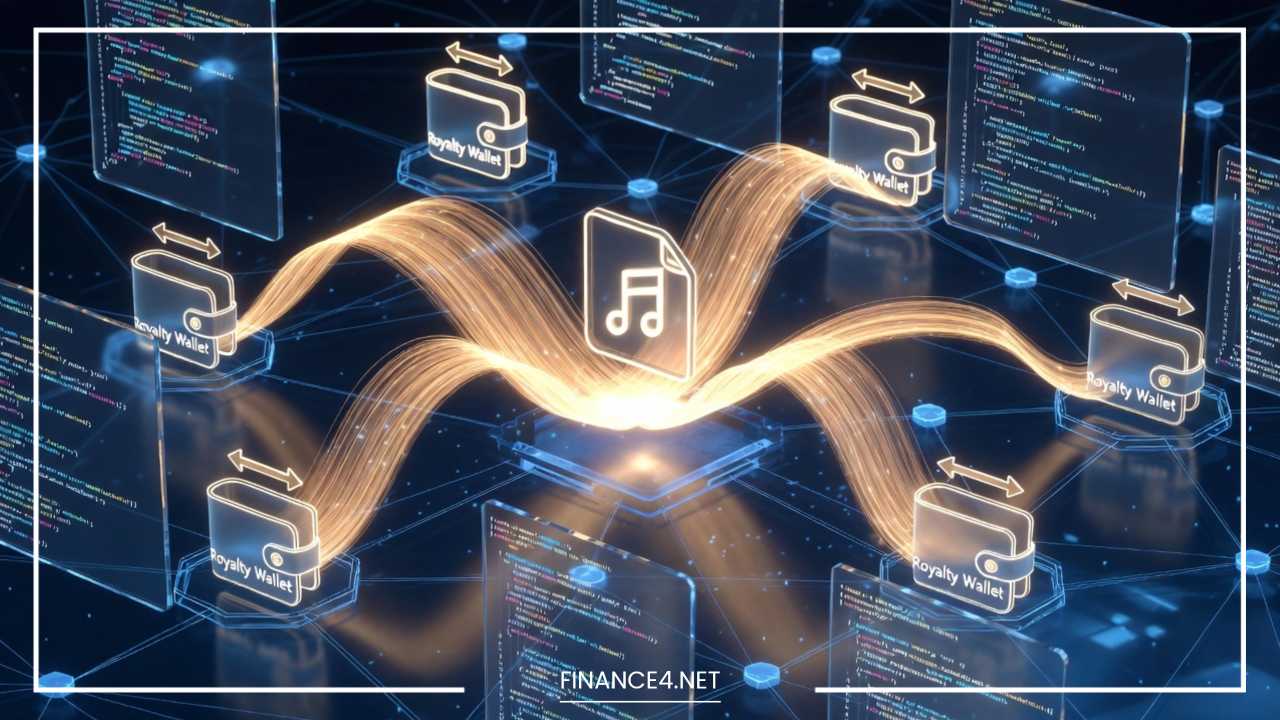
The entire concept of NFT royalties is enabled by smart contracts. A smart contract is a self-executing contract with the terms of the agreement directly written into code. When an NFT is minted, the underlying smart contract contains the logic that dictates the NFT’s properties, ownership transfer rules, and, critically, the royalty mechanism.
When an NFT is resold, the marketplace executes a function within the smart contract. This function automatically:
- Verifies the sale price.
- Calculates the royalty percentage (e.g., 5% or 10%).
- Splits the proceeds: sending the sale price minus the royalty and marketplace fees to the seller, and sending the calculated royalty amount directly to the creator’s specified wallet address.
Common Royalty Structures
The most common royalty structure is a percentage of secondary sales. This percentage is typically set by the creator during the initial setup process, often ranging from 2% to 10%, though some projects opt for higher or lower rates.
Other less common or supplementary structures can include:
- Tiered Royalties: Where the royalty percentage changes based on the number of previous sales or the sale price (e.g., lower on the first resale, higher on subsequent ones).
- Platform-Based Royalties: In some legacy systems or specialized platforms, the royalty logic might be tied more closely to the marketplace’s own backend rather than solely on-chain smart contract code.
Differences Across NFT Standards
The efficiency and reliability of royalty tracking are tied to the underlying technical standard:
- ERC-721 (Non-Fungible Token Standard): This is the most common standard for unique collectibles and profile picture (PFP) projects. Royalties are typically coded into the ERC-721 contract. However, relying on the original contract for royalty calculation can lead to issues if a marketplace chooses to ignore that logic.
- ERC-1155 (Multi-Token Standard): Used for collections where multiple copies of an item exist (e.g., gaming items). The royalty logic is often handled similarly to ERC-721 but can sometimes be more complex due to the multi-token nature.
- EIP-2981 (NFT Royalty Standard): This is a key proposal designed to standardize how royalties are requested and paid across all marketplaces. It provides a simple, universal function that any marketplace can call to determine the royalty amount and recipient, significantly improving on-chain tracking and enforcement. Creators who adopt EIP-2981 make their royalty payments far more discoverable and reliable.
How NFT Royalties Work on Major Marketplaces
The primary challenge in royalty tracking stems from the fact that not all royalties are enforced equally. While the royalty percentage is written into the NFT’s contract, marketplaces have historically been the enforcers—the entities that actually execute the royalty payment logic.
Overview of Marketplace Royalty Handling
OpenSea
OpenSea, being the largest general marketplace, has been at the center of the royalty debate.
- Historical Model: OpenSea historically respected the on-chain royalty settings, automatically enforcing payments for most collections.
- The Shift to Optional Royalties: In 2023, OpenSea made significant policy changes, moving toward optional creator fees (their term for royalties) for new collections. This means buyers can choose not to pay the creator fee on resales, dramatically impacting a creator’s predictable income. This shift necessitated a focus on on-chain enforcement tools for creators.
Blur
Blur, an NFT aggregator and marketplace focused on professional traders, significantly contributed to the “royalty wars.”
- Minimal/Optional Royalties: Blur famously minimized or made royalties optional to attract high-volume traders with lower overall transaction costs. This policy pressured other marketplaces to follow suit to remain competitive on fees.
- Impact on Tracking: Royalties on Blur are highly inconsistent and often near-zero, making tracking simpler but less lucrative for creators.
Rarible and Foundation
These platforms, often viewed as more creator-centric, have tended to prioritize supporting creators.
- Rarible: Historically strong on royalty enforcement and a proponent of on-chain royalty solutions. They have supported tools and standards to make royalty payments more robust.
- Foundation and SuperRare: These curated platforms often have higher, enforced royalty rates built into their platform structure, reflecting their focus on high-value, primary art sales. The tracking is often simpler on these platforms as they maintain tighter control over the secondary market activity for the NFTs minted through them.
On-Chain vs. Off-Chain Royalty Enforcement
The distinction between on-chain and off-chain enforcement is vital for tracking:
- On-Chain Enforcement: The royalty payment is directly coded into the NFT’s smart contract. The transfer function cannot execute unless the royalty payment to the creator is included. This is the most reliable method, as it’s enforced by the blockchain itself, regardless of the marketplace’s policies. Standards like ERC-721C are attempts to formalize this on-chain enforcement.
- Off-Chain Enforcement: The royalty payment is a social convention or a policy enforced by the marketplace’s own backend or listing contract. The underlying NFT contract allows transfer without the royalty, but the marketplace chooses to execute the payment before processing the sale. When marketplaces like OpenSea move to “optional” royalties, they are essentially withdrawing their off-chain enforcement, leading to tracking issues and income loss.
The Impact of Optional Royalties
The industry-wide shift toward optional royalties has made tracking more complex. A creator must now not only track when an NFT is resold but also whether a royalty was paid. This forces creators to rely less on marketplace dashboards and more on deep, on-chain data analysis to verify payments. The primary goal is now to confirm: Did the funds flow from the buyer’s wallet, through the transaction, and into the creator’s wallet?
Tools to Track NFT Royalties
Effectively tracking NFT royalties requires leveraging a combination of built-in platform analytics and powerful third-party blockchain analysis tools.
Built-in Analytics in Marketplaces
Most major marketplaces offer a basic level of reporting:
- Marketplace Dashboards: OpenSea, Rarible, and others provide creator dashboards that summarize sales and aggregated royalty earnings. These are the simplest starting point.
- Pros: Easy to use, no technical knowledge needed, provides quick high-level totals.
- Cons: Only covers sales made on that specific platform, may not reflect total earnings if the NFT is resold elsewhere, and sometimes lacks the granular data needed for deep auditing.
Third-Party Royalty Tracking Tools
These tools offer more granular, cross-platform insights necessary in a fragmented market.
Manifold
Manifold provides a suite of tools for creators, including their “Creator Studio,” which often offers robust analytics. Crucially, Manifold helps creators mint NFTs with advanced royalty logic, making the ensuing payments easier to track through their connected ecosystem tools.
Zora
Zora is a protocol and marketplace known for its focus on decentralization and creator ownership. The Zora protocol is designed with royalty payment in mind, and creators using Zora often benefit from its transparent, on-chain structure for tracking and aggregation of payments.
Etherscan (Manual Tracking)
Etherscan (or the corresponding block explorer for other chains like Polygonscan or BscScan) is the ultimate source of truth but requires manual effort.
- Locate Creator Wallet: Identify the wallet address designated to receive the royalties.
- Filter for Incoming Transactions: Use the “Internal Transactions” or “Token Transfers” section on Etherscan for that wallet.
- Cross-Reference Transaction Hashes: Match incoming royalty payments with the corresponding secondary market sale transactions, often identified by the smart contract interaction (e.g., a call to an OpenSea or Blur contract).
- Pros: 100% accurate, the source of truth.
- Cons: Extremely time-consuming, requires technical understanding of blockchain transactions and smart contract addresses.
NFT Analytics Platforms
For high-volume creators or projects, dedicated analytics platforms are indispensable:
- Dune Analytics: This is a powerful, community-driven platform where analysts create and share SQL queries (called ‘Dune Dashboards’ or ‘Dune Queries’) that pull data directly from the blockchain. Creators can search for dashboards tracking their specific collection’s secondary sales, royalty payments, and marketplace breakdown. This offers unparalleled transparency and the ability to compare royalty flows across different marketplaces.
- Nansen: A professional-grade, paid analytics platform that aggregates data across various chains and marketplaces. Nansen offers sophisticated wallet labeling and transaction tracking, allowing creators to track “smart money” movements and see real-time royalty earnings and sale volumes.
Custom Dashboards and Advanced Tracking
For large projects, relying on pre-built dashboards may not suffice.
- Using The Graph: The Graph is a decentralized protocol for indexing and querying blockchain data. A creator or their development team can build a Subgraph—a custom API—specifically tailored to index all transactions for their NFT collection. This allows for a completely custom, scalable dashboard that precisely tracks all secondary sales, the marketplace used, and the corresponding royalty payment to the creator’s wallet.
- Custom Dune Dashboards: By learning basic SQL, creators can fork or write their own Dune query to track exactly what they need, filtering by specific time periods, token IDs, or royalty amounts. This is often the most comprehensive and customizable tool available for free.
Pros and Cons of Automated vs. Manual Tracking
Setting Up Royalty Tracking as a Creator
Effective royalty tracking begins before the first NFT is minted. A proactive approach to smart contract configuration is the foundation of a reliable income stream.
Ensuring Smart Contract Royalty Logic
The royalty percentage and recipient wallet must be hardcoded into the initial smart contract. This involves defining a function that returns the royalty information. Key considerations include:
- Immutability: Is the royalty percentage set in stone, or can it be updated? An immutable rate offers more certainty but less flexibility.
- Recipient Address: Ensuring the correct, secure, and permanent wallet address is specified as the royalty receiver.
Using Royalty Standards (like EIP-2981)
Adopting established standards is the single best way to ensure maximum marketplace support and easier tracking:
- EIP-2981 (The NFT Royalty Standard): This standard provides a simple, universal interface. When a creator implements EIP-2981, any marketplace can easily query the contract to ask: “What is the royalty for this token, and where should it go?” Marketplaces that support EIP-2981 make tracking significantly easier because the information is structured and standardized. Creators should ensure their contract implements the
royaltyInfofunction as defined in the EIP.
Testing Royalty Flow Before Minting
Never launch a collection without thorough testing.
- Testnet Deployment: Deploy the collection smart contract to a test network (e.g., Sepolia or Mumbai).
- Simulate Secondary Sale: Mint a few test NFTs and perform a simulated secondary sale on a testnet marketplace (if available) or by directly interacting with the contract.
- Verify Flow on Etherscan: Crucially, check the testnet block explorer to confirm that the royalty payment correctly splits off from the sale price and lands in the creator’s test wallet. This confirms the on-chain logic works as intended before real funds are involved.
Platforms that Allow Custom Royalty Configuration
Most modern NFT launchpads and minting services offer simple interfaces for setting royalties.
- Thirdweb: A popular Web3 development platform that allows developers to easily select and set royalty percentages and recipient addresses when generating the smart contract code, often with built-in EIP-2981 support.
- Manifold Studio: Offers advanced contract customization, ensuring the royalty logic is robust and easily auditable.
Metadata and Smart Contract Auditing Tips
- Audit the Code: If you’re using a custom contract, hire a professional blockchain auditor to review the code. A small mistake in the royalty function could result in lost income or, worse, an irrecoverable contract.
- Verify Deployment: After deployment, double-check the contract on Etherscan to ensure the royalty percentage and recipient address variables are set correctly on the live chain.
- Metadata Tagging: While not strictly for tracking, ensure your NFT metadata is accurate and linked correctly, as any metadata issue can impact the NFT’s display and sale, indirectly affecting royalty generation.
Challenges and Limitations in Tracking Royalties
Despite technological advancements, several factors complicate the precise tracking and enforcement of NFT royalties.
Marketplace Enforcement Inconsistencies
The biggest hurdle is the lack of universal, consistent enforcement. A creator might set a 10% royalty, but if a sale occurs on a marketplace that supports optional or zero royalties, the payment may never materialize. Tracking tools must now distinguish between a sale that occurred and a sale that generated a royalty.
Off-Chain Royalties and Lack of Standardization
Older collections or those on proprietary platforms may rely on off-chain agreements where the royalty mechanism is not fully coded into the open-source smart contract but is part of the marketplace’s proprietary logic. This is a black box for external tracking tools. Without a universal standard like EIP-2981 adopted by all contracts and marketplaces, any comprehensive tracking system must integrate with dozens of disparate marketplace APIs and contract structures, which is costly and prone to failure.
Wallet Anonymity and Fragmentation
The pseudo-anonymity of blockchain addresses poses a challenge for linking royalty payments to real-world financial records. A creator may use one main wallet for minting and receiving royalties, but if they use multiple wallets across different chains or projects, aggregating the total royalty income becomes a manual reconciliation process. Furthermore, tracking who paid the royalty requires advanced analytics to deanonymize or label the buyer’s wallet.
Royalties on Cross-Chain or Cross-Market Resales
The problem is exacerbated when NFTs move between chains or when a marketplace sells an NFT that was originally minted on a different platform (an aggregator model).
- Bridging: If an NFT is “bridged” from Ethereum to Polygon, the new contract on the destination chain must correctly reference the original royalty logic. Tracking the royalty across this bridge is highly technical.
- Aggregators: When an aggregator like Blur pulls a listing from OpenSea and allows a sale with optional royalties, the transaction flow becomes complex, often involving three smart contracts (the NFT, the listing marketplace, and the aggregator), making it difficult for simple Etherscan checks to verify the payment.
Best Practices for Managing and Optimizing Royalties
A successful creator treats their royalty stream like a small business, requiring meticulous record-keeping and strategic planning.
Keeping a Record of Transactions
This is critical for auditing and tax purposes.
- The Royal Register: Maintain a digital log (spreadsheet or dedicated crypto accounting software) of every royalty transaction. Key data points should include:
- Date of Sale
- Token ID
- Sale Price (in ETH/SOL/etc.)
- Royalty Percentage
- Royalty Amount Received (in crypto and USD equivalent on that day)
- Marketplace Used
- Transaction Hash (for auditing)
- Reconciling Gaps: Use this log to cross-reference data from your tracking tools (Dune/Nansen) with your actual wallet deposits (Etherscan) to identify any missing or underpaid royalties.
Setting Realistic Royalty Percentages
While a high royalty rate (e.g., 20%) seems attractive, it can deter secondary market sales, as it increases the cost for the buyer.
- Market Standard: The industry norm is often between 5% and 10%.
- Liquidity vs. Income: A slightly lower royalty that encourages more frequent sales (higher liquidity) might ultimately generate more total income than a very high royalty that stifles trading.
Diversifying Marketplaces and Adopting New Standards
Do not rely on a single marketplace for all your sales.
- Multi-Platform Listing: Encourage your community to list on platforms that have a history of enforcing creator fees.
- Adopt New Standards Early: Immediately implement EIP-2981 and new on-chain enforcement standards (like EIP-721C) as they become available and widely adopted. This is the best defense against changing marketplace policies.
Using NFT Wallets or Dashboards with Analytics
- Integrated Wallets: Use wallets that offer built-in transaction labeling and analytics features to easily filter incoming deposits by their source (e.g., labeling deposits as “OpenSea Royalties”).
- NFT Portfolio Trackers: Tools like Zerion or specialized portfolio trackers can often aggregate wallet deposits and display them in a user-friendly way, simplifying the overview of total royalty income.
Understanding Tax Implications
Royalty income is considered taxable income in most jurisdictions.
- Tax Basis: The royalty is typically taxed based on its fair market value (FMV) in the fiat currency (USD, EUR, etc.) at the time it is received.
- Need for Conversion: You must track the crypto amount received and its fiat equivalent on the date of receipt.
- Accounting Software: Utilize crypto-specific tax software (e.g., Koinly, CoinTracker) that can connect to your wallet addresses and automatically calculate the fiat value of all incoming royalty payments for tax reporting. This is often the most critical reason for maintaining impeccable records.
The Future of NFT Royalty Tracking
The current royalty crisis—the shift to optional payments—is driving significant innovation in enforcement and tracking.
Emergence of New Royalty Standards
The trend is moving toward on-chain enforced royalties that do not require marketplace cooperation.
- ERC-721C: This standard is an example of smart contract logic that limits what a seller can do with the NFT (e.g., transfer it) unless certain conditions, like the payment of a royalty, are met. If this is widely adopted, it could render marketplace optionality moot.
- Decentralized Exchange (DEX) Standards: As more NFT trading moves to decentralized exchange-like protocols, new standards will emerge to ensure these protocols respect creator fees programmatically.
On-Chain Enforcement Trends
The industry is learning that relying on centralized marketplaces is a risk. Future tracking will be simpler because the question of if a royalty was paid will become less relevant—the contract will ensure it. Tracking will then simply involve monitoring the designated royalty receiver wallet.
Web3 Tools and Infrastructure Improving Transparency
The refinement of data indexing tools like The Graph and the widespread adoption of Dune Analytics means that the data itself is becoming more accessible. Developers are building better, open-source dashboards that aggregate royalty data across the entire Web3 space, reducing reliance on proprietary marketplace APIs.
Creator DAOs and Community Tools
For many large projects, royalty management is being handed over to a Decentralized Autonomous Organization (DAO). The DAO’s smart contract automatically receives the royalties, and the community votes on how to use them (e.g., reinvesting in the project, burning tokens, or distribution to core members). Tracking, in this case, shifts to auditing the DAO’s treasury contract, adding a layer of transparency and collective accountability.
Final Thoughts
The ability to secure a perpetual revenue stream through secondary sales is the single most powerful financial innovation the NFT space offers creators. However, this system is constantly under pressure and change.
For artists, developers, and project leaders, proactive setup is paramount: ensure your smart contract is robust, adopts standards like EIP-2981, and is thoroughly tested. Once launched, diligent tracking is non-negotiable. Leverage the power of Web3 analytics—tools like Dune and Etherscan—to audit your marketplace reports and verify every single payment that lands in your wallet.
The landscape of NFT royalties is highly dynamic. What works today may be obsolete tomorrow. Creators must remain informed, technically proactive, and strategic in their approach to financial management. By mastering the tools and best practices outlined here, creators can safeguard their valuable income stream and fully capitalize on the potential of the decentralized creator economy.