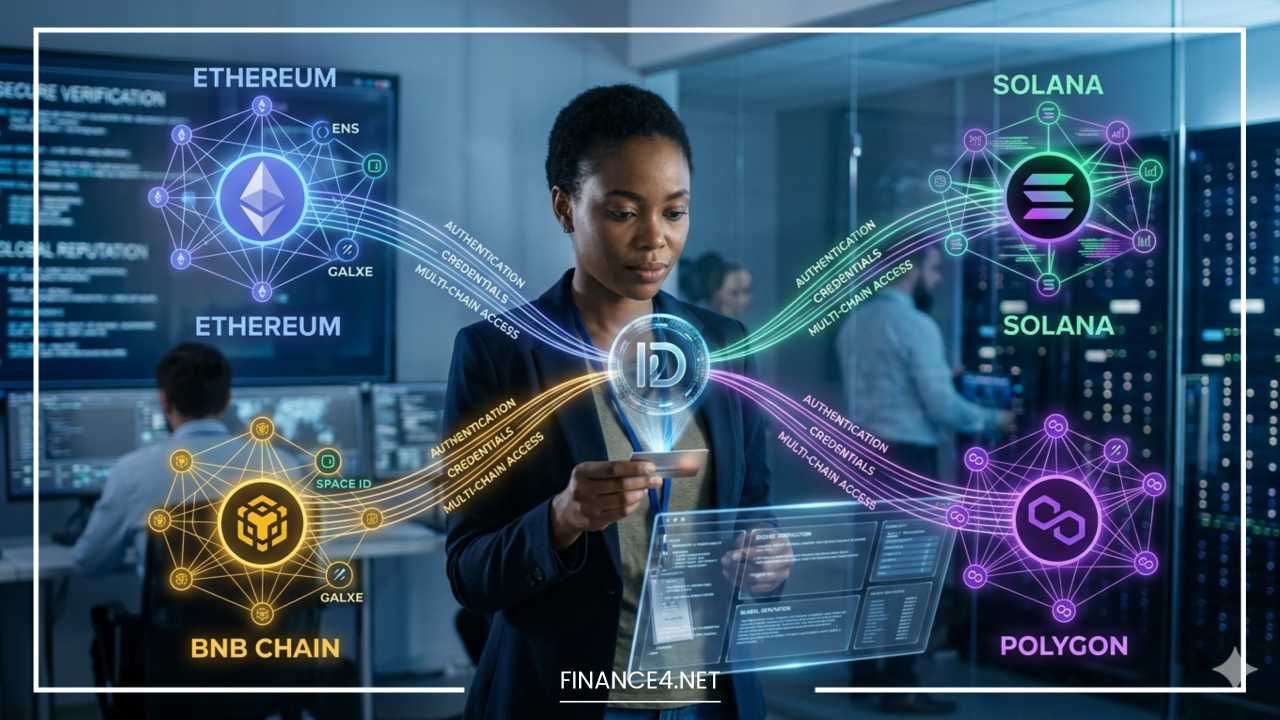
Leading NFT-Based Social Networks
 by
by 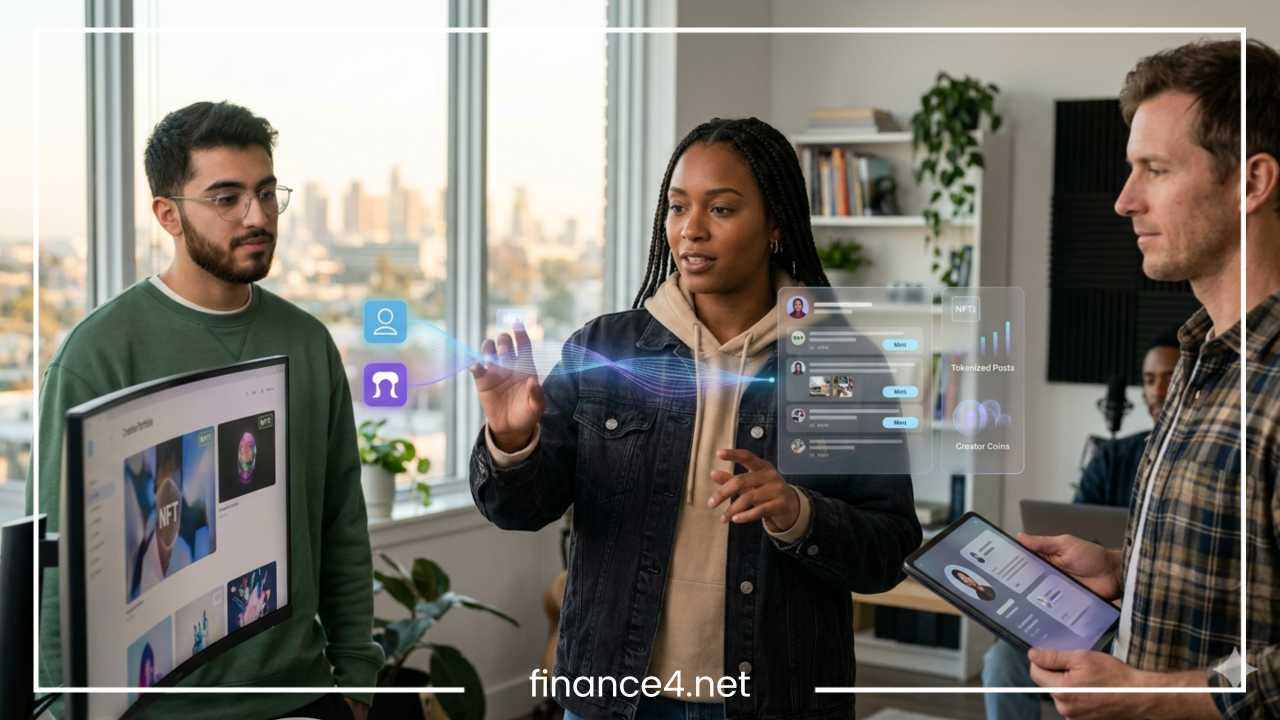
Top 7 Leading NFT-Based Social Networks
The digital landscape is undergoing a fundamental shift as the centralized models of traditional social media face increasing scrutiny. For decades, users have operated on platforms where they are the product, providing data and content in exchange for access, while the platforms retain full control over monetization and distribution. NFT-based social networks represent the next evolution of this relationship, moving toward a model defined by decentralization, true digital ownership, and direct monetization.
At their core, these platforms leverage non-fungible tokens (NFTs) to give users power over their digital presence. Unlike traditional platforms where a profile or a post can be deleted or demonetized at the whim of a corporation, NFT-based networks treat digital assets as portable, permanent entities owned by the creator. This shift is deeply rooted in the rise of Web3 and the broader creator economy. As creators seek more sustainable ways to earn a living without relying solely on unpredictable ad-revenue shares or brand deals, the ability to tokenize content offers a direct line to fans and supporters.
This trend matters right now because it addresses the growing demand for digital sovereignty. As concerns over data privacy, censorship, and algorithmic manipulation reach a fever pitch, blockchain technology provides a transparent alternative. By integrating NFTs into the social fabric, these networks are not just changing how we post; they are redefining what it means to belong to an online community.
What Are NFT-Based Social Networks?
NFT-based social networks are decentralized platforms built on blockchain technology where user interactions, profiles, and content are represented by non-fungible tokens. In a standard social network, your data exists on a private server owned by a company. In a Web3 social network, your profile is often an NFT held in your crypto wallet, and your social “graph”—the map of who you follow and who follows you—is stored on a public, permissionless ledger.
The role of blockchain here is to act as a neutral infrastructure. It ensures that no single entity can revoke your access or claim ownership of your work. NFTs serve several critical functions within these ecosystems. First, they act as a form of digital identity. Your profile is not just a username; it is a unique asset that you can move between different compatible applications. Second, they serve as tokens of ownership for content. A video, an article, or a piece of digital art can be “minted” directly into a user’s feed, allowing it to be bought, sold, or tipped by other users.
Furthermore, NFTs function as access tokens. This enables “token-gating,” where specific communities or pieces of premium content are only accessible to those holding a particular NFT. This creates a tiered system of engagement that rewards early supporters and loyal fans. Whether it is a private group for collectors or a subscription-style feed, the blockchain provides a trustless way to verify access without needing a middleman to manage permissions.
Key Features of NFT Social Platforms
The architecture of NFT-based social platforms is built on several pillars that distinguish them from the “walled gardens” of the past. The most prominent feature is decentralized ownership. Because user data is not siloed within a single company’s database, the user maintains control over their assets. If a specific interface or app on the network becomes undesirable, the user can take their “social graph”—their followers and their content history—and plug it into a different app built on the same protocol.
Tokenization of content is the second pillar. Every post has the potential to be an asset. This turns the act of social sharing into an act of value creation. When a user posts a photo or a thought, it can be minted as an NFT, allowing the creator to set parameters for how that content is shared or sold. This leads directly into the third feature: innovative creator monetization models. Instead of waiting for a platform to pay out a fraction of ad revenue, creators can earn through direct sales, secondary market royalties, and micro-tips in the form of cryptocurrency.
Interoperability is another game-changer. In the traditional web, your Instagram followers are separate from your Twitter followers. In Web3 social networks, because the identity is anchored in a blockchain wallet, your reputation and assets can follow you across the entire decentralized web. Finally, community governance plays a major role. Many of these platforms are governed by Decentralized Autonomous Organizations (DAOs), where users who hold native tokens can vote on platform upgrades, content moderation policies, and treasury spending.
Benefits of NFT-Based Social Networks
The primary benefit of moving social interaction to the blockchain is the radical improvement in revenue opportunities for creators. By removing intermediaries, creators can capture a much higher percentage of the value they generate. The programmed nature of NFTs also allows for automated royalties; every time a piece of content is resold, the original creator can receive a percentage of that sale automatically, creating long-term passive income streams.
Transparency and trust are also significantly enhanced. Because the blockchain is a public ledger, metrics like follower counts, engagement rates, and transaction histories are verifiable. This eliminates the “fake follower” problem and provides brands and collaborators with clear, honest data. Furthermore, these platforms reduce the reliance on opaque algorithms. In traditional social media, an algorithm determines who sees your content based on what keeps users on the app longest. In NFT-based networks, the focus often shifts to direct ownership and chronological feeds, giving creators more predictable reach.
Finally, these platforms foster stronger community engagement. When fans own a piece of a creator’s work or a “membership pass” NFT, they are financially and emotionally invested in that creator’s success. This transforms the audience from passive consumers into active stakeholders who have a vested interest in promoting and supporting the community.
Challenges and Limitations
Despite the potential, NFT-based social networks face significant hurdles before they can achieve mainstream adoption. Scalability is a major technical challenge. Blockchains can be slower and more expensive than traditional databases. If every “like” or “repost” required a transaction fee (gas fee) on a busy network, the user experience would be prohibitively expensive and sluggish. While “Layer 2” solutions and specialized blockchains are addressing this, it remains a work in progress.
There is also a high entry barrier for the average user. Traditional social media requires only an email and a password. Web3 platforms require users to manage digital wallets, safeguard private keys, and understand the nuances of cryptocurrency. This “onboarding friction” prevents many non-technical users from participating. Additionally, the volatility of the NFT and crypto markets can be a double-edged sword. If the value of a platform’s native token or its NFTs crashes, it can demoralize the community and lead to an exodus of users.
Regulatory uncertainty is another concern. Governments around the world are still determining how to classify and regulate NFTs and social tokens. Changes in law could impact how these platforms operate or how creators are taxed. Lastly, the user experience of many decentralized apps still lags behind the polished, highly optimized interfaces of major Silicon Valley platforms, making it difficult to compete for the attention of the general public.
Leading NFT-Based Social Networks
Lens Protocol
Lens Protocol is a decentralized social graph that allows developers to build social media applications without having to worry about building a user base from scratch. Built on a scalable blockchain infrastructure, Lens treats every user’s profile as an NFT. When you follow someone on Lens, you are actually collecting a “follow NFT” that records that relationship on-chain.
The core features include the ability to “collect” posts, which allows users to purchase and own content they find valuable. It also supports “mirrors,” which are similar to retweets but can be programmed to share revenue with the original creator. What makes Lens unique is its modularity; developers can create new features (like different ways to monetize or moderate) and plug them into the existing graph. Its target audience includes developers looking to build the next generation of social apps and creators who want total control over their social capital.
Farcaster
Farcaster is a sufficiently decentralized protocol for building social networks. It is often compared to a decentralized version of Twitter or Reddit. It uses a hybrid architecture where identity is managed on-chain, but the social data (posts and likes) is stored in “hubs” that are off-chain but still verifiable. This allows for a fast, snappy user experience that feels like a traditional app.
The key features of Farcaster include “Frames,” which allow developers to turn a simple post into an interactive mini-app. Within a Frame, a user can mint an NFT, join a poll, or make a purchase without leaving the feed. Its strength lies in its high-signal community, primarily composed of developers and early adopters. While it is currently more technical in nature, its emphasis on open-source development makes it a breeding ground for social innovation.
DeSo (Decentralized Social)
DeSo is a custom-built blockchain designed specifically to scale social media applications to billions of users. Unlike general-purpose blockchains, DeSo is optimized for the high-frequency storage and indexing required for social interactions like posting, commenting, and following.
A core feature of DeSo is “Creator Coins,” where every user has a token associated with their profile that others can buy and sell. As a creator’s reputation grows, the price of their coin typically increases. This provides a direct way for fans to speculate on and support their favorite creators. The platform also supports “Social NFTs,” which are designed to be easily tipped or gifted within the feed. Its target audience is influencers and creators who want to experiment with tokenized economies and “social tipping.”
Mirror
Mirror is the premier Web3 publishing platform, often described as a decentralized version of Medium or Substack. On Mirror, writers can publish their work and “mint” it as a “Writing NFT.” This allows readers to collect a digital edition of an article, serving as both a collectible and a way to support the author.
Mirror features powerful crowdfunding tools, allowing creators to launch “Campaigns” where supporters contribute crypto in exchange for tokens representing a stake in a project. This makes it a hub for journalists, researchers, and DAO contributors. Its unique strength is its integration with the broader Ethereum ecosystem, allowing for complex financial arrangements, like splitting earnings between multiple collaborators automatically. It is best suited for thought leaders and long-form content creators.
BitClout
BitClout was one of the first major applications built on the DeSo blockchain, operating as a social crypto-exchange. It functions similarly to Twitter but with a heavy emphasis on the financial value of profiles. Every user has a price tag determined by the market demand for their Creator Coin.
The core features include “Diamonds,” which are a form of social tipping that carries actual monetary value. While it was initially controversial for its aggressive onboarding of celebrity profiles, it proved the concept of “social speculation.” Its primary strength is the gamification of social influence, making it attractive to traders and those interested in the financialization of social media. However, its limitations include a focus on financial value over content quality, which can lead to a noisy environment.
Only1
Only1 is an NFT-powered social platform built on the Solana blockchain, designed to bridge the gap between creators and fans using a subscription model. It combines the features of a traditional social feed with NFT marketplaces and “Initial NFT Offerings” (INOs).
A key feature is the “Create-to-Earn” model, where both creators and fans can earn rewards for interacting with content. Fans can buy “Genesis NFTs” of their favorite creators, which gives them a share of the rewards generated by that creator’s activity. This creates a deeply incentivized relationship. Its target audience is digital creators who currently use platforms like Patreon or OnlyFans but want to move toward a model where fans can also profit from their growth.
Audius
Audius is a decentralized music-sharing and streaming protocol that gives artists more control over how their music is distributed and monetized. While specifically focused on audio, it functions as a social network where artists can interact with their listeners.
The platform uses a native token to reward artists for trending tracks and to give users a say in platform governance. Artists can offer “Silver” or “Gold” tier content accessible only to those who hold certain NFTs or a certain amount of the platform’s token. This provides a way for independent musicians to bypass the traditional record label system. Its strength is its large user base and polished mobile app, making it one of the most “mainstream-ready” NFT social platforms.
How NFT Social Networks Are Changing the Creator Economy
The shift toward NFT-based social media is fundamentally changing the power dynamics of the creator economy. For the first time, creators are moving from being “tenants” on a platform to being “owners” of their digital space. In the traditional model, a creator’s livelihood is at the mercy of platform-owned databases. If a platform changes its algorithm or bans an account, years of work can disappear. NFT-based networks remove this risk by decoupling the content and the audience from the specific application.
Furthermore, these networks enable a shift from “broadcasting to many” to “building for the few.” Because a creator can monetize a small group of highly dedicated fans through NFTs and social tokens, they no longer need millions of views to make a living. This “1,000 True Fans” model is supercharged by blockchain, where a single NFT sale or a loyal group of token-holders can provide more sustainable income than millions of ad-supported views.
We are also seeing the rise of programmable royalties. In the past, if a viral video was shared or used by others, the original creator rarely saw any financial return. With NFTs, the rules of compensation are baked into the code. This ensures that as a creator’s influence grows and their early work becomes more valuable, they continue to benefit from its success in the long term.
Future of NFT-Based Social Media
The future of NFT-based social media lies in the seamless integration of digital identity across the physical and virtual worlds. As the concept of the metaverse matures, our social media profiles will likely evolve into 3D avatars and digital “spaces” that we carry with us. NFTs will be the glue that holds these experiences together, representing our clothes, our achievements, and our social status.
We can also expect significant improvements in user experience. Developers are working on “account abstraction,” which allows users to interact with blockchain apps using familiar methods like email or biometrics, hiding the complexity of wallets and private keys. As scalability issues are solved by faster blockchains, the “gas fees” associated with social interactions will likely vanish, making Web3 social feel as fluid as Web2.
The combination of AI and Web3 will also play a role. AI could help users curate their decentralized feeds or manage their NFT portfolios, while the blockchain provides a way to verify that content was created by a human and not a bot. As these technologies converge, NFT-based social networks could move from a niche interest to the standard way we connect online.
Final Thoughts
NFT-based social networks are more than just a technological trend; they represent a demand for a fairer, more transparent digital world. By prioritizing ownership, decentralization, and direct monetization, these platforms offer a compelling alternative to the centralized giants that have dominated the internet for the last two decades.
While challenges like technical complexity and market volatility remain, the core value proposition—that you should own your digital life—is too powerful to ignore. As the tools become easier to use and the benefits to creators become more obvious, we are likely to see a steady migration toward these user-owned ecosystems. In the end, the success of NFT social networks will be measured not just by the value of their tokens, but by the freedom and agency they return to the people who create the internet’s value every day.
Frequently Asked Questions
How do I earn money on decentralized NFT social networks?
Creators earn through multiple direct revenue streams rather than relying on traditional ad-share models. Common methods include selling posts as writing or media NFTs, receiving micro-tips in cryptocurrency, and earning secondary market royalties every time a piece of content is resold. Additionally, some platforms reward users with native tokens for high engagement or for providing value to the community.
What is the difference between Lens Protocol and Farcaster?
While both aim for decentralization, they use different architectures. Lens Protocol is a social graph where your entire profile and follow-history are stored as NFTs on a blockchain, making them fully portable across any app built on Lens. Farcaster is a “sufficiently decentralized” protocol that uses a hybrid model: your identity is on-chain, but the actual data (posts) is stored in off-chain hubs for faster performance. Lens focuses on deep on-chain ownership, while Farcaster prioritizes a user experience that mimics traditional fast-paced apps.
Do I need a crypto wallet to use NFT-based social media?
Most platforms currently require a crypto wallet (like MetaMask or Phantom) because it serves as your universal login and your storage for digital assets. However, many newer networks are integrating “social login” features that allow you to sign up with an email while a wallet is automatically created for you in the background. This is part of a broader effort to reduce the technical barrier for mainstream users.
Are NFT social networks safer than traditional social media?
These platforms offer a different type of security focused on data sovereignty. Since you own your data and identity through your wallet, a platform cannot easily “de-platform” you or sell your private information to third-party advertisers without your consent. However, users must take more personal responsibility for security, such as protecting their private keys and being wary of phishing attempts that target digital assets.
How do token-gated communities work on Web3 platforms?
Token-gating uses blockchain verification to restrict access to certain content or groups. When a user tries to enter a gated space, the platform checks their connected wallet for a specific NFT or a minimum amount of a particular token. If the asset is present, the user is granted access. This allows creators to offer exclusive content, private chats, or early access to loyal supporters without managing manual membership lists.
Can I move my followers from one NFT social network to another?
On decentralized protocols like Lens or DeSo, the answer is yes. Because your “social graph” (who you follow and who follows you) is stored on a public blockchain rather than a private company database, you can theoretically take that relationship data to any other application built on the same underlying protocol. This prevents the “vendor lock-in” seen with traditional platforms where leaving the app means starting your audience from zero.
What are the environmental impacts of NFT-based social networks?
The environmental impact depends heavily on the blockchain the network uses. Many modern NFT social platforms are built on “Proof of Stake” networks like Solana, Polygon, or the current version of Ethereum. These networks use significantly less energy than earlier “Proof of Work” systems—often comparable to the energy consumption of traditional global data centers—making them a more sustainable choice for high-frequency social interactions.