How to Run an NFT-Based Subscription Service
 by
by 
How to Run an NFT-Based Subscription Service | Step-by-Step Guide
The digital age has seen the rise of two powerful concepts: the Non-Fungible Token (NFT) and the subscription service. On the one hand, subscriptions—from streaming video to premium news—have become the bedrock of the modern creator and media economy. On the other, NFTs have fundamentally redefined digital ownership, offering verifiable proof of authenticity and unique utility. Combining these two models creates a revolutionary paradigm: the NFT-based subscription service. This article serves as a comprehensive guide, walking aspiring creators, developers, and businesses through the mechanics, benefits, technical requirements, and strategic nuances of launching and scaling this next-generation model.
Introduction to NFT-Based Subscriptions
At its core, a Non-Fungible Token (NFT) is a unique digital identifier, recorded on a blockchain, that is used to certify ownership and authenticity. Unlike cryptocurrencies like Bitcoin, which are fungible (interchangeable), each NFT is distinct.
The subscription model is a business strategy where a customer must pay a recurring fee (monthly, quarterly, or annually) to access a product or service. Examples range from Netflix and Spotify to private newsletters and exclusive software tools.
An NFT-based subscription service marries these two concepts. Instead of paying a recurring fiat or crypto fee to a centralized entity for access, the user purchases an NFT that functions as a digital access token. Holding the NFT in their wallet grants them verifiable, programmatic access to the exclusive content, community, or utility. This simple shift has profound implications.
The primary motivation for this combination is the transition from rented access to owned access. A traditional subscriber merely rents the service; the NFT holder owns the key to the service. Real-world applications are rapidly emerging across various sectors:
- Media: An NFT granting lifetime access to a premium investigative journalism site.
- Art: A collectible art piece that also functions as a membership card for exclusive gallery events and artist releases.
- Gaming: An in-game asset (NFT) that unlocks a season pass or ongoing premium content.
- Creator Economy: A creator issuing a $PASS NFT that gates access to their private Discord, weekly AMA sessions, and educational resources, directly bypassing intermediaries like Patreon or Substack.
Benefits of Using NFTs for Subscriptions
Integrating NFTs into a subscription model offers distinct advantages over traditional, centralized systems.
Ownership and Transferability of Access Rights
The most compelling benefit is the shift from renting access to owning it. A traditional subscription is non-transferable; if you cancel Netflix, your access is gone. An NFT subscription, however, is an asset in the user’s wallet. The holder can sell or gift their access token (the NFT) on a secondary marketplace, creating a liquid market for membership. This transferability adds significant perceived and actual value for the customer.
Decentralization and Transparency
The access logic is managed by an immutable smart contract on a public blockchain, not by a single company’s database. This offers unprecedented transparency regarding the total number of subscriptions, the revenue distribution (royalties), and the access rules.
Potential for Resale and Added Utility
Because the subscription access is an asset, it can appreciate in value, particularly if the service or community becomes highly sought after. Users aren’t just paying for access; they’re acquiring an investment. Furthermore, the NFT can be programmed to unlock utilities beyond the primary subscription, such as exclusive merchandise discounts, voting rights in a DAO (Decentralized Autonomous Organization), or airdrops of future assets.
Long-Term Community Engagement
NFTs foster a deeper, more committed community. Holders are financially and emotionally invested in the success of the service because their asset’s value is tied to it. This leads to higher retention, organic marketing, and a powerful sense of belonging.
Elimination of Intermediaries
By running the subscription through a smart contract, creators can minimize the reliance on centralized platforms like Patreon, YouTube, or proprietary ticketing systems, allowing them to recapture up to 100% of the revenue (minus blockchain transaction fees) and maintain direct ownership of their community data.
How It Works: The Mechanics of NFT Subscriptions
The functional elegance of an NFT subscription lies in the smart contract and its ability to act as a programmatic gatekeeper.
NFT as a Digital Access Token
Instead of issuing a username and password, the service issues an NFT. This token is the user’s proof of subscription. The service’s protected resource (e.g., a website page, a video stream, a private Discord channel) uses token-gating technology to check if the connecting wallet address owns the required NFT. If the wallet holds the NFT, access is granted; if not, access is denied.
Time-Based vs. Lifetime Subscriptions
- Lifetime/Perpetual: The user purchases an NFT (e.g., a “Founders Key”) once, and as long as they hold it, they have access. This is ideal for strong, committed communities or high-value, exclusive services.
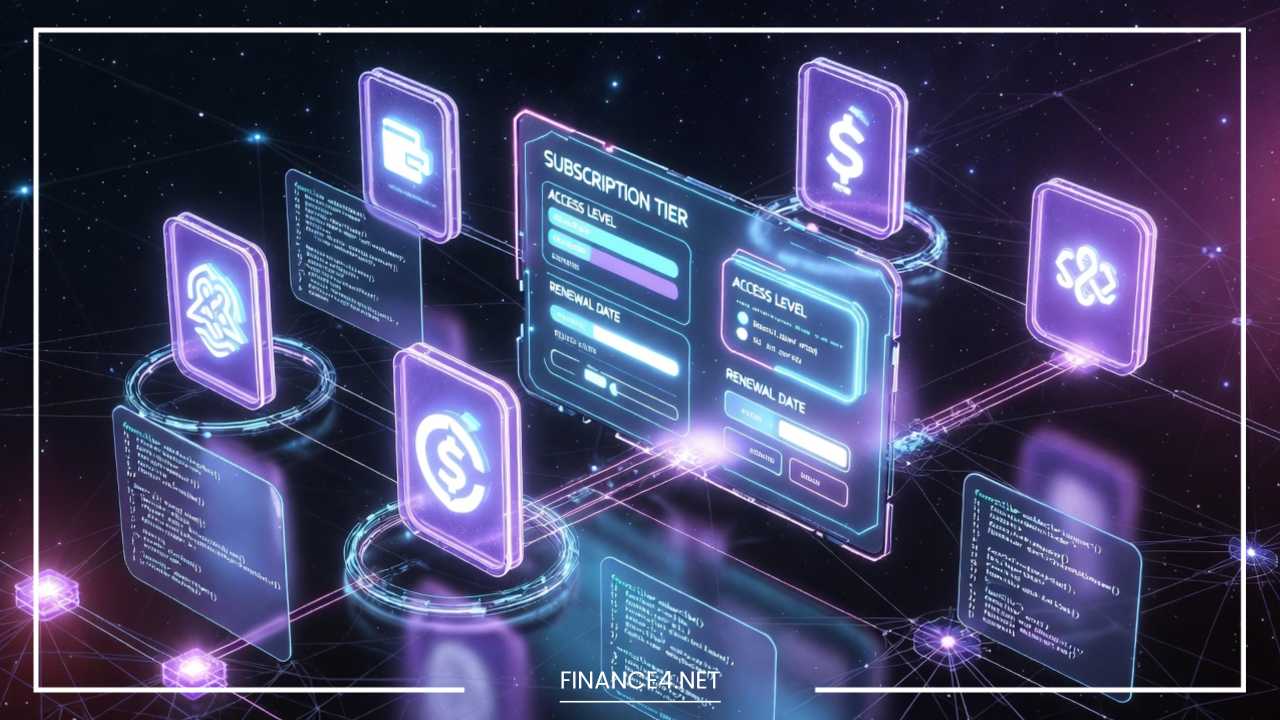
- Time-Based/Renewable: The NFT acts like a time-stamped pass. The initial purchase grants, for instance, one month’s access. The smart contract, or an associated off-chain mechanism, is programmed to check for a renewal transaction (a fee payment) after the period expires.
Smart Contracts for Automation
The smart contract on the blockchain automates the core subscription logic:
- Minting: Creating and issuing the initial NFT upon payment.
- Access Check: A function that external systems can call to verify ownership and, for time-based models, check the expiration date.
- Renewal (for time-based): A function that allows the holder to pay the recurring fee, which updates the expiration metadata on the NFT and resets the access clock.
Integration with Web Apps or Gated Content
The subscription service’s frontend must integrate a Wallet Login (e.g., “Connect Wallet” button). Once connected, the application uses Web3 libraries (like Ethers.js) to query the blockchain and confirm:
- The user’s connected wallet address.
- Whether that address holds the specific required NFT contract ID.
- The relevant metadata (like the expiration date).
If all checks pass, the user is authenticated and the gated content is served.
NFT Burning or Renewal Mechanisms
In a time-based model, there are two primary ways to manage expiration:
- Soft Expiration (Metadata Update): The NFT’s smart contract is set up so that the actual token remains in the wallet, but its metadata is updated to show an “Expired: True” status after the time runs out. Upon renewal payment, the status reverts to “Expired: False,” granting access again.
- NFT Burning (Less Common): The user is required to burn (destroy) their expiring NFT and mint a new one upon renewal, though this is cumbersome and less user-friendly.
The metadata update approach is overwhelmingly preferred as it preserves the token’s history and value while allowing for seamless renewal and resale of “pre-paid” access.
Technical Requirements & Tools
Building an NFT subscription service is a full-stack engineering challenge requiring expertise in blockchain, smart contracts, and modern web development.
1. Blockchain Platform Selection
The foundational decision is which blockchain to deploy on. Key considerations are transaction cost (gas fees), speed, security, and developer ecosystem size.
- Ethereum: The most secure and decentralized platform, with the largest developer community. It’s ideal for high-value NFTs or perpetual subscriptions where security is paramount. However, high gas fees can be prohibitive for monthly, micro-transaction renewals.
- Polygon (Layer 2 on Ethereum): Offers significantly lower gas fees and faster transactions than the Ethereum mainnet while maintaining a connection to the security of Ethereum. It’s an excellent choice for services expecting frequent, low-cost subscription renewals.
- Solana: Offers ultra-low fees and high throughput. It is a strong competitor for services requiring extremely fast and cheap transactions, though its decentralization and security have faced more scrutiny than Ethereum.
- Other Chains (BNB Chain, Avalanche): Offer a balance of speed and cost, often with EVM (Ethereum Virtual Machine) compatibility, making development easier if leveraging existing Ethereum tooling.
For most subscription services, Polygon strikes the best balance between cost, speed, and security.
2. NFT Standards to Use
- ERC-721: The classic standard for unique, non-fungible tokens. It is typically used where every single subscriber gets a distinct, individual NFT (e.g., a personalized “Founder’s Pass”). This is the default choice for most NFT subscriptions.
- ERC-1155 (Multi-Token Standard): Allows for a single contract to govern both fungible and non-fungible tokens. It is useful for creating large quantities of an identical access pass (e.g., 10,000 “Bronze Tier” subscriptions) more efficiently. It is excellent for tiered systems where many users hold the same level of access.
The NFT’s metadata is crucial. It must include fields for:
access_tier(Bronze, Gold, etc.)expiration_date(Unix timestamp)status(Active, Expired)
3. Smart Contract Development
The subscription logic is encoded here.
- Frameworks: Hardhat or Truffle are essential development environments for compiling, deploying, and testing smart contracts.
- Libraries: OpenZeppelin provides battle-tested, standardized implementations of ERC-721 and access control contracts, drastically reducing security risks.
- Subscription Logic: The contract must contain a
mint()function for initial purchase and arenew()function that takes payment, updates the expiration date in the token’s metadata, and ensures only the current owner can renew.
4. Frontend & Wallet Integration
The user-facing application requires integration with the blockchain.
- Web3 Libraries: Ethers.js or Web3.js are JavaScript libraries that allow the frontend to interact with the blockchain (e.g., read NFT ownership status, initiate transactions).
- Simplified Tools: Tools like ThirdWeb or Moralis offer pre-built APIs and SDKs that abstract away much of the complex Web3 coding, accelerating development.
- Wallet Integration: WalletConnect provides a simple, universal protocol for connecting the web app to dozens of mobile and desktop wallets (MetaMask, Coinbase Wallet, Trust Wallet, etc.) for authentication and transaction signing.
5. Content Gating
The final step is to restrict access based on the wallet check.
- Website Access: A server-side check (using the Web3 libraries) verifies NFT ownership before rendering the content.
- Token-gated Discord: Services like Collab.Land or Guild.xyz automate the process of granting specific Discord roles (e.g.,
#Gold-Subscriber) only to users whose connected wallet holds the required NFT.
Designing the NFT Subscription Experience
A successful NFT subscription is not just about the technical plumbing; it’s about crafting a valuable and engaging user journey.
Creating Compelling Artwork or Utility-Based NFTs
The NFT itself must have intrinsic value to justify the price.
- Artwork Focus: The token could feature unique, high-quality generative art, making it a collectible that serves a dual purpose as an access pass. This appeals to aesthetically driven users.
- Utility Focus: The NFT’s value is purely in the access and benefits it unlocks. The artwork may be simple, but the associated perks (exclusive software, direct line to a creator, voting rights) must be robust.
The highest-value subscriptions usually blend both: a beautiful, limited-edition art piece that also unlocks significant utility.
User Onboarding and Purchase Flow
The onboarding must be frictionless, especially for users new to Web3.
- Education: Clearly explain that the user needs a crypto wallet (e.g., MetaMask) and the native currency (e.g., ETH, MATIC). Provide simple, one-click links to install/fund guides.
- Purchase (Mint) Page: A dedicated, easy-to-use page where users can select their tier, connect their wallet via WalletConnect, and initiate the
mint()transaction. The transaction fee (gas) and the subscription cost must be clearly displayed. - Confirmation and Access: Upon successful transaction confirmation, provide immediate, clear instructions on how to use the NFT to access the gated content (e.g., “Success! Connect your wallet to our Discord or visit the Subscriber Portal now.”)
Branding and Value Perception
The branding of the NFT and the service must communicate exclusivity and permanence. Use terms like “Key,” “Pass,” “Artifact,” or “Founders Token” to reinforce the idea that the user is acquiring a valuable, long-term asset, not a temporary receipt.
Rarity Levels or Tiered Access
Implement a tiered system to capture different market segments and encourage upselling:
- Bronze/Basic: Low-cost, high-supply NFT granting essential access (e.g., general Discord channel, weekly newsletter).
- Silver/Premium: Mid-range cost, medium-supply NFT granting additional features (e.g., monthly AMA with the creator, discounts on merch).
- Gold/VIP: High-cost, low-supply NFT granting ultimate access and perks (e.g., one-on-one sessions, voting rights in a DAO, lifetime access).
This allows the project to create a vibrant economy where higher-tier NFTs may command a premium on the secondary market.
Monetization & Revenue Models
The revenue strategy for an NFT subscription can be more diverse and profitable than traditional models.
One-Time Mint + Monthly Renewal
This is the most common and robust model.
- Initial Mint Price: A one-time, upfront cost (e.g., $100 or 0.05 ETH) to acquire the NFT. This fee covers initial development costs, creates scarcity, and weeds out non-serious users.
- Recurring Renewal Fee: A lower, recurring fee (e.g., $10/month) paid via a
renew()function on the smart contract to update the NFT’s expiration metadata. This generates predictable, recurring revenue.
Tiered Pricing Strategies
As detailed above, tiered NFTs allow the service to monetize different levels of value delivery. Ensure the value differential between tiers is substantial enough to incentivize upgrades. The highest tier may be a perpetual access pass with a high initial mint price, creating a major initial capital injection.
Royalties on Secondary Sales
A core revenue stream unique to NFTs is the secondary market royalty. The smart contract can be programmed to automatically pay the creator a percentage (typically 5% to 10%) every time the NFT is resold on a marketplace like OpenSea or Magic Eden. This means the service continues to earn revenue long after the initial sale, monetizing the appreciation and transferability of their access token.
Upsells (Exclusive Merch, Events)
NFT holders are a deeply engaged audience. The service can create exclusive revenue opportunities that are only accessible to them, such as:
- Token-Gated Merch: Physical products or digital collectibles only purchasable by NFT holders.
- Exclusive IRL Events: Tickets for conferences, concerts, or meet-ups that require the NFT to be verified for entry.
- Future Airdrops: Offering new NFTs or tokens for free (airdropping) to current subscribers, which can be another asset for them to hold or sell.
Marketing Your NFT Subscription Service
Marketing an NFT service is less about traditional advertising and more about community building, scarcity, and viral growth.
Building Community (Discord, Twitter, Telegram)
Your community platforms are the lifeblood of the service.
- Discord is the command center for Web3 projects. Use it for announcements, support, and token-gated private channels to immediately deliver value and exclusivity.
- Twitter (X) is the primary platform for outreach and viral marketing. Use it to showcase the artwork, announce utility, and engage with the broader NFT ecosystem.
- Telegram is often used for quick, high-priority announcements.
Influencer & Creator Partnerships
Collaborate with established crypto influencers, thought leaders, and complementary creators in the target niche. A partnership where an influencer is given a small, exclusive batch of your NFTs to distribute or sell to their audience is highly effective.
Launch Strategy (Whitelisting, Drops)
The launch is critical for generating momentum and capitalizing on scarcity.
- Whitelisting (Allowlist): Reward early and engaged community members with a guaranteed slot or a discounted price to mint the NFT before the public. This builds loyalty and an initial dedicated user base.
- The Drop: An announced public sale (Dutch Auction, Fixed Price, or Free Mint + Gas) creates urgency and a sense of shared experience. A successful sell-out on a drop is a powerful marketing signal.
SEO, Content, and Social Media
While community is key, don’t neglect traditional marketing for Web2 users.
- SEO: Create educational content (guides, articles) on “What is an NFT subscription?” and “Why use blockchain access?” to capture organic search traffic from users transitioning into Web3.
- Content: Produce high-quality, free content that serves as a top-of-funnel magnet, showcasing the value that the gated, NFT-exclusive content provides.
Airdrops and Giveaways
Use airdrops to reward long-term holders and incentivize engagement. Giving away NFTs, especially to the followers of partner projects, is an excellent way to bootstrap an initial community. Airdropping a new utility token (a governance token or a new NFT art piece) to current subscribers rewards loyalty and prevents churn.
Legal, Ethical, and Regulatory Considerations
The regulatory landscape for NFTs is still nascent, requiring cautious navigation.
Securities Law & Utility NFT Distinctions
The most significant risk is the NFT being classified as a security by a regulator (e.g., the SEC in the U.S.). To avoid this, the NFT must primarily be a utility token that grants access to an existing product or service.
- Avoid: Language that promises future financial returns, capital appreciation, or passive income from the NFT itself.
- Focus On: The immediate, tangible utility it unlocks (content access, discounts, private channels). The emphasis must be on the consumption of the service, not the investment value of the token.
Terms of Service (ToS) and Refund Policies
The ToS must be transparent, outlining:
- The exact utility the NFT provides.
- The duration (lifetime vs. time-based).
- The finality of blockchain transactions: Clearly state that once the NFT is minted (a transaction is complete), a refund is typically not possible, especially since the user has a tradable asset.
- The project’s roadmap and service guarantees.
Privacy and Data Compliance
While the wallet address is public, the project still needs to comply with local data privacy laws (e.g., GDPR) if it collects any personal identifying information (PII) like email addresses for marketing or KYC purposes. The use of a wallet address alone is generally privacy-preserving, but any off-chain PII collection must be compliant.
Protecting Against Rug Pulls or Scams
The project must demonstrate trust and commitment.
- Transparent Team: A publicly “doxxed” team (real identities known) dramatically reduces the fear of a rug pull (where the developers abandon the project and take the funds).
- Audited Smart Contracts: Hire reputable security firms to audit the smart contracts for vulnerabilities before deployment, showcasing a commitment to security.
Challenges and Risks
Launching an NFT subscription is not without its hurdles and risks.
Technical Hurdles
Blockchain development is complex. Security vulnerabilities in the smart contract can lead to the loss of user funds or subscription access. Furthermore, ensuring the off-chain content gating mechanism is robust and cannot be easily bypassed requires continuous maintenance.
Market Volatility
The value of the crypto used for payments (e.g., ETH, SOL) is highly volatile. This can make fixed pricing difficult. A subscription priced at $100 in ETH one month might be $50 or $200 the next. Projects must either peg the price to a stablecoin (like USDC) or dynamically adjust the crypto price frequently.
User Adoption and Education
The barrier to entry for Web3 is still high. Many potential subscribers don’t have a wallet, don’t know how to fund it, or are intimidated by gas fees. The service must dedicate significant resources to simplifying the onboarding process and providing clear educational resources.
Regulatory Uncertainty
As mentioned, the lack of clear global regulation introduces the risk of future laws or precedents forcing an overhaul of the business model or even shutting it down if deemed an unregistered security.
Platform Dependency or Rug Pull Perception
While decentralization is a goal, if the service’s website or content server fails, the NFT is useless, creating an impression of platform dependency. Furthermore, any high-profile NFT project failure casts a shadow, making new projects work harder to earn trust.
Scaling and Evolving Your NFT Subscription
The true potential of an NFT subscription is realized through continuous innovation and expanded utility.
Expanding Utility (Metaverse, AR, IRL Benefits)
The access token should not remain static.
- Metaverse/Gaming: Integrate the NFT into virtual worlds, using it to unlock exclusive land, avatars, or access passes.
- AR: Use the NFT to activate augmented reality experiences (e.g., an AR overlay of the subscription artwork).
- IRL Benefits: Partner with brands to offer real-world discounts or priority access at events.
Integrating DAOs or Community Governance
Transitioning the subscription into a Decentralized Autonomous Organization (DAO) grants holders voting rights on key decisions (e.g., “What new feature should we build next?”, “What should the next renewal fee be?”). This aligns incentives and supercharges community commitment. The NFT then becomes a governance token.
Ongoing Updates and Rewards for Holders
Commit to a continuous roadmap of service upgrades and surprises for holders. This could include airdropping new, valuable NFTs to long-term subscribers, releasing free content upgrades, or introducing new token-gated channels.
Partnerships or Ecosystem Building
Seek collaborations with other NFT projects, Web3 protocols, or established Web2 businesses. This cross-pollination expands the utility of the subscription NFT and broadens the addressable market. The ultimate goal is to build an ecosystem where the subscription NFT is a foundational “passport” to a network of interconnected services.
Final Thoughts
The NFT-based subscription model represents a powerful evolution beyond the centralized, rent-seeking systems that dominate the digital economy today. By transforming a fleeting payment receipt into a liquid, tradable, and programmable digital asset, creators and businesses can forge a deeper, more committed relationship with their audience.
The path requires a significant upfront investment in secure smart contract development and a deep commitment to community building and education. However, the long-term rewards—including perpetual revenue via royalties, higher user retention, and a motivated, invested community—make the leap worthwhile. The technology is here; the primary challenge now is to design compelling, valuable utility that makes owning the key worth more than simply renting the service. For those ready to innovate, the NFT subscription is the future of digital access.
Resources for Next Steps:
- Smart Contract Development: OpenZeppelin documentation, Hardhat tutorials.
- Wallet Integration: Ethers.js and WalletConnect documentation.
- Community Gating: Collab.Land and Guild.xyz.