How to List NFTs on Multiple Marketplaces
 by
by 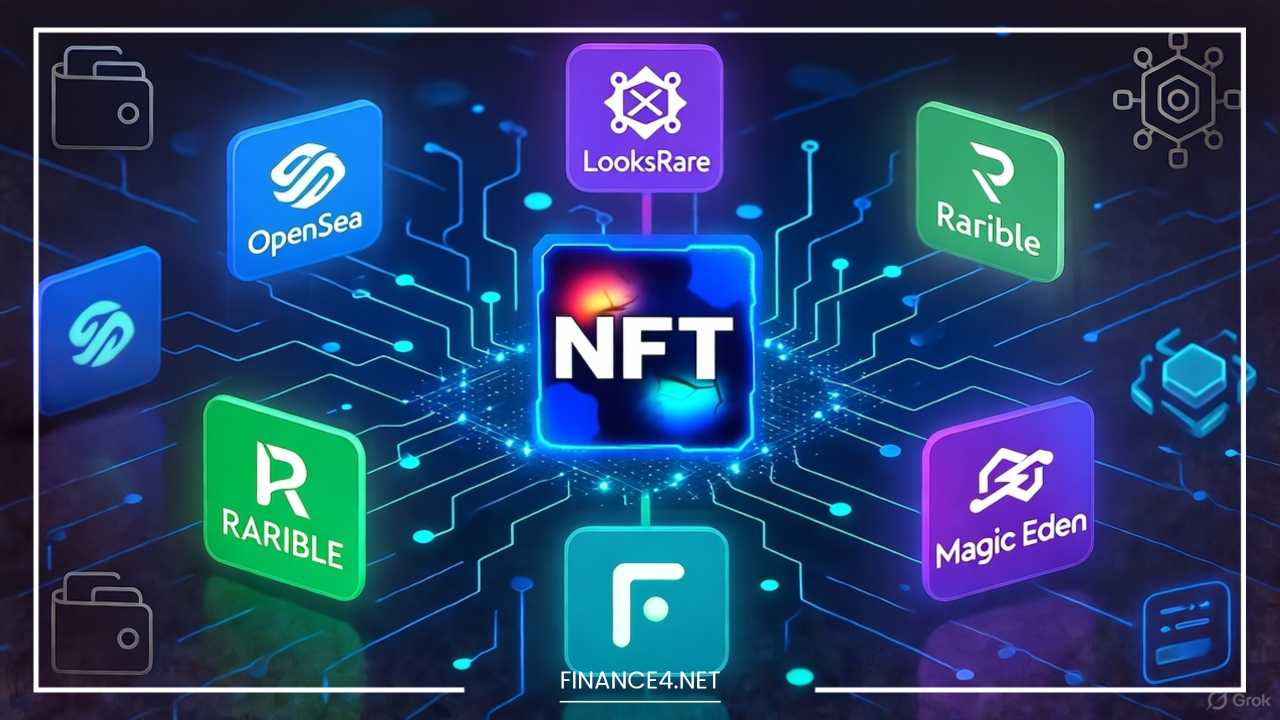
How to List NFTs on Multiple Marketplaces | Step-by-Step Guide
The digital art and collectibles market, powered by Non-Fungible Tokens (NFTs), has exploded, creating a new digital economy for creators and collectors alike. An NFT is a unique digital asset—be it art, music, a video game item, or a tokenized real-world asset—whose ownership is recorded on a blockchain. This digital ledger provides verifiable proof of authenticity and provenance, transforming how we perceive and transact with digital property.
For any creator or seller, the primary goal is maximizing visibility and finding the right buyer. While major platforms like OpenSea once dominated the landscape, the market has fragmented, with specialized and competitor marketplaces emerging across various blockchains. This fragmentation, while offering variety, presents a new strategic challenge: how to effectively list and manage your NFTs across multiple platforms simultaneously. Cross-listing, or listing an NFT on more than one marketplace, is quickly becoming a necessary strategy to capture the widest possible audience.
However, this multi-platform approach introduces complexities, from managing different fee structures and blockchain compatibility to the critical need to prevent duplicate sales. This article serves as your comprehensive guide to navigating the multi-marketplace landscape. We will explore the strategic advantages, technical standards, essential tools, and a step-by-step process for effectively listing your NFTs on multiple platforms while safeguarding your assets.
Why List NFTs on Multiple Marketplaces?
The decision to move beyond a single marketplace is rooted in the fundamental principle of market saturation and segmentation. While single-platform listing is simpler, it severely limits your potential reach.
Expanded Audience Reach
The NFT world is no longer a monolith. Different marketplaces attract distinct demographics. For instance, OpenSea, with its broad appeal and multi-chain support, attracts a vast, general audience. Conversely, platforms like Blur cater specifically to high-volume traders seeking speed and low fees, while Foundation is known for its curated, high-end art clientele. Listing across these diverse platforms exposes your work to a much larger and more varied pool of potential buyers than any single site could offer.
Different Platforms = Different Buyers
Each marketplace cultivates a unique community and focus. A photography NFT might find a more engaged and appreciative audience on a platform specializing in fine art, while a generative PFP (Profile Picture) collection might thrive in the fast-paced, high-volume environment of a trader-centric platform. By cross-listing, you can strategically place your asset in front of the specific segment of buyers most likely to value and purchase it.
Market-Specific Features and Economics
Marketplaces differentiate themselves through various features:
- Royalties: Some platforms offer more robust or customizable on-chain royalty enforcement than others.
- Gas Fees and Transactions: Platforms built on different blockchains (e.g., Solana via Magic Eden vs. Ethereum via LooksRare) offer drastically different fee structures and transaction speeds.
- Visibility and Curation: Some platforms offer greater visibility for new collections or have unique methods for featuring listings.
Leveraging these differences can significantly impact your potential profit and sale speed.
Increased Liquidity Potential
By increasing the number of active listings for your NFT, you inherently increase the chance of a successful sale, thereby improving the asset’s liquidity. A buyer on Solana shouldn’t have to bridge assets to Ethereum just to purchase your NFT; cross-listing allows them to transact on their preferred chain and platform.
Downsides and Management
While the benefits are compelling, cross-listing is not without its challenges. It is significantly more time-consuming to manually manage listings, update prices, and respond to offers across half a dozen sites. Furthermore, each platform has its own fee structure, and the most critical challenge is managing listing synchronization to prevent the catastrophic mistake of selling the same unique NFT to two different buyers. This complexity necessitates the strategic use of tools and rigorous management practices.
Understanding NFT Standards (ERC-721 vs ERC-1155)
The core technology enabling cross-platform listing is the standardized smart contract. These standards dictate how an NFT behaves, which is crucial for marketplace compatibility.
Brief Overview of Common Standards
- ERC-721 (Non-Fungible Token Standard): This is the foundational standard for most unique digital collectibles (like 1/1 art or PFP collection items). Each token is unique and distinct, meaning Token ID 1 is not interchangeable with Token ID 2. When an ERC-721 is listed on a marketplace, the platform is essentially creating a transaction that, upon sale, transfers that specific, unique token to the buyer’s wallet.
- ERC-1155 (Multi-Token Standard): This standard allows a single smart contract to govern both fungible tokens (like a collection’s governance coin) and non-fungible tokens. Crucially, it allows for semi-fungibility or editions. You can issue 100 identical copies of an artwork under a single Token ID. When listing, you are listing one edition from that specific token pool.
Why Compatibility Matters
A blockchain is simply a set of rules. For a marketplace to interact with your NFT—to display it, verify ownership, and execute a transfer—it must be built to recognize the underlying smart contract standard. Virtually all major marketplaces support ERC-721 and ERC-1155 on Ethereum, Polygon, and compatible chains.
However, non-EVM (Ethereum Virtual Machine) chains like Solana use entirely different standards (e.g., the Metaplex Token Metadata Program). This means that a standard Ethereum NFT cannot be natively listed on a Solana marketplace like Magic Eden without a complex bridge or “wrapping” process, which is often managed by the marketplace or a specialized protocol. Understanding the standard of your NFT and the native chains of your target marketplaces is the first technical filter in your cross-listing strategy.
Top NFT Marketplaces to List On
The landscape is competitive, and each major player offers unique value. A successful cross-listing strategy involves selecting platforms that align with your assets, target buyer, and preferred blockchain.
OpenSea
- Strength: Unquestionably the largest NFT marketplace by volume and number of users. It supports multiple chains (Ethereum, Polygon, Klaytn, etc.) and allows for both standard and lazy minting (minting only when sold), which is a key feature for minimizing upfront gas costs.
- Target Audience: Broad, general collectors and large PFP/utility collections.
- Key Feature for Cross-Listing: Its widespread adoption means most cross-listing tools prioritize its API integration.
Rarible
- Strength: Community-focused and creator-centric, Rarible was an early mover and remains a powerful alternative. It emphasizes customizable on-chain royalties and governance through its RARI token.
- Target Audience: Artists, creators seeking higher royalty enforcement, and users looking for a decentralized approach.
- Key Feature for Cross-Listing: Offers a strong API and a platform known for supporting high-quality, curated art.
Magic Eden
- Strength: The dominant marketplace for the Solana ecosystem. Known for its low fees, near-instant transaction speeds, and user-friendly interface. It has recently expanded to support Ethereum, Polygon, and Bitcoin Ordinals, aiming to become a major multi-chain aggregator.
- Target Audience: Solana and Polygon collectors, traders prioritizing speed and low costs.
- Key Feature for Cross-Listing: Essential for capturing the non-EVM market segment; a must-list for any asset with a Solana version or bridge.
LooksRare
- Strength: Ethereum-focused, known for its token rewards structure. It rewards users and stakers with its native LOOKS token for trading NFTs on the platform, attracting high-volume traders. It generally uses the same smart contract standards as OpenSea, making cross-listing straightforward.
- Target Audience: High-volume ETH traders and collectors looking to earn token rewards on trades.
- Key Feature for Cross-Listing: Its integration often allows users to list NFTs that are already in a wallet (even if listed elsewhere) without a redundant “approval” transaction.
Blur
- Strength: Designed specifically for pro-traders and NFT “whales.” It is an aggregator (initially sourcing listings from other platforms) but also became a full-fledged marketplace, offering a powerful bidding and listing interface. It rapidly gained market share by aggressively offering token-based rewards to its users.
- Target Audience: Floor price sniping, high-frequency traders, and market makers.
- Key Feature for Cross-Listing: Its focus on speed and low fees makes it a critical venue for liquidating or trading floor assets quickly.
Specialized and Curated Marketplaces
- Foundation: Highly curated platform, often invite-only, focusing on unique 1/1 artwork. Appeals to fine art collectors.
- Zora: A protocol and marketplace focused on decentralization, creator tools, and hyper-customizable media and publishing options. Excellent for experimental or highly creative projects.
- Mintable: Known for its easy-to-use minting tools and support for multiple NFT types.
Blockchain Compatibility
When selecting your marketplace mix, the underlying blockchain is the most important consideration:
- Ethereum/Polygon/Arbitrum/Optimism (EVM-Chains): These chains use compatible standards, making the technical aspects of cross-listing between platforms like OpenSea, LooksRare, Blur, and Rarible relatively simpler, as the same NFT smart contract exists on the same chain.
- Solana/Tezos/Flow (Non-EVM Chains): Listings on these platforms require a separate minting process on their respective blockchains or the use of a specialized cross-chain bridge protocol.
Tools & Services for Cross-Platform Listing
Manually listing across multiple sites is tedious and prone to error. Fortunately, a suite of protocols and tools has emerged to simplify, and in some cases, automate the process. These tools operate by integrating with the APIs (Application Programming Interfaces) of the major marketplaces.
Aggregators and Listing Protocols
- Reservoir: More than just a marketplace, Reservoir is an open-source protocol and data layer that provides liquidity aggregation across major marketplaces. It allows developers to build customized NFT apps and tooling that can source, list, and fill orders from multiple marketplaces simultaneously (e.g., OpenSea, LooksRare, Zora, etc.). For a creator, working with a platform or tool built on Reservoir’s API can significantly streamline multi-market listing.
- Manifold: Primarily known for its “Creator Contract” which gives artists complete control over their smart contract, Manifold’s tools often include features that simplify the process of pushing metadata and listings to multiple front-ends. By using a custom contract, the creator retains the ultimate power over the asset, regardless of where it is listed.
Specialized Marketplace Tools
- Zora’s Protocol: Zora has transitioned from a marketplace to a powerful, open-source protocol for creating and distributing NFTs. Its API and on-chain tools are designed to facilitate decentralized publishing, meaning an asset minted or managed through Zora can be more easily picked up and listed by any front-end built on the Zora protocol, and often other aggregators.
Cross-Listing Aggregators (Front-End/End-User Tools)
While true, push-button automation for listing remains complex due to the need for wallet signatures on each platform, a category of front-end tools is emerging:
- Trader-Focused Interfaces: Many trading dashboards (like Blur) began as aggregators, allowing users to see and fulfill listings from multiple platforms in one view. While primarily for buying, some offer streamlined bulk-listing features after an initial setup.
- Custom Scripts and APIs: For creators with larger collections or those developing their own decentralized application (dApp), using marketplace SDKs (Software Development Kits) or direct API calls is the most effective automation method. This requires coding knowledge but allows for full control over metadata synchronization, price updates, and withdrawal of listings.
Automation vs. Manual Listing
The key distinction is the level of on-chain action required:
- Manual Listing: Requires connecting your wallet to each marketplace (OpenSea, Rarible, etc.) and signing a transaction (or a “signature”) to authorize that platform to sell the NFT on your behalf.
- Semi-Automation (via APIs/SDKs): Tools can automate the process—preparing metadata, calculating fees, and generating the listing parameters—but the final, crucial step of signing the transaction on each platform generally requires the owner’s explicit digital signature to maintain security and ownership control.
The current state of technology leans toward strategic semi-automation—tools to manage the data and process, minimizing the manual work, but ensuring the owner’s explicit approval is retained for the final, critical listing signature on each platform.
Step-by-Step Guide to Listing NFTs on Multiple Platforms
This process requires meticulous planning and execution to ensure security and prevent listing conflicts.
1. Create or Own Your NFT
Before listing, you must possess the token.
- Custom Smart Contract: For large collections, creators often deploy their own contract (using tools like Manifold or third-party developers). This grants maximum control over royalties, metadata, and token mechanics.
- Marketplace Minting: Platforms like OpenSea and Rarible offer “lazy minting” or simple minting tools. Lazy minting is key for cost-saving; the NFT isn’t written to the blockchain until the first sale, and the buyer typically pays the gas fee. However, this method might limit your control over the underlying smart contract features and restrict cross-listing until the token is actually on-chain.
2. Choose Your Platforms Strategically
Select a mix of marketplaces based on your goals:
- Max Volume: Must include OpenSea and Blur.
- Targeting Solana/Polygon: Must include Magic Eden.
- Art/Curation: Must include Foundation or Zora.
Ensure your chosen platforms support the blockchain your NFT is minted on (e.g., Ethereum) or have a mechanism to list compatible tokens (e.g., Magic Eden’s recent EVM expansion).
3. Prepare Your Assets and Metadata
Consistency is paramount for cross-listing. The marketplace front-ends may differ, but the underlying data on the blockchain must be the same.
- Standardize Metadata: Ensure the JSON metadata file, which points to your asset and contains all the NFT’s attributes (traits, description, name), is consistent and hosted securely (e.g., on IPFS).
- File Types and Descriptions: Use clear, consistent titles and compelling descriptions across all platforms. Use the same high-resolution image or media file. This ensures brand integrity and helps prevent confusion among buyers.
4. Mint Your NFT (On-Chain or Lazy Minting)
- If already minted (On-Chain): The NFT exists on the blockchain (e.g., ERC-721 token in your wallet). You are ready to list.
- If Lazy Minted: If you used a lazy-minting service, you will typically need to list it on the minting platform first. Once a sale is made, the NFT is written to the chain, and you can then list it on other marketplaces as a standard on-chain asset.
5. Manually List on Each Platform
This is the most time-consuming step for assets that are already on-chain.
| Marketplace | Steps |
| OpenSea | Connect wallet $\rightarrow$ Select NFT $\rightarrow$ Click ‘List for sale’ $\rightarrow$ Set Price (ETH/WETH) $\rightarrow$ Set Duration $\rightarrow$ Sign Listing Message (Gas-free) |
| Rarible | Connect wallet $\rightarrow$ Select NFT $\rightarrow$ Click ‘Put on Sale’ $\rightarrow$ Set Price $\rightarrow$ Set Royalties $\rightarrow$ Sign Listing Message |
| LooksRare | Connect wallet $\rightarrow$ Go to ‘List’ section $\rightarrow$ Select NFT $\rightarrow$ Set Price $\rightarrow$ Sign Listing Message |
Critical Step: The Approval Transaction: When listing your NFT for the first time on a new marketplace, you must execute an “Approval” or “Set ApprovalForAll” transaction. This is a crucial, one-time, gas-costing transaction that authorizes the marketplace’s smart contract to transfer the specific NFT (or all NFTs from that contract) from your wallet when a buyer executes a purchase. Do not skip this, and be ready to pay gas for it.
6. Using Cross-Listing Tools (Advanced)
If using a tool like Reservoir’s API or a custom script, the process is streamlined:
- The tool calculates fees, pricing, and constructs the listing data for multiple marketplaces (e.g., OpenSea and LooksRare) based on your input.
- The tool presents you with the required listing signatures (one for each platform) for you to sign with your wallet, thereby authorizing the cross-listings simultaneously. This dramatically cuts down on the clicking and manual data entry.
7. Manage Your Listings & Price Syncing
This is the ongoing management burden.
- Immediate Withdrawal: If your NFT sells on OpenSea, you must immediately withdraw the listing from Rarible, LooksRare, and all other platforms.
- Price Updates: If you change the price on one platform, you must update it manually on all others to prevent arbitrage or user confusion.
8. Avoid Duplicate Sales/Conflicts
The absolute worst-case scenario is a “double-spend” where two buyers successfully purchase the same unique NFT (ERC-721) nearly simultaneously on different marketplaces.
- Use the Same Contract: Ensure both marketplaces are listing the exact same on-chain token.
- Marketplace Protocol: Modern marketplaces are designed to check ownership instantly. Once a transaction is submitted to the blockchain, the marketplace’s system should, within seconds, recognize the asset is no longer in your wallet and prevent new transactions.
- The Owner’s Responsibility: Despite safeguards, network congestion or slow API updates can cause issues. The ultimate responsibility lies with the owner to use synchronization tools or manually delist immediately upon a sale confirmation.
Security, Ownership, and Smart Contracts
Listing an NFT on multiple marketplaces inherently involves authorizing multiple external smart contracts to manage your asset. Understanding this interaction is key to maintaining security and control.
Why Smart Contracts Matter
The smart contract is the definitive owner and ruleset for your NFT. When you list an NFT, you are not transferring it to the marketplace; you are signing a message that authorizes the marketplace’s contract (the Executor) to move the token from your wallet to the buyer’s wallet once a valid purchase is made.
- Authorization: The one-time “Set ApprovalForAll” transaction grants this Executor contract the right to move the token.
- Risk: If you authorize a malicious or compromised marketplace, that Executor contract could theoretically move all your NFTs to a hacker’s wallet. Always verify the contract address and ensure you are using reputable, audited marketplaces.
Risks of Duplicate Listings or Sales Mishaps
The technical risk of a true double-spend is low with established protocols, but the risk of a conflict is real:
- Race Condition: Two buyers submit transactions for the same NFT on different platforms (e.g., OpenSea and Rarible) at almost the exact same time. The one whose transaction is confirmed by the blockchain first is the winner. The loser’s transaction will fail (or revert) because the NFT has already moved out of the seller’s wallet.
- User Confusion: Buyers seeing the same asset at different prices (due to a seller forgetting to sync) or seeing a sold item still listed for a few minutes can erode trust.
Best Practices for Securing Your Wallet
- Hardware Wallet (The Gold Standard): Never list or sign transactions with a wallet that isn’t secured by a physical device (Ledger, Trezor).
- Dedicated Wallet: Use a secondary, “hot” wallet for interacting with marketplaces, and keep your most valuable assets and the majority of your ETH/tokens in a secure, “cold” (hardware) wallet.
- Revoke Permissions: Regularly use a tool (like Etherscan’s Token Approvals) to revoke the “Set ApprovalForAll” authorization for marketplaces you are no longer using. This is a crucial security step that costs gas but removes the smart contract’s power to move your tokens.
Use of Custom Contracts for Royalty Enforcement
Creators who deploy their own smart contracts can often use tools (like Manifold or Metaplex on Solana) to include specific royalty enforcement logic within the contract itself. This is often more reliable than relying solely on the individual marketplace’s commitment to paying royalties, ensuring that even if the NFT is traded across various platforms, the creator’s fee is built into the asset’s underlying rules.
Optimizing Listings for Visibility
Listing on multiple marketplaces is only the first step; maximizing sales requires optimizing each listing for its specific platform.
SEO for NFT Titles and Descriptions
- Keyword Research: Think like a collector. What terms are buyers searching for? Incorporate relevant keywords (e.g., “Generative Art,” “Photorealism,” “PFP,” “Utility Token”) into your titles and descriptions.
- Uniqueness: While the title should be consistent across platforms, tailor the description slightly to match the platform’s audience (e.g., a more technical description for Blur, a more artistic/narrative description for Foundation).
- Backlinks (on-chain): If possible, link back to your collection’s official website or social media from the metadata to establish authority.
Use of Tags and Categories
Each marketplace uses a different set of categories (e.g., ‘Collectibles,’ ‘Art,’ ‘Gaming’).
- Select All Relevant Categories: Don’t limit yourself. If your NFT is a PFP but also offers utility, list it under both categories if the platform allows it.
- Tags/Traits: Ensure the metadata traits (e.g., “Background: Red,” “Eyes: Laser”) are correctly indexed and display accurately on all platforms. Many power users filter collections based on specific traits to find “floor” (cheapest) items or rare ones.
Creating Collection Pages
A single NFT listing is easily lost. The best approach is to create a branded, verified Collection Page on each marketplace.
- Verification: Apply for collection verification (the blue checkmark) on OpenSea, Magic Eden, and others. Verification grants credibility and a higher search ranking.
- Branding: Use the same logo, banner image, and collection description across all platforms to maintain a consistent professional brand.
Social Media and Community Promotion
Listings are passive; promotion is active.
- Marketplace-Specific Shout-outs: When you list on a new platform, announce it. “Just listed my new 1/1 on Foundation!” This pulls buyers from your community to the specific marketplace.
- Targeted Ads: If you run paid advertising, target ads to communities specific to the platform (e.g., a Telegram group dedicated to Solana trading).
Leveraging Marketplace Features
- Offers and Bidding: Actively encourage offers on platforms like Blur, which are optimized for bidding.
- Featured Listings/Curation: Submit your work for consideration for “Featured Artist” or “Curated Drops” on platforms like Foundation or Zora, which rely heavily on editorial selection for visibility.
Tracking Sales & Analytics Across Marketplaces
A cross-listing strategy is only effective if you can measure its performance. Tracking metrics across disparate platforms is essential for optimizing price, promotion, and platform selection.
Tools to Track Performance
Since a single marketplace’s analytics only track its own sales, you need third-party aggregators:
- Dune Analytics: A powerful, community-driven platform for querying blockchain data. Users can find and run dashboards (called “Dune Queries”) that track the sales volume, floor price, and overall metrics for any NFT collection across multiple major marketplaces (OpenSea, Blur, LooksRare, etc.). This is a must-use for serious creators, though it requires some familiarity with finding or running existing queries.
- Nansen: A professional, institutional-grade blockchain data platform that offers deep, cross-market insights, including tracking “smart money” wallet activity. While subscription-based, it provides high-quality, aggregated data on volume and price trends.
- Marketplace Analytics: Even with external tools, you must check the native analytics for qualitative data: OpenSea’s activity tab, for example, is excellent for viewing recent offers and price history.
How to Monitor Trends Across Platforms
- Floor Price Discrepancies: Track the “Floor Price” (the lowest available price) for your collection on OpenSea vs. LooksRare vs. Magic Eden. These should be nearly identical. A significant discrepancy suggests an arbitrage opportunity for a trader or a missed opportunity for you to sell at a higher price.
- Volume & Velocity: Which platform is generating the most sales volume for your collection? If 80% of your sales occur on Blur, you should focus your listing and promotional efforts there, even if OpenSea has more general users.
Evaluate Which Marketplace is Performing Better
Use your aggregated data to make strategic decisions:
- High Volume, Low Price (e.g., Blur): Suggests traders are actively flipping your floor. Your strategy here should be to manage floor stability or capitalize on volume through rapid listing/delisting.
- Low Volume, High Price (e.g., Foundation): Suggests high-end collectors are buying your rare 1/1s. Your strategy should be focused on curation and artistic narrative.
- High Listings, Zero Sales: If you have many listings on one platform but zero sales, it might be an unsuited audience or a poor time to list. Consider delisting and moving your limited “liquidity focus” to a more active platform.
Common Mistakes to Avoid
While the benefits are clear, a single mistake in a cross-listing strategy can result in a lost asset or significant financial penalty.
- Listing the Same ERC-721 NFT Multiple Times Without Syncing: This is the most catastrophic error. If the unique token is sold on OpenSea, and the seller fails to immediately withdraw the listing from LooksRare, a buyer on LooksRare could submit a transaction that fails, leading to gas loss and a poor user experience, or, in a severe race condition, a double-spend attempt.
- Forgetting to Set Royalties or Licenses: Many marketplaces allow you to set or adjust royalties (e.g., 5% to the creator). Since these are often set on a per-platform basis (or via the underlying contract), forgetting to set a royalty on one platform means forfeiting that percentage of the sale price. Always double-check the royalty field.
- Not Checking for Platform Exclusivity: Some smaller, highly-curated platforms (like SuperRare or certain specialized art sites) require a temporary or permanent exclusivity agreement. Listing on their site may legally or contractually prevent you from listing on OpenSea. Read the terms of service carefully.
- Not Testing Wallet Security: Before listing a high-value asset, ensure your hardware wallet is functioning correctly, you have revoked old permissions, and you understand what each signature message means. Never sign a transaction that looks suspiciously cheap or too broad in its permissions.
- Paying Unnecessary Gas: Remember the Approval transaction is usually a one-time gas fee per platform per contract. Listing itself is typically a gas-free signature. Do not accidentally pay gas for a simple listing signature; this is often a scam attempt.
Future of Multi-Market NFT Listings
The complexity of cross-listing is a clear indicator that the NFT market is still maturing. Future developments are likely to centralize the experience while preserving the decentralized nature of the assets.
Evolution of Cross-Marketplace Interoperability
Protocols like Reservoir and initiatives from major players will continue to evolve toward a single, unified “order book.” The goal is for a listing to be universally available across all front-ends, with a single, secure authorization signature from the seller. This would eliminate the need for manual delisting, as the underlying smart contract would automatically recognize a sale from any authorized front-end.
Rise of Multi-Chain and Multi-Market Aggregators
Aggregators will likely become the dominant interface for serious traders. They will evolve to not only display listings from various Ethereum marketplaces but also integrate Solana, Flow, Tezos, and others into a single, unified inventory view. This means a buyer won’t care where the NFT is listed, only that they can purchase it instantly.
Will Unified Standards Emerge?
While a full standardization across all blockchains (Ethereum, Solana, etc.) is unlikely due to their different technical architectures, the adoption of universal metadata standards and robust cross-chain bridges will become seamless. The technical process of “wrapping” an ETH NFT to make it tradable on Solana, for instance, will become so integrated that the user won’t even realize they are bridging.
In the future, cross-listing will shift from a tactical, manual chore to a single, secure, protocol-level action, granting creators maximum liquidity with minimum effort.
Final Thoughts
Listing your NFTs on multiple marketplaces is no longer a luxury—it is a strategic necessity for maximizing visibility, accessing diverse buyer communities, and enhancing the liquidity of your digital assets. While the process introduces technical complexities, the potential rewards of increased sales and wider brand recognition far outweigh the administrative burden.
Success in this fragmented market hinges on three core pillars: Research, Security, and Smart Planning. Research your target platforms, secure your assets with hardware wallets and by revoking unused permissions, and plan your listings using consistent metadata and smart tools. Start small, master the process of listing and syncing between two major platforms (e.g., OpenSea and Blur), and then scale your operations. By embracing a multi-marketplace strategy, you are not just listing an NFT; you are expanding your digital footprint across the entire, growing decentralized web.