Best NFT Tools for Creators
 by
by 
Best NFT Tools for Creators | Top Platforms to Create & Manage NFTs
The rise of Non-Fungible Tokens (NFTs) has fundamentally reshaped the landscape for digital creators—artists, musicians, photographers, and developers. NFTs allow them to monetize their work directly, establish verifiable ownership, and earn royalties on secondary sales. This seismic shift from traditional models demands a new toolkit. The journey from a digital file to a blockchain-backed asset that generates income is complex, involving design, contract deployment, market analysis, and community building.
This article provides a comprehensive guide to the best NFT tools for creators, breaking down the essential software, platforms, and services required to not only navigate but thrive in the Web3 ecosystem. By leveraging the right tools for creation, minting, selling, analytics, and management, creators can streamline their operations, maximize profitability, and focus on what they do best: creating.
Understanding NFT Tools: What They Are and Why You Need Them
NFT tools are specialized software solutions designed to interact with the Non-Fungible Token standard on various blockchains. They serve to simplify the complexity of blockchain technology, allowing artists without coding expertise to participate effectively.
Categories of Essential NFT Tools
The creator’s workflow can be divided into distinct stages, each requiring specialized tools:
- Creation Tools: Software for generating the original digital asset, often including generative art features and seamless integration for minting.
- Marketplace Platforms: The venues where NFTs are minted, listed, auctioned, and sold to collectors. They are the creator’s storefront in the Web3 world.
- Analytics Tools: Services that provide data on market trends, collection performance, buyer behavior, and asset rarity, crucial for smart pricing and planning.
- Community and Marketing Tools: Platforms that facilitate fan engagement, manage allowlists (whitelists) for drops, and enable token-gated access.
- Wallet and Management Tools: The secure software or hardware needed to store the private keys, hold the cryptocurrency for fees (gas), and track the overall portfolio of digital assets.
Choosing the appropriate suite of tools is critical. The right choices can significantly reduce gas fees, save time on manual tasks like metadata generation, and ultimately improve the profitability and longevity of an NFT project.
Best NFT Creation Tools
The starting point for any NFT project is the art itself. Modern creation tools have evolved far beyond simple design software, now incorporating AI-generation and no-code smart contract deployment. These tools help artists design, generate, and mint NFTs with unprecedented ease.
1. Manifold
| Feature | Description | Pros/Cons |
| Focus | Custom Smart Contract Creation | Pro: Creator-owned smart contract; high degree of control. Con: Requires more technical understanding than no-code platforms; costs involved in contract deployment. |
| Key Use | Deploying a fully custom, immutable smart contract for a collection. | |
| Supported Blockchains | Ethereum, Polygon, others. |
Manifold empowers creators to mint their NFTs directly to a creator-owned smart contract. Unlike using a marketplace’s shared contract, this gives the artist ultimate control over their metadata, royalty structure, and future collection updates, making it a favorite for established artists and serious projects aiming for long-term decentralization and brand integrity.
2. Bueno
| Feature | Description | Pros/Cons |
| Focus | No-Code Generative Art & Drop Tools | Pro: Extremely user-friendly for PFP (Profile Picture) collections; built-in drop and allowlist management. Con: Primarily focused on generative/layered art collections. |
| Key Use | Generating a large-scale collection (e.g., 10,000 PFP NFTs) from layered traits without writing code. | |
| Pricing | Often a per-token fee after initial free testing/preview. |
Bueno is a powerhouse for artists looking to launch generative NFT collections quickly. It allows users to upload layers (hats, eyes, backgrounds, etc.), set rarity controls and rules, and then automatically generate thousands of unique tokens and their corresponding metadata. It drastically lowers the technical barrier for launching large PFP projects.
3. Fotor NFT Creator
| Feature | Description | Pros/Cons |
| Focus | AI Art to NFT Generator | Pro: Fast, diverse range of art styles using AI prompts; integrates image editing. Con: AI-generated art may be perceived as less unique than hand-drawn assets; quality control is necessary. |
| Key Use | Transforming text prompts or existing images into new, stylized digital art ready for minting. |
Fotor uses Artificial Intelligence (AI) to help create unique art. By inputting text prompts or leveraging existing photos, creators can instantly generate various digital art styles. This is a powerful tool for artists seeking inspiration or wanting to create a high volume of stylized, one-of-a-kind 1/1 pieces rapidly.
4. NightCafe / Artbreeder
These are popular AI-based art generation platforms. They are excellent for experimentation, allowing creators to evolve images through algorithms and collaborative tools. While they serve as the initial creation tool, the output must still be taken to a dedicated minting tool or marketplace to be converted into an NFT.
5. Adobe Photoshop + NFT Plug-ins
Adobe Photoshop and Illustrator remain the gold standard for many digital artists. While not inherently Web3 tools, new plug-ins and integrations allow artists to prepare their work, verify its authenticity, and streamline the exporting of layered assets and metadata ready for platforms like Bueno or Manifold. This combination marries traditional design fidelity with modern NFT requirements.
Best NFT Marketplaces for Creators
Marketplaces are the core platforms for listing and selling NFTs. The choice of platform impacts audience reach, transaction fees, and the specific blockchain an NFT lives on.
| Marketplace | Core Focus | Creator Fees (Approx) | Supported Blockchains (Key) | Audience Reach |
| OpenSea | Broad, Diverse, Collectibles | 2.5% | Ethereum, Polygon, Solana, Klaytn | Largest Audience (Mass Market) |
| Rarible | Community-Driven, Multi-Chain | 1-2.5% | Ethereum, Polygon, Tezos, Flow | Good, Focus on Royalties/Governance |
| Foundation | Curated, High-End 1/1 Art | 5% | Ethereum | Niche, Highly Curated (Premium) |
| SuperRare | Exclusive, Art-Focused | 3% | Ethereum | Exclusive, Blue-Chip Digital Art |
| Zora | Protocol, Decentralized Commerce | Low/Protocol-Based | Ethereum, Base | Protocol-Focused, Developer/Artist Tool |
1. OpenSea
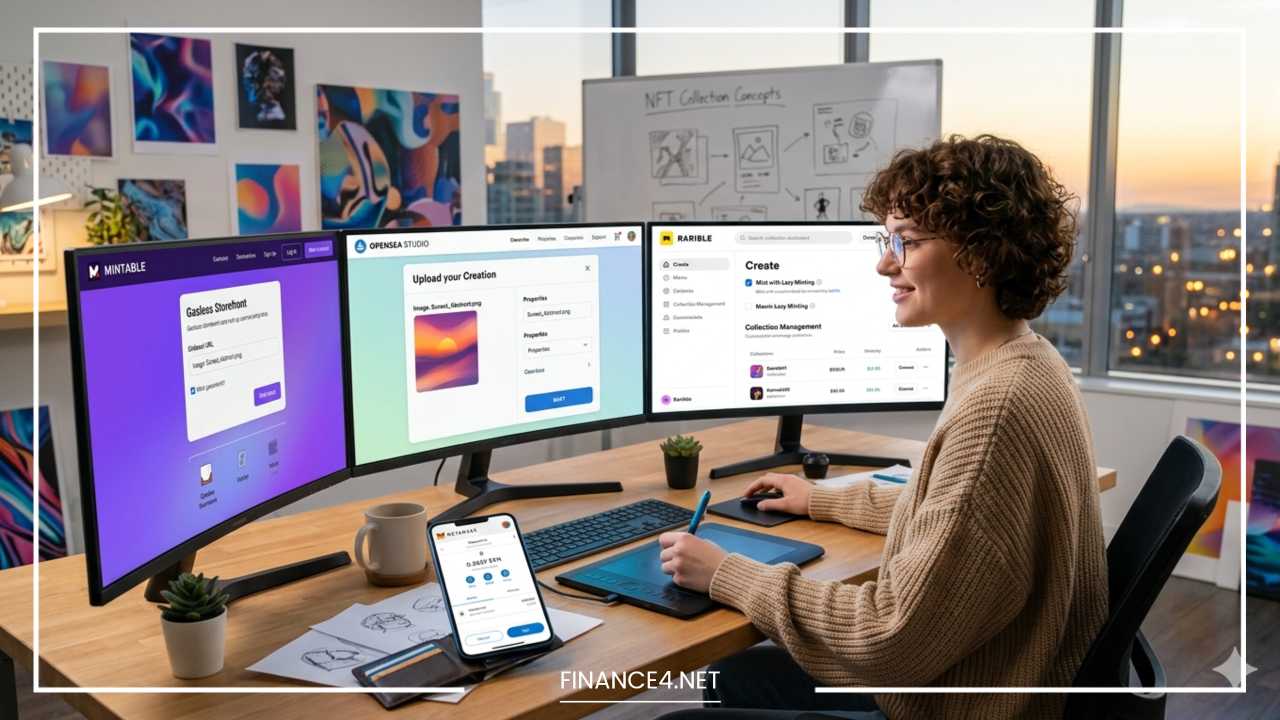
As the largest and most widely recognized NFT marketplace, OpenSea offers the greatest audience reach and diversity of collections. It is often the default choice for new creators due to its user-friendly interface and support for gas-free ‘lazy minting’ on Polygon, allowing creators to list without paying upfront network fees. Its main drawback is the sheer volume of competition.
2. Rarible
Rarible positions itself as a community-governed marketplace with a strong focus on creators. It offers multi-chain support and allows artists to set customizable royalties, ensuring they earn a percentage on every secondary sale. The platform is driven by its native RARI token, giving users a say in its development.
3. Foundation
Foundation is a highly selective, invite-only marketplace that fosters a curated, high-quality environment. It is best suited for established artists or those with highly professional, sought-after 1/1 digital art. While its fees are higher, the prestige and higher average sale price often compensate for the exclusivity.
4. SuperRare
Similar to Foundation, SuperRare focuses strictly on premium, curated digital art. Its mission is to be the ‘Christie’s’ of the crypto art world. Creations are limited and exclusive, appealing to high-net-worth collectors looking for museum-quality digital assets.
5. Zora
More than a marketplace, Zora is an open-source protocol designed for decentralized media and NFT commerce. It allows creators to build and launch their own minimal, on-chain marketplaces with low protocol fees, making it popular with artists and developers who prioritize decentralization and flexibility.
Best NFT Analytics and Rarity Tools
Once an NFT is minted, a creator’s work is not done. Understanding how a collection is performing and how collectors perceive it is crucial for pricing strategy and future drops. Analytics and rarity tools provide the data-driven insights needed to navigate the market.
1. Nansen
Nansen is an advanced blockchain analytics platform that provides real-time, deep-dive data on wallet activity. Creators use it to track “Smart Money”—wallets belonging to highly profitable and influential investors—to understand which collections they are buying and selling. This helps creators time their drops and identify potential whales to target for promotion.
2. Icy.tools
Icy.tools offers real-time data focusing on floor prices and trending collections. It is an indispensable tool for quickly identifying current market momentum. Creators can track their collection’s floor price (the lowest listed price), sales volume, and the velocity of transactions, allowing for rapid adjustments to their listing strategy.
3. NFTBank
NFTBank is primarily a portfolio management and valuation tool. For creators who have sold NFTs and hold crypto or for those who hold their own collection pieces, NFTBank offers an automated way to track the value of their holdings, including complex calculations for tax reporting and asset appraisal.
4. Rarity.tools
For generative projects, the rarity of individual traits is the primary driver of value. Rarity.tools analyzes the metadata of collection traits and assigns a quantifiable rarity score to each NFT. Creators use this to communicate the scarcity of their most valuable pieces to collectors and ensure fair, tiered pricing across the collection.
5. Dune Analytics
Dune Analytics is a powerful platform for custom, open-source data dashboards. It allows technical creators or their development teams to write SQL queries to pull and visualize specific, granular data directly from the blockchain. For custom, in-depth analysis that other platforms don’t offer, Dune is the go-to solution.
NFT Community & Marketing Tools
NFT success is inextricably linked to community and utility. The most successful projects are backed by a strong, engaged audience. These tools help creators build audience, promote drops, and engage fans effectively.
1. Discord + Collab.Land
Discord is the de facto home for NFT communities. Collab.Land is an essential integration that turns a regular Discord server into a token-gated community. It automatically verifies a user’s wallet ownership of a specific NFT, granting them access to exclusive channels. This creates powerful utility and exclusivity for collectors.
2. Twitter/X + Hootsuite/Buffer
Twitter/X remains the primary platform for NFT announcements, discussions, and market sentiment. Tools like Hootsuite or Buffer allow creators to manage and schedule their content, track mentions, and analyze the performance of their marketing campaigns across social channels, maximizing visibility for drops and announcements.
3. Premint
Managing an allowlist (whitelist) for a large NFT drop can be a logistical nightmare. Premint simplifies this process by providing a user-friendly platform for creators to run raffles, manage sign-ups, verify wallet addresses, and set entry requirements (e.g., must hold a specific token or follow certain accounts). This is critical for building hype and rewarding early supporters.
4. Linktree / Bento
Creators need a single, clean landing page to direct traffic to all their projects, social media, and marketplaces. Linktree and its Web3-focused alternative, Bento, allow a creator to compile all their essential links—like their OpenSea profile, Discord invite, Twitter, and website—into one optimized page, essential for a clear call-to-action in all marketing materials.
5. Mirror.xyz
Mirror.xyz is a decentralized blogging platform that integrates Web3 features like fundraising, collecting, and governance. Creators can publish long-form stories about their art, sell limited-edition NFTs to fund the writing, and even enable community voting. It’s an ideal tool for creators who want to decentralize their content and deepen their narrative connection with their collectors.
NFT Wallets & Management Tools
Securely storing private keys and managing crypto and NFT assets is the foundation of a creator’s financial security in Web3.
1. MetaMask
MetaMask is the most widely used browser-extension and mobile crypto wallet for Ethereum and EVM-compatible networks (like Polygon and Base). It is the essential bridge between a creator’s browser and most marketplaces, dApps, and protocols, used for signing transactions, confirming mints, and managing assets.
2. Trust Wallet
As a popular multi-chain mobile wallet, Trust Wallet offers support for a wide array of blockchains beyond Ethereum. Its mobile-first approach and built-in dApp browser make it a flexible option for creators who work across different ecosystems.
3. Ledger
For creators holding significant value in NFTs and cryptocurrency, a Ledger or similar hardware wallet is non-negotiable. It is a physical device that stores private keys offline, requiring a physical button press to authorize transactions. This provides the highest level of security against online hacks and malware. Safety Practice: Creators should never share their 12- or 24-word recovery phrase, especially with anyone claiming to be ‘support’ staff.
4. Rainbow Wallet
Rainbow Wallet is known for its user-friendly, aesthetically pleasing mobile interface. It offers a clean, visual way to view and manage NFT collections, making it a favorite for artists who prioritize a streamlined and visual experience.
5. Zapper / Zerion
These are NFT portfolio and DeFi management dashboards. They allow creators to connect their wallets and view a consolidated overview of their entire crypto and NFT portfolio across multiple chains and protocols. They are invaluable for tracking royalty payments, investment balances, and overall net worth.
How to Choose the Right NFT Tools for Your Needs
Selecting the right tools is a strategic decision that should align with a creator’s artistic goals and technical comfort level.
Factors to Consider
- Skill Level (Beginner vs. Pro):
- Beginner: Should prioritize no-code tools like Bueno for generative art or OpenSea for minting simplicity, paired with a simple wallet like MetaMask.
- Pro/Developer: Should opt for tools that offer maximum control, like Manifold for custom contracts and Dune Analytics for deep data analysis.
- Blockchain Preference:
- Ethereum: Offers the largest market and historical significance, but requires tools that help manage high gas fees (e.g., using Polygon support on OpenSea).
- Solana/Tezos/Flow: These use lower transaction fees but require wallets and marketplaces built specifically for their respective ecosystems (e.g., Solanart or Tezos-compatible platforms).
- Type of NFTs:
- Generative Art/PFPs: Requires tools like Bueno or custom scripts to manage layers and metadata.
- 1/1 Art/Photography: Best suited for curated, high-end marketplaces like Foundation or SuperRare.
- Budget and Technical Support: Free tools are great for starting, but premium tools like Nansen offer an edge through proprietary data. Creators must factor in the cost of smart contract deployment and gas fees when budgeting.
Example Creator Profile: The Generative Artist
A generative artist launching a 5,000-piece PFP collection would likely use: Adobe Photoshop (layers) → Bueno (generation / metadata / rarity) → Manifold (custom smart contract) → OpenSea (selling platform) → Premint (allowlist) → MetaMask and Ledger (secure management).
Future of NFT Tools: What’s Next?
The NFT toolkit is continuously evolving, driven by the demand for better user experience, cross-chain compatibility, and advanced utility.
Future trends are dominated by:
- Deeper AI Integration: Tools like Fotor will become more sophisticated, allowing AI to not just generate art but also draft smart contract parameters and marketing copy.
- Dynamic and Programmable NFTs: Next-generation NFTs will change based on external data (e.g., weather, time, user actions). Tools will emerge to simplify the coding and deployment of these complex, smart-contract-driven assets.
- Cross-Chain Platforms: As the market fragments across multiple blockchains, new “aggregator” tools will allow creators to manage, track, and sell their NFTs seamlessly across different ecosystems from a single dashboard.
- Sustainability Focus: Tools will increasingly favor or even default to eco-friendly blockchains (like Tezos or Layer 2 solutions on Ethereum) in response to rising environmental awareness.
By 2025 and beyond, the creator tool stack will be highly personalized, more intuitive, and fully interconnected, allowing creators to deploy sophisticated contracts and marketing strategies with minimal technical friction.
Final Thoughts
The digital frontier of Non-Fungible Tokens offers creators an unparalleled opportunity to establish ownership, build loyal communities, and secure a lasting revenue stream through royalties. However, navigating this space requires a strategic approach to technology.
The right set of NFT tools—from the custom contract control of Manifold and the ease of Bueno for creation, to the market intelligence of Nansen and the security of a Ledger—empowers the artist to focus on their art rather than the underlying technical complexity. The tools listed here are not just software; they are the infrastructure that enables a creator economy defined by scarcity, provenance, and long-term digital ownership.
Explore these tools and start creating your next NFT masterpiece today.