Most User-Friendly NFT Minting Tools
 by
by 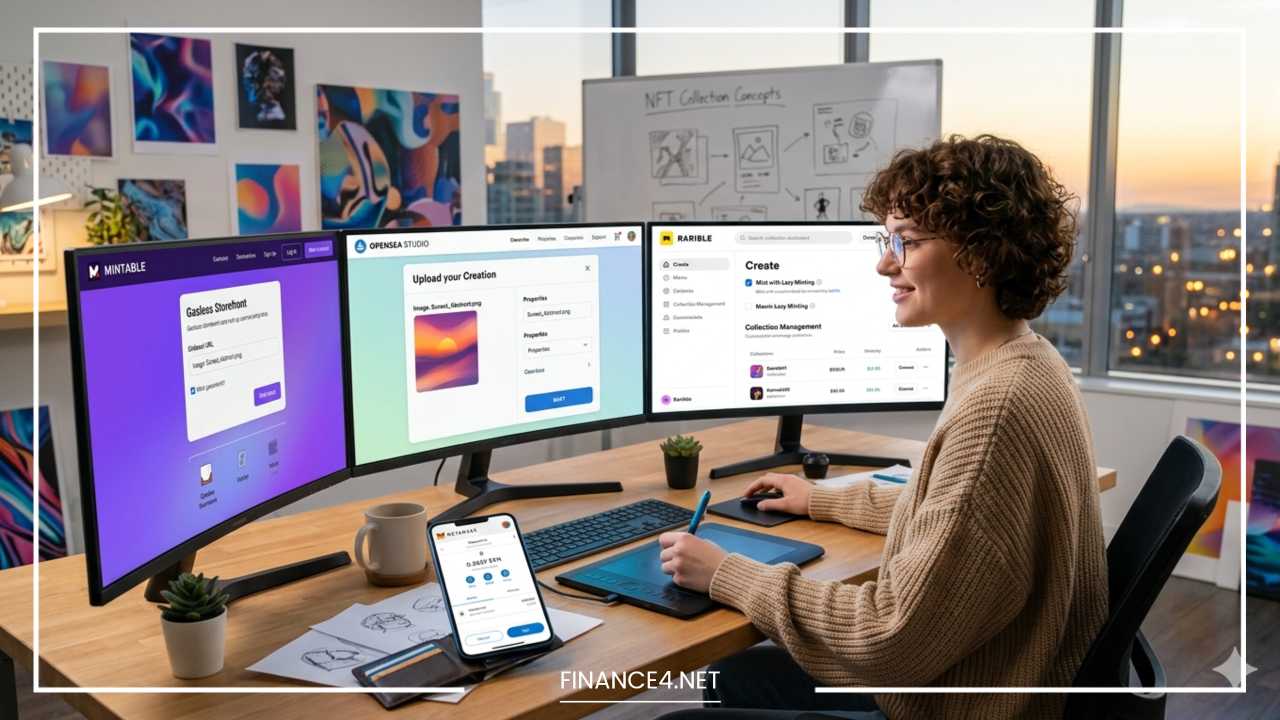
Most User-Friendly NFT Minting Tools for Beginners & Creators
The digital landscape has undergone a seismic shift. In the early 2020s, NFTs were often viewed as a speculative bubble driven by profile pictures of colorful apes. By 2026, however, the narrative has matured. Non-fungible tokens have evolved into the underlying infrastructure for digital ownership, serving as the “deeds” for everything from fine art and music to real estate in virtual worlds and exclusive membership passes for global brands.
For creators, this shift represents a move toward “platform independence.” No longer are artists solely dependent on the whims of social media algorithms to monetize their work. Through NFT minting, creators can establish a direct financial relationship with their audience. However, the technical barrier remains the primary hurdle for the “un-cryptoed” masses. This is where NFT minting tools come into play.
A minting tool is the interface that translates your creative vision into blockchain code. The importance of choosing the right tool cannot be overstated; it dictates your upfront costs, your long-term royalties, and the ease with which a collector can purchase your work. In 2026, “user-friendly” is the gold standard. It implies a “no-code” environment where a photographer or illustrator can launch a global collection in minutes without writing a single line of Solidity or Rust. This article explores the cream of the crop in user-friendly minting technology, ensuring that your entry into the Web3 space is smooth, cost-effective, and professional.
What Is NFT Minting? (Beginner-Friendly Explanation)
At its core, minting is the act of publishing a unique digital asset on a blockchain so that it can be bought, sold, and traded. Before an item is minted, it is simply a file—a JPEG, an MP3, or a 3D model—sitting on your hard drive or a cloud server. Once it is minted, it is assigned a unique identification code and timestamp that is permanently recorded on a decentralized ledger.
How Minting Works: The Digital Notary
Think of the blockchain as a global, high-tech notary public that never sleeps. When you mint an NFT, you are essentially asking this notary to witness the creation of your asset. The notary records:
-
Who created it (your digital wallet address).
-
When it was created.
-
What it is (via a link to the file and its description, known as metadata).
The Lifecycle: Minting, Listing, and Selling
It is vital to distinguish between these three stages:
-
Minting: The technical creation of the token. This usually requires a small fee (gas) to pay the network’s computers for their work.
-
Listing: Placing that minted token on a digital “store shelf” (a marketplace) and setting a price.
-
Selling: The actual transaction where a buyer sends cryptocurrency to your wallet and the NFT moves to theirs.
The 2026 Blockchain Landscape
-
Ethereum: Still the most prestigious “Main Street.” It hosts the most liquidity but remains the most expensive in terms of transaction fees.
-
Polygon & Base: These are “Layer 2” networks that sit on top of Ethereum. They offer the same security but at a fraction of the cost, making them the favorite for beginners.
-
Solana: A high-speed alternative with its own unique ecosystem, popular for gaming and fast-paced trading.
Key Features of User-Friendly NFT Minting Tools
As the market has matured, the features that define a “good” tool have shifted from purely functional to highly intuitive. If you are a creator looking for a platform, these are the non-negotiables:
Simple UI/UX (User Interface/Experience)
The dashboard should feel like a modern website—think Canva or Shopify—rather than a terminal for a space shuttle. You should be able to find the “Create” button immediately, with clear prompts for every step of the process.
No-Code/Low-Code Setup
In 2026, the best tools use “smart contract templates.” You fill in the blanks (Name, Symbol, Description), and the tool generates the complex code in the background. You don’t need to know how to program to be a successful NFT creator.
Gas Fee Transparency & Gasless Minting
One of the biggest “scares” for beginners is the fluctuating cost of gas fees. User-friendly tools now provide real-time gas estimates or, better yet, offer Lazy Minting. Lazy minting allows you to create the NFT for free; the actual “writing” to the blockchain only happens when someone buys the item, at which point the buyer pays the fee.
Multi-Chain Support
You shouldn’t be locked into one ecosystem. A top-tier tool allows you to choose between Ethereum for high-end pieces and Polygon for high-volume collections, all from the same dashboard.
Royalties & Customization
A key benefit of NFTs is the secondary royalty. A user-friendly tool makes it easy to set a percentage (typically 5% to 10%) that you will receive every time your NFT is resold on the secondary market. In 2026, look for tools that support “ERC-2981,” the standard for cross-marketplace royalties.
Built-in Marketplace vs. Standalone
Some tools are part of a massive marketplace (like OpenSea), giving you instant traffic. Others are “standalone” (like Manifold), giving you more brand control but requiring you to bring your own audience.
Top Most User-Friendly NFT Minting Tools
1 OpenSea: The Universal Entry Point
OpenSea remains the undisputed heavyweight of the NFT world. In 2026, its “OpenSea Studio” has become the gold standard for beginner accessibility.
-
The Experience: OpenSea Studio is designed for the person who has never touched crypto. It guides you through creating a “Contract” first—which is the professional way to do it—before you even upload your art.
-
Lazy Minting: This is their “killer feature.” You can upload 10,000 items and not pay a single cent in gas fees until they sell.
-
Pros: Massive existing traffic; supports almost every major blockchain; robust “Help Center.”
-
Cons: Because it is so large, it can feel impersonal. Their marketplace fee (typically 2.5%) is a standard take on every sale.
-
Ease of Use: 5/5
-
Pricing: Free to mint (lazy); 2.5% fee on sales.
-
Best For: Hobbyists, photographers, and anyone who wants their work seen by the largest possible number of eyes immediately.
2 Rarible: The Creator’s Ally
Rarible has positioned itself as the more “ethical” alternative to OpenSea, focusing heavily on protecting creator royalties in an era where some platforms have tried to make them optional.
-
The Experience: Rarible offers a sleek, modern interface that feels more like a social media platform. It was one of the first to implement “multi-wallet” support, allowing you to sign in with an email address via “Account Abstraction” (no complex seed phrases required).
-
Multi-chain Mastery: It handles Ethereum, Polygon, and Tezos with ease.
-
Pros: Strong focus on community governance; better royalty enforcement than many competitors.
-
Cons: Lower overall trading volume compared to OpenSea.
-
Ease of Use: 4.5/5
-
Pricing: Small service fee on trades; supports lazy minting.
-
Best For: Artists who want to be part of a community and are focused on long-term secondary income.
3 Mintable: The “Gasless” Pioneer
Mintable’s entire brand is built on removing the financial barrier to entry. If you have zero dollars in your pocket, Mintable is where you go.
-
The Experience: The “Gasless Shop” on Mintable is their primary draw. It uses a specific version of lazy minting that is exceptionally streamlined. The UI is a bit more “Web2” (reminiscent of eBay), which might feel more familiar to non-crypto natives.
-
Advanced Features: Despite its simplicity, it offers “Printable” NFTs and the ability to batch-mint hundreds of items at once.
-
Pros: Truly zero-cost start; easy-to-understand store management.
-
Cons: The site aesthetic is slightly dated compared to the “gallery” feel of others; smaller buyer pool.
-
Ease of Use: 4.5/5
-
Pricing: Free for gasless; standard fees apply for “Pro” features.
-
Best For: Beginners on a strict budget who want to experiment without financial risk.
4 NiftyKit: The Professional Brand Builder
NiftyKit is a “SaaS” (Software as a Service) approach to NFTs. Instead of a marketplace, it is a tool that allows you to build your own minting page.
-
The Experience: Think of NiftyKit as the “Shopify of NFTs.” You get a dedicated URL where your fans can go to mint your work. This is perfect for “Drop” culture, where you want to build hype for a specific release date.
-
Smart Settlements: It allows for “Revenue Splitting,” which is vital if you are collaborating with other artists or donating a portion to charity.
-
Pros: Professional-grade smart contracts; no “OpenSea” branding on your collection; excellent for membership passes.
-
Cons: It usually requires a monthly or annual subscription fee.
-
Ease of Use: 4/5
-
Pricing: Subscription-based (starting around $10-$20/month).
-
Best For: Established influencers, musicians, and small businesses looking to maintain brand consistency.
5 Manifold: The Artist’s Sovereign Tool
Manifold is for the creator who has done their homework and wants total control. It is famous for “Manifold Studio.”
-
The Experience: Manifold allows you to “own your contract.” On platforms like OpenSea (in the old days), you were often minting under their contract. With Manifold, you are the owner of the underlying code.
-
The Gallery Feel: It integrates beautifully with high-end gallery sites like Foundation and Zora.
-
Pros: 100% ownership; zero platform fees on the contract itself; highly respected by “whales” (major collectors).
-
Cons: The UI is slightly more technical; you need to “deploy” your contract, which requires a small gas payment upfront.
-
Ease of Use: 3.5/5
-
Pricing: You pay the network gas; Manifold doesn’t take a cut of your sales.
-
Best For: Professional digital artists and 1/1 (one-of-a-kind) creators.
6 Foundation: The Premium Gallery
Foundation is the “Sotheby’s” of the digital world. While it has become more accessible in 2026, it still carries an air of exclusivity.
-
The Experience: The interface is minimalist and gorgeous, designed to make art the star of the show. It utilizes “World” contracts, allowing creators to build their own curated galleries within the platform.
-
Pros: Extremely high-quality collector base; very social-centric (you can see who is following whom).
-
Cons: Primarily Ethereum-based, meaning gas fees can be higher; higher marketplace commission than OpenSea.
-
Ease of Use: 4/5
-
Pricing: 5% marketplace fee.
-
Best For: Fine artists, luxury brands, and high-concept creators.
Comparison Table
| Tool Name | Ease of Use | Key Benefit | Typical Fees | Ideal Creator |
| OpenSea | 5/5 | Maximum Exposure | 2.5% on sale | Generalists / Beginners |
| Rarible | 4.5/5 | Multi-chain / Royalties | 1% – 2% | Community-focused artists |
| Mintable | 4.5/5 | Zero Upfront Cost | Variable | Absolute Beginners |
| NiftyKit | 4/5 | Brand Control | Subscription | Brands / Musicians |
| Manifold | 3.5/5 | Total Ownership | Network Gas | Professional 1/1 Artists |
| Foundation | 4/5 | Curated Audience | 5% on sale | Fine Art / Photographers |
Step-by-Step: How to Mint an NFT (Beginner Guide)
Minting can feel like a high-stakes operation, but if you follow these steps, it’s no more difficult than setting up an online store.
Step 1: Prepare Your Digital Asset
Quality is king. Ensure your image is high-resolution (at least 300 DPI for art) or your video is optimized for web viewing. Prepare a folder with your file and a simple text document containing the title and the “story” behind the piece.
Step 2: Set Up and Fund Your Wallet
Install the MetaMask or Phantom extension. You will need a small amount of cryptocurrency (ETH, MATIC, or SOL) to pay for “signing” your contract, even if you are lazy minting. Buy $20 worth on an exchange and send it to your wallet address.
Step 3: Connect to Your Chosen Platform
Navigate to a tool like OpenSea or Rarible. Click “Connect Wallet.” A pop-up will appear in your browser; click “Sign.” You have now logged in using your wallet—no password required.
Step 4: Create a “Collection”
Before minting a single item, you must create a “Collection” (the container). Upload a banner image and a logo. This is your “brand” on the blockchain.
Step 5: Upload and Fill in Metadata
Click “Add Item.” Upload your file. Give it a title and a compelling description. Add “Properties” if applicable (e.g., Year: 2026, Style: Abstract).
Step 6: Choose Your Minting Method
Select Lazy Minting if you want to avoid upfront costs, or Regular Minting if you want the item to appear on the blockchain immediately.
Step 7: List for Sale
Once minted, click the “Sell” button. Choose between a Fixed Price (e.g., 0.1 ETH) or a Timed Auction. Review the fees, click “Complete Listing,” and your NFT is live!
Common Mistakes Beginners Should Avoid
Falling for “Gas Wars”: Never try to mint when the network is congested (like during a massive global drop). You will end up paying 10x the normal price. Use a “Gas Tracker” app to find the quietest times.
-
Neglecting Security: In 2026, scammers are sophisticated. Never, under any circumstances, type your 12-word “Seed Phrase” into a website. Only use it to recover your wallet in the official app.
-
Vague Metadata: If your description just says “Cool art,” nobody will buy it. Collectors buy the story as much as the pixels. Explain your process and your vision.
-
Inconsistent Branding: Don’t use a different name on X (Twitter) than you do on OpenSea. Your digital identity should be a unified front across all platforms.
-
Ignoring the “Burn”: If you make a mistake on a minted NFT, you can’t “edit” it. You have to “Burn” it (send it to a null address) and mint it again. This costs gas, so double-check your spelling!
Tips for Choosing the Right NFT Minting Tool
The “best” tool is the one that aligns with your specific goals:
-
The Experimenter: If you just want to see how it works, use Mintable or OpenSea on the Polygon network. It’s nearly free and very forgiving.
-
The Professional Artist: If you are building a career, use Manifold. Owning your contract is a badge of honor in the art world and ensures your work is “future-proof.”
-
The Social Butterfly: If you have a large following on social media, use NiftyKit. Sending your fans to your own website looks much more professional than sending them to a generic marketplace.
-
The High-Value Creator: If you produce 1/1 pieces that you expect to sell for thousands of dollars, go with Foundation or SuperRare. The prestige of the platform acts as a “vetting” process for collectors.
Future of NFT Minting Tools
The trajectory of NFT tools is toward total invisibility. By 2027 and 2028, we expect “Social Minting” to be the norm—where you can simply “tag” a post on Instagram or X as an NFT, and the platform handles the wallet and minting in the background.
We are also seeing the rise of AI-Assisted Minting. Modern tools are beginning to include AI modules that suggest the best price based on market trends, write your descriptions for you, and even help generate “Generative Art” layers from a single prompt. Finally, “Cross-chain” functionality will become standard; you will mint once, and your NFT will be available to buy on every blockchain simultaneously, removing the headache of choosing a network.
Final Thoughts
The world of NFTs is no longer a “Wild West”—it is a structured, vibrant, and increasingly accessible economy. The tools we have discussed—from the massive reach of OpenSea to the sovereign control of Manifold—provide a spectrum of entry points for every type of creator.
The most important takeaway for any beginner is this: Don’t let the technology intimidate you. In 2026, the “hard part” of crypto has been smoothed over by brilliant user interfaces and no-code solutions. Your primary focus should remain where it has always been—on your creativity, your storytelling, and your connection with your audience.
Start small. Mint a single piece on a low-fee chain like Polygon. See how it feels to own a piece of the blockchain. As you grow more comfortable, you can explore more complex contracts and custom storefronts. The digital renaissance is happening now, and for the first time in history, the tools of production and distribution are entirely in your hands.