Top Multi-Chain NFT Games
 by
by 
Top Multi-Chain NFT Games | Best NFT Gaming Platforms
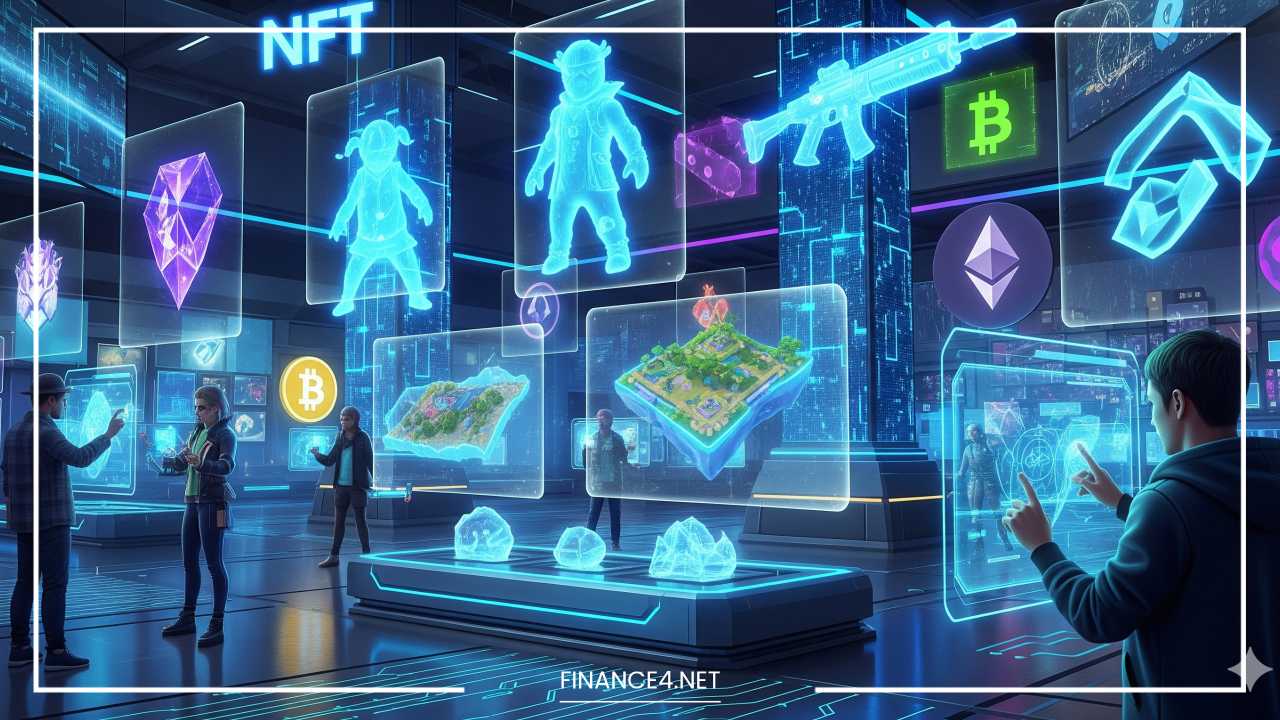
The gaming world is undergoing a seismic shift, moving from traditional closed ecosystems to open, player-centric digital economies. At the heart of this revolution is Non-Fungible Token (NFT) gaming, where digital assets like characters, land, and items are minted on a blockchain, granting players true ownership. This groundbreaking model has catalyzed the Play-to-Earn (P2E) movement, allowing gamers to earn tangible value from their in-game activities.
Initially, most NFT games were built on a single blockchain, primarily Ethereum. However, the rapidly evolving landscape quickly presented challenges, notably high transaction costs (gas fees) and network congestion, especially during peak popularity. This bottleneck spurred the innovation of multi-chain NFT games.
Multi-chain games are those whose assets or core functions operate across two or more distinct blockchain networks. This matters immensely because it unlocks greater interoperability, ensures superior scalability by distributing network load, and dramatically lowers transaction fees for players by utilizing more efficient Layer 2 or sidechain solutions. This article will serve as your essential guide to navigating this exciting frontier, helping you discover the top multi-chain NFT games and the platforms driving the future of decentralized gaming.
What Are Multi-Chain NFT Games?
A multi-chain NFT game is a decentralized application (dApp) that utilizes the infrastructure of multiple separate blockchain networks for different aspects of its operation. This is a critical distinction from single-chain games, which confine all NFTs, tokens, and transactions to one blockchain.
The transition to a multi-chain architecture is driven by the need to solve the “blockchain trilemma”—the difficulty of simultaneously achieving decentralization, security, and scalability. Ethereum, the first major home for NFTs, provides top-tier security and decentralization but often struggles with scalability and high transaction costs. By expanding to other networks, multi-chain games can cherry-pick the best features of each.
Benefits of Multi-Chain
- Cross-Chain Asset Transfers: The most direct benefit is the ability for players to move their high-value NFTs or tokens from a congested, expensive chain (like Ethereum Mainnet) to a faster, cheaper one (like Polygon or a proprietary sidechain) for seamless trading and gameplay. This significantly enhances liquidity and player experience.
- Broader User Base and Liquidity: By supporting multiple chains, a game can tap into the unique communities and existing liquidity pools of each network, drawing a larger, more diverse user base.
- Better Decentralization and Resilience: Spreading the game’s core components across several blockchains reduces the reliance on a single network, making the ecosystem more robust, resistant to failure, and promoting broader decentralization.
Challenges of Multi-Chain
- Complexity for Developers: Building and maintaining cross-chain functionality, particularly secure asset bridging, is a complex technical challenge that requires specialized expertise.
- Possible Security Risks: Cross-chain bridges, the protocols that facilitate asset transfer between chains, can be vulnerable targets for malicious attacks, representing a significant risk to user funds and game assets. Users must rely on the security of the bridge mechanism.
Popular blockchains commonly integrated into the NFT gaming space include Ethereum (for core asset security/settlement), Solana (for high speed/low fees), Polygon (as an Ethereum scaling solution), Binance Smart Chain/BNB Chain (for low-cost transactions), and proprietary sidechains like Ronin and Immutable X.
Key Features to Look for in Multi-Chain NFT Games
When evaluating the best multi-chain NFT games and platforms, players and investors should look beyond graphics and gameplay to assess the underlying economic and technical health.
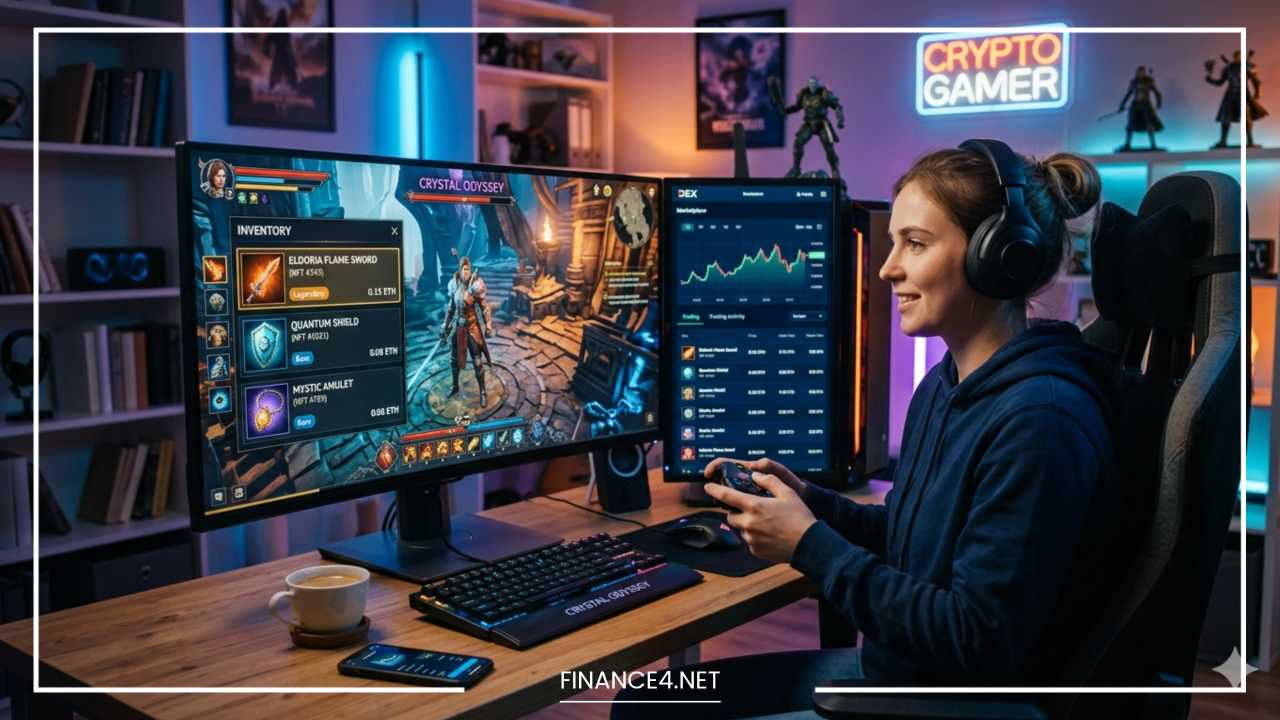
- Play-to-Earn (P2E) Mechanics: The game must feature sustainable and engaging P2E loops. Look for diverse ways to earn, such as competitive play, content creation, staking, yield generation from land ownership, or resource gathering, ensuring the economy isn’t solely reliant on new user influx.
- Cross-Chain NFT Compatibility: A crucial feature. It should be easy for players to seamlessly bridge their primary NFTs (characters, land) and/or tokens across the supported chains, allowing them to choose the network with the optimal cost and speed for their activity.
- Active and Growing Communities: A strong, vibrant community is the lifeblood of a decentralized game. Active forums, social media channels, and high engagement on community platforms indicate long-term viability and development interest.
- Game Economy Sustainability: Investigate the tokenomics. Look for features like dual-token models (one for utility, one for governance), token sinks (mechanisms to burn or lock up tokens), and a clear roadmap for balancing inflation and rewarding long-term holders.
- User-Friendly Wallets and Marketplaces: Accessibility is key to mass adoption. The game should support popular multi-chain wallets (like Metamask or Phantom) and feature intuitive in-game or external marketplaces that clearly display asset prices and transaction costs across the connected chains.
- Scalability and Transaction Speed: The primary reason for multi-chain support. The chosen secondary chains or Layer 2 solutions must offer high throughput and near-instant, low-cost transactions to handle millions of daily in-game actions without performance degradation.
- Security and Smart Contract Audits: Due diligence is non-negotiable. Look for evidence of professional security audits of the game’s smart contracts, especially the cross-chain bridge contracts, by reputable third-party firms.
Top Multi-Chain NFT Games
The following games represent the current vanguard of multi-chain NFT gaming, setting the standard for interoperability, economic complexity, and user engagement.
Axie Infinity (Ethereum & Ronin)
Game Overview
Axie Infinity is a turn-based, card-battler strategy game inspired by Pokémon. Players collect, breed, and battle fantasy creatures called Axies, each represented by a unique NFT. Gameplay revolves around strategic team composition and battle mechanics in Adventure (PvE) and Arena (PvP) modes. While the graphics are simple, the complex meta and deep economic incentives have attracted millions of players.
Multi-Chain Integration
Axie Infinity pioneered the Layer 2 solution necessity. Originally on Ethereum, the game’s assets and tokens were later bridged to Ronin, an Ethereum-linked sidechain built specifically for the Axie ecosystem. This move dramatically reduced gas fees from potentially hundreds of dollars to practically zero, making the game accessible to a global audience. The most valuable NFTs, like Genesis Land plots, still reside on the more secure Ethereum Mainnet, but the high-frequency transactions—battling, breeding, and collecting daily rewards—occur on the Ronin sidechain.
Play-to-Earn Opportunities
The core P2E mechanic centers on earning Smooth Love Potion ($SLP), the game’s utility token, primarily through battling. The governance token, Axie Infinity Shards ($AXS), is rewarded for high rankings in the PvP leaderboard and can be staked on the Ronin network for further rewards. Players also earn by breeding new Axies (which consumes both $SLP and $AXS) and selling them on the dedicated marketplace, or by earning a yield from their NFT Land plots in the upcoming Axie Homeland game mode.
Community & Ecosystem
Axie Infinity boasts one of the largest and most recognizable Web3 gaming communities globally. Its ecosystem includes an in-house marketplace (Axie Marketplace on Ronin), a staking platform for $AXS, and a vibrant community of scholars, managers, and decentralized autonomous organizations (DAOs). Its partnerships are vast, and the game has evolved from its core battling mechanic to an entire gaming franchise powered by the Ronin network.
Illuvium (Ethereum & Immutable X)
Game Overview
Illuvium is a highly anticipated open-world, monster-collector, and auto-battler RPG with stunning, AAA-quality graphics built on Unreal Engine 5. Players traverse a vast alien world, capture creatures called Illuvials (NFTs), and assemble teams for strategic battles in the Arena. The game is known for its focus on a high-quality gaming experience, distinguishing it from simpler P2E titles.
Multi-Chain Integration
Illuvium is a prime example of leveraging a Layer 2 solution for scalability. It is built on the Ethereum blockchain but leverages Immutable X ($IMX), a Layer 2 scaling solution using ZK-Rollups, for all in-game NFT minting and trading. This architecture allows Illuvium to benefit from Ethereum’s robust security and decentralization while offering players gas-free NFT transactions and instant settlement, solving the high-cost, slow-speed problem inherent to the Ethereum Mainnet. The game’s primary token, $ILV, can be traded on the Ethereum Mainnet, but in-game assets are handled on Immutable X.
Play-to-Earn Opportunities
P2E opportunities include capturing Illuvials and selling them as NFTs on the Immutable X marketplace, winning $ILV from tournaments, and providing liquidity for the IlluviDEX (the in-house exchange). Furthermore, players can stake their $ILV to earn rewards from a protocol revenue distribution mechanism. The upcoming Illuvium: Zero game allows Land NFT owners to generate in-game fuel, which is a valuable resource that can be sold to other players.
Community & Ecosystem
The Illuvium community is highly engaged, drawn by the high production value and the governance structure, which is run by the Illuvium DAO (Decentralized Autonomous Organization). The ecosystem is defined by its integrated, gas-free marketplace, IlluviDEX, and its commitment to an Interoperable Blockchain Game (IBG) framework, linking its various gaming experiences—Overworld, Arena, and Zero—together.
The Sandbox (Ethereum & Polygon)
Game Overview
The Sandbox is a virtual metaverse where users can create, own, and monetize their gaming experiences and voxel assets (like digital Lego bricks). It’s a decentralized world-builder game where the community controls the vast, block-based landscape. The core gameplay is about creativity and social interaction within user-generated content.
Multi-Chain Integration
The Sandbox’s primary digital real estate, LAND NFTs, and its main currency, $SAND, were initially hosted on the Ethereum Mainnet. However, to enable the high volume of low-cost transactions necessary for active gameplay, creating and trading smaller assets, and interacting within the game, The Sandbox integrated the Polygon (MATIC) Layer 2 solution. This allows for near-instant, low-fee transactions for in-game activities, while the high-value LAND assets maintain their security on the Ethereum chain. This hybrid approach ensures both security for large assets and usability for daily micro-transactions.
Play-to-Earn Opportunities
The main P2E opportunities include: Land Ownership (renting, hosting experiences, and earning a yield), Asset Creation (designing voxel assets in VoxEdit and selling them as NFTs), and Game Creation (building and monetizing games/experiences using Game Maker). Players can also simply earn by playing games within the metaverse that offer $SAND rewards.
Community & Ecosystem
The Sandbox boasts massive mainstream recognition, driven by key partnerships with brands like Atari, Snoop Dogg, and Adidas. The platform’s ecosystem is robust, with a dedicated NFT marketplace for both LAND and ASSETs, a DAO for governance, and numerous high-profile corporate land owners driving development and events within the metaverse.
Decentraland (Ethereum & Polygon)
Game Overview
Decentraland is one of the original 3D virtual worlds and metaverses. Players can buy virtual plots of land, called LAND (NFTs), which they can then build upon, monetize, and navigate. It serves as a decentralized social platform for games, art exhibitions, concerts, and other virtual experiences.
Multi-Chain Integration
Decentraland operates primarily on the Ethereum blockchain for the settlement and ownership of its two main assets: LAND (the NFT plots) and MANA (the native cryptocurrency). Similar to The Sandbox, Decentraland has historically struggled with Ethereum’s high gas fees for in-world transactions. To mitigate this, the platform utilizes Polygon ($MATIC) for some of its off-chain activities and low-value transactions, such as voting within the DAO using an off-chain voting platform like Snapshot, though the most crucial asset ownership remains tethered to Ethereum’s security. This multi-layered approach aims to balance security for high-value assets with low-cost utility for community governance and engagement.
Play-to-Earn Opportunities
Earning is primarily achieved through: Developing and Monetizing Land (charging admission to events, advertising, or creating mini-games), Trading LAND (buying low and selling high), and Creating and Selling Wearables (customizing avatars and selling the NFT clothing/accessories on the marketplace). $MANA holders can also participate in the DAO and potentially earn rewards from staking or through ecosystem growth.
Community & Ecosystem
Decentraland has a mature, first-mover community. It’s governed by the Decentraland DAO, which controls smart contracts, policies, and the distribution of $MANA funds. Its ecosystem features an official Marketplace for LAND and Wearables and has hosted major virtual events and partnerships with brands like Sotheby’s and Samsung.
Alien Worlds (WAX, Ethereum & BNB Chain)
Game Overview
Alien Worlds is a decentralized, science fiction-themed metaverse and simulated economy centered on planet governance and resource competition. The core gameplay revolves around mining the native utility token, Trilium ($TLM), on various NFT Land plots across six planet DAOs.
Multi-Chain Integration
Alien Worlds is one of the most truly multi-chain NFT games, spanning WAX, Ethereum, and BNB Chain.
- The primary Mining Game and most in-game transactions occur on the WAX blockchain, known for its feeless, high-speed transactions, making it ideal for the numerous daily clicks required for mining.
- The Trilium ($TLM) token is a cross-chain asset, with the majority circulating on BNB Chain to support its Missions game mode and for trading on major exchanges.
- Ethereum is used as the high-security settlement layer for some of the higher-value token trading and staking.
- The game features a native Teleport function that allows players to seamlessly move their $TLM between the WAX, Ethereum, and BNB chains.
Play-to-Earn Opportunities
Players earn $TLM through Mining using NFT tools, going on Missions on the BNB Chain, and by Staking $TLM to vote for Planetary DAOs and earn a share of their Trilium allocation. Landowners earn a commission from the $TLM mined on their plots. The game is highly dynamic, with multiple avenues to earn based on chosen chain and activity.
Community & Ecosystem
Alien Worlds has consistently ranked as one of the most used blockchain games by user count due to its accessibility and P2E mechanics. Its ecosystem is complex, featuring multiple Planet DAOs, an NFT marketplace on WAX, and a strong community governance element, making it a decentralized economic simulation first, and a game second.
Star Atlas (Solana & Ethereum)
Game Overview
Star Atlas is an ambitious, next-generation, space-themed grand strategy and exploration massively multiplayer online role-playing game (MMORPG). With cinema-quality graphics built on Unreal Engine 5, the game aims to create a vast, immersive metaverse where players can explore, mine, battle, craft, and trade. The game world is controlled by three main factions.
Multi-Chain Integration
Star Atlas is primarily built on the Solana blockchain, chosen for its ultra-fast transaction speed and extremely low fees—a necessity for an AAA-quality MMORPG with an on-chain economy. The vast majority of its core assets, including ship NFTs and the main tokens, ATLAS (utility) and POLIS (governance), reside on Solana. However, to tap into greater liquidity and institutional investment, Star Atlas ensures interoperability with the Ethereum ecosystem, allowing its tokens to be bridged and traded on Ethereum-compatible platforms. This integration leverages Solana’s speed for real-time gameplay and Ethereum’s stability and deep liquidity for high-value asset settlement.
Play-to-Earn Opportunities
The P2E model is deep and encompasses several avenues: Mining and Resource Collection, Crafting and Selling new ships and components as NFTs, Space Exploration for discovering and claiming resources, Staking POLIS for governance rewards, and engaging in strategic Fleet Battles for territory and loot. The game focuses on a player-driven economy where every asset has value.
Community & Ecosystem
Star Atlas has a passionate community driven by the game’s high visual fidelity and ambitious roadmap. The ecosystem is extensive, including a dedicated Galactic Marketplace for trading NFTs, a robust DAO structure powered by the POLIS token, and various browser-based mini-games (SAGE Labs) that allow for economic activity even before the full game launch.
Advantages of Playing Multi-Chain NFT Games
The migration to multi-chain architectures is not just a developer trend; it provides significant, direct benefits to the player experience.
- Flexibility in Trading and Moving Assets Across Chains: Players are no longer locked into one network. They can move an NFT from the expensive Ethereum Mainnet to a low-fee chain like Polygon or Ronin when they want to sell it quickly or use it in high-frequency gameplay, and then move earned tokens back to a secure layer for long-term holding. This is a game-changer for asset management.
- Potential for Lower Transaction Fees on Secondary Chains: The most tangible benefit. By shifting utility and gameplay transactions to fast, low-cost chains (Layer 2s or sidechains), players save money on gas fees, making P2E sustainable for even low-value activities.
- Access to Larger Marketplaces and Player Communities: Multi-chain support means connecting to a broader spectrum of liquidity and users. For instance, a game supporting both WAX and BNB Chain can attract communities from both ecosystems, exponentially increasing the potential buyers for an NFT asset.
- Increased Innovation and Game Options: Developers are free to experiment with new blockchain features and technologies without being constrained by the limitations of a single network. This accelerates the development of more complex, feature-rich, and scalable games.
Risks and Challenges
While multi-chain gaming offers exciting opportunities, it’s essential for players to be aware of the inherent risks associated with this complex technology.
- Smart Contract Vulnerabilities: All blockchain games rely on smart contracts. Flaws in the code of the main game contracts or, critically, the cross-chain bridge contracts, can be exploited by hackers, potentially leading to the loss of user funds or game assets.
- Price Volatility of In-Game Assets: The value of in-game tokens and NFTs is often tied to market sentiment and the broader crypto market. Extreme volatility can quickly diminish the “Earn” potential of the P2E model, turning an investment into a loss.
- Regulatory Uncertainties: The decentralized nature of NFT games and the borderless nature of multi-chain assets place them in a complex and rapidly evolving regulatory environment globally. Future government regulations could significantly impact the business model and asset value of these platforms.
- Risk of “Pump and Dump” in Tokenized Economies: Especially in projects with smaller communities or less transparent tokenomics, the in-game tokens can be subject to speculative price manipulation, where early investors “pump” the price and then “dump” their holdings, leaving retail players with depreciated assets.
- Cross-Chain Bridges Can Be Attack Targets: The bridge protocols that lock up assets on one chain to mint wrapped equivalents on another are centralized points of failure, making them high-value targets for hackers. Several high-profile crypto heists have targeted these cross-chain bridges.
How to Get Started
Diving into multi-chain NFT gaming requires a few simple steps to ensure you are equipped to handle transactions across different networks.
- Choosing a Wallet that Supports Multiple Chains: Your first step is a non-custodial wallet that can manage assets across several blockchains. Metamask is the most popular choice for EVM (Ethereum Virtual Machine) compatible chains like Ethereum, Polygon, and BNB Chain. For Solana-based games like Star Atlas, the Phantom wallet is essential. For WAX-based games, you will need a WAX Cloud Wallet. Learn how to configure these wallets to connect to multiple networks.
- Buying Initial Crypto for Gaming Platforms: You’ll need the native token of the primary chains you plan to use. This includes ETH (for Ethereum, if necessary), MATIC (for Polygon gas), and BNB (for BNB Chain gas). You will buy these on a major centralized exchange and transfer them to your non-custodial wallet.
- Joining the Game Community and Marketplace: Before investing, join the official Discord or Telegram community. This is where you’ll find guides, developer announcements, and marketplace links. Always use official links to avoid phishing scams.
- Tips for Beginners to Minimize Risk: Start small, treat initial NFT purchases as gaming expenses, not guaranteed investments, and never invest more than you are willing to lose. Crucially, never share your private keys or seed phrase with anyone, and verify the smart contract addresses of any tokens or NFTs before making a purchase.
Future of Multi-Chain NFT Gaming
The multi-chain narrative is not just a temporary fix; it’s the inevitable future of Web3 gaming.
- Trends in Cross-Chain Interoperability: We are moving toward a future where cross-chain bridges become more secure, decentralized, and user-friendly, potentially fading into the background of the player experience. New technologies like Layer Zero or advanced messaging protocols aim to enable true seamless asset transfer between any two chains.
- Integration with Web3, DeFi, and Metaverse Ecosystems: Multi-chain architecture will allow games to integrate more deeply with decentralized finance (DeFi) platforms for complex asset lending and yield generation, making the metaverse a more interconnected economic entity. In-game assets will be easily used as collateral in DeFi protocols residing on separate chains.
- Potential for Mass Adoption: By eliminating high gas fees and slow transaction times, multi-chain games remove the biggest hurdles to onboarding traditional gamers. When a game feels as fast and cheap as a Web2 game but offers genuine asset ownership, mass adoption will accelerate.
- Role of Layer 2 Solutions and Sidechains in Scaling NFT Games: Proprietary sidechains (like Ronin) and optimized Layer 2 solutions (like Immutable X and Polygon) will continue to evolve, offering dedicated gaming environments that are specifically tuned for high-throughput, low-latency gaming transactions. These dedicated layers are the true engine for scaling the industry.
Final Thoughts
Multi-chain NFT gaming represents the culmination of the Play-to-Earn revolution, offering a pathway toward truly open, scalable, and decentralized digital economies. By distributing assets and activity across multiple, purpose-built blockchains, these platforms successfully overcome the limitations of single-chain architectures, leading to lower fees, faster transactions, and a far superior user experience.
The games highlighted—from the strategic depth of Axie Infinity to the stunning graphics of Illuvium and the expansive metaverses of The Sandbox and Decentraland—are not just games; they are complex economic ecosystems. They give power and ownership back to the player, allowing them to earn real-world value from their digital time and creativity.
The future of gaming is one of ownership and interoperability. We encourage readers to explore these top multi-chain games, dive into their communities, and begin their journey into the exciting world of Play-to-Earn, but always do so with a responsible and informed approach.