Stablecoin Bridging Solutions | Seamless Cross-Chain Transfers
 by
by 
Stablecoin Bridging Solutions | Seamless Cross-Chain Transfers
The digital asset ecosystem has evolved far beyond its volatile beginnings. At the forefront of this maturation stands the stablecoin—a cryptocurrency designed to maintain a stable value, typically pegged to a fiat currency like the US Dollar. These digital dollars have become the foundational currency of the decentralized finance (DeFi) movement, acting as the primary medium of exchange, lending collateral, and store of value within the crypto sphere.
Yet, a fundamental challenge persists: the fragmented nature of blockchain technology. The world of Web3 is a multi-chain universe, where thousands of independent blockchains—Ethereum, Solana, Polygon, Avalanche, and others—operate as distinct, isolated silos. A stablecoin like USDC on Ethereum cannot inherently be used on Solana, trapping liquidity and hindering capital efficiency. This is the critical problem solved by stablecoin bridging solutions.
These bridges are the essential infrastructure enabling seamless cross-chain transfers, transforming a collection of walled-garden blockchains into a single, cohesive, and fluid multi-chain economy. They are the key to unlocking the true potential of global, borderless finance, meeting the increasing demand for fast, secure, and cost-effective stablecoin movement across all crypto markets.
Understanding Stablecoins
A stablecoin is an innovative financial instrument that merges the borderless, transparent, and immutable nature of blockchain technology with the price stability of traditional assets. Their core purpose is to provide a low-volatility medium for transacting, saving, and investing within the crypto landscape.
Stablecoins can be categorized primarily by their collateral mechanism:
-
Fiat-Collateralized (Centralized): These are the most common, such as USDT and USDC. They maintain their peg by holding an equivalent reserve of fiat currency (or cash equivalents like Treasury Bills) for every coin issued. They rely on a centralized issuer (like Circle or Tether) for issuance, redemption, and reserve transparency.
-
Crypto-Collateralized (Decentralized): These are backed by a basket of other cryptocurrencies (e.g., Ether or Bitcoin), often in an over-collateralized manner to absorb price volatility. DAI, backed by the MakerDAO protocol, is a prime example. These rely on smart contracts and decentralized governance to maintain their peg.
-
Algorithmic: These stablecoins historically attempted to maintain their peg using a purely decentralized, code-based approach, often involving a second, volatile token to absorb price fluctuations through minting and burning mechanisms. Due to notable collapses in this category, this model carries the highest risk profile and has largely seen a decline in market trust.
In DeFi, stablecoins are indispensable. They allow users to take profits without converting back to a traditional bank account, participate in yield farming on various protocols, and execute rapid, low-cost international remittances, bridging the gap between volatile crypto and the stability of traditional finance.
The Need for Cross-Chain Transfers
The current blockchain landscape is defined by its diversity and its resulting fragmentation. Each Layer 1 (L1) network—Ethereum, Solana, Cosmos, etc.—uses its own consensus mechanism, virtual machine, and asset standards. Consequently, assets deployed on one network are non-native and often unusable on another. This creates “blockchain silos.”
For a DeFi user, this fragmentation presents several critical issues:
-
High Fees and Delays: If a user holds USDC on Ethereum but wants to capitalize on a high-yield opportunity on a Layer 2 (L2) like Arbitrum, they traditionally had to use a centralized exchange as an intermediary. This process involves multiple steps: withdrawing from DeFi, depositing to the exchange, trading, and withdrawing to the new chain, incurring multiple fees and significant time delays.
-
Liquidity Fragmentation: The total supply of a stablecoin is split across multiple networks, diluting liquidity. A large trade on one chain might suffer from high slippage, even if plenty of the same stablecoin exists on another chain. A seamless bridge ensures that all pockets of liquidity are effectively connected.
-
Hindrance to DeFi Composability: True decentralized finance requires composability, where protocols on different chains can interact frictionlessly. Without a reliable way to move the underlying collateral (stablecoins), this goal remains elusive, limiting the reach and innovation of multi-chain dApps.
The increasing importance of the multi-chain ecosystem, fueled by the rise of high-throughput L1s and scalable L2s, has made robust and secure interoperability—achieved through bridging—not just a desirable feature, but an absolute necessity for continued growth.
What Are Stablecoin Bridging Solutions?
A stablecoin bridging solution, or cross-chain bridge, is a protocol or set of smart contracts that enables the secure transfer of an asset, such as a stablecoin, from one independent blockchain network to another. They function as a two-way peg mechanism, ensuring that the total supply of the stablecoin remains constant across all chains.
The mechanism is simple in concept: lock the stablecoin on the source chain and issue a corresponding representation of that stablecoin on the destination chain.
Types of Bridging Mechanisms
Bridges are differentiated primarily by their architecture and the trust assumptions they require:
-
Custodial vs. Non-Custodial (Trust Model):
-
Custodial Bridges: These rely on a single, centralized entity or a small group of trusted validators to hold the locked assets and attest to the cross-chain transfer. They are fast but carry a significant single point of failure and require user trust.
-
Non-Custodial Bridges (Trustless): These use a decentralized network of validators, smart contracts, or cryptographic proofs to automatically and transparently manage the locking and minting process. They are slower and more complex but significantly more secure and aligned with the ethos of decentralization.
-
-
Wrapped Assets and Synthetic Tokens (Lock-and-Mint): The most common model. The original token (e.g., native USDC on Ethereum) is locked in a smart contract on Chain A, and a new, wrapped version (e.g., USDC-Wormhole on Solana) is minted on Chain B. This wrapped token is a synthetic representation backed 1:1 by the locked asset. When the user wishes to return, the wrapped token is burned on Chain B, and the native token is unlocked on Chain A.
-
Liquidity Pools (Liquidity-Based Swaps): This model, used by protocols like Synapse and Stargate, does not rely on wrapping. Instead, it maintains local liquidity pools of the stablecoin on both the source and destination chains. When a user deposits on Chain A, the bridge uses a cross-chain messaging protocol to release an equivalent amount from the pool on Chain B. This is generally faster and offers a “native” stablecoin experience on the destination chain but requires deep liquidity to prevent slippage.
The overarching benefit of these solutions is the creation of a unified capital market where stablecoins, the lifeblood of the crypto economy, can move efficiently, reducing costs and delays for users globally.
How Stablecoin Bridges Work
To illustrate the functionality of a bridge, let us follow the journey of a common stablecoin, USDC, as it moves from Ethereum (Source Chain) to Avalanche (Destination Chain) using a standard Lock-and-Mint bridge model.
The Five-Step Cross-Chain Transfer Process
-
Initiation and Locking (Source Chain): The user interacts with the bridge’s smart contract on Ethereum, specifying the amount of USDC to transfer and the recipient address on Avalanche. The user confirms the transaction, which sends the native USDC to the bridge’s locked reserve contract on Ethereum.
-
Event Emission and Verification: Once the USDC is locked, the Ethereum smart contract emits an event log, confirming the lock. The bridge’s decentralized network of validators (or relayers/oracles) constantly monitors the source chain for these events. These validators confirm the transaction’s finality and validity according to the bridge’s consensus rules (e.g., $2/3$ of the validators must sign off).
-
Message Passing (Interoperability Protocol): The verified message, containing data about the amount, destination chain, and recipient address, is transmitted across the networks. This is the core of the cross-chain communication, often facilitated by a dedicated interoperability protocol like LayerZero or Wormhole.
-
Minting/Releasing (Destination Chain): The destination chain’s smart contract on Avalanche receives the verified message. It then performs one of two actions, depending on the bridge type:
-
Lock-and-Mint: It mints a new, wrapped version of the stablecoin (e.g., axlUSDC or W-USDC) equivalent to the locked amount on Ethereum.
-
Liquidity Pool: It releases the native stablecoin from its local liquidity pool to the user’s Avalanche address.
-
-
Final Settlement: The newly minted/released stablecoin arrives in the user’s wallet on Avalanche, available for use in the Avalanche DeFi ecosystem. To reverse the process, the user sends the wrapped token back to the Avalanche contract, which burns it and sends a message back to Ethereum to unlock the native USDC from the reserve.
Risk Factors in the Bridging Process
While powerful, this multi-step process introduces significant complexity and risk:
-
Smart Contract Vulnerabilities: The locking, minting, and validation contracts are highly complex and hold vast amounts of value (Total Value Locked, or TVL). Bugs in this code are the most common cause of bridge hacks, where an attacker tricks the system into minting tokens without a corresponding lock.
-
Validator/Custodial Risks: In centralized or federated bridges, the keys or signing mechanism of the validators can be compromised (e.g., the infamous Ronin Bridge exploit). If the validators collude or are hacked, the reserve collateral can be drained.
-
Slippage and Peg Risk: In liquidity pool models, if the pool on the destination chain is depleted, the transaction may fail or experience high slippage. In wrapped models, if the reserve on the source chain is compromised, the wrapped token loses its 1:1 backing, leading to a de-peg.
Key Features to Look for in a Stablecoin Bridge
For a user or institution, selecting a bridge is a critical decision that balances speed, cost, and risk. The following features are paramount for secure and efficient stablecoin transfers:
-
1. Security and Trust Model:
-
Decentralization of Validators: Look for bridges with a large, diverse, and economically secured set of validators, making collusion prohibitively expensive (high cost-to-attack).
-
External Audits and Bug Bounties: Consistent security audits by reputable firms and active bug bounty programs are a baseline requirement for holding large TVL.
-
Insurance/Risk Mitigation: Some newer protocols are exploring decentralized insurance funds or native slashing mechanisms to compensate users in the event of a successful exploit.
-
-
2. Speed and Transaction Cost:
-
Finality Speed: The time from sending a token on the source chain to receiving it on the destination chain. Liquidity-based models generally offer faster finality than traditional lock-and-mint models.
-
Cost Efficiency: The combined fee structure, which includes gas costs on both chains and the bridge’s service fee. Bridges that aggregate gas payments or subsidize costs on cheaper chains offer superior UX.
-
-
3. Liquidity Support and Compatibility:
-
Deep Liquidity: Sufficient TVL on the destination chain is crucial, especially for liquidity pool bridges, to ensure large transactions do not suffer from excessive slippage.
-
Cross-Chain Compatibility: The range of L1s and L2s the bridge supports. A good bridge connects all major stablecoin ecosystems (Ethereum, Polygon, Arbitrum, Avalanche, Solana, etc.).
-
-
4. User Experience (UX):
-
Intuitive Interface: A simple, single-click interface that clearly displays fees, estimated transfer time, and potential risks (like required minimum deposits or current pool imbalance).
-
Integrations: Seamless integration with major wallets and direct embedding into popular DeFi applications (dApps) to allow in-app bridging without navigating to a separate platform.
-
Popular Stablecoin Bridging Solutions
The landscape of stablecoin bridges is highly competitive, with various protocols deploying different trust models to optimize for speed and security.
-
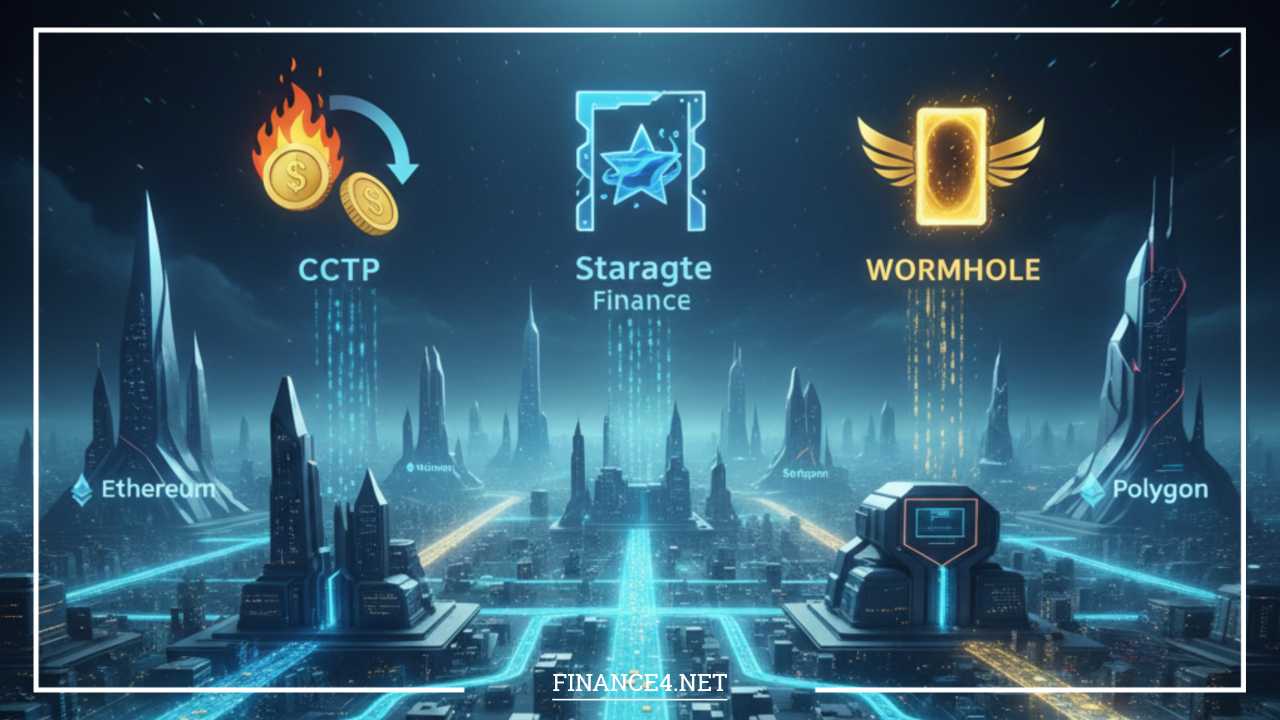
Circle / USDC Bridge (CCTP – Cross-Chain Transfer Protocol):
-
Mechanism: Burn-and-Mint. Instead of locking USDC on Chain A and minting a wrapped version, Circle’s protocol burns native USDC on the source chain and then mints native USDC on the destination chain.
-
Feature: Considered the most trustless form of stablecoin bridging, as it relies on the issuer’s (Circle’s) authorized minting and burning, eliminating the need for a third-party bridge validator or pooled liquidity risk. It aims to make USDC truly native everywhere.
-
-
Wormhole:
-
Mechanism: Federated/Validator model (Lock-and-Mint). A powerful multi-chain messaging protocol that allows assets to move between major chains, including non-EVM chains like Solana.
-
Feature: Known for its vast network coverage and speed. It has been a key component in connecting the Solana ecosystem to EVM-compatible chains. Its security relies on a small, trusted set of “Guardians” who sign off on transfers.
-
-
Multichain (Anyswap):
-
Mechanism: Centralized Multi-Party Computation (MPC) model. At its peak, it was a dominant player, facilitating cross-chain transfers across over 70 chains using a network of MPC nodes.
-
Feature: Known for its wide array of supported chains and assets. However, the centralization aspect of the MPC nodes and recent operational issues have highlighted the inherent security risks of centralized bridging.
-
-
Stargate Finance (LayerZero):
-
Mechanism: Liquidity Pool with Unified Liquidity. Built on the LayerZero protocol, which is a cross-chain messaging layer.
-
Feature: Offers “instant finality” and uses a single liquidity pool shared across all chains, solving the critical problem of liquidity fragmentation. It allows users to transfer native assets without wrapping, relying instead on liquidity rebalancing mechanisms to maintain stability.
-
-
Allbridge:
-
Mechanism: Lock-and-Mint or Liquidity Pools (Allbridge Core). It supports both EVM and non-EVM chains.
-
Feature: Allbridge Core focuses specifically on native stablecoin bridging without wrapping, using deep pools and incentivized rebalancing to offer a seamless cross-chain swap experience, often connecting niche or highly specialized chains.
-
Challenges and Risks
Despite their ingenuity, stablecoin bridges are the most frequent targets of exploits in the crypto industry, often due to the immense value they secure. Understanding these challenges is essential for responsible use.
Technical Risks
-
Smart Contract Bugs (The $600M+ Problem): A significant number of high-profile bridge exploits have stemmed from flaws in the smart contract code. Attacks, such as the Poly Network hack, exploited vulnerabilities related to signature validation, allowing the attacker to trick the bridge into releasing assets without the corresponding collateral being locked or burned. The complexity of managing state and consensus across two separate blockchains makes these contracts particularly difficult to secure.
-
Centralization Risks: Many bridges, particularly federated or semi-custodial ones, rely on a small set of multisig wallets or validators (e.g., 5 out of 8 signers). If a majority of these keys are compromised, the entire TVL of the bridge can be drained. This is a weakness in the economic security model, as the cost to attack is lower than the potential reward.
-
Liquidity Strain: While liquidity-based bridges are fast, they are susceptible to market risks. A sudden large transfer that drains a destination pool can cause the bridge to halt operations temporarily or impose high fees/slippage until the pool is rebalanced, impacting the user experience during peak demand.
Regulatory and Market Risks
-
Regulatory Uncertainty: Stablecoins themselves are under increasing scrutiny globally, with regulators focusing on reserve requirements and consumer protection (e.g., MiCAR in the EU, and evolving US frameworks like the GENIUS Act). Cross-chain bridging complicates this compliance, as the asset traverses multiple jurisdictions and different governance protocols. A regulatory clampdown on a specific stablecoin issuer could halt all transfers across their respective bridges.
-
Counterparty Risk in Wrapped Assets: For all lock-and-mint bridges, the wrapped token’s stability is directly tied to the security of the locked collateral. If the source chain’s reserve is compromised, the wrapped token on the destination chain immediately loses its peg, causing catastrophic losses for holders. The TerraUSD (UST) collapse also serves as a stark reminder of the market risk associated with algorithmic stablecoins, which had their own cross-chain mechanisms.
Case Study: The Ronin Bridge Exploit. The 2022 hack on the Ronin Bridge, which connects the Axie Infinity game’s sidechain to Ethereum, resulted in a loss of over $600 million. The attackers gained control of the majority of the nine validator nodes’ private keys, allowing them to sign fraudulent withdrawal transactions. The lesson learned was clear: even a small degree of centralization in the signing mechanism presents a critical security vulnerability.
The Future of Stablecoin Bridging
The trajectory of stablecoin bridging is moving away from the risky, fragmented, first-generation lock-and-mint models and towards more elegant, native, and cryptographically secure solutions.
Emerging Technologies and Trends
-
Native Minting/Burning (CCTP Model): The push toward issuer-controlled burn-and-mint protocols is perhaps the most significant development. By eliminating the need for third-party custody and wrapping, this model ensures that the stablecoin on the destination chain is always the native asset, improving security, composability, and liquidity.
-
Layer 2 (L2) Interoperability: The rise of rollups (Arbitrum, Optimism) as primary scaling solutions for Ethereum has created a need for specialized L2-to-L2 bridges. The future will involve shared sequencing and proof generation to enable near-instant and trust-minimized communication between these execution layers, effectively turning the entire Ethereum ecosystem into one massive, fluid network.
-
Cross-Chain Messaging Protocols: Technologies like LayerZero and Axelar are creating a foundational interoperability layer that separates the message (the instruction to transfer) from the asset transfer itself. This allows applications to be built to interact across chains natively, rather than simply moving tokens.
-
Multi-Chain Wallets and UX: Future wallets will abstract away the complexity of bridging entirely. Users will simply send a stablecoin to an address, and the wallet will intelligently choose the most secure, fastest, and cheapest underlying bridge protocol (e.g., a liquidity pool or CCTP) to complete the transfer.
Impact on Web3 and Global Payments
The seamless movement of stablecoins will be a critical accelerant for Web3 adoption:
-
DeFi Expansion: True capital efficiency will be achieved when liquidity can chase the highest yield and lowest fees across any chain instantaneously. This will lead to the emergence of truly multi-chain applications (dApps) that operate as a single entity across various networks.
-
Global Payments and Remittances: Stablecoins already offer a faster, cheaper alternative to traditional banking rails for cross-border payments. Secure, efficient bridging will turn this into a 24/7, global infrastructure, allowing businesses and individuals to move vast sums internationally without relying on legacy financial intermediaries.
-
Institutional Adoption: As compliance-focused, native stablecoin models (like CCTP) gain dominance, institutional investors will have the confidence to deploy capital on various networks. This increased institutional activity will demand, and in turn fund, the development of even more secure and robust bridging infrastructure.
Final Thoughts
Stablecoin bridging solutions are the unseen, yet utterly vital, circulatory system of the decentralized financial world. They have taken an otherwise fragmented collection of isolated blockchains and woven them into a multi-chain tapestry, unlocking vast pools of dormant liquidity and paving the way for unprecedented capital efficiency.
The journey has been marked by remarkable innovation, but also by significant security challenges, demonstrating that complexity is the enemy of security in decentralized systems. The future belongs to bridges that prioritize native, trust-minimized interoperability—protocols that burn and mint native assets rather than relying on vulnerable custody mechanisms.
By ensuring stablecoins can move securely, seamlessly, and efficiently across any digital ledger, bridging solutions are not just connecting different crypto ecosystems; they are solidifying the foundation for a truly global, borderless, and decentralized economy, making them an indispensable pillar of the Web3 future.