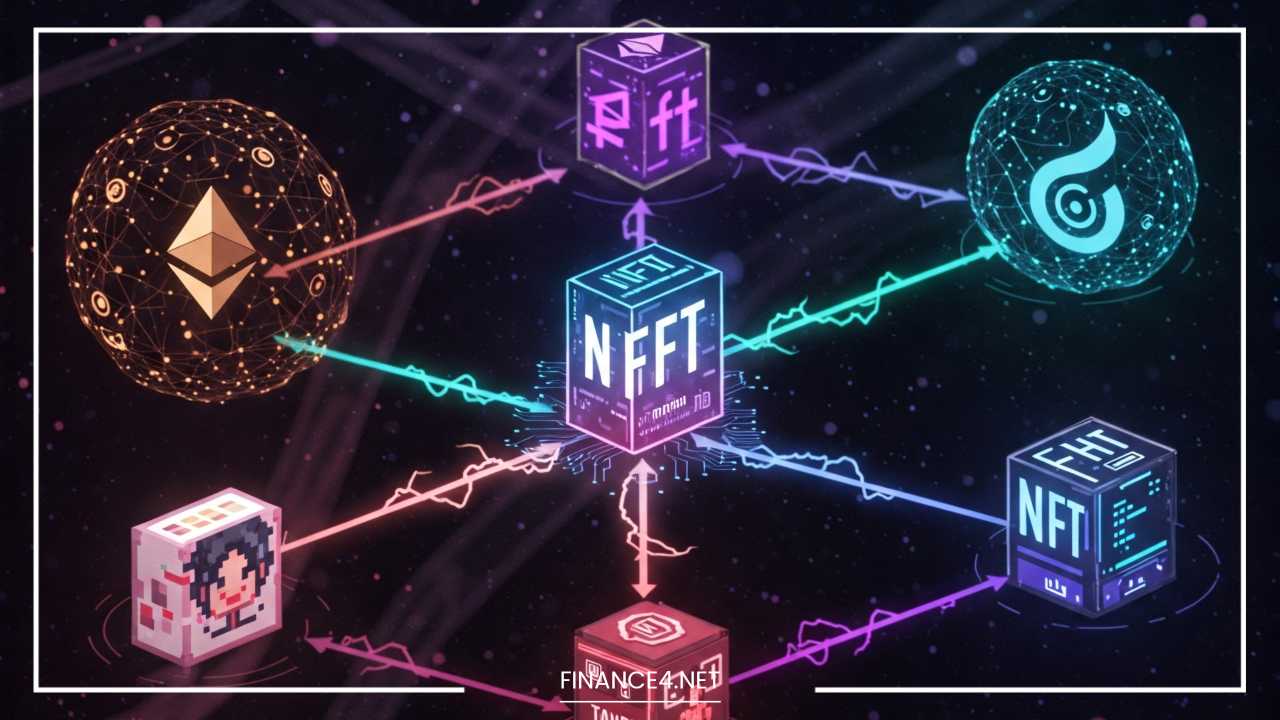
NFT Auctions Using Stablecoin Bridging
 by
by 
NFT Auctions Using Stablecoin Bridging | Seamless Crypto Transactions
The world of Non-Fungible Tokens (NFTs) has seen explosive growth and subsequent recalibration, revealing both immense potential and significant hurdles. While the initial frenzy around digital art and collectibles has somewhat cooled, the underlying technology continues to evolve, pushing the boundaries of digital ownership and value transfer. One of the most promising advancements on this horizon is the integration of stablecoins with cross-chain bridging technology to revolutionize NFT auctions.
This innovative approach promises to address key pain points in the current NFT ecosystem, offering enhanced liquidity, stability, and a more seamless user experience.
The Current Landscape of NFT Auctions: A Mixed Bag
NFT auctions, predominantly conducted on platforms like OpenSea, SuperRare, and Foundation, have traditionally relied on volatile cryptocurrencies like Ethereum (ETH) for bidding and settlement. While this native integration with blockchain technology is fundamental to NFTs, it introduces several challenges:
- Price Volatility: The inherent price fluctuations of cryptocurrencies like ETH create significant uncertainty for both buyers and sellers. A bid placed at a certain ETH value might drastically change in fiat value by the time the auction concludes, impacting the perceived worth of the NFT. This volatility can deter conservative bidders and make financial planning difficult for creators.
- High Gas Fees: Transacting on popular blockchains like Ethereum, especially during periods of high network congestion, can incur substantial gas fees. These fees, which are essentially transaction costs, can make bidding on lower-value NFTs economically unfeasible and add an unpredictable cost element to every interaction within an auction.
- Limited Interoperability: Most NFT marketplaces are largely siloed, operating on specific blockchains. This means a buyer on Ethereum might not easily participate in an auction on Solana or Polygon without complex cross-chain asset transfers, limiting the pool of potential bidders and fragmenting liquidity.
- Complex User Experience: For many mainstream users, navigating cryptocurrency wallets, understanding gas fees, and managing multiple blockchain networks presents a steep learning curve. This complexity hinders broader adoption and creates friction in the auction process.
- Lack of Price Discovery and Transparency: While blockchains inherently offer transparency, the off-chain nature of some auction components and the fluctuating value of bidding currencies can obscure true price discovery and create an opaque environment for some participants.
The Promise of Stablecoins: A Foundation for Stability
Stablecoins are a class of cryptocurrencies designed to minimize price volatility, typically by pegging their value to a stable asset1 like a fiat currency (e.g., USD), a basket of currencies, or commodities. Examples include USDT, USDC, and DAI. Their inherent stability offers crucial advantages for financial applications, including NFT auctions:
- Price Certainty: By denominating bids and settlements in stablecoins, the fiat value of the NFT remains consistent throughout the auction. This eliminates the risk of price depreciation or appreciation due to cryptocurrency market swings, providing a predictable environment for both buyers and sellers.
- Reduced Speculative Risk: Bidders can focus on the intrinsic value of the NFT rather than speculating on the future price of the bidding cryptocurrency. This encourages more rational and value-driven participation.
- Easier Financial Planning: Creators can more accurately forecast their earnings from NFT sales, and buyers can budget effectively, knowing the exact cost of their acquisition in familiar fiat terms.
- Bridge to Traditional Finance: Stablecoins act as a crucial bridge between the volatile cryptocurrency market and the stable traditional financial system, making the NFT space more accessible and understandable for institutions and individuals accustomed to fiat currencies.
The Power of Bridging: Unlocking Cross-Chain Liquidity
Cross-chain bridging technology enables the seamless transfer of assets and data between different blockchain networks. This is a vital component for true blockchain interoperability, allowing isolated ecosystems to communicate and interact. When combined with stablecoins, cross-chain bridges unlock a new paradigm for NFT auctions:
- Enhanced Liquidity Pools: Instead of being confined to a single blockchain’s user base, NFT auctions can tap into a wider pool of global stablecoin liquidity across various chains. A bidder holding USDC on Polygon could seamlessly use it to bid on an NFT hosted on Ethereum, or vice-versa, without needing to convert their stablecoin into a volatile native asset or navigate complex exchange processes.
- Lower Transaction Costs: While cross-chain transactions still incur fees, the ability to leverage stablecoins on more scalable and cost-effective Layer 2 solutions or alternative blockchains (e.g., Polygon, Arbitrum, Solana, Avalanche) significantly reduces the overall transaction costs associated with bidding and settlement. This makes lower-value NFTs more viable for auction and encourages more frequent participation.
- Improved User Experience: A well-designed stablecoin bridging mechanism simplifies the bidding process. Users would only need to hold a stablecoin in their wallet on any supported chain, and the bridging mechanism would handle the underlying complexities, presenting a much cleaner and more intuitive interface.
- Broader Market Access: By abstracting away the underlying blockchain complexities, stablecoin bridging makes NFT auctions accessible to a wider audience, including those who are not deeply technical or familiar with the nuances of different blockchain networks.
- New Auction Mechanisms: The stability and interoperability offered by stablecoin bridging can enable the development of more sophisticated and fairer auction mechanisms. Imagine auctions where bids can be placed from multiple chains simultaneously, or where dynamic pricing models can be implemented with greater certainty due to stable valuation.
How NFT Auctions Using Stablecoin Bridging Would Work (A Conceptual Framework)
Let’s envision a typical NFT auction leveraging stablecoin bridging:
- NFT Listing: A creator mints an NFT on their preferred blockchain (e.g., Ethereum). They then list it for auction on a marketplace that supports stablecoin bridging. The auction terms would specify stablecoins (e.g., USDC, DAI) as the accepted bidding currency.
- Stablecoin Deposit/Bridge: Bidders from various blockchains, possessing stablecoins on their native chains, would utilize a secure cross-chain bridge integrated within the marketplace. For example, a user with USDC on Polygon could initiate a bridge to send their USDC to the Ethereum network, where the NFT is listed, or a wrapped version of their USDC could be created on the destination chain.
- Bidding in Stablecoins: Once their stablecoins are accessible on the relevant chain (either directly or as wrapped tokens), bidders place their bids in the specified stablecoin. The marketplace’s smart contracts would manage the bidding logic, ensuring transparency and fairness.
- Real-time Valuation: The auction interface would display bids directly in stablecoin values, providing immediate and understandable price information without the need for constant mental conversion or worry about crypto price swings.
- Auction Settlement: Upon the auction’s conclusion, the winning bidder’s stablecoins are transferred to the seller, and the NFT is transferred to the winner’s wallet. The entire process is settled in a stable, predictable currency.
- Withdrawal/Bridge Back: The seller can then either keep the stablecoins on the receiving chain or bridge them back to their preferred blockchain if they wish to utilize them elsewhere.
Addressing the Challenges: The Technical and Operational Considerations
Implementing robust stablecoin bridging for NFT auctions requires careful consideration of several technical and operational aspects:
- Bridge Security: Cross-chain bridges are complex and have been targets of significant exploits in the past. Robust security audits, decentralized bridge architectures, and multi-signature safeguards are paramount to protect user funds during asset transfers. Projects like Chainlink’s Cross-Chain Interoperability Protocol (CCIP) are aiming to set new standards for secure cross-chain communication.
- Stablecoin Selection and Liquidity: Marketplaces must carefully select which stablecoins to support, considering their auditability, regulatory compliance, and depth of liquidity across various blockchains. Ensuring sufficient liquidity in the bridging pools is crucial for smooth and efficient transfers.
- Gas Fee Optimization: While stablecoins reduce volatility risk, gas fees remain a factor. Integrating Layer 2 scaling solutions and optimizing smart contract efficiency are vital to minimize transaction costs for users.
- User Experience (UX) Design: The bridging process, while technically complex, must be presented to the user in a simple, intuitive, and user-friendly manner. Clear instructions, transparent fee disclosures, and real-time status updates are essential for a positive user experience.
- Regulatory Compliance: The regulatory landscape for stablecoins is evolving globally. Marketplaces and bridge providers must navigate these regulations, particularly concerning anti-money laundering (AML) and know-your-customer (KYC) requirements, to ensure legal and compliant operations.
- Error Handling and Support: Comprehensive error handling mechanisms and responsive customer support are critical for addressing potential issues during bridging or auction participation.
- Incentivizing Bridge Use: Marketplaces might need to incentivize users to utilize stablecoin bridging through lower fees, exclusive auction access, or loyalty programs to drive adoption.
Innovative Auction Mechanisms Enabled by Stablecoin Bridging
The stability and interoperability brought by stablecoin bridging open doors for more sophisticated and user-friendly auction formats:
- Multi-chain Blind Auctions: Participants can submit bids in stablecoins from various chains without revealing their bid amounts until the auction’s close, ensuring fairness and preventing last-minute sniping.
- Dutch Auctions with Stablecoin Price Decrement: The price of an NFT gradually decreases over time, denominated in stablecoins, allowing buyers to purchase when they feel the price is right. The stable valuation ensures predictability in the price drops.
- Fractionalized NFT Auctions: High-value NFTs can be fractionalized, and shares can be auctioned off using stablecoins, making ownership more accessible to a broader range of collectors. Stablecoin valuation is critical here for clear pricing of individual fractions.
- Subscription-based NFT Auctions: Users could subscribe to a service that periodically auctions off exclusive NFTs, with payments and bids handled in stablecoins for consistent billing.
- Conditional Auctions: Smart contracts could enable auctions where the sale is contingent on certain stablecoin-denominated thresholds being met or specific conditions being fulfilled.
The Future Vision: A More Accessible and Liquid NFT Market
The integration of stablecoins and cross-chain bridging represents a significant leap forward for NFT auctions. It addresses core limitations of the current ecosystem, paving the way for:
- Mass Adoption: By simplifying the financial aspects and reducing volatility risks, NFT auctions become more appealing to a mainstream audience, including traditional art collectors, financial institutions, and everyday consumers.
- Enhanced Market Efficiency: Increased liquidity and seamless cross-chain access lead to more efficient price discovery and a more robust secondary market for NFTs.
- New Business Models: The stability and interoperability could foster new business models around NFT financing, lending, and investment products.
- True Decentralization (with caveats): While centralized marketplaces currently dominate, the underlying technology facilitates more decentralized auction mechanisms where trust is placed in code rather than intermediaries. However, the security of bridges and the custodianship of stablecoin reserves remain critical areas of focus.
- Interoperable Digital Economies: As the metaverse and Web3 evolve, stablecoin bridging will be essential for creating truly interconnected digital economies where assets and value can flow freely across different virtual worlds and platforms.
Final Thoughts
NFT auctions using stablecoin bridging are not merely a technical upgrade; they represent a fundamental shift towards a more mature, stable, and accessible digital asset ecosystem. By mitigating the volatility of native cryptocurrencies and overcoming the fragmentation of blockchain networks, this innovation promises to unlock a new era of liquidity, broader participation, and innovative auction experiences for non-fungible tokens.
While challenges related to security, regulation, and user experience remain, the clear benefits and ongoing technological advancements suggest that stablecoin-bridged NFT auctions will play a pivotal role in shaping the future of digital ownership and the burgeoning Web3 economy. The journey towards a truly interoperable and frictionless NFT market is complex, but with stablecoins acting as the reliable currency and bridges as the vital connectors, the path forward appears clearer and more promising than ever before.