Top Cross-Chain NFT Bridging Options
 by
by 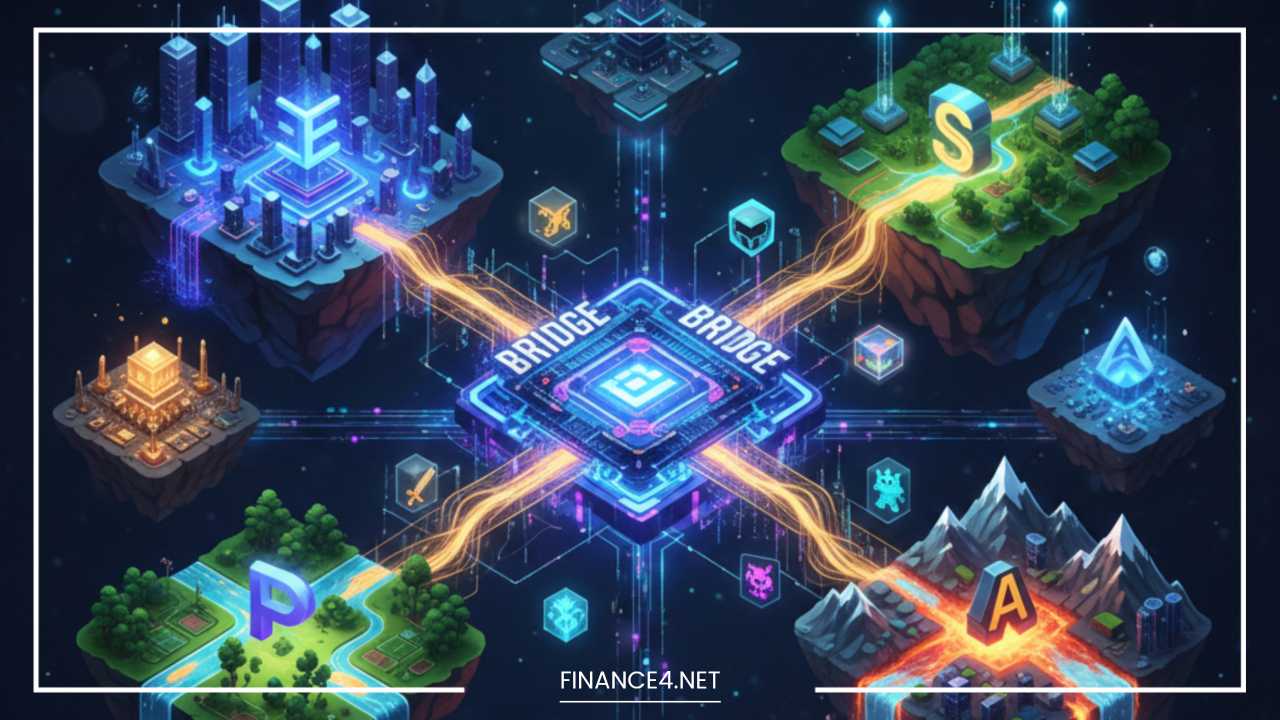
Top Cross-Chain NFT Bridging Options
The Non-Fungible Token (NFT) movement has fundamentally reshaped digital ownership, turning digital art, collectibles, and in-game assets into provably unique, transferable blockchain assets. However, the initial explosion of NFTs was largely confined to single ecosystems, primarily Ethereum. As the blockchain landscape matured, a multi-chain reality emerged, featuring high-speed, low-cost networks like Polygon, Solana, Avalanche, and BNB Chain, all competing to host the next wave of decentralized applications (dApps).
This fragmentation, while fostering innovation, created a crucial challenge: liquidity and utility silos. An NFT minted on Ethereum could not natively be used in a GameFi application on Avalanche, nor could it be easily sold on a Solana-native marketplace like Magic Eden. This inability to move assets freely hinders market efficiency, limits collector access, and ultimately stifles the true potential of interoperable Web3.
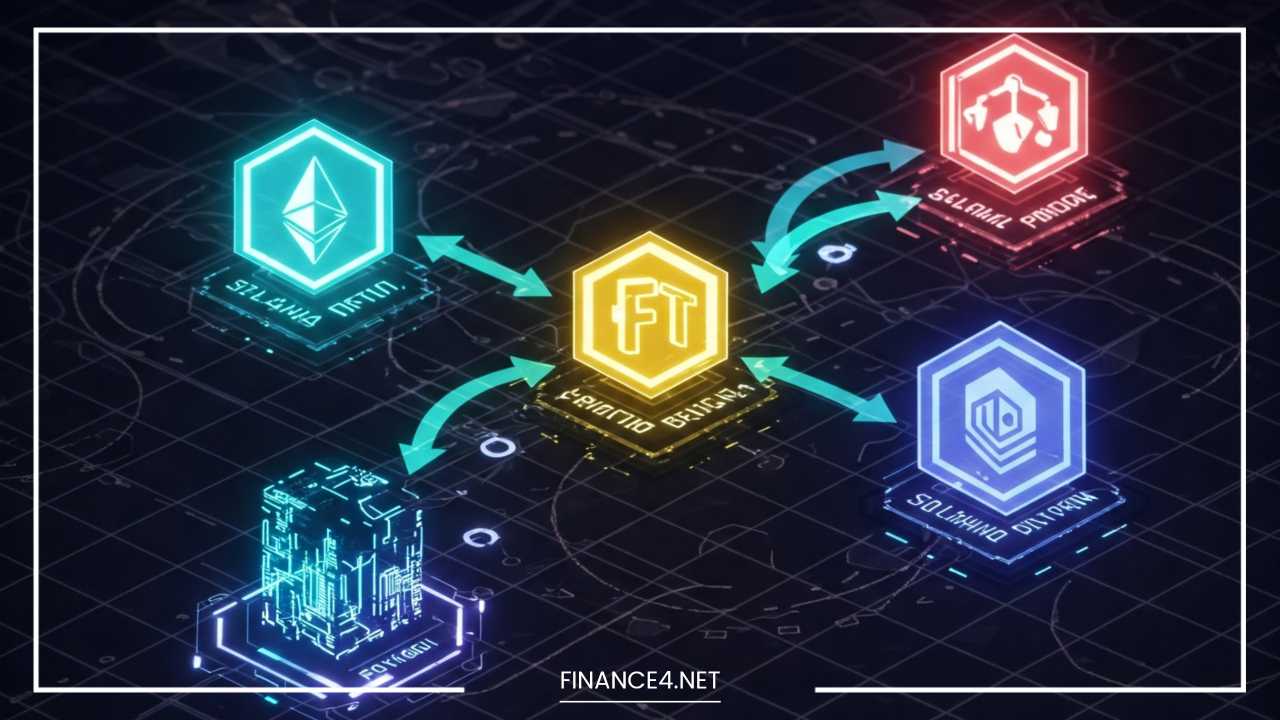
Cross-chain NFT bridging is the essential technology designed to solve this problem. These protocols act as the secure connective tissue, allowing an NFT’s unique ownership rights and metadata to be securely ported from one chain to another. The purpose of this comprehensive 2600-word article is to dive deep into the mechanics of NFT bridges, examine the critical factors for choosing a secure and efficient solution, and provide a detailed analysis of the top protocols leading the charge toward an omnishain future.
What Is an NFT Bridge?
An NFT bridge is a protocol, comprised of smart contracts and off-chain relayers/validators, that facilitates the transfer of a non-fungible token from a source blockchain to a destination blockchain. The core function is not to move the actual digital asset (which is technically impossible since its smart contract resides on the origin chain), but to transfer the canonical proof of ownership and the underlying asset’s metadata.
How NFT Bridging Differs from Token Bridging
Fungible token bridges (like those for ERC-20 tokens) focus on maintaining a consistent total supply. They typically use a lock-and-mint or burn-and-mint mechanism to ensure that if 100 tokens are locked on Chain A, exactly 100 equivalent tokens are minted on Chain B, and vice-versa.
NFT bridging is more complex because it must preserve uniqueness and metadata integrity. Each NFT has a unique tokenId and a specific set of attributes (metadata). The bridge must ensure that the specific NFT being transferred is the only one that exists across all connected chains at any given time, and that its metadata (e.g., image, traits, name) is correctly represented on the destination chain.
Types of NFT Bridges
-
Lock & Mint / Lock & Unlock (Adapter-Based): The original NFT is locked in an escrow smart contract on the source chain. A corresponding, wrapped version (often called a “mirror” or “Portal” NFT) is minted on the destination chain. To move back, the wrapped NFT is burned, and the original is unlocked. This is common for bridging existing collections.
-
Burn & Mint (Native Asset Transfer): A truly omnishain-native NFT is burned on the source chain, and the same canonical NFT (with the same
tokenId) is instantly re-minted on the destination chain. The NFT’s smart contract must be deployed on all participating chains. This is the mechanism used by LayerZero’s ONFT standard and is favored for new projects seeking true cross-chain fluidity. -
Wrap & Mirror: Similar to lock & mint, but often used in older architectures or for non-EVM compatibility (e.g., bridging Solana NFTs to EVM chains). The wrapped asset on the destination chain mirrors the state of the asset on the source chain.
Key Mechanisms
The bridge process relies on a combination of technologies to securely attest to the transfer:
-
Smart Contract Escrow: Contracts deployed on both chains that handle the locking/burning and minting/unlocking process.
-
Validators/Guardians: A decentralized network of nodes (off-chain) that monitor the source chain for a transfer event, verify it, and sign a message (attestation or Verifiable Action Approval – VAA).
-
Relayers: Off-chain services that pick up the signed message and submit it to the destination chain’s smart contract, triggering the final mint/unlock operation.
-
Message-Passing Systems: Protocols like LayerZero and Wormhole that provide the generalized infrastructure for sending and verifying arbitrary data (including NFT metadata) across different chains.
Why Cross-Chain NFT Bridging Matters
The utility of NFTs explodes when they are not confined to a single blockchain ecosystem. Cross-chain bridging unlocks critical functionalities for collectors, creators, and developers:
-
Access to New Marketplaces: A collection may have been minted on a high-gas chain like Ethereum, but most buyers want to trade it on a low-fee chain like Polygon or Solana. Bridging enables collectors to list their assets on chains with better liquidity and lower transaction costs (e.g., moving an NFT to sell on OpenSea on Polygon or on a Solana-native platform).
-
GameFi and Metaverse Asset Interoperability: True metaverse experiences require assets to be fluid. A weapon NFT acquired in a game on BNB Chain should be usable as an avatar accessory on a virtual world built on Polygon. Bridging is the technical layer that allows this seamless movement and use.
-
Creator Ability to Tap into Multiple Chains: Projects can launch an initial sale on one chain but grow their community and utility on others. Bridging allows a single, unified collection to exist across various chains, massively expanding the total addressable market for creators without fragmenting their community.
-
Fee Optimization and Performance: Users can move their assets to networks that offer faster transaction speeds and significantly lower gas fees for daily activities, such as staking, crafting, or simple transfers, enhancing the overall user experience.
-
Cross-Chain Liquidity Expansion: By unifying the supply of a collection across multiple chains, its overall market depth and liquidity are increased. An NFT’s floor price becomes more robust when it is not split between isolated marketplaces.
Key Factors When Choosing an NFT Bridge
Selecting the right bridge is a decision that balances convenience with significant security and financial risk. Here are the core factors to evaluate:
1. Supported Chains (Interoperability Breadth)
The utility of a bridge is directly tied to the chains it connects. A bridge specializing in Ethereum ↔ Solana is useless for a user needing to move assets between Polygon and Avalanche. The best solutions support a wide, growing matrix of major chains (Ethereum, Polygon, Solana, Avalanche, Arbitrum, Optimism, BNB Chain).
2. Security Model (Trust Minimization)
The security of a bridge is paramount, as exploits have cost the industry billions. Users should look for:
-
Decentralized Verification: Bridges secured by a large, decentralized network of validators (like Wormhole’s Guardians) or an entirely external, cryptographically secure oracle network (like Chainlink CCIP). Centralized or small multi-sig bridge setups are major points of failure.
-
Audits and Bug Bounties: Regular, thorough third-party smart contract audits by reputable firms (e.g., Certik, Consensys Diligence). Protocols that run ongoing, well-funded bug bounty programs demonstrate a commitment to security.
-
Verified Smart Contracts: Transparency in the deployed contract code, allowing for community and expert scrutiny.
3. Speed and Cost
An efficient bridge should be fast enough to meet market demand and cost-effective.
-
Speed: Time to finality (the time from initiating the transfer on the source chain to the asset appearing on the destination chain) can range from a few minutes to hours. Faster is generally better for active traders.
-
Cost: Fees include source chain gas, destination chain gas, and the bridge protocol’s fee. Lower overall cost is a major driver of adoption.
4. User Experience (UX)
A seamless, intuitive interface that clearly walks the user through the process, shows estimated fees and time, and provides real-time status updates is crucial for mass adoption.
5. Decentralization of Bridging Mechanism
Trustless, permissionless bridges—where the transfer is secured by a robust cryptographic protocol rather than a small, trusted group of operators—are inherently more secure than centralized “custodial” bridges.
6. Reputation and Past Exploits
The history of a bridge speaks volumes. While past exploits are negative, a protocol’s subsequent actions—reimbursing users, undergoing rigorous re-audits, and implementing fundamental architectural changes (like Wormhole did)—can demonstrate a strong commitment to long-term security.
Top Cross-Chain NFT Bridging Options
This section details the leading protocols and standards shaping the future of NFT interoperability.
1. LayerZero OFT & ONFT Standard
-
Overview: LayerZero is not a bridge in itself but an omnishain messaging protocol that enables two endpoints (smart contracts) on different chains to securely communicate via an Oracle and a Relayer. The ONFT (Omnichain Non-Fungible Token) Standard is a set of smart contract interfaces built on LayerZero specifically for NFTs.
-
Supported Chains: Over 50 EVM and non-EVM chains (including Ethereum, Polygon, BNB Chain, Avalanche, Arbitrum, Optimism, Aptos, etc.).
-
How the Bridge Works: The ONFT standard typically uses a burn-and-mint or adapter-based lock-and-mint approach. When a project integrates the ONFT standard, the core NFT contract is deployed on every supported chain. To bridge, the NFT is either burned on the source chain (Burn & Mint) or locked in an adapter contract. LayerZero sends a verified message (attested by both the Oracle and the Relayer) to the destination chain, which then mints or unlocks the canonical NFT. This preserves a single, unified global supply.
-
Pros:
-
True Omnichain: Enables native asset transfer without wrapping.
-
Developer Choice: Allows NFT projects to choose their own Oracle/Relayer combination for security, providing a highly customizable model.
-
Lightweight: Low overhead for transfers.
-
-
Cons:
-
Requires Project Integration: An existing NFT collection must be updated or wrapped into an adapter contract to become ONFT-compatible. It’s not a universal retail bridge for any NFT.
-
-
Ideal Use Cases: New NFT collections and GameFi assets built from the ground up for cross-chain functionality, such as the cross-chain items of Pudgy Penguins or the Gh0stly Gh0sts project.
2. Wormhole NFT Bridge (Portal)
-
Overview: Wormhole is a generic message-passing protocol similar to LayerZero, secured by a decentralized network of validators called Guardians. It was one of the first major protocols to facilitate bridging between Solana and EVM chains.
-
Supported Chains: Over 30 chains, including Ethereum, Solana, Polygon, Avalanche, BNB Chain, Aptos, Sui, and more.
-
How the Bridge Works: The Wormhole NFT Bridge uses a lock-and-mint model. When an NFT is sent across, it’s locked on the source chain. The Guardians observe this lock event, sign a Verifiable Action Approval (VAA) attesting to the event, and this VAA is relayed to the destination chain. The destination smart contract verifies the VAA and mints a wrapped, or “Portal,” version of the NFT.
-
Pros:
-
Highly Adopted: Massive transaction volume and ecosystem integration, especially for Solana bridging.
-
Fast: The Guardian network is highly efficient, often leading to rapid transfer times.
-
Robust Security Updates: The protocol has implemented significant security enhancements (like the Global Accountant and Governor) following its major 2022 exploit.
-
-
Cons:
-
Attack History: The $321 million exploit in 2022 remains a major point of consideration, though it was covered by Jump Crypto and led to major security upgrades.
-
Wrapped Assets: Transfers create a wrapped asset on the destination chain.
-
-
Ideal Use Cases: Users needing fast, liquid transfers between Solana and EVM ecosystems, and projects prioritizing high adoption across a wide matrix of chains.
3. Multichain NFT Bridge (Formerly AnySwap)
-
Overview: Multichain was a major player in cross-chain asset routing, supporting a vast number of chains and providing a bridge for both fungible and non-fungible tokens. It used a Secure Multi-Party Computation (MPC) network of nodes to secure transfers.
-
Supported Chains: 20+ chains (was one of the broadest solutions).
-
How the Bridge Works: Primarily used a lock-and-mint mechanism secured by its MPC network.
-
Pros:
-
Broad Support: Connected many niche and mainstream chains.
-
High Liquidity: Known for its high TVL in its fungible token transfers.
-
-
Cons:
-
Security Concerns and Operational Uncertainty: The protocol faced severe operational security and technical issues in 2023 that led to a significant drain of assets and subsequent halt of operations. This severely impacted trust and renders it a non-viable option for new users. This should be addressed diplomatically as a lesson in bridge risk management.
-
-
Ideal Use Cases: Historically, it was excellent for connecting lesser-known chains, but current operational status makes it unsuitable.
4. Chainlink CCIP (Cross-Chain Interoperability Protocol) NFT Use Cases
-
Overview: CCIP is an enterprise-grade, universal interoperability protocol designed by Chainlink. It leverages Chainlink’s battle-tested Decentralized Oracle Networks (DONs) and introduces an independent Risk Management Network (RMN) to verify transfers and messages, making it one of the most secure and trust-minimized options.
-
Supported Chains: Growing, including major EVM networks like Ethereum, Polygon, Avalanche, Arbitrum, Optimism, and institutional blockchains.
-
How the Bridge Works: CCIP enables secure arbitrary message passing and programmable token transfers. For NFTs, this means a smart contract on the source chain can send a message via CCIP that includes the metadata and an instruction (e.g., “Burn NFT #123 and Mint it on the destination chain”). The RMN, acting as a separate safety check, continuously monitors the transaction flow and has the authority to pause it if anomalous activity is detected. CCIP is not a retail-facing bridge but a foundational protocol for developers to build ultra-secure bridges.
-
Pros:
-
Highest Trust & Security: Dual-network security (DON + RMN) provides defense-in-depth, minimizing single points of failure.
-
Enterprise Adoption: Trusted by major financial institutions (e.g., SWIFT pilot) for high-value asset transfers.
-
Programmable: Allows for complex logic on the destination chain (e.g., Mint NFT AND immediately stake it).
-
-
Cons:
-
Not a Plug-and-Play Retail Bridge: It is a B2B infrastructure solution, not a consumer-facing platform for bridging any NFT.
-
-
Ideal Use Cases: Building custom, institution-grade, and mission-critical NFT infrastructure, such as tokenized real-world assets (RWAs) or complex GameFi ecosystems.
5. deBridge
-
Overview: deBridge is a cross-chain infrastructure solution focused on fast, secure asset and data transfers, positioning itself as a secure general messaging protocol, often used by dApps to power their cross-chain functionality.
-
Supported Chains: Ethereum, Polygon, Arbitrum, BNB Chain, Optimism, Solana, Avalanche, and others.
-
How the Bridge Works: Secured by an independent network of validators, deBridge is known for its fast message finality. For NFTs, it enables the secure relay of ownership and metadata across chains.
-
Pros:
-
UX-Friendly: Often integrated directly into dApps, providing a seamless experience.
-
Fast Message Transfer: Prioritizes speed and low-latency communication.
-
-
Cons:
-
Limited Chain Coverage: While supporting major networks, its matrix may not be as extensive as Wormhole or LayerZero.
-
-
Ideal Use Cases: GameFi and DeFi protocols that require high-speed, reliable, and integrated cross-chain messaging for in-app logic (e.g., governance, asset movement).
6. Rarible Multi-Chain Protocol
-
Overview: Rarible is an NFT marketplace that has developed its own protocol to unify its storefront across multiple blockchains. While not a universal public bridge, its internal mechanism demonstrates a marketplace-driven approach to cross-chain movement.
-
Supported Chains: Ethereum, Polygon, Flow, Tezos, Immutable X, and BNB Chain.
-
How the Bridge Works: Rarible’s protocol abstracts the underlying blockchain complexity, allowing users to view and interact with NFTs from different chains on a single platform. For certain collections, it facilitates the transfer to the corresponding chain to enable trading.
-
Pros:
-
Great UX: Single, unified interface for discovery and trade.
-
Focus on Art/Collectibles: Tailored for the aesthetic NFT market.
-
-
Cons:
-
Not a Universal Bridge: It is primarily a marketplace feature; it cannot be used to bridge any NFT to any chain for use in a third-party dApp.
-
-
Ideal Use Cases: Collectors who want to buy, sell, and manage their portfolio of art NFTs across a variety of chains within a single, integrated marketplace environment.
7. Other Notable Options (Short Summaries)
-
Polygon PoS Bridge (for NFTs): The primary official route for moving assets between Ethereum and Polygon (PoS). It is high-security, relying on Polygon’s Proof-of-Stake consensus, but transfers can sometimes be slow and complex for the return trip to Ethereum. Best for assets permanently migrating to the Polygon ecosystem.
-
Avalanche Bridge NFT Support: The Avalanche Bridge (AB) facilitates fast and secure bridging between Ethereum and the Avalanche C-Chain. While its primary function is fungible tokens, it has the technical capability to support NFT transfers, often using a secure committee-based verification model. Best for projects heavily invested in the Avalanche ecosystem.
-
NFT-Specific L2 Bridges (Immutable X, XAI, Horizon): These Layer-2 solutions often employ a Fraud Proof or Zero-Knowledge Proof mechanism for highly secure and extremely low-cost bridging between the L2 and Ethereum (L1). They are hyper-specialized for high-volume activities like gaming. Immutable X’s bridge, for example, is the official, fast route for its GameFi ecosystem tokens and NFTs to and from Ethereum.
Comparing Top NFT Bridges
| Bridge Protocol | Primary Mechanism | Core Security Model | Speed | Typical Fees (Gas + Protocol) | Best For |
| LayerZero (ONFT) | Burn/Mint or Adapter Lock/Mint | Modular (Oracle + Relayer combo) | Fast (minutes) | Low-Medium (Protocol & Gas) | New, Omnichain-Native Collections & GameFi |
| Wormhole (Portal) | Lock/Mint (Wrapped Asset) | 13/19 Guardian Multi-Sig Network | Very Fast (minutes) | Low-Medium (VAA & Gas) | Solana Interoperability, Wide Chain-Matrix Adoption |
| Chainlink CCIP | Arbitrary Message Passing | Decentralized Oracle Network (DON) + Risk Management Network (RMN) | Varies (High Security) | Medium-High (Premium Security) | Enterprise, Tokenized RWAs, Ultra-Secure Infrastructure |
| Polygon PoS Bridge | Lock/Mint | Polygon PoS Validators | Medium-Slow (especially L2 -> L1) | Low-Medium (Gas only) | Large-Scale migration to Polygon ecosystem |
Note: Multichain is excluded from this comparison due to its current operational uncertainty and security history.
Risks and Security Considerations
Despite the advancements, cross-chain bridging remains one of the highest-risk operations in Web3. The complexity of coordinating state across two disparate systems creates a massive attack surface.
1. Smart Contract Vulnerabilities
The core risk lies in the smart contracts that custody the locked assets and verify the messages. Flaws in the code can be exploited to mint unauthorized assets or drain the locked tokens, as seen in the historical Wormhole and Multichain incidents.
2. Bridge Exploits and Real-World Examples
-
Wormhole (2022): An attacker exploited a vulnerability to forge a VAA (Verifiable Action Approval), allowing them to mint 120,000 Wrapped ETH on Solana without locking the necessary collateral on Ethereum.
-
Ronin Bridge (Axie Infinity – 2022): Attackers took control of the small, centralized multi-sig key set (five of nine validators) used to secure the bridge, leading to the largest crypto heist in history at the time ($625 million).
These examples highlight the critical distinction between a Trusted Bridge (secured by a small set of known entities) and a Trustless Bridge (secured by cryptographic proofs and decentralized consensus).
3. Mitigation Steps for Users and Developers
-
Audits and Formal Verification: Developers must ensure their bridge code undergoes multiple, rigorous audits and formal verification to prove the mathematical correctness of the protocol.
-
Trust-Minimization: Users should prioritize protocols with large, decentralized validator sets (like Wormhole) or layered security models (like Chainlink CCIP’s RMN), which provide a higher threshold for consensus failure.
-
Using Official UI Only: Phishing scams often involve creating fake bridge front-ends. Always verify the URL and use links only from official project documentation.
-
Understanding the Mechanism: Know if you are receiving a wrapped or a native asset. Wrapped assets carry the counterparty risk of the bridge protocol itself.
The Future of Cross-Chain NFTs
The trajectory of NFT bridging points toward a more seamless, abstracted, and secure model.
-
Unified Omnichain NFT Formats: Protocols like LayerZero’s ONFT are setting the standard for native asset transfer, where the NFT truly exists across chains without being wrapped. This will become the default for new collections, eliminating the current wrapped asset risk.
-
Bridges Becoming More Abstracted: The trend is moving away from users manually interacting with a bridge interface. Instead, the bridging action will be integrated directly into marketplaces, GameFi experiences, or wallets—it will become an invisible utility layer known as Intents-based architecture or Abstracted Interoperability.
-
Role of Zero-Knowledge Proofs (ZKPs): ZKPs offer a revolutionary path to absolute trustlessness. Instead of relying on a network of external validators, a ZK-based bridge can cryptographically prove the integrity of the transfer event on the source chain directly to the destination chain. This technology promises to deliver the ultimate security standard.
-
Multi-Chain Marketplaces: Marketplaces will continue to unify, allowing users to see the global supply and liquidity of a collection, regardless of which chain an individual NFT resides on. They will automatically handle the underlying asset movement when a purchase is initiated.
Final Thoughts
The journey of NFTs from single-chain novelty to multi-chain utility is entirely dependent on the robustness of cross-chain bridging. These protocols are the engines of the truly interoperable Web3 ecosystem.
For creators, choosing an omnishain standard like LayerZero’s ONFT for a new collection offers the greatest future flexibility and risk mitigation. For users, selecting battle-tested, highly decentralized protocols like Wormhole for fast, cross-ecosystem trading, or an infrastructure like Chainlink CCIP for enterprise-grade security, is paramount.
Security must always be the first consideration. As the complexity of transfers increases, so does the attack surface. By understanding the core mechanisms—Lock & Mint versus Burn & Mint—and the security models—Guardian network versus Oracle/Relayer—users can participate safely in the rapidly evolving, liquid, and limitless omnichain NFT world. The siloed Web3 is fading; the era of fluid, universal digital ownership is arriving.