How to Build Cross-Chain NFT Forging Mechanics | Step-by-Step Guide
 by
by 
How to Build Cross-Chain NFT Forging Mechanics | Step-by-Step Guide
The digital realm has been revolutionized by Non-Fungible Tokens (NFTs), offering irrefutable proof of ownership for unique digital assets. While initially gaining traction for digital art and collectibles, their utility has rapidly expanded into gaming, decentralized finance (DeFi), and beyond. A particularly exciting innovation within the NFT space is NFT forging, a mechanism where existing NFTs are combined, often consumed or transformed, to create new, distinct NFTs with enhanced properties, different aesthetics, or novel functionalities. This concept breathes new life into existing assets, fostering deeper engagement and creating dynamic ecosystems.
Traditionally, NFT forging has been confined to a single blockchain, limiting the scope of assets that can participate. However, the advent of cross-chain technologies is breaking down these silos. Cross-chain in the context of NFTs means the ability to seamlessly move, interact with, or combine NFTs that originate or reside on different blockchain networks. Imagine combining a character from a game on Ethereum with a weapon from a game on Polygon to forge a powerful new avatar on Avalanche. This capability unlocks immense value through increased interoperability, allowing for richer utility across diverse ecosystems, and significantly boosting the liquidity of NFTs by expanding their potential audience and use cases beyond their native chains. This article will guide you through the intricate process of building cross-chain NFT forging mechanics, covering everything from foundational concepts to advanced architectural designs and security considerations.
Basics of NFT Forging
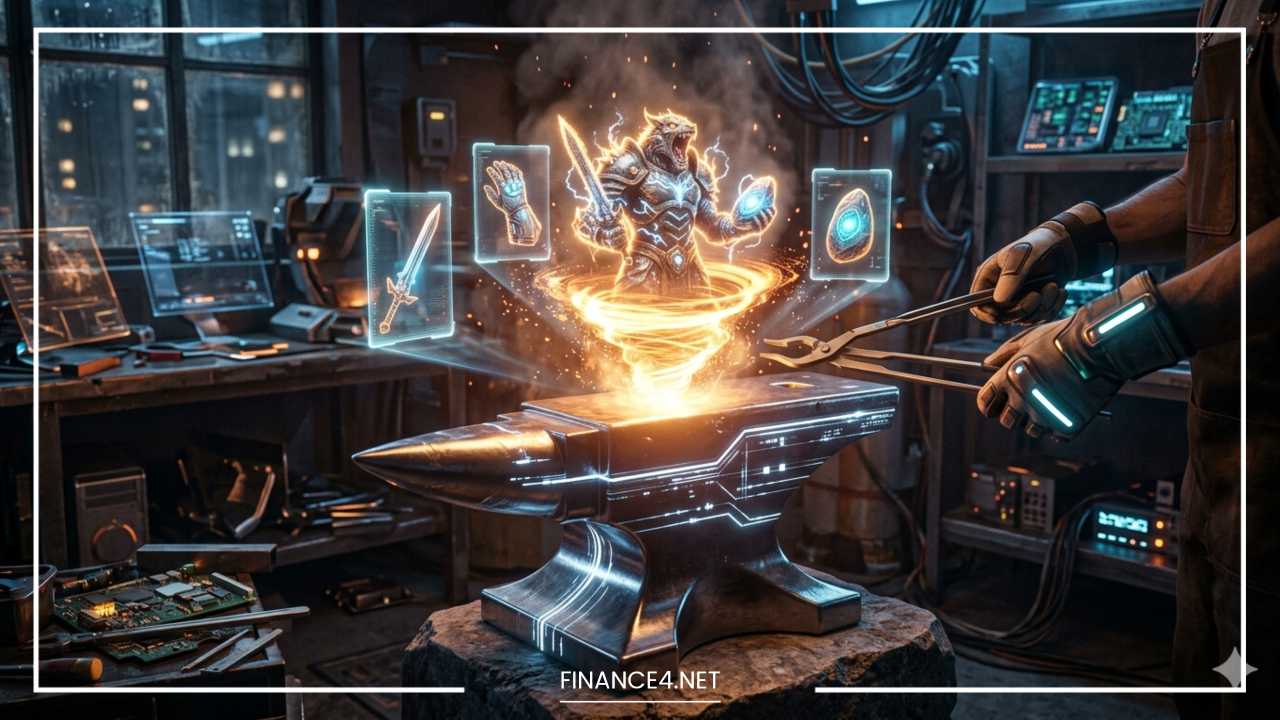
At its core, NFT forging is a process of combining two or more existing NFTs to produce a new, often more valuable or potent, NFT. The mechanics of forging can vary widely based on the specific application, but they generally involve burning, locking, or transforming the input NFTs. The inspiration for forging mechanics often comes from traditional crafting systems found in video games, where players combine raw materials or lesser items to create more powerful equipment. However, its applications extend far beyond gaming, finding relevance in DeFi, where NFTs might represent staked positions or yield-bearing assets, and in digital art, where artists could combine elements from different collections to create collaborative, generative pieces.
Consider a simple example: a blockchain-based collectible card game. A user might possess two “Common” rarity weapon NFTs. Through a forging mechanism, they could combine these two “Common” weapons, perhaps consuming them in the process, to mint a new “Rare” weapon NFT with improved stats or a unique ability. Similarly, in a metaverse environment, two land plot NFTs could be “forged” to create a larger, contiguous land parcel, or two character NFTs could be merged to produce a “descendant” NFT inheriting traits from both parents.
On a single chain, the process is relatively straightforward. A smart contract, often called a “forging contract” or “crafting contract,” is deployed on the same blockchain as the input NFTs. Users send their NFTs to this contract, which then verifies ownership, checks the validity of the inputs according to predefined rules (e.g., specific NFT IDs, collections, or traits), performs the “forging” logic (e.g., randomizing new traits, applying stat bonuses), and finally mints the new NFT to the user’s wallet. The input NFTs are typically burned or locked within the contract, ensuring their unique properties are transferred or retired appropriately. This single-chain model, while effective, inherently limits the universe of assets that can participate in the forging process, paving the way for the necessity of cross-chain solutions.
Cross-Chain Concepts
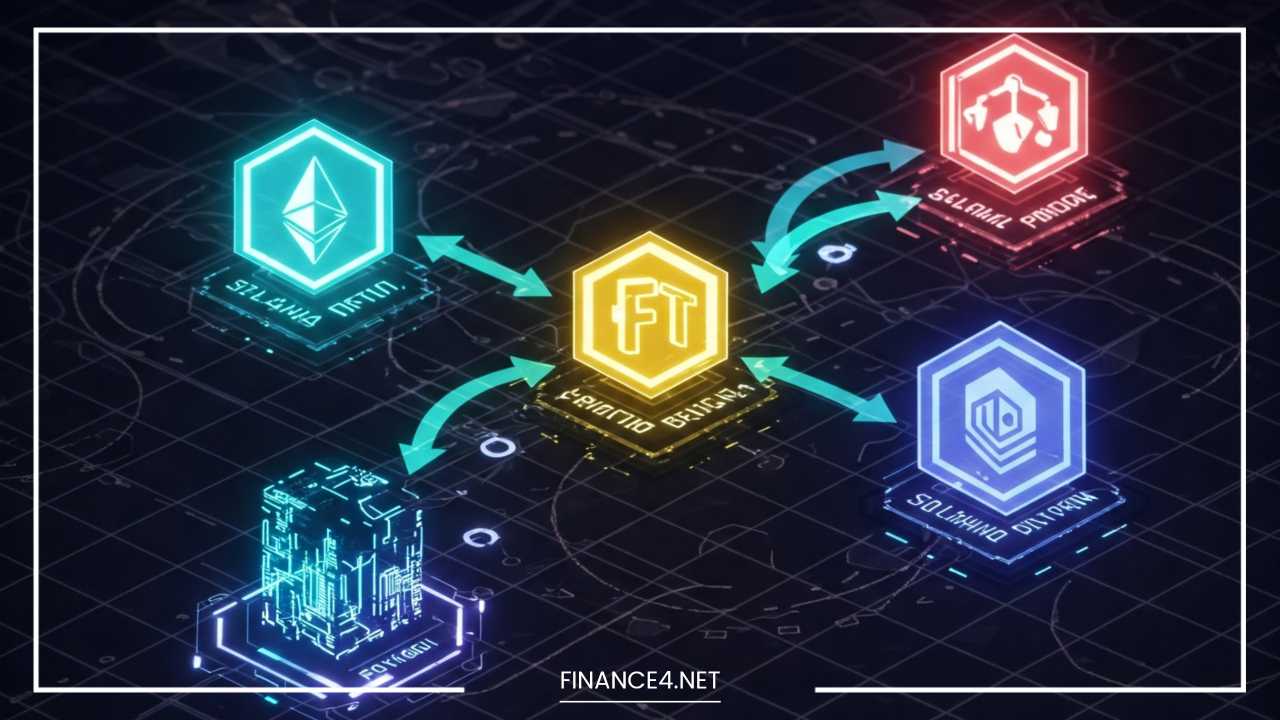
The true power of NFT forging is unleashed when it transcends the boundaries of a single blockchain. This requires robust cross-chain communication, which refers to the ability for different blockchain networks to securely and reliably exchange information and assets. The importance of interoperability cannot be overstated in a fragmented blockchain landscape. Without it, value and utility remain siloed, hindering the overall growth and adoption of Web3 technologies. Cross-chain capabilities enable seamless interactions between dApps and assets residing on different chains, fostering a more connected and efficient ecosystem.
Several key technologies facilitate cross-chain communication:
- Bridges: Blockchain bridges are perhaps the most common method for transferring assets and data between disparate chains. They essentially lock an asset on one chain and mint a wrapped or representative version of that asset on the target chain. Examples include Wormhole and LayerZero. Wormhole is a generic message passing protocol that allows arbitrary data to be sent between connected chains, making it suitable for NFT transfers and forging instructions. LayerZero is an omnichain interoperability protocol that provides a lightweight message passing primitive, enabling secure and efficient communication without the need for an intermediate chain or liquidity pools.
- Oracles: While primarily known for bringing off-chain data onto blockchains, some advanced oracle networks also facilitate cross-chain communication. Chainlink CCIP (Cross-Chain Interoperability Protocol) is a prime example. CCIP provides a secure, reliable, and scalable way for applications to send messages and transfer tokens across different blockchains. It leverages Chainlink’s decentralized oracle network to ensure the integrity and authenticity of cross-chain messages, making it a powerful tool for complex operations like cross-chain NFT forging where data integrity is paramount.
- Layer 0 Protocols: These are foundational protocols that aim to create a network of interconnected blockchains. They offer inherent cross-chain communication capabilities as part of their core design. Cosmos IBC (Inter-Blockchain Communication Protocol) allows independent sovereign blockchains within the Cosmos ecosystem to communicate and exchange data and assets directly. Similarly, Polkadot XCMP (Cross-Chain Message Passing) enables parachains within the Polkadot ecosystem to send messages to each other. While these are ecosystem-specific, they represent a deeper level of interoperability than traditional bridges.
Each of these technologies comes with its own trade-offs in terms of security, decentralization, latency, and cost. Choosing the right cross-chain solution is a critical decision in designing a robust NFT forging system, heavily influencing the overall architecture and user experience.
Core Challenges in Cross-Chain NFT Forging
Building a cross-chain NFT forging mechanism is a complex undertaking, fraught with several significant challenges that must be addressed to ensure a secure, efficient, and user-friendly experience.
- Security Risks: The history of cross-chain bridges is unfortunately marred by high-profile exploits, resulting in billions of dollars lost. These incidents highlight the inherent security risks associated with moving assets and information across different trust domains. Bridge exploits, often targeting vulnerabilities in smart contracts or validator networks, can lead to the loss of underlying assets or the unauthorized minting of new ones. Validation failures are another concern, where a malicious actor or a faulty mechanism could trick one chain into believing a valid event occurred on another, leading to incorrect state updates or asset transfers. In NFT forging, this could mean unauthorized new NFTs being minted or legitimate input NFTs being permanently lost.
- Latency and User Experience: Cross-chain operations are inherently slower than single-chain transactions. Messages need to be sent, validated, and processed across potentially disparate networks, introducing significant latency. This can lead to a frustrating user experience, especially for interactive applications like games, where immediate feedback is often expected. Users may have to wait minutes, or even longer, for their forged NFT to appear on the target chain, impacting adoption and engagement.
- Token Standards Mismatch: While ERC-721 and ERC-1155 are prevalent on EVM-compatible chains, other blockchain ecosystems utilize different NFT standards. For instance, Solana uses the Metaplex standard, while Cosmos-based chains often employ CW721. Bridging or interacting with NFTs across these disparate standards requires careful handling of metadata, ownership, and functionality. Simply moving an ERC-721 to Solana might not preserve all its original properties or allow it to be used within Solana’s native dApps without significant adaptation or wrapping.
- Maintaining Provenance and Metadata Consistency: NFTs derive their value from their unique identity and associated metadata (e.g., traits, images, historical ownership). When NFTs move or are transformed across chains, ensuring the integrity and consistency of this metadata is paramount. How do you track the lineage of a forged NFT that originated from components on different chains? How do you guarantee that the forged NFT’s metadata accurately reflects its new properties and provenance, and that this metadata is accessible and verifiable across all relevant chains? Inconsistent or tampered metadata can severely undermine the value and trustworthiness of forged NFTs. These challenges necessitate robust architectural design and meticulous implementation to deliver a truly reliable cross-chain NFT forging solution.
Architecture Design for Cross-Chain Forging
Designing a robust architecture for cross-chain NFT forging requires careful consideration of how smart contracts, message relays, and metadata management will interact across different blockchain environments. The goal is to ensure secure, reliable, and consistent operations.
At the heart of the architecture are the smart contract components on each chain. On the “source” chains where the input NFTs reside, a “locking” or “burning” contract will be deployed. This contract will receive the NFTs from the user, verify their ownership, and then either lock them (making them temporarily unusable) or burn them (permanently removing them from circulation). This contract will also initiate a cross-chain message containing critical information about the locked/burned NFTs, such as their token IDs, contract addresses, and the user’s target wallet address on the destination chain. On the “target” chain, a “forging” and “minting” contract will be deployed. This contract will receive the cross-chain message, verify its authenticity, execute the forging logic (e.g., combining traits, calculating new stats), and then mint the new, forged NFT to the user’s specified wallet address.
A crucial element connecting these contracts is the cross-chain message relayer. This component is responsible for monitoring events on the source chain’s smart contracts, picking up the initiated cross-chain messages, and relaying them to the corresponding smart contracts on the target chain. The relayer can be a decentralized network of validators (as in many bridge solutions) or a more centralized service if trust assumptions allow. The choice of the underlying cross-chain protocol (e.g., LayerZero, Axelar, Chainlink CCIP) heavily influences the relayer’s implementation and security model. For instance, LayerZero uses Ultra Light Nodes and endpoints on each chain, relying on Oracles and Relayers to deliver messages. Chainlink CCIP uses a network of Chainlink nodes to deliver messages securely.
Metadata management strategy is another critical aspect. When NFTs are forged, their metadata must be updated to reflect the new properties. This metadata should ideally be stored in decentralized storage solutions like IPFS (InterPlanetary File System) or Arweave, ensuring immutability and censorship resistance. The smart contract on the target chain, after minting the new NFT, should update its token URI to point to the newly generated metadata file on IPFS/Arweave. Furthermore, a mechanism should exist to link the forged NFT’s metadata back to its constituent parts, providing a clear provenance trail across chains. This could involve embedding references to the original NFT contract addresses and token IDs within the new NFT’s metadata.
Finally, identity and ownership verification are paramount for security. On the source chain, the locking contract must strictly verify that the user initiating the forging request is the legitimate owner of the input NFTs. This is typically done by checking msg.sender against ownerOf() calls. When the cross-chain message arrives at the target chain, the forging contract must verify the authenticity of the message itself, ensuring it truly originated from the designated source chain contract and was not tampered with. This often involves cryptographic proofs and the security mechanisms provided by the chosen cross-chain protocol. The target forging contract then mints the new NFT to the wallet address specified in the cross-chain message, ensuring the forged asset is delivered to the correct recipient.
Choosing the Right Tech Stack
Selecting the appropriate technologies is paramount for building a robust and scalable cross-chain NFT forging system. The choices made here will influence the system’s performance, security, cost, and developer experience.
When it comes to blockchain choices, the landscape is vast. Ethereum offers the largest ecosystem, unparalleled security, and a robust developer community, but comes with high gas fees and lower transaction throughput. For applications requiring more frequent transactions or lower costs, Polygon (a Layer 2 scaling solution for Ethereum), Avalanche (a high-performance EVM-compatible blockchain), and BNB Smart Chain offer faster and cheaper alternatives while maintaining EVM compatibility. For truly independent ecosystems with strong cross-chain narratives, Cosmos (with its IBC standard) and Polkadot (with XCMP) provide frameworks for interconnected blockchains, often allowing for more customization and control over the underlying chain. The choice often depends on the target audience, the desired transaction costs, and the specific features required.
Understanding NFT standards is crucial. ERC-721 is the most widely adopted standard for unique, non-fungible tokens, making it ideal for individual collectibles and one-of-a-kind assets. ERC-1155, on the other hand, is a multi-token standard that can represent both fungible and non-fungible tokens. It’s more efficient for managing collections with many identical or semi-identical items, as it allows for batch transfers and can save gas costs. For forging mechanics where multiple instances of the same “material” NFT might be used, ERC-1155 could offer efficiencies. Beyond EVM, Non-EVM standards like Solana’s Metaplex standard (for NFTs on Solana) or CW721 (for NFTs on Cosmos SDK chains) necessitate careful consideration when planning cross-chain interactions. Compatibility layers or custom adapters might be required to ensure seamless forging operations involving these diverse standards.
The selection of cross-chain tools is perhaps the most critical decision for the forging mechanism itself.
- LayerZero provides a lightweight message passing primitive, allowing developers to build omnichain applications. Its security model relies on decentralized Oracles and Relayers.
- Axelar is a secure, universal interoperability platform that connects multiple blockchains. It features a decentralized network that validates cross-chain transactions and a set of SDKs for developers.
- Hyperlane is an open-source, permissionless interoperability layer that aims to allow secure and private cross-chain communication. These protocols offer different security assumptions, latency characteristics, and integration complexities. The choice will depend on the project’s risk tolerance, desired level of decentralization, and technical capabilities.
For metadata storage, IPFS (InterPlanetary File System) and Arweave are industry standards. IPFS offers content-addressable, distributed storage, while Arweave provides permanent, pay-once, store-forever data storage. Both are excellent choices for ensuring the immutability and availability of NFT metadata.
Finally, indexers like The Graph are indispensable for querying blockchain data efficiently. As cross-chain forging involves interactions across multiple chains, gathering information about NFT ownership, transaction history, and forging events can be challenging. The Graph allows developers to build subgraphs that index specific blockchain data, making it easily queryable via GraphQL APIs. This is crucial for building responsive frontends and providing users with real-time information about their NFTs and forging progress.
Step-by-Step Forging Flow
Let’s break down a typical cross-chain NFT forging workflow to understand the sequence of operations and interactions between various components.
- User selects NFTs from different chains: The process begins with the user interacting with a decentralized application (dApp) frontend. This UI allows them to browse their NFTs across various connected blockchain wallets (e.g., MetaMask, Keplr, Phantom) and select the specific NFTs they wish to use as inputs for forging. These selected NFTs could originate from Ethereum, Polygon, Solana, or any other chain supported by the dApp’s cross-chain infrastructure.
- Frontend UI gathers user input: Once the NFTs are selected, the frontend presents the user with forging options. This might involve choosing a target chain for the new NFT, configuring specific parameters for the forging process (if applicable, e.g., naming the new NFT, selecting specific traits), and reviewing the estimated gas fees for all necessary transactions across the involved chains. The UI should clearly display the input NFTs that will be consumed or locked.
- NFTs are locked/burned (or wrapped): This is a critical step on the source chains. For each input NFT, the user initiates a transaction on its native blockchain to send it to a designated “forging escrow” smart contract. Depending on the forging logic, these NFTs are either:
- Locked: The NFTs are held by the escrow contract, made unusable for other purposes, but can potentially be retrieved if the forging process fails or is canceled. This is often used when the input NFTs are not permanently consumed but merely held as collateral or a temporary state.
- Burned: The NFTs are permanently removed from circulation by sending them to an unspendable address (e.g.,
0x00...00). This is common when the input NFTs are meant to be entirely consumed in the creation of the new NFT. - Wrapped: In some scenarios, especially for cross-chain movement, NFTs might be wrapped. An NFT is locked on the source chain, and a new “wrapped” version is minted on the target chain. While not direct forging, this mechanism could be part of a multi-step process where wrapped NFTs are then forged. Upon successful locking/burning, the source chain’s escrow contract emits an event containing details of the consumed NFTs, the user’s target wallet address, and a unique transaction identifier.
- Request sent via cross-chain protocol: A cross-chain message relayer, observing the events on the source chains, picks up these signals. It then constructs a cross-chain message according to the chosen interoperability protocol (e.g., LayerZero, Axelar, Chainlink CCIP). This message securely transmits the necessary information (input NFT details, user’s target address, unique transaction ID) to the “forging” smart contract on the designated target chain. The security and reliability of this message passing are paramount, leveraging cryptographic proofs and decentralized validators of the cross-chain protocol.
- New NFT is minted on target chain: Once the forging contract on the target chain receives and verifies the authenticity of the cross-chain message, it executes the core forging logic. This involves:
- Validating the input NFT details against predefined forging rules (e.g., “do these two types of NFTs combine to make X?”).
- Generating the properties and metadata for the new NFT (e.g., based on a deterministic algorithm, a random roll, or a combination of traits from the input NFTs).
- Minting the new, unique NFT directly to the user’s wallet address as specified in the cross-chain message.
- Metadata and ownership updated: Immediately after minting, the forging contract updates the new NFT’s token URI to point to its associated metadata file, which is typically stored on IPFS or Arweave. This metadata includes all the new properties, a visual representation (if applicable), and crucially, a clear provenance chain linking it back to the original input NFTs across their respective chains. The ownership record of the newly minted NFT is now on the target chain, in the user’s wallet. The dApp frontend can then monitor the target chain for the new NFT and update the user’s interface to reflect the successful forging operation.
This multi-step process ensures that the integrity of the NFT assets is maintained throughout the cross-chain transfer and forging operation, providing a secure and verifiable audit trail.
Real-World Use Cases
Cross-chain NFT forging opens up a plethora of innovative applications across various sectors, pushing the boundaries of what’s possible with digital assets.
- GameFi: Combine items or characters from different games/chains. This is perhaps one of the most intuitive and impactful use cases. Imagine a scenario where a player owns a rare sword NFT from a game on Ethereum and a powerful magical gem NFT from another game running on Polygon. Through cross-chain forging, they could combine these two disparate assets to create a new, unique, and perhaps more potent weapon NFT that exists on a third chain, like Avalanche, where a new game might leverage this combined item. This fosters true interoperability between game ecosystems, allowing players to carry their assets and progress across different virtual worlds, enhancing engagement and providing deeper utility for their digital possessions. This could extend to combining character NFTs from different games to create a new “meta-character” with aggregated abilities or aesthetics.
- Art: Artists collaborate across ecosystems. Cross-chain forging can revolutionize digital art collaboration. An artist might create a unique background NFT on Tezos, while another artist creates a foreground element NFT on Ethereum. Through a forging mechanism, these two independent art pieces, residing on different blockchains, could be combined to create a new, collaborative masterpiece NFT that could be minted on, say, Arbitrum. This allows for seamless cross-platform artistic expression and the creation of truly unique, multi-faceted digital art that transcends the limitations of a single blockchain. Generative art projects could also leverage this, combining elements from various collections or artists across chains to produce novel outputs.
- DeFi/NFT Hybrids: Create yield-generating forged NFTs. This is an emerging and highly experimental area. Consider an NFT that represents a staked position in a DeFi protocol on one chain and another NFT representing a liquidity provider (LP) token from a DEX on a different chain. A cross-chain forging mechanism could allow users to combine these two NFTs to create a new, “hybrid” NFT that automatically compounds yield from both underlying positions or represents a bundled, diversified DeFi strategy. This could create more complex, yield-optimized NFTs that simplify user interaction with sophisticated DeFi strategies across multiple networks, effectively abstracting away the underlying complexities of managing separate positions. Similarly, an NFT representing ownership in a DAO on one chain could be forged with an NFT representing voting rights in another DAO, creating a “governance aggregator” NFT.
These examples only scratch the surface of the potential for cross-chain NFT forging. As interoperability solutions mature and become more robust, we can expect to see an explosion of innovative use cases that blur the lines between gaming, art, finance, and other digital domains.
Security Considerations
Security is paramount when dealing with cross-chain operations, especially involving valuable digital assets like NFTs. A single vulnerability can lead to catastrophic losses and undermine trust in the entire system.
- Multi-sig governance for minting contracts: The smart contracts responsible for minting new forged NFTs on the target chain, and potentially the locking/burning contracts on the source chains, should ideally be controlled by a multi-signature (multi-sig) wallet. This requires multiple authorized individuals or entities to approve any critical operations, such as changing contract parameters, upgrading the contract, or even initiating emergency shutdowns. This significantly reduces the risk of a single point of failure or malicious insider activity, adding a crucial layer of security.
- Rate-limiting and spam protection: To prevent denial-of-service attacks or excessive resource consumption, forging contracts should implement rate-limiting mechanisms. This could involve restricting the number of forging operations a single address can initiate within a specific timeframe or imposing higher fees for rapid, successive forging attempts. Additionally, general spam protection measures, such as CAPTCHAs on the frontend or transaction cost-based throttling, can deter automated or malicious activity.
- Fraud prevention: ensure valid NFTs are used: A critical security measure is to rigorously verify the authenticity and validity of the input NFTs. This goes beyond merely checking ownership. The forging contract must confirm that the NFTs being submitted are indeed from the expected collection(s) and meet any specific criteria for forging (e.g., minimum rarity, specific traits). For cross-chain inputs, this verification relies heavily on the integrity of the cross-chain message and the cryptographic proofs provided by the chosen interoperability protocol. Any discrepancies or attempts to use forged or invalid NFTs must be rejected. This might involve maintaining an allowlist of valid NFT contract addresses or integrating with external services that can verify NFT provenance.
- Verification of cross-chain proofs: The integrity of the entire cross-chain forging mechanism hinges on the robust verification of cross-chain proofs. When a message indicating an NFT lock/burn is sent from a source chain to a target chain, it must be accompanied by cryptographic proof that the event truly occurred and was properly validated on the source chain. The forging contract on the target chain must meticulously verify these proofs using the security mechanisms provided by the underlying cross-chain protocol (e.g., light client verification, decentralized validator attestations, oracle network consensus). Any failure in proof verification should immediately halt the forging process for that particular request, preventing the unauthorized minting of new NFTs or the misuse of the system. Regular audits of the cross-chain protocol’s implementation and the forging smart contracts are also non-negotiable.
Future of Cross-Chain NFT Forging
The evolution of cross-chain NFT forging is intrinsically linked to advancements in blockchain interoperability and cryptographic techniques. The future holds immense promise for more seamless, secure, and sophisticated forging mechanics.
- Role of ZK proofs for faster and secure verification: Zero-Knowledge (ZK) proofs are poised to revolutionize cross-chain communication and, by extension, NFT forging. ZK proofs allow one party to prove to another that a statement is true, without revealing any information beyond the validity of the statement itself. In a cross-chain context, this means a source chain could generate a ZK proof that an NFT was legitimately locked or burned, and this proof could be verified by a smart contract on the target chain with minimal data transfer and maximum privacy. This could lead to significantly faster and more secure verification of cross-chain messages, reducing latency and enhancing overall system integrity, potentially making bridge exploits much harder to execute.
- More robust cross-chain standards: As cross-chain activity grows, there will be an increasing demand for more standardized approaches to asset transfer, message passing, and state synchronization across diverse blockchains. Currently, various protocols exist, each with its own nuances. The future will likely see the emergence of more robust and widely adopted cross-chain standards that simplify development, improve interoperability across multiple protocols, and provide a common framework for secure asset movement and interaction. This could involve standardizing metadata schemas for cross-chain NFTs or defining universal interfaces for forging contracts.
- Potential for composable metaverse assets: The ultimate vision for cross-chain NFT forging extends to the burgeoning metaverse. Imagine a future where digital assets are truly composable across different virtual worlds and experiences, regardless of their native blockchain. A character NFT from one metaverse could be forged with an item NFT from another, resulting in a unique, enhanced asset that can seamlessly traverse and interact within multiple metaverse environments. This would unlock unprecedented levels of creativity, utility, and economic activity within these digital spaces, fostering a truly interconnected and dynamic digital reality. Forged NFTs could become the building blocks of a truly interoperable metaverse, allowing users to craft unique identities, tools, and experiences by combining assets from a myriad of sources.
The journey of cross-chain NFT forging is still in its early stages, but the foundational technologies are rapidly maturing. As these advancements coalesce, we can anticipate a future where the friction of blockchain boundaries disappears, unleashing the full potential of NFTs as truly programmable and interoperable digital assets.
Final Thoughts
Cross-chain NFT forging stands at the vanguard of innovation in the decentralized ecosystem, promising to transform how we perceive, utilize, and value digital assets. By enabling the combination and transformation of NFTs across disparate blockchain networks, it unlocks unprecedented levels of interoperability, utility, and liquidity, moving beyond the siloed environments that have historically constrained the NFT space.
We’ve explored the fundamental mechanics of NFT forging, the critical role of cross-chain communication facilitated by technologies like bridges, oracles, and Layer 0 protocols, and the formidable challenges that must be overcome, particularly in terms of security, latency, and token standard compatibility. The architectural design principles, emphasizing smart contract components, message relayers, and robust metadata management, are crucial for building secure and reliable systems. Furthermore, selecting the right tech stack – from blockchain choices to cross-chain tools and decentralized storage solutions – is paramount for successful implementation. The step-by-step workflow illustrated how these components interact to facilitate a seamless forging experience for the user. Finally, the real-world use cases in GameFi, art, and DeFi hybrids highlight the immense potential this technology holds, while stringent security considerations remain non-negotiable.
The future of cross-chain NFT forging is bright, driven by advancements in ZK proofs and the maturation of cross-chain standards, paving the way for truly composable metaverse assets. We encourage developers, artists, and innovators to experiment with these powerful concepts, pushing the boundaries of what’s possible and contributing to the open standards that will define the next generation of Web3 applications. The journey to a truly interconnected and utility-rich NFT ecosystem is underway, and cross-chain forging is a key catalyst in this exciting evolution.