Best Multi-Chain NFT Launchpads
 by
by 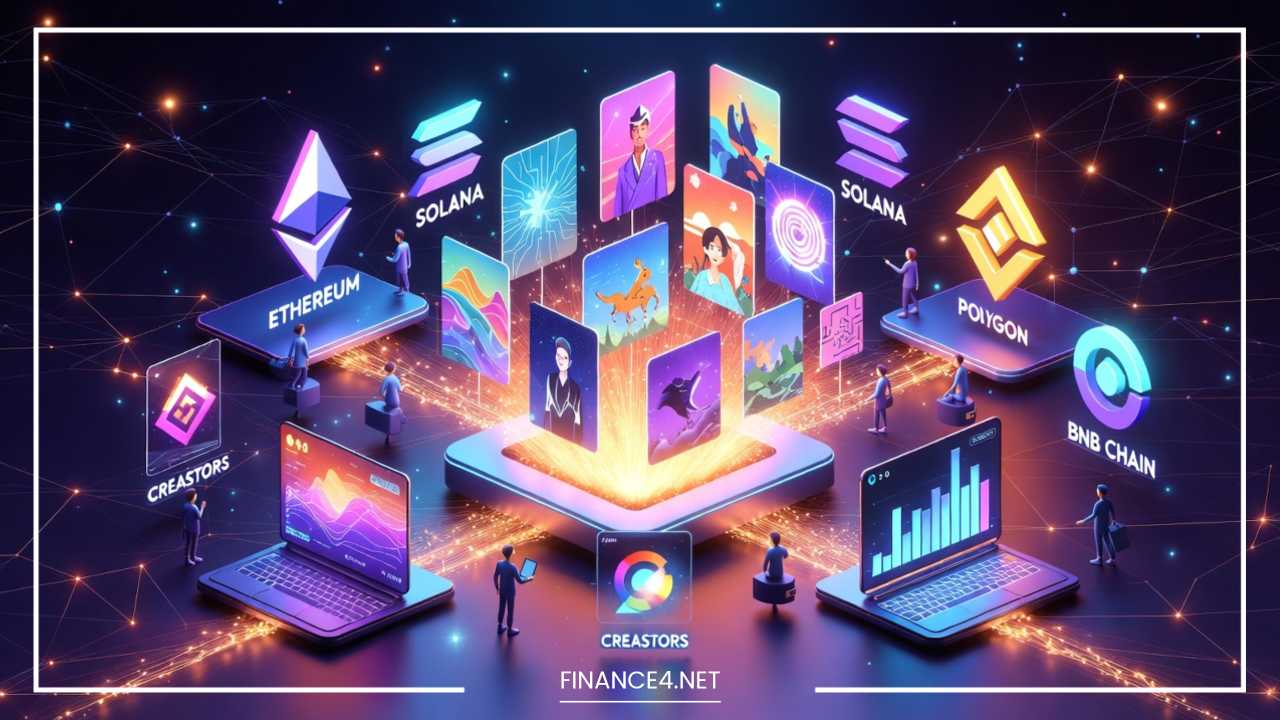
Best Multi-Chain NFT Launchpads for Creators & Investors
The digital asset landscape has undergone a seismic shift since the initial NFT boom of 2021. What began as a speculative market centered primarily on the Ethereum network has matured into a sophisticated, multi-chain ecosystem. For creators, the goal is no longer just “minting an NFT”; it is about building a sustainable brand across a fragmented digital landscape. For investors, the focus has shifted from high-risk hype to vetted, cross-chain utility.
At the heart of this evolution are multi-chain NFT launchpads. These platforms serve as the bridge between visionary creators and capital-ready investors, offering the infrastructure needed to deploy assets across various blockchains simultaneously. By 2025, the ability to operate across multiple chains has become a necessity rather than a luxury, driven by the need for lower fees, higher scalability, and broader audience reach.
In this guide, we will explore the mechanics of multi-chain launchpads, why they are indispensable in the current market, and which platforms stand out as the best options for both creators and investors.
What Is a Multi-Chain NFT Launchpad?
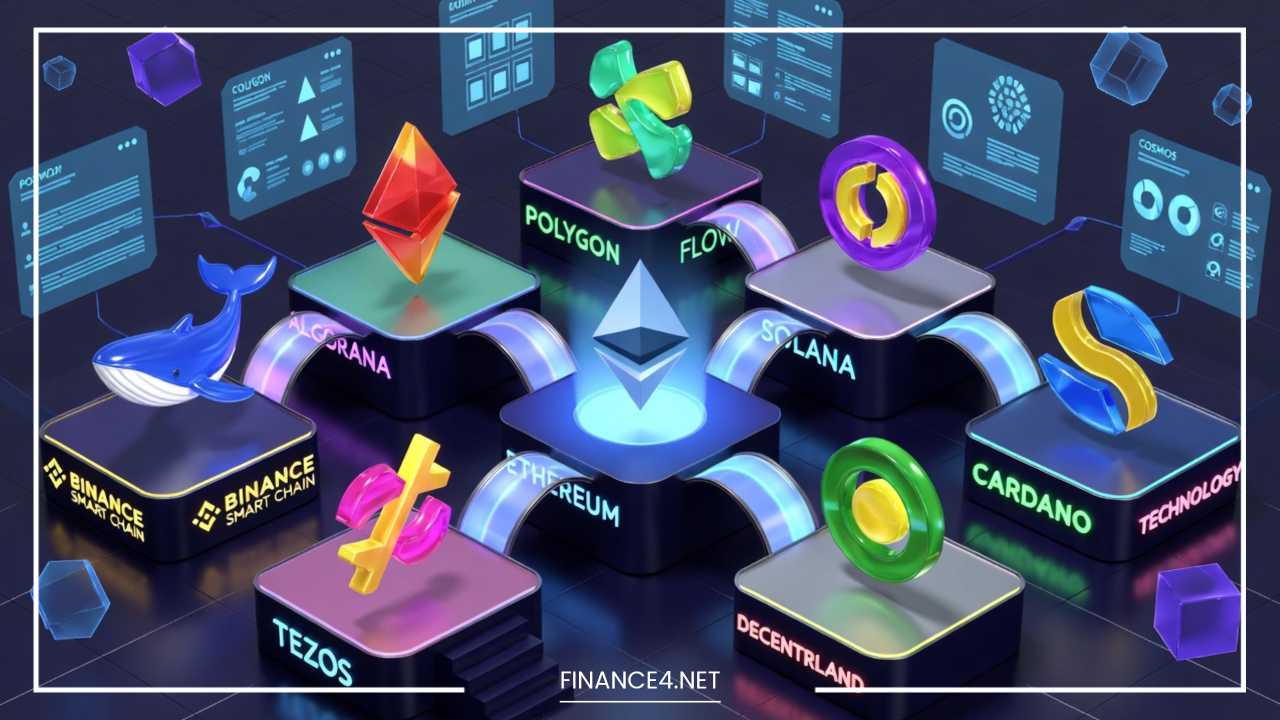
A multi-chain NFT launchpad is a specialized platform that facilitates the primary issuance (minting) of non-fungible tokens across several different blockchain networks. Unlike traditional marketplaces that may only support a single chain like Ethereum, these launchpads integrate with diverse environments such as Polygon, BNB Chain, Solana, Avalanche, and Arbitrum.
Definition and Functionality
At its core, a launchpad is a technical and marketing springboard. It provides the “primary market” where NFTs are born. When a creator launches a collection, they aren’t just selling images; they are deploying smart contracts. A multi-chain launchpad provides a unified interface where these contracts can be deployed to various networks without the creator needing to write specific code for each individual chain’s architecture (such as Rust for Solana or Solidity for Ethereum-compatible chains).
How Multi-Chain Launchpads Work
The process typically begins with a project application. Once a project is accepted, the launchpad’s infrastructure takes over. They offer:
-
Smart Contract Templates: Pre-audited contracts that support features like royalties, minting limits, and revealing mechanisms.
-
Cross-Chain Bridging: Many platforms now integrate “omni-chain” standards (like LayerZero), allowing an NFT to be minted on one chain and easily moved to another.
-
Wallet Integration: They support multi-chain wallets like MetaMask, Phantom, and Trust Wallet, ensuring that regardless of which chain the user prefers, they can connect and participate.
The 2025 Context: Why Multi-Chain Matters
In the early days, Ethereum was the only viable option for high-value NFTs. However, as the industry expanded into gaming, music, and loyalty programs, the “one-size-fits-all” approach of Ethereum became a bottleneck. In 2025, we see a specialized landscape:
-
Solana is the hub for high-speed, low-cost retail trading.
-
Polygon is the preferred choice for corporate brands (Starbucks, Nike).
-
Bitcoin (via Ordinals) has emerged as the premier “digital gold” layer for high-value artifacts.
-
Immutable X dominates the gaming sector.
A multi-chain launchpad allows a project to exist where its audience is most active, rather than forcing the audience to come to a specific, perhaps inconvenient, chain.
Why Multi-Chain NFT Launchpads Are Important for Creators
For creators, choosing a launchpad is one of the most critical decisions in a project’s lifecycle. The “multi-chain” aspect addresses several pain points that previously stifled creative growth.
1. Lower Gas Fees and Flexible Selection
High gas fees on the Ethereum mainnet have historically priced out many creators and collectors. Multi-chain launchpads allow creators to launch on Layer-2 solutions like Polygon or high-speed chains like Solana, where transaction costs are negligible. This flexibility allows for “micro-NFTs” or high-volume gaming assets that would be financially unviable on Ethereum. For instance, a gaming project needing to mint 100,000 individual items would spend a fortune on Ethereum but mere dollars on a Layer-2 or Solana.
2. Access to Multiple NFT Communities
Every blockchain has its own unique “culture” and liquidity pool. By using a multi-chain launchpad, a creator can tap into the artistic community of Ethereum, the gaming-heavy audience of BNB Chain, and the high-frequency traders of Solana all at once. This diversification maximizes the chances of a successful “sell-out” during the minting phase. It prevents “ecosystem lock-in,” where a project’s success is entirely dependent on the health of a single blockchain.
3. Built-In Professional Tools
Launchpads offer more than just a “mint” button. They provide creators with:
-
Whitelisting and Allowlisting: Automated systems to manage early-access lists and community rewards.
-
Lazy Minting: A feature where the NFT is not actually written to the blockchain until it is purchased, saving the creator from paying upfront minting fees.
-
Royalty Enforcement: While some marketplaces have made royalties optional, reputable launchpads use smart contract standards that help ensure creators receive a percentage of secondary sales across various chains.
-
Security Audits: Launchpads often provide or require third-party audits of the project’s smart contracts, which builds immediate trust with the audience.
4. Marketing and Community Growth
Launching an NFT project is 10% technical and 90% marketing. Multi-chain launchpads often have massive social media followings and email lists. When a project is featured on a top-tier launchpad, it receives an immediate “stamp of approval,” which is invaluable in a market filled with “rug pulls” and low-quality efforts.
Why Investors Prefer Multi-Chain NFT Launchpads
Investors and collectors have moved away from “blind mints” on obscure websites. They now look for the safety and curation provided by established launchpads.
1. Early Access to Vetted Projects
Top-tier launchpads perform rigorous due diligence on the projects they host. This includes:
-
Founder KYC: Verifying the real-world identities of the team.
-
Roadmap Verification: Ensuring the project’s goals are technically feasible and financially backed.
-
Code Audits: Confirming there are no “backdoors” in the contract that could allow the developer to steal funds.
For an investor, this significantly reduces the risk of “rug pulls.” While it doesn’t guarantee the price will go up, it guarantees the project is a legitimate effort.
2. Portfolio Diversification
A multi-chain approach allows investors to spread their risk. Instead of being heavily exposed to the fluctuations of a single ecosystem (like Solana or Ethereum), investors can build a diversified portfolio of assets. If one chain experiences a technical outage or a regulatory crackdown, the investor’s assets on other chains remain unaffected.
3. Reduced Friction and Better Liquidity
Multi-chain launchpads usually have integrated secondary marketplaces or partnerships with major exchanges. This means that as soon as a mint ends, there is an immediate place to trade the assets. This liquidity is vital for investors who may want to exit a position or rebalance their portfolio.
4. Staking and Tier-Based Participation
Many launchpads operate on a staking model. By holding the launchpad’s native token (e.g., SFUND for Seedify or POLS for Polkastarter), investors gain guaranteed or prioritized access to the most anticipated NFT drops. This creates a “club” atmosphere where loyal supporters are rewarded with early-stage opportunities, often at a lower price than the public mint.
Key Features to Look for in a Multi-Chain NFT Launchpad
When evaluating a platform, both creators and investors should look for the following “gold standard” features:
Supported Blockchains
The platform should support at least three to five major chains. A launchpad limited to only one or two EVM (Ethereum Virtual Machine) chains may not offer enough reach in the 2025 market. Ideally, you want a mix of “blue-chip” chains (Ethereum), “utility” chains (Polygon, BNB), and “emerging” chains (Aptos, Sui).
Minting Fees and Revenue Sharing
For creators, the fee structure is paramount. Some platforms take a flat fee, while others take a percentage of the total mint (typically 5% to 10%). Investors should look at whether the launchpad takes a “platform fee” on every purchase, as this can eat into potential profits.
KYC and Project Vetting Process
A launchpad that lets “anyone” launch is not a launchpad—it is a marketplace. A true launchpad must have a gatekeeping function. Look for platforms that clearly outline their vetting criteria. If the platform has a history of hosting projects that eventually fail or turn out to be scams, it is a major red flag.
User Experience (UI/UX)
The minting process should be “idiot-proof.” If a user has to jump through hoops, bridge assets manually, or deal with a confusing interface, they will likely abandon the mint. The best launchpads offer a “one-click” experience.
Analytics and Performance Tracking
Post-launch support is just as important as the launch itself. Does the platform provide a dashboard showing who is holding the NFTs? Does it track floor prices across different chains? For investors, these analytics are crucial for making informed sell or hold decisions.
Best Multi-Chain NFT Launchpads for Creators & Investors
1. Magic Eden (The Multi-Chain Titan)
Originally the king of Solana NFTs, Magic Eden has successfully pivoted into a dominant multi-chain powerhouse. It now supports Solana, Bitcoin (Ordinals), Ethereum, and Polygon.
-
Overview: Magic Eden is the “Amazon” of the NFT world. It offers a highly polished, retail-friendly experience.
-
Key Features: It features a “Launchpad” section that is highly curated. It also introduced a “Rewards” program that gives users “Diamonds” for trading, which can be used for future benefits.
-
Pros: Massive existing user base; industry-leading secondary marketplace; very high brand recognition.
-
Cons: Highly competitive for creators; very strict selection process.
-
Best For: Creators looking for high-volume retail traffic and investors interested in Bitcoin Ordinals and Solana ecosystems.
2. Seedify (The Gaming Specialist)
Seedify has carved out a niche as the premier launchpad for GameFi and Metaverse NFTs. It operates primarily on BNB Chain but supports multi-chain deployments for gaming assets across Polygon and Ethereum.
-
Overview: Seedify is more than a launchpad; it is an incubator. They help gaming projects with everything from tokenomics to character design.
-
Key Features: A tiered staking system where holding the $SFUND token grants access to different levels of “Initial NFT Offerings” (INOs).
-
Pros: Extremely loyal community of gamers; high historical ROI for successful gaming launches.
-
Cons: Requires significant token staking for top-tier access; focused exclusively on gaming/metaverse.
-
Best For: Gaming studios and investors looking for high-utility gaming assets.
3. Binance NFT Launchpad (The Exchange Giant)
Leveraging the world’s largest exchange ecosystem, Binance NFT offers unparalleled liquidity and security. It supports BNB Chain and Ethereum, with increasing integration for Bitcoin Ordinals.
-
Overview: This is a centralized launchpad. While this goes against some “decentralization” ideals, it provides a level of security and ease-of-use that is unmatched.
-
Key Features: Subscription-based participation models where users commit BNB to get a “ticket” for a chance to buy an NFT.
-
Pros: Instant access to millions of users; highest level of vetting and security; easy “fiat-to-NFT” onramps.
-
Cons: Centralized nature; very difficult for independent or “indie” creators to get listed.
-
Best For: Large-scale “blue chip” brands and mainstream investors who prioritize safety.
4. Polkastarter (The Fair Launch Pioneer)
Known for its decentralized approach, Polkastarter has evolved into a multi-chain hub supporting Ethereum, BNB Chain, Polygon, and Celo.
-
Overview: Polkastarter focuses on “Fixed Swap” pools, which prevent whales from buying up the entire supply and ensure a fairer distribution.
-
Key Features: “PolkaTrader” AI tools for investors; anti-bot measures that ensure real humans are getting the NFTs.
-
Pros: Strong reputation for quality; excellent community governance via the $POLS token.
-
Cons: Lower frequency of NFT-specific drops compared to their token IDOs.
-
Best For: Projects requiring a decentralized, fair-launch approach and investors who hate “gas wars.”
5. DAO Maker (The Investor Protector)
A veteran in the crowdfunding space, DAO Maker uses its “Strong Holder Offering” (SHO) model to ensure that NFTs end up in the hands of long-term supporters rather than flippers.
-
Overview: DAO Maker is built for professional-grade projects. They support Ethereum, Solana, and XDC Network.
-
Key Features: Refundable launch models where, if a project underperforms or fails to meet milestones, investors can get a portion of their capital back.
-
Pros: Advanced protection mechanisms for investors; deep venture capital connections.
-
Cons: Very complex entry requirements for investors; high barrier to entry for creators.
-
Best For: Infrastructure-heavy NFT projects and professional investors who want downside protection.
6. NFTb (The Artist-Centric Choice)
NFTb is a multi-chain platform built on BNB Chain but expanded to Polygon and Ethereum, focusing on high-quality digital art and social impact.
-
Overview: NFTb combines a premium marketplace, a launchpad, and a DeFi platform.
-
Key Features: “Charity Income” features where a portion of proceeds can be automatically sent to a verified NGO.
-
Pros: Great UI for artists; focus on “Social Good” projects.
-
Cons: Smaller audience compared to Magic Eden or Binance.
-
Best For: Digital artists and “impact” projects.
7. GameFi.org (The Web3 Gaming Hub)
As the name suggests, this platform is an all-in-one discovery hub for web3 games, featuring a robust multi-chain launchpad for game assets.
-
Overview: It supports almost all major EVM chains and has a specific focus on “Play-to-Earn” (P2E) ecosystems.
-
Key Features: Integrated “Game Guild” support, allowing large groups of players to participate in launches together.
-
Pros: Very specialized audience; great for projects with complex in-game economies.
-
Cons: Very niche; if the gaming market cools, this platform feels the impact more than others.
-
Best For: Web3 games and “Guild” investors.
Comparison Table of Top Multi-Chain NFT Launchpads
| Launchpad | Primary Chains | Best Use Case | Participation Model | Focus |
| Magic Eden | SOL, BTC, ETH, POLY | Retail / Art / Gaming | Open / Curated | High Volume |
| Seedify | BNB, ETH, POLY | GameFi / Metaverse | SFUND Staking | Utility NFTs |
| Binance NFT | BNB, ETH | Enterprise / Blue Chip | BNB Subscription | Liquidity |
| Polkastarter | ETH, BNB, POLY | Decentralized Tech | POLS Power | Fair Launch |
| DAO Maker | ETH, SOL, XDC | Infrastructure / RWA | DAO Staking | Investor Safety |
| NFTb | BNB, POLY, ETH | Digital Art / Charity | NFTB Staking | Social Good |
| GameFi.org | BNB, POLY, ARB | P2E Gaming | GAFI Staking | Gaming Guilds |
How to Choose the Right Multi-Chain NFT Launchpad
Selecting the right platform requires a strategic alignment of goals. It is not just about which platform is “biggest,” but which one fits your specific needs.
For Creators: Questions to Ask
-
Where is my community? If you have a massive Discord following that mostly uses Solana, launching on an Ethereum-only launchpad is a mistake. Look for a platform that supports your core community’s preferred chain.
-
What is my technical capability? Do you have developers who can build a custom minting site, or do you need a “no-code” solution provided by the launchpad?
-
What is the cost of entry? Calculate the “Total Cost of Launch.” This includes the platform fee, the marketing budget required to get the launchpad to notice you, and the cost of the smart contract audits.
-
Does the launchpad offer post-mint support? A successful mint is just the beginning. Does the launchpad help you get listed on secondary exchanges? Do they help with community management?
For Investors: Questions to Ask
-
What is my budget for staking? Most launchpads require you to hold their native token to get early access. If you only have $500 to invest, you might be better off on a platform like Magic Eden that doesn’t require staking for most drops.
-
What is my risk tolerance? Are you looking for a “moonshot” gaming token, or a stable piece of digital art? Decentralized launchpads (Polkastarter) often have higher upside but higher risk, while centralized ones (Binance) are more stable.
-
Is there secondary market liquidity? There is nothing worse than buying an NFT and realizing there is nowhere to sell it. Always check if the launchpad has an active secondary market.
-
What is the project’s utility? In 2025, “just art” is rarely enough. Does the NFT give you access to a game? Does it provide passive income? Does it represent a real-world asset?
Risks and Challenges of Multi-Chain NFT Launchpads
While multi-chain launchpads offer significant benefits, they are not without risks. Both creators and investors must navigate these challenges with caution.
1. Smart Contract Vulnerabilities
The more chains a launchpad supports, the more complex its smart contract architecture becomes. Every bridge and cross-chain protocol is a potential point of failure. In the past, bridges have been the most hacked components in the crypto ecosystem. Always ensure the platform uses audited, non-custodial solutions and has a “bug bounty” program in place.
2. Market Saturation and “Launchpad Fatigue”
Because launchpads make it easier to release projects, the market is often flooded with low-quality collections. This “noise” can make it difficult for truly innovative projects to stand out. Investors must conduct their own research (DYOR) and not rely solely on the launchpad’s “vetted” tag.
3. Cross-Chain Security Risks
When an NFT is “bridged” from one chain to another, the original NFT is usually locked in a contract and a “wrapped” version is created on the new chain. If the locking contract is hacked, the wrapped NFT on the other chain becomes worthless. Multi-chain launchpads are working on “native” cross-chain NFTs to solve this, but the technology is still maturing.
4. Regulatory Uncertainty
Governments around the world are still deciding how to classify NFTs. If a launchpad project involves “revenue sharing” or “staking for yield,” it might be classified as a security in certain jurisdictions (like the US). This could lead to the project being shut down or the launchpad being forced to geo-block certain users.
5. Liquidity Issues on Smaller Chains
While launching on a brand-new, high-speed chain is exciting, those chains often lack “depth.” This means that if you want to sell your NFT, there might not be enough buyers on that specific chain, leading to a “liquidity trap.”
Future of Multi-Chain NFT Launchpads
The trajectory of NFT launchpads is moving toward Omni-chain architecture and deep integration with real-world industries.
1. The Rise of “Chain-Agnostic” Minting
Using technologies like LayerZero and Chainlink CCIP, future launchpads will allow “seamless minting.” The user will simply click “Buy,” and the platform will handle the backend—moving funds from the user’s BNB wallet to mint an NFT on Avalanche, which then shows up in their universal wallet. The user won’t even need to know which chain the NFT is on.
2. AI-Powered Curation and Analytics
We are moving away from human committees picking projects. Future launchpads will use AI algorithms to analyze on-chain data, social media sentiment, and developer activity (via GitHub) to rank the highest-potential projects. This will provide investors with a data-driven “score” for every project.
3. Integration with Real World Assets (RWA)
By the end of 2025, the “NFT” label will likely be replaced by “Digital Twin” or “Digital Receipt.” Launchpads will transition from selling “JPEG” art to selling fractionalized interests in real estate, intellectual property rights, and luxury goods (like watches or wine). These platforms will need to support multiple chains to comply with different international property laws.
4. Institutional and Brand-Owned Launchpads
We will see more brands like Nike or Disney creating their own “private” multi-chain launchpads. Instead of using a third-party platform, they will build their own infrastructure to maintain total control over the user experience and secondary royalties.
Final Thoughts
Multi-chain NFT launchpads have become the engine of the modern Web3 economy. They have solved the fragmentation issues of the early NFT days by providing creators with a global stage and investors with a secure, diversified gateway to digital assets.
For creators, these platforms offer the tools to turn a creative vision into a global brand without needing a PhD in blockchain engineering. For investors, they provide a curated “filter” in a sea of digital noise, offering early access to the next generation of digital value.
However, the “golden rule” of crypto still applies: Technology is a tool, not a guarantee. The best launchpad in the world cannot save a project with no utility, just as the best investor can lose money if they don’t perform their own due diligence.
As we move further into 2025, the distinction between “NFTs” and “the internet” will continue to blur. Multi-chain launchpads are leading this charge, ensuring that the digital assets of the future are accessible, secure, and truly interoperable. Whether you are building or buying, the multi-chain path is no longer the “alternative”—it is the standard.