Top Bridging Solutions for Gaming Metaverses
 by
by 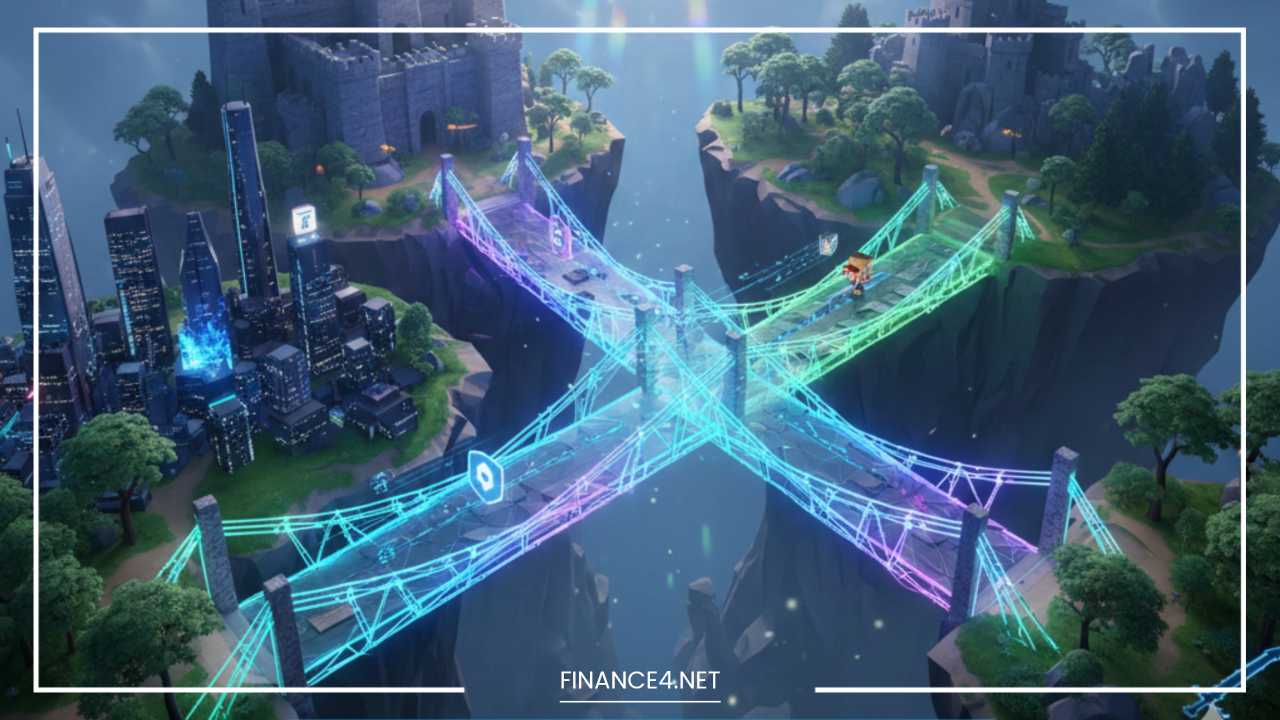
Top Bridging Solutions for Gaming Metaverses | Cross-Chain Interoperability Guide
The digital landscape is undergoing a seismic shift. We are moving away from isolated gaming experiences toward a unified, persistent series of virtual worlds collectively known as the Metaverse. However, as the foundational technology for these worlds—blockchain—has evolved, it has created a significant hurdle: fragmentation. Currently, the Web3 gaming ecosystem is scattered across dozens of disparate networks, including Ethereum, Polygon, Solana, and Avalanche. Without a way for these networks to communicate, the dream of a truly open metaverse remains out of reach.
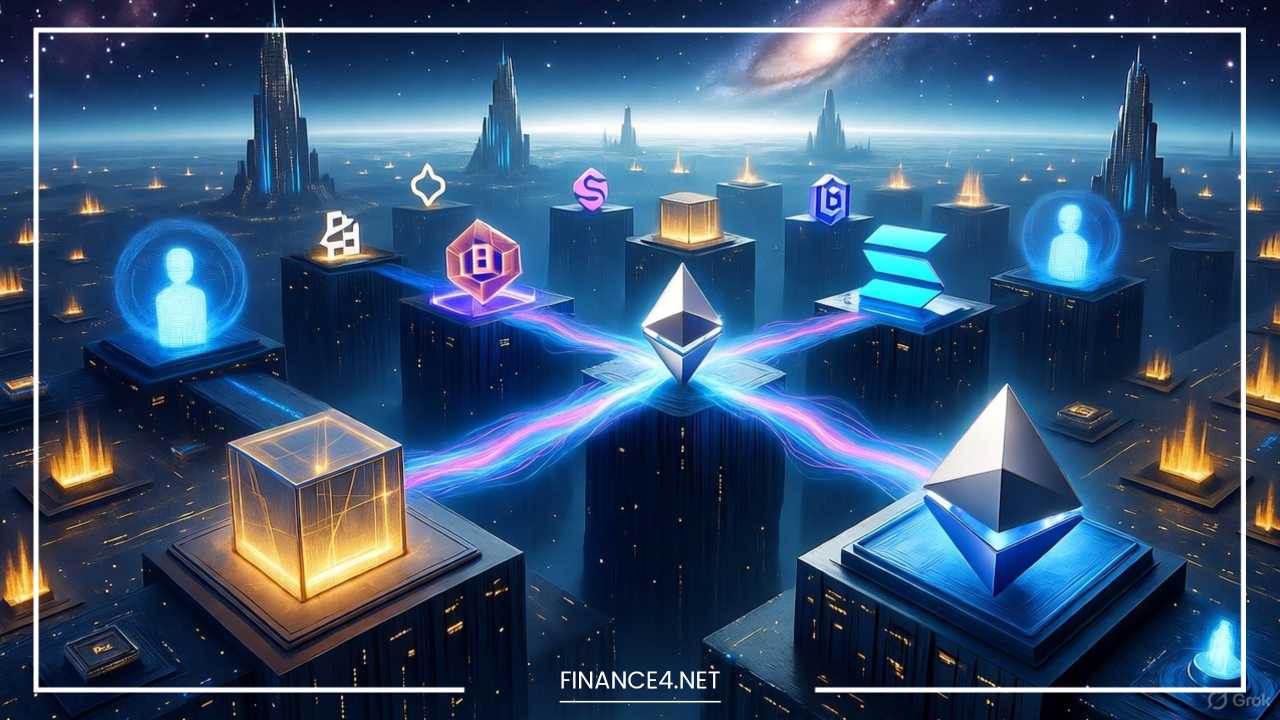
Cross-chain interoperability is the bridge that connects these digital islands. It allows a player to earn a legendary sword on one chain, use it as a skin in a game on another, and eventually sell it for liquidity on a third. This guide explores the infrastructure making this possible, examining the top bridging solutions that are currently defining the future of gaming metaverses.
What Is Cross-Chain Interoperability in Gaming?
In the context of blockchain, interoperability is the ability of different computer systems and software to exchange and make use of information. For gaming, this translates to the fluid movement of assets, data, and value across different blockchain protocols.
Blockchain bridges are the primary tools used to achieve this. A bridge acts as a translator and a secure transport layer. When you “move” an asset from Ethereum to Polygon, you aren’t literally moving the data packet; rather, the bridge locks the asset on the source chain and issues a representative version (a “wrapped” asset) on the destination chain.
Definition of Blockchain Bridges
A blockchain bridge is a protocol that allows two or more blockchains to share data and assets. Because blockchains are typically “closed loops” with their own consensus rules and state histories, they cannot natively “see” what is happening on another network. A bridge acts as a neutral intermediary that monitors the state of Chain A and communicates it to Chain B.
Asset Portability: The Core of Ownership
The true promise of Web3 gaming is “True Ownership.” In traditional gaming, if a server shuts down, your items vanish. In Web3, your items live on a ledger. However, ownership is hollow if it is restricted to one game. Interoperability enables:
-
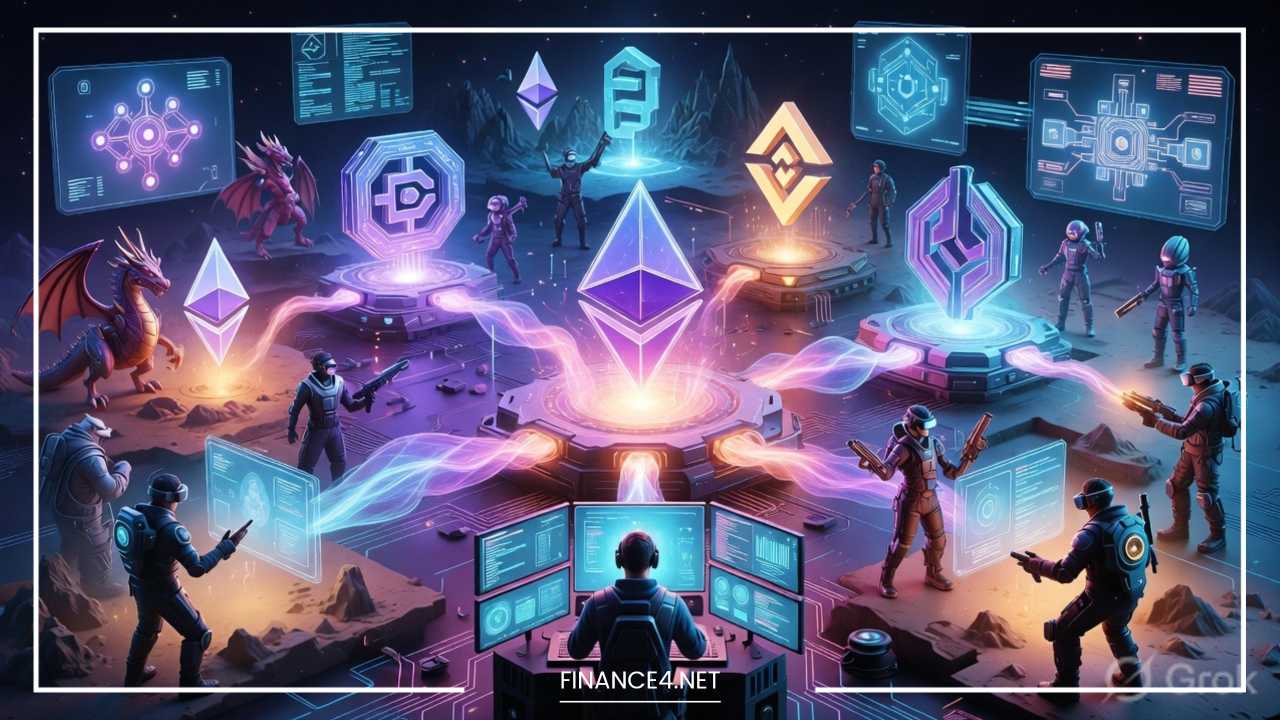
NFT Portability: Moving a 3D avatar from a social metaverse like Decentraland to a competitive shooter like Shrapnel.
-
Token Portability: Transferring earned in-game currency to a decentralized exchange (DEX) on another chain to swap for stablecoins.
-
In-game Currency Utility: Using “Gold” earned in an RPG to buy “Fuel” in a space simulator, even if they exist on different subnets.
The Need for Faster Finality and Lower Fees
For gaming, interoperability must be invisible. A player waiting for a cross-chain transfer is a player who isn’t playing. Gaming-centric bridges focus on “Fast Finality”—the point at which a transaction is considered irreversible. While Ethereum mainnet might take several minutes to reach high levels of certainty, gaming bridges often utilize “Optimistic” or “ZK-based” proofs to reduce this wait time to seconds. Furthermore, gas optimization is paramount; if bridging a common item costs more than the item’s market value, the ecosystem fails.
Why Gaming Metaverses Need Bridging Solutions
The necessity for bridging arises from the “Blockchain Trilemma”—the struggle to balance security, scalability, and decentralization. No single chain does everything perfectly. Ethereum offers unmatched security but suffers from high gas fees. Solana offers lightning speed but faces occasional stability issues. Consequently, developers choose different chains based on their specific needs, leading to a fragmented user base.
Fragmented Liquidity
When players and capital are spread across twenty different chains, it creates “thin” markets. A player trying to sell a rare NFT on an isolated chain might find no buyers, whereas a cross-chain marketplace could expose that NFT to the entire global Web3 audience. Bridging aggregates this liquidity, creating a more robust economy for developers and players alike.
Scalability and User Experience
Modern games require thousands of transactions per second (TPS). Most games perform their “high-frequency” actions (like moving a character or swinging a sword) on a private server or a dedicated sidechain. However, the “value-heavy” actions (like minting a rare item) should happen on a secure public chain. Bridges act as the link between these two layers, allowing for a “Best of Both Worlds” approach where gameplay is fast and the economy is secure.
Player Onboarding Friction
One of the biggest hurdles to Web3 gaming is the “Wallet Problem.” Requiring a player to set up five different wallets for five different chains is an immediate deterrent. Interoperability layers allow for “Account Abstraction,” where a player uses one identity to interact with multiple chains. The bridge handles the complex switching and gas payments in the background.
Real-World Case: The NFT Migration
Consider a studio that launched its collection on Ethereum in 2021. As the game develops, the studio realizes that players cannot afford the $50 gas fees to “equip” an item. By utilizing a bridge, the studio can migrate the entire player base to a Layer 2 like Polygon or Arbitrum, where fees are less than a cent, without the players losing the “provenance” or history of their original Ethereum assets.
Types of Blockchain Bridges
Not all bridges are created equal. The architecture of a bridge determines its speed, cost, and, most importantly, its security profile.
1. Trusted (Custodial) Bridges
These bridges rely on a central entity or a small group of validators to confirm transactions. While they are often the fastest and easiest to use, they require the user to trust the bridge operator.
-
Pros: Extremely fast, low fees, often has a simple UI.
-
Cons: Centralized point of failure. If the operator’s keys are stolen, the bridge’s collateral is at risk.
2. Trustless (Decentralized) Bridges
Trustless bridges use smart contracts and algorithms to manage the transfer process. They typically utilize a network of decentralized validators or “Light Clients” that verify the state of the connected chains mathematically.
-
Pros: Highly secure, censorship-resistant.
-
Cons: High technical complexity, can be slower due to decentralized consensus requirements.
3. Native Bridges
Many ecosystems build their own “canonical” bridges. For example, the Polygon PoS Bridge or the Arbitrum Bridge.
-
Role: These are designed specifically to move assets between a specific Layer 2 and its parent Layer 1 (usually Ethereum). They are generally the safest option for that specific route but lack the flexibility to connect to “third-party” chains like Solana.
4. Third-Party Interoperability Protocols
These are “Layer 0” protocols. They provide a framework for dozens of chains to talk to one another. They often use different models:
-
Lock-and-Mint: The bridge locks the original asset on Chain A and mints a “wrapped” version on Chain B.
-
Burn-and-Release: This is often used for native tokens. The bridge “burns” (destroys) the token on Chain A and tells a contract on Chain B to “release” an equivalent native token from a pre-funded pool.
-
Liquidity Pool Model: The bridge maintains massive pools of native assets (e.g., USDC) on all supported chains. When you bridge, you are essentially swapping your USDC on Chain A for someone else’s USDC on Chain B.
Key Features to Evaluate in Gaming Bridges
For a metaverse developer, choosing a bridge is a high-stakes decision. The following metrics are the industry standard for evaluation:
Transaction Speed and Latency
In a gaming context, “latency” refers to the time it takes for a cross-chain action to be reflected in the game UI. Top-tier gaming bridges aim for “sub-minute” finality. If a player buys a “power-up” on a bridge, it needs to appear in their inventory before the next round starts.
Gas Optimization and Fees
The bridge must be “Gas Efficient.” This is achieved through “Batching” (combining many user transactions into one) or using “Off-chain Relayers” to handle the expensive computation.
NFT Compatibility and Metadata Preservation
Many early bridges only supported fungible tokens (ERC-20). Modern gaming bridges must support:
-
ERC-721 and ERC-1155: The standards for unique and semi-fungible items.
-
Metadata Integrity: Ensuring that the “stats” of a weapon (level, durability, kills) remain identical after the bridge.
Smart Contract Security and Audits
The code must be open-source and audited by multiple reputable firms (e.g., Trail of Bits, OpenZeppelin). A bridge with a “Bug Bounty” program is generally more trustworthy, as it incentivizes ethical hackers to find vulnerabilities before criminals do.
Top Bridging Solutions for Gaming Metaverses
The following protocols are the current leaders in providing infrastructure for the interconnected metaverse.
1. LayerZero
LayerZero is an “Omnichain” interoperability protocol that has taken the GameFi world by storm. It does not function as a traditional bridge but as a communication layer.
-
How it works: It uses “Ultra Light Nodes.” Instead of keeping the entire history of another chain, it uses an Oracle (like Chainlink) and a Relayer to verify transactions independently.
-
Gaming Relevance: It is the pioneer of the ONFT (Omnichain Non-Fungible Token) standard. An ONFT can move between chains without “wrapping,” meaning it retains its original identity across all networks.
-
Strengths: Lightweight, extremely flexible, and already integrated into hundreds of dApps.
2. Wormhole
Wormhole is one of the most comprehensive protocols, connecting over 30 blockchains, including non-EVM chains like Solana, Near, and Sui.
-
How it works: It uses a network of 19 “Guardians” (high-reputation validators) who observe transactions. When a super-majority of Guardians signs off, a “Verifiable Action Approval” (VAA) is generated.
-
Gaming Relevance: Essential for games that want to bridge the high-liquidity Ethereum ecosystem with the high-performance Solana ecosystem. It also features a dedicated “NFT Bridge.”
-
Strengths: Massive reach and deep liquidity.
3. Axelar
Axelar delivers decentralized cross-chain communication for builders. It provides a “one-click” experience for users.
-
How it works: Axelar is its own Proof-of-Stake blockchain. This means its security is backed by the same mechanisms that secure chains like Cosmos or Polygon.
-
Gaming Relevance: Its General Message Passing (GMP) allows a game to store its “World State” on a specialized chain while players interact with it via a mobile-friendly chain.
-
Strengths: Enterprise-grade security and a robust Developer SDK.
4. Polygon Bridge
As the most popular scaling solution for Ethereum gaming, the native Polygon Bridge is a cornerstone of the industry.
-
How it works: It uses a dual-bridge architecture: the Plasma Bridge for increased security and the PoS (Proof of Stake) Bridge for faster transactions.
-
Gaming Relevance: Most major Web3 titles (like Sunflower Land or Decentraland) have a presence on Polygon. This bridge is the primary artery for assets moving between the “Safety” of Ethereum and the “Playability” of Polygon.
-
Strengths: Highly trusted, native integration, and very low fees.
5. Avalanche Bridge
Avalanche has carved out a niche in gaming through its “Subnets”—customizable, app-specific blockchains.
-
How it works: The Avalanche Bridge uses “Intel SGX” technology. This is a hardware-based secure enclave that ensures the bridge’s private keys are never exposed, even to the operators.
-
Gaming Relevance: For games running on their own Avalanche Subnet (like Shrapnel), this bridge provides a secure, high-speed link to the broader Avalanche C-Chain and Ethereum.
-
Strengths: Rapid finality and innovative hardware-level security.
6. Stargate Finance
Stargate is a liquidity-focused bridge built on top of LayerZero. It is the first bridge to solve the “Bridging Trilemma”: Instant Guaranteed Finality, Unified Liquidity, and Native Asset Swaps.
-
How it works: It uses a Delta Algorithm to manage liquidity pools across multiple chains.
-
Gaming Relevance: It allows gaming platforms to integrate “Native Swaps.” A player can swap USDT on Ethereum for native AVAX on Avalanche in one transaction, which is essential for purchasing in-game currency.
-
Strengths: No “wrapped” assets; you get the real token on the other side.
7. Immutable (Passport & zkEVM)
While primarily a gaming platform, Immutable’s infrastructure includes specialized bridging to Ethereum designed specifically for games.
-
Gaming Relevance: It offers “Gas-free” minting and trading for players, with a secure bridge to Ethereum for high-value withdrawals.
-
Strengths: Fully tailored to the gaming user journey; no “crypto-knowledge” required for the end user.
Security Risks in Cross-Chain Bridges
The saying “a chain is only as strong as its weakest link” is literal in the world of bridging. Bridges are some of the most targeted pieces of infrastructure in the crypto world because they act as massive “honeypots” of locked collateral.
Validator Compromise
If a bridge requires 5 out of 9 validators to sign a transaction, a hacker only needs to steal 5 private keys to drain the entire bridge. This was the cause of the infamous Ronin Bridge hack (Axie Infinity), where over $600 million was stolen.
Smart Contract Vulnerabilities
Since bridges often involve complex logic to lock and unlock assets, a single coding error can allow an attacker to mint “infinite” assets on the destination chain or “double-spend” an asset.
Liquidity Pool Exploits
Bridges that rely on liquidity pools can be drained if the “price feed” (Oracle) for an asset is manipulated. If a hacker makes the bridge think an asset on Chain A is worth ten times its actual value, they can withdraw more collateral than they are entitled to.
The Importance of Audits and Bug Bounties
Gaming platforms must prioritize bridge security over speed. A single exploit can destroy years of community building and player trust. Developers should look for bridges that have undergone multiple audits and have a “Time-Lock” on large withdrawals to allow for manual intervention in case of a suspicious event.
Real Use Cases in Gaming Metaverses
Cross-Chain NFT Avatars
Imagine a “Metaverse Avatar” that exists on Ethereum. Using a bridge like Wormhole or LayerZero, the player can “port” that avatar into a high-speed racing game on Solana. The metadata (wins, losses, level) is updated on the racing game’s chain and periodically synced back to the original NFT on Ethereum. This creates a “Living Asset.”
Interoperable Land Ownership
In a modular metaverse, different “regions” might exist on different chains to handle load. Bridging allows a user to own a plot of land on an “Industrial Subnet” and a luxury apartment on a “Social Subnet,” with both assets appearing in their single unified inventory.
DAO Governance Spanning Chains
A gaming DAO (Decentralized Autonomous Organization) might have its treasury on Ethereum but hold its voting on a cheaper chain like Polygon. Bridges ensure that the “votes” from the cheap chain are securely transmitted to trigger “treasury movements” on the expensive chain.
Future of Cross-Chain Gaming Infrastructure
We are moving toward a “Chain-Agnostic” future. In this future, the player won’t even know which blockchain they are using. The complexity of bridging will be abstracted away by the game’s interface.
Omnichain Assets
Instead of “wrapping” assets, developers will increasingly use standards like LayerZero’s ONFT. These assets exist natively on all chains simultaneously. There is no “Home Chain”—the asset is a first-class citizen everywhere it goes.
ZK-Powered Interoperability
Zero-Knowledge proofs will allow for “light-client” bridges that are mathematically guaranteed to be secure. Instead of trusting a group of “Guardians,” the bridge will verify a mathematical proof that the transaction occurred on the source chain.
AI-Driven Asset Migration
As liquidity shifts, AI agents could automatically move a player’s assets to the most efficient or lowest-cost chain for the specific activity they are performing. If a player is “crafting,” the AI moves the materials to a high-speed chain; if the player is “holding,” the AI moves the finished item to a high-security chain.
Modular Ecosystems (Cosmos and Polkadot)
Platforms like Cosmos (via IBC) and Polkadot (via XCM) are building interoperability into the “base layer” of the internet. This creates a “Web of Chains” where every game has its own dedicated chain but can talk to any other game instantly and natively, without the need for third-party bridges.
Final Thoughts
The success of the Metaverse depends on its ability to be open, fluid, and interconnected. If the digital world remains a series of isolated silos, it will never surpass the utility of the traditional, centralized gaming industry. Interoperability is not just a technical feature; it is a philosophy of open access and user empowerment.
Bridging solutions like LayerZero, Wormhole, and Axelar are the unsung heroes of this revolution. They are building the “TCP/IP” of the blockchain world—the protocols that allow different networks to form a single, cohesive internet of value. For developers, choosing the right bridge is a balance of speed, cost, and a relentless focus on security. For players, these technologies represent the realization of true digital sovereignty: the ability to take your identity, your wealth, and your legacy wherever you choose to go in the sprawling expanse of the Metaverse.
As we move forward, the “bridge” as we know it may disappear, becoming an invisible, seamless part of the user experience. Until then, understanding these protocols is essential for anyone looking to navigate the frontier of Web3 gaming.