NFT Rug Pull Warning Signs
 by
by 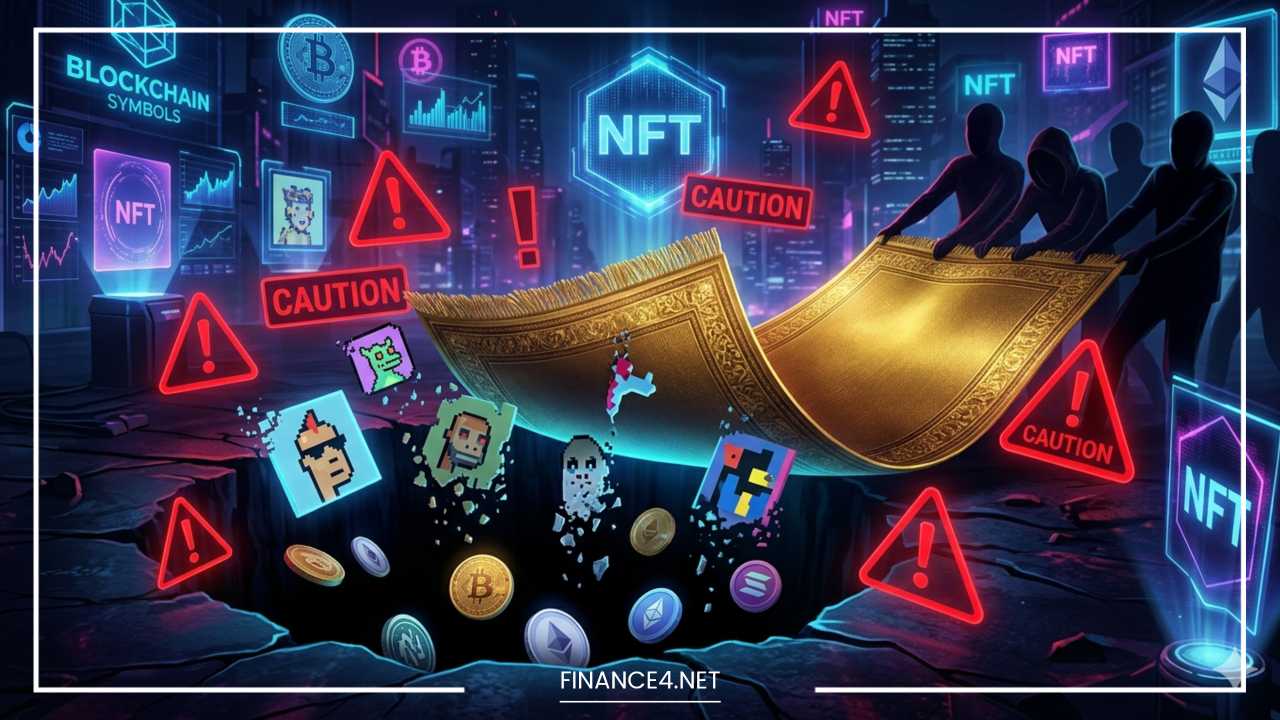
NFT Rug Pull Warning Signs: 7 Red Flags to Watch For
The emergence of Non-Fungible Tokens (NFTs) has fundamentally altered the landscape of digital ownership, art, and decentralized finance. By utilizing blockchain technology to create unique, verifiable digital assets, NFTs have allowed creators to monetize their work in unprecedented ways and offered investors a new asset class with explosive growth potential. From digital art collections and virtual real estate to utility-based tokens that grant access to exclusive communities, the diversity of the NFT market is vast. However, this rapid expansion and the pseudonymity inherent in the crypto world have also created a breeding ground for sophisticated scams.
Among the most damaging of these scams is the rug pull. In the context of NFTs, a rug pull occurs when the developers or creators of a project hype up a collection, attract a large amount of investment capital through minting or secondary sales, and then suddenly abandon the project. They vanish with the funds, delete social media accounts, and leave the investors holding tokens that have lost all liquidity and value. The “rug” is effectively pulled out from under the feet of the community.
As the market matures, rug pulls have become more nuanced, often disguised as legitimate startups with polished websites and aggressive marketing. For any collector or investor, the ability to distinguish between a visionary project and a digital trap is the most critical skill to develop. Navigating the “Wild West” of Web3 requires a disciplined approach to due diligence. This article serves as a comprehensive guide to the seven most common red flags of an NFT rug pull, providing you with the analytical framework needed to protect your capital and invest with confidence.
Lack of a Transparent Team
In any traditional investment, the track record of the founding team is the primary indicator of future success. The NFT space should be no different. While the culture of “being anon” (remaining anonymous) is deeply rooted in the crypto ethos, it presents a massive risk factor for investors. When a project goes south, an anonymous team faces zero reputational or legal consequences, making it much easier for them to walk away with millions of dollars.
Why Identity Matters in Decentralized Spaces
Transparency acts as a social contract. When a developer “doxxes” themselves, they are essentially collateralizing their real-world reputation against the success of the project. If they disappear, their professional future is effectively over. Conversely, an anonymous founder can launch “Project A,” rug it, and launch “Project B” the following week under a new pseudonym. This cycle of serial scamming is the backbone of the rug pull economy.
Red Flag Indicators
The most glaring red flag is a project led by founders who provide no verifiable identity, professional history, or links to previous successful ventures. If the “Team” section of a website features only generic 2D avatars and pseudonyms like “CryptoKing” or “NFTMaster” without any external validation, you are essentially gambling on the honesty of a stranger. Furthermore, a lack of a verifiable social media presence—specifically on platforms like LinkedIn or a long-standing Twitter account with genuine industry interactions—suggests the persona was created recently specifically to launch the project.
Watch for “artificial doxxing.” Some scammers use stock photos or AI-generated faces (often from websites like “thispersondoesnotexist.com”) to create fake identities. Always cross-reference team photos using reverse image searches.
Tips for Vetting a Team
To vet a team properly, look for “doxxed” founders. Check if they have been involved in prior blockchain projects and research how those projects performed. Did they deliver on their promises, or did those projects also fade into obscurity? A team with a reputation to uphold in the professional world is far less likely to commit fraud than one operating entirely from the shadows. In the absence of a doxxed team, look for “KYC” (Know Your Customer) badges from reputable auditing firms that confirm the founders’ identities have been verified privately.
Overly Hype-Driven Marketing
Marketing is a necessity for any successful NFT launch, but there is a thin line between building a community and engineering a frenzy based on FOMO (Fear of Missing Out). Scammers are masters of human psychology; they know that if they can make you feel like you are about to miss the “next big thing,” you will skip your due diligence and rush to mint.
The Anatomy of Engineered FOMO
Hype-driven projects often use artificial scarcity and time-pressure tactics. They might announce “stealth drops” or “limited whitelist spots” that expire in minutes. The goal is to bypass your critical thinking centers. When your brain is in a state of high arousal due to perceived opportunity, you are less likely to notice that the smart contract isn’t verified or the art is derivative.
Red Flag Indicators
Watch out for projects that prioritize celebrity endorsements and flashy promotional videos over technical substance or utility. If the primary messaging revolves around “going to the moon,” “100x gains,” or “guaranteed wealth,” the project is likely a speculative bubble designed to burst. Aggressive marketing tactics on Discord and Twitter, such as constant “shilling” by paid influencers who clearly do not understand the project, are major warning signs.
Another indicator is the use of “Engagement Pods.” If every tweet from a project has thousands of likes but the comments are all repetitive phrases like “Awesome project!” or “LFG!”, the engagement is being faked to trick the algorithm and your perception of the project’s popularity.
Advice: Look for Sustainable Growth
Legitimate projects usually adopt a more measured approach. They focus on the technology, the art, or the long-term utility they provide to holders. They build their community organically through meaningful conversation rather than through “invite contests” that encourage botting and spam. Before buying into the hype, ask yourself: If the marketing stopped tomorrow, would this project have any intrinsic value?
Unclear Roadmap or Whitepaper
A project’s roadmap and whitepaper are its foundational documents. They outline the vision, the technical implementation, and the milestones the team intends to reach. In a space where many projects are selling a “future,” these documents are the only thing holding the developers accountable.
The Purpose of a Technical Whitepaper
A whitepaper should explain the how, not just the what. If a project claims it will build a decentralized play-to-earn game, the whitepaper should detail the game engine, the economic model of the reward token, and the server architecture. If these details are missing, the “roadmap” is merely a wishlist.
Red Flag Indicators
A common red flag is a roadmap filled with “fluff”—vague goals like “community building,” “exclusive merch,” or “metaverse integration” without any specific dates, partners, or technical details. Even more dangerous are copy-pasted whitepapers. Scammers often steal documentation from successful projects, changing only the names.
Check for “Roadmap Inflation.” This is when a project promises an impossible number of features—a game, a DAO, a token, and a physical fashion line—all within three months of launch. Real development takes years. If the timeline is too aggressive to be realistic, it is likely a lure to get you through the minting process.
How to Read Critically
When reading a whitepaper, look for the “How.” If they promise a DAO, do they explain the voting structure? If they promise a liquidity pool, is there a breakdown of the mathematical formulas involved? A legitimate project will be transparent about the challenges it faces. If the goals seem too good to be true, they probably are.
Low-Quality or Stolen Art
While beauty is subjective, the effort and originality put into the art of an NFT collection speak volumes about the creators’ intentions. High-quality, original art requires a significant investment of time and money, which a “get-rich-quick” scammer is rarely willing to provide.
The Rise of Derivative and AI Scams
The market is flooded with “derivatives”—projects that look almost exactly like Bored Ape Yacht Club or CryptoPunks but with slight variations. While some are legitimate tributes, many are low-effort attempts to ride the coattails of successful brands. Similarly, AI-generated art is increasingly used to churn out thousands of images with zero manual effort. If a project lacks a cohesive artistic vision, it may be a low-effort cash grab.
Red Flag Indicators
Stolen art is a rampant issue. Scammers frequently take art from established artists on platforms like ArtStation, mint them as NFTs, and sell them. If the art style varies wildly between pieces or if the project promises “art upgrades” only after the mint is sold out, exercise extreme caution.
Another subtle red flag is “layer clashing.” In generative collections (like 10,000 PFP sets), if the hats don’t fit the heads correctly or the accessories overlap in ways that look broken, it indicates the team didn’t put in the basic quality control work. If they won’t fix the art, they won’t fix the project.
Tips for Verifying Originality
Use tools like Google Reverse Image Search or TinEye to see if the artwork appears elsewhere on the web under a different name. Check the artist’s social media—if they are as famous as the project claims, they should be actively promoting the collection. Stolen art projects are often shut down by marketplaces, leaving you with a “dead” asset.
Suspicious Tokenomics or Pre-Minted NFTs
Tokenomics refers to the mathematical and economic logic behind a crypto asset. In the NFT world, this includes the total supply, the mint price, and how the tokens are distributed among the founders and the public. Transparency in these numbers is non-negotiable.
The Danger of Founder Concentration
If the creators hold too much of the supply, they act as a “central bank” that can devalue your holding at any moment. In a rug pull, the founders often keep a large percentage of the rarest NFTs for themselves. Once the public mint sells out and the floor price rises on the secondary market, the founders dump their rare NFTs for massive profit and disappear.
Red Flag Indicators
A major red flag is when a significant portion of the collection (e.g., more than 20%) is “pre-minted” or reserved for the founders’ wallets. While it is standard for teams to keep some NFTs for marketing, an excessive reserve allows for a “slow rug,” where founders sell off pieces over a few weeks to avoid immediate detection.
Also, be wary of “guaranteed returns.” Any project promising a fixed percentage of profit through its secondary token is likely a Ponzi scheme. For a token to have value, it needs a sink (a reason for people to spend it). If everyone is just earning and selling, the value will inevitably go to zero.
Blockchain Transparency
Use tools like Etherscan to view the smart contract and see which wallets are holding the NFTs. If the contract is not “verified” on Etherscan, you cannot see the code, which is a massive security risk. Look for “wallet clusters”—multiple wallets funded by the same source that are all holding large amounts of the NFT. This is a sign of team manipulation.
Inactive or Fake Community
In Web3, community is the “moat.” A project with a dedicated, engaged following can survive market downturns, while a project built on fake engagement will collapse the moment the hype dies down. Scammers use bots to create an illusion of popularity.
Identifying the “Bot House”
Bots can be programmed to do more than just like a post. They can have basic conversations, join Discord servers, and even participate in “invite contests.” However, they lack the ability to provide nuanced feedback or engage in complex problem-solving.
Red Flag Indicators
A Discord server with 50,000 members but only 10 people talking in the general chat is a classic sign of botting. Similarly, if a Twitter account has massive follower counts but very low engagement on its posts, those followers were likely purchased.
Look at the quality of the conversation. In bot-driven communities, you will see endless repetitions of “GM,” “LFG,” and “Great project!” without any actual discussion of the roadmap. If moderators are absent or if they ban anyone who asks “FUD” (Fear, Uncertainty, Doubt) questions—which are often just legitimate questions—the project is hiding something. A project that cannot handle criticism is a project that cannot survive.
Assessing Health
A healthy community is characterized by active, diverse conversations. Members should be discussing the long-term vision and feeling comfortable challenging the developers. A transparent team will welcome difficult questions and provide data-backed answers.
Lack of Smart Contract Audits
The smart contract is the engine of an NFT project. It is the code that governs the minting, transferring, and ownership of the assets. If the code is poorly written or contains “backdoors,” developers can drain the funds from the contract or steal NFTs back from your wallet.
The Technical Vulnerability
Scammers often use “proxy contracts” or “unverified code” to hide malicious functions. A common rug pull tactic is the “SetApprovalForAll” exploit, where a malicious contract asks for permission to manage your NFTs and then drains your entire wallet. Without an audit, you are essentially signing a blank check to a stranger.
Red Flag Indicators
The absence of a smart contract audit is a critical red flag for any high-profile project. If a project refuses to release an audit report or claims they were audited by an unknown firm, you are at risk. Some rug pulls involve “blacklisting” functions that allow the owner to prevent specific wallets from selling, effectively trapping your money in the project while they exit.
Verifying the Audit
Do not just take the project’s word for it. Look for audits from reputable firms like CertiK, Hacken, or Quantstamp. These firms usually host the audit reports on their own websites. A professional audit doesn’t guarantee a project won’t rug, but it does mean the developers are willing to be transparent about their code.
Analyzing Social Media Sentiment and Longevity
Beyond the team and the art, the history of a project’s social presence can reveal its true nature. Scammers are often impatient; they want to launch, collect funds, and disappear within a few weeks. A project that has been active for six months to a year before launching is far less likely to be a rug pull than one that appeared out of nowhere yesterday.
The “New Account” Trap
Check the creation date of the project’s Twitter account and Discord server. If the project claims to have been in development for “over a year” but the Twitter account was created last month, they are lying. Consistency across platforms is key. If their website was registered two weeks ago but they claim to be an established brand, that is a major red flag.
Sentiment Analysis
Go beyond the project’s official channels. Search for the project’s name on Reddit, specialized NFT forums, and among “NFT alpha” groups. If the general sentiment is one of suspicion, or if veteran traders are pointing out inconsistencies in the contract, listen to them. Rug pulls often have a “glossy” exterior that falls apart under the scrutiny of experienced users.
How to Protect Yourself
Vigilance is your best defense. The concept of DYOR (Do Your Own Research) is often repeated, but rarely practiced with the necessary depth. To truly protect yourself, you must move beyond the marketing website and look at the underlying data.
Use the Right Tools
-
Etherscan/BscScan: Learn to check the “Contract” tab to see if it is verified. Check the “Holders” tab to see the distribution of tokens.
-
NFT Analytics Platforms: Use sites like Dune Analytics or Nansen to track “Smart Money” movements. If the “smart” wallets are selling while the project is hyping, you should probably sell too.
-
Revoke.cash: Regularly use tools like this to revoke any unnecessary permissions you’ve given to smart contracts. This prevents a “delayed rug” from draining your wallet months after a mint.
Avoid the FOMO Trap
Scammers rely on speed. They want you to mint in a panic. If a project is pressuring you to act within minutes or claiming a “stealth drop” with no prior notice, it is often a tactic to prevent you from researching. High-quality projects give their community time to prepare.
Burner Wallets
Never mint an NFT using your “vault” wallet (the one containing your most valuable assets). Always use a “burner” wallet—a fresh wallet with only enough crypto to cover the mint price and gas fees. If the smart contract is malicious, it can only drain the small amount in the burner wallet, leaving your main holdings safe.
Final Thoughts
The potential of NFTs to revolutionize digital ownership remains significant, but the path to a mature ecosystem is riddled with obstacles. Rug pulls are a painful reality of the current landscape, yet they are not unavoidable. By training yourself to recognize the red flags—from anonymous teams and fake hype to stolen art and suspicious tokenomics—you shift the power balance back in your favor.
The NFT market is a high-reward environment, but those rewards are reserved for those who treat it with the seriousness of a professional investor. Vigilance is not just about protecting your wallet; it is about supporting the creators and developers who are actually building the future of the decentralized web.
As you continue your journey in the NFT space, remember that transparency, utility, and community are the hallmarks of a project built to last. Stay curious, stay skeptical, and always look beneath the surface before you hit the “mint” button. By sharing this knowledge and reporting suspicious activity, we can collectively work toward a safer, more transparent digital frontier where innovation thrives and scammers are left with nowhere to hide.