Top NFT Avatar Collections
 by
by 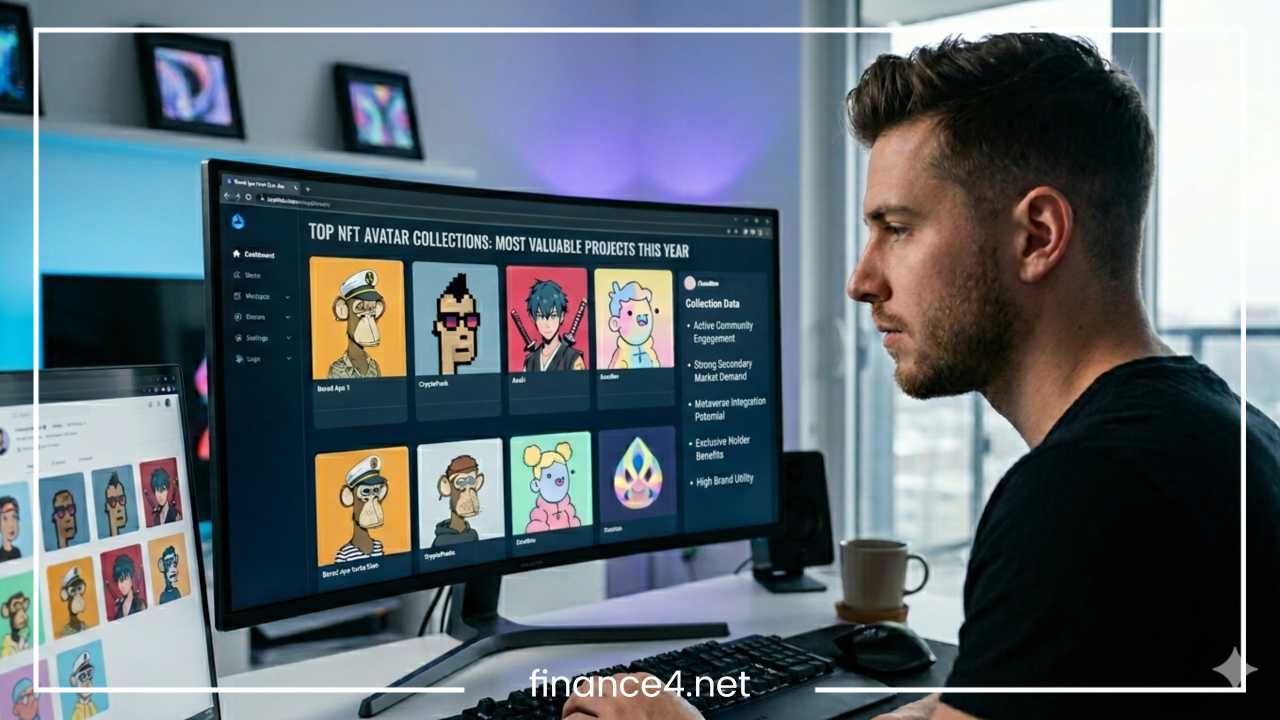
Top NFT Avatar Collections: Most Valuable Projects This Year
The digital landscape has undergone a profound transformation over the last decade, shifting from a space of simple information exchange to a complex ecosystem of digital ownership and identity. At the forefront of this revolution are Non-Fungible Token (NFT) avatars. Often referred to as profile picture (PFP) NFTs, these digital assets have evolved from niche experimental art projects into powerful symbols of social status, community membership, and programmable identity within the burgeoning Web3 space.
Initially, NFT avatars gained mainstream attention during the explosive market cycle of 2021. What began as a trend for enthusiasts to signal their early adoption of blockchain technology quickly ballooned into a multi-billion dollar industry. Celebrities, athletes, and global brands rushed to secure their own digital likenesses, turning these pixelated or 3D characters into the digital equivalent of luxury watches or high-end memberships. However, as the market moved through various cycles, the narrative shifted from pure speculation toward a focus on long-term sustainability and utility.
Today, the market has entered a phase of maturity. The collections that remain relevant are no longer judged solely on visual appeal or hype. Instead, “value” is now defined by a sophisticated mix of floor price stability, total market capitalization, cultural impact, and the tangible utility provided to holders. These avatars serve as the foundational layer for digital identity in the metaverse, acting as a gateway to exclusive communities and decentralised ecosystems. Understanding which collections dominate this space requires an analysis of how they have adapted to the changing demands of the digital economy.
What Makes an NFT Avatar Collection Valuable?
Determining the value of an NFT avatar collection is a multidimensional process. Unlike traditional assets, the worth of a digital collectible is often intrinsic to the network effects it generates. While price is the most visible metric, several underlying pillars support the valuation of the most successful projects in the world.
Rarity and Traits
At the technical level, most top-tier avatar collections are algorithmically generated. Developers create a set of base characters and a wide variety of individual traits, such as headwear, clothing, eye color, and background gradients. A smart contract then randomly assembles these traits to create a fixed supply of unique images.
The scarcity of certain traits creates a hierarchical value structure within a single collection. For example, a character with a “gold skin” trait might be significantly more expensive than one with a common trait. This internal economy of rarity drives demand among collectors who wish to own the most unique versions of a project, thereby increasing the overall floor price of the entire collection.
Community Strength
The strength of an NFT project is often a reflection of its community. In the decentralized world, a project’s holders act as its marketing team, developers, and ambassadors. Valuable collections typically have highly active Discord servers, dedicated social media followings, and a culture of engagement that persists even during market downturns.
Ownership of an avatar often grants “social capital.” In many circles, displaying a specific NFT as a profile picture signals that the individual belongs to an elite group of investors or creators. This sense of belonging creates a powerful retention loop; people are less likely to sell their assets if doing so means losing their status within a vibrant, influential community.
Utility and Ecosystem
In the current market, “art for art’s sake” is rarely enough to sustain high valuations. The most valuable projects have built expansive ecosystems around their core intellectual property. This utility can take many forms, including:
-
Airdrops: Holders receiving free additional NFTs or tokens that have their own market value.
-
Staking: The ability to “lock” an NFT to earn passive rewards or governance tokens.
-
Access: Entry to real-world events, private parties, or exclusive digital platforms.
-
Metaverse Integration: The ability to use the 2D avatar as a 3D playable character in various virtual worlds.
Brand Power and Partnerships
The transition from a “crypto project” to a “global brand” is a hallmark of the most successful collections. Projects that have secured partnerships with mainstream fashion houses, gaming studios, or media conglomerates tend to command higher valuations. When a project moves beyond the blockchain and into the physical world—through merchandise, animated series, or high-profile collaborations—it taps into a much larger audience, providing a buffer against the volatility of the crypto markets.
Historical Significance
In the world of collectibles, “provenance” is everything. The first-mover advantage is a massive factor in long-term value. Projects that pioneered the NFT avatar format or contributed significantly to the technical standards of the industry are viewed as “digital artifacts.” Investors often treat these collections as historical markers of the Web3 era, leading to a “blue-chip” status that is difficult for newer projects to replicate, regardless of how advanced their utility might be.
Overview of the NFT Avatar Market
The NFT avatar market has transitioned from a period of frenetic speculation to one of calculated growth. During the early years, the market was characterized by a “rising tide lifts all boats” phenomenon, where almost any new collection could achieve high volume. As the industry matured, a significant consolidation occurred. Investors became more discerning, moving away from derivative projects and focusing their liquidity on a handful of established leaders.
This era is defined by the rise of “Blue-Chip” NFTs. Similar to blue-chip stocks in traditional finance, these are collections that have survived multiple market cycles, maintain high trading volumes, and possess professional management teams. While the overall number of active NFT projects has increased, the majority of the market’s value is concentrated in the top ten to twenty collections.
Furthermore, there has been a notable shift in how participants view these assets. They are no longer seen just as speculative vehicles, but as long-term investments in intellectual property. The focus is now on how these brands will monetize their IP over the next decade. As the barrier between the physical and digital worlds continues to blur, the market for digital identity remains one of the most robust sectors of the blockchain economy.
Top NFT Avatar Collections This Year
To understand the current hierarchy of the market, one must look closely at the individual projects that have defined the standards of the industry. These collections represent the pinnacle of digital art, community building, and technological innovation.
Bored Ape Yacht Club (BAYC)
The Bored Ape Yacht Club, launched by Yuga Labs in 2021, remains perhaps the most culturally significant NFT collection in existence. Consisting of 10,000 unique cartoon apes, the project initially gained traction due to its “fair launch” and its promise of an exclusive digital clubhouse for holders.
What truly set BAYC apart was the decision to grant full commercial IP rights to the owners of the NFTs. This allowed holders to create their own businesses, products, and brands using their specific Ape’s likeness. This decentralised branding led to the creation of Bored Ape-themed restaurants, music groups, and clothing lines, exponentially increasing the project’s visibility.
Yuga Labs has since expanded the ecosystem into a massive conglomerate, acquiring other major projects and launching the Otherside metaverse. BAYC is more than just a collection of images; it is the cornerstone of a media empire that bridges the gap between Web3 and mainstream entertainment. Its value is sustained by its exclusive membership and its role as a leader in the “membership-as-an-asset” model.
CryptoPunks
If BAYC represents the future of NFT branding, CryptoPunks represents the history. Created by Larva Labs in 2017 and later acquired by Yuga Labs, CryptoPunks consists of 10,000 24×24 pixel art characters. As one of the earliest examples of the generative NFT profile picture format, they are widely regarded as the “OG” collection.
The value of CryptoPunks is rooted in their scarcity and historical importance. There is no roadmap, no staking mechanism, and no promised metaverse. Instead, they are valued as pure digital art and historical artifacts. Owning a Punk is a statement of “old money” in the crypto world, signifying that the holder understands or participated in the early days of the blockchain movement. Because they were originally given away for free, the journey from zero value to millions of dollars per Punk remains one of the most legendary stories in digital finance.
Azuki
Azuki brought a new level of artistic sophistication to the NFT world with its anime-inspired aesthetic. Launched by Chiru Labs, the collection of 10,000 avatars focused heavily on the “skater culture” of the internet and high-end storytelling. The project introduced the concept of “The Garden,” a corner of the internet where art, community, and culture fuse to create magic.
Azuki’s value proposition is built on its highly loyal community and its technical innovations, such as the ERC-721A standard, which significantly reduced gas fees for minting multiple NFTs. The brand has successfully expanded into physical fashion and is positioning itself as a major player in the global animation and entertainment industry. For many collectors, Azuki represents the bridge between traditional Asian art styles and the future of decentralized IP.
Doodles
Doodles stands out for its colorful, line-art aesthetic created by the artist Burnt Toast. The collection of 10,000 hand-drawn characters has focused on being a “community-driven” brand from the start. A portion of all sales goes into the “Doodlebank,” a treasury that holders can vote on how to spend for the benefit of the ecosystem.
Doodles has shifted its focus toward becoming a global media and entertainment brand. By hiring high-profile executives from the music and film industries, the project aims to bring its whimsical characters to the masses through music videos, live events, and mainstream partnerships. The value of a Doodle is tied to this expansion into the broader “culture” market, moving beyond the confines of the crypto-native audience.
CloneX
A collaboration between the virtual fashion studio RTFKT (later acquired by Nike) and the legendary Japanese contemporary artist Takashi Murakami, CloneX is a collection of 20,000 3D avatars designed for the metaverse. These avatars are high-fidelity models that can be exported for use in various virtual environments and games.
The value of CloneX lies in its intersection of high art and functional technology. Because of the Nike acquisition, CloneX holders are at the forefront of the “phygital” trend—the merging of physical products with digital assets. Holders often receive access to exclusive Nike sneakers that are linked to their digital avatars. This makes CloneX a premier choice for those interested in the future of digital fashion and wearable technology.
Moonbirds
Moonbirds, created by the Proof Collective, introduced a unique “utility-first” approach to NFT avatars. The 10,000 pixelated owls feature a mechanism called “nesting.” By keeping the NFT in their wallet and not listing it for sale, holders “nest” their bird, which allows it to level up over time and unlock increasingly valuable rewards.
This mechanism directly incentivizes long-term holding and reduces market supply, which helps stabilize the floor price. Moonbirds is backed by a group of highly influential venture capitalists and tech entrepreneurs, giving it a level of institutional credibility that few other projects possess. It remains a top choice for those who value data-driven utility and access to a high-net-worth network of collectors.
Pudgy Penguins
Pudgy Penguins is one of the greatest “comeback” stories in the NFT space. After a period of management issues, the project was purchased by a new leadership team that focused on building a brand that could appeal to children and families. They successfully launched a line of physical plush toys available in major retail stores, with each toy including a QR code that connects the owner to a digital experience.
This “retail-to-Web3” strategy has made Pudgy Penguins one of the most visible NFT brands in the world. By creating a sustainable revenue stream outside of NFT trading fees, the project has built a robust foundation for its digital avatars. It serves as a blueprint for how NFT projects can use cute, accessible IP to bridge the gap to the mainstream public.
Emerging NFT Avatar Projects to Watch
While the blue-chip collections dominate the headlines, a new wave of innovation is stirring in the emerging market. These newer projects are moving away from the static image format and experimenting with dynamic elements.
One major trend is the integration of Artificial Intelligence. New collections are featuring avatars that can “learn” and interact with their owners, using large language models to provide a personalized experience. These are no longer just pictures; they are digital companions.
Another emerging area is cross-chain NFTs. Historically, most high-value collections lived on the Ethereum blockchain. However, as scaling solutions and new networks like Solana, Polygon, and Bitcoin (via Ordinals) gain traction, we are seeing the rise of prominent avatar collections across multiple ecosystems. This fragmentation is leading to a more diverse market where different chains offer unique technical advantages for gaming or social media integration.
Key Trends Shaping NFT Avatars
The evolution of the avatar market is being driven by several macro trends that are redefining the relationship between users and their digital identities.
Metaverse Integration
As virtual worlds become more immersive, the demand for high-quality, interoperable avatars is rising. Projects are no longer content with being a 2D image on a social media profile. They are developing the rigging and files necessary for these characters to walk, talk, and interact in 3D environments. This turns the NFT from a simple collectible into a “skin” or a “persona” that the user can carry across different platforms.
Real-World Utility and Phygital Goods
The most successful projects are finding ways to bring value to the physical lives of their holders. This includes “token-gated” access to conferences and parties, as well as the ability to claim high-end physical merchandise. The “phygital” movement—where a physical item comes with a digital twin—is becoming a standard expectation for premium avatar collections.
AI and Dynamic NFTs
We are seeing a shift toward “Dynamic NFTs” (dNFTs), where the metadata of the avatar can change based on external data or user interaction. An avatar’s appearance might change based on the weather, the price of a certain cryptocurrency, or the achievements the user has reached in a connected game. This adds a layer of gamification and personalization that static images cannot match.
Shift Toward IP Ownership
One of the most radical shifts in the NFT avatar space is the movement toward holder-owned intellectual property. By allowing users to monetize their specific avatars, projects are creating thousands of “sub-brands.” This decentralized approach to marketing and business development is a core tenet of the Web3 philosophy, allowing the community to profit alongside the creators.
Risks and Challenges
Despite the immense potential and current value of these collections, the NFT avatar market is not without significant risks. It is a highly volatile sector, even compared to the broader cryptocurrency market.
Liquidity is a primary concern. Unlike stocks or fungible tokens, you cannot instantly sell an NFT at the market price. You must find a specific buyer willing to pay your asking price for your specific unique asset. During market downturns, liquidity can dry up almost entirely, making it difficult for investors to exit their positions.
Regulatory uncertainty also looms over the industry. Governments are still determining how to classify NFTs—whether they are digital art, securities, or consumer goods. Changes in regulation regarding IP rights, secondary market royalties, and taxation could significantly impact the valuation and operation of these projects.
Finally, there is the risk of “hype decay.” The NFT market is driven by attention. If a project’s leadership fails to innovate or if the community loses interest, even a “blue-chip” collection can see its value plummet. Maintaining relevance in the fast-paced digital world requires constant effort and a clear long-term vision.
How to Evaluate NFT Avatar Investments
For those looking to enter the market, a disciplined approach to evaluation is essential. Rather than following social media hype, prospective collectors should look at the fundamental data.
First, analyze the trading volume and floor price history. A project with consistent, high volume is generally healthier than one with occasional “pumps.” Second, research the team behind the project. Do they have a track record of building successful businesses? Are they “doxxed” (publicly known) or anonymous? Public accountability often correlates with long-term project stability.
Third, look at the “unique holder” ratio. A collection where a few individuals own a large percentage of the supply is more susceptible to price manipulation or sudden crashes. A wide distribution of holders suggests a more organic and resilient community. Finally, evaluate the “roadmap” and the project’s ability to deliver on its promises. A project that consistently meets its development milestones is far more likely to retain its value over time.
Final Thoughts
NFT avatars have moved far beyond their origins as experimental digital art. They have become the cornerstone of digital identity, social coordination, and brand building in the modern age. The most valuable projects this year are those that have successfully navigated the transition from speculative assets to sustainable ecosystems.
Whether it is the historical prestige of CryptoPunks, the cultural dominance of the Bored Ape Yacht Club, or the innovative retail strategies of Pudgy Penguins, these collections represent a new frontier of ownership. As the metaverse continues to develop and as blockchain technology becomes more integrated into our daily lives, the role of the digital avatar will only grow in importance.
The future of these collections lies in their ability to provide deep utility and a sense of belonging in an increasingly digital world. While the market will undoubtedly face challenges and fluctuations, the concept of a verifiable, unique digital identity is here to stay. For the modern collector, an NFT avatar is not just a picture—it is a passport to the future of the internet.