Best Aggregator to Check Bridging Fees Instantly
 by
by 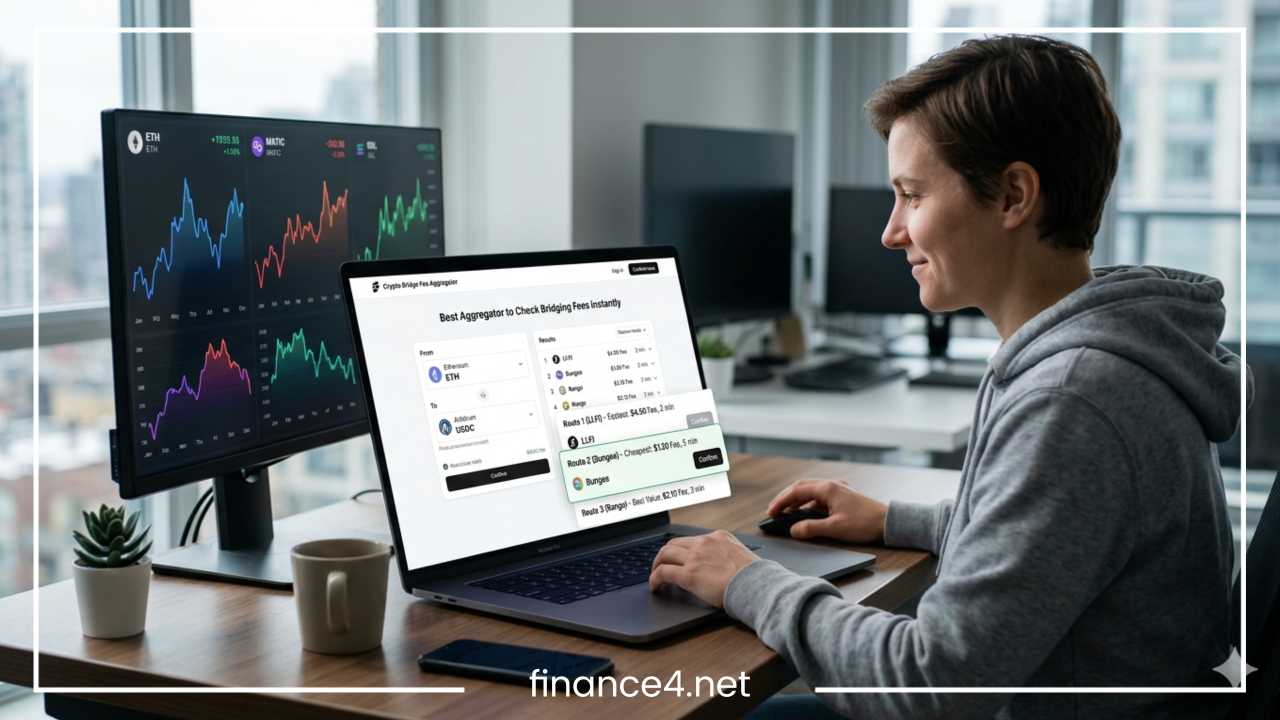
Best Bridge Aggregators to Check Crypto Bridging Fees Instantly
The expansion of the blockchain landscape has shifted from a single-chain dominance model to a vibrant, multi-chain ecosystem. Today, users are no longer confined to Ethereum Mainnet; they regularly traverse Layer 2 scaling solutions like Arbitrum, Optimism, and Base, as well as alternative Layer 1s like Solana, Avalanche, and Polygon. While this diversity fosters innovation and lowers barriers to entry, it introduces a significant challenge: fragmented liquidity.
Fragmented liquidity means that value is scattered across isolated networks. To participate in a new decentralized finance protocol or purchase a specific NFT, users often find themselves needing to move assets from one chain to another. This process, known as bridging, is notoriously complex. Each bridge operates with its own set of fee structures, security models, and latency periods. Without a centralized way to compare these variables, users often fall victim to unpredictable bridging fees and slippage.
The primary pain point for the modern Web3 user is the lack of transparency. Manually checking five different bridges to find the cheapest route for moving USDC from Ethereum to Polygon is time-consuming and often results in the user choosing an inefficient path. High gas fees on the source chain, combined with liquidity provider fees and destination execution costs, can eat significantly into a user’s capital. This is where bridge aggregators become an essential part of the tech stack, providing a single interface to scan the entire market and identify the most cost-effective and fastest routes instantly.
What Are Bridge Aggregators?
To understand bridge aggregators, one must first distinguish them from the underlying infrastructure they utilize. An individual bridge, such as Hop Protocol or Stargate Finance, is a specific transport layer. These protocols use various mechanisms—such as lock-and-mint, burn-and-mint, or atomic swaps—to move value. While effective, an individual bridge is limited to its own liquidity pools and supported chains.
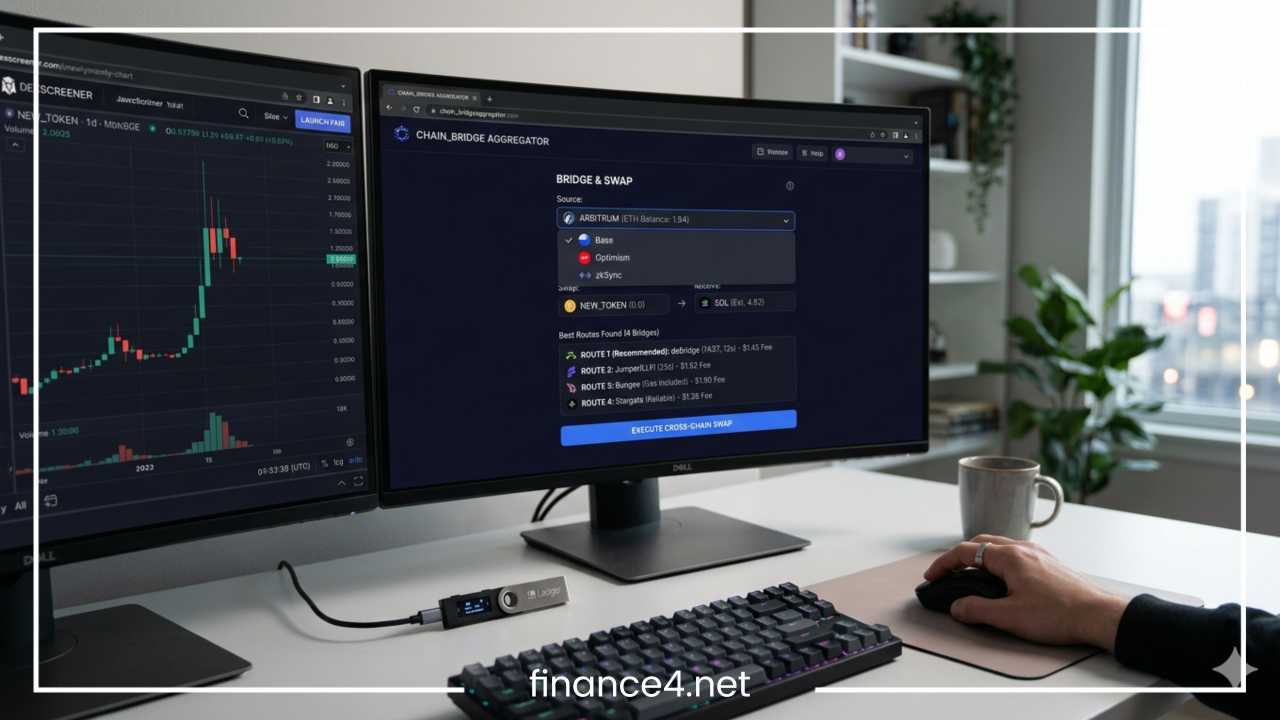
A bridge aggregator sits a level above these individual protocols. Much like a DEX aggregator such as 1inch scans multiple decentralized exchanges to find the best price for a token swap, a bridge aggregator scans multiple bridges to find the best route for a cross-chain transfer. It does not provide the transport layer itself; instead, it acts as a meta-interface that routes user requests through the most efficient third-party bridges available.
The core function of a bridge aggregator is route optimization. It takes a user’s intent—for example, moving 1 ETH from Arbitrum to Mainnet—and analyzes dozens of potential paths. It evaluates factors like current gas prices, liquidity depth, and bridge-specific fees. By aggregating these options into a single dashboard, these tools reduce the cognitive load on the user and ensure that they are not overpaying for the convenience of interoperability. Furthermore, many aggregators integrate swapping functionality, allowing a user to move from Token A on Chain X to Token B on Chain Y in a single transaction.
Why Bridging Fees Are So Confusing
The difficulty in calculating the true cost of a bridge transaction stems from the fact that the fee is actually a collection of several distinct charges. Most users see a single estimated cost, but under the hood, the capital is being eroded by several factors.
The most visible cost is the gas fee. In a cross-chain transaction, gas is typically required on both the source chain and the destination chain. The source chain gas pays for the initial deposit or lock transaction. However, someone must also pay for the transaction that releases the funds on the destination chain. Some bridges require the user to manually claim funds (requiring a second gas payment), while others “relayer” the transaction for a fee, abstracting the gas cost into the bridge’s total price.
Bridge fees are the service charges levied by the protocol itself. These are often a flat fee or a small percentage of the total volume (e.g., 0.05% to 0.1%). These fees sustain the protocol and incentivize the developers. Closely related are Liquidity Provider (LP) fees. If a bridge relies on local liquidity pools to facilitate instant transfers, the LPs who provide that capital take a cut of the transaction to compensate for the risk of impermanent loss or rebalancing costs.
Slippage and Price Impact are the hidden killers of value. If you are bridging a large amount of a token and the destination pool has low liquidity, the price of the asset may change during the transaction. Finally, there are Hidden Costs like MEV (Maximal Extractable Value). If a bridge route is inefficient, bots may front-run the transaction, resulting in a worse execution price for the user. Because these variables change every block, manual comparison is essentially impossible for a human, making automated aggregation a necessity.
Key Features of a Good Bridge Fee Aggregator
Choosing an aggregator is not just about finding the lowest number on the screen; it requires an analytical look at how that number is generated and what the trade-offs are. A high-quality aggregator should offer a comprehensive suite of features that prioritize the user’s economic interest and security.
Real-Time Fee Estimation
The volatility of gas prices on networks like Ethereum means that a quote valid sixty seconds ago might be obsolete now. A good aggregator refreshes its data constantly and provides a breakdown of exactly where the money is going—how much is for gas, how much for the bridge, and how much is lost to slippage. This transparency allows users to make informed decisions about whether to bridge now or wait for lower congestion.
Multi-Chain Coverage
Multi-chain coverage determines the utility of the tool. An aggregator that only supports EVM (Ethereum Virtual Machine) chains is useful, but one that bridges the gap between EVM, Solana, and Cosmos is far more powerful. As the industry moves toward non-EVM ecosystems, the ability to compare routes across disparate tech stacks becomes a major competitive advantage. The best aggregators are those that act as a gateway to the entire digital asset economy, regardless of the underlying architecture.
Route Optimization Logic
Route optimization logic should be flexible. Users have different priorities: a retail user moving $50 might prioritize the cheapest route regardless of time, while a whale moving $500,000 might prioritize the safest or fastest route to minimize exposure to market volatility. The ability to toggle between these preferences is a hallmark of a professional-grade tool. Sophisticated routing also involves “splitting” orders or finding “indirect” routes—for instance, bridging through a middle-chain like Polygon because it offers better liquidity for a specific pair than a direct Ethereum-to-Avalanche route.
Security and Transparency
Security and transparency cannot be overlooked. The aggregator should clearly state which bridges it is using and whether those bridges have undergone rigorous audits. Trust assumptions—such as whether a bridge is minting a wrapped asset or providing native liquidity—should be surfaced to the user. Finally, for power users and other protocols, API access allows for the integration of bridging directly into other dApps, creating a seamless omni-chain experience.
Best Aggregators to Check Bridging Fees Instantly
Several platforms have emerged as leaders in the aggregation space. Each has a unique approach to how they source liquidity and present data to the end-user.
LI.FI and Jumper Exchange
LI.FI is a middle-ware solution that powers many other platforms, while Jumper Exchange is its flagship consumer-facing product. LI.FI is essentially a bridge and DEX aggregator. It doesn’t just find the best bridge; it finds the best swap-and-bridge combination.
-
Supported Chains: Over 20 chains including Ethereum, Arbitrum, Optimism, Polygon, Solana, and various L2s.
-
Strengths: Incredibly deep integration. It aggregates nearly 20 bridges and over 30 DEXs. Its routing logic is among the most sophisticated in the industry, capable of finding “complex” paths that involve multiple swaps across different chains to ensure the final output is maximized.
-
Limitations: The interface can be overwhelming for absolute beginners due to the sheer number of options provided.
-
Best Use Case: Users who need to perform complex Cross-Chain Swaps (e.g., swapping MATIC on Polygon for ARB on Arbitrum).
Bungee (Powered by Socket)
Bungee is the front-end for the Socket protocol. It focuses heavily on the Refuel feature, which solves one of the most annoying problems in bridging: arriving on a new chain without the native gas token.
-
Supported Chains: Focuses heavily on the EVM ecosystem, including all major L2s.
-
Strengths: The Refuel feature allows users to send a small amount of gas to the destination chain as part of the bridge. The UI is exceptionally clean and focused on speed. It simplifies the user journey by presenting only the most relevant data points.
-
Limitations: Historically slower to add non-EVM chains compared to some competitors.
-
Best Use Case: Users who are frequently moving between L2s and want a simple, gas-conscious experience.
Rango Exchange
Rango describes itself as a multi-chain journey provider. It is perhaps the most ambitious in terms of the variety of ecosystems it connects.
-
Supported Chains: EVM, Solana, Cosmos, Osmosis, Juno, and even Bitcoin/ThorChain integrations.
-
Strengths: It is the go-to for moving assets between fundamentally different blockchain architectures. If you want to move from Ethereum to the Cosmos ecosystem, Rango is often the most direct path. It supports hardware wallets across various ecosystems, which is a rare feature.
-
Limitations: Because it covers so many chains, some routes can be quite slow as they rely on multiple hops across different protocols.
-
Best Use Case: Hardcore multi-chain users who operate outside the EVM bubble.
Comparison of Top Aggregators
| Feature | Jumper (LI.FI) | Bungee (Socket) | Rango Exchange |
| Primary Focus | Maximum Route Options | Ease of Use & Gas Refuel | Multi-Ecosystem (Cosmos/Solana) |
| Number of Bridges | 15+ | 10+ | 20+ |
| Non-EVM Support | Strong (Solana) | Limited | Excellent |
| Best For | Best Price Discovery | Daily L2 Transfers | Cross-Ecosystem Trading |
How These Aggregators Actually Work
Behind the sleek user interfaces of these platforms lies a complex series of smart contracts and off-chain routing algorithms. When a user inputs a request, the aggregator’s backend queries the APIs of dozens of underlying bridges.
The Smart Routing Algorithm is the brain of the operation. It calculates every possible permutation of a transaction. For instance, if you want to move USDC from Ethereum to Optimism, the algorithm checks:
-
Direct bridges: Checking protocols like Stargate, Across, or Hop to see who offers the best rate for that specific asset pair.
-
Indirect routes: Sometimes it is cheaper to swap USDC for ETH on the source chain, bridge the ETH via a canonical bridge, and swap back to USDC on the destination chain.
-
Multi-hop routes: If liquidity is thin on a direct path, the algorithm might suggest routing through a high-liquidity intermediary chain like Polygon or Arbitrum.
Once the routes are identified, the aggregator evaluates the cost of each. This is not just the bridge fee, but the effective price the user receives on the destination. This requires real-time integration with DEXs on both the source and destination chains to account for slippage.
The Liquidity Sourcing aspect involves monitoring the depth of pools. If a bridge has $10 million in its Ethereum-Polygon pool, a $1,000 transfer will have zero price impact. However, a $1 million transfer might drain the pool, triggering massive slippage. The aggregator detects this and might suggest splitting the transaction across two different bridges or choosing a different route entirely. The trade-off is always between speed, cost, and security; aggregators allow users to choose which of these three they value most for any given transaction.
Security Risks and Considerations
While aggregators provide immense utility, they are not without risk. It is vital for users to remember that an aggregator is an additional layer of code. While most aggregators are non-custodial—meaning they do not hold your funds—they interact with smart contracts that do.
The Vulnerability of Bridges
The history of blockchain is littered with bridge-related exploits. The Ronin Bridge Hack and the Wormhole Exploit are reminders that bridges are often the most targeted infrastructure in Web3 because they represent massive “honey pots” of locked liquidity. When you use an aggregator, you are indirectly exposing yourself to the security risks of the underlying bridge it selects. If an aggregator routes your funds through a bridge that gets exploited mid-transaction, your funds could be lost.
Custodial vs. Non-Custodial
There is also the distinction between custodial and non-custodial bridging. Some bridges rely on a centralized set of validators to approve transfers. If these validators are compromised, the bridge is compromised. Other bridges are trustless, relying on mathematical proofs (like ZK-proofs) or optimistic challenges. Aggregators often label these bridges, and users should look for those with high security ratings or multiple audits.
Aggregator Smart Contract Risk
Furthermore, the aggregator’s own smart contracts could have vulnerabilities. A malicious or buggy contract could misroute funds or fail to execute a swap correctly. To mitigate these risks, users should use well-known aggregators that have been integrated into large wallets (like MetaMask or Phantom) and have a proven track record of handling high volumes without incident. Always verify that you are on the official website of the aggregator to avoid phishing attacks.
How to Choose the Right Aggregator for Your Needs
The best aggregator is subjective and depends entirely on your profile as a user.
Retail Users
If you are a casual user moving small amounts of money to try out a new game or a social dApp, simplicity and gas management are your priorities. You should look for an aggregator like Bungee. Its Refuel feature is a lifesaver for people who don’t want to worry about being stranded on a new chain without the native token to pay for their first transaction. For retail users, the most expensive bridge is the one that leaves you unable to use your funds once they arrive.
DeFi Traders and Yield Farmers
For those who move large amounts of capital to capture yield opportunities, cost optimization is the only metric that matters. Even a 0.2% difference in fees can equate to thousands of dollars when moving significant volume. These users should use LI.FI/Jumper, as they provide the most granular control over routing and allow for slippage tolerance settings that protect large orders from front-running. The ability to view “gas-adjusted” returns is crucial here.
Developers and Integrators
If you are building an application and want to allow your users to pay in any token from any chain, you are looking for an aggregator with a robust SDK and API. Socket and LI.FI are the industry leaders here. They provide plug-and-play widgets that can be embedded into a website in minutes, allowing for a buy with any token experience that drastically improves conversion rates. By abstracting the bridging process, developers can keep users on their site rather than sending them to a third-party bridge.
Future of Cross-Chain Aggregation
The current model of bridge and swap is rapidly evolving. We are moving toward a future of intent-based bridging. In this model, a user doesn’t specify the bridge or the route; they simply state their desired outcome (e.g., “I want 100 native SOL on Solana, and I have 0.1 ETH on Arbitrum”). “Solvers” or “fillers” then compete to fulfill this intent in the most efficient way possible, often taking on the bridging risk themselves in exchange for a small fee. This shifts the complexity from the user to a professional market of liquidity providers.
Furthermore, the rise of cross-chain messaging protocols (like LayerZero, CCIP, and Wormhole) is making the concept of a bridge disappear. Instead of moving a token, these protocols allow a dApp on Chain A to simply call a function on Chain B. In this future, aggregators won’t just aggregate bridges; they will aggregate interoperability layers, allowing for seamless interaction between chains that doesn’t even feel like bridging to the end-user.
Unified liquidity layers will also play a role. Projects are working on omni-chain tokens that exist natively on multiple chains simultaneously, eliminating the need for wrapping or locking assets. As these technologies mature, bridge aggregators will become even more invisible, operating in the background of every wallet and exchange. The ultimate goal is a “chain-abstracted” experience where the user doesn’t even know which network they are using.
Final Thoughts
The complexity of the multi-chain world makes bridge aggregators an indispensable tool for anyone interacting with decentralized finance. By providing a single point of entry to compare fees, speed, and security across dozens of protocols, these platforms ensure that users keep more of their capital and spend less time navigating technical hurdles.
While the best aggregator depends on whether you value ecosystem breadth (Rango), gas management (Bungee), or deep liquidity routing (Jumper), the most important habit a user can develop is the habit of comparison. Just as one would not trade a large sum on a single DEX without checking for better prices elsewhere, one should never bridge assets without consulting an aggregator first.
As the infrastructure continues to mature, these tools will only become faster, cheaper, and more secure. We are rapidly approaching an era where the friction of moving value across the internet will be as negligible as the friction of sending an email. Until then, bridge aggregators remain the most powerful weapon in a crypto user’s arsenal for fighting high fees and fragmented liquidity. By leveraging these tools, you can ensure that your journey across the multi-chain landscape is as efficient and cost-effective as possible.