Top Bridging Aggregator for Cross-Chain Liquidity
 by
by 
Top 10 Cross-Chain Liquidity Aggregators
The blockchain landscape has undergone a monumental shift, evolving from a handful of isolated networks into a vast, sprawling ecosystem of hundreds of specialized blockchains. While this expansion has fostered unprecedented innovation, it has simultaneously introduced a significant friction point: liquidity fragmentation. In this decentralized world, capital, users, and applications are scattered across disparate networks, each operating with its own unique consensus mechanism, security architecture, and asset standards.
Moving assets between these chains has historically been a daunting, manual, and often error-prone process. Users frequently find themselves forced to manually research bridges, compare volatile fee structures, manage native gas tokens on both source and destination chains, and navigate the inherent security risks associated with third-party protocols. The rise of cross-chain liquidity bridging aggregators represents a critical evolution in decentralized finance, serving as the intelligent middleware required to abstract away the underlying plumbing of the blockchain ecosystem.
In this article, we will explore the architecture of these aggregators, explain why they are vital to the health of the broader DeFi market, and provide a comprehensive comparison of the top platforms currently leading the industry. By understanding how these tools optimize routing and liquidity, users can navigate the multi-chain future with greater confidence, reduced costs, and enhanced security.
What Is a Cross-Chain Liquidity Bridging Aggregator?
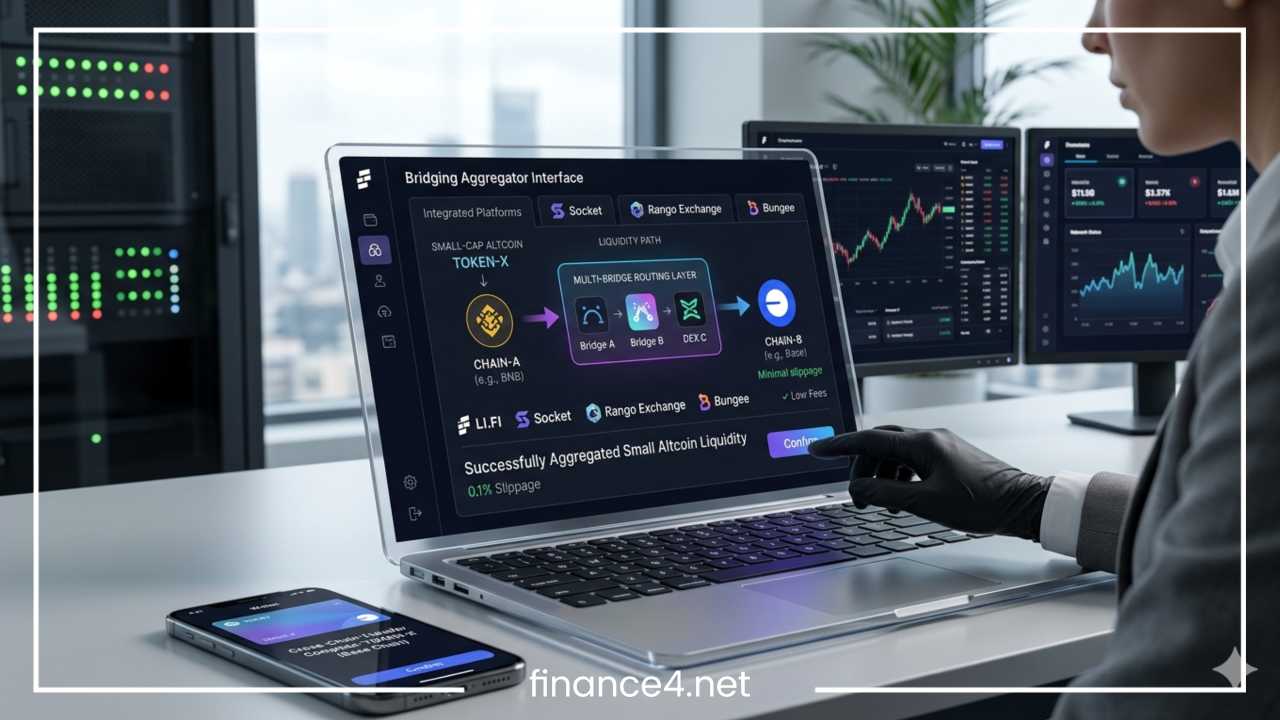
At its core, a cross-chain liquidity bridging aggregator is a sophisticated protocol designed to streamline the movement of assets across different blockchain networks by automatically scanning and evaluating multiple underlying liquidity sources in real-time.
The Bridge vs. The Aggregator
To appreciate the value of an aggregator, one must first understand its predecessor: the traditional cross-chain bridge. A standard bridge typically provides a fixed, pre-defined path between two specific networks. While functional, this model creates a rigid dependency; if that specific bridge suffers from low liquidity, high congestion, or a security vulnerability, the user is effectively stranded, often forced to accept inferior exchange rates or long waiting periods.
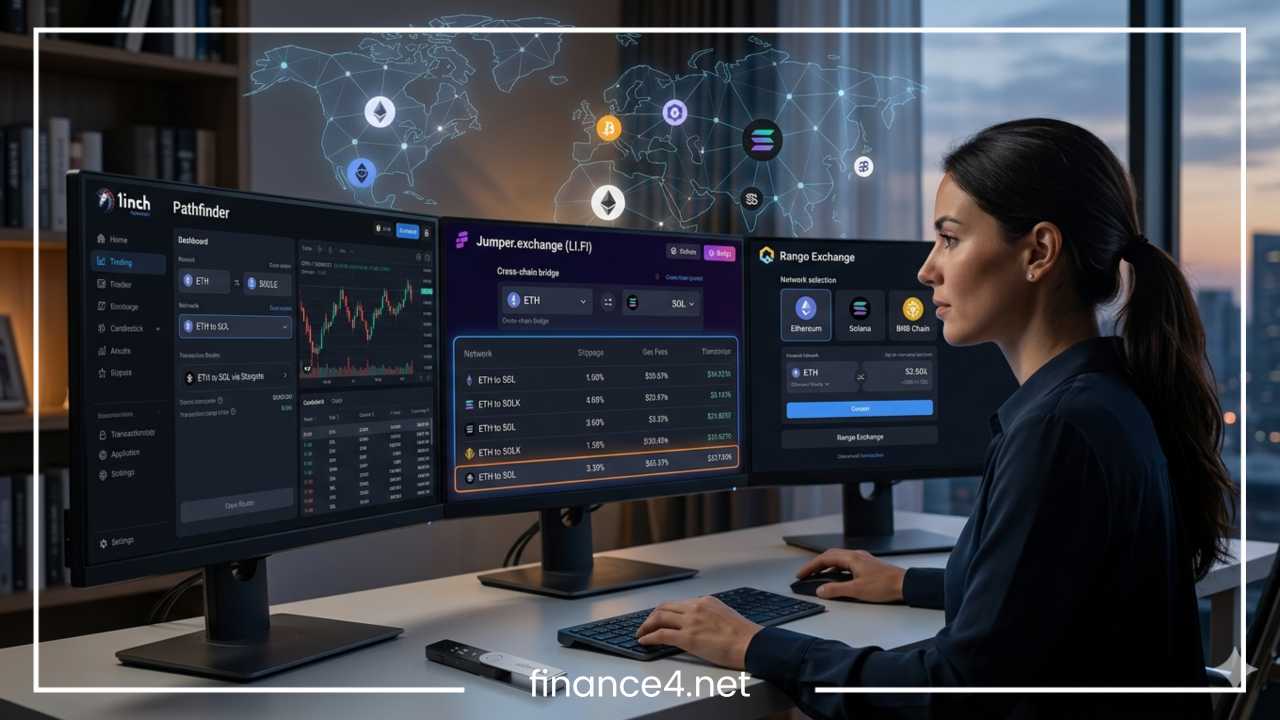
A bridge aggregator functions as a higher-level abstraction layer. Instead of locking the user into a single path, it acts as a discovery engine that sits atop a multitude of bridges, decentralized exchanges (DEXs), and liquidity pools. When a user initiates a cross-chain transaction, the aggregator performs a series of complex operations:
-
Route Optimization: It evaluates every possible path, considering factors such as speed, current network congestion, and protocol security, to select the most efficient route.
-
Liquidity Sourcing: By connecting to various pools, the aggregator ensures the transaction can be executed without causing excessive price impact, even for large volumes.
-
Fee Comparison: It aggregates fee data from across the ecosystem to minimize the total cost of the transfer, including gas fees on both chains.
-
Slippage Management: The platform can intelligently split a large order across multiple pools to ensure that the user receives the best possible rate, minimizing the difference between the expected and executed price.
By automating this discovery and execution process, the aggregator acts as a universal router, ensuring that the end goal—transferring assets seamlessly—is achieved with maximum efficiency.
Why Bridge Aggregators Matter in DeFi
The emergence of bridge aggregators is not merely a matter of convenience; it is a fundamental requirement for a mature DeFi market. As the number of L2 rollups and application-specific chains continues to grow, the complexity of moving capital grows exponentially.
Benefits to the User
The most immediate benefit is financial. By tapping into a vast network of routes, aggregators can identify paths that avoid congested or high-cost networks, significantly reducing the “gas friction” that plagues retail users. Furthermore, because these tools constantly monitor the status of various bridges, they can direct users away from routes currently undergoing maintenance or those experiencing liquidity crunches.
Beyond cost, aggregators offer a significantly improved user experience. In the early days of DeFi, a user might need to visit three different websites to move an asset from Chain A to Chain B and then swap it for a specific token. An aggregator collapses these steps into a single transaction, reducing the chance of human error and saving the user from needing to manage complex wallet interactions across multiple environments.
Challenges They Solve
-
Liquidity Fragmentation: By unifying liquidity pools across the ecosystem, aggregators ensure that capital can be utilized where it is most needed, rather than being trapped on a single chain.
-
Capital Inefficiency: Traditional manual bridging often results in capital “getting stuck” because a user is unsure of the best path to move it back to their preferred hub. Aggregators make capital movement fluid, which increases velocity and overall market efficiency.
-
Selection Paralysis: With dozens of bridges on the market, each with different security models and trust assumptions, users often face a difficult choice. Aggregators simplify this by vetting protocols and presenting only the most secure and reliable options for a given trade.
Evaluation Criteria
To provide a thorough and objective assessment of the top ten platforms in this space, we have evaluated each based on a weighted framework. This ensures that the rankings reflect a balance of technical capability, user accessibility, and security.
| Factor | Importance | Description |
| Supported Chains | High | The breadth of blockchain networks the aggregator can traverse. |
| Liquidity Sources | High | The depth and variety of bridges, DEXs, and pools connected. |
| Security Model | High | The technical architecture, audit frequency, and trust assumptions. |
| Speed | Medium | The latency of the transfer and the speed of finality. |
| Fees | Medium | The cost efficiency and transparency regarding gas and service fees. |
| User Experience | Medium | Ease of navigation, interface design, and clarity of information. |
| Institutional Support | Low/Medium | Compatibility with institutional-grade security and compliance tools. |
Main Section: Top 10 Cross-Chain Liquidity Bridging Aggregators
1. LI.FI
Overview
LI.FI stands as a powerhouse in the DeFi infrastructure space, acting as the primary engine for many other front-end applications. It provides a comprehensive aggregation layer that connects to almost every major bridge and DEX in the industry.
Key Features
-
Unparalleled aggregation breadth, connecting dozens of liquidity protocols.
-
Advanced smart routing that dynamically adjusts to market conditions.
-
Robust developer SDK/API, making it the preferred choice for dApp developers looking to integrate cross-chain functionality.
Supported Chains
Broad support across all EVM-compatible chains, Solana, and expanding non-EVM ecosystems.
Pros
-
Battle-tested security and reliability.
-
Deep integration with the broader Web3 stack.
Cons
-
Because it serves as infrastructure, the primary interface can sometimes feel less “retail-friendly” compared to dedicated consumer front-ends.
Best For
Developers building cross-chain applications and power users who value deep liquidity and reliability.
2. Socket
Overview
Socket is a protocol layer designed to connect all blockchains through a modular framework. Its front-end, Bungee, is one of the most widely used interfaces for retail cross-chain movement.
Key Features
-
The Refuel feature, which is a game-changer for new users, allowing them to bridge assets and receive native gas tokens on the destination chain in a single action.
-
Sophisticated route optimization that prioritizes both cost and security.
-
Modular architecture that allows for highly customizable integrations.
Supported Chains
Extensive support for major EVM networks, with continuous expansion into newer L2 rollups.
Pros
-
Excellent, intuitive user interface on Bungee.
-
Highly innovative features that solve common pain points like the “gas trap.”
Cons
-
The interface can experience latency during periods of extremely high network congestion.
Best For
Retail users who want a seamless, all-in-one experience without needing to manage gas separately.
3. Rango Exchange
Overview
Rango has established itself as a versatile aggregator that bridges the gap between different ecosystems, including those that are notoriously difficult to connect, such as the Cosmos and Solana networks.
Key Features
-
Multi-hop swaps that allow users to move assets across vastly different blockchain architectures in a single interaction.
-
A strong focus on retail accessibility and education.
-
Deep integration with a wide variety of hardware and software wallets.
Supported Chains
Extremely broad, covering virtually every major ecosystem, including non-EVM chains.
Pros
-
Unmatched chain coverage.
-
Extremely user-friendly for non-technical retail users.
Cons
-
Multi-hop routes can occasionally be subject to higher cumulative slippage depending on the path.
Best For
Users who frequently interact with multiple, disparate blockchain ecosystems.
4. Jumper Exchange
Overview
Jumper, which utilizes the industry-leading LI.FI infrastructure, offers a highly refined, user-friendly interface specifically designed to lower the barrier to entry for cross-chain interaction.
Key Features
-
Clear and pedagogical path visualization, explaining exactly how a transaction is being routed.
-
Comprehensive breakdown of all costs, including bridge fees and estimated gas, before the transaction is signed.
-
Detailed documentation that helps users understand the mechanics of their trades.
Supported Chains
Matches the wide-ranging, exhaustive support of the underlying LI.FI protocol.
Pros
-
Best-in-class user interface and user experience design.
-
Full transparency regarding routing choices.
Cons
-
As a consumer-facing implementation of LI.FI, it offers a similar feature set to other implementations, meaning it lacks unique, proprietary bridging protocols.
Best For
Users who prioritize UX/UI and want full transparency into where their funds are being routed.
5. OpenOcean
Overview
OpenOcean is a multi-faceted liquidity aggregator that focuses on the nexus between DEX swaps and cross-chain bridging, aiming to provide the best price across all possible venues.
Key Features
-
Deep liquidity sourcing from a massive network of DEXs.
-
Competitive pricing through a highly optimized order-routing engine.
-
Support for cross-chain swaps of disparate assets in one seamless action.
Supported Chains
Wide support across all major EVM mainnets and prominent L2 rollups.
Pros
-
Reputation for providing some of the lowest slippage on large trades.
-
Strong pricing engine that consistently competes with major centralized exchanges.
Cons
-
The user interface can feel somewhat cluttered as it tries to accommodate both DEX and bridging features simultaneously.
Best For
Active traders who want to combine standard swaps and cross-chain bridging within a single liquidity-optimized environment.
6. Owlto Finance
Overview
Owlto Finance has carved out a niche as a highly specialized bridge aggregator, focusing almost exclusively on the rapidly expanding Layer-2 ecosystem within Ethereum.
Key Features
-
Extreme focus on speed and low-cost transfers between L2 rollups.
-
High stability for users performing frequent Rollup-to-Rollup moves.
-
A minimalist, ultra-fast interface designed for rapid, recurring execution.
Supported Chains
Primary focus on Ethereum L2s, including Arbitrum, Optimism, Base, and zkSync.
Pros
-
Arguably the fastest settlement times in the L2 space.
-
Very consistent performance during high-traffic events.
Cons
-
Limited utility for users looking to bridge outside of the Ethereum ecosystem.
Best For
Users living primarily within the Ethereum L2 ecosystem who prioritize speed and efficiency.
7. Relay
Overview
Relay differentiates itself by focusing on intent-based routing. Instead of picking a route, the user declares an intent, and the protocol identifies the most efficient way to fulfill it.
Key Features
-
Atomic execution through an intent-based architecture.
-
Optimized for high-speed, predictable transactions, making it ideal for stablecoin movements.
-
A developer-first ecosystem that simplifies cross-chain integration.
Supported Chains
Primary focus on EVM-compatible networks.
Pros
-
Extremely high success rates for transactions.
-
Very efficient at handling “common” assets like stablecoins.
Cons
-
The intent-based model is more niche and may not support every long-tail asset or obscure network.
Best For
Users who need predictable, fast, and high-success-rate execution for stablecoin transfers.
8. XY Finance
Overview
XY Finance is a pioneer in “metarouting,” a sophisticated technique that allows for the swapping and bridging of assets across chains through a single, continuous liquidity path.
Key Features
-
Advanced cross-chain swaps with a dedicated focus on asset liquidity depth.
-
Customized routing logic that is perfect for complex, multi-hop requirements.
-
A robust bridge-DEX hybrid architecture.
Supported Chains
Broad support across all major EVM-compatible chains.
Pros
-
Highly efficient for complex, high-value asset swaps.
-
Strong focus on institutional-grade liquidity depth.
Cons
-
The interface can be slightly daunting for users unfamiliar with the technical nuances of routing.
Best For
Experienced DeFi users who manage complex asset allocations between multiple chains.
9. deBridge
Overview
deBridge is an interoperability protocol that goes beyond simple liquidity bridging, offering a high-security framework for cross-chain messaging and data transfer.
Key Features
-
Architecture that supports both messaging and liquidity transfer simultaneously.
-
High security emphasis, utilizing rigorous, validator-driven validation.
-
Developer-focused tools that enable the creation of true cross-chain dApps.
Supported Chains
Primary focus on secure connections between major EVM chains and Solana.
Pros
-
Industry-leading security standards.
-
Excellent infrastructure for building cross-chain applications.
Cons
-
The interface is functional but lacks some of the “gamified” retail ease-of-use seen in others.
Best For
Institutional users, developers, or anyone prioritizing high-security bridging over pure UI simplicity.
10. Across Protocol
Overview
Across has become a staple for fast bridging, utilizing an intent-based, optimistic architecture that allows for incredibly low-latency transfers.
Key Features
-
Near-instant bridging for major assets.
-
Competitive fee structures that benefit from an efficient relay system.
-
A strong focus on capital efficiency for liquidity providers.
Supported Chains
Major Ethereum L2s and base EVM chains.
Pros
-
Unbeatable speed for standard transfers.
-
Transparent and highly competitive fee modeling.
Cons
-
A smaller selection of supported assets compared to larger, more generalized aggregators.
Best For
Users who need to bridge large amounts of major stablecoins or tokens with minimal wait times.
Comparison Table
| Aggregator | Chains Supported | Route Optimization | DEX Aggregation | Best For |
| LI.FI | Very High | Advanced | Yes | Integration/Power Users |
| Socket | High | Advanced | Yes | Gas/UX Focus |
| Rango | Very High | Medium | Yes | Multi-Ecosystem Users |
| Jumper | Very High | Advanced | Yes | UI/UX Focus |
| OpenOcean | High | High | Yes | DEX/Cross-chain Swap |
| Owlto | Medium | Medium | No | L2-to-L2 Hops |
| Relay | High | High | No | Intent-based Speed |
| XY Finance | High | Advanced | Yes | Complex Swaps |
| deBridge | High | Medium | No | Institutional/Security |
| Across | Medium | High | No | High-Speed Bridging |
Security Considerations When Using Bridge Aggregators
While aggregators are designed to improve efficiency, it is crucial to recognize that they also introduce additional layers of risk. Understanding these risks is part of responsible DeFi participation.
Key Risks
-
Smart Contract Vulnerability: Even if an aggregator itself is secure, the bridges and DEXs it connects to represent multiple potential points of failure. If an underlying protocol is exploited, the path used for your transaction could be compromised.
-
Validator Assumptions: Most cross-chain protocols rely on a set of validators to verify messages between chains. It is important to know if a bridge relies on a centralized set of nodes or a decentralized validator set, as this dictates the trust assumptions of your transfer.
-
Bridge-Limbo Risk: In some cases, if a cross-chain transfer is interrupted, assets may get caught in a “pending” state. While aggregators work to minimize this, the inherent complexity of distributed systems means that network congestion or technical errors can still occur.
Best Practices for Users
-
Start Small: When testing a new route or a new aggregator, always perform a trial run with a negligible amount of capital.
-
Audit Transparency: Check the project’s documentation for information on their security audits. Legitimate protocols will be transparent about their code and the third-party firms that have audited them.
-
Monitor Fees and Routes: Never blindly sign a transaction. Review the path the aggregator has chosen and ensure the fees align with your expectations for the transaction speed.
-
Use Block Explorers: After initiating a bridge, keep an eye on your address via block explorers on both the sending and receiving chains to ensure the assets have reached their destination.
Future of Cross-Chain Liquidity Aggregation
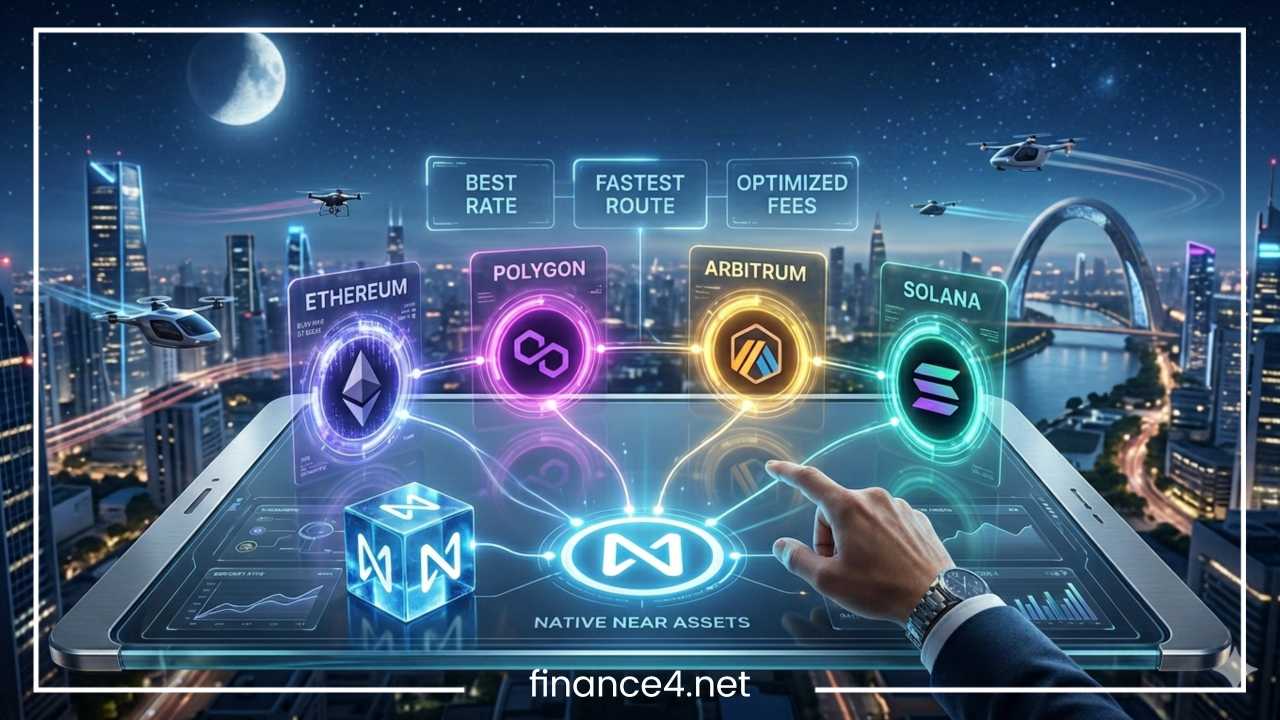
The industry is currently transitioning toward a concept known as “chain abstraction.” This represents the next major milestone in the evolution of blockchain UX. In a fully chain-abstracted world, the user will interact with a single, unified interface, and the underlying blockchain infrastructure—including bridging, gas payments, and liquidity routing—will happen entirely in the background.
Emerging Trends
-
Intent-Based Bridging: We are moving away from manual route selection. Users will simply declare an intent (e.g., “I want to swap 100 USDC on Arbitrum for 100 USDC on Base”), and the protocol will handle the complexity of finding the best route to fulfill that intent.
-
AI-Assisted Routing: Artificial intelligence will soon play a role in predicting optimal liquidity times and identifying routes that are less likely to experience congestion based on historical data.
-
Unified Liquidity Layers: Future protocols will likely move beyond simple bridging and toward shared liquidity layers, where assets don’t need to be “bridged” in the traditional sense but rather accessed across a shared, cross-chain state.
The ultimate goal is to make the blockchain layer as invisible as the server backend of a modern web application. As these technologies mature, users will be able to move capital and data effortlessly across the entire Web3 space, without needing to worry about the underlying technical limitations of the chains they are using.
Final Thoughts
Cross-chain liquidity bridging aggregators have fundamentally altered the DeFi experience, transforming what was once a convoluted, multi-step chore into a streamlined, high-speed activity. By prioritizing route optimization, fee reduction, and deep liquidity access, platforms like LI.FI, Rango, and Across have cemented themselves as essential tools for any serious multi-chain participant.
While the convenience of these aggregators is undeniable, the importance of maintaining an informed approach to security cannot be overstated. As the blockchain ecosystem continues to evolve, the shift toward intent-based architectures and seamless chain abstraction will further solidify these aggregators as the primary gateways for global liquidity. By choosing the right tool for the job and following best practices, users can successfully navigate the complexities of the multi-chain era, ensuring their capital remains fluid and accessible across the ever-expanding decentralized economy.
Frequently Asked Questions
Are cross-chain liquidity aggregators the same as crypto bridges?
No, they are different tools. A bridge is a specific protocol that moves assets from one blockchain to another. An aggregator is a higher-level platform that scans multiple bridges and decentralized exchanges (DEXs) to find the best route, lowest fees, and optimal liquidity for your transfer. Think of a bridge as a single airline, while an aggregator is a flight comparison site that helps you choose the best airline and connection for your journey.
How do cross-chain aggregators reduce slippage?
Aggregators reduce slippage by employing smart routing algorithms that can split a large trade across multiple liquidity pools or bridges. Instead of pushing the entire trade through one pool—which would significantly move the price and result in a bad exchange rate—the aggregator breaks it down into smaller, more efficient portions that the market can absorb more easily.
What is the biggest security risk when using bridge aggregators?
The primary risk is known as “stacked risk.” Because an aggregator connects to many different bridges, you are indirectly exposed to the security vulnerabilities of every protocol in the route. If one underlying bridge or liquidity pool is compromised or suffers a smart contract exploit, the entire transaction path could be affected. Always verify the audit status of the platforms an aggregator chooses for your route.
What does “chain abstraction” mean for DeFi users?
Chain abstraction is a user experience (UX) framework designed to make the underlying blockchain infrastructure invisible. In a fully chain-abstracted environment, you would interact with a single interface without needing to worry about manual bridging, gas token management, or which specific network your assets are sitting on. The aggregator handles all the “plumbing” in the background so you can focus on your financial goal.
Why did my cross-chain transaction get stuck?
Transactions often get stuck due to one of three common issues:
-
Gas on Destination: You might have successfully bridged your token, but you lack the native gas token on the destination chain to perform further actions.
-
Network Congestion: High traffic on the source or destination chain can delay the finality of the transaction.
-
Bridge Maintenance: The underlying bridge route chosen by the aggregator may have paused withdrawals or experienced a temporary liquidity drought.
Always check the official block explorer for the destination chain to see if the tokens have arrived, even if your wallet interface hasn’t updated.
Are these aggregators safe for large amounts of capital?
While many aggregators are well-audited and battle-tested, moving large amounts of capital always carries higher stakes. For significant sums, it is best practice to run a “test” transaction with a small amount first. Additionally, keep an eye on the “transaction history” features within the aggregator interface to track your funds in real-time, and consider splitting large transfers into smaller batches to mitigate risk.
Which cross-chain aggregator should a beginner use?
For beginners, platforms like Jumper or Bungee are often recommended because they prioritize user-friendly interfaces, offer clear explanations of the costs involved, and provide helpful features like gas-refueling (which automatically provides you with gas tokens on the destination chain). These tools are designed to remove the technical jargon and manual steps that often confuse new users.