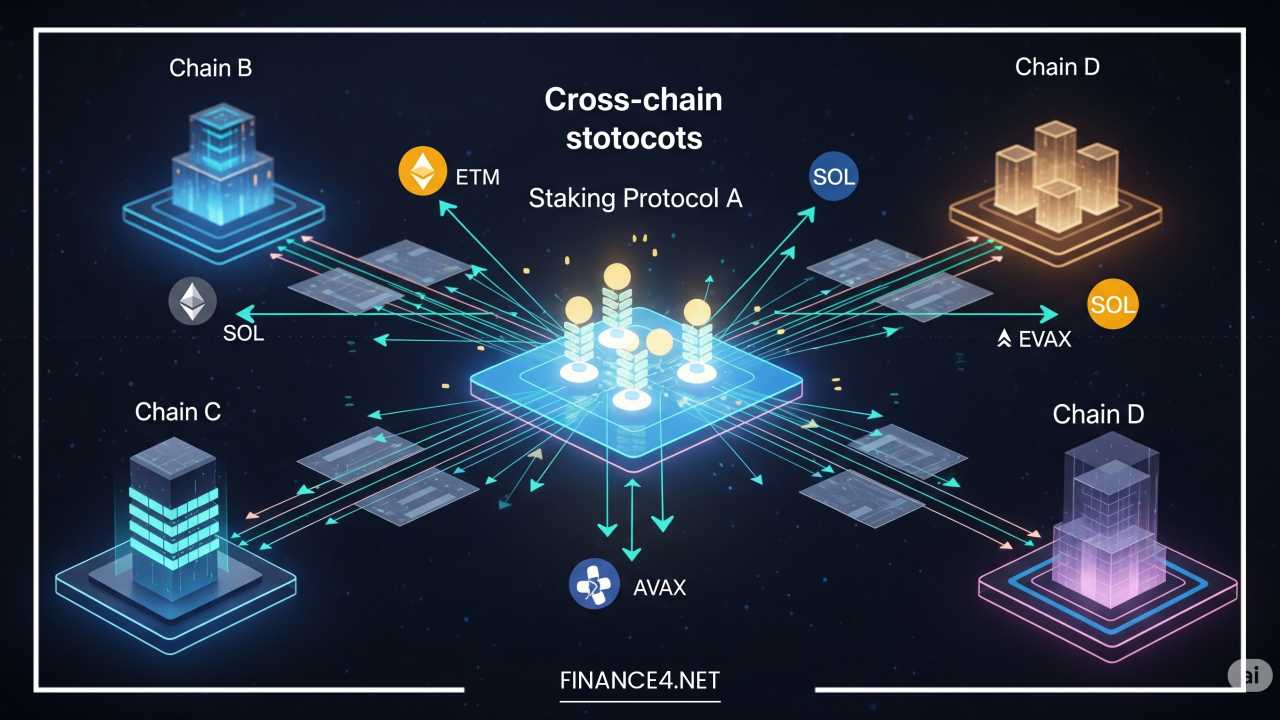
Tracking Cross-Chain MATIC Usage with Analytics
 by
by 
Tracking Cross-Chain MATIC Usage with Analytics: Complete Guide
The rapid expansion of the decentralized web has shifted the landscape from single, isolated blockchains to a vast web of interconnected networks. Within this multi-chain ecosystem, digital assets no longer remain confined to their native environments. Instead, they fluidly move across different layers and platforms to seek optimal yield, lower transaction costs, or access specific decentralized applications. One of the most prominent examples of this mobility is MATIC, the native utility token of the Polygon ecosystem. While natively functioning as the lifeblood of the Polygon Proof of Stake network, MATIC has established a substantial footprint across numerous other blockchain infrastructures.
As assets migrate across boundaries, they leave behind a fragmented trail of cryptographic footprints. For developers, investors, liquidity providers, and enterprise operators, understanding the velocity, destination, and behavior of these cross-chain movements is no longer a luxury but an absolute operational necessity. Fragmented blockchain data presents a unique challenge: each network operates under its own consensus mechanisms, smart contract structures, and ledger formats, making a unified view difficult to achieve.
This comprehensive guide explores the mechanics of tracking cross-chain MATIC usage through advanced blockchain analytics. Readers will learn the underlying architecture of cross-chain asset movement, the specific metrics required for comprehensive ecosystem monitoring, the tools available for data aggregation, and a blueprint for building multi-chain data pipelines. By mastering these analytical dimensions, stakeholders can transform raw ledger data into actionable intelligence, optimizing everything from protocol liquidity to institutional treasury management.
What Is Cross-Chain MATIC?
To accurately track MATIC across multiple networks, one must first understand that the token exists in several distinct states depending on the environment in which it resides. Native MATIC operates on the Polygon PoS network, where it is utilized to pay for transaction fees (gas) and to secure the network through cryptographic staking. On the Ethereum mainnet, MATIC exists as a standard ERC-20 token. When users move their assets beyond these two primary habitats, they interact with cross-chain variants.
The cross-chain movement of MATIC relies on bridging protocols that abstract the underlying network differences. When an asset leaves its native environment, it is typically wrapped or represented by a synthetic counterpart on the destination chain. For example, if a user transfers MATIC from Polygon to the BNB Chain or Arbitrum, the destination network handles a wrapped version of the asset that mirrors the value of the underlying token.
The structural distinction between these versions is critical for blockchain data analysis:
-
Native Assets: Tokens operating directly on their home ledger, bound to the consensus and gas mechanisms of that specific chain.
-
Wrapped/Bridged Assets: Synthetic tokens minted by smart contracts on external chains, backed by native assets locked securely within a bridge vault on the originating network.
Common cross-chain use cases for MATIC include capitalizing on decentralized finance (DeFi) yield opportunities on alternative Layer 2 solutions, purchasing non-fungible tokens (NFTs) across various multi-chain marketplaces, participating in decentralized gaming ecosystems, and executing high-frequency cross-chain arbitrage. Because each of these actions requires interacting with distinct smart contracts on different platforms, tracking the supply and velocity of these wrapped variants requires a sophisticated framework that can connect disparate ledgers.
Why Track Cross-Chain MATIC Usage?
The incentives for implementing comprehensive cross-chain analytics span several operational and strategic domains. As multi-chain liquidity becomes increasingly fragmented, relying solely on single-chain telemetry leads to incomplete strategies and unmitigated risks.
User Behavior Analysis and Wallet Activity
Understanding how users interact with MATIC across different networks allows decentralized application developers to optimize their product design and marketing strategies. By tracking cross-chain wallet analytics, teams can determine if users prefer specific networks for certain transaction sizes, how long they retain assets on a given destination chain, and what actions prompt them to migrate their capital. This data helps segment users into categories such as retail participants, power users, and institutional actors.
Bridge Adoption and Liquidity Movement
Bridges serve as the primary transit highways of the multi-chain ecosystem. Monitoring the volume of MATIC flowing through specific bridges provides immediate insight into which cross-chain pathways are gaining traction. Low adoption rates can point to friction points like high fees or slow confirmation times, whereas sudden spikes in bridge volume might signal a successful marketing campaign, a new protocol launch, or an emerging arbitrage window.
Total Value Locked and DeFi Analytics
Total Value Locked (TVL) remains a primary benchmark for evaluating ecosystem health. However, without cross-chain tracking, TVL calculations run the risk of double-counting assets or missing dark pools of liquidity trapped in isolated protocols. Advanced multi-chain analytics provide visibility into exactly where MATIC is deployed within DeFi pools, lending protocols, and automated market makers across all supported networks, providing a true assessment of liquidity concentration.
Treasury Management
For decentralized autonomous organizations (DAOs), project teams, and enterprise entities holding significant MATIC reserves, multi-chain monitoring is fundamental to risk management. Treasury managers must track asset distribution across various protocols to prevent over-exposure to any single network or smart contract risk. Real-time analytics enable these organizations to monitor yield performance, maintain optimal capital efficiency, and execute rebalancing strategies across multiple networks safely.
Security Monitoring and Compliance Reporting
Cross-chain pathways are frequent targets for malicious actors. Security teams leverage analytics to monitor for anomalous transfer patterns, sudden whale movements, or unauthorized contract interactions that could indicate an exploit or bridge vulnerability. Furthermore, institutional participants require meticulous compliance reporting. Tracking the provenance of cross-chain MATIC ensures adherence to anti-money laundering regulations, enabling compliance officers to audit the exact flow of funds across intermediate addresses and cross-chain routers.
How Cross-Chain MATIC Transfers Work
Tracking cross-chain activity requires an understanding of the cryptographic mechanisms that move state and value between isolated ledgers. Blockchains cannot inherently communicate with one another; therefore, intermediate systems must orchestrate these transfers.
The Lock-and-Mint Mechanism
The most common approach for cross-chain token movement is the lock-and-mint framework. When a user transfers MATIC from Chain A to Chain B, the tokens on Chain A are directed to a specialized smart contract known as a bridge vault. Once the transaction achieves finality on Chain A, the vault locks the tokens securely. A message is then broadcast to Chain B, instructing its corresponding bridge contract to mint an equivalent number of wrapped MATIC tokens to the user’s designated wallet address on the destination network.
The Burn-and-Release Mechanism
The reverse process occurs when returning assets to their originating chain. The user initiates a transaction on Chain B that sends the wrapped MATIC to a destruction contract, where the tokens are permanently burned. Proof of this burn event is packaged and transmitted back to Chain A. Upon verifying this message, the bridge vault on Chain A releases the corresponding amount of native MATIC back into circulation on the source network.
Message Passing, Validators, and Relayers
The underlying backbone of this infrastructure relies on cross-chain communication protocols, validators, and relayers. Relayers are off-chain nodes that actively monitor source chains for specific events, such as a lock or burn transaction. When an event is detected, the relayer extracts the cryptographic proof and transaction metadata, submitting it to a set of validators or an oracle network for consensus. Once the event is verified, the relayer delivers the message to the target chain’s smart contracts to execute the final mint or release step.
Transaction Lifecycle and Finality
Every cross-chain transfer follows a strict multi-stage lifecycle:
-
Initiation: The user signs a transaction on the source chain, interacting with the bridge contract.
-
Source Finality: The source chain processes the block, and the transaction reaches immutable finality.
-
Observation: Relayers identify the finalized log event on the source chain.
-
Verification: Validators verify the legitimacy of the transfer event.
-
Relaying: The verified payload is submitted to the destination chain.
-
Execution: The destination contract processes the payload and issues the corresponding tokens.
Analysts must account for the varying finality times across different blockchains. A transaction on a fast Layer 2 might achieve finality in seconds, whereas the Ethereum mainnet or other alternative Layer 1 chains may require significantly longer validation windows before a cross-chain message can be safely dispatched.
Types of Cross-Chain Analytics to Monitor
To build an institutional-grade monitoring system, data architects must divide the incoming multi-chain ledger data streams into specific categories of analytics.
Transaction Volume
Transaction volume measures the raw throughput of MATIC migrating across boundaries. Analysts look at daily transfers to identify short-term volatility or immediate reactions to macro market events. Weekly trends strip away daily noise to reveal broader shifts in user preferences, while monthly growth metrics serve as the primary indicator for assessing long-term ecosystem expansion or contraction.
Active Wallets
Raw volume can easily be skewed by a small group of high-frequency traders. Monitoring active wallets provides a clearer picture of actual user adoption. Analysts divide this domain into new wallets executing their first cross-chain transfer, returning wallets indicating sustained retention, and power users who move large volumes of assets across multiple protocols regularly.
Bridge Usage
Bridges vary in security profiles, fee structures, and execution speeds. Tracking bridge usage involves identifying which routing protocols capture the largest market share. Analysts compile data on the absolute volume processed by each bridge and cross-reference this with transaction success and failure rates. High failure rates often signal smart contract bottlenecks, gas shortages on destination chains, or relayer delays.
Transfer Value
Analyzing transaction values helps distinguish retail activity from institutional flows. Data sets are evaluated based on average transaction sizes and median transaction values to understand typical user interactions. Additionally, monitoring whale transfers—large-volume movements executed by high-net-worth addresses—is critical, as these shifts often precede substantial changes in market liquidity or protocol utilization.
Chain Distribution
A comprehensive analytics engine must map out exactly where cross-chain MATIC is distributed across the wider blockchain landscape. This involves tracking the percentage of circulating MATIC sitting on Polygon PoS versus the amounts deployed on alternative ecosystems such as the Ethereum mainnet, BNB Chain, Avalanche, Arbitrum, Optimism, and Base. This mapping highlights which competitive networks are successfully attracting MATIC liquidity.
Time Analysis
Blockchain ecosystems never sleep, but they do exhibit clear cyclical patterns. Time analysis focuses on isolating peak periods of activity by tracking transactions on an hourly, daily, and seasonal basis. Identifying these windows helps developers schedule protocol upgrades during low-volume periods and allows liquidity providers to adjust their capital parameters ahead of predictable high-volume trading hours.
Key Metrics for Cross-Chain MATIC Analytics
To turn these analytical categories into precise data points, tracking platforms monitor specific metrics that serve as the quantitative indicators of multi-chain health.
| Metric Name | Measurement Focus | Operational Utility |
| Transfer Count | Absolute number of cross-chain transactions over a specified period. | Measures raw network and bridge utilization independent of financial value. |
| Total Bridged Value | The cumulative financial value of MATIC moving across networks. | Evaluates the overall market demand for multi-chain MATIC mobility. |
| Bridge Fees | Total cryptographic tolls paid to bridging smart contracts and relayers. | Determines the operational cost-efficiency of specific cross-chain pathways. |
| Gas Fees | The native network fees consumed on both source and destination chains. | Pinpoints network congestion points and highlights gas optimization needs. |
| Average Confirmation Time | The time elapsed from source initiation to destination finality. | Benchmarks user experience and assesses relayer performance. |
| Failed Bridge Transactions | The percentage of initiated transfers that fail to execute correctly. | Identifies technical glitches, liquidity shortages, or contract bugs. |
| Wallet Retention Rate | The percentage of unique wallets that continue cross-chain activity over 30, 60, or 90 days. | Gauges platform stickiness and long-term user engagement. |
| Cross-Chain Frequency | How often an individual wallet moves assets between chains within a set timeframe. | Identifies algorithmic bots, arbitrageurs, and power users. |
| Net Inflow/Outflow | The mathematical difference between incoming and outgoing MATIC on a specific chain. | Signals capital migration trends and ecosystem preference shifts. |
| Liquidity Concentration | The ratio of bridged MATIC held within top-tier DeFi protocols versus idle wallets. | Measures capital efficiency and velocity within destination ecosystems. |
Tools for Tracking Cross-Chain MATIC Usage
No single utility can capture the entirety of cross-chain data. Instead, analysts leverage an ecosystem of tools ranging from granular block scanners to high-level relational data warehouses.
Blockchain Explorers
Blockchain explorers are the first line of data acquisition. Platforms like PolygonScan, Etherscan, and Blockscout allow analysts to inspect individual transaction hashes, trace exact smart contract calls, and verify token mint or burn events.
-
Strengths: Unrivaled granularity, real-time data accuracy, and direct verification of ledger state.
-
Limitations: Highly siloed; they cannot natively correlate events occurring across multiple distinct blockchains inside a single view.
Analytics Platforms
For aggregate analysis and trend identification, platforms like Dune, Flipside, Token Terminal, and Nansen are indispensable. These services index raw blockchain data into queryable SQL databases.
-
Strengths: Allow analysts to write custom multi-chain queries, build complex data visualizations, and track wallet labels to identify entity behavior (e.g., smart money or institutional market makers).
-
Limitations: Data availability can be subject to indexing lags, and constructing highly custom cross-chain queries requires significant data engineering expertise.
Cross-Chain Dashboards
Aggregators such as DeFiLlama and Artemis specialize in multi-chain telemetry, pulling data from thousands of protocols to present an integrated view of capital flows.
-
Strengths: Ready-to-use visualizations of TVL, cross-chain bridge flows, and net volume migrations out of the box.
-
Limitations: Abstract away low-level raw transaction data, making them less suitable for forensic auditing or specialized security investigations.
APIs and Infrastructure Providers
For teams building proprietary tracking software, accessing data requires direct infrastructure lines. This category includes Remote Procedure Call (RPC) providers, indexing protocols, and specialized data APIs.
-
Strengths: Provides raw programmatic control, enabling real-time stream processing and integration into custom data architectures.
-
Limitations: High infrastructure maintenance overhead, requiring robust data pipelines to parse, clean, and normalize the raw JSON-RPC payloads.
How to Build a Cross-Chain Analytics Dashboard
Creating a custom dashboard to track cross-chain MATIC usage requires a systematic approach to data engineering. The goal is to ingest unstructured, multi-chain event logs and turn them into a clear, unified visualization interface.
Step 1: Choose Supported Chains
Define the scope of your dashboard. Identify which networks outside of Polygon PoS and Ethereum mainnet are crucial for your operational visibility. Restricting the initial architecture to high-volume networks ensures manageable compute costs before expanding to long-tail chains.
Step 2: Connect Blockchain APIs and Node Infrastructure
Establish reliable access points to all target networks. This involves setting up dedicated RPC connections through infrastructure providers to guarantee constant uptime and low-latency block ingestion across all targeted chains.
Step 3: Index Bridge Events
Bridges broadcast specific cryptographic event logs upon token interaction. You must configure your indexers to listen for these specific log signatures. For example, monitor the transfer event signatures of the native Polygon Bridge contract as well as third-party liquidity networks.
Step 4: Normalize Wallet Addresses
Address formats can vary across different non-EVM networks, and even within EVM environments, tracking a single user entity across multiple chains requires normalization. Map addresses into a uniform format within your database to ensure that transfers initiated by a single entity on one chain are accurately attributed to that same entity when they touch another chain.
Step 5: Track Token Contracts
Locate and catalog the exact smart contract addresses for MATIC across every network being tracked. Because anyone can deploy a token named “MATIC” on a decentralized network, your indexing pipeline must explicitly whitelist the authenticated, official token contract addresses to prevent malicious or copycat tokens from corrupting your metrics.
Step 6: Store Historical Data
Design a database schema capable of handling high-velocity time-series data. Relational databases or optimized columnar data warehouses should be utilized to store indexed transaction records, historical balances, and event metadata. Implement partition strategies based on block timestamps to keep query performance fast as the dataset grows into millions of rows.
Step 7: Build Visualizations
Connect your data warehouse to a visualization layer. Design clean interfaces that feature high-level overviews (such as cumulative cross-chain volume and total active wallets) alongside granular filter systems that let users drill down into specific chains, bridges, or time frames.
Step 8: Create Alerts
Integrate real-time alert triggers into your analytics engine. Using webhooks or messaging services, configure alerts for anomalies such as whale transfers exceeding predefined thresholds, sudden drops in bridge success rates, or sharp changes in cross-chain gas costs.
Step 9: Monitor Trends and Optimize Pipelines
Regularly audit data pipelines for lag or gaps. As networks undergo updates or introduce changes to block structures, indexers must be adjusted to prevent data dropping out of sync. Continuous pipeline optimization guarantees that dashboard displays mirror live on-chain reality.
Common Challenges in Cross-Chain Analytics
Data engineers and analysts face significant hurdles when working with multi-chain environments. The decentralized, permissionless nature of public ledgers introduces structural inconsistencies that complicate data aggregation.
Token Standards and Wrapped Asset Variations
While the ERC-20 standard dominates EVM networks, variations in implementation details can alter how transfer logs are emitted. Furthermore, MATIC can exist as different wrapped iterations across various networks depending on which bridge minted the asset. Distinguishing between official wrapped tokens and third-party wrapped tokens requires meticulous contract mapping and ongoing database maintenance.
Duplicate Transactions and Double Counting
A single cross-chain transfer always generates at least two distinct on-chain events: a lock or burn on the source chain, and a mint or release on the destination chain. Simple aggregation scripts often count both events independently, artificially doubling the actual transaction volume and circulating supply statistics. Analytics engines must implement cryptographic correlation logic to link these two events into a single cross-chain transaction record.
Wallet Identity and Missing Metadata
While tracking users across EVM-compatible chains is simplified by identical public key derivation, tracking user movement between EVM and non-EVM chains breaks the linear trail of identity. Furthermore, many bridge contracts fail to include informative metadata within their event logs, omitting details like the intended destination chain or the identity of the recipient wallet on the target network. This requires analysts to perform complex downstream transaction tracing to uncover the complete path of funds.
Inconsistent APIs and Historical Data Gaps
Different blockchain platforms and RPC providers use varying data schemas and rate limits. Aggregating this data requires building specialized abstraction layers that transform diverse JSON-RPC responses into a uniform database schema. Additionally, indexers frequently experience node desynchronization or historical data gaps during network hard forks or extended congestion periods, requiring complex data reconciliation routines to restore database integrity.
Bridge Upgrades and Smart Contract Changes
Decentralized protocols evolve over time. When a bridging platform upgrades its core smart contracts to patch a vulnerability or improve efficiency, the underlying event log signatures often change. If an analytics framework relies on hardcoded contract parameters or outdated ABI specifications, it will immediately stop indexing transactions from the upgraded contracts, causing noticeable data blind spots.
Best Practices for Accurate Analytics
To mitigate these challenges and maintain high data integrity, analytics teams should integrate the following architectural standards into their tracking platforms.
-
Normalize Token and Currency Data: Always translate raw token amounts into their basic atomic units (decimals) based on the specific contract specifications before converting them into fiat or native token values.
-
Employ Multiple Redundant Data Sources: Never rely on a single RPC provider or indexing node. Use multi-node consensus checks to verify the accuracy of parsed block data and protect against node desynchronization errors.
-
Maintain an Active, Verified Bridge Registry: Explicitly map and continuously update the smart contract addresses of all recognized bridges, cross-chain routers, and asset vaults to ensure precise data filtering.
-
Track and Isolate Failed Transactions: Monitor destination chain status logs to identify transactions that failed post-initiation. Isolating these errors prevents inaccurate calculations of successful net asset inflows.
-
Implement Automated Anomaly and Velocity Alerts: Configure real-time alerts for deviations in transaction volume, unusual wallet concentrations, or drastic variations in average confirmation times to catch indexing failures or security events early.
-
Segment User Metrics by Chain and Protocol: Avoid blending all multi-chain users into a single group. Segment metrics to observe independent behavior patterns on individual networks.
-
Perform Periodic Cross-Validation Audits: Routinely cross-reference data pipeline outputs against trusted, independent block explorers to ensure that data aggregation remains accurate over time.
Real-World Use Cases
The practical deployment of cross-chain MATIC analytics delivers immediate value across several sectors of the Web3 economy.
DeFi Protocols and Liquidity Optimization
Decentralized exchanges and lending markets leverage cross-chain analytics to map out capital migration trends. If data reveals a steady outflow of MATIC from Ethereum mainnet to a specific Layer 2 network, DeFi protocols can proactively deploy new liquidity pools or adjust yield incentives on that destination chain to capture the moving volume and preserve their market share.
Centralized and Decentralized Exchanges
Exchanges utilize multi-chain monitoring to manage their asset distribution. By tracking the volume of cross-chain deposits and withdrawals, risk desks ensure that exchange hot wallets maintain optimal liquidity balances across all supported networks, minimizing processing delays for users while keeping surplus assets securely stored in cold systems.
GameFi and Cross-Chain Gaming Assets
Modern Web3 games frequently utilize multi-chain structures where the game engine runs on a dedicated network while players hold assets across various platforms. Analytics engines allow game developers to track how players move MATIC across bridges to buy in-game assets, helping studios trace player spending patterns and assess the economic health of their virtual marketplaces.
NFT Marketplaces and Digital Art Distribution
As prominent digital art collections and gaming NFTs launch across alternative layers, tracking cross-chain MATIC flows helps marketplaces identify which networks are actively generating the highest trading volume. This gives platforms clear indicators on where to focus cross-chain minting support and marketing resources.
DAO Treasuries and Decentralized Governance
DAOs that manage large asset portfolios utilize cross-chain analytics to generate transparent, real-time financial statements for their communities. Automated tracking dashboards give token holders clear visibility into treasury allocations across different networks, ensuring compliance with community governance votes and verifying portfolio diversification strategies.
Institutional Investors and Portfolio Management
For digital asset funds and institutional family offices, multi-chain analytics are a foundational component of standard risk management. Portfolio management systems ingest real-time asset tracking data to monitor exposure limits, calculate accurate multi-chain net asset values, and evaluate counterparty risks across all bridging smart contracts.
Future of Cross-Chain Analytics
As blockchain systems mature, the methodologies used to analyze cross-chain MATIC activity will undergo a significant technical evolution.
Chain Abstraction and Intent-Based Architecture
The broader industry is moving toward chain abstraction, a design philosophy that completely hides the complexities of multi-chain routing from the end-user. In an abstraction-centric landscape, users do not manually interact with bridges or switch network settings in their wallets; instead, they sign an intent, and specialized solvers handle the cross-chain execution behind the scenes. For analytics engines, this means tracking will shift from monitoring explicit bridge transactions to parsing complex intent-fulfillment paths and decentralized solver networks.
Unified Multi-Chain Data Lakes and AI Integration
Traditional siloed databases are being replaced by unified multi-chain data lakes. These modern systems store raw, unparsed ledger logs from dozens of networks inside a single distributed environment. Simultaneously, data engineering teams are integrating machine learning models directly into these data streams. AI-powered anomaly detection tools can analyze multi-chain transaction velocity in real time, automatically identifying security threats, predicting liquidity crunches, and grouping related wallet addresses across networks without relying on manual entry.
Zero-Knowledge Interoperability
The adoption of zero-knowledge (ZK) technology is redefining cross-chain messaging. ZK-bridges pass state changes between networks using mathematical proofs rather than relying on intermediate validator sets. Tracking these cutting-edge systems requires analytics platforms to monitor and verify ZK-proof generation logs and execution contracts, providing a whole new layer of cryptographic verification to multi-chain data pipelines.
Final Thoughts
Tracking cross-chain MATIC usage represents a vital shift away from legacy, single-chain monitoring models toward integrated multi-chain intelligence. As capital fluidly crosses distinct cryptographic networks, stakeholders must build and maintain robust analytical frameworks capable of normalizing fragmented ledger records, tracking accurate token states, and isolating multi-chain metrics.
While structural hurdles like varying token implementations, missing metadata, and duplicate events present real data engineering challenges, adhering to rigorous validation practices ensures high data reliability. Ultimately, clean multi-chain intelligence empowers developers, treasury managers, and investors to make data-driven decisions, manage smart contract exposures, and capture emerging growth opportunities within an increasingly interconnected decentralized economy.
Frequently Asked Questions
What is the difference between native MATIC and wrapped MATIC on external blockchains?
Native MATIC is the base token used to settle transaction fees and secure consensus on the Polygon Proof of Stake network. When MATIC is moved to external networks like Ethereum or Arbitrum, it is locked in a source smart contract and re-issued on the target destination as a wrapped token (such as an ERC-20 token). Wrapped variants represent a 1:1 claim on the native tokens held within the bridging protocol’s custody vault.
How do you track a Polygon bridge transaction end to end?
To trace a cross-chain transfer completely, you must capture the distinct transaction hashes generated on both the origin and destination networks. First, check the source blockchain explorer to confirm the token lock or burn event. Next, copy the transaction payload or specific log data into a cross-chain bridge explorer or indexer to verify that relayers have successfully processed the message and triggered the corresponding mint or release transaction on the destination chain.
Why do multi-chain analytics tools sometimes double count cross-chain transaction volume?
Double counting occurs when data aggregation pipelines treat the initial deposit event on the source blockchain and the subsequent distribution event on the target network as two separate, isolated financial transactions. Advanced multi-chain analytics systems fix this inflation by using unique message IDs or cryptographic nonces to link the source and destination events together into a single transaction record.
Can I track cross-chain wallet analytics for the same user across different blockchains?
Yes, within Ethereum Virtual Machine compatible environments, users typically share identical public wallet addresses across multiple networks. This consistency allows data analysts to map a wallet’s behavioral footprint across various layers. However, when tracking paths that cross into non-EVM ecosystems, analytics platforms must utilize advanced clustering algorithms and behavioral pattern matching to link different public keys to a single user entity.
How do I use Dune Analytics or Flipside Crypto to monitor multi-chain token transfer analytics?
You can build custom tracking dashboards by writing SQL queries against indexed database tables that aggregate data across multiple networks. By querying raw event logs—specifically filtering for the standard Transfer event topic alongside the known contract addresses of official bridge routers—you can calculate aggregate metrics like daily net inflows, transaction velocities, and wallet retention metrics inside a unified workspace.
What are the main limitations of using standard blockchain explorers for cross-chain transaction tracking?
Standard explorers are inherently restricted to reading the state of their own specific ledger. For example, Etherscan can only display data directly processed on the Ethereum mainnet. When an asset leaves that specific environment via a bridge contract, the explorer loses visibility. Comprehensive tracking requires using multi-chain data aggregators or dedicated bridge scanners that index cross-chain message passing frameworks directly.