How to Trade NFTs with Synthetic Assets
 by
by 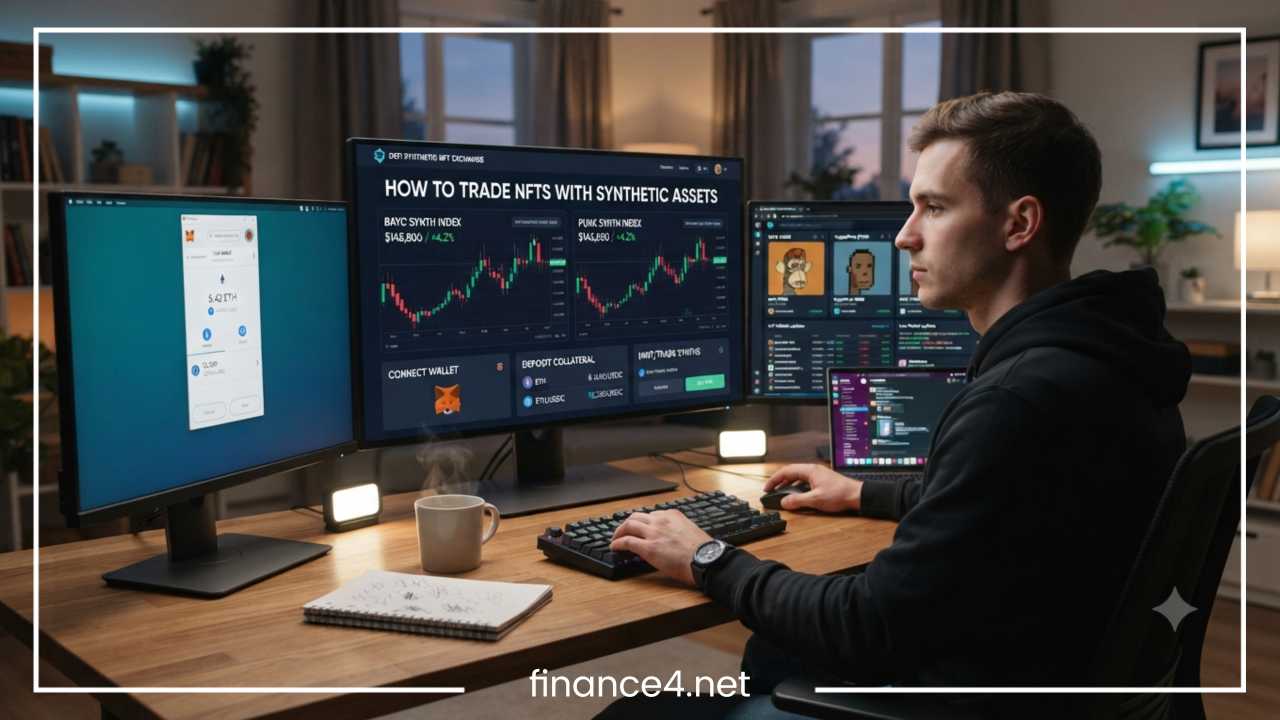
How to Trade NFTs with Synthetic Assets: Step-by-Step Guide
The digital asset ecosystem has witnessed two massive waves of innovation over the past decade: Decentralized Finance (DeFi) and Non-Fungible Tokens (NFTs). DeFi revolutionized how we think about financial infrastructure, introducing automated market makers, decentralized lending, and permissionless liquidity pools. On the other hand, NFTs completely transformed the concept of digital ownership, allowing creators, collectors, and gamers to buy, sell, and verify unique digital items on the blockchain.
While both sectors have grown exponentially, they have largely operated in separate silos. The NFT market has traditionally suffered from a structural challenge: acute illiquidity. Unlike fungible cryptocurrencies like Bitcoin or Ethereum, which can be traded instantly in any fractional amount, traditional NFTs require finding a specific buyer willing to purchase a specific token at a specific price. This friction often leads to capital inefficiency, high slippage, and significant barriers to entry for everyday retail participants.
To bridge this gap, innovative developers began applying DeFi principles to the NFT ecosystem, giving rise to the practice of using synthetic assets for NFT trading. By creating financial derivatives that track the floor prices or index values of popular NFT collections, traders can gain exposure to high-value digital assets without ever having to hold the underlying token. This guide provides an in-depth, step-by-step look at how to trade NFTs with synthetic assets, exploring the underlying technology, advantages, practical workflows, and critical risk mitigation strategies.
What Are NFTs?
To understand how synthetic NFT assets operate, it is essential to first establish a solid foundation regarding the underlying assets themselves. Non-Fungible Tokens, or NFTs, are unique digital certificates issued on a blockchain—most commonly Ethereum, Solana, or Polygon—that represent ownership of a specific item or piece of content.
Unlike fungible tokens, where every unit is identical and interchangeable (for example, one US Dollar is worth exactly the same as another US Dollar, and one Ether is identical to another Ether), each NFT possesses unique attributes, metadata, and token IDs. This uniqueness means they cannot be exchanged on a one-to-one basis with another token of the same collection.
The application of NFTs spans a wide variety of digital and physical categories:
-
Digital Art: Digital illustrations, generative art collections, and 3D animations where ownership and provenance are cryptographically verified.
-
Gaming Assets: In-game items such as avatars, virtual weapons, digital skin upgrades, and characters that players truly own outside the game developer’s centralized servers.
-
Music: Audio tracks, albums, and concert tickets issued directly by artists to fans, bypassing traditional industry intermediaries.
-
Virtual Real Estate: Digital land plots within decentralized metaverse platforms where users can build experiences, host virtual events, or monetize advertising space.
-
Collectibles: Digital trading cards, profile picture (PFP) collections, and historical internet memorabilia that function as digital status symbols or community membership passes.
The valuation of traditional NFTs differs significantly from fungible assets. Because each item within a collection may have varying degrees of rarity based on its specific traits, asset prices fluctuate widely based on subjective demand, community engagement, speculative narrative shifts, and the overall floor price—the lowest price at which an asset within a specific collection can be purchased.
What Are Synthetic Assets?
Synthetic assets, frequently referred to in DeFi circles as “synthetics” or “synths,” are tokenized derivatives that mimic the value of another underlying asset. In traditional finance, a derivative is a contract whose value is determined by the performance of an underlying entity, such as a stock, bond, commodity, or currency index. Synthetic assets bring this exact mechanism on-chain, utilizing smart contracts to replicate the price movements of real-world or digital assets without requiring the user to physically purchase or store the actual item.
Synthetic assets rely heavily on three core infrastructure components to operate securely on a decentralized network:
-
Smart Contracts: Self-executing pieces of code deployed directly to a blockchain that automatically manage the minting, burning, and collateral requirements of the synthetic asset based on pre-programmed parameters.
-
Price Tracking Mechanisms (Oracles): Decentralized network nodes that fetch accurate, real-world pricing data from off-chain or external sources and feed that data directly into the on-chain smart contracts. Without robust oracles, the synthetic asset cannot maintain its peg to the underlying asset’s real price.
-
Collateralization: To ensure that a synthetic token has actual financial backing, users must deposit a specified amount of value—typically in the form of highly liquid cryptocurrencies or stablecoins—into a smart contract pool before a synthetic asset can be minted.
The scope of blockchain synthetic assets is vast and expanding rapidly, encompassing several distinct classes:
-
Synthetic Stocks: Tokens that track the price movements of major publicly traded equities, allowing global users to trade fractional shares 24/7 without traditional brokerage accounts.
-
Synthetic Commodities: Digital tokens pegged to the spot prices of physical goods like gold, silver, oil, or real estate indexes.
-
Synthetic Crypto Assets: Tokens that mirror the price of other cryptocurrencies across different networks (e.g., a synthetic Bitcoin asset trading natively on the Ethereum blockchain).
-
Synthetic NFT Indexes: Financial instruments that track the collective floor prices of an entire basket of NFT collections, providing broad exposure to the digital art and collectible markets.
Why Trade NFTs with Synthetic Assets?
Using synthetic crypto assets to gain NFT exposure offers numerous operational and financial advantages over buying and selling physical digital collectibles on traditional marketplaces. By decoupling price action from actual token ownership, traders unlock a far more flexible, efficient, and accessible market environment.
Better Liquidity
Traditional NFT markets are notoriously fragmented and illiquid. Selling a high-value NFT requires list management, waiting for a motivated counterparty, and accepting the risk that market conditions may deteriorate while waiting for a sale. Synthetic NFT tokens, conversely, operate within automated market maker (AMM) pools or centralized order books, enabling traders to enter and exit positions instantly at prevailing market prices.
Fractional Exposure
Many iconic NFT collections carry prohibitive floor prices, costing tens or hundreds of thousands of dollars for a single token. Synthetic variants allow for infinite fractionalization. A trader does not need to buy a whole asset; they can purchase $10, $100, or $1,000 worth of a synthetic NFT token, gaining proportional exposure to the price appreciation or depreciation of that premium asset class.
Lower Capital Requirements
Because synthetic trading supports fractional positions and decentralized leverage options, participants do not need to lock up massive amounts of capital to execute an investment strategy. Traders can allocate capital dynamically across multiple asset classes rather than sinking their entire net worth into a single piece of digital art.
Diversification
Investing in individual NFTs exposes collectors to specific trait risks, where certain properties within a collection may fall out of favor even if the broader project performs well. Synthetic NFT indexes allow users to diversify their capital by buying a single token that tracks the average value of multiple premier collections simultaneously, mitigating individual asset downside.
Reduced Entry Barriers
Trading standard NFTs involves interacting with multiple marketplace interfaces, dealing with complex bidding mechanics, verifying individual asset metadata authenticity, and paying variable creator royalties. Synthetic platforms abstract these steps away, offering a clean, unified trading interface that behaves exactly like standard cryptocurrency spot or perpetual trading.
24/7 Trading Opportunities
While traditional marketplaces can stall during market panics due to a complete lack of buy bids, synthetic platforms run continuously. Automated liquidation mechanisms, arbitrage loops, and deep liquidity pools ensure that positions can be actively managed, hedged, or liquidated at any hour of the day or night.
Portfolio Hedging
For collectors who already own physical, high-value NFTs but fear an impending market correction, synthetic assets provide an excellent hedging mechanism. By opening a short position on a synthetic token tracking their exact collection, the collector can offset potential real-world losses with short derivative gains without needing to sell their cherished digital collectible.
How Synthetic NFTs Work
The mechanism behind synthetic NFT trading relies on a sophisticated feedback loop that bridges unique, non-fungible assets with highly fungible, liquid DeFi tokens. To understand how these assets function, consider the fundamental architecture of an NFT-backed synthetic system:
| Component | Operational Function |
| NFT Collection | The primary target asset whose market floor price or historical sales data serves as the basis for valuation. |
| Oracle Feed | The decentralized data network that continuously aggregates floor prices from multiple marketplaces and pushes updates on-chain. |
| Synthetic Token | The ERC-20 or equivalent fungible token minted by the smart contract that precisely replicates the oracle-delivered value. |
| Collateral Pool | The decentralized reserve vault holding user deposits that secures the financial solvency of all active synthetic tokens. |
The workflow proceeds in a straightforward manner. First, an oracle network monitors a specific NFT collection across major secondary markets, filtering out wash trades and outliers to determine a reliable floor price. This price data is delivered to the synthetic protocol’s smart contract.
When a user wishes to initiate synthetic NFT trading, they must deposit an overcollateralized amount of a standard cryptocurrency (such as Ether or stablecoins) into the protocol’s collateral pool. Based on the current oracle price and the protocol’s safety ratios, the contract mints a corresponding amount of synthetic NFT tokens, which can then be freely traded on open decentralized exchanges.
If a trader wants to reclaim their original collateral, they must return the synthetic tokens to the protocol. The smart contract then burns (destroys) the synthetic tokens and unlocks the deposited collateral, minus any applicable protocol or transaction fees. Settlement is entirely digital, executed via code, and requires zero physical handling of the actual NFT asset.
Prerequisites Before You Start
Before diving into the mechanics of choosing platforms and executing trades, you must set up your digital environment correctly. Trading synthetic derivatives requires a fundamental understanding of Web3 infrastructure and proper operational security.
Wallet Setup
You cannot interact with synthetic protocols using a standard centralized exchange account. You require a non-custodial Web3 wallet that gives you full control over your private keys. Popular, secure choices include:
-
MetaMask: The most widely used browser extension and mobile wallet across Ethereum-compatible networks.
-
Rabby Wallet: A highly secure, developer-friendly alternative that provides clear transaction decoding and built-in risk warnings.
-
WalletConnect-Compatible Wallets: Any hardware or software wallet capable of utilizing the secure WalletConnect protocol to interface with decentralized applications (dApps).
Crypto Needed
To interact with smart contracts, pay for network execution fees, and provide necessary collateral backing, your wallet must be funded with appropriate digital assets:
-
Base Layer Currencies: Native network tokens such as Ethereum (ETH) or Polygon (POL) to settle transaction fees.
-
Stablecoins: Standard stable assets like USDC or USDT, which are overwhelmingly used as the primary collateral denominator on derivative platforms due to their price stability.
Network Selection and Gas Fees
Synthetic trading can occur on multiple layers. While Ethereum Layer 1 offers the deepest institutional liquidity, it also subjects users to high gas fees during periods of network congestion. Layer 2 scaling networks like Arbitrum, Optimism, and Base offer identical functionality with drastically lower transaction costs, making them far more suitable for active traders executing frequent adjustments.
Basic DeFi Knowledge
Traders must be thoroughly familiar with core DeFi concepts before attempting to navigate synthetic ecosystems. You should understand how decentralized exchanges function, how price slippage impacts order execution, the meaning of automated market makers, and how variable network speeds can influence transaction execution times.
Step-by-Step Guide to Trading NFTs with Synthetic Assets
Once your infrastructure is active and your wallet is funded, you can begin the formal process of executing synthetic NFT trades by following these detailed sequential steps.
Step 1: Choose a Platform
Your first objective is to identify a secure, reliable protocol that supports synthetic NFT trading or offers relevant derivatives infrastructure. When evaluating platforms, pay strict attention to five foundational vectors:
-
Security: Review the protocol’s historical record. Look for platforms that have operated for extended periods without experiencing severe economic exploits or smart contract hacks.
-
Liquidity: Ensure the specific synthetic NFT pair you wish to trade features deep liquidity pools. Low liquidity results in wide bid-ask spreads and severe price slippage when entering or exiting positions.
-
Supported Chains: Verify that the platform operates on an affordable blockchain network that aligns with your available capital and gas fee tolerance.
-
Fees: Analyze the protocol’s complete cost structure, including minting fees, redemption penalties, funding rates for perpetual swaps, and standard swap fees.
-
Audits: Only utilize platforms whose underlying smart contracts have been thoroughly audited by reputable, independent blockchain security firms (e.g., Trail of Bits, OpenZeppelin, ConsenSys Diligence).
Step 2: Connect Your Wallet
Navigate to the official, verified web domain of your chosen synthetic platform. Always double-check the URL to ensure you are not interacting with a malicious phishing site. Click the “Connect Wallet” interface element, typically located in the top-right corner of the application dashboard. Select your specific wallet provider from the prompt, review the permissions requested by the dApp, and cryptographically sign the connection request within your wallet interface to establish the secure session.
Step 3: Deposit Collateral
To mint new synthetic assets or open a leveraged derivative trading position, you must commit capital to the protocol’s vault. Select your preferred collateral asset (such as USDC or ETH) from the deposit menu. Input the specific quantity you wish to commit.
At this stage, the platform will display your individual Collateral Ratio—the mathematical relationship between the value of your deposited assets and the value of the synthetic debt you intend to assume. You must maintain an overcollateralized position to safeguard your account against market volatility; for example, a $200 deposit backing $100 of synthetic exposure equals a 200% collateralization ratio. Approve the token allowance transaction within your wallet, then confirm the final deposit transaction.
Step 4: Mint or Buy Synthetic NFT Tokens
Depending on the specific platform design, you will execute your trade through one of two primary pathways:
-
Minting Synthetic Assets: If you choose to mint, you interact directly with the primary issuance contract. The protocol locks your deposited collateral and issues brand-new synthetic NFT tokens directly into your wallet. This process creates an active debt position that must be managed continuously.
-
Buying Existing Synthetic Assets: Alternatively, you can completely bypass the minting process by navigating to the platform’s spot market interface or an integrated decentralized exchange. Here, you simply use your stablecoins or native crypto to purchase pre-existing synthetic tokens directly from an AMM liquidity pool. This approach gives you pure price exposure without the operational burden of managing a collateralized debt position.
Step 5: Monitor NFT Prices
With your synthetic position active, you must establish a systematic routine for tracking market conditions. Because your synthetic asset mirrors the real-world value of a digital collectible collection, you must keep a close eye on real-time market metrics:
-
Floor Price: Watch the lowest listing price of the underlying collection across major marketplaces.
-
Collection Volume: Analyze whether trading volume is rising or drying up, as low volume can precede sudden, erratic floor price drops.
-
Market Trends: Stay updated on community sentiment, roadmap announcements, or macro changes affecting the NFT landscape.
-
Oracle Updates: Ensure the protocol’s oracle feeds are updating frequently and precisely matching real-world marketplace conditions. Utilise dedicated analytics platforms like Dune Analytics, Blur, or OpenSea data feeds to verify information accuracy.
Step 6: Execute Trades
If your chosen platform supports advanced derivative trading mechanics rather than simple spot token accumulation, you can tailor your market execution using several order types:
-
Market Orders: Instantly execute your buy or sell transaction at the best available current market price. Best used when immediate execution is prioritized over price precision.
-
Limit Orders: Set a specific target price at which your trade should execute. The trade remains pending until the market hits your exact parameters, protecting you from unexpected price spikes.
-
Swaps: Quickly exchange one type of synthetic NFT token for a different synthetic asset within a unified liquidity dashboard.
-
Leverage: If the protocol features decentralized perpetual swaps, you can borrow capital against your collateral to amplify your price exposure.
Use extreme caution when utilizing leverage. While a 5x or 10x leverage position multiplies your gains if the floor price moves in your favored direction, it equally accelerates your path to total liquidation if the market moves against you.
Step 7: Close Your Position
When you reach your profit target or choose to cut your losses, you must formalize the exit strategy to reclaim your underlying capital:
-
Redeem and Burn: If you originally minted the synthetic tokens, navigate to the protocol’s vault interface. Return the exact quantity of synthetic assets required to satisfy your debt. The protocol will automatically burn those tokens, dissolve the debt obligation, and unlock your original collateral for withdrawal.
-
Sell via AMM: If you purchased the synthetic tokens on the open market, simply return to the trading dashboard, swap the synthetic tokens back into your original stablecoins or native cryptocurrency, and confirm the transaction to completely clear your portfolio exposure.
Risks of Trading NFTs with Synthetic Assets
While DeFi NFT trading unlocks unparalleled financial flexibility, it also exposes participants to a highly complex, multi-layered risk landscape. You must thoroughly comprehend these vectors before deploying real capital.
-
Market Volatility: The underlying NFT market is notorious for extreme, unpredictable price swings. A collection can lose significant value within hours due to shifting trends, community disputes, or project abandonment, causing rapid devaluation of your tracking synthetic asset.
-
Oracle Failures: Synthetic assets are entirely dependent on accurate data delivery. If an oracle experience a technical lag, a flash-loan manipulation attack, or a data feed distortion, the smart contract may read an incorrect asset price, leading to erroneous liquidations or broken asset pegs.
-
Smart Contract Vulnerabilities: DeFi protocols are built on complex code structures that may contain hidden software bugs or economic loopholes. If an attacker exploits a flaw in the platform’s minting or vault contracts, all deposited collateral could be permanently drained.
-
Liquidation Risks: If you hold a minted position or a leveraged trade, a sudden drop in the underlying NFT collection’s floor price will cause your collateralization ratio to degrade. If it falls below the protocol’s mandatory maintenance threshold, the system’s automated liquidation engine will immediately seize and sell your collateral to keep the pool solvent, imposing heavy financial penalties.
-
Collateral Fluctuations: If you use a volatile asset like Ether as your primary collateral instead of a stablecoin, you face a dual-risk scenario. If the price of Ether drops simultaneously while the synthetic NFT asset rises, your collateral ratio will compress at an accelerated rate, greatly increasing your vulnerability to sudden liquidation.
-
Platform Insolvency: In catastrophic market events where asset prices drop so fast that liquidation bots cannot execute fast enough, a protocol can accrue bad debt. If the total liabilities of the system outpace its reserves, the platform faces systemic insolvency, leaving users unable to withdraw their deposits.
-
Regulatory Uncertainty: The intersection of synthetic assets, derivatives, and digital collectibles occupies a heavily scrutinized legal gray area. Future legislative crackdowns or regulatory restrictions targeting synthetic asset issuance could force platforms to geoblock certain jurisdictions or shut down completely.
-
Low Liquidity: During severe market contractions, the capital pools backing specific synthetic pairs can dry up rapidly. If you attempt to exit a substantial position in an illiquid market, you may suffer immense financial losses due to devastating price slippage.
Tips for Successful NFT Synthetic Trading
To protect your trading capital and maintain a sustainable edge within the synthetic asset landscape, implement these practical operational methodologies:
-
Research NFT Collections Thoroughly: Never trade a synthetic asset based purely on technical chart patterns. Analyze the underlying community health, historical floor price resilience, trading volume velocity, and the track record of the founding team.
-
Maintain High Collateral Ratios: Do not skirt close to the protocol’s minimum collateral requirements. Keep your vaults significantly overcollateralized (e.g., maintaining a 250% or 300% ratio when the minimum requirement is 150%) to absorb sudden midnight flash crashes without getting liquidated.
-
Avoid Excessive Leverage: Treat leverage as a highly volatile tool rather than a standard operational setting. Keep leverage factors low, particularly when first navigating a new protocol or trading highly erratic collections.
-
Diversify Across Asset Classes: Avoid consolidating your entire trading portfolio into a single synthetic asset. Spread your capital across broad synthetic NFT indexes, various independent collections, and highly liquid standard stablecoin yield strategies.
-
Utilize Stop-Loss Strategies: If your chosen trading platform natively supports conditional limit orders, always establish explicit stop-loss parameters to automatically close out your positions before losses cascade into uncontrollable territory.
-
Track Gas Fees Continuously: Factor transaction costs directly into your mathematical profit-and-loss calculations. Executing frequent microscopic trades on networks with high gas fees can rapidly erode your trading profits.
-
Monitor Protocol Governance Updates: Subscribe to official communication channels, developer documentation sites, and discord alert feeds for the platforms you utilize. Protocol adjustments regarding collateral requirements, fee hikes, or layer migrations require instant portfolio adjustments.
-
Start with Small Positions: Treat your initial trades as purely educational exercises. Deploy microscopic sums of capital to test the full lifecycle of connecting a wallet, depositing, minting, trading, and redeeming before committing institutional-grade capital.
Best Platforms That Support Synthetic NFT Trading or Related Infrastructure
Navigating the synthetic NFT landscape requires selecting the right structural ecosystem. The following overview details prominent platforms, perpetual networks, and derivatives protocols that enable tokenized or synthetic exposure to the digital asset market.
1. NFT Perpetual and Derivatives Networks
These platforms specialize in offering synthetic decentralized perpetual futures contracts pegged to the floor prices of blue-chip digital collectible collections.
-
Main Use Case: Leveraged directional trading (longing and shorting) of NFT floor prices without holding actual tokens.
-
Supported Networks: Arbitrum, Optimism, and other select Layer 2 networks.
-
Key Features: Virtual Automated Market Maker (vAMM) architectures, clear leverage sliders, cross-collateralization support, and zero reliance on peer-to-peer liquidity matching.
-
Security Considerations: Highly dependent on high-speed, secure oracle update frequencies; users face funding rate costs to keep the derivative price pinned to the spot floor price.
-
Suitable User Type: Active day traders, quantitative scalpers, and advanced Web3 market participants looking to actively hedge real NFT collection holdings.
2. General Synthetic Asset Protocols
Broad-scale decentralized financial ecosystems designed for the creation, minting, and trading of a vast range of synthetic crypto assets, commodities, and custom indexes.
-
Main Use Case: Minting custom synthetic debt tokens backed by overcollateralized native network reserves.
-
Supported Networks: Ethereum Layer 1, Optimism, and Base.
-
Key Features: Deep shared liquidity models, zero-slippage trading mechanics against a global collateral pool, and native issuance tools for broad market index creation.
-
Security Considerations: Highly complex smart contract logic that has undergone multiple upgrades over several years; exposure to system-wide debt pool rebalancing risks.
-
Suitable User Type: Long-term capital allocators, portfolio diversifiers, and macro investors who want exposure to broader synthetic baskets rather than individual day-to-day asset trading.
3. NFT Fractionalization and Tokenization Infrastructure
Ecosystems that ingest physical NFTs into secure vaults and issue liquid, fungible ERC-20 tokens representing fractional ownership of the underlying collection.
-
Main Use Case: Converting highly illiquid individual collectibles into fractional, easily tradable fungible tokens.
-
Supported Networks: Ethereum, Polygon, and Arbitrum.
-
Key Features: Direct asset backing inside cryptographic smart vaults, direct integration with standard AMM platforms like Uniswap, and democratic vault buyout voting mechanisms.
-
Security Considerations: Risk of target vault buyout triggers occurring at unfavorable prices, alongside smart contract exploit risks regarding the vault storage mechanisms.
-
Suitable User Type: Retail investors wishing to accumulate fractional pieces of highly premium art collections, and liquidity providers wanting to earn fee yields on fractional pools.
Common Mistakes to Avoid
Many losses incurred during synthetic NFT trading stem from avoidable behavioral oversights and a failure to strictly monitor system parameters. Review this checklist to ensure you do not fall into standard retail trading traps:
-
Ignoring Collateral Ratios: Failing to regularly monitor your vault health is the number one cause of sudden liquidations. Assuming a safe ratio during a calm market period will protect you during an intense market drawdown is a recipe for financial loss.
-
Trading Illiquid Collections: Entering synthetic pairs that feature thin liquidity pools means you will pay exorbitant premium costs upon entry and receive highly depreciated value when attempting a rapid exit.
-
Not Checking Oracle Updates: Assuming a platform’s displayed price perfectly matches the true outside spot price without cross-verifying oracle health can trap you in a broken market arbitrage loop.
-
Overleveraging: Using maximum available leverage on an inherently volatile underlying asset class drastically narrows your liquidation margin, often resulting in total capital loss within minutes of market turbulence.
-
Ignoring Protocol Fees: Overlooking small recurring costs like hourly funding rates, minting spreads, and vault closure penalties can turn a theoretically profitable trade into a net loss over an extended period.
-
Using Unaudited Platforms: Chasing extremely high yield opportunities or exotic synthetic pairs on new, unaudited protocols puts your entire deposited principal at immediate risk of developer rug-pulls or code exploits.
-
Skipping Risk Management: Trading without clear, pre-determined profit take-points and ironclad stop-loss thresholds turns disciplined financial trading into pure, uncontrolled speculation.
Final Thoughts
The convergence of Decentralized Finance and Non-Fungible Tokens via synthetic crypto assets marks a massive evolution in digital asset market efficiency. By transforming unique, illiquid digital collectibles into highly fungible, fractionalized, and liquid derivative instruments, synthetic protocols completely democratize access to premier asset classes. Traders worldwide can now easily establish strategic price exposure to the NFT landscape without navigating the high capital requirements, transaction friction, and counterparty delays inherent to traditional physical marketplaces.
However, the immense flexibility unlocked by this framework comes with an equally elevated responsibility. Synthetic NFT trading introduces layers of structural risk that do not exist in standard spot markets. Participants must navigate volatile floor price swings, continuously manage variable collateralization ratios, and bear direct exposure to oracle dependencies and smart contract vulnerabilities.
Ultimately, success in this highly technical niche requires a disciplined approach to risk management. Traders must thoroughly research underlying protocols, verify auditing histories, use leverage with extreme moderation, and always start with modest position sizes. By balancing the innovative yield opportunities of DeFi with rigorous capital preservation strategies, you can safely navigate the dynamic frontier of synthetic asset trading.
Frequently Asked Questions
What is the difference between fractional NFTs and synthetic NFT tokens?
Fractional NFTs involve taking a specific, physical NFT, locking it in a smart contract vault, and splitting it into smaller fungible shares (like ERC-20 tokens) that represent direct fractional ownership of that exact asset. In contrast, synthetic NFT tokens do not require locking up an actual NFT. Instead, they are pure derivatives minted against external cryptocurrency collateral that use decentralized oracles to mimic and track the price movements or index value of a collection without giving you any claim to an underlying token.
Can you short NFTs using blockchain synthetic assets?
Yes. One of the primary advantages of synthetic asset platforms and NFT perpetual networks is the ability to open short positions. By depositing collateral and taking a short position on a synthetic token tied to an NFT collection’s floor price, you profit if the collection’s value decreases. This allows collectors to hedge their physical portfolios during market drawdowns without selling their actual digital collectibles.
What happens if an NFT synthetic asset platform experiences an oracle failure?
If a decentralized oracle network lags, suffers a data feed distortion, or experiences a flash-loan manipulation attack, it can push inaccurate price data to the platform’s smart contracts. This can cause the protocol to read an artificial price crash or spike, potentially triggering erroneous liquidations of user collateral pools or breaking the synthetic asset’s peg to the real-world NFT floor price.
How do collateralized synthetic assets protect against extreme NFT market volatility?
To survive severe price swings, synthetic protocols enforce strict overcollateralization parameters. When you mint a synthetic asset, you must deposit collateral (such as stablecoins or Ether) worth significantly more than the synthetic asset you receive—often maintaining a collateral ratio of 150% to 200% or higher. This financial cushion absorbs rapid market drops, giving traders a buffer to add more capital before the system initiates an automated liquidation.
Are there any gas fee optimization tips for trading DeFi synthetic assets?
To minimize transaction fees, you should avoid executing trades directly on Ethereum Layer 1, especially during periods of high network congestion. Instead, look for synthetic asset platforms deployed on Layer 2 scaling networks such as Arbitrum, Optimism, or Base. These networks process smart contract operations at a fraction of the cost, making frequent position adjustments, minting, and burning much more capital-efficient.