Bridging Ethereum NFTs to BSC
 by
by 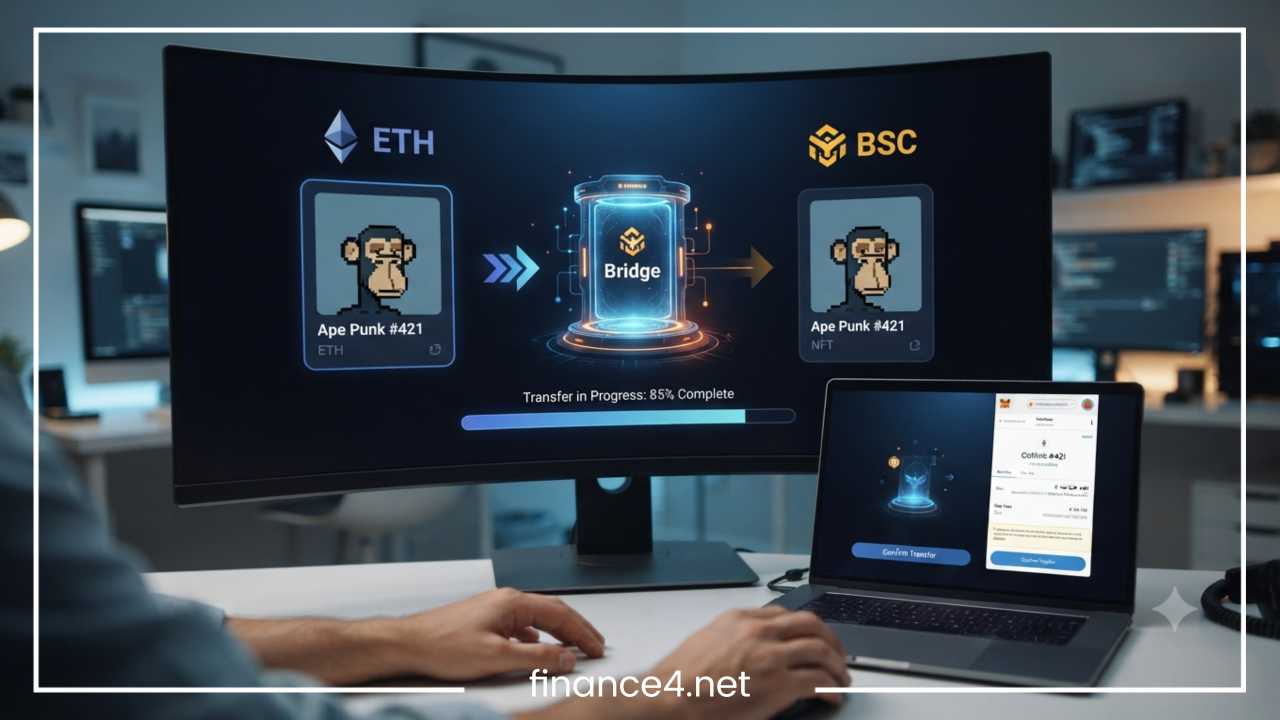
Bridging Ethereum NFTs to BSC: Complete Guide
The digital asset landscape has transformed from a single-chain environment into a vast, interconnected network of multiple blockchains. In the early days of digital collectibles, a single network held an absolute monopoly over creation, trading, and community building. Today, tokenized assets exist across a multitude of decentralized networks, each offering unique trade-offs regarding security, decentralization, speed, and cost. As these distinct ecosystems mature, the demand for fluid asset movement across them has intensified, making cross-chain infrastructure one of the most critical sectors in the broader industry.
Ethereum remains the dominant ecosystem for high-value digital collectibles. It hosts the most historically significant collections, commands the highest total trading volume, and possesses the deepest liquidity pools in the market. The network benefits from immense cultural capital and first-mover advantages, making it the default destination for prestigious digital artists, luxury brands, and blue-chip profile picture collections. The foundational security provided by its highly decentralized validator base gives collectors confidence when storing high-value digital assets for the long term.
However, this dominance comes with severe architectural trade-offs. The network frequently suffers from extreme congestion, resulting in unpredictable and exorbitant transaction fees, commonly referred to as gas fees. During periods of peak market activity, such as highly anticipated asset drops or broad market rallies, executing a simple transfer or interacting with a smart contract can cost hundreds of dollars in transaction fees. This high barrier to entry prices out retail participants, restricts active trading, and severely limits the financial viability of micro-transactions, gaming assets, and algorithmic dynamic collectibles.
To escape these financial and technical constraints, users and developers are increasingly looking to move assets to BNB Chain, formerly known as Binance Smart Chain or BSC. This network offers a compelling alternative by providing significantly higher transaction throughput and dramatically lower fees. For collectors, transferring assets to this ecosystem opens up affordable trading, active participation in decentralized applications, and interaction with new communities. For developers, it offers an environment where they can deploy interactive, high-utility collections without forcing their user base to bear prohibitive operational costs.
This comprehensive guide serves as a practical manual for navigating this multi-chain landscape. Readers will learn the underlying mechanisms of cross-chain asset migration, the architectural differences between the two prominent networks, and the economic motivations driving asset movement. Furthermore, the guide provides an exact, step-by-step walkthrough of the entire transfer process, evaluates the leading infrastructure providers, reviews essential technical standards, details transaction costs, outlines critical security risks, and troubleshoots common technical issues.
What Is an NFT Bridge?
An NFT bridge is a specialized decentralized infrastructure protocol designed to enable the secure movement of non-fungible cryptographic tokens between independent blockchain networks. Unlike fungible tokens, which are interchangeable and can be pooled to facilitate cross-chain liquidity swaps, non-fungible assets are completely unique and indivisible. Each asset possesses distinct token IDs and cryptographic metadata that must be preserved, verified, and mapped accurately when moving from a source network to a target destination.
Blockchain networks operate as isolated, self-contained ledgers. By default, a smart contract deployed on one network cannot natively communicate with, read data from, or modify the state of a contract on an entirely separate network. Cross-chain bridges solve this fundamental interoperability challenge. They act as translation layers and cryptographic clearing houses, monitoring events on the source network and executing corresponding actions on the destination network to ensure the total circulating supply of a specific asset remains constant across all systems.
It is important to differentiate between token bridges, NFT bridges, and generalized cross-chain messaging protocols. Token bridges deal exclusively with fungible assets, often relying on pre-funded liquidity pools on both sides to execute rapid swaps. NFT bridges must handle individual asset identities, tracking specific token IDs and their associated metadata. Generalized cross-chain protocols operate at a deeper layer, serving as the underlying communication fabric that transmits arbitrary data packets across networks, which specialized asset bridges then use to verify transactions.
The structural mechanics of cross-chain movement typically rely on one of two fundamental models. The first and most prevalent approach is the lock-and-mint model. The operational workflow occurs through the following sequence:
-
The user initiates the transfer by sending their original asset to a dedicated bridge smart contract on the source network.
-
The source smart contract receives the asset and securely locks it within its state repository, removing it from active circulation.
-
Oracle networks or decentralized validators monitor the source contract, verify the validity of the transaction, and transmit a cryptographic proof to the destination network.
-
A corresponding bridge smart contract on the destination network receives this proof, verifies its authenticity, and mints an identical wrapped version of the asset, matching the original token ID and metadata, to the user’s destination wallet address.
The second approach is the burn-and-release model, which is used when returning a wrapped asset to its original native network. The operational workflow follows this sequence:
-
The user initiates the return transfer by sending the wrapped asset to the bridge contract on the destination network.
-
The destination smart contract permanently destroys, or burns, the wrapped token, removing it from the secondary network’s supply.
-
The cross-chain communication protocol transmits a verified message back to the primary network confirming the destruction of the wrapped asset.
-
The original bridge smart contract on the primary network receives the message, processes the cryptographic proof, and unlocks the original native asset, releasing it back to the user’s specified wallet address.
This entire mechanism relies on a sophisticated architecture consisting of smart contracts, validators, and oracles. Smart contracts govern the precise rules of locking, minting, burning, and releasing assets. Validators act as the consensus layer of the bridge, monitoring state changes and signing off on transactions. Oracles serve as the secure data relays, fetching state proofs from one network and delivering them to another, ensuring the integrity of the cross-chain transaction.
Ethereum vs BSC for NFTs: Key Differences
To fully understand the necessity and utility of cross-chain asset migration, one must analyze the structural, economic, and cultural variations between the source and destination networks. The technical design choices made by each network’s core architects directly impact the user experience, transaction costs, settlement speeds, and the broader commercial ecosystem.
| Feature | Ethereum | BSC |
| Consensus | Proof of Stake | Proof of Staked Authority |
| Transaction fees | Higher | Lower |
| Speed | Slower | Faster |
| NFT ecosystem | Largest | Growing |
| Marketplace options | Extensive | Expanding |
Ethereum NFT Advantages
The primary advantage of the network lies in its massive, highly developed marketplace ecosystem. As the historical birthplace of tokenized digital art and collectibles, it commands the highest market valuations and attracts institutional capital, prominent traditional artists, and major global brands. This concentration of high-net-worth participants creates an environment of deep liquidity, where premium assets can be bought and sold with minimal slippage compared to smaller networks.
Furthermore, the ecosystem features an incredibly robust and battle-tested developer community. The tooling, libraries, auditing frameworks, and development environments available are the most mature in the industry. This technical maturity minimizes smart contract vulnerabilities and fosters rapid innovation in experimental asset structures, such as dynamic metadata, fractionalized ownership, and complex on-chain utility. The underlying network security provided by thousands of independent validation nodes gives collectors long-term peace of mind regarding ledger immutability.
BSC NFT Advantages
The defining advantage of this network is its exceptional cost efficiency. By utilizing an optimized consensus mechanism, the network slashes transaction fees to a fraction of a dollar. This economic accessibility transforms the user experience, allowing collectors to mint, trade, list, and transfer digital assets continuously without worrying about transaction costs eroding their capital. It democratizes participation, allowing retail users with modest budgets to engage fully with digital collectible ecosystems.
In tandem with low fees, the network delivers substantially faster confirmation times. Block creation occurs at a rapid, predictable cadence, resulting in near-instantaneous transaction settlement. This high-speed environment is ideal for interactive applications, such as Web3 gaming, where players must frequently update, modify, trade, or merge in-game assets in real time. Additionally, the network features tight integration with an expansive decentralized finance ecosystem, providing users with immediate opportunities to use their assets as collateral, participate in yield-generating protocols, and tap into alternative capital pools.
Why Bridge Ethereum NFTs to BSC?
Migrating digital collectibles away from their native network is driven by distinct operational, economic, and strategic motivations. Both retail collectors and enterprise developers face structural pressures that make cross-chain migration an attractive strategy for maximizing utility and preserving capital.
Lower Gas Fees
The most immediate catalyst for cross-chain migration is the optimization of transaction costs. Interacting with digital asset smart contracts on the primary network is an expensive endeavor. Simple actions such as approving a marketplace contract, listing an asset for sale, accepting an offer, or transferring a token to a cold wallet require significant execution gas. During market spikes, these fees can easily outvalue the underlying asset itself, creating a standstill where trading becomes economically irrational.
By moving the asset to the secondary network, these operational costs are drastically mitigated. Minting an entire collection, executing high-volume trades, or transferring items between multiple wallets costs pennies. This drastic reduction in overhead allows collectors to employ active trading strategies, participate in low-value open editions, and manage their portfolios dynamically without the constant financial drag of network fees.
Access to New Markets
Cross-chain migration enables direct exposure to entirely separate digital asset communities and demographic profiles. Each blockchain network develops its own distinct cultural identity, user base, and localized liquidity pools. Assets confined to a single network miss out on the purchasing power and engagement of communities dedicated to alternative ecosystems.
By bridging an asset, holders can list their items on alternative marketplaces, exposing their digital assets to a fresh audience of collectors who capital-allocate exclusively within that ecosystem. This cross-pollination enhances asset visibility, drives demand from alternative market sectors, and provides arbitrageurs with opportunities to capitalize on price discrepancies for similar collections across different network venues.
NFT Utility Expansion
Modern digital assets are evolving past static imagery into dynamic instruments of utility. Bridging serves as a primary mechanism for expanding what an asset can actually do. The alternative network is home to a massive, hyper-active ecosystem of decentralized gaming applications and virtual worlds that require fast, cheap state updates.
The transfer process moves from the baseline asset holding on Ethereum, through the bridge smart contract custody protocol, into the cross-chain validation phase, and finishes with the minting of the wrapped counterpart on the target chain.
For instance, an avatar asset originally created on the source network can be bridged to the destination network to unlock an active, playable character within a popular Web3 game. Furthermore, the extensive financial infrastructure on the target network allows users to deposit their wrapped assets into innovative financial protocols, enabling them to borrow stablecoins against their collectibles or lease their assets to other users for passive yield.
Developer Benefits
For creators and project founders, cross-chain capability eliminates user friction and opens up new avenues for experimentation. Deploying an interactive collection entirely on an expensive network limits the audience to a small group of wealthy capital allocators. By utilizing bridges, developers can maintain a prestigious presence on the primary network while offloading high-velocity interactive elements—such as leveling up characters, changing equipment, or collecting daily items—to the cost-efficient secondary network. This hybrid architectural approach keeps user acquisition costs low while preserving the brand value associated with the primary ecosystem.
How Does Ethereum NFT Bridging Work?
The mechanics of moving a unique digital asset across distinct cryptographic ledgers require a highly coordinated, multi-stage technical workflow. This sequence ensures that asset scarcity is strictly maintained and that no duplication of data or value occurs during transit.
Step 1: NFT Verification
The bridging sequence begins with a rigorous cryptographic audit conducted by the bridge infrastructure’s ingestion smart contract. When a user submits an asset to the bridge, the system must definitively identify the specific source smart contract address, confirm the authenticity of the token standard, and verify that the initiating user is the true, cryptographically proven owner of the specific token ID. This step prevents unauthorized state manipulation and ensures that malicious actors cannot attempt to bridge assets they do not legally control within the source ledger.
Step 2: Locking the Original NFT
Once ownership and authenticity are validated, the original asset must be safely isolated. The user executes a transaction that transfers the asset directly into the custody of the bridge’s secure storage smart contract on the source network. This contract acts as an immutable vault. The asset is not destroyed; rather, it is held in a state of suspended animation, locked away from the source network’s active marketplace supply. It cannot be sold, transferred, or modified on the primary network as long as it remains inside this escrow contract.
Step 3: Cross-Chain Message Transfer
With the asset securely locked, the bridge’s off-chain infrastructure must transmit this state change to the destination network. Specialized decentralized oracle networks, independent relayers, or dedicated bridge validators constantly watch the source smart contract for specific event logs. When they detect a lock event, they compile a transaction receipt, sign it cryptographically to prove its validity, and transmit this data packet across the digital void to the destination network’s intake smart contract.
Step 4: Wrapped NFT Creation on BSC
The final stage occurs entirely on the destination network. The target bridge smart contract receives the signed cross-chain message and verifies the cryptographic signatures of the relayers or validators. Once satisfied that the data packet is authentic and that the original asset is safely locked on the source network, the destination contract executes a minting function. This function creates a completely new wrapped token on the secondary network. This wrapped asset retains an exact replica of the original token’s metadata, URI links, and token ID, and it is immediately deposited directly into the user’s destination wallet address, ready for use.
Requirements Before Bridging Ethereum NFTs to BSC
Successfully executing a cross-chain transfer requires careful technical preparation. Skipping necessary setup steps can result in stuck transactions, failed transfers, or the potential loss of digital assets due to misconfigured wallet software.
Wallet Requirements
Users must utilize a non-custodial Web3 wallet capable of interacting with multiple EVM-compatible networks and managing cross-chain smart contract permissions. Standard options include:
-
MetaMask: The industry standard browser extension and mobile wallet, offering comprehensive custom RPC configuration and manual token import options.
-
Trust Wallet: A mobile-first wallet option that provides native support for both networks out of the box, featuring a simplified user interface.
-
WalletConnect-Compatible Wallets: Any hardware or software wallet utilizing the generalized connection protocol to establish secure communication channels with decentralized applications.
Assets Needed
Executing transactions on distributed ledgers requires paying the network validators in their native utility tokens. Because a bridge transfer involves operations on two distinct blockchain networks, users must hold appropriate balances of both native currencies:
-
The Specific Ethereum NFT: The unique digital asset intended for migration must reside actively within the connected source wallet address.
-
Ether (ETH): A sufficient balance of native Ether must be present in the wallet to pay for the initial smart contract approval and the subsequent asset-locking transaction on the source network.
-
BNB: A foundational balance of native BNB must be secured in the destination wallet address to cover the gas costs associated with claiming, importing, or trading the wrapped asset once it arrives on the target network.
Network Setup
Before initiating a bridge transfer, the wallet software must be properly configured to communicate with the destination network. While some modern bridge interfaces will automatically prompt the user to add the network, manual configuration is often required for security verification. The user must navigate to their wallet’s network settings and input the official Remote Procedure Call (RPC) parameters for the secondary network, including the correct Chain ID, network name, and block explorer URL. This ensures that when the wrapped asset is minted, the wallet can accurately query the ledger and display the newly created token balances.
Security Preparation
The cross-chain infrastructure landscape is a frequent target for malicious actors, necessitating strict security hygiene before interacting with any platform. Users must double-check the exact Uniform Resource Locator (URL) of the bridge platform to avoid sophisticated phishing clones that mimic popular interfaces to steal assets. All search engine advertisements and unverified social media links should be systematically avoided. Furthermore, users must remember that no legitimate bridge protocol will ever require them to input their wallet’s secret backup phrase or private keys to facilitate a transfer.
Step-by-Step Guide: How to Bridge Ethereum NFTs to BSC
Migrating your digital collectible across networks requires following a systematic, multi-step operational procedure. Adhering strictly to these operational phases ensures a smooth transaction and prevents common user errors.
Step 1: Choose an NFT Bridge
The process begins with selecting a reputable, secure cross-chain protocol that natively supports unique asset transfers between your chosen networks. When evaluating a platform, analyze its historical security record, verify that it supports your specific asset standard, inspect its historical volume, and review its transparent service fee structure. Stick to established platforms with publicly audited smart contracts and positive developer community reputations.
Step 2: Connect Your Wallet
Navigate to the verified, official web portal of the selected bridge protocol. Click the prominent connection interface button, usually located in the upper right quadrant of the application. Select your specific software or hardware wallet from the provided options. A secure pop-up window will emanate from your wallet software, requesting permission to view your account addresses and active chain state. Confirm this request, ensuring that your wallet is currently set to the source network.
Step 3: Select NFT
Within the bridge interface, locate the asset selection module. The application will scan your connected wallet address for compatible collections. If your collection does not automatically populate the list, locate the manual entry field and input the raw smart contract address of the asset alongside its unique token ID. Carefully click on the exact item you wish to migrate, confirming via the visual preview that the token details match your intended asset perfectly.
Step 4: Select Destination Chain
Locate the destination network selection dropdown menu within the bridge interface. Set the target parameters precisely to the secondary network. The platform will automatically calculate the projected transfer costs, displaying an itemized breakdown of the required network gas fees alongside any flat protocol service charges applied by the bridge provider for processing the cross-chain transaction message.
Step 5: Approve NFT Transfer
Before the bridge smart contract can interact with your asset, you must grant it explicit operating permissions. Click the approval button on the interface. This will prompt a transaction signature request within your wallet software. This transaction does not move the asset; it merely alters the asset’s contract state to allow the bridge to securely custody the token in the next step. Confirm the approval transaction and wait for it to be recorded on the source blockchain.
Step 6: Wait for Confirmation
Once approval is granted, click the final initiate transfer or deposit button on the bridge interface. Confirm the main transaction in your wallet, which will deduct the asset and the necessary gas fees from your balance. The asset is now locked in the source vault. You must now wait patiently as the cross-chain relayers detect the event, reach consensus, and transmit the verification proof to the destination ledger. This process can take anywhere from a few minutes to an hour depending on network congestion.
Step 7: Add NFT to BSC Wallet
After the bridge interface confirms that the cross-chain message has been successfully settled, switch your wallet’s active network configuration to the target chain. If the newly minted wrapped asset does not automatically appear in your wallet’s visual collection inventory, navigate to the manual asset addition interface. Input the specific wrapped contract address provided by the bridge platform along with your asset’s token ID to render your newly migrated collectible visible and available for transactions.
Popular Bridges for Ethereum NFTs to BSC
Navigating the cross-chain ecosystem requires selecting the appropriate infrastructure class for your specific technical and financial needs. Bridge protocols generally fall into two primary categories, each offering distinct operational profiles and trade-offs.
Official Blockchain Bridges
These platforms represent infrastructure built, maintained, or officially endorsed by the core development entities responsible for the blockchain networks themselves. They prioritize security above all else, using highly decentralized validator sets and rigorous auditing frameworks to manage the asset vaults. While their transaction processing speeds can occasionally be slower due to conservative block confirmation requirements, they offer the highest degree of structural trust for high-value assets.
Third-Party NFT Bridges
These are independent, specialized protocols engineered by third-party development teams focusing exclusively on multi-chain asset optimization and high-speed cross-chain interoperability. They frequently offer highly polished user interfaces, broad asset standard compatibility, and optimized routing paths that lower the total cost of cross-chain communication. However, users must carefully inspect their independent security histories and governance models before committing high-value assets to their smart contract repositories.
When choosing between these available options, users should continually cross-reference the specific operational realities of each platform. Ensure the selected service explicitly supports the exact token standard of your collection, verify that the current protocol service fees do not disproportionately erode the value of your asset, and consult real-time community channels to confirm that the bridge is operating normally without any active latency issues or pending contract migrations.
NFT Standards and Compatibility
A primary technical consideration when executing a cross-chain transfer is understanding the underlying programmatic code standards that govern how digital collectibles behave on different ledgers. Tokens must be translated cleanly from their native frameworks into the corresponding frameworks of the target network.
Ethereum NFT Standards
-
ERC-721: The foundational, universally adopted non-fungible token standard. Every token within an ERC-721 contract is entirely unique, featuring independent ownership arrays and distinct metadata paths.
-
ERC-1155: The multi-token standard that allows a single deployed smart contract to govern an infinite combination of fungible, semi-fungible, and non-fungible tokens simultaneously, highly optimized for reducing deployment gas costs.
BSC NFT Standards
-
BEP-721: The localized modification of the standard ERC-721 framework, optimized to run natively within the network’s virtual machine architecture while maintaining full structural parity with its origin design.
-
BEP-1155: The regional equivalent of the ERC-1155 standard, allowing for identical multi-token optimization features, fast batch transfers, and low execution costs within the target network ecosystem.
During a typical bridge lifecycle, maintaining metadata compatibility is of paramount importance. The bridge must ensure that the decentralized InterPlanetary File System (IPFS) or centralized web server Uniform Resource Identifiers (URIs) that point to the asset’s visual traits, names, and attributes are read accurately and stamped permanently onto the new wrapped token. A failure to map this information correctly results in a broken asset that appears blank or broken within destination marketplaces, destroying its immediate commercial utility.
Fees When Bridging NFTs From Ethereum to BSC
Moving an asset across cryptographic environments involves multiple financial outlays that users must calculate beforehand. Capital optimization requires understanding exactly where and why these transaction fees are being assessed.
Ethereum Gas Fees
These are the primary financial expenses incurred during the initial phase of the bridging lifecycle. Users must execute two separate on-chain transactions:
-
The Approval Transaction: A state-modifying action that informs the asset’s contract that the bridge is authorized to interact with the specific token ID, requiring moderate gas.
-
The Deposit Transaction: The heavy cryptographic process of transferring the asset away from the user’s wallet and locking it securely into the bridge’s escrow contract, which demands high gas allocation.
Bridge Fees
Outside of native network gas fees, the bridge infrastructure providers charge a service fee to sustain their operational costs. These fees cover the expenses incurred by the off-chain relayer nodes and oracle networks that spend their own computational resources to monitor transactions, sign cryptographic data packets, and transmit state changes to the target network. These fees can be structured either as a flat processing fee per transaction or as a minor percentage based on the overall value configuration of the asset class being moved.
BSC Gas Fees
Once the asset has cleared the bridge protocol and arrived safely at the target network, the ongoing cost environment changes drastically for the better. While a minimal gas fee paid in native BNB may occasionally be required to claim the minted token from the destination bridge contract, all subsequent portfolio management actions—including listing the asset on local marketplaces, transferring the item to alternative personal addresses, or interacting with decentralized gaming applications—cost fractions of a single dollar, representing immense ongoing operational savings.
To maximize capital efficiency, users should consistently monitor gas tracking web utilities to execute the initial locking phase during periods of low network traffic, such as late weekends or off-peak international business hours. Furthermore, it is critical to always maintain a fractional reserve of native BNB tokens within your destination wallet address to prevent your asset from becoming temporarily stranded due to a lack of local gas funds to execute trades.
Security Risks and Best Practices
Interacting with cross-chain infrastructure carries inherent technical risks. Understanding these vulnerabilities and maintaining rigorous operational discipline is the only definitive way to safeguard your digital asset portfolio from exploitation.
Fake Bridge Websites
The most common vector for asset theft is sophisticated social engineering via phishing sites. Malicious actors create pixel-perfect replicas of popular bridge interfaces and buy search engine advertisements or use automated social media accounts to redirect users to these malicious domains. When a user connects their wallet to these duplicate portals, the malicious contracts request broad permissions to drain all assets from the wallet. Always bookmark verified domain names and check contract approvals meticulously.
Smart Contract Risks
Bridges are high-value targets because their source-side escrow vaults hold massive concentrations of locked assets. If a development team introduces a logical flaw, an access control vulnerability, or a cryptographic oversight into the bridge’s smart contracts, hackers can exploit the weakness to drain the vault. If the original assets are stolen from the primary network storage contract, the wrapped assets on the destination network lose their underlying backing, rendering them completely worthless. Stick to protocols with multiple independent security audits and active bug bounties.
Wrapped NFT Risks
When an asset is minted on a secondary network, its long-term value depends entirely on the provenance and authenticity of its wrapped contract address. Fraudsters frequently mint counterfeit versions of famous collections directly on secondary networks, attempting to trick unsuspecting buyers into purchasing unverified copycats. Before buying a bridged collection on a secondary marketplace, always manually verify that the wrapped asset’s smart contract points directly to the legitimate bridge protocol and maintains an authentic link to the true origin collection on the source network.
Wallet Security
Maintaining robust endpoint security is a fundamental prerequisite for cross-chain operations. Users should ideally utilize cold storage hardware wallets to sign all approval and deposit transactions, keeping their private keys isolated from internet-connected operating systems. When executing transactions, never sign obscure hex data or unreadable text strings within your wallet pop-ups without verifying the contract address destination. Regularly use token approval revocation tools to clean out old, unused permissions granted to platforms you no longer actively use.
Troubleshooting Common NFT Bridge Problems
Due to the complex asynchronous communication required between separate distributed ledgers, technical disruptions can occasionally occur during the bridging lifecycle. Knowing how to diagnose and resolve these edge cases reduces anxiety and prevents user errors.
NFT Not Showing After Bridging
If the bridge interface reports a successful transfer but your asset is completely missing from your destination wallet inventory, the issue is usually software-related rather than a loss of funds. Wallets cannot automatically scan every contract address in existence to display token balances. To resolve this, locate the transaction hash on the target network’s block explorer, extract the specific contract address of the wrapped asset, and paste it manually into your wallet software’s “Import Tokens” or “Import NFTs” utility alongside the correct token ID to render it visible.
Transaction Pending Too Long
Cross-chain transactions can occasionally become stuck in a pending loop. This typically happens if the user selected an insufficient gas price during the initial phase on the source network, causing main network validators to ignore the transaction in favor of higher-paying alternatives. Alternatively, the bridge’s off-chain relayer nodes may be experiencing temporary database synchronization issues. Users should check the public status page of the bridge protocol, monitor the transaction hash on a block explorer, or use their wallet software to submit a higher-gas transaction replacement to clear the queue.
NFT Metadata Missing
A frustrating issue occurs when a bridged asset appears in the destination wallet or marketplace, but its name, image, and descriptive traits fail to load, displaying instead a blank placeholder icon. This happens because the target marketplace has not yet indexed the newly minted token’s metadata path, or the bridge provider’s metadata synchronization server is experiencing a temporary queue backup. To fix this, locate the asset’s listing page on a major secondary marketplace and click the manual button labeled “Refresh Metadata” or “Update Information” to force the platform to query the source URI and restore the visuals.
Failed Transactions
A bridging transaction can explicitly fail and revert during execution for several structural reasons. The most frequent causes include a sudden, volatile spike in baseline network gas costs that exceeds the user’s pre-allocated maximum fee limits, an unsupported contract configuration within custom or highly complex experimental collection structures, or temporary liquidity shortfalls within the bridge contract itself. When a transaction fails completely, the smart contracts are engineered to automatically revert all state changes, meaning your asset will remain safely inside your source wallet, though any gas fees spent to initiate the failed attempt will unfortunately be consumed by the network.
Ethereum NFT to BSC Bridge: Pros and Cons
Every structural architectural shift in asset management involves clear trade-offs. Collectors and developers must weigh these distinct operational advantages against the structural disadvantages before committing their assets to a cross-chain migration lifecycle.
Advantages
-
Significant Cost Reductions: The most visible benefit is the permanent reduction in day-to-day transaction costs. Minting, collection management, and ongoing marketplace trading activity become accessible for fractions of a dollar, completely removing gas fee anxiety from the user experience.
-
Rapid Transaction Speeds: The high throughput and optimized block confirmation cadence of the secondary network enable near-instantaneous execution, removing long waiting times and enhancing the fluidity of asset trading.
-
New Application Utility: Bridging allows stagnant art collectibles to transform into active utility instruments, granting them entry into immersive Web3 gaming environments, virtual metaverses, and decentralized finance yield generation protocols.
Disadvantages
-
Increased Attack Surface: Moving an asset into a bridge introduces an added layer of systemic smart contract risk. Your asset’s security is no longer dependent solely on the underlying base blockchain, but also on the integrity of the bridge protocol’s code.
-
Fragmented Market Liquidity: Migrating an asset away from the primary network separates it from the deepest pools of high-net-worth capital, potentially reducing the speed at which you can liquidate highly valuable premium items.
-
Wrapped Complexity: Managing wrapped assets introduces additional technical friction, requiring constant network switching, contract address tracking, and careful monitoring of underlying asset backing.
Future of Cross-Chain NFTs
The long-term trajectory of the digital collectible landscape is moving decisively away from isolated, single-chain silos toward a fluid, completely invisible multi-chain future. The early generation of asset bridges—which require manual network additions, separate token approvals, and complex wrapped asset tracking—will eventually give way to highly advanced intent-based cross-chain infrastructure. In this evolving paradigm, the underlying technical movements will be entirely abstracted away from the end user; a collector will simply click a button to buy or interact with an asset, and the protocols will handle the locking, burning, and cross-chain messaging seamlessly behind a single, clean user interface.
Furthermore, the rise of specialized native cross-chain token standards will completely eliminate the need for confusing wrapped asset variants. Instead of locking an asset on one chain to mint a separate copy on another, future collections will be deployed using unified, cross-chain native frameworks that allow a single token to natively hop across distinct network layers by burning itself on the source chain and instantly reconstructing itself on the target chain. As secure Layer 2 scaling networks mature alongside optimized alternative layer ecosystems, multi-chain interoperability will become a standard, default characteristic of every digital asset, unlocking a globally interconnected creative economy.
Final Thoughts
Bridging unique digital assets from the primary network over to the secondary network represents a powerful strategy for mitigating prohibitive operational costs, escaping network congestion, and unlocking entirely new horizons of functional utility. By migrating assets, users successfully retain their underlying ownership privileges while benefiting from the rapid confirmation speeds and minimal fee environments offered by the target network. However, this technical freedom requires a steadfast commitment to security hygiene, including thorough platform verification, meticulous contract address inspection, and a clear understanding of the risks associated with wrapped token structures. As long as participants maintain rigorous operational caution, cross-chain infrastructure serves as a vital bridge toward a highly accessible, interconnected multi-chain digital asset future.
Before committing highly valuable digital assets to any cross-chain bridge protocol, always perform thorough independent research into the platform’s recent development updates, manually double-check all smart contract addresses via public block explorers, and initially test the system workflow using a low-value asset to guarantee that your software configurations are completely correct before moving major collections.
Frequently Asked Questions
What is the cheapest way to bridge NFTs from Ethereum to BSC?
The cheapest way to bridge NFTs from Ethereum to BNB Chain (BSC) is to monitor gas tracking tools and execute the transaction during low-congestion hours, such as late weekends or off-peak international timezones. Because the lock-and-mint mechanism requires interacting with an Ethereum smart contract, the initial approval and deposit gas fees comprise the bulk of the cost. Choosing a third-party bridge protocol that offers gas-optimized smart contracts or batch-bridging options can also significantly reduce individual asset transfer fees.
How do I view my wrapped Ethereum NFT in MetaMask on BSC?
To view your wrapped NFT, you must manually import the token contract address into your MetaMask wallet while connected to the BNB Smart Chain network. Navigate to the “NFTs” tab in MetaMask, click “Import NFT,” and paste the specific contract address provided by the bridge protocol along with the unique Token ID. If the asset metadata or image does not load immediately, you can refresh the token data within the wallet or search your wallet address on BscScan to confirm the asset is present.
Can I transfer ERC-1155 tokens from Ethereum to Binance Smart Chain?
Yes, many modern cross-chain bridges support the transfer of both ERC-721 and ERC-1155 multi-token standards. When bridging an ERC-1155 token, the bridge smart contract locks the asset on Ethereum and mints a corresponding BEP-1155 token on BSC, preserving the semi-fungible nature and quantity of the original asset. However, you must verify that your specific target marketplace or game on BSC fully supports the BEP-1155 standard before initiating the transfer.
Is it safe to use third-party NFT bridges for high-value collectibles?
Using third-party bridges introduces smart contract risk, as your digital asset is held in an escrow vault managed by the bridge protocol. While established bridges undergo rigorous security audits, vaults remain attractive targets for exploits. For high-value or “blue-chip” collectibles, it is generally safer to use officially endorsed ecosystem bridges or keep the asset on Ethereum’s highly decentralized baseline layer unless moving the token is absolutely necessary for utility or gaming integration.
What happens to my original NFT metadata after bridging to BSC?
During a successful bridging process, the original asset’s cryptographic metadata, attributes, and decentralized storage links (such as IPFS hashes) are fully preserved and replicated onto the newly minted wrapped token on BSC. The wrapped contract points to the exact same metadata repository as the original asset. If the image or traits appear missing on a BSC marketplace like Element or PancakeSwap, it is typically a front-end indexing delay that can be resolved by clicking the “Refresh Metadata” button on the marketplace page.