Best Aggregator for Bridging Altcoins to Ethereum
 by
by 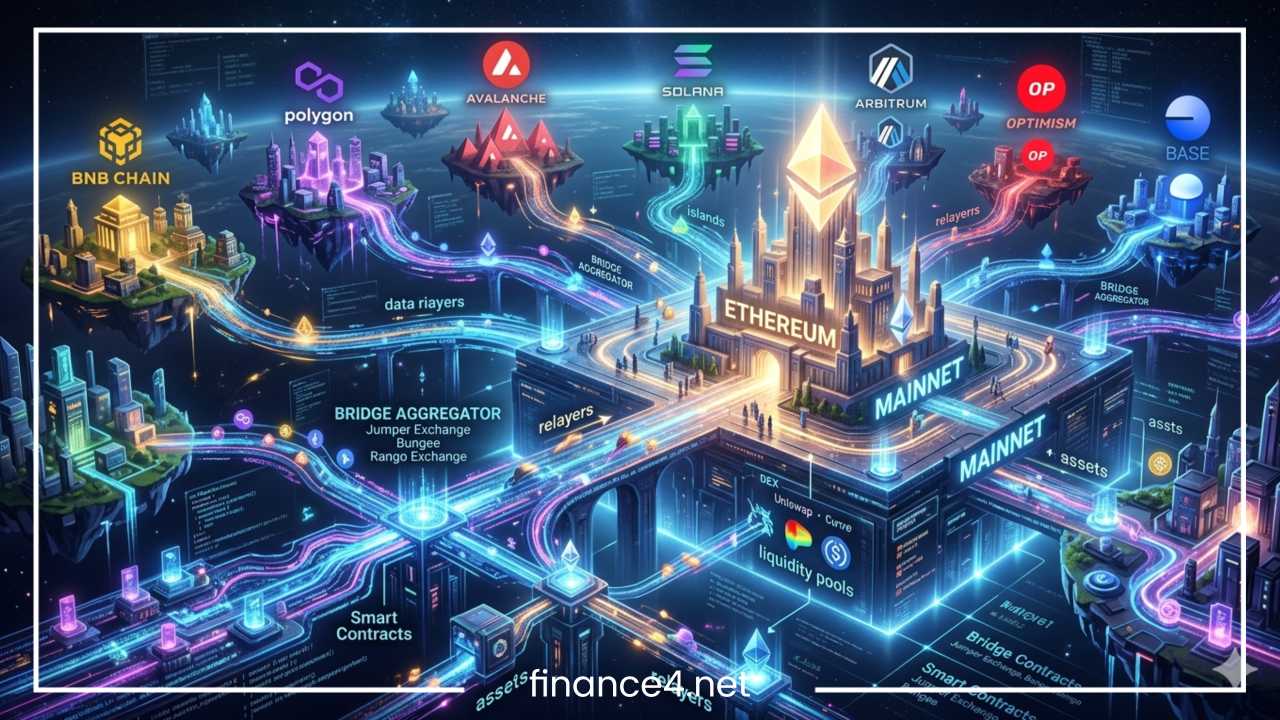
Top Cross-Chain Aggregators to Bridge Altcoins to Ethereum Fast
The cryptocurrency landscape has evolved into a vast web of interconnected networks. While new Layer 1 and Layer 2 solutions emerge constantly, Ethereum remains the undisputed gravitational center for decentralized finance, high-value NFT collections, and institutional-grade security. However, as liquidity spreads across dozens of chains, the simple act of moving funds back to the Ethereum mainnet has become increasingly complex.
For users holding altcoins on chains like BNB Chain, Polygon, Avalanche, or Solana, the journey to Ethereum often involves navigating a fragmented landscape of individual bridges, each with varying fees, speeds, and security profiles. This is where bridge aggregators become essential.
Introduction: Why Bridging Still Matters
The growth of multi-chain ecosystems has brought immense innovation, but it has also created “liquidity silos.” A user might have significant holdings in an altcoin on a secondary chain but find that the most lucrative yield-farming opportunity or the specific NFT they want to purchase is only available on Ethereum.
Liquidity fragmentation is the primary hurdle. Without a unified way to move assets, the crypto space risks becoming a collection of isolated islands. Ethereum serves as the central hub because it offers the deepest liquidity and the most robust smart contract ecosystem. However, moving assets back to the “L1” can be expensive and slow if done incorrectly.
The problem users face is choice paralysis. With dozens of bridges available, how do you know which one offers the best rate at this exact moment? How do you avoid high slippage? And most importantly, how do you ensure the bridge you are using is secure? Using an aggregator solves these issues by providing a single interface to access the entire bridging market.
What Is a Bridge Aggregator?
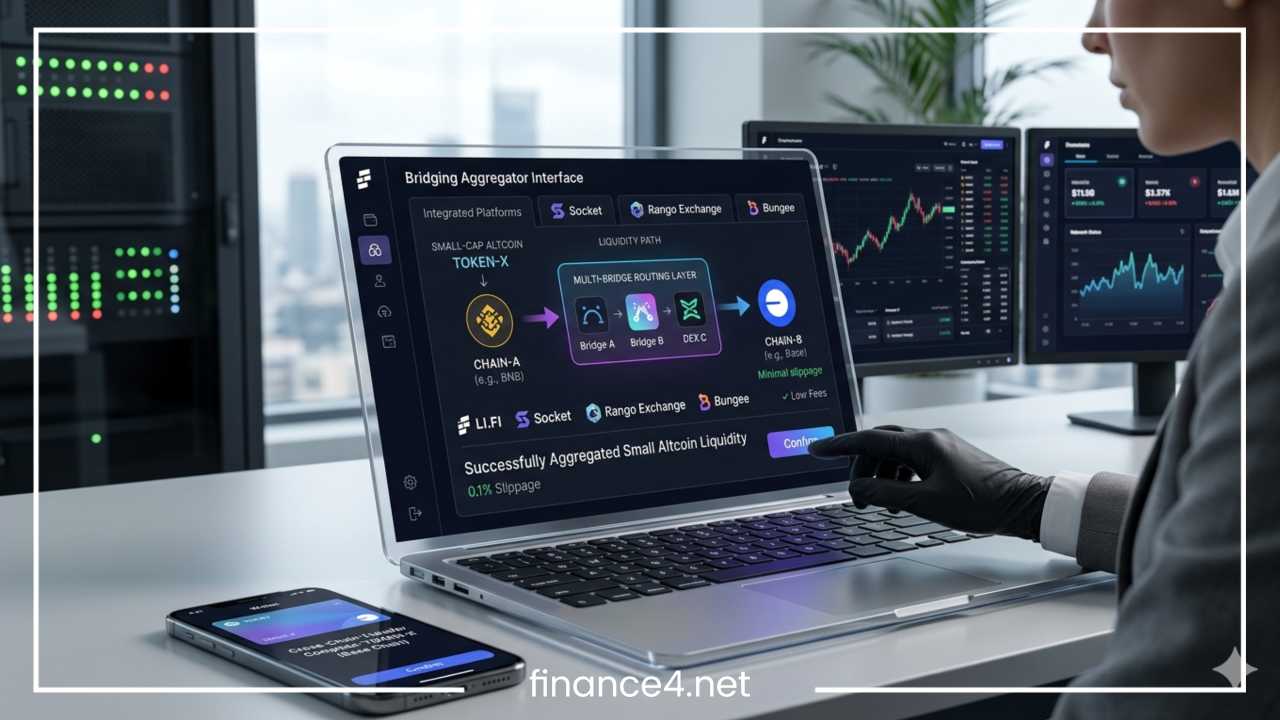
A bridge aggregator is a meta-protocol that sits on top of individual cross-chain bridges. While a standard bridge moves assets from Chain A to Chain B using its own specific liquidity pool or messaging protocol, an aggregator does not move the money itself. Instead, it scans multiple bridges simultaneously to find the most efficient path for the user’s specific trade.
Think of a bridge aggregator as the “Kayak” or “Skyscanner” of the crypto world. When you want to fly from London to New York, you don’t check every airline’s website individually; you use a search engine that compares prices, durations, and layovers.
How Aggregators Route Transactions
Aggregators utilize complex pathfinding algorithms to evaluate different variables in real-time:
-
Gas Costs: The cost of executing the transaction on both the source and destination chains.
-
Bridge Fees: The cut taken by the underlying bridge protocol.
-
Slippage: The price impact caused by the size of the trade relative to the available liquidity.
-
Speed: The estimated time for the transaction to reach finality on Ethereum.
Prominent examples of these platforms include LI.FI (and its consumer-facing app, Jumper), Socket (which powers the bridging inside many wallets), and Rango Exchange. These platforms connect to hundreds of decentralized exchanges (DEXs) and dozens of bridges to ensure that even if a user is moving an obscure altcoin, the aggregator can find a route that swaps the altcoin into a bridgeable asset and then lands it safely on Ethereum as ETH or a stablecoin.
Why Users Need Aggregators for Altcoin to Ethereum Transfers
Manually bridging is fraught with “invisible” costs and risks. If you are moving an altcoin from a chain like BNB Chain to Ethereum, the manual process would look like this:
-
Find a DEX on BNB Chain to swap your altcoin for a liquid asset like USDT.
-
Research which bridges support USDT transfers to Ethereum.
-
Check the liquidity of that bridge to ensure your $5,000 transfer won’t result in 2% slippage.
-
Check current gas prices on Ethereum to see if the “claim” transaction will cost more than the transfer is worth.
The Pain Points of Manual Bridging
-
Complex Selection: There are now too many bridges for a human to track. New protocols like “intent-based” bridges are often faster than old “lock-and-mint” bridges, but their availability changes by the minute.
-
Hidden Fees: Some bridges charge a flat fee, while others charge a percentage. Aggregators normalize this data so you see the “Net Out” amount—exactly what will land in your wallet.
-
Liquidity Fragmentation: A bridge might have plenty of ETH on Polygon but be completely “dry” on the Ethereum side, meaning your transaction could get stuck for hours or days. Aggregators detect this liquidity in advance.
By using an aggregator, a user moving funds from Polygon or Avalanche simply selects their starting token and their destination. The aggregator handles the complex multi-hop logic in the background.
How Bridge Aggregators Work: A Technical Overview
To understand why one aggregator might be better than another, it is helpful to look under the hood at the mechanics of cross-chain movement.
Liquidity Sources and Routing
Aggregators integrate three main components:
-
DEX Aggregators: To swap your niche altcoin into a “bridgeable” asset (like USDC or ETH).
-
Bridges: The actual transport layer (e.g., Across, Stargate, deBridge).
-
Relayers/Solvers: Off-chain actors that “fill” a user’s request immediately in exchange for the right to claim the funds later.
Atomic Swaps vs. Wrapped Tokens
The best aggregators prioritize atomic swaps or native-to-native transfers. In the early days of bridging, most protocols used a “lock-and-mint” mechanism. You would lock your ETH on Ethereum, and the bridge would mint “wETH” on the destination chain. This created a massive security risk: if the bridge’s vault on Ethereum was hacked, the “wETH” on the other chain became worthless.
Modern aggregators favor “native” bridges like Stargate or Across. These bridges use existing pools of native assets on both sides. If you bridge USDC from Avalanche to Ethereum, you receive actual native USDC on Ethereum, not a wrapped version. This significantly reduces the risk for the end-user.
Intent-Based Routing
The latest evolution in aggregator tech is “intents.” Instead of the user defining the path (e.g., “Use Bridge X”), the user defines the outcome (“I want 1 ETH on Ethereum, and I’m paying with this much AVAX”). A network of “solvers” then competes to fulfill that order. This usually results in the fastest possible execution, as solvers often front their own capital to the user before the underlying bridge transaction even clears.
Key Features to Look for in the Best Aggregator
Not all aggregators are created equal. When choosing the best tool for bridging your altcoins to Ethereum, evaluate them based on these six criteria:
Supported Chains and Tokens
The best aggregator should support more than just the “Big Three” (Ethereum, BNB, Polygon). It should reach into the Cosmos ecosystem, Solana, and the burgeoning world of Ethereum Layer 2s like Base, Arbitrum, and Optimism.
Fees and Transparency
Does the aggregator show you the breakdown of the gas fee versus the bridge fee? Some aggregators take a small “convenience fee” on top of the bridge cost. You should look for platforms that are transparent about their take and provide the cheapest overall route.
Speed and Execution Reliability
A bridge that takes 40 minutes but saves you $2 might not be the best choice if the market is volatile. A top-tier aggregator will give you multiple options: the “Cheapest” route and the “Fastest” route.
Security and Audits
Since you are interacting with a smart contract, security is paramount. The best aggregators only integrate bridges that have undergone multiple rigorous audits and have a high “Trust Score” or significant Total Value Locked (TVL).
UX/UI Simplicity
Bridging is stressful. A clean interface that shows a progress bar and provides a transaction hash for both the source and destination chains is a massive relief for users.
Routing Intelligence
Can the aggregator handle “complex” swaps? For example, if you want to move a low-cap altcoin on BNB Chain directly into ETH on Ethereum, the aggregator must be smart enough to find a DEX to swap the altcoin first, then bridge the resulting stablecoin, and finally swap for ETH on the destination.
Top Aggregators for Bridging Altcoins to Ethereum
While the “best” platform can change based on current liquidity, these five platforms are currently the leaders in the space.
LI.FI (Jumper Exchange)
LI.FI is perhaps the most advanced bridge aggregation protocol available. Their consumer-facing interface, Jumper, is widely considered the gold standard for cross-chain swaps.
-
Strengths: It integrates nearly every major bridge (Across, Stargate, deBridge, Celer) and DEX aggregator (1inch, 0x). It is incredibly reliable and offers a “Safe” mode that filters out less-tested bridges.
-
Best For: Most users, especially those moving significant capital who want a balance of speed and cost.
Socket (Bungee Exchange)
Socket is the engine behind the bridging features in many popular wallets like MetaMask and Coinbase Wallet. Their own frontend, Bungee, is famous for its “Refuel” feature, which allows you to bridge a small amount of native gas tokens to a new chain if you are stuck without funds to pay for transactions.
-
Strengths: Extremely fast routing and excellent integration with Ethereum L2s.
-
Best For: Users who are frequent “power users” of the Ethereum L2 ecosystem.
Rango Exchange
Rango is the king of “multi-ecosystem” bridging. While many aggregators stay within the EVM (Ethereum Virtual Machine) world, Rango connects EVM chains to Solana, Cosmos, and even Bitcoin.
-
Strengths: If you have an altcoin on a non-EVM chain (like ThorChain or Juno) and want to get it to Ethereum, Rango is likely your only one-stop shop.
-
Best For: Users bridging from non-Ethereum-compatible chains.
XY Finance
XY Finance is a cross-chain DEX aggregator that focuses on deep liquidity. They have their own internal bridge (XY Bridge) but also aggregate others to ensure the user gets the best price.
-
Strengths: Very competitive rates for high-volume traders.
-
Best For: Traders moving large amounts of altcoins who are highly sensitive to slippage.
Comparison Table: Top Aggregators
| Aggregator | Core Strength | Key Feature | Best Use Case |
| Jumper (LI.FI) | Comprehensive Routing | Multi-bridge comparison | General users / High security |
| Bungee (Socket) | L2 Optimization | Refuel (Gas bridge) | Developers / L2 power users |
| Rango Exchange | Non-EVM Support | Cross-ecosystem (BTC/SOL) | Multi-chain maximalists |
| XY Finance | High Liquidity | Native DEX + Bridge | Large volume traders |
Security Risks in Cross-Chain Bridging
It is impossible to discuss bridging without discussing risk. Bridges are among the most targeted pieces of infrastructure in the crypto world.
Smart Contract Vulnerabilities
A bridge is essentially a giant vault of money controlled by code. If there is a bug in that code, an attacker can potentially drain the vault. This has happened in several high-profile incidents, such as the Ronin Bridge hack, where hundreds of millions were lost.
How Aggregators Mitigate Risk
Aggregators provide a layer of safety by:
-
Vetting Bridges: Most aggregators have a “curated” list. They won’t include a new, unaudited bridge until it has proven its stability.
-
Insurance/Guarantees: Some intent-based bridges integrated into aggregators offer “guaranteed” fills, meaning if the bridge fails, the relayer takes the hit, not the user.
However, users must remember that an aggregator is an additional smart contract. While they rarely hold funds themselves (they just pass them through), you are technically adding one more “link” to the security chain. Always check if the aggregator itself has been audited by reputable firms like Spearbit or Trail of Bits.
Cost Breakdown: What You Actually Pay
When you bridge from an altcoin on a chain like Polygon to Ethereum, your costs are divided into four categories:
-
Source Chain Gas: The cost to “send” the funds from your wallet to the bridge contract (usually very cheap on altcoin chains).
-
The Bridge Fee: Usually between 0.05% and 0.3% of the total amount.
-
The Destination Gas (The “Ethereum Tax”): This is usually the largest cost. Because Ethereum is expensive to use, the bridge must pay high gas fees to “deliver” your funds. Most bridges bake this into the quote.
-
Slippage: If you are swapping an obscure altcoin for ETH during the process, you might lose 0.5% due to price fluctuations in the liquidity pool.
Realistic Example
-
Scenario: Moving $1,000 worth of an altcoin from Polygon to Ethereum.
-
Polygon Gas: $0.02
-
Bridge Fee (0.1%): $1.00
-
Ethereum Delivery Gas: $15.00 – $40.00 (depending on congestion).
-
Total Cost: ~$16.02 to $41.02.
If you were moving $10,000, the “Ethereum Tax” remains the same, making bridging much more cost-effective for larger amounts.
Step-by-Step: How to Use a Bridge Aggregator
If you are ready to move your altcoins to Ethereum, follow this standard workflow:
1. Connect Your Wallet
Navigate to an aggregator like Jumper.exchange or Bungee.exchange. Connect your wallet (MetaMask, Rabby, or Phantom). Ensure your wallet is set to the “Source” chain (e.g., BNB Chain).
2. Select Your Assets
In the “From” field, select the altcoin you currently hold. In the “To” field, select Ethereum as the destination chain and the token you want to receive (usually ETH or USDC).
3. Compare and Review Routes
The aggregator will present several options.
-
The “Best” Route: Usually the one that gives you the most tokens at the end.
-
The “Fastest” Route: Might cost a few dollars more but arrives in under 2 minutes.
4. Approve and Swap
If this is your first time using the aggregator for that specific token, you will need to sign an “Approve” transaction. This gives the smart contract permission to move your tokens. After approving, click “Swap” or “Bridge.”
5. Monitor the Transaction
Most aggregators provide a built-in tracker. You will see when the funds leave the source chain, when they are “in-flight,” and finally when they land in your Ethereum wallet.
Aggregators vs. Direct Bridges vs. CEX Transfers
Is an aggregator always the best choice? Not necessarily. Let’s look at the alternatives.
Direct Bridges (Native)
If you are moving funds from an official Layer 2 (like Arbitrum) to Ethereum, the “Native Bridge” is technically the most secure. However, native bridges often have a 7-day withdrawal delay for security reasons. Aggregators use “Fast Bridges” (third-party liquidity) to bypass this delay, getting your funds to Ethereum in minutes instead of a week.
Centralized Exchanges (CEXs)
You could send your altcoins to Binance or Coinbase, sell them for ETH, and then withdraw to your Ethereum wallet.
-
Pros: Often the cheapest for very large amounts; no smart contract risk.
-
Cons: Requires KYC; you lose custody of your funds; withdrawal fees can be high; it’s a slower, manual process.
Aggregators are the preferred choice for users who want to stay “on-chain” and value speed and privacy over the slightly lower fees of a CEX.
Future of Cross-Chain Aggregation
The “end game” for bridging is Chain Abstraction. In the future, users won’t even know they are bridging. You will simply have a balance of “USD” or “ETH,” and the underlying infrastructure (powered by aggregators and protocols like Chainlink CCIP or LayerZero) will move the funds automatically behind the scenes when you interact with an application.
We are also seeing the rise of Zero-Knowledge (ZK) Bridges. These use mathematical proofs rather than human validators to confirm transactions. As aggregators begin to integrate these ZK-proof paths, the security of bridging will eventually approach the security of the underlying blockchains themselves.
Final Thoughts: Which Aggregator Is Best?
There is no single “best” aggregator for every scenario, as the crypto market is too dynamic. However, you can choose based on your specific needs:
-
For the Cheapest and Most Reliable Experience: Use Jumper (LI.FI). It has the most integrations and generally finds the most efficient routes for standard EVM-to-Ethereum transfers.
-
For Moving Gas to a New Chain: Use Bungee (Socket). Their “Refuel” feature is an industry-leading utility that solves the “no gas” problem.
-
For Complex, Multi-Ecosystem Moves: Use Rango Exchange. If your altcoins are on a non-EVM chain like Solana or ThorChain, Rango is the premier aggregator to bridge those assets to Ethereum.
The best strategy for any crypto user is to cross-reference. Before committing to a large transfer, check both Jumper and Bungee. The few seconds it takes to compare can often save you significant amounts in gas and slippage, ensuring your move to the Ethereum mainnet is as smooth and cost-effective as possible.
Frequently Asked Questions
What is the cheapest way to bridge altcoins to Ethereum?
The cheapest way to move altcoins to Ethereum is typically through a bridge aggregator that uses intent-based routing. Aggregators like Jumper or Bungee compare real-time gas prices and bridge fees across multiple protocols. To minimize costs, look for routes that utilize fast bridges, which often have lower overhead than native liquidity pool bridges. Additionally, bridging during periods of low Ethereum network activity can significantly reduce the destination gas fee.
Are bridge aggregators safer than using a single bridge?
Bridge aggregators can be safer because they provide diversified security. Most aggregators vet the protocols they integrate, only listing bridges with high trust scores and proven track records. If one specific bridge is experiencing issues, an aggregator will automatically route you through a different, functional path. However, remember that you are still subject to the smart contract risks of the underlying bridge.
How long does it take to bridge tokens to Ethereum?
Transfer times vary depending on the bridge and the source chain. Most fast bridges and aggregators complete transactions within 2 to 10 minutes. This is a significant improvement over native bridges, which can have a 7-day withdrawal period due to fraud-proof windows. Aggregators bypass this by using liquidity providers who front the capital on Ethereum for a small fee.
Can I bridge any altcoin directly to Ethereum?
While not every niche altcoin can be bridged directly, aggregators solve this through multi-hop routing. If your specific altcoin isn’t supported by a bridge, the aggregator will first swap it for a liquid asset like USDC or ETH on a local exchange, bridge that asset to Ethereum, and then swap it back into your desired Ethereum-based token.
Why are Ethereum bridging fees higher than on other chains?
The fee isn’t usually from the aggregator itself, but from the Ethereum delivery transaction. Because Ethereum has a higher cost for block space, the bridge must pay a gas fee to release the tokens into your Ethereum wallet. This is why it is often more cost-effective to bridge larger amounts; a smaller transfer and a larger transfer often cost a similar amount in absolute gas fees.
Do I need the native gas token of both chains to bridge?
Typically, yes. You need the native token of the source chain to pay for the initial transaction. However, some advanced aggregators now offer gasless bridging or refuel features. These tools allow you to pay fees using the token you are bridging, or they can drop a small amount of ETH into your destination wallet so you aren’t stuck without gas when you arrive on Ethereum.
What happens if my bridge transaction gets stuck?
If a transaction is delayed, it is usually due to a sudden spike in gas prices or a temporary liquidity shortage on the destination chain. Most aggregators provide a transaction history where you can track the status. If it stays pending for a long time, you can usually take your transaction hash to the support channel of the underlying bridge for intervention. Your funds are rarely lost; they are simply waiting for the next available relayer to process the claim.