Best Aggregator for Bridging Multi-Chain DeFi Tokens
 by
by 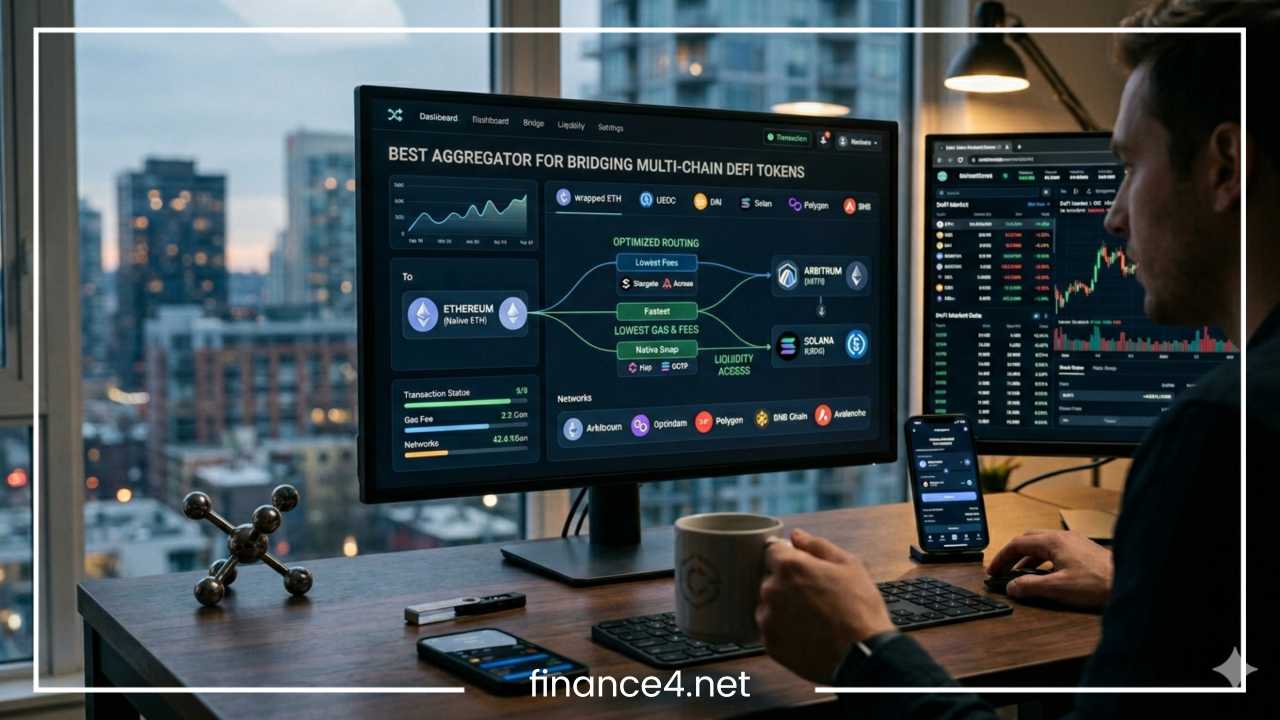
Bridging Multi-Chain DeFi Tokens: Find the Best Aggregator
The decentralized finance (DeFi) landscape has evolved from a single-chain ecosystem dominated by Ethereum into a sprawling, vibrant metropolis of interconnected blockchains. Today, users regularly interact with Layer 2 scaling solutions like Arbitrum, Optimism, and Base, as well as alternative Layer 1 networks such as Solana, Avalanche, and BNB Chain. While this multi-chain reality offers lower fees and specialized environments for different applications, it has introduced a significant hurdle: liquidity fragmentation.
Why Multi-Chain Bridging Matters
As capital disperses across dozens of different networks, the seamless movement of value becomes the lifeblood of the industry. Bridging is the process of moving assets from one blockchain to another, a task that was once cumbersome and fraught with technical complexity. In the early days of DeFi, a user wanting to move funds from Ethereum to a newer chain often had to navigate centralized exchanges as intermediaries or use clunky, official “canonical” bridges that were slow and expensive.
The problem with manual bridging is multifaceted. Users face significant risks, including high slippage due to thin liquidity, exorbitant gas fees, and the ever-present threat of failed transactions that leave funds in limbo. Moreover, the sheer number of bridges makes it nearly impossible for a manual user to know if they are getting the best price or the fastest route. This is where bridge aggregators enter the frame, acting as the intelligent navigation layer for the multi-chain world.
Liquidity fragmentation is not just a minor inconvenience; it is a structural inefficiency. When liquidity is split across ten different chains, the “depth” of any single market is reduced. This means a large trade that would have 0.1% price impact on a unified chain might have 2% impact on a fragmented one. Bridge aggregators mitigate this by effectively “re-unifying” liquidity, allowing the user to tap into the most efficient pools regardless of where their starting capital sits.
What is a Bridge Aggregator in DeFi?
To understand an aggregator, one must first understand the underlying component: the cross-chain bridge. A bridge is a dedicated protocol that allows for the transfer of data or assets between two distinct blockchain networks. However, because different bridges use different security models, liquidity sources, and speed protocols, no single bridge is the “best” for every transaction.
A bridge aggregator is a meta-protocol that sits on top of multiple individual bridges and cross-chain liquidity providers. It functions similarly to how a flight search engine works for airlines. Instead of visiting five different airline websites to find the cheapest flight, you use a platform that queries all of them simultaneously and presents the optimal route.
In DeFi, aggregators optimize four critical pillars of the user experience:
-
Routing: Finding the path that connects the source chain to the destination chain. Sometimes the best path isn’t a straight line; it might involve hopping through a highly liquid Layer 2 to reach a destination Layer 1.
-
Fees: Comparing the cost of the bridge provider plus the gas fees on both ends. This includes the “hidden” cost of the bridge’s spread.
-
Speed: Estimating how long the transaction will take based on the underlying bridge’s finality. Some bridges take seconds; others take seven days.
-
Liquidity: Ensuring that the transaction size does not cause massive price impact (slippage).
Unlike a traditional bridge, which is a piece of infrastructure, an aggregator is a piece of intelligence. It does not necessarily “own” the liquidity; rather, it directs the user’s capital toward the most efficient infrastructure available at that specific microsecond.
How Cross-Chain Token Bridging Works
While bridge aggregators simplify the user interface, the underlying plumbing remains complex. There are several primary technical models for how assets actually move across chains. Understanding these helps users appreciate what the aggregator is calculating behind the scenes.
Lock-and-Mint Model
In this scenario, a user locks their native asset (like ETH) in a smart contract on the source chain. A decentralized or centralized “relayer” sees this lock and triggers the minting of a “wrapped” version of that asset (like wETH or a bridge-specific derivative) on the destination chain. When the user wants to return, the wrapped tokens are burned, and the original tokens are unlocked. This model is highly scalable but introduces “wrapped asset risk.”
Burn-and-Release Model
This is often used for tokens that have native deployments on multiple chains. Instead of locking, the protocol burns the token on the source chain and issues an equivalent amount on the destination chain from a pre-existing treasury or minting authority. This is generally considered more secure than lock-and-mint because it avoids the creation of non-native derivatives.
Liquidity Pool-Based Bridging
This is perhaps the most common model for aggregators. It involves liquidity providers depositing assets into pools on both sides of a bridge. When a user sends USDC from Chain A to Chain B, they are essentially swapping their USDC on Chain A for someone else’s USDC on Chain B. This is fast but relies on the bridge having deep “rebalanced” pools.
Message Passing Protocols
Modern systems focus on “generalized message passing.” They don’t just move tokens; they move data. This allows for more complex “intent-based” bridging where a user can swap a token on one chain and have it arrive as a completely different token on the destination chain in a single transaction. Aggregators leverage these protocols to find the most efficient path for these complex swaps, often combining a DEX swap on the source chain, a bridge in the middle, and another DEX swap on the destination.
Why Users Need Bridge Aggregators
The primary benefit of using an aggregator is the elimination of “bridge fatigue.” Without an aggregator, a user must manually research which bridges support their specific token pair and which one currently has enough liquidity to handle their trade.
Best Route Discovery
Aggregators are often referred to as the “1inch of bridges.” By scanning dozens of providers, they can find routes that a human would never discover. For example, if you want to move a niche altcoin from Avalanche to Polygon, a direct bridge might not exist. An aggregator might find a route that swaps the altcoin for USDC on Avalanche, bridges the USDC to Polygon via a high-speed provider, and then swaps the USDC back to the altcoin on a Polygon DEX.
Lower Fees and Optimized Routing
Aggregators calculate the total cost of a transaction, including the bridge’s service fee and the gas required. Often, an aggregator can find a route that saves the user a significant percentage in total costs. They also account for “gas-on-destination” issues. Nothing is more frustrating than bridging funds to a new chain and realizing you have no native tokens to pay for the next transaction. Many aggregators now offer “gas refuel” services as part of the routing.
Reduced Failed Transactions
Bridges fail for many reasons: lack of liquidity, RPC errors, or sudden spikes in gas. Aggregators monitor the health of their integrated bridges in real-time. If a specific bridge is experiencing downtime or high failure rates, the aggregator simply removes it from the recommended list, protecting the user’s capital and preventing funds from being stuck in a “pending” state for hours.
Unified UX
Instead of maintaining bookmarked tabs for ten different bridge websites, each with a different wallet connection requirement and interface, an aggregator provides a single, consistent dashboard. This reduces the “cognitive load” of DeFi and makes the multi-chain experience feel like a single, unified computer.
Key Features of a Good Bridge Aggregator
When evaluating which aggregator to use, several technical and functional features should be considered:
Multi-Chain Support
A high-quality aggregator should support not just the major Ethereum Virtual Machine (EVM) chains, but also non-EVM environments. The inclusion of Solana, Cosmos, and Move-based chains (like Sui or Aptos) is a hallmark of a top-tier aggregator. The more ecosystems supported, the less likely you are to need a secondary tool.
Liquidity Aggregation Across Bridges
Some aggregators only look at bridges. The best ones look at both bridges and DEXs. This is critical because most users aren’t just moving “USDC to USDC”; they are moving “ETH on Ethereum to JOE on Avalanche.” An aggregator that can tap into Uniswap, Trader Joe, and Stargate simultaneously will always provide a better price than one that only looks at the bridge.
Slippage Protection
Slippage occurs when the price of a token changes between the time a transaction is submitted and when it is executed. Top-tier aggregators allow users to set strict slippage tolerances. Furthermore, they often use “smart routing” to split a single large trade across multiple bridges to minimize the impact on any single liquidity pool.
Security Audits and Insurance
Because bridging is inherently risky, a good aggregator prioritizes protocols that have undergone rigorous third-party security audits. Some aggregators go a step further by implementing their own “trust scores” for bridges, warning users if a particular route uses a bridge with a centralized validator set or unaudited code.
Transaction Tracking
One of the most stressful parts of bridging is the “waiting period” where funds have left the source chain but haven’t arrived at the destination. A good aggregator provides a detailed, real-time dashboard. This should include the transaction hashes for both the source and destination chains, as well as a status bar showing precisely which stage of the “lock-confirm-mint” process the transaction is currently in.
MEV Protection
Maximal Extractable Value (MEV) is a risk during the swap portions of a bridge transaction. “Sandwich attacks” can drain value from unsuspecting users. Advanced aggregators integrate with private RPCs or use specialized solvers that protect users from being front-run during the cross-chain swap.
Top Bridge Aggregators
Several platforms have emerged as leaders in the cross-chain aggregation space. Each has unique strengths tailored to different types of users and technical needs.
LI.FI and Jumper Exchange
LI.FI is more than just a website; it is a cross-chain liquidity routing protocol. Its flagship consumer-facing interface is Jumper Exchange. Jumper is widely considered a premier choice for retail users because of its incredibly clean UI and deep integration. It supports almost every major bridge, including Stargate, Across, and Circle’s CCTP. Its “multi-hop” capability is its greatest strength, allowing for a seamless transition between any two assets on any two chains.
Rango Exchange
Rango is perhaps the most comprehensive aggregator for users who operate outside the “EVM bubble.” While many tools struggle with non-Ethereum chains, Rango excels at connecting EVM chains to the Cosmos ecosystem (like Osmosis or Celestia), Solana, and even native Bitcoin. It is the go-to tool for power users who need to move assets in and out of specialized app-chains or non-standard wallet environments.
Socket
Socket (formerly known as Movr) focuses heavily on the developer experience. It powers the bridging functionality inside many of the world’s most popular wallets, such as MetaMask and Coinbase Wallet. Socket’s strength lies in its “Bungee” interface, which is known for its speed and its “Refuel” feature, which allows users to bridge a small amount of native gas tokens to a new chain alongside their main transfer.
OpenOcean
Originally built as a DEX aggregator, OpenOcean expanded into cross-chain aggregation to provide a holistic trading experience. It is particularly strong for high-frequency traders who want to ensure they are getting the best possible price on a swap that also requires a bridge. Its routing algorithm is designed to find the absolute maximum return on a trade by scanning both CEX and DEX liquidity where possible.
Via Exchange
Via is another strong contender that focuses on “cross-chain liquidity aggregation.” It provides a very detailed breakdown of exactly where fees are going, which appeals to users who are sensitive to the “hidden costs” of DeFi. It often features routes that other aggregators might miss, particularly for newer or more obscure Layer 2 networks.
Security Risks in Cross-Chain Bridging
It is impossible to discuss bridging without addressing security. Bridges are among the most targeted infrastructures in the crypto world because they act as massive “honeypots” of locked liquidity. When you use an aggregator, you are essentially inheriting the security profile of the underlying bridge it chooses for you.
Smart Contract Vulnerabilities
If the code governing the lock-and-mint process has a bug, an attacker can potentially mint unlimited tokens on the destination chain without actually locking assets on the source chain. This can lead to a total collapse of the bridge’s liquidity. Aggregators mitigate this by diversifying their integrations. If a specific bridge is flagged for a vulnerability, an aggregator can instantly redirect all traffic to a different, unaffected provider.
Validator and Relayer Risks
Many bridges rely on a set of validators to “confirm” that a deposit happened on the source chain. If a majority of these validators are compromised, they can sign off on fraudulent transfers. Users should look for aggregators that prioritize “trustless” or “optimistic” bridges. Optimistic bridges don’t rely on a “multisig” of humans; instead, they allow anyone to challenge a fraudulent transaction during a set window of time, backed by economic incentives.
Wrapped Asset Risk
When you bridge an asset, you often receive a “wrapped” version. If the bridge that issued that wrapped asset is hacked, the wrapped asset could lose its backing and “de-peg,” potentially going to zero even if the original asset on the source chain is safe. Aggregators that utilize Native Asset Bridging (like Circle’s CCTP for USDC or Chainlink’s CCIP) are generally considered much safer because they move the actual native asset, eliminating the need for a “wrapped” representative.
Aggregator Risk vs. Individual Bridge Risk
It is important to note that an aggregator adds another layer of smart contract risk. However, most reputable aggregators do not actually “hold” your funds. They simply “route” the calls to the underlying bridges. This means that while the aggregator’s UI or routing contract could have an issue, the primary risk usually remains with the bridge protocols themselves.
Cost Comparison: Fees and Slippage
The cost of bridging is rarely a single number. It is a complex stack of expenses that can vary wildly depending on network congestion and the specific tokens involved.
-
Source Gas: The cost to interact with the bridge contract on your starting chain. On Ethereum mainnet, this can be $50; on an L2, it might be $0.05.
-
Bridge Service Fee: A flat fee or percentage (often 0.1% to 0.5%) charged by the bridge provider to maintain the infrastructure.
-
Liquidity Provider (LP) Fee: Paid to the users who provide the liquidity on the destination chain. This is often dynamic based on the pool’s balance.
-
Destination Gas: Some bridges require you to pay gas on the destination chain to “claim” your funds. Aggregators often find “gasless” routes where the bridge pays this for you and deducts it from the bridged amount.
-
Slippage: The price movement caused by your own trade.
Aggregators allow for a side-by-side comparison that is invaluable for large transfers. For example, moving $10,000 from Ethereum to Arbitrum might be cheapest via a liquidity-based bridge like Across, which uses a decentralized network of “intent-fillers.” However, moving $5,000,000 might be more efficient through a message-passing system like Stargate to avoid the massive slippage that would occur in a smaller liquidity pool.
Speed Comparison Across Aggregators
In DeFi, time is often money. Speed is usually the trade-off for security or cost.
-
Optimistic Bridges: These are highly secure but can have a “challenge period.” While some are optimized for speed, others can take longer if the network is under stress.
-
Liquidity Bridges: These are usually the fastest (taking seconds to a few minutes) because they rely on pre-funded pools on the destination chain. The bridge “fronts” you the money and then settles the back-end balance later.
-
Zero-Knowledge (ZK) Bridges: These use mathematical proofs to confirm state transitions. They offer a high balance of speed and security but are technically difficult to implement for every chain pair.
Aggregators provide “estimated time of arrival” (ETA) for every route. In a fast-moving market where a user needs to bridge funds to avoid a liquidation on a lending platform like Aave, a five-minute difference in speed can be worth a higher fee. Aggregators give users the agency to choose between the “Cheapest” route and the “Fastest” route based on their current priority.
Use Cases for Bridge Aggregators
DeFi Traders and Arbitrageurs
Traders use aggregators to move capital to chains where a specific token is trading at a discount or where yield farming opportunities are offering higher APYs. For an arbitrageur, every second and every basis point of slippage matters. An aggregator is their primary tool for maintaining profitability across fragmented markets.
NFT Collectors
As NFT marketplaces proliferate on Layer 2s and chains like Solana, collectors use aggregators to move their liquid funds (ETH or SOL) to the specific chain where a mint is occurring. Because mints often happen at specific times and can sell out in seconds, having a fast, reliable bridge aggregator is the difference between getting a rare NFT and missing the drop entirely.
Yield Farmers
Yield farming involves moving assets to the protocol offering the best rewards. These rewards often shift from chain to chain. A yield farmer might bridge their stablecoins from Polygon to Base to take advantage of a new liquidity mining program. Aggregators make this “chain hopping” much more cost-effective.
Developers and DAOs
Through SDKs and APIs, developers can build “chain-agnostic” applications. A DAO might use a bridge aggregator’s API to manage its multi-chain treasury, ensuring that when it needs to pay contributors on different chains, it is always using the most efficient route to convert and move its native governance tokens.
Institutional Liquidity Providers
Institutions moving millions of dollars cannot afford to use a single bridge that might have a $2,000,000 liquidity cap. They use aggregators to split their orders across five different bridges simultaneously, ensuring they can move large volumes without crashing the price of the wrapped assets on the destination chain.
How to Choose the Best Bridge Aggregator
When deciding which platform to use for your next move, run through this checklist to ensure you are maximizing safety and efficiency:
-
Does it support the specific chains you use? If you are moving between Ethereum and Solana, ensure the aggregator has native Solana wallet integration (like Phantom support).
-
What is the security reputation? Look for aggregators that provide a “security score” or detailed information about the underlying bridges. Avoid routes that use bridges with “low trust” ratings.
-
Is the UI intuitive? You should be able to see your transaction progress clearly. A “stuck” transaction is much easier to resolve if you have a clear tracking ID provided by the aggregator.
-
Are the fees transparent? Some aggregators are free to use, while others might take a small “convenience fee.” Always compare the final “expected output” amount across two different aggregators.
-
Is there a “Gas Fuel” feature? If you are going to a new chain for the first time, this feature is mandatory. It ensures you have the 0.01 native token needed to actually use your funds once they arrive.
-
Liquidity Depth: For large trades, check if the aggregator supports “split routing,” which sends parts of your trade through different bridges to minimize slippage.
Future of Cross-Chain Aggregation
The long-term goal of the DeFi industry is “chain abstraction.” In this future, the user experience will be “account-centric” rather than “chain-centric.” Users won’t even know they are “bridging.” They will simply click “Buy” on an asset, and the underlying infrastructure—driven by aggregators—will pull liquidity from wherever it is cheapest and deliver the asset to the user’s wallet.
We are seeing the rise of “Intent-Based” systems. In this model, a user doesn’t pick a bridge. Instead, they sign a “limit order” for a cross-chain swap. A network of “solvers” (professional market makers) then competes to fulfill that request. This shifts the complexity and the risk from the user to the professionals. If the solver fails to deliver the funds, the user’s money remains safe on the source chain.
Furthermore, AI-driven routing is an emerging trend. As the number of chains reaches into the hundreds (via “app-chains” and “rollups-as-a-service”), human-designed routing tables will become obsolete. AI models will constantly scan the entire multi-chain web to predict gas spikes and liquidity shifts, moving user funds through the “path of least resistance” before the congestion even happens.
Final Thoughts
Bridge aggregators have transformed from a luxury tool into an essential piece of DeFi infrastructure. As the number of blockchains continues to grow, the ability to navigate them efficiently becomes a competitive advantage for traders and a necessity for casual users. The manual days of “bridge and pray” are over.
While no bridge is perfectly risk-free, aggregators provide the tools, data, and routing intelligence needed to minimize those risks while maximizing the utility of decentralized finance. The best aggregator is ultimately the one that aligns with your specific needs for a given transaction—balancing the eternal triad of speed, cost, and security. By using an aggregator, you are not just choosing a bridge; you are choosing the most intelligent path through the increasingly complex world of multi-chain finance. The future of DeFi is not one chain to rule them all, but a seamless web of thousands of chains, all made accessible through the power of aggregation.
FAQ: Bridging Multi-Chain DeFi Tokens
What is the safest way to bridge crypto between different blockchains?
The safest way to bridge is to use an aggregator that prioritizes native asset bridging (like Circle’s CCTP) or optimistic bridges. Aggregators allow you to filter for these “high-security” routes. Native bridging is safer because it avoids “wrapped” tokens, which carry the risk of losing their 1:1 backing if the bridge contract is compromised.
Which bridge aggregator has the lowest fees for Ethereum to Layer 2 transfers?
Fees vary based on real-time gas costs, but aggregators are consistently ranked as the lowest-cost options because they aggregate intent-based bridges. These bridges use “solvers” who compete to fill your transaction at the lowest price, often saving you 30% to 50% compared to using a single canonical bridge.
Can I bridge tokens from Ethereum to Solana without a centralized exchange?
Yes. Using a multi-chain aggregator, you can swap and bridge assets directly from an EVM wallet to a Solana wallet. The aggregator handles the cross-chain messaging and liquidity swaps in one seamless flow, eliminating the need to deposit funds into an exchange.
How do I avoid getting my funds stuck in a cross-chain bridge?
To prevent stuck transactions, always use an aggregator that provides real-time transaction tracking and has a gas refuel feature. Funds often get “stuck” because the user doesn’t have the native gas token on the destination chain to claim them. Aggregators allow you to bridge a small amount of native gas (like ETH, MATIC, or SOL) along with your main transfer.
What is the difference between a DEX aggregator and a bridge aggregator?
A DEX aggregator finds the best price for swapping tokens on a single blockchain. A bridge aggregator finds the best route for moving and swapping tokens across multiple blockchains. Modern platforms are now “cross-chain aggregators,” combining both functions to let you swap “Token A on Chain X” for “Token B on Chain Y” in one click.
Is it better to use a bridge aggregator or a direct official bridge?
For small to medium transactions, aggregators are almost always better because they offer lower fees and better speed by utilizing private liquidity pools. However, for massive institutional transfers, using a direct canonical bridge may be safer as it avoids the smart contract risks associated with third-party liquidity providers and multiple routing layers.
How long does a typical cross-chain bridge transaction take?
Using a liquidity-based aggregator, most transfers take between 1 and 5 minutes. However, if you use a “slow” route for security or cost reasons, it can take up to 7 days to move funds back to the mainnet. Always check the ETA (Estimated Time of Arrival) provided by the aggregator before confirming.
Can I bridge NFTs across different blockchains using aggregators?
While most aggregators focus on fungible tokens (ERC-20), protocols integrated into specialized aggregators allow for cross-chain NFT “beaming.” This is highly useful for moving digital collectibles between Ethereum, Polygon, and Solana.