Best Bridging Aggregator for Multi-Chain Swaps
 by
by 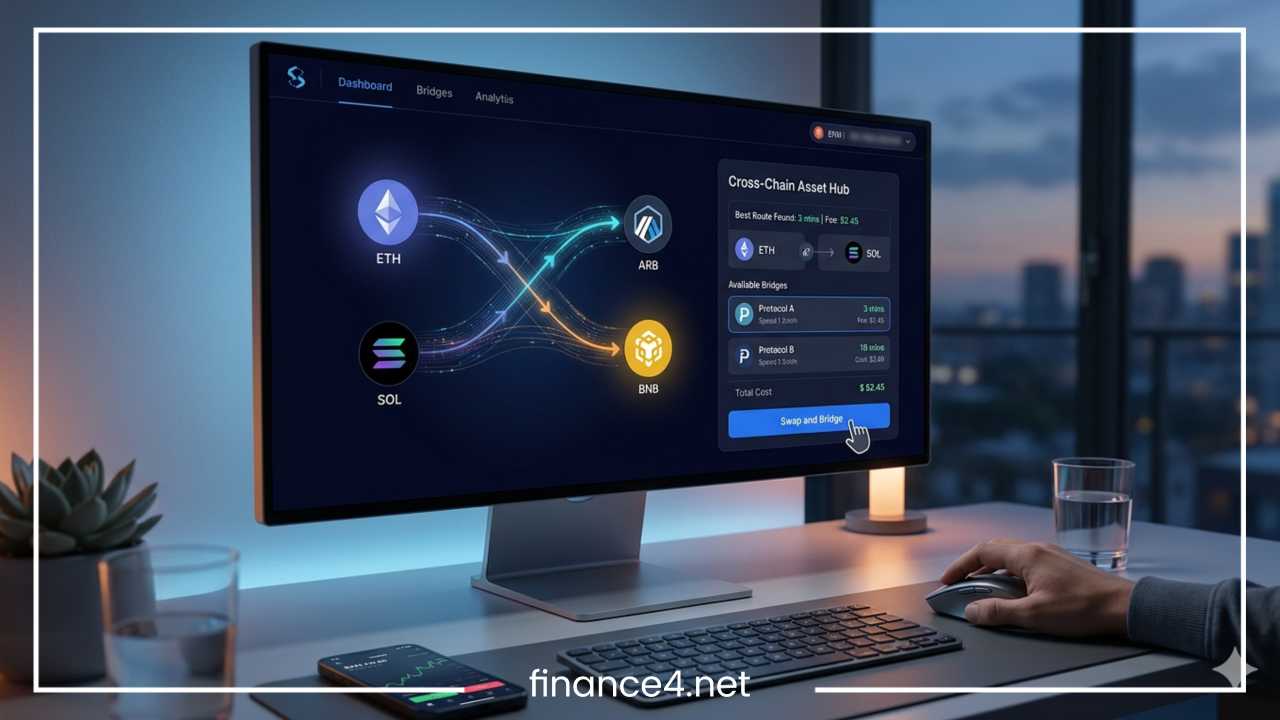
The Best Bridging Aggregator for Multi-Chain Swaps
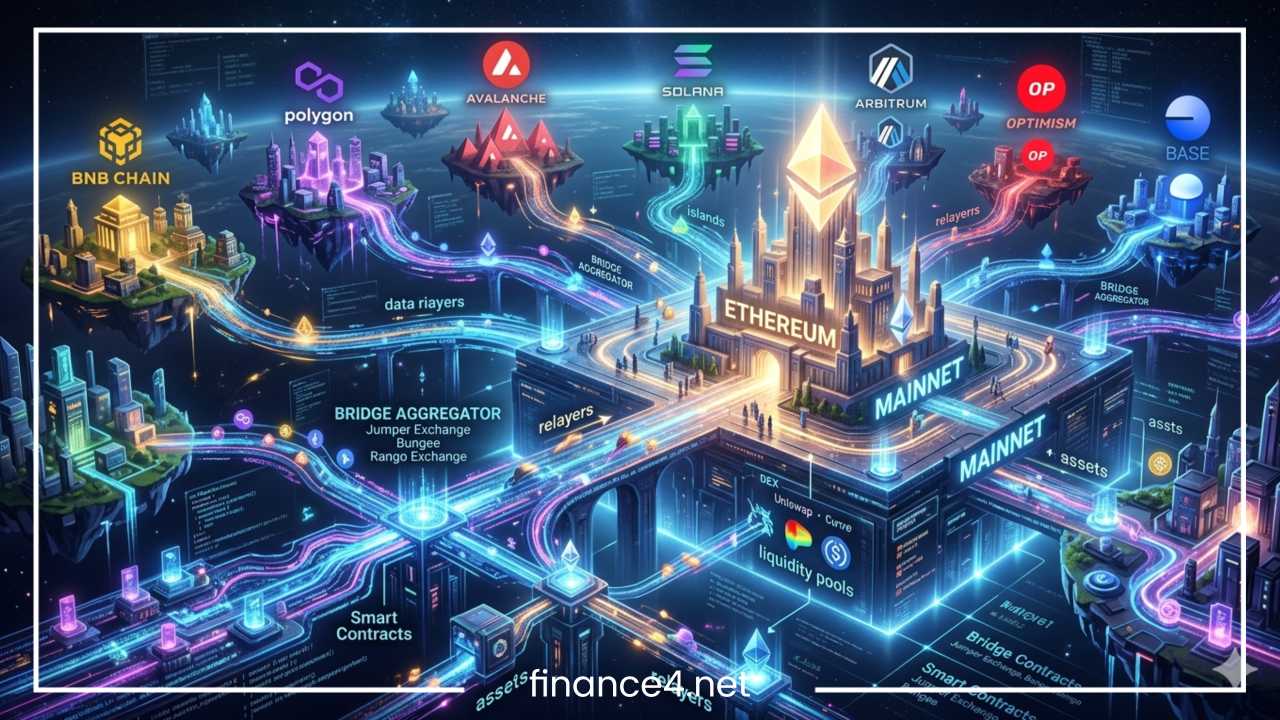
The blockchain landscape is no longer a single-chain world. We have moved from the dominance of the Ethereum mainnet into a diverse ecosystem of Layer 2 rollups, alternative Layer 1s, and specialized app-chains. While this growth has fostered innovation and lowered fees, it has also created a significant hurdle: liquidity fragmentation.
Assets are scattered across Ethereum, Arbitrum, Solana, BNB Chain, and dozens of other networks. For a user, moving value from one chain to another has traditionally been a clunky, expensive, and high-risk endeavor. This is where bridge aggregators come in. They act as the connective tissue of Web3, simplifying complex routing and ensuring users get the most efficient deal without having to manually scout dozens of individual bridges.
Instead of manually choosing a bridge, users now rely on aggregators that find the best route across multiple protocols in real time. This shift represents the professionalization of decentralized finance (DeFi), moving away from manual “power user” work toward a frictionless, automated consumer experience.
What is a Cross-Chain Bridge?
To understand aggregators, we first need to understand the underlying infrastructure: the cross-chain bridge. At its core, a blockchain bridge is a protocol that allows the transfer of assets or data between two independent blockchain networks. Since blockchains are inherently closed systems—isolated silos of data—they cannot “talk” to each other natively. A bridge acts as the intermediary, facilitating the flow of information or value across these digital borders.
Mechanisms of Moving Assets
Most bridges operate using one of three primary models, each with its own balance of security and speed:
-
Lock-and-Mint: This is the most common design. You lock your original asset (e.g., ETH) in a smart contract on the source chain, and the bridge mints a “wrapped” version (e.g., wETH) on the destination chain. When you bridge back, the wrapped asset is burned, and the original is released.
-
Burn-and-Mint: This is increasingly popular for native protocols like Circle’s Cross-Chain Transfer Protocol (CCTP). Instead of locking, the asset is destroyed on the source chain and a native version is minted on the destination. This is highly efficient because it eliminates the risk of “wrapped” asset de-pegging, as users always receive native assets.
-
Liquidity Pools: Bridges like Stargate or Across use pools of native assets on both sides. You deposit USDC on Ethereum, and the bridge pays you out from its USDC pool on Arbitrum. This is often faster than minting but requires the bridge to maintain deep liquidity on every chain it supports.
The Risks Involved
While bridges are essential, they are historically the most targeted infrastructure in the crypto ecosystem. The complexity of managing two different state machines (two blockchains) simultaneously introduces several vulnerabilities:
-
Smart Contract Vulnerabilities: Bugs in the bridge code can lead to massive exploits. Since bridges often hold billions in collateral, they are honeypots for hackers.
-
Liquidity Fragmentation: A bridge might have plenty of funds on Ethereum but be “dry” on a smaller chain like Gnosis. If you try to bridge a large amount, the transaction might fail or result in extreme slippage.
-
Latency: Some bridges can take 20 minutes to several hours to finalize a transaction. In the case of optimistic rollups, withdrawing back to the mainnet can take up to seven days due to challenge periods, unless a liquidity-provider bridge intervenes to “fast-track” the funds for a fee.
What is a Bridging Aggregator?
If a bridge is a single highway connecting two cities, a bridging aggregator is a GPS navigation system that scans every highway, toll road, and back-street to find the fastest and cheapest route.
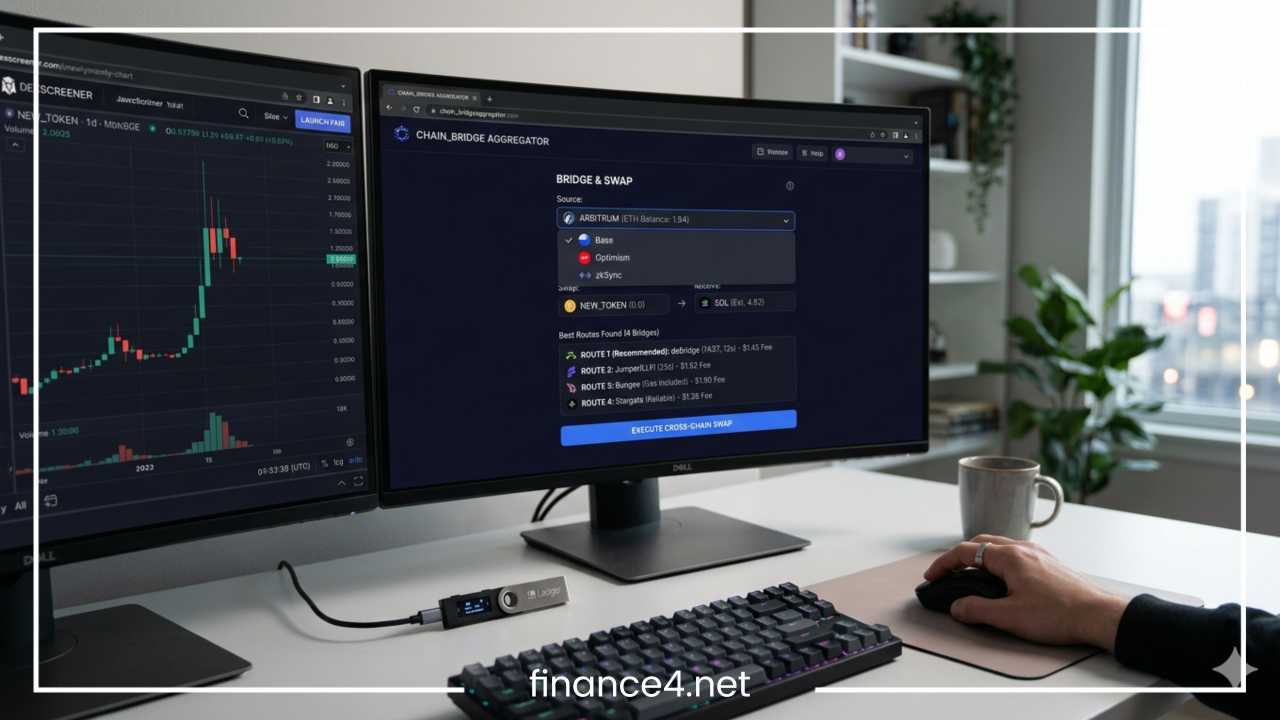
An aggregator is a “meta-layer” that sits on top of multiple individual bridges and decentralized exchanges (DEXs). When a user wants to move 1,000 USDC from Ethereum to Solana, the aggregator doesn’t just look at one bridge; it queries dozens of protocols—like Stargate, Across, Wormhole, Symbiosis, and CCTP—simultaneously.
Aggregator vs. Bridge: The Core Concept
The difference is fundamental. A bridge is a liquidity provider; it actually moves the money. An aggregator is a routing engine; it finds the bridge and the DEX that will give you the best deal. An aggregator is essentially a sophisticated piece of software that talks to every bridge’s API to compare prices in real-time.
Optimization Factors
Aggregators focus on four primary pillars to ensure the user experience is superior to manual bridging:
-
Lowest Fee: They calculate the total cost, including bridge fees, DEX swap fees (if you are changing tokens), and gas on both the source and destination chains.
-
Fastest Route: They prioritize bridges with the lowest time-to-finality, which is crucial for traders chasing a fast-moving market.
-
Best Liquidity: They ensure the destination chain has enough “depth” to fulfill the order without significant price impact.
-
Lowest Slippage: By splitting routes or finding the most efficient liquidity, they prevent the user from losing 1–2% of their capital during the swap.
Route Splitting and Dynamic Pathfinding
A key feature of advanced aggregators is route splitting. For example, if you are moving $1,000,000, no single bridge might have enough liquidity to handle it without 5% slippage. An aggregator can split that million into four $250,000 chunks, sending them through four different bridges simultaneously, and reassembling them on the destination chain. This ensures the best possible price for large-scale institutional or whale movements.
Why Users Need Bridge Aggregators
The “manual” era of bridging—where users would bookmark five different bridge sites and check them one by one—is rapidly ending. It is simply too inefficient and risky for the modern DeFi landscape.
Solving User Pain Points
The average crypto user faces several daunting challenges when trying to navigate a multi-chain world without an aggregator:
-
Confusing UX: Every individual bridge has a different interface, requiring users to learn multiple platforms, connect to various sites, and manage different wallet permissions. This friction is a major barrier to mass adoption.
-
Hidden Costs: Individual bridges often hide their “spread” or slippage. You might think you are paying $5 in gas, but you end up receiving $50 less in tokens than you expected due to poor exchange rates. Aggregators bring transparency by showing the exact “output” amount before you click swap.
-
Time Inefficiency: Markets move fast. Checking five different bridges to see which is cheapest today takes time. An aggregator does this in milliseconds, allowing users to capitalize on opportunities before they vanish.
-
Safety and Vetting: How do you know a new bridge is safe? Aggregators act as a first line of defense. They typically only integrate bridges that have undergone rigorous audits and have a proven track record. By using a reputable aggregator, you are indirectly benefiting from their professional security team’s due diligence.
For a DeFi user, a bridge aggregator transforms a stressful 15-minute process fraught with technical anxiety into a one-click experience that feels like a standard bank transfer.
Key Features of a Good Bridging Aggregator
Not all aggregators are created equal. As the competition in this space grows, several technical and functional criteria have emerged that define a “best-in-class” service.
Route Optimization and Multi-Pathing
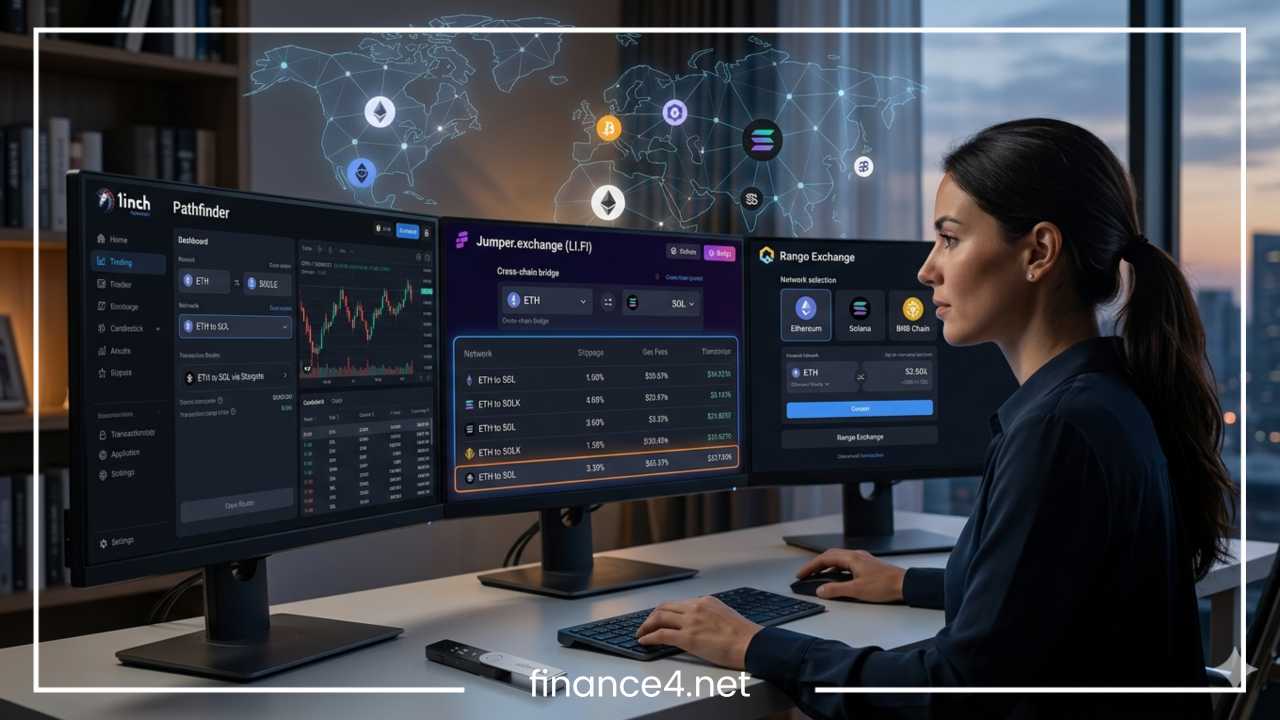
The most basic aggregators only compare Bridge A to Bridge B. The best tools use sophisticated pathfinding algorithms. They don’t just look at bridges; they look at combinations. For example:
-
Route 1: Swap ETH to USDC on Source -> Bridge USDC -> Swap USDC to SOL on Destination.
-
Route 2: Bridge ETH directly -> Swap ETH to SOL on Destination.
The aggregator calculates the net result of every possible combination to find the winner.
Fees and Gas Optimization
Gas estimation is notoriously difficult across different architectures (e.g., comparing Ethereum’s gas model to Solana’s or Arbitrum’s). A top-tier aggregator provides an “all-in” fee estimate. Furthermore, they are increasingly offering gas abstraction. This allows a user who has USDC but no ETH to still perform a bridge, because the aggregator or an intermediate solver pays the gas and deducts it from the bridged asset.
Security and Trust Metrics
Security is the most important metric, as a single bridge exploit can lead to 100% loss of funds. A good aggregator should offer:
-
Security-Specific Routing: A toggle that allows users to “Exclude unaudited bridges” or “Only use bridges with >$100M TVL.”
-
Risk Scoring: Providing a visual score (e.g., 1–10) for each bridge based on its history and decentralization.
-
Non-Custodial Design: The aggregator’s smart contracts should be “stateless” where possible, meaning they never hold your funds. They simply redirect the transaction call to the bridge contract.
Supported Chains and Asset Coverage
An aggregator is only as good as the networks it connects. While EVM-to-EVM (Ethereum to Arbitrum/Optimism/Base) is standard, the best aggregators bridge the gap between different ecosystems. Supporting Solana, Cosmos, and even Bitcoin Layer 2s is a significant competitive advantage. Additionally, they should support thousands of tokens, not just major stablecoins.
Top Bridging Aggregators
Several players have emerged as leaders in the aggregation space. Each has unique strengths tailored to different types of users, from retail beginners to high-frequency traders.
LI.FI (and Jumper.exchange)
LI.FI is widely considered the “gold standard” for developers, offering a powerful SDK that hundreds of other apps (like MetaMask or Alchemix) use to power their internal bridging. For retail users, their flagship product is Jumper.
-
Strengths: Massive chain coverage (20+ bridges, 30+ DEXs), extremely deep liquidity, and a very intuitive interface. Jumper provides a “one-step” experience where the swap and the bridge are bundled together perfectly.
-
Speed & Fees: Generally offers the most competitive pricing for EVM-based swaps due to its sheer number of integrations.
-
Best Use Case: The “everyday” DeFi user who wants a reliable, high-liquidity portal for moving assets between popular Layer 2s.
Rango Exchange
Rango stands out because of its commitment to cross-chain interoperability beyond the Ethereum Virtual Machine (EVM). While many aggregators stay within the Ethereum bubble, Rango connects Ethereum to Solana, Cosmos, ThorChain, and even native Bitcoin.
-
Strengths: Best-in-class for “exotic” swaps. If you want to go from a token on the Osmosis chain (Cosmos) to a token on Avalanche, Rango is often the only aggregator that can find a direct route.
-
Weaknesses: Because it deals with complex non-EVM chains, the UI can sometimes be more complex than its competitors.
-
Best Use Case: Multi-chain “maximalists” who move assets across fundamentally different blockchain architectures.
Socket (Bungee)
Socket is the infrastructure behind many popular wallet integrations. Their user-facing app, Bungee, is famous for its “Refuel” feature. One of the biggest problems in bridging is arriving on a new chain with 1,000 USDC but 0 gas tokens (like MATIC or ARB) to actually spend it.
-
Strengths: “Refuel” allows users to send a small amount of native gas to a new chain in a separate, lightning-fast transaction. It also has an extremely clean, minimal interface.
-
Best Use Case: Users entering a new ecosystem for the first time who are worried about being “stranded” without gas money.
deBridge and DLN
While deBridge operates its own infrastructure, its DLN (deBridge Liquidity Network) functions with aggregator-like efficiency through an “intent-based” model. Instead of relying on locked liquidity pools, it uses a peer-to-peer settlement layer.
-
Strengths: Incredible speed (often sub-minute transfers) and zero-slippage designs. It effectively aggregates “orders” rather than just bridges.
-
Best Use Case: High-volume traders and “whales” who cannot afford the price impact of traditional liquidity-pool bridges.
How Bridge Aggregators Work: A Technical Overview
The “magic” of an aggregator happens through a combination of off-chain computation and on-chain execution. It is a classic “solver” problem.
1. The Query and Discovery Layer
When you input a trade, the aggregator’s backend API sends requests to the “adapters” of every integrated bridge. These adapters are necessary because every bridge speaks a different “language” (different smart contract functions). The aggregator normalizes this data so it can compare the time, cost, and output of each route.
2. The Routing Algorithm
This is the “brain” of the operation. The algorithm evaluates thousands of potential paths. It doesn’t just look for the shortest path; it looks for the most cost-effective path. It uses dynamic programming to account for:
-
Source DEX Swap: Converting Token A to Bridgeable Token B.
-
The Bridge: The cross-chain transfer itself.
-
Destination DEX Swap: Converting the bridged asset to the final desired Token C.
The algorithm must calculate the gas cost for all three steps across two different blockchains.
3. Smart Contract Execution (The Meta-Transaction)
Once the user signs the transaction, the aggregator’s smart contract takes over. It acts as a conductor. It calls the DEX to swap your funds, then immediately calls the bridge contract to send those funds. By “bundling” these calls, the aggregator ensures that the user only has to sign one or two permissions in their wallet, rather than five.
4. Monitoring and Finality
After the transaction is sent, the aggregator monitors the source chain for finality. Once the source chain confirms the transaction is irreversible, the aggregator tracks the “relay” to the destination chain. Most aggregators provide a real-time progress bar, showing exactly where your funds are in the “inter-chain” void.
Risks and Limitations
Even though aggregators simplify the process, they do not eliminate the inherent risks of cross-chain activity. In some cases, they can add a small layer of complexity.
-
Inherited Bridge Risk: If an aggregator routes your funds through a bridge that gets hacked during your transaction, your funds are gone. The aggregator is a portal, not an insurance policy. Users must still be aware of which bridges they are comfortable using.
-
API/Frontend Dependency: If the aggregator’s website or API goes down, you might lose visibility into your transaction status. Your funds are likely safe on-chain, but the “stuck” feeling can be stressful for users who don’t know how to check block explorers.
-
Failed Swaps on Destination: A common issue is when the bridge transfer succeeds, but the final swap on the destination chain fails (perhaps due to a sudden price move). In this case, the user is left holding an intermediate asset (like USDC) on the destination chain and must complete the final swap manually.
-
Latent Gas Spikes: If gas prices on the destination chain spike significantly between the time you start the bridge and the time the funds arrive, the “relayer” might not have enough gas to finish the transaction. This results in “stuck” funds that require the user to manually “claim” them once they provide more gas.
Real-World Use Cases
The utility of bridge aggregators extends far beyond simple asset transfers. They are becoming the foundational layer for complex financial strategies.
DeFi Yield Farming
Yield farmers constantly move capital to wherever the returns are highest. If a new lending protocol on Base is offering 20% on stables while Arbitrum is only offering 5%, a farmer can use an aggregator to move their entire position in under three minutes, ensuring they don’t miss a single hour of high interest.
NFT Market Participation
Imagine an NFT collection is minting on Solana, but your liquid capital is tied up in a liquidity pool on Ethereum. Without an aggregator, you would have to withdraw from the pool, swap to USDC, bridge to Solana (hoping the bridge isn’t congested), and then buy SOL for the mint. An aggregator allows you to do this entire “unwind and move” sequence with minimal friction, potentially in time for the mint.
Arbitrage and Market Making
Professional traders use aggregators to exploit price discrepancies. If ETH is trading at $3,000 on Uniswap (Ethereum) and $3,050 on a DEX on Optimism, an aggregator allows the trader to quickly bridge funds to capture that $50 spread. Speed is the only thing that matters here, and aggregators provide the fastest possible routes.
DAO Treasury Management
DAOs often hold diversified assets across multiple chains to mitigate risk. When a DAO needs to pay contributors or fund a grant on a specific chain, the treasury manager uses an aggregator to ensure the DAO’s funds are moved with the lowest possible impact on the treasury’s balance.
How to Choose the Best Bridging Aggregator
With so many options, the “best” aggregator is often subjective based on the specific needs of the transaction. Here is a decision framework:
-
Check the Asset Pair: If you are moving a common asset like USDC or ETH between EVM chains, Jumper or Bungee are almost always the best bet for speed and price.
-
Check the Ecosystem: If you are going “off-road” to Cosmos or Bitcoin, Rango is likely your only reliable option.
-
Prioritize Speed vs. Cost: Most aggregators allow you to sort results. If you are bridging to pay for a time-sensitive auction, choose the “Fastest” route, even if it costs $5 more. If you are moving long-term savings, choose the “Cheapest” and wait the extra 10 minutes.
-
Security Toggles: If you are moving a life-changing amount of money, use an aggregator that allows you to deselect “experimental” bridges. Stick to battle-tested protocols like Stargate or Across.
-
Gas Needs: If you have zero funds on the destination chain, always use an aggregator with a “Refuel” feature. It saves you the headache of having to find a centralized exchange to buy $2 worth of gas tokens.
The Future of Bridge Aggregation
We are moving toward a future where the word “bridge” might disappear from the user’s vocabulary entirely. This transition is being driven by two major trends:
Intent-Based Bridging
In the current model, you choose a route. In the “Intent” model, you simply sign a message saying: “I am willing to pay 1 ETH on Mainnet to receive 3,000 USDC on Base.” You don’t care how it happens. Professional “fillers” or “solvers” see your intent and compete to fill it. This is faster, more secure (since the solver takes the bridging risk), and much simpler for the user. Aggregators are already evolving into Intent Aggregators.
Chain Abstraction
Projects like LayerZero, Axelar, and Chainlink (CCIP) are building “omnichain” standards. Eventually, developers will build apps that exist on all chains simultaneously. When you use a “Chain Abstracted” app, the bridging happens automatically in the background. You might click “Deposit” on a site, and it will pull funds from your wallets on three different chains at once without you ever seeing a bridge interface.
Unified Liquidity Layers
As Layer 2s become more integrated (e.g., the “Superchain” or “AggLayer”), the friction between them will drop to near zero. Aggregators will likely become the primary interface for all wallet activity, acting as the “operating system” that manages your assets across the fragmented landscape of Web3.
Final Thoughts
The multi-chain future is no longer a theory; it is the reality of the blockchain industry. However, this reality brought with it a level of complexity that threatened to stall user adoption. Bridge aggregators have stepped in to solve this, acting as the critical infrastructure that transforms a fragmented mess of isolated networks into a cohesive, global financial system.
By abstracting away the technical hurdles, comparing costs in real-time, and prioritizing security, bridge aggregators have made cross-chain swaps accessible to everyone. Whether you are a retail user chasing gas-efficient swaps or an institutional player moving millions, these platforms are the essential tools of the trade. As we move toward an era of chain abstraction and intent-based commerce, the role of the aggregator will only grow, eventually making the concept of “moving assets” as invisible and seamless as sending an email. For any participant in the modern DeFi ecosystem, mastering the use of bridge aggregators is not just a convenience—it is a necessity for navigating the future of finance.
Frequently Asked Questions (FAQ)
What is the cheapest bridge for multi-chain swaps?
There is no single “cheapest” bridge, as costs fluctuate based on network congestion, gas prices, and current liquidity. This is exactly why using a bridge aggregator is essential. Aggregators compare real-time fees across protocols to show you the most cost-effective route at that specific moment.
How do I avoid high gas fees when bridging crypto?
To minimize gas fees, consider three strategies:
- Use Layer 2 Networks: Bridging between rollups like Arbitrum, Base, or Optimism is significantly cheaper than bridging to or from the Ethereum Mainnet.
- Time Your Swaps: Perform transactions during off-peak hours when network traffic is low.
- Leverage Aggregators: Some aggregators offer “gas-efficient” routing that bundles transactions or uses “Refuel” features to send small amounts of native gas to your destination chain without expensive separate transfers.
Are bridge aggregators safer than using a single bridge?
Bridge aggregators provide a layer of security by vetting the protocols they integrate. However, they inherit the risks of the underlying bridges. To stay safe, choose an aggregator that provides risk scores or security ratings for each route. Always prefer “trustless” or “non-custodial” bridges that have undergone multiple third-party audits.
Can I swap tokens across chains in one click?
Yes, modern cross-chain DEX aggregators enable “any-to-any” swaps. This means you can swap a specific token on Chain A for a completely different token on Chain B in a single transaction. The aggregator handles the DEX swap, the bridge, and the final swap on the destination chain for you.
What is the fastest cross-chain bridge for stablecoins?
For stablecoins like USDC or USDT, intent-based bridges or native burn-and-mint protocols are typically the fastest. Because they don’t rely on traditional lock-and-mint mechanisms, they can often finalize a transfer in under two minutes, compared to the 10–20 minutes required by older liquidity-pool models.
Why did my cross-chain swap fail or get stuck?
The most common reasons for a stuck bridge transaction are:
- Slippage: The price of the asset changed too much during the bridging process.
- Insufficient Gas: You don’t have enough native tokens on the destination chain to complete the final swap.
- Network Congestion: The source or destination chain is experiencing a delay in block finality.
If a transaction is stuck, most aggregators provide a “Claim” button or a link to the bridge explorer where you can manually complete it once gas is provided.
Do I need a different wallet for every blockchain?
No, you can use a single multi-chain wallet (like MetaMask, Rabby, or Trust Wallet) to manage assets across multiple EVM-compatible chains. For non-EVM chains like Solana or Bitcoin, you may need a specialized wallet, though many aggregators now support WalletConnect to allow multiple wallets to be linked for a seamless cross-chain experience.