Best NFT Aggregator for New Artists
 by
by 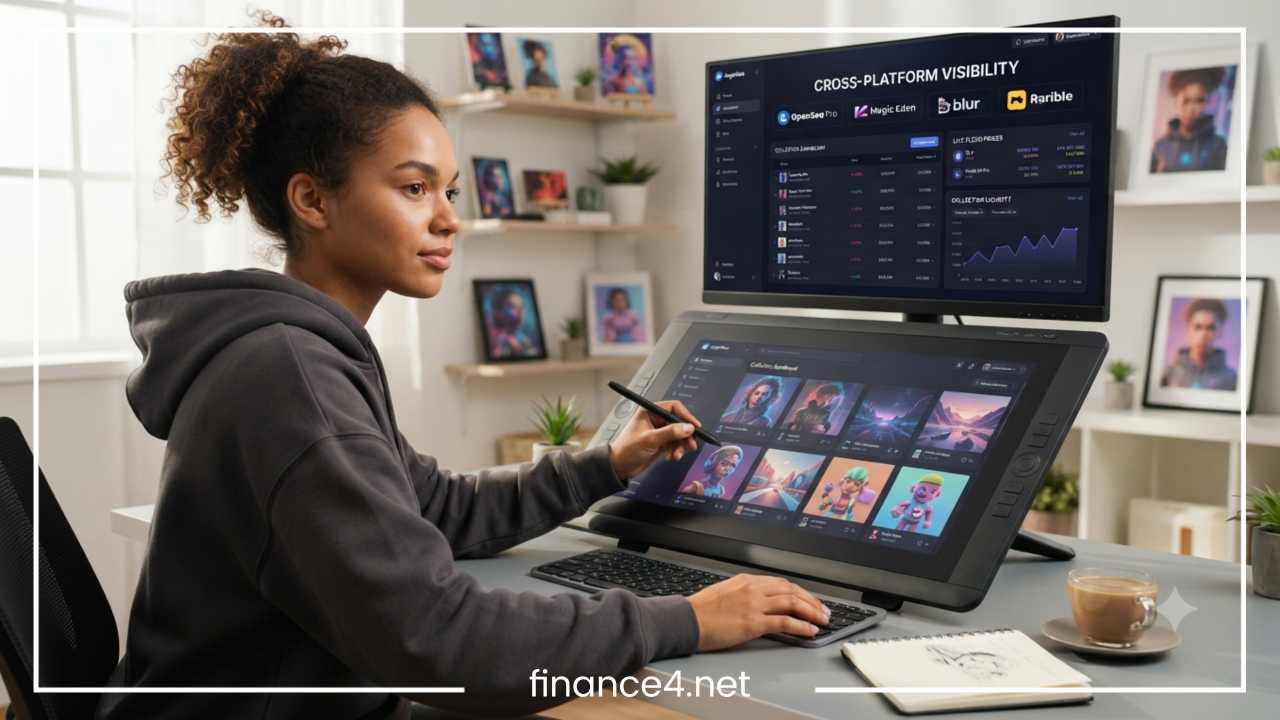
Best NFT Aggregator for New Artists to Maximize Sales
Entering the digital art market as a new creator brings an array of unique challenges that extend far beyond the creative process itself. In the early days of digital collectibles, launching a project meant selecting a single storefront, uploading your work, and relying almost entirely on that specific website’s internal search engine and user base. However, the modern digital asset ecosystem has evolved into a vastly fragmented and highly complex landscape. Today, collectors and liquidity are scattered across dozens of different domains, specialized applications, and entirely separate blockchain networks.
Creators who limit their work to a single platform often find themselves trapped inside a localized silo. This approach severely limits organic traffic and forces artists to miss out on prospective buyers who happen to prefer competing venues. For new creators without an established community, relying on a solitary marketplace is no longer a viable strategy for long-term growth and commercial success. Because digital art buyers are dispersed, artists need sophisticated tools that bridge these infrastructural gaps and unify the market.
This is precisely where NFT aggregators play a transformative role. By compiling live listings, bids, and historical data from multiple decentralized trading hubs into a single, unified interface, aggregators radically improve asset discoverability. They streamline the purchasing process for buyers while putting your art in front of a much larger, global audience. Aggregators act as the grand central stations of the digital art world, routing traffic, volume, and attention toward your work regardless of where it was originally minted.
Throughout this comprehensive guide, you will learn exactly what NFT aggregators are, the underlying mechanics of how they differ from traditional digital storefronts, and why they are essential tools for maximizing your sales. We will also explore the specific features you must look for when choosing a platform, alongside a detailed breakdown of the best aggregators currently available for emerging creators looking to establish their brand and secure sustainable revenue.
What Is an NFT Aggregator?
To understand how to leverage these platforms, you must first understand their foundational architecture. An NFT aggregator is a specialized web platform and blockchain interface that pulls, indexes, and displays live listings from multiple different decentralized marketplaces simultaneously. You can think of an aggregator in the same way you might think of a travel booking website. Instead of visiting five different airline websites to find the best price for a flight, you visit a single travel aggregator that compiles all the available flights, times, and prices into one easily readable dashboard.
Unlike a standalone NFT marketplace—which generally only displays digital items that were minted or explicitly listed within its own proprietary smart contract system—an aggregator functions as a master search engine and a universal routing layer. It does not necessarily host the primary smart contract for your art; rather, it reads the data from the blockchain and displays it.
When an artist lists an item on a standard marketplace, or when an aggregator indexes a new collection via decentralized data feeds, that artwork becomes immediately discoverable to anyone browsing through the aggregator’s interface. This happens regardless of which underlying platform hosts the primary listing.
For digital art collectors, aggregators represent a massive leap forward in user experience. They save time and reduce network transaction costs by finding the absolute best available price across competing platforms. They also allow for bulk transactions, enabling a buyer to purchase multiple pieces of art from different marketplaces in a single click. For sellers and artists, aggregators act as massive distribution megaphones. They route high-intent potential buyers directly to your digital canvas without requiring you to manually manage, update, and monitor separate artist accounts on every single marketplace in existence.
Why NFT Aggregators Matter for New Artists
New artists face a steep uphill battle against digital noise, algorithmic suppression, and incredibly high market competition. Breaking through this noise requires strategic distribution. Utilizing NFT aggregators provides distinct, measurable advantages that directly impact your brand visibility and your bottom line.
Greater exposure across the entire market
When you rely on one marketplace, your potential audience is capped by that specific platform’s daily active user count. Aggregators pool the user bases of multiple platforms. By ensuring your collection is indexed by an aggregator, you instantly multiply your digital footprint, exposing your art to a global audience rather than a localized community.
Access to diverse pools of potential buyers
Different marketplaces attract different demographics of collectors. Some platforms are known for fine art, others for generative profile pictures, and others for gaming assets. Because aggregators pull from all these sources, your work is placed in front of diverse buyer pools who might not have sought out your specific niche but are captivated by your visual presentation on the aggregator’s trending page.
Cross-marketplace visibility
Aggregators ensure that your collection appears wherever capital is actively flowing. If a collector prefers to use a specific aggregator because of its interface or advanced charting tools, they will still see your artwork even if you originally listed it on a smaller, independent storefront.
Better liquidity and faster sales
Liquidity refers to how quickly an asset can be bought or sold without affecting its price. In a fragmented market, liquidity is split. Aggregators consolidate this liquidity. Because your art is visible to a wider demographic of active capital, the time it takes to find a willing buyer decreases significantly. This helps you maintain momentum, especially during the crucial days immediately following a new collection launch.
Competitive pricing visibility
Aggregators inherently display the floor price (the lowest listed price of a collection) across all platforms. This transparency helps you as an artist understand market trends and evaluate your work fairly. It also builds trust with collectors, as they know they are viewing the most accurate and up-to-date market data before making a purchase.
Easier collection discovery
Modern aggregators feature incredibly robust sorting and filtering mechanisms. Buyers can filter by specific visual traits, background colors, artist names, or recent listing times. This granular level of discovery means that a buyer looking for a highly specific type of art is much more likely to find your work through an aggregator’s deep search functions than through a basic marketplace search bar.
Reduced dependence on one platform
Centralized marketplaces can experience server outages, change their royalty enforcement policies, or alter their user interfaces in ways that harm creators. By utilizing aggregators, you decentralize your reliance on any single corporate entity. If one marketplace goes down, your art remains perfectly visible and purchasable through the aggregator via other indexed platforms.
How NFT Aggregators Work
Understanding the technical mechanics behind aggregators helps demystify how your artwork travels from your digital wallet to a collector’s screen. Aggregators rely on complex, high-speed backend infrastructure to synchronize data in real time without compromising blockchain security.
Wallet connection and authentication
The journey begins when users and creators link their Web3 wallets to the aggregator. This connection authenticates user profiles, allows artists to manage their portfolios, and provides the necessary cryptographic signatures to authorize bulk listings and cross-platform transactions securely.
API and continuous indexing process
The backbone of any aggregator is its indexer. Aggregators run continuous, high-performance indexing nodes that scan public blockchains block-by-block. They monitor marketplace smart contracts to detect new mints, new listings, canceled listings, and completed sales. This data is pulled via Application Programming Interfaces (APIs) and formatted for the aggregator’s front-end display.
Listing synchronization
To prevent frustrating user experiences—such as a buyer trying to purchase an artwork that was already sold seconds ago—aggregators must synchronize listings instantly. When an item is priced, repriced, or sold on an underlying marketplace, the aggregator’s database updates in milliseconds. This real-time synchronization is critical for maintaining accurate floor prices and market volume statistics.
Metadata aggregation
Digital art consists of images and metadata (the text-based data detailing the art’s title, description, and specific traits). Aggregators synthesize high-resolution images, traits, descriptions, and creator credentials from various decentralized storage networks and format them into a uniform, visually appealing display, ensuring your art looks pristine no matter where it is viewed.
Smart contract interactions and proxy routing
When a buyer clicks purchase on an aggregator, they are interacting with a specialized proxy smart contract. This contract acts as an intermediary. It takes the buyer’s funds, splits them if necessary, routes them to the correct underlying marketplace contracts, executes the trades simultaneously, and then delivers the purchased artwork to the buyer’s wallet in a single, seamless atomic transaction.
Royalty handling
Sophisticated aggregators respect standard creator royalty frameworks across multiple marketplaces. When a cross-market transaction occurs, the aggregator’s routing protocol ensures that the specified percentage of the secondary sale is automatically distributed directly to the artist’s designated royalty wallet, protecting the creator’s passive income stream.
Cross-market purchasing and cart mechanics
Unlike single marketplaces where you buy one item at a time, aggregators introduced the concept of the shopping cart to Web3. Buyers can add multiple pieces of art from entirely different marketplaces and blockchains into one cart, purchasing them all together to save heavily on network transaction fees.
Features to Look for in the Best NFT Aggregator
When evaluating which platforms you should focus your attention on to help build your brand and increase revenue, it is vital to look beyond basic aesthetics. The best aggregators offer specific, highly technical features designed to support creators and incentivize high-volume collectors.
Multi-marketplace support
The foundational requirement of any aggregator is the breadth of its integration. The platform must index listings from a vast array of external storefronts, from the largest industry giants to niche, specialized platforms. The more marketplaces an aggregator supports, the wider your net is cast, maximizing your cross-platform reach and ensuring no potential buyer slips through the cracks.
Low transaction fees
Platform fees can eat into a collector’s budget, reducing the amount they are willing to spend on the art itself. Aggregators that minimize their own protocol overhead or offer zero-fee routing encourage higher buyer activity and volume. Lower friction in the purchasing process directly translates to faster sales for new artists.
Real-time listing updates
The digital art market moves at lightning speed. Instant synchronization is a non-negotiable feature. Real-time updates prevent double-sale errors, ensure accurate floor price tracking, and allow day-traders and serious collectors to snipe underpriced listings instantly, driving volume to your collection.
Fast search and filters
A powerful search engine is the most direct path between a buyer and your art. Advanced filtering options allow collectors to locate specific art styles, background traits, color palettes, or thematic elements instantly. If an aggregator has a clunky or slow search function, buyers will abandon it, taking their liquidity with them.
Cross-chain compatibility
The future of digital art is multi-chain. Support for multiple blockchain networks enables you to reach diverse audiences. A top-tier aggregator should seamlessly bridge ecosystems like Ethereum, Solana, Polygon, Base, and others, allowing you to deploy your art on the chain that best fits your technical and financial needs while still reaching a unified audience.
Creator analytics
Data is a creator’s best friend. Detailed tracking tools provide invaluable insights into viewer engagement, historical sales volume, floor price trends, and collector demographics. Access to advanced analytics allows artists to understand holding times, track which marketing campaigns are driving the most traffic, and adjust their strategies based on hard data rather than guesswork.
Portfolio management
The best aggregators are not just stores; they are digital galleries and portfolio managers. Integrated tracking dashboards help collectors monitor the real-time value of their asset portfolios. This feature encourages secondary market retention and builds platform loyalty, keeping active buyers returning to the aggregator daily.
Royalty support
Secondary sales are the lifeblood of a sustainable career in digital art. Robust enforcement of creator earnings safeguards your long-term revenue streams. You must seek out aggregators that have explicitly stated commitments to honoring and enforcing creator royalties, regardless of the underlying marketplace’s policies.
Collection verification
In the digital realm, copycats and malicious actors frequently attempt to steal momentum from rising artists by launching identical, fake collections. Official checkmarks, verification badging, and strict flagging systems protect your brand reputation against scams and ensure that buyers are confidently purchasing your genuine, authentic work.
Security
Because aggregators handle massive amounts of capital and route complex transactions, absolute security is paramount. Look for platforms that boast publicly audited smart contracts, bug bounty programs, and secure routing protocols. A secure platform protects both buyers and creators from malicious exploits and smart contract vulnerabilities.
Wallet integrations
Frictionless onboarding is essential for capturing new collectors. Seamless compatibility with popular Web3 wallet providers, alongside modern features like social logins or email-based wallet creation, ensures that even absolute beginners can purchase your art without getting lost in technical hurdles.
Best NFT Aggregators for New Artists
Navigating the multitude of platforms can be overwhelming for a new creator. To help you formulate your distribution strategy, we have detailed the most prominent and effective aggregators currently dominating the market. Each platform serves slightly different demographics and offers unique toolsets for artists.
OpenSea Pro
Overview:
Evolving from the historical and highly respected asset aggregator known as Gem, OpenSea Pro stands as a powerhouse utility in the current ecosystem. It was designed to aggregate massive amounts of marketplace liquidity while offering deep retail integration with the standard OpenSea platform. It provides a professional suite of tools wrapped in an incredibly polished interface.
Supported blockchains:
Ethereum, Polygon, Arbitrum, Optimism, Base, and multiple other Ethereum Virtual Machine (EVM) compatible networks.
Fees:
OpenSea Pro utilizes standardized marketplace fee models but features highly optimized gas efficiency for sweep transactions, saving buyers money on network costs.
Creator friendliness:
Very high. Because it is directly tethered to the largest general consumer base in the digital collectibles space, verifying a collection here lends immediate legitimacy and widespread visibility to new artists.
Ideal users:
New and established artists looking for broad, mainstream exposure alongside advanced trading tools. It is the perfect middle ground for both retail buyers and professional collectors.
Advantages:
Unmatched organic user traffic, comprehensive ecosystem integration, robust search infrastructure, and unparalleled brand recognition.
Drawbacks:
Because of its massive user base, competition levels are exceptionally high. It can be easy for a brand-new, unpromoted collection to get buried under the massive daily listing volumes without external marketing.
Magic Eden
Overview:
Originally established as the undisputed leading hub for the Solana ecosystem, Magic Eden has aggressively and successfully expanded into a formidable cross-chain marketplace and aggregator. It has built a reputation for pioneering creator-first initiatives and fostering incredibly tight-knit digital communities.
Supported blockchains:
Solana, Ethereum, Bitcoin Ordinals, Polygon, and Base.
Fees:
Competitive, dynamic fee structures tailored to encourage active community participation, often utilizing reward systems to offset costs for active traders.
Creator friendliness:
Exceptionally high. Magic Eden features dedicated launchpad programs, personalized creator support, and leading initiatives for royalty enforcement and creator protection.
Ideal users:
Artists launching multi-chain projects, creators heavily focused on community building, or those looking to tap into the high-energy, fast-paced ecosystems on alternative layer networks like Solana and Bitcoin.
Advantages:
Excellent creator tooling, strong multi-chain footprint, dedicated community support, and an innovative rewards program that keeps users returning daily.
Drawbacks:
Managing a presence across their fragmented multi-chain environment requires careful planning and strategic focus during your initial launch phase to ensure your messaging remains clear.
Blur
Overview:
Built explicitly for high-volume traders, market makers, and professional market participants, Blur functions as both a high-speed trading terminal and an aggressive aggregator. It disrupted the industry by introducing advanced financialization tools to digital art trading.
Supported blockchains:
Ethereum and Blast.
Fees:
Zero-fee marketplace mechanisms designed specifically to incentivize heavy trading activity and massive liquidity pooling.
Creator friendliness:
Moderate. Its primary focus leans heavily toward financial traders and liquidity providers rather than narrative-driven art collectors. However, the sheer volume it commands cannot be ignored by serious creators.
Ideal users:
Advanced digital artists, large-scale generative art projects, and creators working within high-velocity profile picture niches where trading volume is a primary metric of success.
Advantages:
Lightning-fast execution speeds, incredibly deep liquidity pools, advanced portfolio analytics, and sophisticated bidding mechanics that allow buyers to bid on entire collections at once.
Drawbacks:
The complex, data-heavy, terminal-style interface can easily overwhelm absolute beginners and casual art appreciators looking for a traditional gallery experience.
Gem
Overview:
While no longer an independent platform, Gem must be mentioned for its historical significance. It is recognized as one of the pioneering standalone NFT aggregators that completely revolutionized multi-market shopping on the Ethereum network.
Supported blockchains:
Ethereum.
Fees:
Utilized standard aggregator routing fees during its operational peak.
Creator friendliness:
High foundational impact, as it introduced the tools that creators now rely on globally.
Ideal users:
Studied by market historians, developers, and integrated directly into the modern OpenSea Pro architecture.
Advantages:
Set the original, golden standard for multi-market floor sweeping, gas optimization, and shopping cart checkout features that are now industry standards.
Drawbacks:
It no longer operates as an independent standalone application, having been fully absorbed into the OpenSea ecosystem.
Tensor
Overview:
Tensor is a lightning-fast, terminal-style NFT marketplace and aggregator optimized specifically for high-performance trading environments within the Solana network. It emerged as a direct competitor to Magic Eden, focusing on professional traders.
Supported blockchains:
Solana.
Fees:
Low protocol fees integrated with maker-taker incentive designs to reward users who provide liquidity to the market.
Creator friendliness:
Good for projects launching inside its native ecosystem, though heavily skewed toward trading metrics rather than art appreciation.
Ideal users:
Artists targeting the specific, high-velocity Solana collector community who appreciate granular data feeds, instant execution, and professional trading environments.
Advantages:
Exceptional speed, advanced automated charting tools, deep native ecosystem integration, and robust financial tools.
Drawbacks:
Restricted entirely to a single network environment, lacking the cross-chain reach of its major competitors.
Rarible
Overview:
Rarible is a long-standing, community-centric marketplace that successfully blends native, beginner-friendly minting capabilities with powerful multi-platform aggregation features under the hood.
Supported blockchains:
Ethereum, Flow, Tezos, and Polygon.
Fees:
Flexible structuring that is often governed by decentralized community consensus models.
Creator friendliness:
Very high. Rarible offers straightforward, no-code creation tools and lazy-minting options that are absolutely ideal for newcomers who want to bypass steep technical learning curves.
Ideal users:
Independent creators, single-edition fine artists, and beginners seeking an accessible, supportive entry point into digital art sales.
Advantages:
Decentralized governance structure, incredibly beginner-friendly setup, clean aesthetic interface, and excellent multi-chain flexibility for independent artists.
Drawbacks:
Lower overall trading volume and institutional liquidity compared to the major dominant financial hubs like Blur or OpenSea Pro.
Reservoir-Powered Platforms
Overview:
Reservoir is not a single consumer-facing website; rather, it provides open-source liquidity infrastructure and developer APIs that power custom aggregation layers across the entire Web3 ecosystem. It allows anyone to build their own aggregator.
Supported blockchains:
Extensive multi-chain EVM network support.
Fees:
Variable and entirely dependent on the specific frontend implementation built by the developer utilizing the API.
Creator friendliness:
High infrastructure reliability, offering tools for creators to build their own independent, aggregated storefronts.
Ideal users:
Highly technical creators, web developers, and brands building custom gallery experiences embedded directly into their own websites.
Advantages:
Total decentralization of liquidity routing, robust developer flexibility, and the ability to bypass centralized platform restrictions entirely.
Drawbacks:
Requires significant coding and technical know-how to utilize effectively, making it inaccessible for non-technical artists looking for plug-and-play solutions.
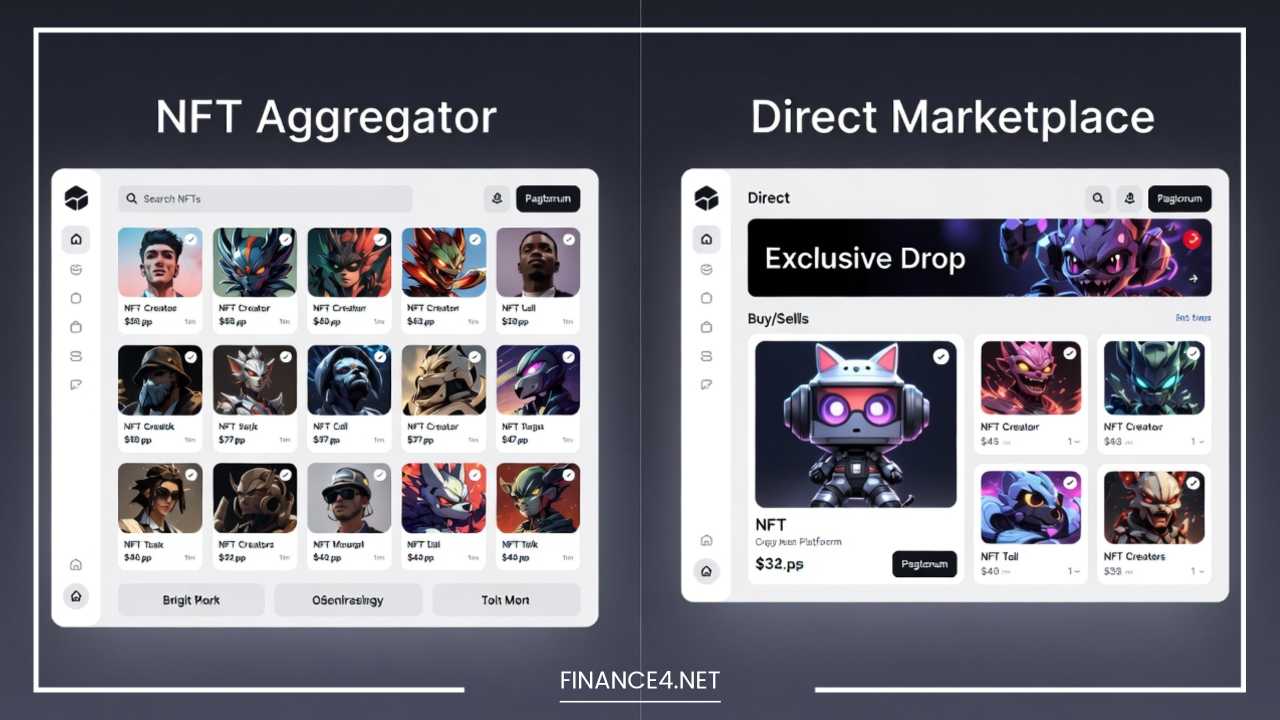
NFT Aggregator vs NFT Marketplace
To make informed distribution and marketing decisions, artists must clearly understand the functional, structural, and philosophical differences between traditional marketplaces and modern aggregators. While the lines are increasingly blurring as marketplaces adopt aggregation features, the core distinctions remain vital for your launch strategy.
| NFT Marketplace | NFT Aggregator |
| Lists own NFTs directly on its proprietary contract | Searches and indexes multiple independent marketplaces |
| Limited inventory restricted to its user base | Larger inventory encompassing the entire blockchain ecosystem |
| Single ecosystem with isolated liquidity | Cross-platform routing with pooled, deep liquidity |
| Basic search functionality and limited filters | Advanced search, analytics, and trait-based sorting |
| Individual pricing based on localized sellers | Best available price displayed globally across all platforms |
Strategic Application for New Artists:
Artists should not view this as an either-or scenario; it is a synergistic relationship. You should utilize traditional marketplaces and native smart contracts for your primary minting events, official drops, and direct community engagement. Once the art is minted and in the hands of your early supporters, you must leverage aggregators to maximize secondary market visibility. Aggregators ensure that as your art changes hands over the months and years, new collectors can easily discover, analyze, and purchase your work regardless of which portal they use to browse the blockchain.
Tips to Maximize NFT Sales Using Aggregators
Simply listing your art and hoping an aggregator indexes it is not enough to guarantee commercial success. Achieving consistent sales requires deliberate strategy, ongoing optimization, and careful attention to detail across every aspect of your digital portfolio.
Create verified collections
Trust is the most valuable currency in digital art. Work proactively with platform support teams across major aggregators to secure official checkmarks for your collections. Verification assures buyers of your collection’s authenticity, protects them from malicious fakes, and significantly boosts your conversion rates.
Optimize metadata flawlessly
Aggregators rely heavily on metadata to categorize your art. Ensure all layer attributes, titles, and descriptions are clean, structured, and free of typos. Well-structured metadata is easily indexable by search bots, ensuring your art appears correctly when buyers use granular trait filters to hunt for specific aesthetics.
Use strong, high-resolution artwork previews
In a dense grid layout featuring thousands of competing artworks, your thumbnail is your first and only impression. High-resolution, crisp thumbnails capture attention instantly. Ensure your art scales well visually, maintaining its impact whether viewed on a large desktop monitor or a mobile screen.
Price strategically and logically
Study historical floor trends, analyze comparable artists, and price your pieces competitively. Overpricing your debut collection can stall momentum instantly, while underpricing might undervalue your creative labor. Many successful artists use tiered pricing models to cater to different levels of collectors.
Build and nurture a dedicated community
Aggregators are tools for fulfillment and discovery, but communities drive the narrative. Foster genuine, ongoing connections on social channels, Discord, and forums. A strong community will actively search for your work on aggregators, generating organic volume that pushes your collection up the trending charts.
Promote on social media effectively
Do not just post pictures of your art; post direct links to your multi-market aggregator pages. Directing external social media traffic straight to your aggregator links boosts your algorithmic visibility and makes the purchasing process frictionless for impulsive buyers.
Leverage rarity traits and gamification
If you are creating generative collections, design diverse attribute distributions carefully. Collectors love to filter, analyze, and hunt for rare traits. Thoughtful rarity mechanics encourage secondary market trading, which in turn keeps your collection highly visible on aggregator volume charts.
Maintain consistent, professional branding
Use uniform profile graphics, consistent artist biographies, and identical naming conventions across every connected platform. This professional consistency reassures buyers that they are investing in a serious artist with a long-term vision.
Launch on multiple marketplaces simultaneously
Broaden your initial footprint during your drop. By ensuring your primary sales happen across platforms that are heavily indexed, you provide aggregators with multiple data points, increasing the speed at which your collection populates across the global ecosystem.
Track analytics relentlessly
Use the built-in creator analytics provided by platforms like OpenSea Pro and Blur. Monitor which platforms generate the most profile views and conversions. Use this hard data to refine your marketing focus, doubling down on the platforms that yield the highest return on investment.
Time listings with market activity
The digital asset market is highly cyclical. Align your drop schedules, major announcements, and new listings with periods of high network volume and active market participation. Launching during peak hours ensures maximum visibility on aggregator “recently listed” feeds.
Common Mistakes New NFT Artists Should Avoid
Navigating Web3 is complex, and early missteps can severely stunt an artist’s growth. Steering clear of these common pitfalls protects your brand reputation, saves you money, and vastly improves your overall sales conversion rates.
Listing only on one localized marketplace
Restricting your portfolio to a single storefront is the fastest way to remain invisible. It cuts you off from valuable external audiences and limits your liquidity, making it difficult for new collectors to justify buying into a stagnant ecosystem.
Ignoring or misconfiguring royalties
Failing to properly set up, verify, and enforce creator earnings across all aggregator dashboards can cost you vital passive income. Secondary sales are where artists generate sustainable wealth; do not leave this money on the table due to administrative laziness.
Poor artwork presentation and file formatting
Grainy images, misaligned previews, or excessively massive file sizes that fail to load turn potential buyers away immediately. Test how your art displays on various aggregators before finalizing your smart contract.
Unrealistic pricing without proven demand
Overpricing initial pieces without having an established collector base or a proven track record halts momentum. Collectors rely on aggregators to analyze your historical volume; if they see zero sales due to high prices, they will move on to another artist.
Weak, vague project descriptions
Empty descriptions leave buyers guessing about the narrative, utility, and inspiration behind your art. Aggregators give you space to tell your story—use it to forge an emotional connection with the viewer.
Neglecting community building for transaction chasing
Treating digital art sales purely as a transactional, financial exercise misses the core cultural engine of the space. Buyers want to invest in artists they believe in, not just JPEGs on a screen.
Skipping metadata optimization
Poorly formatted, incomplete, or corrupted metadata causes your pieces to fail indexation checks on major aggregators. If an aggregator cannot read your traits, your art becomes unsearchable and functionally invisible.
Overlooking blockchain gas fees
Forgetting to account for network transaction costs can trap your funds, disrupt planned listing schedules, and price out lower-tier collectors. Always factor in the cost of doing business on the blockchain when structuring your release strategy.
Final Thoughts
Navigating the modern digital art market requires significantly more than just creating compelling, visually stunning work; it demands smart, proactive distribution and a deep understanding of market infrastructure. As the ecosystem continues to expand across multiple blockchains and specialized storefronts, NFT aggregators serve as vital, indispensable bridges. They elegantly solve the massive problem of liquidity fragmentation, lifting your artwork out of isolated, quiet storefronts and placing it directly into high-traffic, global discovery zones.
By taking the time to choose the right aggregator platforms based on your target blockchain, your specific art style, and your long-term career goals, you position your creative portfolio for absolute maximum visibility. Remember that these aggregation tools, as powerful as they are, work best when strategically paired with active community engagement, flawless metadata optimization, and consistent, authentic marketing. Take the necessary time to test multiple platforms, strictly monitor your analytics and performance data, and remain flexible. By adapting your strategy to utilize the full power of NFT aggregators, you can build a sustainable, highly profitable career in the ever-evolving digital creative economy.
Frequently Asked Questions
What is the best NFT aggregator for new artists trying to maximize sales?
The best NFT aggregator depends heavily on your target blockchain and collection style, but platforms like OpenSea Pro and Magic Eden are top choices for new artists. OpenSea Pro provides massive mainstream retail exposure across multiple EVM networks, while Magic Eden offers powerful cross-chain capabilities and dedicated creator support tools spanning Solana, Ethereum, and Polygon.
How do NFT marketplace aggregators help digital creators sell art faster?
NFT aggregators pull live listings, floor prices, and collection data from dozens of separate marketplaces into a single unified search interface. For artists, this means your work gains cross-platform visibility, exposing your portfolio to a much larger pool of active buyers and investors without requiring you to manually manage multiple accounts.
Can I sell my digital art on multiple NFT platforms at the same time?
Yes, multi-market listing is a standard practice for digital creators. When you list your art or when an aggregator indexes your collection, multiple external storefronts display the asset. Aggregators then route prospective buyers to the best available price or listing, ensuring you do not miss out on liquidity from competing ecosystems.
Do NFT aggregators support creator royalties for secondary sales?
Most top-tier NFT aggregators respect and enforce creator royalty frameworks to protect long-term secondary revenue streams. However, because underlying marketplace policies can vary, artists should always verify how specific aggregator routing protocols handle creator earnings before launching a new collection.
What is the difference between an NFT marketplace and an NFT aggregator?
A traditional NFT marketplace only lists and displays items minted or hosted directly on its own proprietary smart contract system. In contrast, an NFT aggregator functions as a master search engine that crawls and compiles data from numerous independent marketplaces simultaneously, giving buyers a unified shopping cart experience and sellers massive cross-platform exposure.
How can beginners optimize their NFT metadata for aggregator search engines?
Beginners can optimize their metadata by ensuring that all trait categories, background attributes, titles, and descriptions are cleanly formatted without code errors. Clean metadata allows aggregator indexing bots to properly categorize your work, making it easily discoverable when collectors use granular filter tools to search for specific art styles.