Best Bridging Solution for New Chains
 by
by 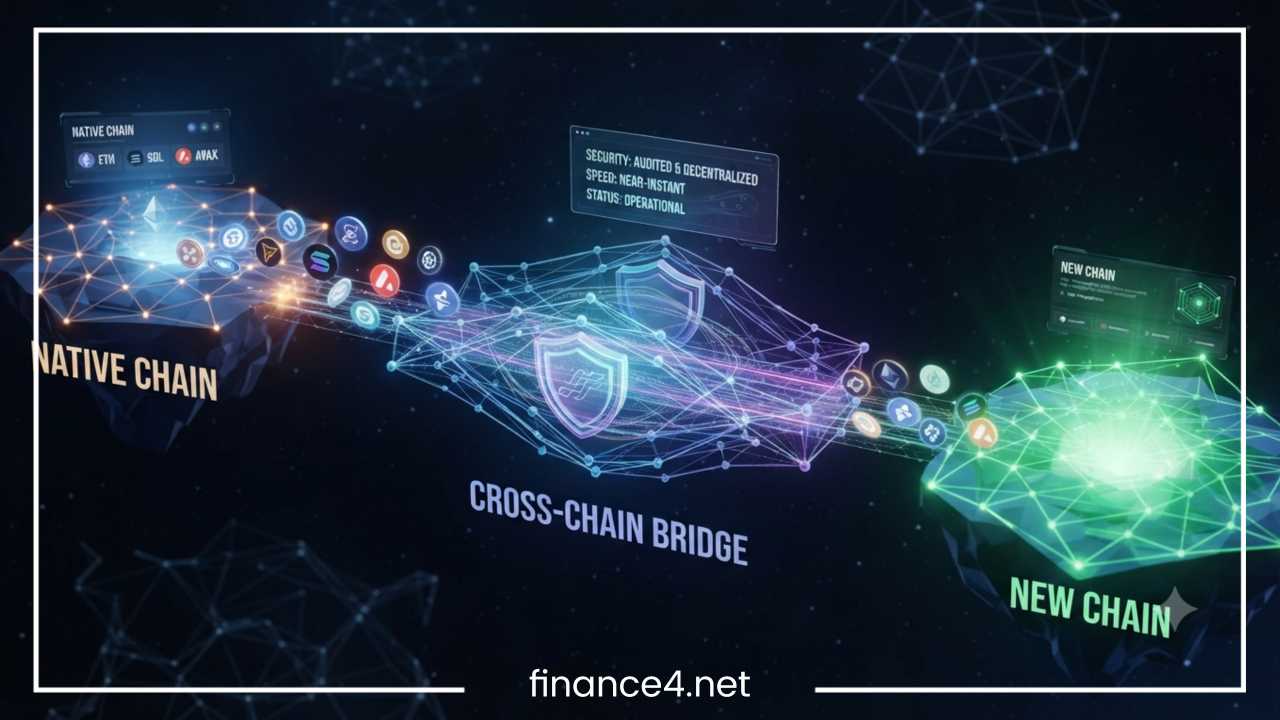
Best Bridging Solution for New Chains: How to Choose a Fast & Secure Cross-Chain Bridge
The modern landscape of distributed ledger technology is characterized by a sprawling, dynamic multi-chain ecosystem. Where a handful of monolithic networks once dominated the space, today we see a vibrant tapestry of specialized Layer 1 networks, high-throughput Layer 2 execution layers, application-specific chains, and modular blockchain architectures. While this multi-chain expansion has unlocked unprecedented levels of innovation, scaling capability, and architectural customization, it has also introduced a formidable hurdle for developers, liquidity providers, and everyday users alike: the severe breakdown of unified liquidity and native communication.
For newly launched blockchains, navigating this fragmented environment is a make-or-break proposition. Without robust, reliable, and secure communication channels to connect with established networks, a newly deployed chain risks remaining an isolated digital island, entirely cut off from the broader Web3 economy. This fundamental reality is precisely why finding the best bridging solution for new chains is paramount. A cross-chain bridge acts as the vital circulatory system of the entire multi-chain universe, allowing native assets, raw data, and arbitrary cross-chain messages to flow seamlessly across technologically disparate networks.
However, moving assets from one independent blockchain to another has historically been fraught with technical complexity and severe security risks. Users frequently face confusing user interfaces, exorbitant transaction costs, unpredictable waiting times, and, in the worst cases, catastrophic security exploits that have drained billions of dollars from vulnerable bridge contracts. Understanding how to critically evaluate these protocols is therefore an absolute necessity for anyone looking to build on, invest in, or interact with emerging blockchain networks.
Throughout this comprehensive guide, we will explore the underlying mechanics of cross-chain bridges, the systemic challenges facing new networks, the core architectural features that define a top-tier bridging solution, and the exciting future outlook for blockchain interoperability.
Why New Blockchain Networks Need Bridging Solutions
The explosive growth of alternative Layer 1 networks, Layer 2 scaling protocols, custom appchains, and modular data-availability frameworks has fundamentally transformed how decentralized applications are designed, deployed, and scaled. Networks such as Ethereum, BNB Chain, Solana, Avalanche, Arbitrum, Optimism, Base, Sui, and Aptos have each carved out unique technical niches, offering distinct trade-offs in execution speed, security guarantees, decentralization degrees, and developer tooling.
Despite these unique strengths, this vast proliferation of networks has triggered massive liquidity fragmentation across the entire sector. Instead of a single, deep pool of global capital that can be utilized efficiently across the entire Web3 space, financial value is now heavily siloed within individual, self-contained ecosystems. When a brand-new blockchain successfully launches its mainnet, it invariably starts with zero native liquidity. Users cannot easily bring their essential capital—such as stablecoins, blue-chip cryptocurrencies, or governance tokens—onto the new network without an established, reliable pathway for cross-chain asset movement.
This lack of native interoperability creates severe user onboarding friction. If an active crypto enthusiast hears about an innovative decentralized application on a newly launched Layer 1 or Layer 2 network, but discovers that transferring funds to that network takes twenty minutes, incurs exorbitant gas fees, or requires navigating a complex labyrinth of wrapped asset smart contracts, they will almost certainly abandon the attempt. Consequently, new chains suffer from low initial liquidity, poor user adoption, isolated community pockets, and severely restricted decentralized finance participation. Without an effective, high-performance bridge, developers are heavily discouraged from deploying their applications on the new network because they know their potential user base will be constrained by artificial, rigid boundaries.
What Is a Cross-Chain Bridge?
At its most fundamental level, a cross-chain bridge is a specialized protocol, contract suite, or consensus mechanism that facilitates the secure transfer of tokens, data packets, smart contract function calls, and state information between two or more economically and technologically distinct blockchain networks. Because different blockchains operate under completely separate consensus rules, state machines, and cryptographic environments, they cannot inherently read or write to one another directly. Bridges overcome this limitation by constructing a trusted or trust-minimized communication layer that spans the void.
To fully understand how modern bridges operate, it is essential to examine their primary functional and architectural models:
-
Lock-and-Mint: When a user wishes to move a native asset from Chain A to Chain B, the original asset is deposited into a secure, audited smart contract on Chain A, where it is locked in escrow. A corresponding synthetic or wrapped version of the asset is then minted on Chain B. When the user eventually wishes to return to the source chain, the wrapped tokens are burned on Chain B, sending a cryptographic proof that unlocks the original native assets back on Chain A.
-
Burn-and-Release: Similar in principle to the lock-and-mint model, this approach is typically utilized for cross-chain native tokens. Tokens are permanently burned or locked on the source chain, and an equivalent amount of the native asset is released from a pre-funded liquidity pool or reserve vault on the target chain.
-
Liquidity Network: These systems utilize decentralized liquidity pools established simultaneously across multiple blockchains. Instead of wrapping tokens or relying on synthetic representations, a user deposits assets into a pool on the source chain, and a corresponding amount of pre-existing liquidity is released from the matching pool on the destination chain. This approach often results in much faster transfers and completely eliminates the systemic counterparty risks associated with wrapped tokens.
-
Validator-Based Bridges: These architectures rely on an external network of decentralized validators, threshold signature schemes, or multi-signature committees to monitor events on the source chain, cryptographically attest to their validity, and sign off on the release or minting of assets on the destination chain.
-
Light-Client Bridges: Widely considered one of the most trust-minimized and secure designs in the industry, light-client bridges run a cryptographic light client of the source chain directly inside the smart contracts of the target chain. This allows the destination chain to independently verify state proofs from the source chain using pure math, without needing to trust a third-party intermediary committee.
Challenges New Chains Face Without a Reliable Bridge
When a new blockchain network enters the market without a reliable, high-performance, and secure bridging infrastructure, it faces a cascading series of systemic challenges that can completely stunt its growth before it even begins. The single most immediate obstacle is the presence of critically low liquidity. In the realm of decentralized finance, liquidity is the absolute lifeblood of lending markets, borrowing pools, automated market makers, and yield generation. If users cannot effortlessly bridge their capital into the new ecosystem, liquidity pools remain shallow, resulting in punishing price slippage, highly inefficient markets, and a deeply frustrating trading experience.
Furthermore, poor user adoption is an inevitable consequence of ecosystem isolation. Modern Web3 users have grown accustomed to fast, fluid, and frictionless movement between established networks like Ethereum and major Layer 2 rollups. If a new chain forces users through cumbersome, manual, or high-risk transfer processes, adoption stalls indefinitely. High onboarding friction acts as a massive deterrent, driving potential community members right back to more accessible, mature ecosystems.
Beyond purely financial implications, new chains without robust bridges suffer from crippled decentralized finance participation and severe non-fungible token migration problems. Creators, artists, and collectors cannot easily bring their digital assets across chain boundaries, drastically restricting the growth of cross-chain NFT marketplaces and immersive gaming economies. Additionally, developers face strict operational limitations. A builder constructing a modern multi-chain application needs absolute confidence that their smart contracts can securely interact with assets and states across different execution environments. Without a dependable bridging solution, top-tier developers will simply choose to build where interoperability is already solved, leaving the new chain entirely devoid of innovative applications.
Key Features of the Best Bridging Solution for New Chains
Identifying the ideal bridging solution requires a deep, meticulous dive into the architectural, economic, and operational features that separate elite, battle-tested protocols from vulnerable or inefficient ones. When evaluating options for a new blockchain network, several core dimensions must be analyzed with extreme rigor.
Security
Security is the absolute cornerstone of any cross-chain infrastructure. Because bridges frequently hold massive amounts of locked capital or govern high-value message routing, they represent the single most lucrative target for sophisticated hackers. The best bridging solution must feature rigorous, continuous smart contract audits conducted by multiple reputable, tier-one security firms. Validator security is equally critical; whether a bridge relies on a decentralized proof-of-stake validator set, advanced threshold cryptography, or robust multi-signature protection, the economic security and decentralization degree of the validation layer must be robust enough to withstand targeted state-level attacks. Comprehensive risk management frameworks and continuous monitoring systems are strict, non-negotiable requirements for any production-grade network.
Speed
In an era where digital natives and institutional traders alike expect near-instantaneous execution, transaction speed can entirely make or break a bridging protocol. A fast and secure cross-chain bridge should deliver near-instant transfers or minimize confirmation delays to the absolute lowest threshold permitted by the underlying consensus mechanisms of the connected networks. Highly efficient routing algorithms and optimized message passing ensure that users do not experience frustrating delays caused by network congestion or suboptimal path selection.
Low Fees
High transaction overhead acts as an aggressive, regressive tax on user activity and protocol growth. The best bridging solutions utilize advanced gas optimization techniques and batching mechanisms to keep transaction costs to an absolute minimum. Furthermore, competitive bridge fees ensure that users moving modest amounts of capital are never priced out of the ecosystem, encouraging frequent micro-transactions, active trading, and robust multi-chain participation.
Multi-Chain Support
Interoperability immediately loses its core value if it is artificially restricted to a narrow, isolated set of networks. A top-tier bridging solution must offer expansive, out-of-the-box multi-chain support, encompassing broad Layer 1 compatibility and Layer 2 rollup integration. It should seamlessly bridge assets between EVM-compatible networks while simultaneously extending its reach to high-performance non-EVM environments, ensuring that the newly launched chain can plug directly into the entire breadth of the global Web3 landscape.
Scalability
As a new blockchain network gains real-world traction and user acquisition accelerates, transaction volume will surge exponentially. The underlying bridging solution must be built for massive throughput, capable of handling thousands of cross-chain transactions per second without suffering from performance degradation or bloating network gas fees. Growing ecosystem support ensures that as additional chains inevitably emerge in the future, the bridge can easily incorporate them into its universal routing network.
User Experience
Technical complexity should always remain strictly under the hood, hidden safely away from the end user. The best bridging solutions offer exceptionally clean, intuitive user interfaces that guide participants through complex asset transfers in the minimum possible number of clicks. Seamless wallet compatibility across different signature schemes, clear asset selection menus, and transparent, real-time status tracking ensure that even novice users can navigate cross-chain transfers safely and with absolute confidence.
Liquidity
Deep liquidity pools are essential for minimizing price slippage during large-scale transfers. Solutions that leverage unified liquidity pools rather than fragile, vulnerable lock-and-mint wrapped token models provide a dramatically smoother user experience, ensuring that participants receive clean, native assets on the destination chain without facing arbitrary transfer caps or sudden liquidity crunches.
Reliability
High uptime, fault tolerance, and stable infrastructure are critical requirements for institutional funds and retail users alike. A dependable bridge must feature highly redundant validation systems, decentralized node operators, and automatic fail-safes to ensure completely uninterrupted service even during periods of extreme market volatility, network stress, or unexpected congestion.
Security Considerations When Choosing a Cross-Chain Bridge
Evaluating the true security posture of a cross-chain bridge requires looking far beyond polished marketing materials and examining historical performance, architectural attack surfaces, and defensive engineering mechanisms. Bridges are inherently complex distributed systems because they must sit directly between multiple independent consensus frameworks, creating a vastly expanded attack surface compared to standard single-chain smart contracts.
Historically, some of the most devastating exploits in the history of decentralized finance have targeted bridge contracts, frequently stemming from compromised validator private keys, flawed cryptographic signature verification logic, or subtle edge-case bugs in smart contract state management. Consequently, modern bridging solutions must implement uncompromising defense-in-depth security strategies. This includes comprehensive, continuous code audits, active and rewarding bug bounty programs that incentivize white-hat security researchers to discover vulnerabilities before malicious actors can exploit them, and exceptionally high levels of validator decentralization to entirely eliminate single points of failure.
Furthermore, real-time monitoring systems play an indispensable role in contemporary bridge security. Automated sentinel networks can detect anomalous transaction patterns, unusual large-scale withdrawals, or consensus irregularities in a matter of milliseconds, automatically triggering circuit breakers or pausing bridge operations before catastrophic financial damage can occur. Advanced proof verification methods, such as zero-knowledge cryptographic proofs and trust-minimized light-client validation, continue to elevate security standards by anchoring cross-chain transfers in mathematical truth rather than human trust or centralized multi-signature committees.
Use Cases for Cross-Chain Bridges
Cross-chain bridges unlock a vast, powerful array of real-world use cases that actively drive economic activity, network utility, and foundational value across the entire decentralized economy.
DeFi
Within decentralized finance, bridges empower users to move capital fluidly across diverse blockchain ecosystems to chase yield, provide market-making liquidity, or borrow against collateral held securely on another chain. A user holding core assets on Ethereum can instantly deploy capital into a high-yielding lending market on a newer, faster Layer 2 network without needing to completely liquidate their original long-term holdings.
Yield Farming
Yield participants and professional market makers constantly seek out the most lucrative capital deployment opportunities across the multi-chain landscape. Bridges allow financial capital to flow dynamically and instantly to wherever reward emissions, staking incentives, or trading fee revenues are most advantageous, optimizing global returns across disparate networks.
NFT Transfers
The digital art, collectible, and tokenized asset space has evolved to become thoroughly multi-chain. Cross-chain non-fungible token bridges allow creators, collectors, and gaming guilds to transfer unique digital items safely between different marketplaces and distinct blockchain networks, preserving provenance and full ownership rights while accessing much broader buyer bases.
Gaming
Web3 gaming relies heavily on lightning-fast, ultra-low-cost transaction execution. Players frequently need to move in-game currencies, rare digital characters, and functional items seamlessly across specialized gaming appchains and high-performance settlement layers. Bridges facilitate this complex asset movement behind the scenes, ensuring an uninterrupted, smooth gaming experience.
DAO Treasury Management
Decentralized Autonomous Organizations often hold heavily diversified financial treasuries distributed across multiple independent blockchain networks. Bridges enable DAOs to allocate capital, execute ecosystem grants, and manage multi-chain investments efficiently without requiring cumbersome, high-friction manual interventions.
Enterprise Blockchain
Enterprise-grade blockchain adoption frequently requires securely bridging private, permissioned corporate ledgers with public, permissionless settlement networks. Secure cross-chain protocols allow major enterprises to interact directly with public liquidity and smart contracts while maintaining strict data privacy and compliance controls on their internal databases.
How to Evaluate a Bridging Solution for a New Blockchain
When a core blockchain development team, foundation, or community governance body is tasked with selecting the optimal bridging solution for a newly launching network, a structured, highly objective evaluation framework is absolutely essential. Relying on gut feelings, superficial hype, or financial incentives alone is a proven recipe for systemic protocol failure.
The comprehensive evaluation checklist should rigorously address the following core criteria:
-
Supported Networks: Does the bridge natively connect to major liquidity hubs such as Ethereum, Solana, and dominant Layer 2 rollup environments?
-
Security Model: Does the protocol rely on centralized multi-signature signers, decentralized proof-of-stake validators, or trust-minimized zero-knowledge light clients?
-
Total Value Locked: What is the current economic scale and historical volume of assets securely managed by the bridging protocol?
-
Liquidity Depth: Can the protocol handle massive institutional transfer sizes without causing severe price slippage or liquidity lockups?
-
Transaction Speed: What is the exact average time required for funds to achieve absolute finality on the destination chain?
-
Fee Structure: Are the transfer fees completely transparent, highly competitive, and optimized for everyday users?
-
Audits and Open-Source Code: Have multiple tier-one security firms thoroughly reviewed the codebase, and is the protocol repository fully open-source for public inspection?
-
Developer Tools: Does the bridge provide robust documentation, clean software development kits, flexible APIs, and dedicated developer support to facilitate smooth integration?
-
Community Trust: What is the historical track record, brand reputation, and resilience of the project within the wider Web3 community?
Future of Cross-Chain Interoperability
As the broader blockchain industry continues its relentless maturation, the fundamental paradigm of cross-chain communication is evolving at a breathtaking pace. We are rapidly moving away from a clunky, highly fragmented landscape where users must manually navigate individual, application-specific bridges, heading instead toward a unified, highly abstracted user experience where chains fade entirely into the background.
Key structural trends shaping the future of interoperability include chain abstraction, where the underlying blockchain networks become completely invisible to the end user. Under this model, users simply express their financial or operational intent, and automated routing protocols handle complex cross-chain execution, gas payments, and asset swaps entirely behind the scenes. Intent-based bridging architectures and advanced zero-knowledge bridges are leading this profound transformation, utilizing cutting-edge cryptography to verify state transitions instantly and trustlessly without relying on trusted third parties. Furthermore, modular blockchain ecosystems, AI-assisted routing algorithms, and universal liquidity layers are successfully paving the way for a truly interconnected Web3 where artificial boundaries between individual ledgers dissolve completely.
Final Thoughts
The long-term commercial and technical success of any newly launched blockchain network is inextricably linked to the quality, safety, and efficiency of its native interoperability infrastructure. Without a fast, secure, and reliable cross-chain bridge, even a technologically revolutionary layer-one or layer-two network will struggle critically to attract vital liquidity, talented developers, and active users.
As we have explored throughout this guide, selecting or designing the right bridging solution requires a meticulous, uncompromising balancing act between top-tier security, high execution speed, massive scalability, and deep liquidity pools. Prioritizing robust security architectures, decentralized validation models, and resilient liquidity frameworks over short-term cost savings ensures that a new chain can foster a thriving, highly resilient digital ecosystem. Ultimately, as the multi-chain universe continues to expand globally, advanced bridging solutions will remain the absolute essential connective tissue that unites otherwise isolated networks into a cohesive, highly efficient global economy.
What Makes a Bridging Solution Stand Out?
| Feature | Why It Matters |
| Security model | Protects user assets from sophisticated exploits, flash-loan attacks, and unauthorized access |
| Supported chains | Enables broader interoperability with major Layer 1 and Layer 2 networks |
| Transaction speed | Improves user experience by eliminating long, frustrating waiting periods during finality |
| Fees | Reduces transfer costs for both everyday retail participants and high-volume institutional entities |
| Liquidity | Minimizes execution delays and severe price slippage during high-value asset transfers |
| Developer tools | Simplifies technical integration for protocols, dApps, and projects launching on new networks |
| Cross-chain messaging | Supports complex smart contract interactions and arbitrary data calls beyond simple token transfers |
| Decentralization | Reduces structural reliance on trusted intermediaries and single points of failure |
| Monitoring and analytics | Helps ensure continuous operational reliability and rapid threat detection against emerging exploits |
Frequently Asked Questions (FAQ)
What is the best bridging solution for new chains with low initial liquidity?
The best bridging solutions for newly launched networks utilize decentralized liquidity network models rather than traditional lock-and-mint architectures. These protocols deploy pre-funded liquidity pools across multiple chains, allowing users to transfer native assets directly without encountering wrapped token risks or severe price slippage.
How can I find a fast and secure cross-chain bridge for Layer 1 and Layer 2 networks?
When searching for a fast and secure cross-chain bridge, evaluate protocols based on independent third-party smart contract audits, validator decentralization, transaction finality speed, and historical uptime. Trust-minimized designs such as zero-knowledge proofs and light-client validation offer superior security compared to centralized multi-signature committees.
Why do new blockchain ecosystems struggle with cross-chain asset transfers?
New blockchains often suffer from liquidity fragmentation because they start their mainnets with zero native capital. Without a reliable interoperability layer, users face high onboarding friction, long confirmation waiting times, and complex transaction trails, which severely limit decentralized finance participation and user adoption.
What are the differences between lock-and-mint and liquidity network bridges?
Lock-and-mint bridges lock native tokens in escrow on a source chain while minting synthetic wrapped assets on the target chain. In contrast, liquidity network bridges swap assets directly out of pre-existing multi-chain pools, eliminating the security vulnerabilities and systemic counterparty risks associated with wrapped asset tokens.
How do developers integrate cross-chain messaging into new blockchain apps?
Developers integrate cross-chain functionality by utilizing interoperability protocols and software development kits (SDKs) that support arbitrary message passing (GMP). This allows smart contracts on a new chain to communicate securely, trigger actions, and read state data across independent blockchain networks.