Bridging Harmony to Cosmos
 by
by 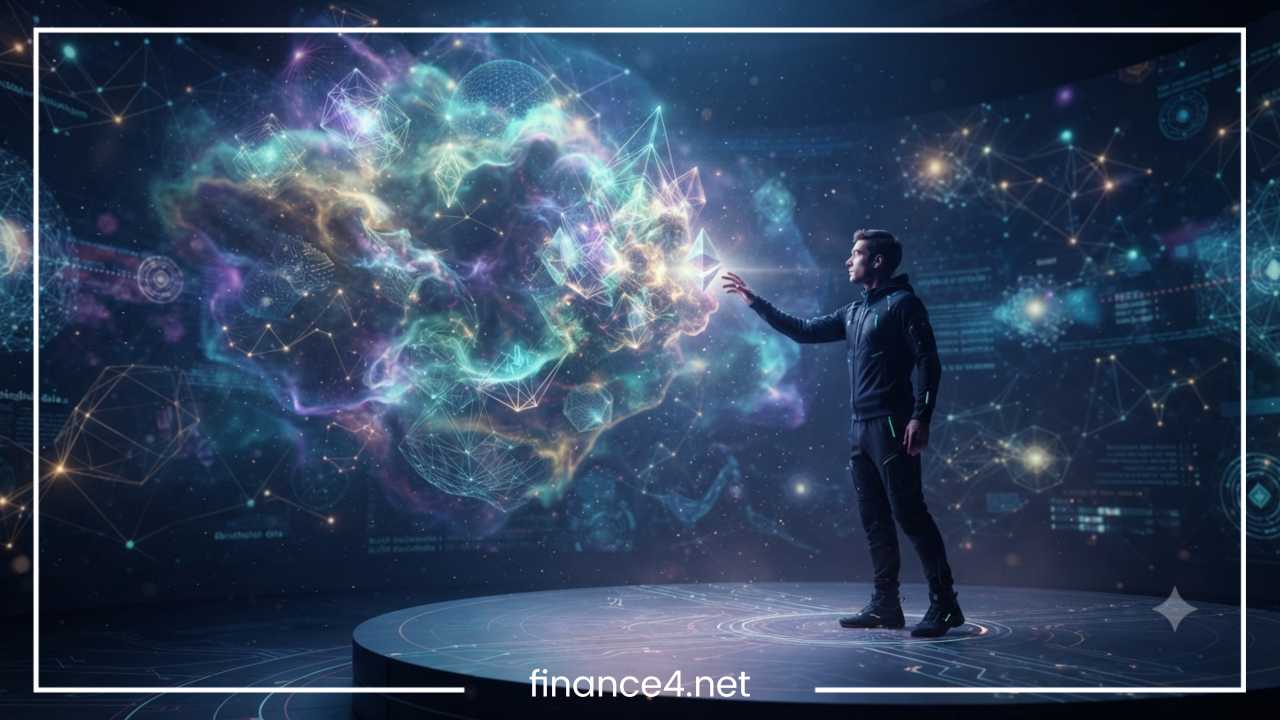
Bridging Harmony to Cosmos: A Guide to Universal Balance
NFTs are not merely digital assets; they can be a medium through which artists explore interconnectedness, balance, technology, nature, and humanity’s relationship with the cosmos.
NFTs as a Bridge Between Art and the Cosmos
When non-fungible tokens first entered the broader cultural and technological consciousness, they were largely viewed through the narrow, hyper-financialized lens of digital collectibles, speculative trading cards, and profile pictures. However, reducing this cryptographic technology to momentary transactional hype overlooks its profound, enduring potential as a revolutionary artistic medium. At its foundational core, blockchain technology introduces a transformative capability to the digital realm: verifiable ownership, permanent immutability, and absolute provenance. For the very first time in human history, a purely digital creation can possess a singular, authentic identity that cannot be replicated, forged, or quietly altered without a transparent public record. This technical breakthrough opens the door for a deeper cultural synthesis, moving digital art from the periphery of temporary exhibition spaces into the very center of contemporary philosophical dialogue.
Throughout human history, art has consistently served as an intellectual and emotional mirror for our relationship with the cosmos. From ancient cave paintings mapping the constellations to Renaissance masterpieces exploring geometric proportion, golden ratios, and celestial mechanics, creators have always sought to capture the invisible harmony of the universe. Today, that ancient quest finds an unprecedented frontier in the digital landscape. By connecting the concepts of harmony, interconnectedness, and the vast expanse of the cosmos to NFT culture, artists are building an entirely new visual and conceptual vocabulary. NFTs provide a transformative medium for creators exploring universal balance, merging mathematical precision with deep spiritual and philosophical inquiry. This comprehensive exploration examines how blockchain-based digital art bridges the gap between human imagination and the grand scale of the cosmos.
The dialogue between human consciousness and stellar phenomena has always required translation. Ancient astrologers and astronomers translated the night sky into mythologies and navigational charts; Renaissance painters translated perspective into the geometry of divine proportion; and contemporary digital creators translate data, code, and algorithmic complexity into living visual experiences. Non-fungible tokens serve as the modern ledger for this ongoing translation. By anchoring digital works to an unalterable blockchain network, artists ensure that their visions of celestial order and cosmic harmony are preserved with the same reverence once reserved for physical monuments and museum-grade canvases.
Furthermore, the integration of blockchain into the fine art ecosystem democratizes the creation of cosmic narratives. Historically, large-scale explorations of the universe—whether through planetariums, massive installations, or high-end publications—were restricted by institutional funding and geographic gatekeepers. Today, independent digital artists sitting in remote corners of the world can deploy complex cosmic visualizers, generative star maps, and abstract meditations on infinity directly to a global audience. This decentralization of cosmic art allows for a diverse chorus of human voices to interpret the universe, ensuring that our collective reflection on universal balance is rich, multifaceted, and truly representative of humanity as a whole.
Understanding NFTs and the New Digital Art Landscape
To comprehend the artistic revolution currently unfolding across decentralized networks, one must first examine the structural mechanics of non-fungible tokens. Unlike traditional cryptocurrencies such as Bitcoin or Ethereum, which are fungible and completely interchangeable, an NFT is a unique cryptographic token stored on a decentralized blockchain ledger. This ledger securely records the creator’s identity, the current owner, and the complete transaction history of the asset. This cryptographic structure solves one of the oldest and most stubborn challenges of digital art: the problem of infinite reproducibility. In the past, a digital file could be copied endlessly across servers and hard drives without any loss of quality, rendering the concept of an original copy meaningless. Blockchain changes this permanently by anchoring digital art to a verifiable certificate of authenticity.
This technological shift separates NFTs from ordinary digital images floating across social media feeds or search engine results. An ordinary image is fleeting, easily detached from its creator, and prone to losing its context over time. An NFT, by contrast, establishes a permanent cultural artifact with an unbroken lineage of ownership. This evolution has transformed digital art from a marginalized format into a major artistic and cultural asset class. Independent digital artists, who historically struggled to monetize their work or find gallery representation in traditional, heavily gatekept art markets, now enjoy direct access to a global audience. The barriers to entry have shifted from geographic exclusivity and institutional connections to pure creative execution, empowering a diverse new generation of digital pioneers who operate outside traditional establishments.
The mechanics of this digital art landscape rely upon smart contracts—self-executing code stored on the blockchain that automates the execution of agreements between parties. When a digital artwork is minted as an NFT, the smart contract embeds the creator’s rules, royalty percentages, and transfer parameters directly into the token’s metadata. This innovation guarantees that artists receive financial compensation whenever their work is resold on secondary markets, a protection that has historically been denied to visual artists in traditional physical art auctions. Consequently, the economic foundation of digital art has grown more robust, allowing creators to sustain their practices full-time and dedicate themselves to ambitious, long-term conceptual projects.
Beyond economics, the digital art landscape fosters a unique sense of ownership and psychological connection. When a collector acquires a traditional painting, the physical object hangs on a wall, visible only to those who enter the room. When a collector acquires an NFT, they hold a cryptographic key that proves ownership within a global, transparent ledger. This ownership is public yet secure, allowing collectors to showcase their digital galleries in virtual worlds, metaverse museums, and specialized online platforms. The relationship between the creator, the artwork, and the collector becomes a shared public record, transforming passive patronage into an active, verifiable form of cultural stewardship.
The Concept of Harmony in NFT Art
Harmony in digital art is rarely accidental; it is the result of intentional choices regarding symmetry, geometry, color, light, nature, and movement. Artists working within the Web3 space frequently return to recurring philosophical themes such as duality, balance, interconnectedness, and transformation. By leveraging the infinite canvas of the screen, they construct visual symphonies that would be physically impossible to realize in traditional media. Light can be manipulated as an active medium rather than a static reflection, and color can shift dynamically over time to evoke emotional resonance and spatial depth.
Generative art and algorithmic approaches have become extraordinarily powerful tools in the pursuit of visual harmony. By writing code that dictates parameters of color, shape, frequency, and scale, artists set rules that allow an algorithm to generate unique yet cohesive outputs. This fascinating interplay between human intent and machine execution mirrors the natural world, where complex ecosystems emerge from simple biological and chemical rules. Abstract and conceptual NFT art works particularly well with cosmic themes because it bypasses literal representation, allowing viewers to contemplate abstract concepts like infinity, quantum entanglement, and universal equilibrium directly through visual perception.
Symmetry and sacred geometry occupy a central place in this artistic pursuit. From ancient mandalas to the fractal patterns found in ferns and galaxies, geometric balance has long been associated with spiritual order and cosmic stability. Digital artists harness these ancient visual languages through modern programming languages, creating intricate mandalas that pulse, rotate, and evolve in real-time. These digital structures do not merely imitate natural geometry; they embody the underlying mathematical principles that govern both quantum particles and spiral galaxies. Through code, artists demonstrate that harmony is not a static state of rest, but a dynamic equilibrium achieved through constant motion and adjustment.
Furthermore, color theory in digital art transcends the limitations of physical pigments. Monitors emit light directly through RGB subpixels, enabling a vibrancy and luminosity that paint can never fully replicate. Cosmic artists exploit this luminous quality to simulate the blazing intensity of stellar nurseries, the deep darkness of interstellar voids, and the shifting spectrums of cosmic radiation. By pairing these vibrant color fields with subtle, hypnotic movements, artists create meditative spaces that encourage viewers to pause, reflect, and internalize a sense of inner and outer balance.
From Digital Canvas to Cosmos: Cosmic Themes in NFTs
Humanity has always gazed upward at the night sky with a mixture of wonder, humility, and existential inquiry. Space, galaxies, stars, planets, nebulae, and celestial geometry have long inspired creative expression, but digital tools have fundamentally changed how we visualize the universe. In the realm of cosmic NFTs, artists are no longer constrained by the physical limitations of paint, canvas, or even terrestrial perspective. They utilize advanced technology to visualize phenomena that cannot easily be represented physically, such as gravitational waves, multidimensional space, quantum fields, and the deep, incomprehensible time of stellar evolution.
Cosmic NFT collections often function as deep philosophical explorations of existence, infinity, time, and interconnectedness. A single digital piece might depict the birth of a star through swirling procedural particle systems, while another uses complex three-dimensional environments to simulate floating through an endless, meditative nebula. The role of animation, generative algorithms, and immersive experiences is crucial here. By introducing movement, scale, and depth, artists transform static viewing into an experiential journey. Collectors do not merely look at a picture of space; they inhabit a simulated cosmic space that breathes, evolves, and responds to digital interaction, echoing the dynamic nature of the universe itself.
The aesthetic exploration of the cosmos through NFTs also serves as a bridge between hard science and human emotion. Astrophysics provides us with equations, data visualizations, and telescope imagery from instruments like the James Webb Space Telescope, but these scientific outputs can sometimes feel cold or clinical to the general public. Cosmic artists act as cultural translators, taking raw scientific concepts—such as spectroscopic data, orbital mechanics, and cosmic microwave background radiation—and transforming them into emotionally resonant digital masterpieces. This synthesis of data and art allows viewers to feel the awe of the cosmos on a deeply personal level, bridging the gap between intellectual comprehension and visceral wonder.
Moreover, the temporality of digital cosmic art reflects the vast timescales of the universe. Unlike a physical painting frozen in a single moment, an NFT can incorporate time-based elements that change over hours, days, or even years. Some generative cosmic works shift their color palettes based on actual planetary alignments, real-time weather data, or lunar phases. By tying the digital artwork to real-world cosmic phenomena, artists create a living link between the viewer, the blockchain, and the physical universe. The artwork becomes an ongoing dialogue with time, reminding us that we are part of an immense, unfolding cosmic narrative.
Blockchain as an Ecosystem of Digital Connection
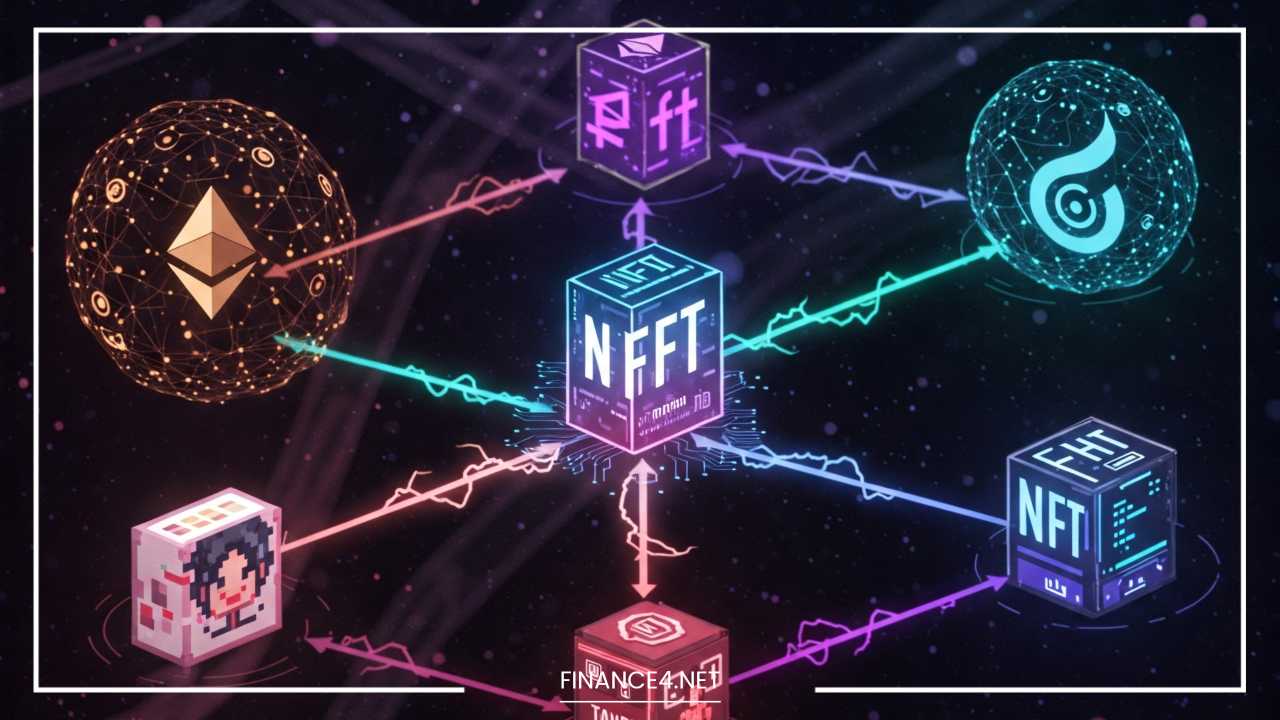
The infrastructure of blockchain technology extends far beyond financial transactions; it functions as a vibrant ecosystem of digital connection. Traditional art markets are often hierarchical, centralized, and exclusive, relying on a small network of galleries, auction houses, and critics to validate value. In contrast, blockchain architectures are decentralized, allowing artists, collectors, developers, marketplaces, and global communities to interact directly without intermediaries. This peer-to-peer structure fosters a sense of shared participation that is entirely unique to the digital age.
Smart contracts play a foundational role in this ecosystem. These self-executing programs automate agreements, ensuring that creator royalties are respected across secondary sales without the need for traditional middlemen. Provenance and authenticity are guaranteed by cryptographic math rather than institutional gatekeepers. Consequently, the blockchain ecosystem operates less like a traditional commodity market and more like a vast, interconnected neural network. Value, culture, and meaning circulate freely across borders, uniting disparate individuals under shared aesthetic and philosophical interests.
This network effect transforms how artistic movements are formed and sustained. In the past, artistic movements like Impressionism or Surrealism were geographically localized, requiring artists to gather in specific cities like Paris or New York to share ideas and challenge the establishment. Today, Web3 operates as a placeless, borderless metropolis where an artist in Tokyo, a collector in Buenos Aires, and a developer in Reykjavik can collaborate in real-time on a unified cosmic art project. The blockchain acts as the universal protocol that unites these disparate nodes, creating a resilient, global cultural infrastructure that cannot be easily dismantled by local economic downturns or institutional censorship.
Furthermore, the transparency of the blockchain redefines trust within the art world. In traditional markets, issues of forgery, disputed provenance, and hidden fees have plagued collectors for centuries. On a public blockchain, every transaction, provenance record, and smart contract execution is permanently visible to anyone with an internet connection. This radical transparency builds a foundation of trust among participants, allowing global communities to pool resources, fund ambitious public digital art installations, and support emerging talent with absolute confidence in the integrity of the system.
NFTs, Community, and Collective Harmony
One of the most remarkable phenomena of the Web3 era is the formation of tight-knit digital communities centered around specific art collections and creative visions. Platforms like Discord, virtual reality spaces, and specialized social networks serve as modern town squares where collectors and creators converse daily. These spaces transcend geographical boundaries, uniting people from diverse cultural backgrounds through a shared passion for digital art and cosmic philosophy.
Within these communities, shared ownership narratives and collective identities emerge naturally. Collaborative NFT projects, where multiple artists contribute layers to a single evolving universe, demonstrate how collective harmony can be achieved in a decentralized setting. Communities often influence the evolution of long-term artistic projects, voting on narrative directions, funding charitable initiatives, or co-creating lore. This dynamic emphasizes the importance of genuine participation over mere financial speculation. When collectors become active participants in an artistic ecosystem, the art itself gains cultural depth and resilience.
The social dynamics within these Web3 communities often mirror the very cosmic themes their favorite artists explore. Just as celestial bodies are held in stable orbits by mutual gravitational attraction, members of a decentralized art community are held together by shared aesthetic values, mutual respect, and collaborative goals. Governance tokens and decentralized autonomous organizations allow community members to vote on future collection drops, artist grants, and virtual exhibitions. This participatory governance ensures that the community is not a passive audience, but an active co-creator of the cultural ecosystem.
This collective harmony also manifests in times of crisis or cultural transition. When external pressures threaten digital creators or platforms experience disruption, Web3 communities frequently mobilize with remarkable speed to support one another, share resources, and preserve endangered digital archives. The empathy and solidarity forged within these virtual meeting spaces demonstrate that technology, when paired with meaningful artistic intent, can foster genuine human connection across vast physical distances. The community becomes an extended digital family, united under the banner of cosmic exploration and creative expression.
Sustainability and the Search for Balance in Web3
Any serious discussion of blockchain technology must address its environmental impact. Early iterations of blockchain networks relied on energy-intensive consensus mechanisms that drew valid criticism from environmental scientists and conscious creators alike. For an artistic movement rooted in themes of universal balance, ecological neglect posed a profound contradiction. If digital art seeks to honor the harmony of the cosmos, it must also respect the fragile ecosystem of the planet that hosts the creators.
Fortunately, the Web3 landscape has undergone a dramatic evolution toward more energy-efficient networks, with major blockchains successfully transitioning to low-energy validation models. This technological shift highlights the vital relationship between innovation and environmental responsibility. Sustainable NFT creation involves choosing eco-conscious networks, utilizing optimized smart contracts, and fostering a culture of responsible digital practices. True universal balance in the modern age requires reconciling technological ambition with ecological stewardship, ensuring that the expansion of digital culture does not come at the expense of the physical world.
The transition from energy-intensive proof-of-work protocols to proof-of-stake and other green consensus mechanisms reduced the energy consumption of major blockchain networks by over ninety-nine percent. This monumental shift was driven largely by community pressure from artists, collectors, and developers who refused to compromise their ecological ethics for technological progress. It proved that the Web3 ecosystem is capable of self-correction and continuous adaptation, aligning its operational mechanics with the philosophical principles of harmony and balance that inspire its art.
Today, sustainable digital practices extend far beyond network selection. Artists and marketplaces routinely integrate carbon-offsetting initiatives, fund reforestation projects, and design smart contracts that minimize computational overhead. Some platforms even tie secondary sale royalties to environmental charities, creating a closed-loop system where the appreciation of digital art actively contributes to the preservation of the physical biosphere. This holistic approach ensures that the pursuit of digital futures remains grounded in a deep respect for our terrestrial home, achieving a true synthesis between high technology and environmental wisdom.
The Role of Generative AI and Generative Art in Cosmic NFTs
As the digital art landscape matures, algorithms and artificial intelligence have assumed the role of creative collaborators rather than mere tools. Generative systems are capable of producing infinite, unique visual combinations that explore mathematical and organic beauty simultaneously. Procedural patterns inspired by nature, cellular growth, and cosmic formations allow artists to set the philosophical parameters of a piece while letting computational randomness sculpt the final outcome.
This shift has sparked important conversations regarding authorship, intent, and the definition of creativity. When an algorithm generates a stunning visual representation of a celestial event based on an artist’s custom code, who is the creator? The answer lies in the artistic direction. The difference between automated generation and meaningful art is the human vision that frames the work. Randomness and mathematical rules are harnessed to create artistic balance, reflecting the fundamental laws of physics that govern the actual cosmos. The artist acts as a cosmic architect, establishing the laws of a digital universe and allowing beauty to unfold organically.
Generative art operates on the principle of emergent behavior, where complex patterns arise from simple underlying rules—a concept mirrored in the formation of galaxies, weather systems, and biological life. By programming rules that govern color diffusion, gravitational pull, or fractal expansion, artists create digital systems that surprise even their creators. Each minted NFT becomes a unique snapshot of a continuous algorithmic process, much like every human being is a unique genetic manifestation of universal biological rules. This process elevates coding from a purely technical skill into a profound poetic discipline.
At the same time, the integration of artificial intelligence models into the creative pipeline expands the boundaries of visual storytelling. Artists can train custom neural networks on their own historical works, historical astronomical charts, or natural textures, creating hybrid tools that synthesize human intuition with machine intelligence. This collaboration does not replace human creativity; rather, it amplifies it, opening up entirely new visual dimensions for exploring cosmic themes. The resulting artworks challenge our traditional definitions of authorship, reminding us that creation has always been a partnership between the artist and the larger forces of the universe.
The Future of Cosmic and Conceptual NFTs
The evolution of NFTs is moving far beyond static Jpeg images displayed on flat screens. The future belongs to interactive, dynamic, and experiential digital works that respond to real-time data, viewer input, or environmental shifts. Three-dimensional rendering and immersive virtual environments are turning digital art into spaces that users can walk through, explore, and inhabit within metaverse platforms. Furthermore, many contemporary artists are bridging the digital and physical worlds by connecting blockchain tokens to physical sculptures, architectural installations, and live performance art.
These developments are expanding our understanding of digital ownership and identity. As virtual spaces become more integrated into daily life, owning a piece of conceptual digital art will carry the same cultural weight as collecting physical masterpieces. Artists are discovering that the blockchain offers an infinite canvas for experiential storytelling, allowing them to construct evolving narratives that span decades and cross multiple media platforms. The medium is no longer just a digital file; it is an ongoing, living ecosystem of ideas.
Immersive virtual reality galleries and spatial computing environments allow collectors to step directly inside cosmic digital artworks. Imagine standing within a life-sized, interactive simulation of a stellar nursery, where the particle systems respond to your movements and the ambient audio shifts based on real-time solar wind data. These multi-sensory experiences transform digital art from a visual medium into an environmental one. Collectors do not merely view an artwork from a distance; they inhabit it, becoming temporary inhabitants of a digital universe crafted by an artist’s imagination.
Furthermore, the integration of physical and digital mediums opens up unprecedented avenues for conceptual art. Artists are creating physical sculptures embedded with cryptographic microchips that link directly to evolving digital twins on the blockchain. As the physical object ages, weathering in the elements, its digital counterpart updates its visual parameters to reflect that physical transformation. This symbiosis between atoms and bits dissolves the artificial boundary between the physical world and the digital realm, suggesting a future where our cultural heritage exists simultaneously in physical spaces and decentralized networks, anchored by the immutable truth of blockchain provenance.
Final Thoughts: Building a More Connected Digital Art Future
Bridging harmony to the cosmos through digital art is ultimately an exercise in human connection. NFTs have proven to be much more than a passing financial trend; they represent a meeting point between art, technology, community, and boundless imagination. By offering verifiable provenance, decentralized collaboration, and new avenues for visual expression, blockchain technology has empowered artists to explore humanity’s relationship with the larger universe in unprecedented ways.
The lasting value of this movement will not be measured by market valuations or speculative hype, but by the cultural and philosophical resonance of the works created. As digital artists continue to gaze into the digital cosmos, they remind us of our own place within the grand design. Through the fusion of mathematics, technology, and timeless aesthetic principles, digital art is forging a new path toward universal balance, inviting us all to be active participants in a more connected and harmonious future.
As we look toward the horizon of digital culture, the convergence of blockchain technology, generative algorithms, and cosmic themes offers a profound message of unity. In a world often fractured by political division and ecological anxiety, art has always provided a sanctuary for shared contemplation. The Web3 art ecosystem expands that sanctuary across global networks, turning the decentralized ledger into a canvas for our highest aspirations. By embracing sustainable practices, fostering genuine community participation, and pushing the boundaries of immersive storytelling, creators are building a digital landscape worthy of the universe it seeks to reflect.
Ultimately, the journey from digital canvas to the infinite cosmos is a journey inward as much as it is outward. When we contemplate the swirling nebulae, intricate fractals, and algorithmic harmonies crafted by modern digital artists, we are confronting the same questions that have driven human curiosity since the dawn of time: Who are we, where do we come from, and how do we fit into the vast, beautiful machinery of the cosmos? Through the enduring medium of decentralized digital art, we find not definitive answers, but a shared, harmonious language that brings us closer together under the same vast, digital stars.
Frequently Asked Questions
What is cosmic NFT art and how does it connect technology with universal balance?
Cosmic NFT art is a genre of digital creation that uses blockchain technology, generative algorithms, and immersive 3D environments to visualize astronomical themes, stellar evolution, and abstract concepts like infinity. It connects technology with universal balance by merging mathematical precision and procedural patterns with philosophical explorations of interconnectedness and humanity’s place in the universe.
How do smart contracts and blockchain provenance protect digital artists?
Blockchain networks record transactions on an immutable, public ledger, solving the historical problem of infinite digital reproducibility. Smart contracts embedded within non-fungible tokens automatically enforce creator royalties across secondary sales, guarantee authentic provenance, and provide independent digital creators with direct access to global collectors without traditional institutional gatekeepers.
Why is generative art used to explore cosmic and spiritual themes?
Generative art relies on custom code and algorithmic rules that dictate parameters of color, shape, and frequency. This mirrors natural systems where complex structures emerge from simple foundational laws. By using computational randomness guided by human artistic intent, creators can generate unique, evolving visualizations of quantum fields, mandalas, and celestial geometries that capture the dynamic equilibrium of the cosmos.
What is the difference between static digital images and dynamic cosmic NFTs?
While an ordinary digital image is fixed and easily detached from its creator, dynamic cosmic NFTs incorporate time-based elements, interactive particle systems, and real-time data feeds. These works can shift color palettes based on environmental changes, lunar phases, or viewer input, transforming static digital files into living, experiential environments that evolve over time.
How has the Web3 art ecosystem addressed environmental sustainability concerns?
The Web3 art landscape has transitioned toward energy-efficient consensus mechanisms, such as proof-of-stake validation models, which reduce blockchain energy consumption by over ninety-nine percent. Sustainable digital practices now involve choosing eco-conscious networks, utilizing optimized smart contracts, and integrating carbon-offsetting initiatives to align technological innovation with environmental responsibility.
How do decentralized communities influence the evolution of digital art collections?
Tight-knit Web3 communities function as modern digital town squares where collectors and creators collaborate through platforms like Discord and virtual reality spaces. Members participate in shared ownership narratives, collaborative multi-artist projects, and decentralized governance votes that shape the narrative direction and long-term evolution of conceptual art collections.