How to Fractionalize Multi-Chain NFTs
 by
by 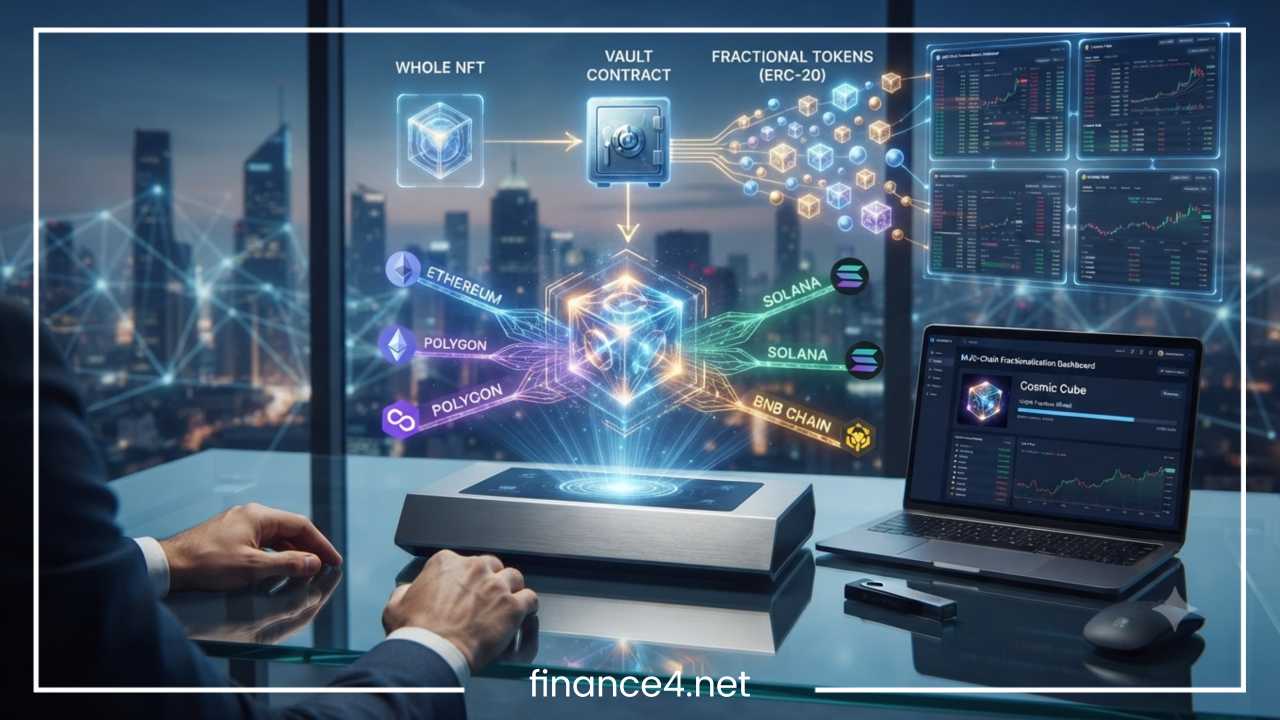
How to Fractionalize Multi-Chain NFTs Step by Step (Complete Guide)
The evolution of digital assets has transformed how creators, collectors, and investors perceive value. Among the most innovative developments in the Web3 space is NFT fractionalization, a mechanism that turns exclusive digital assets into shared commodities. By breaking a single token into thousands of fungible pieces, creators and collectors unlock unprecedented liquidity and accessibility.
As the blockchain ecosystem expands, multi-chain NFTs are becoming increasingly popular. No longer confined to a single network, digital assets now move fluidly across Ethereum, Polygon, Solana, BNB Chain, Avalanche, Base, and Arbitrum. Combining fractionalization with multi-chain technology solves one of the greatest pain points in the digital asset economy: high entry barriers and illiquidity.
The growing demand for shared NFT ownership stems from the rising valuations of blue-chip collections and landmark digital art pieces. When high-value assets cost tens or hundreds of thousands of dollars, everyday investors are priced out. Fractionalization bridges this gap, allowing communities to pool capital, invest collectively, and participate in decentralized governance.
This comprehensive guide explores the mechanics of multi-chain NFTs, the underlying smart contracts, security best practices, and a complete step-by-step tutorial on how to fractionalize multi-chain NFTs. Readers will learn the entire technical workflow, risk management strategies, and future trends shaping tokenized ownership.
What is NFT Fractionalization?
NFT fractionalization is the process of locking a non-fungible token into a smart contract vault and minting a specific supply of fungible tokens that represent proportional ownership of the underlying asset. While a standard ERC-721 or ERC-1155 token represents a whole, indivisible item, fractionalization transforms that single item into thousands of tradable, identical units.
To understand how ownership is divided, consider a simple example. Suppose a collector owns a rare digital artwork valued at ten thousand dollars. Instead of selling the entire piece to a single buyer, the owner locks the NFT into a fractionalization vault and mints ten thousand ERC-20 tokens. Each token now represents zero point zero one percent ownership of the original NFT. Anyone can buy one or more of these tokens on a decentralized exchange, giving them a verified fractional stake in the primary asset.
This model shares a direct real-world analogy with real estate investment trusts or corporate stock shares. Just as a commercial building can be incorporated and divided into millions of shares to allow everyday investors to own a piece of physical infrastructure, an NFT can be tokenized to democratize access to high-value digital collectibles, virtual real estate, and rare gaming assets.
Understanding Multi-Chain NFTs
A multi-chain NFT is a digital asset that either exists natively across multiple blockchain networks or can be transferred, wrapped, and utilized across disparate ecosystems. While traditional NFTs are locked to the specific blockchain where they were minted, multi-chain architecture leverages cross-chain interoperability to bridge liquidity and utility gaps.
The difference between single-chain and multi-chain NFTs lies in deployment and accessibility. Single-chain NFTs remain strictly within their network of origin. For instance, an Ethereum-based NFT cannot natively interact with protocols on Solana or BNB Chain without specialized infrastructure. Multi-chain NFTs, however, utilize cross-chain bridges, wrapped tokens, and native omnichain standards to circulate freely.
Creators launch NFTs across multiple blockchains to maximize their audience reach, tap into unique user bases, and take advantage of varying transaction fee structures. Popular blockchains frequently utilized for these assets include:
-
Ethereum, known for high security, deep liquidity, and blue-chip collector concentration.
-
Polygon, favored for ultra-low transaction fees and high-speed scaling.
-
Solana, recognized for rapid settlement times and vibrant meme and art communities.
-
BNB Chain, offering broad retail adoption and integrated DeFi ecosystems.
-
Avalanche, providing customizable subnets and fast finality.
-
Base, powering a rapidly growing consumer crypto ecosystem backed by Coinbase.
-
Arbitrum, serving as a premier Ethereum layer-two scaling solution.
To achieve this interoperability, the ecosystem relies on several core mechanisms. Wrapped NFTs are synthetic representations of an original asset locked on a source chain, minted on a destination chain via a bridge. Cross-chain bridges facilitate this secure transfer of data and value, while native multi-chain NFTs utilize messaging protocols to maintain unified state across networks simultaneously.
Why Fractionalize Multi-Chain NFTs?
Fractionalizing multi-chain NFTs unlocks numerous economic and social benefits for creators, communities, and investors alike. By bridging fractionalization with multi-chain infrastructure, participants gain access to expanded liquidity pools and reduced transaction friction.
Improved liquidity
Whole NFTs can take weeks or months to sell because they require a buyer with substantial capital and matching taste. Fractional tokens, by contrast, trade continuously on automated market makers and decentralized exchanges, allowing holders to enter and exit positions instantly.
Lower investment barrier
High-value digital assets often cost small fortunes. Fractionalization lowers the investment barrier, allowing individuals to invest small amounts into top-tier digital art or virtual land.
Shared ownership
Multiple enthusiasts can pool their financial resources to acquire major historical assets, cultural artifacts, or metaverse landmarks that would otherwise be out of reach for independent buyers.
Better price discovery
Continuous public trading of fractional tokens provides a real-time market valuation for the underlying locked NFT, reflecting true supply and demand dynamics more accurately than sporadic whole-asset sales.
Portfolio diversification
Collectors can break down a single large concentration of capital tied up in one NFT and distribute those funds across fractional shares of multiple different multi-chain assets, spreading risk effectively.
DAO ownership
Decentralized autonomous organizations frequently use fractionalized tokens to manage shared treasuries, vote on asset acquisitions, and distribute management rights transparently among members.
Community investing
Creators can distribute fractional tokens to their community as rewards or early investment opportunities, aligning incentives and building deeply engaged supporter bases.
Global accessibility
Because fractional tokens exist on permissionless blockchains, anyone anywhere in the world with an internet connection and a Web3 wallet can buy, sell, or trade fractional stakes without geographic restrictions.
Prerequisites Before Fractionalizing
Before initiating the fractionalization process for a multi-chain NFT, creators and asset holders must prepare their technical toolkit and verify specific foundational elements.
Wallet setup is the first requirement. Users need a secure, non-custodial Web3 wallet capable of interacting with multiple chains. Popular choices include MetaMask for EVM-compatible networks, Phantom for Solana and multi-chain expansion, and Rabby for advanced transaction simulation and multi-chain visibility.
NFT ownership verification is critical. The platform utilized for fractionalization will verify that the connected wallet holds the exact cryptographic signature and ownership rights to the target ERC-721, ERC-1155, or SPL NFT. Attempting to fractionalize an unverified or unauthorized asset will result in transaction failure or platform rejection.
Gas fees must be accounted for across all targeted networks. Fractionalization involves multiple smart contract interactions, including approving token movement, locking the asset in a vault, minting new ERC-20 fractions, and establishing liquidity pools. Users must hold native network tokens like Ether, Matic, Solana, or BNB to cover these execution costs.
Supported blockchains and cross-chain bridge requirements dictate where the asset can be vaulted and where its fractions can live. Creators must ensure their chosen platform supports the source chain of the NFT and offers reliable bridging options if the fraction tokens need to be deployed on a secondary network with lower gas fees.
Compatible marketplaces and token standards form the final technical layer. Creators should understand whether their asset is an ERC-721 standard for unique items, an ERC-1155 standard for semi-fungible editions, or an SPL token standard on Solana, ensuring seamless integration with the chosen fractionalization smart contracts.
Step-by-Step Guide to Fractionalizing Multi-Chain NFTs
This section provides the comprehensive technical workflow required to successfully fractionalize a multi-chain NFT from conception to redemption.
Step 1: Choose the NFT
Selecting the right asset is the most important decision in the fractionalization lifecycle. Asset holders should evaluate prospective NFTs based on strict criteria. Rarity ensures the asset has unique cultural or aesthetic value that justifies fractionalization. Floor price and historical sales volume indicate whether the collection has established market demand. Liquidity metrics help predict how easily fractional tokens will trade once minted, while overall community sentiment and ecosystem relevance determine long-term holding power.
Step 2: Decide Which Chain to Use
Choosing the correct blockchain network for the fractionalization process impacts both cost and user adoption. Key factors include transaction fees, which can render small-scale trading unprofitable if set on congested mainnets. Evaluate the existing user base and liquidity depth of the chain, marketplace support for fractional tokens, and the availability of secure cross-chain bridges that allow seamless movement of tokens between ecosystems like Ethereum and layer-two scaling networks.
Step 3: Move NFT if Necessary
If the target NFT resides on a blockchain network that lacks efficient fractionalization tools or features prohibitively high gas fees, it must be moved. This is accomplished using cross-chain bridges. The process involves locking the original NFT in a smart contract on the source chain, which triggers the minting of a verified wrapped NFT on the destination chain. Users must exercise extreme caution during this phase, as poorly audited bridges represent a primary target for malicious exploits.
Step 4: Select a Fractionalization Platform
Selecting a reputable fractionalization platform requires careful due diligence. Key criteria include comprehensive smart contract audits conducted by recognized security firms, reasonable platform and protocol fees, support for multi-chain asset deployments, robust governance mechanisms, and integrated liquidity solutions that automatically bootstrap decentralized exchange pools for the newly minted fractions.
Step 5: Lock the NFT
Once a platform is chosen, the asset holder deposits the NFT into the platform vault smart contract. This vault acts as an immutable custody layer. Once locked inside the vault, the NFT cannot be withdrawn by the original owner unless specific conditions are met, such as a successful buyout proposal or a complete token burn by a majority shareholder. The vault smart contract guarantees that the physical or digital backing of the fractions remains secure and transparent on-chain.
Step 6: Mint Fraction Tokens
After the NFT is secured in the vault, the creator configures the parameters for the new fraction tokens. Topics include selecting the total token supply, defining the token name and ticker symbol, uploading metadata, and setting initial ownership distribution percentages.
For example, a creator might decide to mint ten thousand tokens for a single vaulted artwork. In this scenario, holding one token grants exactly zero point zero one percent ownership of the underlying asset. This fungible token standard typically adheres to the ERC-20 format on EVM chains or equivalent fungible token standards on alternative networks.
Step 7: Set Initial Pricing
Establishing an initial valuation requires strategic planning. Asset holders can use recent market valuations, historical sales data of similar items, or automated valuation models to set a baseline. To protect the asset and ensure fair market participation, creators establish a reserve price or minimum buyout threshold. Options for distribution include holding public token auctions, offering fixed-price public sales, or utilizing bonding curves to dynamically adjust prices based on demand.
Step 8: List Fractions
For fractional tokens to gain traction, they must be made accessible to the market. Creators and platforms list the newly minted fractions across decentralized exchanges, automated market makers, and specialized NFT marketplaces. By depositing a portion of the fraction tokens alongside native assets into liquidity pools, creators ensure that buyers can swap into and out of fractional ownership positions at any time without relying on peer-to-peer negotiations.
Step 9: Manage Governance
Fractionalization transforms an isolated asset into a decentralized collective. Governance contracts enable token holders to vote on key decisions regarding the vaulted asset. Voting rights allow fractional owners to decide whether to accept commercial licensing deals, lend the NFT to digital museums, display the asset in metaverse galleries, or accept external buyout offers. Revenue generated from these activities can be funneled into a shared treasury for distribution among token holders.
Step 10: Redeeming the NFT
Every fractionalization framework must include a mechanism for unwinding the vault and returning the underlying NFT to whole ownership. This is achieved through a buyout mechanism. If an external collector or an existing fractional holder wishes to acquire the whole NFT, they can initiate a buyout proposal by depositing enough native capital into the smart contract to purchase all outstanding fractions at a premium or above the preset reserve price. Once the buyout is funded, token holders can burn their fraction tokens to claim their proportional share of the sale proceeds, unlocking the NFT and transferring whole ownership to the new buyer.
Smart Contracts Behind NFT Fractionalization
The entire architecture of NFT fractionalization relies on advanced smart contract automation. Understanding these underlying code components is essential for developers and advanced users.
Vault contracts serve as the secure cryptographic containers that hold the locked NFT. They maintain absolute custody and enforce immutability, ensuring the underlying asset cannot be accessed outside the programmed rules of the protocol.
ERC-20 fractional tokens represent the divisible units of ownership. These standard fungible tokens handle balance tracking, transfers, and approvals, allowing fractions to integrate seamlessly with existing decentralized finance protocols, lending markets, and automated market makers.
Ownership tracking contracts calculate real-time proportional holdings, ensuring that governance voting power scales accurately with the number of tokens an individual wallet holds.
Governance contracts manage proposals, voting periods, and execution parameters. When token holders vote to accept a commercial deal or a buyout offer, the governance contract executes the transaction trustlessly.
Buyout contracts automate the hostile or consensual acquisition process. They calculate reserve thresholds, lock buyout funds, distribute proceeds to token burners, and release the NFT from the vault.
Cross-chain messaging protocols handle multi-chain interoperability. By passing cryptographic proofs between networks, these messaging layers ensure that fraction tokens minted on a scaling network accurately reflect the locked status of the master NFT on its source chain.
Security Considerations
Navigating the multi-chain fractionalization landscape requires a rigorous approach to security and risk management.
Smart contract risks represent the most critical vulnerability. Flaws, logic errors, or re-entrancy bugs in vault or fractionalization contracts can allow malicious actors to drain funds or steal locked NFTs. Users must verify that platforms have undergone multiple independent security audits.
Bridge exploits are another major concern. Cross-chain bridges holding wrapped assets are prime targets for hackers. Utilizing decentralized, trust-minimized messaging bridges rather than centralized custodial bridges minimizes this exposure.
Private key security and phishing scams threaten individual users. Malicious actors frequently deploy fake platforms mimicking legitimate fractionalization protocols to trick users into signing unauthorized wallet permissions. Always verify website URLs and contract addresses.
Liquidity issues and slippage can trap investors in illiquid fractional tokens, making it difficult to exit positions during market downturns. Oracle attacks and governance manipulation, where malicious actors acquire a majority of fraction tokens cheaply to vote in favor of unfair buyouts, require robust quorum rules and time-locked protection mechanisms.
Common Challenges
Despite its innovative nature, multi-chain NFT fractionalization faces several industry-wide challenges that impact adoption.
Low liquidity on newly minted fractional tokens can stall price discovery and leave holders unable to sell. Pricing volatility often plagues fractional assets, as speculative trading causes wild price swings disconnected from the intrinsic value of the master NFT.
Regulatory uncertainty surrounds fractionalized tokens across various global jurisdictions. Because fractional NFTs often resemble securities or investment contracts, compliance frameworks remain ambiguous in many regions.
Cross-chain complexity, fragmented gas fees, bridge delays, and token fragmentation across multiple networks create friction for everyday users trying to navigate the ecosystem. Overcoming these hurdles requires continued improvements in user experience and interoperability standards.
Best Practices
Adopting strict operational best practices safeguards assets and optimizes the fractionalization experience.
-
Research platforms thoroughly, reviewing historical track records, community sentiment, and public audit reports.
-
Diversify holdings across multiple fractional tokens rather than concentrating capital in a single asset.
-
Monitor governance proposals actively to protect your voting power and investment interests.
-
Avoid unknown or unverified cross-chain bridges when moving assets between networks.
-
Track gas costs meticulously to ensure transaction fees do not outweigh potential returns.
-
Secure wallets using hardware signers and revoke unnecessary token approvals regularly.
-
Stay updated on evolving regulatory guidelines and platform security patches.
Real-World Use Cases
Fractionalization breathes new life into numerous sectors within the digital economy.
Luxury NFTs and high-end digital art collections utilize fractionalization to enable wider patronage, allowing digital museums and art lovers to co-own historical masterpieces.
Gaming assets, such as rare virtual weapons, characters, and high-yielding guild items, are fractionalized to allow community-driven play-to-earn economies and shared gaming guilds.
Metaverse land parcels in virtual worlds like Decentraland or The Sandbox are tokenized into fractional shares, enabling small investors to gain exposure to virtual real estate appreciation.
Music NFTs, sports collectibles, and DAO treasury assets leverage fractionalization to distribute royalties, ticket revenues, and governance rights directly to loyal fans and community members, paving the way for institutional investment in alternative digital assets.
Future of Multi-Chain NFT Fractionalization
The future of multi-chain NFT fractionalization points toward deeper integration, automation, and institutional participation.
AI-driven valuation models will provide real-time, dynamic pricing for locked assets based on broader market trends and sentiment analysis. Advanced intent-based bridges will abstract away cross-chain complexity, allowing users to fractionalize and trade assets seamlessly across any network with a single transaction.
Layer-two adoption and real-world asset tokenization will merge, bridging physical commodities like fine art and real estate with digital multi-chain vaults. As institutional adoption grows, programmable ownership models and cross-chain decentralized autonomous organizations will establish fractionalized NFTs as a foundational pillar of the global digital economy.
Final Thoughts
Fractionalizing multi-chain NFTs represents a paradigm shift in how digital assets are owned, valued, and traded. By breaking down high-value collectibles into accessible, fungible units and leveraging cross-chain interoperability, creators and investors unlock unprecedented liquidity and community collaboration.
Understanding the technical workflow, utilizing secure vault smart contracts, and adhering to strict risk management practices are essential for success in this space. As multi-chain infrastructure matures and institutional adoption accelerates, fractional ownership will continue to democratize access to the most valuable assets in the digital ecosystem.
Frequently Asked Questions (FAQ)
How to fractionalize multi-chain NFTs?
To fractionalize multi-chain NFTs, you must select an appropriate digital asset, choose a supportive blockchain network, connect a non-custodial Web3 wallet like MetaMask or Phantom, deposit the NFT into a secure vault smart contract on a fractionalization platform, and mint a specific supply of fungible ERC-20 tokens that represent proportional ownership.
What are the best platforms for NFT fractionalization?
The best platforms for NFT fractionalization are those that feature comprehensive smart contract audits, support multi-chain deployments across networks like Ethereum, Polygon, and Arbitrum, offer integrated decentralized exchange liquidity pooling, and provide robust governance mechanisms for token holders.
How do fractional NFT tokens work?
Fractional NFT tokens work by locking a unique whole non-fungible token into an immutable smart contract vault, which automatically mints a designated supply of fungible tokens. Each fungible token represents a specific percentage of ownership, allowing multiple users to trade and hold fractional shares of the underlying asset.
What is the difference between single-chain and multi-chain NFTs?
Single-chain NFTs are restricted to the specific blockchain network where they were initially minted, whereas multi-chain NFTs leverage cross-chain bridges, wrapped tokens, and native omnichain messaging protocols to circulate, trade, and interact across multiple disparate blockchain ecosystems.
How does cross-chain NFT fractionalization work?
Cross-chain NFT fractionalization allows users to lock an NFT on a source blockchain network and deploy or trade its corresponding fractional tokens on a different secondary network, utilizing secure bridges and messaging protocols to maintain unified state and ownership verification.
What are NFT vault smart contracts?
NFT vault smart contracts are secure, immutable on-chain custody mechanisms that hold locked non-fungible tokens during the fractionalization process, ensuring the underlying asset remains safely secured until a valid buyout or redemption mechanism is triggered by token holders.
How do you calculate fractional NFT ownership percentages?
Fractional NFT ownership percentages are calculated by dividing the number of fractional tokens an individual wallet holds by the total supply of tokens minted for that specific asset. For example, holding one hundred tokens out of a total supply of ten thousand represents exactly one percent ownership.
What is the buyout mechanism in NFT fractionalization?
The buyout mechanism is a process that allows an investor or an external buyer to acquire the whole locked NFT by depositing enough capital into the smart contract to purchase all outstanding fractional tokens at a premium or above a pre-set reserve price, after which the fraction tokens are burned and the asset is unlocked.