How to Keep Track of Cross-Chain Bridging Fees
 by
by 
How to Keep Track of Cross-Chain Bridging Fees | Guide & Tips
The decentralized finance (DeFi) landscape is constantly evolving, with new blockchains and innovative protocols emerging at a rapid pace. While this fragmentation offers diverse opportunities, it also presents a challenge: how do you move assets seamlessly between these disparate networks? The answer lies in cross-chain bridges, crucial pieces of infrastructure that enable interoperability and liquidity flow across the blockchain ecosystem. However, navigating these bridges often comes with a variety of fees that can quickly add up, making effective tracking and optimization essential for any savvy crypto user.
Introduction to Cross-Chain Bridges
What are Cross-Chain Bridges?
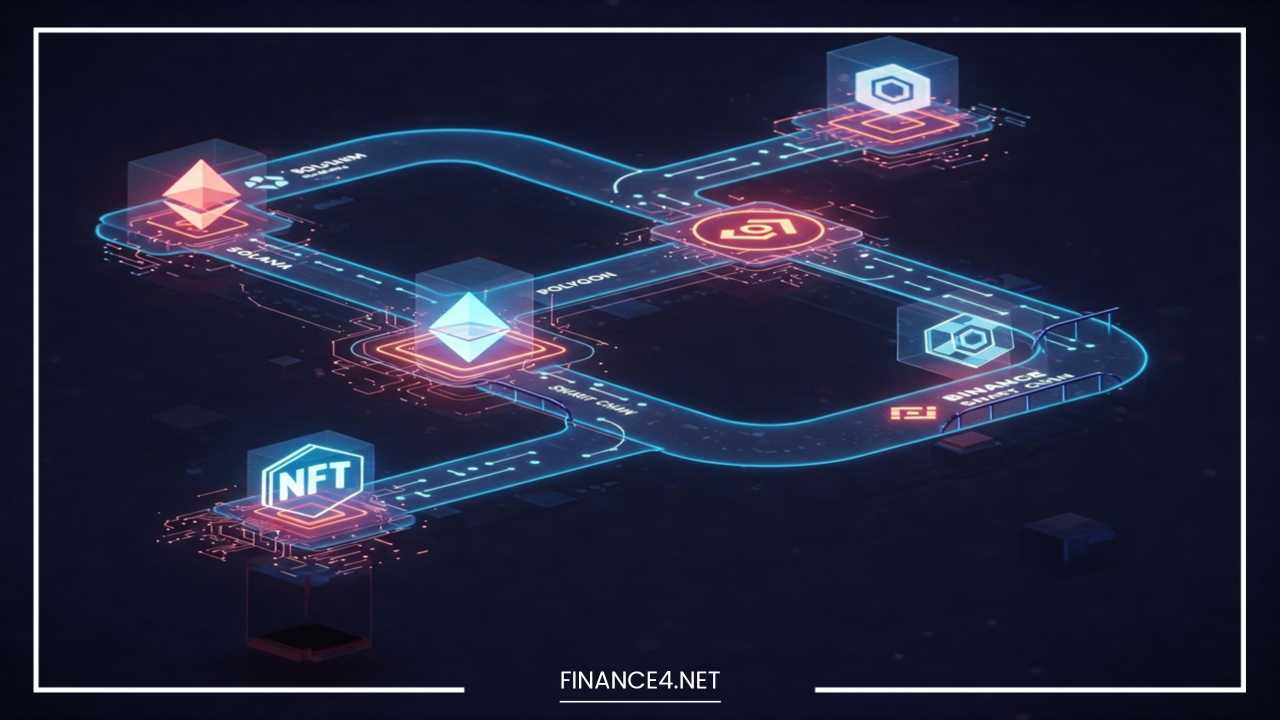
At their core, cross-chain bridges are technological solutions designed to facilitate the transfer of assets and data between different, otherwise incompatible, blockchain networks. Imagine a physical bridge connecting two separate islands. Without it, goods and people couldn’t easily move between them. Similarly, in the blockchain world, without bridges, an asset on Ethereum would be isolated from an application on Polygon or Solana.
These bridges work by essentially “locking” an asset on the source chain and then “minting” an equivalent, wrapped version of that asset on the destination chain. For example, if you want to move Ethereum (ETH) from the Ethereum mainnet to the Avalanche network, a bridge would lock your ETH on Ethereum and then issue an equivalent amount of Wrapped ETH (WETH) on Avalanche. When you want to move it back, the WETH is burned on Avalanche, and your original ETH is unlocked on the Ethereum mainnet. This intricate process ensures that the total supply of the asset remains consistent across both chains.
The importance of cross-chain bridges in the decentralized ecosystem cannot be overstated. They are fundamental to achieving true interoperability, allowing users to leverage the unique advantages of different blockchains, access a wider range of DeFi applications, and tap into deeper liquidity pools. Without them, the blockchain space would remain siloed, hindering innovation and limiting user potential.
Why Are They Needed?
The primary reason for the existence and proliferation of cross-chain bridges is to address blockchain fragmentation. We live in a multi-chain world, with hundreds of independent blockchains, each with its own consensus mechanism, token standard, and community. This fragmentation, while fostering diversity and specialization, also creates barriers to seamless interaction. Users and developers often find themselves needing to move assets between these networks to participate in different DeFi protocols, trade on various decentralized exchanges (DEXs), or simply manage their portfolios more efficiently. Bridges break down these barriers, fostering a more interconnected and fluid decentralized economy.
Brief Mention of Popular Cross-Chain Bridges
The landscape of cross-chain bridges is diverse and constantly expanding. Some of the most prominent examples include:
- Wormhole: A versatile protocol connecting numerous blockchains, including Ethereum, Solana, Binance Smart Chain, and Avalanche.
- Avalanche Bridge: Specifically designed for transferring assets between the Ethereum network and Avalanche.
- Polygon Bridge: Connects Ethereum with the Polygon network, offering a scalable solution for asset transfers.
- Synapse Protocol: Allows for the transfer and swapping of assets across various chains like Ethereum, Layer 2 chains, BSC, and Avalanche.
- THORChain: A decentralized solution for cross-chain swaps and asset transfers without the need for wrapping tokens.
- Celer cBridge: Facilitates liquidity across many blockchains by utilizing the Celer State Guardian Network.
- Hop Protocol: Focuses on transferring assets between Layer 2 solutions like Optimism and Arbitrum, and between Layer 1 and Layer 2 networks.
These are just a few examples, highlighting the variety of approaches and functionalities offered by different bridging solutions.
Understanding Cross-Chain Bridging Fees
While cross-chain bridges unlock immense utility, they are not without costs. Understanding the various fees involved is crucial for making informed decisions and optimizing your bridging experience. These fees compensate the network participants, bridge operators, and liquidity providers that make these complex transactions possible.
Types of Fees Involved
Navigating cross-chain transfers means encountering a combination of different fee types:
- Transaction Fees: These are the fundamental costs associated with executing any transaction on a blockchain. Paid to miners (in Proof-of-Work chains like Ethereum) or validators (in Proof-of-Stake chains), these fees compensate for the computational resources used to process and secure your transaction on both the source and destination chains. On Ethereum, these are commonly known as “gas fees.”
- Bridge Fees: These are fees specific to the bridge provider or the protocol facilitating the cross-chain transfer. They can be a fixed amount, a percentage of the transferred assets, or dynamic based on factors like network traffic or the asset being moved. These fees cover the operational costs of maintaining the bridge infrastructure, including relayers, liquidity pools, and security audits.
- Network Fees: While often overlapping with “transaction fees,” “network fees” specifically refer to the gas or transaction costs on the destination blockchain. For example, when bridging from Ethereum to Polygon, you’ll pay Ethereum gas fees for the initial transaction and then Polygon gas fees for the transaction on the Polygon network.
- Slippage: This is a less direct, but equally important, “cost” to consider. Slippage occurs in decentralized exchanges or liquidity pools where the price of an asset can change between the time your transaction is submitted and when it is executed. If you’re bridging by swapping assets on a decentralized exchange integrated into the bridge, significant slippage can eat into your total received amount, especially for large transactions or illiquid pools. While not a direct fee, it represents a real loss in value.
How Fees are Calculated
The calculation of fees varies significantly between bridges and networks.
- Flat Fees vs. Dynamic Fees: Some bridges might charge a flat fee for any transfer, regardless of the amount. Others, like the Avalanche Bridge, employ dynamic fee structures, often a percentage of the bridged amount, subject to minimum and maximum thresholds. Dynamic fees are more common as they allow bridges to adjust to network conditions and operational costs.
- Asset-Specific Fees: The type of asset being bridged can also influence fees. Bridging a highly liquid stablecoin might incur different fees than bridging a less liquid altcoin.
- Network-Specific Fees: The underlying blockchain networks play a huge role. Ethereum’s gas fees, for instance, are notoriously volatile and can be very high during periods of network congestion, directly impacting the total cost of bridging to or from Ethereum. Cheaper networks like Polygon or Binance Smart Chain will generally have lower network fees.
- Bridge-Specific Logic: Each bridge has its own unique economic model. Some bridges might subsidize certain fees or offer discounts for holding their native tokens, further complicating a simple comparison.
Factors Affecting Fees
Several external and internal factors contribute to the variability of cross-chain bridging fees:
- Network Congestion: This is perhaps the most significant factor, especially on busy blockchains like Ethereum. When network demand is high, transaction fees (gas prices) skyrocket, directly increasing the cost of initiating and completing a bridge transaction.
- Type of Assets Being Bridged: As mentioned, the liquidity and volatility of the asset can influence slippage and, indirectly, the effective cost of the bridge.
- Transaction Speed Requirements: While not always explicitly a “fee,” some bridges or networks might offer faster transaction processing for a higher priority fee.
- Bridge Popularity and Liquidity: Bridges with higher liquidity and user activity might be able to offer more competitive rates due to economies of scale. Conversely, less popular bridges might have higher fees to compensate for lower volume.
- Market Volatility: Rapid price swings in the underlying assets or the native tokens used for gas can cause the estimated fees to change quickly between the time you initiate a transaction and its confirmation.
Challenges of Tracking Cross-Chain Bridging Fees
Despite the growing importance of cross-chain transfers, keeping accurate tabs on the associated fees is far from straightforward. The decentralized and often nascent nature of the technology contributes to several significant hurdles.
Complexity of Different Fee Structures
One of the foremost challenges is the sheer diversity of fee models employed by various cross-chain bridges. There isn’t a “one-size-fits-all” approach to fee calculation.
- Some bridges use a fixed percentage of the transferred amount.
- Others have tiered systems based on the transaction value.
- Some incorporate a combination of base fees and variable components.
- Certain bridges might charge in the native token of the source chain, while others might charge in a stablecoin or their own bridge token.
This lack of uniformity means that comparing the true cost of bridging between different solutions requires a deep dive into each bridge’s documentation and often a manual calculation, which can be time-consuming and prone to error. A user looking to bridge 1000 USDT from Ethereum to Optimism might find completely different fee structures on Hop Protocol versus Orbiter Finance, making it difficult to determine the most cost-effective route without prior research.
Variability of Fees
Compounding the complexity is the highly dynamic nature of fees. Cross-chain bridging fees are rarely static; they fluctuate constantly due to several factors:
- Network Congestion: As previously discussed, gas fees on congested networks like Ethereum can change by the minute, impacting the total cost. A bridge transaction initiated during peak hours could cost significantly more than the same transaction during off-peak times.
- Market Conditions: Volatility in cryptocurrency prices can also affect fees, especially if the fee is calculated as a percentage of the asset being transferred, or if the gas token’s price changes rapidly.
- Bridge Protocol Adjustments: Bridge operators may dynamically adjust their own specific bridge fees based on their operational costs, liquidity demands, or competitive landscape. These changes might not always be immediately apparent or widely publicized.
This constant fluctuation makes it challenging to get a real-time, accurate estimate of the final cost, and what might be cheap now could be expensive in a few hours.
Lack of Standardization
The absence of a unified standard for cross-chain fees is a major impediment to efficient tracking. Unlike traditional financial systems where standardized fees and transparent pricing are often mandated, the decentralized and innovative nature of the crypto space means that each project develops its own fee mechanisms.
- There’s no central body dictating how fees should be displayed or calculated.
- Data formats for fee information can differ significantly across platforms.
- APIs (Application Programming Interfaces) for accessing fee data might not exist or might be poorly documented for some bridges.
This fragmentation of information makes it difficult for aggregators or individual users to compile comprehensive and comparable fee data across the entire bridging ecosystem.
Perhaps the most frustrating aspect of tracking cross-chain bridging fees is the potential for “hidden” or unexpected costs. These aren’t necessarily malicious, but they can catch users off guard:
- Slippage on Integrated Swaps: Many bridges incorporate internal swap mechanisms or rely on external DEXs for liquidity. While the bridge might quote a fee, significant slippage on the underlying swap can reduce the final amount received, effectively increasing the overall cost. This is especially prevalent with less liquid assets.
- Exchange Rate Variances: When bridging assets that require a conversion (e.g., from ETH to a stablecoin on the destination chain), the exchange rate provided by the bridge or integrated liquidity pools might not always be the most optimal, leading to a de facto “fee” through less favorable pricing.
- Minimum/Maximum Fees: Some bridges have minimum or maximum fees, which can disproportionately affect small or very large transactions. A $3 minimum fee on a $10 transfer represents a 30% cost, which is significant.
- Withdrawal Fees on Destination: While less common for bridging itself, sometimes the destination protocol or platform might have its own withdrawal fees once the asset has arrived, adding another layer of cost.
- Relayer Costs: Some bridges rely on external relayers to process transactions. While often bundled into the overall bridge fee, in some cases, these costs might be separated or less transparent, leading to unexpected charges.
The combination of complex, variable, and often opaque fee structures makes effective tracking a significant challenge, demanding diligence and the use of specialized tools.
Tools and Platforms for Tracking Cross-Chain Bridging Fees
Given the complexities, users need reliable tools and platforms to effectively track and compare cross-chain bridging fees. Fortunately, the ecosystem is developing solutions to address this need.
Fee Trackers
Dedicated fee trackers are emerging that aim to provide real-time or near real-time data on bridging costs. While a comprehensive, universally adopted “DeFi bridging fee tracker” is still evolving, several platforms offer insights into transaction costs across various protocols.
- Token Terminal: While not solely a bridging fee tracker, Token Terminal provides extensive data on various DeFi protocols, including their revenue generation. By understanding how bridges generate revenue (often through fees), users can infer the general cost structure. It offers a high-level overview of the economic activity of different protocols.
- DeFi Pulse: Similar to Token Terminal, DeFi Pulse is a broad DeFi analytics platform that tracks total value locked (TVL) and other metrics across different protocols. While it doesn’t offer direct fee comparisons for bridging, it helps identify popular and liquid bridges, which often correlates with more competitive fee structures.
It’s important to note that many general DeFi analytics platforms may not have granular, real-time bridge-specific fee tracking built-in, requiring users to look for specialized tools.
Explorers and Analytics Platforms
Blockchain explorers are indispensable for understanding the granular details of any transaction, including those related to bridging fees.
- Etherscan, Polygonscan, BscScan, etc.: These blockchain explorers, specific to their respective networks, allow users to look up individual transactions by hash. By examining the transaction details, you can see the gas fees paid on the source or destination chain. While they don’t directly show the “bridge fee” component charged by the protocol itself, they are crucial for verifying the network-specific costs. For instance, if you bridge from Ethereum, Etherscan will show you the exact gas cost of your transaction on the Ethereum network.
- Bridge-Specific Explorers/Dashboards: Many cross-chain bridges offer their own dashboards or explorers where users can track the status of their transfers and sometimes view the fees charged by that specific bridge. These are usually the most accurate source for the “bridge fee” component. For example, the Avalanche Bridge interface will display the bridge fee before you confirm your transaction.
Cross-Chain Analytics Platforms
A new generation of platforms is emerging that specifically focuses on cross-chain interoperability and attempts to aggregate data from multiple bridges, making fee comparison easier.
- RocketX Exchange: This is a good example of a hybrid DEX and CEX aggregator that emphasizes cross-chain swaps and bridging. It claims to access the “best rates” and “deepest liquidity” across 180+ chains, suggesting it’s designed to help users find cost-effective routes by transparently showing routes, pricing, partners, and timings. It aims to reduce gas fee surprises by comparing various options.
- AnySwap (now Multichain): While Multichain has faced challenges, its underlying technology aimed to facilitate cross-chain transfers and provide a comparison of different bridging routes, including their associated costs.
- Bridge Finance: Some platforms are specifically named or marketed as “bridge aggregators” or “cross-chain analytics platforms” that aim to compare fees across various bridges. These tools analyze liquidity, speed, and cost parameters to recommend the most efficient bridging path. They often operate similarly to DEX aggregators but for cross-chain transfers. Examples might include platforms that act as an “Expedia for bridges,” pulling data from various sources to give you a comparative overview.
Tracking Tools Built into Wallets
As cross-chain functionality becomes more commonplace, cryptocurrency wallets are increasingly integrating features to help users track and manage bridging fees.
- MetaMask: While MetaMask doesn’t natively aggregate and compare fees across different bridges, when you interact with a bridge DApp through MetaMask, it will display the estimated gas fee for the transaction on the connected network. This gives you a clear indication of the network cost before you confirm.
- Trust Wallet: Similar to MetaMask, Trust Wallet shows estimated network fees for transactions initiated through its integrated DApp browser.
- Hardware Wallets (Ledger, Trezor): When confirming transactions on hardware wallets, the device will typically display the transaction details, including the network fee, which helps you verify the cost before approving.
- Aggregator Wallets/Interfaces: Some wallets or interfaces are specifically designed to aggregate liquidity and routes from various DeFi protocols, including bridges. These might offer more advanced fee comparison features directly within the wallet interface, allowing you to choose the cheapest or fastest bridging option from a consolidated view. While not a standalone wallet, some DeFi aggregators (like 1inch) offer wallet-like interfaces where you can connect your existing wallet and see aggregated fee data for cross-chain swaps.
The key takeaway is that relying solely on one tool might not provide a complete picture. A combination of general blockchain explorers, bridge-specific dashboards, and emerging cross-chain analytics platforms, often integrated with your wallet, will offer the most comprehensive approach to tracking bridging fees.
Strategies to Minimize or Optimize Cross-Chain Bridging Fees
Understanding the fees is the first step; the next is actively working to minimize them. By adopting smart strategies, users can significantly reduce the cost of moving assets across chains.
Choosing the Right Bridge
This is arguably the most impactful strategy. Not all bridges are created equal in terms of fees, security, and speed.
- Assess Bridge Costs Before Initiating: Before every cross-chain transfer, make it a habit to check the fee structures of multiple reputable bridges that support the source and destination chains you intend to use. Some bridges might have lower percentage fees for large transfers, while others might have lower flat fees for smaller amounts.
- Pros and Cons of Different Bridges: Consider more than just the fee.
- Security: Has the bridge been audited? What is its track record? Bridge hacks have resulted in billions of dollars in losses. A slightly higher fee for a demonstrably more secure bridge is often a wise investment.
- Liquidity: Bridges with deeper liquidity pools often offer better exchange rates and less slippage, reducing hidden costs.
- Speed: Some bridges are designed for faster transfers, which might come at a premium but could be worth it for time-sensitive transactions.
- Reputation and User Reviews: Consult community forums and reviews to gauge other users’ experiences with a bridge’s reliability and fee transparency.
Timing Your Transactions
Just like traditional markets, blockchain networks experience peak and off-peak hours, which directly affect gas fees.
- Fluctuations Based on Time of Day/Week: Ethereum gas fees, for example, tend to be higher during weekdays and during peak US and European trading hours. Weekends and late-night hours (UTC) often see lower network congestion and thus lower gas fees. Observing gas price trends can save you a significant amount.
- Utilizing Fee Prediction Tools: Several websites and tools provide real-time and historical gas price data, along with predictions for future gas prices. Websites like Etherscan Gas Tracker or specialized gas price alert services can help you identify optimal times to bridge. Some wallets also integrate these predictions directly.
Consolidating Transactions
If you frequently transfer small amounts, the cumulative effect of fixed transaction and bridge fees can be substantial.
- Minimizing Fees by Grouping Multiple Transactions: Instead of making several small transfers over time, consider consolidating them into a single, larger transaction. While the absolute fee for a larger transaction might be higher, the percentage of the fee relative to the total amount transferred will likely be lower, as the base costs are spread across a larger value. This strategy is particularly effective when dealing with fixed bridge fees or high base network fees.
Gas Fee Optimization
High gas fees are a perennial concern, especially on Ethereum. Leveraging Layer 2 solutions is a powerful way to mitigate this.
- Using Layer 2 Solutions (Polygon, Arbitrum, Optimism, zkSync, Base, etc.): These scaling solutions process transactions off the main Layer 1 blockchain (like Ethereum) and then batch them back to the mainnet, significantly reducing transaction costs and increasing speed. When bridging assets, try to bridge to a Layer 2 network if your destination application or protocol is on it. For instance, if you want to use a DeFi protocol on Arbitrum, it’s generally much cheaper to bridge your assets directly to Arbitrum from Ethereum than to bridge them to another Layer 1 and then to Arbitrum.
- Direct L2-to-L2 Bridges: As the Layer 2 ecosystem matures, more direct bridges between different Layer 2 solutions (e.g., Arbitrum to Optimism) are emerging. These can offer even lower fees than bridging through the main Ethereum network.
- Gas Token Usage: Some specialized protocols or tokens (e.g., Gas DAO or similar concepts) attempt to incentivize gas fee optimization, though their practical impact on individual bridging fees might be limited compared to using Layer 2s.
By proactively selecting the right bridge, timing your transfers, consolidating transactions, and leveraging Layer 2 solutions, users can significantly reduce their cross-chain bridging costs and enhance their overall DeFi experience.
The Future of Cross-Chain Bridging and Fees
The cross-chain bridging landscape is dynamic, constantly evolving to address current challenges like high fees and security vulnerabilities. The future promises more efficient, transparent, and user-friendly solutions for interoperability.
Evolving Fee Models
We can anticipate a shift towards more sophisticated and user-centric fee models in the coming years.
- Increased Transparency: As the market matures and competition intensifies, bridges will likely be incentivized to offer greater transparency regarding their fee structures, clearly outlining all components of the cost (network fees, bridge fees, potential slippage).
- Competitive Pricing: The proliferation of bridges and the rise of bridge aggregators will foster fierce competition, driving down fees across the board. Bridges will need to offer competitive rates to attract and retain users.
- Dynamic and Adaptive Fees: Fee models will become even more adaptive, potentially incorporating real-time data on network congestion, liquidity availability, and market volatility to provide the most optimal pricing at any given moment.
- Subscription or Tiered Services: Some bridges might introduce subscription models or tiered services where users pay a recurring fee for lower transaction costs or priority processing.
- Gas Abstraction: Efforts to abstract away gas fees, allowing users to pay fees in the asset they are bridging or in a stablecoin, are gaining traction. This would simplify the user experience by removing the need to hold native gas tokens on multiple chains.
Potential Solutions for Tracking Fees
The challenges of tracking fees are being addressed by ongoing innovation:
- Sophisticated Analytics Platforms: Expect to see more robust and comprehensive cross-chain analytics platforms emerge. These platforms will move beyond basic TVL tracking to offer detailed, real-time fee comparisons across a vast array of bridges and networks. They will likely integrate with various data sources and APIs to provide highly accurate cost estimations, including slippage analysis.
- AI-Powered Optimization: Artificial intelligence and machine learning could play a significant role in predicting optimal bridging times and suggesting the cheapest routes, even accounting for complex market dynamics. Platforms like Quantum DeX are already looking at AI-powered cross-chain solutions.
- Standardized APIs for Fee Data: As the industry matures, there might be a push for standardized APIs that allow developers to easily access and compare fee data from different bridges. This would enable a new generation of unified fee tracking tools and aggregators.
- Improved Wallet Integrations: Wallets will likely become even more intelligent, offering direct in-app comparisons of bridging routes and costs, allowing users to select the most efficient option without leaving their wallet interface.
The Role of DeFi Aggregators
DeFi aggregators, such as 1inch and Matcha, have already revolutionized how users find the best swap rates on decentralized exchanges. Their role will expand significantly in the cross-chain context.
- Integrated Cross-Chain Fee Tracking: Aggregators will increasingly incorporate cross-chain bridging as a core service, providing a single interface to compare not just DEX swap rates but also bridging fees across multiple protocols.
- Optimized Routing: They will use sophisticated algorithms to find the most cost-effective and efficient path for assets to move from one chain to another, potentially combining multiple bridges or Layer 2 solutions in a single transaction sequence.
- Liquidity Aggregation: By aggregating liquidity from various bridges and DEXs, they can reduce slippage and ensure better execution prices for cross-chain transfers.
- Enhanced User Experience: DeFi aggregators will simplify the entire cross-chain process, making it as seamless as a single-chain swap, hiding the underlying complexity of fee calculation and route optimization from the user.
Decentralized Finance Innovations
Beyond dedicated bridging solutions, broader DeFi innovations will also contribute to reducing or eliminating high cross-chain fees.
- Layer 2 Scaling Solutions: The continued development and adoption of Layer 2 solutions (Optimistic Rollups, ZK-Rollups, Validium, etc.) will inherently reduce the need for costly Layer 1-to-Layer 1 bridges for everyday transactions. Most activity will occur on cheaper, faster Layer 2s, with bridges primarily used for onboarding/offboarding to Layer 1.
- Interoperability Protocols: New native interoperability protocols, like IBC (Inter-Blockchain Communication Protocol) for Cosmos-based chains or generalized message passing protocols, aim to allow direct communication and asset transfer between chains without relying on traditional “lock and mint” bridge models. This could significantly reduce fees and enhance security.
- Atomic Swaps and Decentralized Relayers: Further advancements in atomic swap technologies and decentralized relayer networks could enable more direct, peer-to-peer cross-chain transfers with minimal or no intermediary fees.
- Shared Security Models: Innovations in shared security, where multiple blockchains can leverage the security of a larger network, could reduce the overhead costs associated with independent bridge security mechanisms.
The future of cross-chain bridging is bright, characterized by increasing efficiency, transparency, and a reduction in the friction and cost currently associated with moving assets between disparate blockchain ecosystems.
Final Thoughts
Navigating the multi-chain universe requires more than just understanding where your assets are; it demands a keen awareness of the costs involved in moving them. Cross-chain bridging, while essential for fostering interoperability and unlocking the full potential of DeFi, comes with a varied and often opaque fee landscape. From the ever-fluctuating network gas fees to the specific charges levied by bridge providers and the insidious impact of slippage, the costs can quickly accumulate if not diligently tracked.
As we’ve explored, the challenges of tracking these fees are considerable due to the complexity of different fee structures, their inherent variability, the lack of industry-wide standardization, and the occasional presence of hidden charges. However, the decentralized ecosystem is rapidly evolving, bringing forth a growing array of tools and strategies to empower users.
By leveraging blockchain explorers, bridge-specific dashboards, and emerging cross-chain analytics platforms, users can gain greater visibility into the costs of their transfers. Furthermore, adopting strategic approaches such as choosing the most cost-effective bridge, timing transactions during off-peak hours, consolidating smaller transfers, and critically, embracing Layer 2 scaling solutions, can lead to significant cost savings.
The future of cross-chain bridging promises even greater transparency, efficiency, and potentially lower costs. Evolving fee models, sophisticated AI-powered tracking tools, the expanding role of DeFi aggregators, and continuous innovations in underlying decentralized technologies are all contributing to a more seamless and affordable cross-chain experience.
Ultimately, staying informed and proactive is key. As the decentralized financial landscape continues to mature, those who understand how to effectively track and optimize their cross-chain bridging fees will be best positioned to maximize their capital efficiency and fully participate in the interconnected world of blockchain. Don’t let hidden fees erode your gains; empower yourself with knowledge and the right tools. Explore the cross-chain analytics platforms mentioned, experiment with different bridges, and make fee tracking a regular part of your DeFi journey. Your crypto portfolio will thank you.