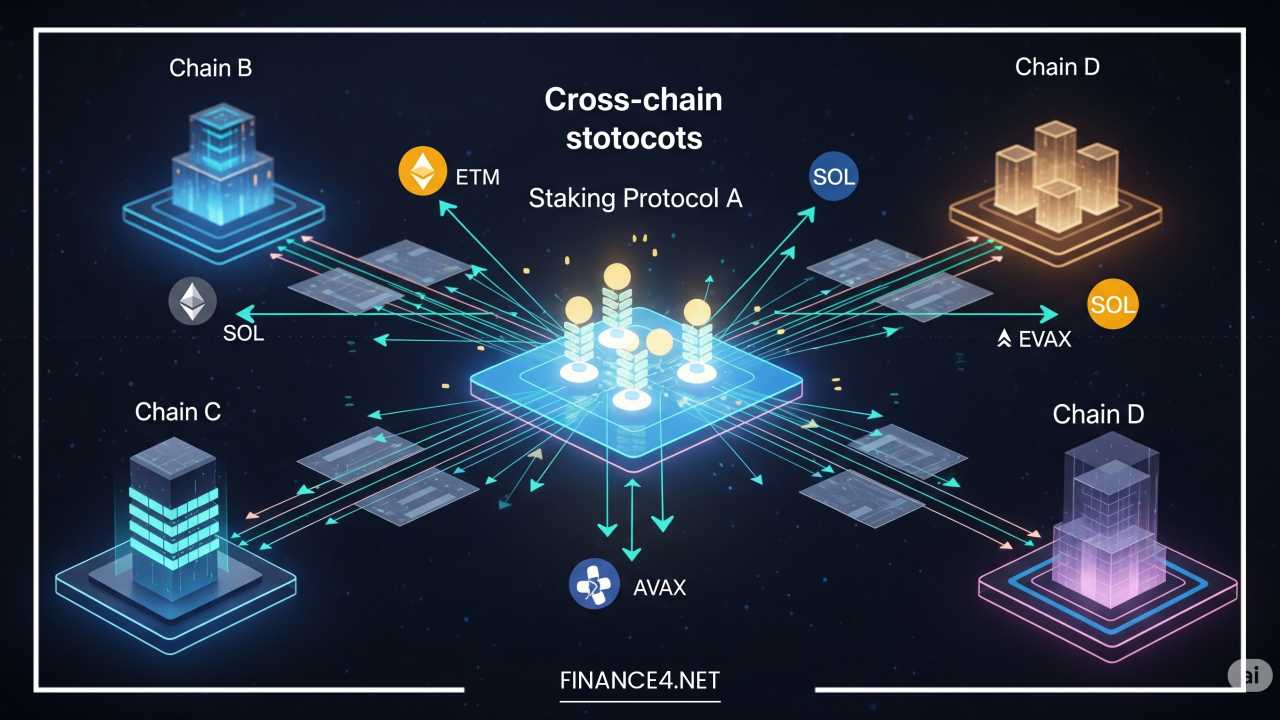
How to Stake Your Tokens on Multiple Protocols
 by
by 
Stake Your Tokens on Multiple Protocols
Maximizing Yield and Diversification: A Guide to Staking Your Tokens Across Multiple Protocols
The decentralized finance (DeFi) landscape has matured beyond its early experimental stages, evolving into a robust ecosystem brimming with opportunities for users to generate passive income.
Among the most foundational and widely used strategies within this space is staking—the process of locking up your tokens to secure blockchain networks, participate in governance, or provide liquidity, all in return for consistent rewards.
While staking originally revolved around single-chain Proof-of-Stake (PoS) networks like Ethereum, Cosmos, or Solana, the emergence of cross-chain DeFi, advanced smart contract platforms, and yield-generating primitives has made it both possible and prudent to diversify staking strategies across multiple protocols.
Today, multi-protocol staking is not just an option for power users—it’s becoming a best practice for anyone looking to optimize returns while minimizing risk.
This guide explores the benefits, considerations, and practical steps of staking across multiple protocols, with a focus on yield optimization, risk management, and ecosystem diversification.
Why Stake Across Multiple Protocols?
Risk Diversification: Avoiding the Pitfalls of Concentration
One of the most immediate advantages of multi-protocol staking is risk diversification. Relying on a single network or protocol leaves your capital exposed to that platform’s unique set of vulnerabilities. These include:
- Smart Contract Risk: Even audited contracts can contain bugs or unforeseen exploits. Diversifying across multiple platforms spreads this risk.
- Validator or Slashing Risk: If you’re staking directly on PoS chains, validator misbehavior or downtime can lead to slashing—resulting in partial loss of funds.
- Centralization & Custodial Risk: Using a centralized platform or exchange for staking introduces counterparty risk. If the platform experiences downtime, regulatory issues, or bankruptcy, your assets could be at risk.
- Token Volatility: Even if a protocol offers a high yield, your real returns can be eroded if the token you’re earning depreciates in value.
- Protocol-Specific Economic Models: Each protocol’s tokenomics—reward schedules, inflation models, and utility—can create risks or opportunities that are isolated to that ecosystem.
By spreading your assets across protocols with different risk profiles, tokenomics, and chains, you mitigate the fallout from any one failure or downturn.
Yield Optimization: Chase the Best Opportunities—Responsibly
Staking yields vary greatly across protocols and over time. They are influenced by factors such as protocol demand, token inflation, network usage, and competition. A multi-protocol strategy allows you to:
- Continuously Rebalance: Shift assets toward protocols offering better risk-adjusted yields.
- Exploit New High-Yield Protocols: Many new protocols offer early users attractive rewards as incentives. These “yield bursts” can be profitable but carry higher risk.
- Leverage Diverse Reward Structures: Protocols may offer yields through native token inflation, transaction fees, governance incentives, or third-party reward tokens. Each comes with its own tradeoffs.
- Participate in Compounding Strategies: Some protocols or aggregators allow for auto-compounding rewards, and staking across multiple platforms can give you access to different compounding strategies.
Ultimately, diversifying staking not only spreads risk but also opens up more opportunities to maximize real, net yield.
Liquidity and Composability via Liquid Staking
Traditional staking often requires a lock-up period where your assets are illiquid. This reduces flexibility and introduces opportunity cost.
However, liquid staking protocols—such as Lido, Rocket Pool, or Marinade—solve this by issuing a Liquid Staking Derivative (LSD), which represents your staked asset and can be used elsewhere in DeFi.
- You can stake ETH via Lido and receive stETH, which can be lent on Aave or used in liquidity pools.
- Some protocols allow LSDs to be used as collateral, enabling leverage on staked assets.
- You earn staking rewards while also participating in other yield-generating strategies—effectively “double-dipping.”
Multi-protocol staking that incorporates LSDs creates powerful synergies across the DeFi ecosystem, offering compounding utility and flexibility.
Ecosystem Exposure: Bet on Blockchain Diversity
The blockchain world is no longer monolithic. Ethereum remains dominant, but Solana, Avalanche, Cosmos, and newer Layer 2s like Arbitrum and Optimism each offer distinct ecosystems. By staking across multiple chains, you:
- Hedge Against Platform Risk: Ethereum gas fees too high? Solana congested? Cosmos bridge compromised? Cross-chain staking provides optionality.
- Gain Exposure to Growth Trends: If you believe a particular chain is poised to grow—due to ecosystem development, narratives, or adoption—you can align your staking accordingly.
- Participate in Governance Across Chains: Staking is often tied to governance. By diversifying, you gain influence over multiple protocol roadmaps and decisions.
Getting Started: Preparing for Multi-Protocol Staking
Step 1: Identify Eligible Tokens
Start by assessing your current holdings and determining which can be staked. PoS tokens like ETH, SOL, ATOM, MATIC, and DOT are obvious candidates. However, many DeFi protocols also support staking via LP tokens or governance tokens.
Ask yourself:
- Which of your tokens are currently underutilized?
- Are there tokens you’re willing to acquire specifically for staking?
Step 2: Choose the Right Wallets
Your choice of wallet is critical when dealing with multiple protocols and chains.
- Non-Custodial Wallets: MetaMask (EVM), Phantom (Solana), Keplr (Cosmos), Rabby (multi-chain), and hardware wallets like Ledger or Trezor provide full control and support direct protocol interactions.
- Multi-Chain Wallets: Wallets like XDEFI, Trust Wallet, or Rabby streamline managing assets across different networks.
- Custodial Platforms: Centralized exchanges like Coinbase or Binance offer simplified staking but limit your flexibility and may charge a cut of your rewards.
For serious multi-protocol staking, non-custodial wallets with multi-chain capabilities are a must.
Step 3: Ensure Proper Funding Across Networks
To stake on-chain, you’ll need:
- The Token to Stake
- The Native Token of the Chain for Gas Fees
For example, to stake MATIC on Polygon, you need both MATIC and some MATIC for gas. If you’re bridging assets across chains, use trusted bridges like:
- Synapse or Stargate (for EVM chains)
- Wormhole or Portal Bridge (for Solana ↔ Ethereum)
- IBC Transfers (within Cosmos ecosystem)
Always test with small amounts when bridging assets.
Step 4: Create a Research Framework
The DeFi landscape is massive and constantly evolving. Build a toolkit of trusted resources:
- DeFi Aggregators: Use tools like DeFiLlama, Token Terminal, or DefiYield to track yield opportunities and TVL.
- Security Audits: Check for completed audits by reputable firms (e.g., Certik, Trail of Bits, Halborn). Avoid unaudited or poorly audited protocols.
- Official Documentation: Always read the staking docs. Know the bonding/unbonding periods, slashing policies, and expected yield mechanics.
- Community & Governance Forums: Participate in forums like Discord, Reddit, or protocol governance portals to stay informed.
- News and Analytics: Stay updated via newsletters like The Defiant, Bankless, and CoinDesk’s DeFi section.
Step 5: Account for Fees and Costs
Every interaction with a smart contract comes with transaction fees. These vary by chain:
- Ethereum: High gas costs; best for large positions.
- Layer 2s (Arbitrum, Optimism): Lower fees, but may require bridging.
- Solana and Cosmos Chains: Extremely low fees; excellent for smaller portfolios.
Factor in how often you’ll be claiming rewards or moving assets—fees can erode yield if not managed properly.
Exploring Different Staking Avenues for a Multi-Protocol Strategy
Implementing a multi-protocol staking strategy means tapping into the wide variety of staking options available across the decentralized finance (DeFi) ecosystem.
Instead of committing all your assets to one platform or chain, you’re spreading them across multiple opportunities to increase returns, manage risk, and gain exposure to diverse protocols and ecosystems.
Here are the primary staking avenues that form the building blocks of an effective multi-protocol strategy, along with their key features, examples, pros, and cons.
Native Blockchain Staking (Proof-of-Stake Chains)
How It Works
Native staking refers to staking tokens directly on Proof-of-Stake (PoS) blockchain networks to help secure the chain and participate in consensus.
This is typically done by delegating your tokens to a validator node, which processes transactions and earns rewards on your behalf.
Running a validator node yourself is possible but requires significant technical knowledge, hardware, and in many cases, a minimum token amount.
Examples
- Ethereum (ETH): Stake 32 ETH to run your own validator or use pooled services like Lido or Rocket Pool.
- Solana (SOL): Delegate SOL to one of hundreds of validators through a wallet like Phantom or Solflare.
- Polygon (MATIC): Stake MATIC via the official staking dashboard or through wallets supporting Polygon staking.
- Cardano (ADA), Polkadot (DOT), Cosmos (ATOM), Avalanche (AVAX): All offer native staking via delegation to validators.
Multi-Protocol Angle
You can spread your holdings across several PoS chains, delegating tokens on each to their respective validator networks. For example:
- Stake ETH on Ethereum via a pool.
- Delegate ATOM on Cosmos through Keplr Wallet.
- Stake SOL using Marinade Finance or directly through Phantom.
This gives you exposure to different consensus mechanisms, validator performance, and staking reward dynamics across chains.
Pros
- High network security: You’re contributing to the core consensus of the blockchain.
- Generally stable rewards: Returns are relatively predictable, especially on mature chains.
- Non-custodial: When done via delegation, you retain control of your assets through your wallet.
Cons
- Unbonding periods: Most chains have lockup durations (7–28 days) before you can withdraw staked assets.
- Slashing risk: If the validator misbehaves (e.g., goes offline or double-signs), part of your stake can be penalized.
- Lower liquidity: Funds are illiquid during the staking period, limiting flexibility.
DeFi Protocol Staking (Yield Farming & Liquidity Mining)
How It Works
Unlike native staking, DeFi protocol staking often involves participating in the protocol’s economic or functional layer. This usually means providing liquidity or securing the platform’s governance mechanisms through staking. This avenue includes both liquidity provision (LP) staking and single-asset staking.
- LP Staking: You provide a pair of assets (e.g., ETH-USDC) to a decentralized exchange (DEX) like Uniswap or Curve and receive LP tokens. You can then stake these LP tokens in a farm contract to earn additional rewards.
- Single-Asset Staking: You stake one token—typically a governance or utility token—into a smart contract to earn protocol fees or token emissions.
Examples
- Uniswap, Balancer, PancakeSwap, Curve: Provide liquidity and stake LP tokens.
- Aave, Compound: Stake governance tokens like AAVE or COMP to earn rewards or participate in protocol safety mechanisms.
- GMX, SushiSwap, QuickSwap: Stake native tokens to receive emissions and protocol incentives.
Multi-Protocol Angle
You can provide liquidity on Uniswap (Ethereum), PancakeSwap (BNB Chain), and Curve (Optimism) simultaneously.
Alternatively, you can stake AAVE on Ethereum while staking CAKE on BNB Chain. This spreads capital across multiple DeFi layers and yield strategies.
Pros
- High yield potential: Particularly for newer protocols, rewards can exceed 50–100% APY.
- Liquidity mining incentives: You often receive bonus tokens that can appreciate in value.
- Supports protocol utility: Staking supports DEX liquidity or lending pool stability.
Cons
- Impermanent loss: In LP staking, value changes between paired tokens can result in losses compared to simply holding the tokens.
- Smart contract risk: These protocols are complex and susceptible to exploits or bugs.
- Emissions risk: Rewards are often paid in the protocol’s native token, which can lose value quickly if inflation is high.
Liquid Staking Derivatives (LSDs)
How It Works
Liquid staking protocols allow users to stake PoS assets while receiving a tokenized representation of the staked asset.
These derivative tokens accrue staking rewards and are freely tradable or usable in other DeFi platforms, unlocking composability and further yield opportunities.
You retain the benefits of staking but with the added liquidity to use those staked assets elsewhere—often referred to as “LSDfi” when these derivatives are used within DeFi.
Examples
- Lido: Stake ETH to receive stETH or wstETH.
- Rocket Pool: Stake ETH to receive rETH.
- Marinade Finance or Jito (Solana): Receive mSOL or JitoSOL.
- Persistence (pSTAKE), StaFi (rTokens): LSDs for various PoS tokens.
Multi-Protocol Angle
LSDs enable rich multi-layered strategies:
- Stake ETH with Lido → get stETH.
- Deposit stETH into Aave as collateral → borrow USDC.
- Provide USDC-ETH LP on Uniswap → stake LP token for rewards.
Each stage is a new protocol in the yield stack, boosting your potential returns.
Pros
- Increased capital efficiency: Use your staked assets in other DeFi protocols.
- No lockups: Sell or swap the LSD token at any time.
- Compounding strategies: Layer additional yield on top of staking rewards.
Cons
- Smart contract risk: Relies on secure design of staking and DeFi contracts.
- Peg risk: LSD tokens can trade below their backing due to market conditions or liquidity issues.
- Centralization risk: Some LSD protocols rely on a limited set of validators.
Centralized Exchange (CEX) Staking
How It Works
Centralized exchanges often offer staking services directly within your trading account. You simply deposit your tokens, and the platform stakes them on your behalf, handling all the technical steps and distributing rewards.
Examples
- Binance, Coinbase, Kraken: Stake ETH, SOL, ADA, and more via the platform UI.
- Bitfinex, OKX, KuCoin: Offer a wide range of staking and “earn” products.
Multi-Protocol Angle
While not on-chain, you can still stake different assets across multiple exchanges. This can serve as a complementary strategy, especially for tokens not supported in your self-custodial setup or for users seeking simplicity.
Pros
- Ease of use: No wallet setup, no gas management.
- One-click staking: Ideal for beginners or passive holders.
- Broad asset support: Exchanges often support more exotic or less common staking assets.
Cons
- Custodial risk: You don’t control your private keys. If the exchange is hacked or goes bankrupt, you could lose access to your funds.
- Lower yields: CEXs often take a cut of rewards.
- Limited transparency: You don’t always know which validators or strategies are being used.
Staking Aggregators and Optimizers
How It Works
Staking aggregators simplify and automate yield farming by deploying user funds across multiple protocols and optimizing for the highest return.
These platforms build complex strategies involving liquidity mining, staking, borrowing, and auto-compounding, saving you the time and effort of manual management.
Examples
- Yearn Finance: Deposits are routed to optimized yield strategies across Curve, Aave, Compound, and others.
- Beefy Finance: Offers auto-compounding vaults across various chains.
- Convex Finance: Enhances Curve staking and maximizes CRV rewards.
- Idle Finance, Harvest Finance: Manage diversified DeFi strategies.
Multi-Protocol Angle
When using an aggregator, you’re often staking into a protocol that itself deploys across 5–10 others. For example, depositing into a Yearn vault might expose you to Curve, Compound, and Synthetix simultaneously. This is “staking within staking,” offering maximum diversification with minimal oversight.
Pros
- Hands-off yield optimization: Great for users without time or technical experience.
- Cross-chain diversification: Many aggregators operate across multiple blockchains.
- Auto-compounding: Maximizes returns with minimal gas fees.
Cons
- Layered smart contract risk: You’re exposed to both the aggregator’s and the underlying protocols’ risks.
- Opaque strategies: It may be hard to track exactly where your funds are being deployed.
- Fees: Aggregators often take a performance or management fee that can eat into returns.
Building Your Multi-Protocol Staking Strategy
As the decentralized finance (DeFi) landscape continues to evolve, the process of staking has become more sophisticated. Gone are the days when staking meant locking a single token on a single chain.
Today, a robust multi-protocol staking strategy blends the principles of yield optimization, risk diversification, and capital efficiency across a wide variety of networks and DeFi primitives.
Designing and executing such a strategy requires not just an understanding of how different staking types work, but a structured approach to capital allocation, platform selection, risk management, and ongoing performance monitoring. Let’s break it down.
Define Your Goals and Risk Tolerance
Before deploying any capital, start by understanding what you’re trying to achieve and how much risk you’re willing to take. This will dictate the types of protocols, assets, and strategies you pursue.
Ask Yourself:
- Are you looking for stable passive income or speculative high yields?
- Do you want your assets to remain liquid or are you comfortable with lock-up periods?
- Is your time horizon short-term (weeks/months) or long-term (years)?
- What is your tolerance for technical risk, regulatory exposure, and token volatility?
Your answers to these questions will shape your strategy. For example:
- Low-risk profiles may lean toward native staking of blue-chip assets (e.g., ETH, SOL) via reputable validators or using Liquid Staking Derivatives on major protocols like Lido.
- Moderate-risk takers might explore LP staking on trusted DEXs or lending protocols offering stablecoin yields.
- High-risk appetites may include staking on newer, unaudited platforms, yield farming on volatile token pairs, or engaging in complex leverage strategies.
Allocate Capital Strategically
After defining your risk profile, decide how much of your capital will go into each risk tier and staking type.
Suggested Allocation Framework:
- 40% Low-Risk: Native staking (ETH, ADA, DOT) or LSDs (stETH, rETH, mSOL). This provides relatively stable returns with strong networks.
- 40% Medium-Risk: LP staking on mature DEXs like Curve, Uniswap, or PancakeSwap, or single-asset staking on lending platforms like Aave or Compound.
- 20% High-Risk: Newer protocols, unaudited farms, experimental LSDfi strategies, or smaller-chain staking opportunities.
Avoid spreading too thin across too many protocols, as transaction fees and complexity can outweigh the benefits—especially on high-fee networks like Ethereum mainnet.
Factor in:
- Gas costs
- Minimum deposit thresholds
- Liquidity of assets
- Your conviction in certain ecosystems or tokens
Revisit your allocation every few weeks to adapt to market changes or new opportunities.
Conduct Thorough Due Diligence
In DeFi, due diligence is not optional. With protocols launching daily and hacks occurring regularly, you must take the time to verify a platform’s legitimacy before staking your assets.
Evaluate Protocols Based On:
- Team Transparency: Are the founders and developers public, or anonymous? A known team brings accountability.
- Security Audits: Has the protocol been audited by firms like Certik, Trail of Bits, or Quantstamp? Read audit reports, don’t just assume security based on logos.
- TVL (Total Value Locked): Higher TVL may indicate trust and adoption, but it’s not a guarantee of safety. Use tools like DeFiLlama.
- Reward Structure: Are rewards sustainable and based on real revenue (fees, interest) or from inflationary token emissions?
- Smart Contract Risks: Have past exploits occurred? Is code open-source and maintained on platforms like GitHub?
- Community & Governance: Are users active on Discord, Telegram, and Twitter? How transparent is the protocol with updates?
Avoid chasing high APYs from unaudited, low-TVL protocols unless you are fully aware of and willing to accept the risks.
Choose Your Networks Wisely
Different blockchain ecosystems offer varying trade-offs between fees, speed, security, and available DeFi protocols. Your chosen networks should align with both your target yields and your portfolio’s token holdings.
Compare Networks:
- Ethereum Mainnet: Offers the deepest liquidity and most trusted protocols, but gas fees can make smaller strategies inefficient.
- Layer 2s (Arbitrum, Optimism, zkSync, Base): Lower fees, faster confirmations, and increasing DeFi opportunities. Ideal for moderate-sized portfolios.
- Sidechains (Polygon PoS, Avalanche C-Chain, BNB Chain): Large ecosystems with popular protocols, generally low fees, but varying levels of decentralization and validator quality.
- Alt L1s (Solana, Cosmos, Near, Polkadot): High performance and native staking opportunities. Consider for ecosystem diversification.
Use bridges like Hop, Stargate, or Synapse to move assets across chains, but always verify security and fees before bridging.
Implement a Monitoring and Rebalancing Plan
Once your assets are staked, your work isn’t done. The DeFi ecosystem moves fast—yields fluctuate, protocols change, and risks evolve.
Set a Monitoring Routine:
- Check APYs: Tools like DeFiLlama, Revert Finance, and Zerion can help.
- Track Your Assets: Use dashboards like DeBank, Ape Board, or Rotki for centralized tracking.
- Watch Gas Fees: Use sites like Etherscan Gas Tracker or TxStreet to monitor network congestion.
- Follow Announcements: Join Discord servers, follow protocols on Twitter/X, and subscribe to community updates.
Rebalancing Strategy:
- Reallocate capital from underperforming pools to new opportunities.
- Adjust for market movements (e.g., if a token spikes in value, consider locking in gains).
- Compound rewards manually or use auto-compounding vaults where available.
- Take profits periodically, especially on high-risk farms.
Practical Steps to Execute Your Strategy
Let’s outline a repeatable execution process to implement your staking plan:
1. Set Up Wallets
- Use MetaMask (Ethereum-compatible chains), Keplr (Cosmos), Phantom (Solana), or similar non-custodial wallets.
- Enable multi-chain support and connect hardware wallets like Ledger or Trezor for larger amounts.
- Back up seed phrases securely and offline.
2. Acquire and Transfer Tokens
- Use centralized exchanges (Coinbase, Binance, Kraken) to buy your base tokens.
- Withdraw to your wallet and ensure you have native tokens for gas (ETH for Ethereum, SOL for Solana, etc.).
- Use bridges if needed to move funds between chains.
3. Identify Opportunities
- Research protocols and pools across your target chains.
- Look for current yield rates, lock-up terms, and platform reputations.
4. Connect Wallet and Stake
Each staking type has a slightly different flow:
- Native Staking: Use your wallet’s built-in staking dashboard or validators list (e.g., Keplr for Cosmos).
- LP Staking: Provide liquidity on DEXs like Uniswap or Curve, receive LP tokens, and stake them in the farming contract.
- Single-Asset Staking: Stake governance tokens (e.g., AAVE, COMP) directly on protocol dashboards.
- Liquid Staking: Stake on Lido, Rocket Pool, or Marinade. Receive LSD tokens, then use them in other DeFi protocols (like Aave or Curve).
- Aggregators: Deposit assets into vaults on Yearn, Beefy, or AutoFarm. Let the protocol manage strategy execution.
5. Monitor & Manage
- Use dashboards or spreadsheets to track APYs, rewards, and protocol performance.
- Check in weekly or biweekly to claim rewards, restake, or rebalance as needed.
- Be mindful of token unlock schedules, protocol updates, and seasonal yield opportunities.
Risks and Considerations Revisited
While the potential for yield and ecosystem participation is immense, so are the risks. Understanding these risks helps prevent costly mistakes.
Smart Contract Risk
Every protocol you interact with introduces potential bugs or vulnerabilities. Using multiple protocols means risk compounds. Look for protocols with:
- Verified audits
- Open-source contracts
- Strong security histories
Impermanent Loss (IL)
LP staking is not as simple as “earn more with two tokens.” Price divergence between paired tokens can lead to loss, even if you earn yield.
- Use tools like IL Calculators to estimate risk.
- Favor stable-stable pairs or correlated assets when possible.
Gas Costs
High gas fees can make small transactions unprofitable, especially on Ethereum L1.
- Batch transactions when possible.
- Use gas-optimized Layer 2s or aggregators.
- Avoid frequent staking/unstaking unless necessary.
Regulatory and Platform Risks
- CEX-based strategies can be affected by local regulations.
- DeFi platforms can change governance models or tokenomics without notice.
- Stay updated on jurisdictional changes and know which protocols are region-restricted.
Tokenomics and Yield Decay
High APY is often fueled by high emissions. Monitor token supply inflation, use tokenomics dashboards, and diversify out of protocols with unsustainable reward models.
Operational Security
Managing multiple wallets, dApps, and bridges increases your exposure to phishing, browser wallet exploits, and misclicks.
- Use hardware wallets
- Bookmark verified URLs
- Avoid Discord DMs
- Double-check transaction details
Final Thoughts
A multi-protocol staking strategy is not just a passive investment—it’s an active financial system you manage. It demands a deep understanding of DeFi primitives, a consistent research habit, and a solid grasp of your risk appetite.
The benefits are significant: increased diversification, more efficient capital use, and access to yield streams that can outpace traditional finance. But it’s a system that rewards diligence over blind optimism.
As staking infrastructure, cross-chain solutions, and automated yield optimizers continue to evolve, you’ll gain even more powerful tools for compounding your digital assets. Protocols are becoming more composable, Layer 2s more accessible, and staking strategies more automated.
For now, here’s the best way to get started:
- Start small: Learn by doing. Test one or two protocols before committing large sums.
- Stay informed: Read whitepapers, follow DeFi researchers, and join governance forums.
- Track everything: Build a habit of performance monitoring. Set goals and measure them.
- Secure your funds: Treat your keys and seed phrases with the seriousness they deserve.
In the long run, multi-protocol staking isn’t just about maximizing yield. It’s about participating in a decentralized, permissionless economy and building sustainable, self-directed financial systems. Done well, it can become a key pillar in your crypto wealth-building strategy.
Let me know if you’d like a checklist version of this strategy or a spreadsheet template to manage everything efficiently.