NFT Bridging Fees vs Minting New NFTs
 by
by 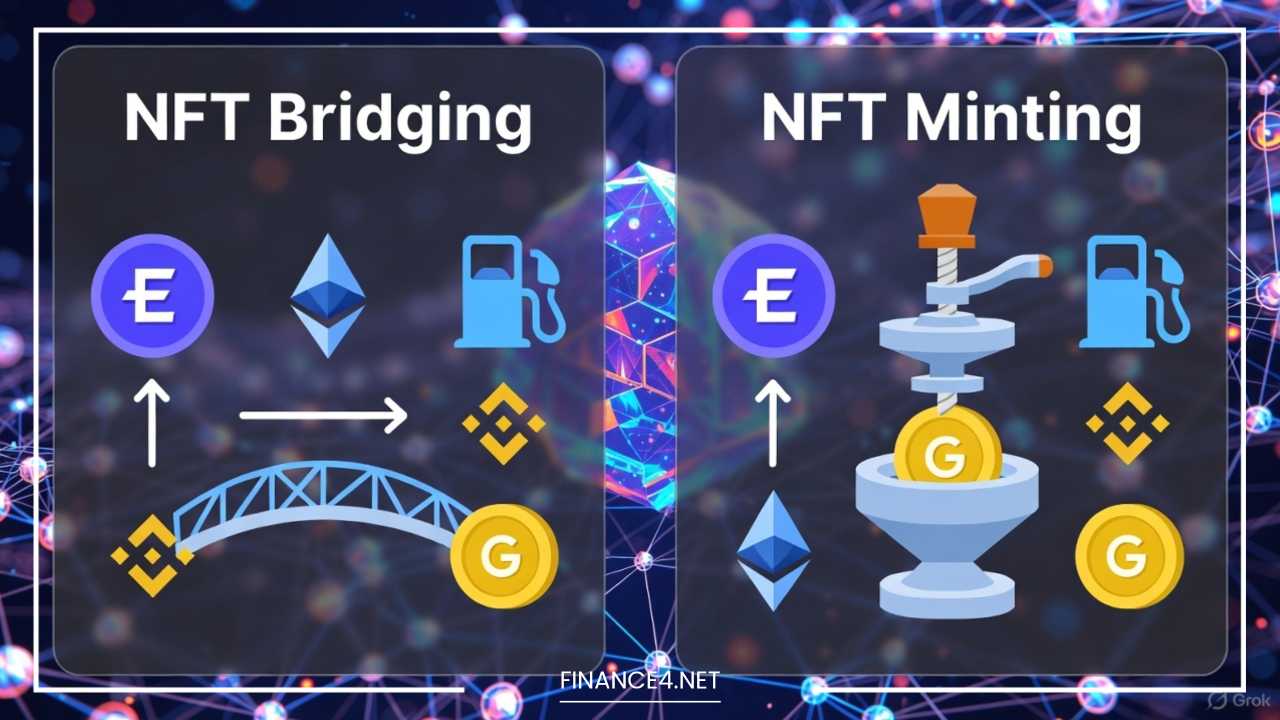
NFT Bridging Fees vs Minting New NFTs | Cost Comparison
The digital asset landscape has been fundamentally reshaped by Non-Fungible Tokens (NFTs). What began as a niche application of blockchain technology has rapidly evolved into a multi-billion dollar ecosystem encompassing digital art, collectibles, gaming assets, real estate, and more. At the core of this revolution lies the concept of digital ownership, verifiable and immutable, thanks to the underlying distributed ledger technology. For anyone involved in this space—be it a creator looking to launch a collection, an investor seeking to diversify their portfolio, or a collector acquiring a piece of digital history—two critical processes govern the life cycle of an NFT: minting and bridging.
Minting is the act of creating a new, unique token on a blockchain, effectively giving birth to the digital asset. Bridging is the process of moving an already existing NFT from one blockchain network to another. Both processes involve a financial cost, and the comparison between bridging fees vs minting fees is a pivotal financial and strategic decision. This decision is not just about the absolute price; it’s about weighing transaction costs, security risks, network accessibility, and long-term asset strategy. Understanding these costs is crucial for optimizing capital, maximizing returns, and ensuring the smooth operation of NFT-related activities.
This article aims to provide a thorough, side-by-side comparison of the costs associated with minting a new NFT versus bridging an existing one. We will delve into the mechanics of each process, analyze the various financial and technical factors that influence their respective fees, explore the hidden costs, and ultimately provide a strategic framework for deciding when to mint and when to bridge.
Understanding NFT Minting
Definition and Process
Minting an NFT is the process of converting a digital file (such as an image, video, or audio clip) into a cryptographically secured digital asset that is recorded on a blockchain. This process officially registers the file’s ownership and scarcity. When an NFT is minted, a smart contract is deployed or called upon, which writes a new, unique token to the blockchain. This token contains a link (typically a Uniform Resource Identifier, or URI) to the digital asset’s metadata and content.
How Minting Works
The minting process involves several key technical steps:
- Creating Metadata: A JSON file is prepared containing essential information about the NFT, such as its name, description, traits (attributes), and a link to the actual digital content. This metadata is often stored off-chain, using decentralized storage solutions like IPFS (InterPlanetary File System) to ensure immutability.
- Smart Contract Interaction: The creator interacts with a smart contract—a self-executing contract with the terms of the agreement directly written into code. The contract defines the rules for the collection, including the total supply, royalty structure, and the function for creating new tokens.
- Storing on Blockchain: When the minting function is executed, the transaction is broadcast to the network. Miners or validators process the transaction, record the new token ID, the associated metadata URI, and the owner’s address onto the ledger, making the NFT permanent and traceable.
Blockchain Differences and Costs
The choice of blockchain profoundly impacts the minting cost.
- Ethereum (ETH): Historically the most popular network for high-value NFTs. Minting costs here are primarily driven by Gas Fees, which are payments made to validators for computing power. Gas fees fluctuate wildly based on network congestion (demand). During peak demand, minting a single NFT on Ethereum can cost anywhere from $50 to several hundred dollars.
- Solana (SOL): A high-throughput, low-latency chain. Minting on Solana is significantly cheaper, often costing fractions of a cent ($0.01 – $0.50). The fee structure is more predictable and less sensitive to congestion than Ethereum’s.
- Polygon (MATIC): A Layer 2 scaling solution for Ethereum. It offers Ethereum Virtual Machine (EVM) compatibility but with vastly reduced fees, typically ranging from $0.10 to a few dollars. Other popular chains with different cost models include Tezos, Flow, and Avalanche.
Factors Influencing Minting Fees
Minting fees are not static and are influenced by several factors:
- Gas Fees (Ethereum): This is the most variable and significant cost on Ethereum. It’s calculated as Gas Units (complexity) $\times$ Gas Price (Gwei) $\times$ ETH Price. When a network is busy (e.g., during a major NFT drop), the required Gas Price (Gwei) skyrockets, making the transaction more expensive.
- Network Congestion: Higher network activity across all chains generally leads to increased transaction priority competition, driving up the cost of the transaction fee.
- Smart Contract Complexity: A more complex smart contract—one with intricate logic for vesting, royalties, batch minting, or custom interactions—requires more computational steps (Gas Units) to execute, thus increasing the base fee.
- Token Standard (e.g., ERC-721 vs. ERC-1155): The choice of token standard can slightly affect complexity and, consequently, the gas cost.
Example Costs: While it’s impossible to give a live figure, a typical standard ERC-721 mint outside of peak congestion on Ethereum might cost 0.01-0.03 ETH (e.g., $30-$90 USD at an ETH price of $3000). On Polygon, the same action might cost less than 1 MATIC (e.g., $1 USD).
Understanding NFT Bridging
Definition and Process
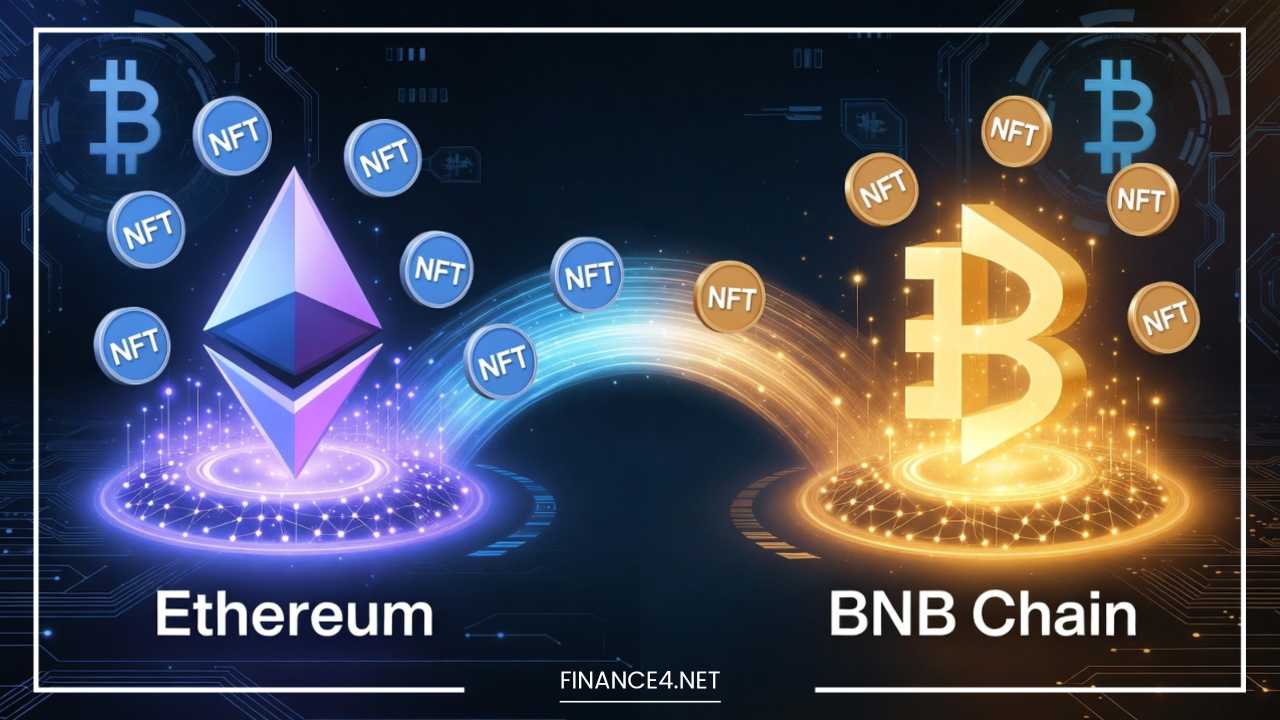
NFT Bridging is the act of securely transferring an NFT from its native blockchain to a different, secondary blockchain. The goal is often to leverage the benefits of the destination chain, such as lower transaction costs, access to a different marketplace, or integration with a specific dApp (Decentralized Application) ecosystem.
How Bridging Works
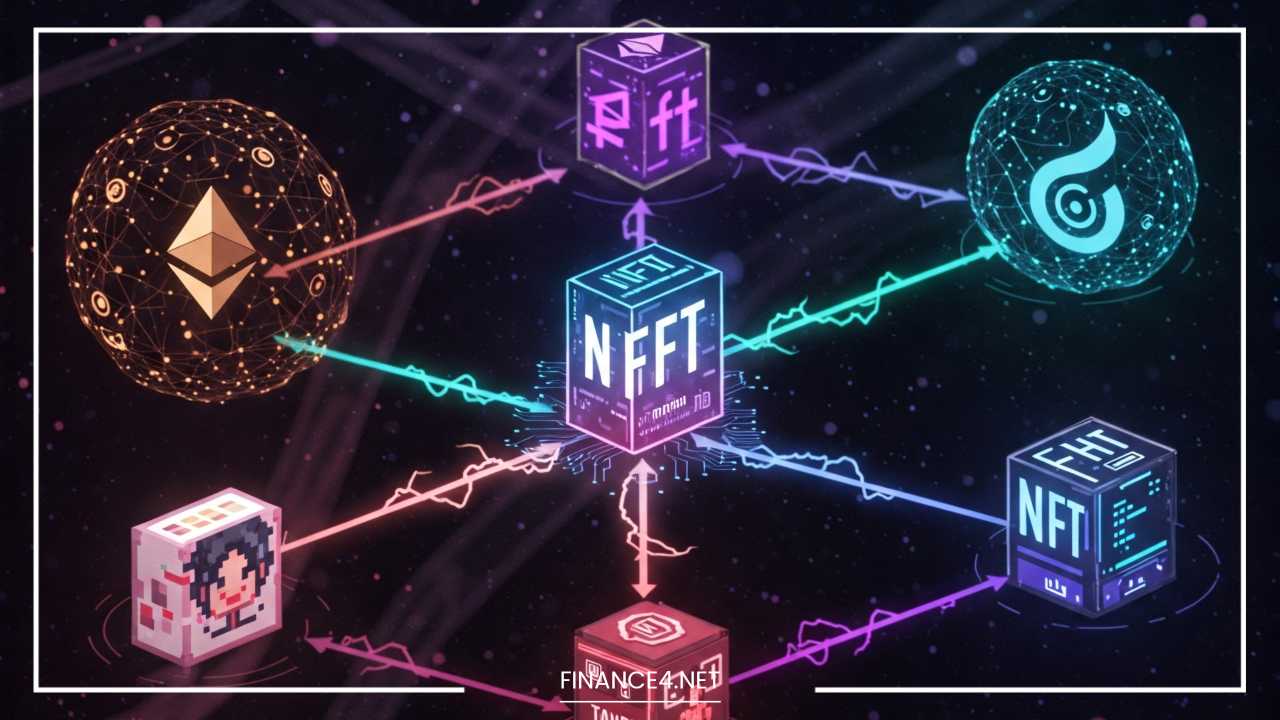
A cross-chain bridge does not physically move the token itself, as NFTs are inherently tied to their native chain’s smart contract. Instead, it employs a mechanism involving locking and wrapping:
- Locking the NFT on the Source Chain: The user sends their NFT to a specific smart contract address (the bridge contract) on the source chain (e.g., Ethereum). This action locks the original NFT, making it temporarily unusable on its native network.
- Minting a Wrapped Version on the Destination Chain: Once the bridge protocol verifies the lock, it simultaneously triggers the minting of a wrapped or derivative version of that NFT on the destination chain (e.g., Polygon). This new token is essentially a 1:1 representation, inheriting the original metadata and ownership, and is typically a different token standard that references the locked original.
- Security Protocols: Bridges rely on various security models (e.g., multi-signature contracts, validators, or relayer networks) to confirm the lock and safely execute the mint. If a user wishes to move the NFT back, the wrapped token is burned on the destination chain, which then releases the original NFT from the lock contract on the source chain.
Types of Bridges
The technology and security model of a bridge significantly impact its fees and risk profile:
- Centralized Bridges: Often managed by a single entity or small consortium (e.g., some exchange-operated bridges). While potentially faster and cheaper due to lower overhead, they introduce a single point of failure (custodial risk).
- Decentralized/Trustless Bridges: Rely on a network of independent validators or cryptographically secured smart contracts to manage the locking and wrapping process. They are generally more secure but often involve higher operational costs, leading to higher fees.
Factors Influencing Bridging Fees
Bridging involves two primary transactions and an additional service charge, making the fee structure complex:
- Gas Fees on Both Chains: A transaction is required to lock the NFT on the source chain (paying source chain gas) and a transaction is required to mint/receive the wrapped NFT on the destination chain (paying destination chain gas). If the source chain is Ethereum, this initial locking fee can be substantial.
- Bridge Service Fees: The bridge operator charges a fee for the service of securing and executing the cross-chain transfer. This fee is often a small percentage of the NFT’s value, a fixed fee, or a combination of both.
- Network Congestion: High demand on either the source or destination chain will inflate the gas component of the fee for the respective transaction.
Examples: Moving an NFT from Ethereum (high-cost source) to Polygon (low-cost destination) might involve a $40-$150+ ETH gas fee for the lock, plus a bridge fee of 0.1% to 0.3% of the NFT’s value, and a final Polygon gas fee of less than $1.
Cost Comparison: Bridging vs Minting
The core financial decision for an NFT user boils down to a fundamental trade-off: is it cheaper to pay the often high, but one-time, initial cost of minting an asset, or the compounded, recurring costs (gas plus service fees) of bridging an existing asset?
Side-by-Side Fee Analysis
| Fee Component | Minting a New NFT | Bridging an Existing NFT |
| Primary Fee | Gas/Transaction Fee on the native chain. Highly variable on chains like Ethereum. | Locking Gas Fee on the source chain (often high), Wrapping Gas Fee on the destination chain (often low). |
| Secondary Fee | Smart Contract Deployment Fee (if creating a new collection contract). | Bridge Service Fee (often percentage-based or fixed charge by the bridge operator). |
| Total Cost Driver | Network Congestion and Smart Contract Complexity. | Source Chain Gas Price and Bridge Service Fee Model. |
| Nature of Cost | Typically a one-time, upfront capital expenditure. | Can be a recurring cost if the NFT is moved back and forth multiple times. |
The key takeaway is that minting is typically cheaper on Layer 2 (L2) or alternative chains (Solana, Polygon) than bridging from Ethereum. However, for a high-value NFT already on Ethereum, bridging to an L2 for trading might be a more cost-effective option than selling the original and re-minting a duplicate on the new chain (which is generally considered a fraudulent practice unless it is a specific cross-chain version by the original creator).
Hidden Costs
The sticker price for minting or bridging does not always account for all financial implications:
- Slippage, Transaction Failures, and Bridge Downtime: A failed transaction (due to insufficient gas or network timeout) on Ethereum still consumes the gas fee—a complete loss of funds with no outcome. For bridges, downtime or technical glitches can lead to prolonged lock-ups, affecting the asset’s liquidity and sale potential.
- NFT Metadata Storage Fees: While not a direct fee, creators must factor in the cost of decentralized storage (e.g., using services like Filecoin or Arweave) for the NFT’s metadata and content. This is a cost associated with the minting process.
- Bridge Risk Premium: While not a direct fee, the risk of a bridge hack (as seen in multiple high-profile incidents) is a financial liability. Investors may price this risk into the value of a wrapped asset, potentially leading to a slight discount compared to the native NFT.
Case Studies or Real-Life Examples
Consider an NFT with a base value of 1 ETH (e.g., $3,000 USD).
- Scenario A: Minting on Ethereum: At a peak gas price, a mint costs 0.05 ETH ($150). Total Cost: $150.
- Scenario B: Minting on Polygon: A mint costs $1. Total Cost: $1.
- Scenario C: Bridging from Ethereum to Polygon:
- Ethereum Lock Gas: 0.03 ETH ($90).
- Bridge Service Fee (0.2%): 0.002 ETH ($6).
- Polygon Mint Gas: $0.50.
- Total Cost: $96.50.
In this specific example, minting new on Polygon is drastically cheaper. However, if the NFT already exists on Ethereum and has established value and provenance, bridging is significantly cheaper than the $150 initial minting cost on Ethereum, and it retains the original asset’s history. The cost comparison favors minting on L2s, but favors bridging when moving from an expensive chain to a cheap chain to facilitate cheaper subsequent transactions (e.g., listing, offers, trading).
Pros and Cons from a Cost Perspective
| Process | Pros (Cost) | Cons (Cost) |
| Minting | Cheaper on L2s and alternative chains. One-time fee only. Full creator control over contract. | Extremely high, variable cost on congested chains (Ethereum). Initial cost can be a major barrier to entry. |
| Bridging | Cheaper than re-minting on the source chain. Reduces trading fees by moving to L2. Retains original asset provenance. | Recurring cost if moving back and forth. Additional bridge service fee. Cost is sensitive to two chain’s gas prices. |
Technical Considerations and Risks
The financial comparison is incomplete without an assessment of the underlying technical risks, which often manifest as unexpected financial losses or asset security compromises.
Security Risks of Bridging
Bridges represent one of the largest attack surfaces in the blockchain ecosystem. They function as large honey pots, locking up massive amounts of assets across different chains.
- Bridge Hacks and Exploits: Due to the complexity of managing cross-chain state verification and asset custody, numerous high-profile bridges have been hacked, resulting in hundreds of millions of dollars in losses. The security of the bridge is paramount; a hack means the locked original NFT may be compromised, and the wrapped version could become worthless.
- Smart Contract Vulnerabilities: The bridge’s locking and wrapping smart contracts are constantly under scrutiny. A bug in the code could allow an attacker to bypass the lock mechanism or mint unauthorized wrapped tokens.
- Centralization Risk: For centralized or federated bridges, the failure or collusion of the multi-sig signers can lead to asset theft or censorship. This lack of trustlessness is a fundamental technical risk that translates directly into financial risk.
Minting Risks
While generally more straightforward, minting also has technical pitfalls:
- Smart Contract Bugs: A flaw in the NFT collection’s smart contract could prevent owners from transferring, burning, or accessing their assets. This issue, while fixable if the contract is upgradeable, can be a major liquidity killer.
- Metadata Immutability Issues: If the creator fails to correctly pin the metadata to decentralized storage (like IPFS) or, worse, uses a centralized server (known as “centralized metadata”), the asset’s image or description can be changed or deleted entirely, fundamentally destroying the NFT’s value proposition.
- “Rug Pulls”: In a worst-case scenario, the creator’s contract may be designed to allow them to drain funds or arbitrarily mint new tokens, devaluing the original collection.
Network Congestion and Timing Risks
- Fee Volatility: On proof-of-work and some proof-of-stake chains, high network congestion can cause gas fees to spike by 10x or more in minutes. A transaction submitted at a lower fee during a spike may get stuck for hours or fail, resulting in a partial or full loss of the paid gas.
- Timing Risk for Bridges: Bridging involves multiple steps on two different chains, introducing latency. If the market value of the NFT changes significantly during the bridging process (which can take minutes or longer), the owner may miss a profitable selling opportunity.
Environmental Impact
The technical choice of blockchain also carries an environmental consideration, which can be viewed as a moral or long-term systemic cost.
- Proof-of-Work (PoW) Chains (e.g., Ethereum before The Merge): Minting on PoW chains consumes significantly more energy, leading to a large environmental footprint.
- Proof-of-Stake (PoS) Chains and L2s (e.g., Polygon, Solana): These networks are vastly more energy-efficient. The decision to mint or bridge to these networks is often aligned with a more environmentally conscious strategy, reducing the long-term, societal cost of the asset’s lifecycle.
When to Mint vs When to Bridge
The ultimate strategic decision—to incur the cost of a new mint or the fees of a bridge—depends entirely on the asset’s status and the user’s objective.
Scenarios for Minting a New NFT
Minting is the appropriate strategy when:
- Original Art or Collectibles: You are a creator launching a brand new collection, and the creation of a unique, first-generation token is necessary. The initial mint establishes the provenance of the entire collection.
- Launching on a New Blockchain: You specifically want to take advantage of the features or community of a chain that your current assets do not use (e.g., launching a new game on Flow or Avalanche).
- Lower Barrier to Entry: When the chosen network is a low-cost L2 or sidechain (e.g., Polygon, Arbitrum), the cost of minting is negligible, making it the most cost-effective way to introduce a new asset.
- Avoiding Bridge Risk: If the asset is extremely valuable and the security risks of available bridges are deemed unacceptable, creating a natively-issued version on the new chain (if feasible and approved by the original creator) is the safer technical route, despite the potential loss of original provenance.
Scenarios for Bridging
Bridging is the appropriate strategy when:
- Existing NFTs with Established Value and Provenance: The NFT is already a blue-chip or has significant historical value on its native chain (e.g., an early CryptoPunk on Ethereum). The asset’s value is tied to its original token ID and history. Bridging allows you to move its utility without sacrificing its core identity.
- Moving NFTs to Cheaper Networks for Lower Transaction Fees: The primary goal is not to trade the asset itself but to interact with it (e.g., staking, lending, trading on a marketplace) at a lower cost. Bridging from Ethereum to Polygon or Arbitrum makes subsequent transactions much cheaper.
- Accessing a Specific dApp Ecosystem: A game or DeFi protocol operates only on a specific chain (e.g., Solana), and an owner wants to use their Ethereum-based asset within that ecosystem.
- Temporary Cross-Chain Movement: The user intends to move the asset to a secondary chain for a specific short-term activity and then plans to move it back to the original, high-security chain.
Strategic Tips
- Timing Transactions: For minting or bridging from Ethereum, monitor gas fee trackers (like Etherscan’s Gas Tracker) and aim to transact during off-peak hours (e.g., late night UTC or weekends) to secure a lower transaction fee.
- Choosing the Right Chain: Creators should always launch their collections on the chain that best balances cost, security, and community engagement. Don’t launch on Ethereum simply for prestige if the target community is L2-native.
- Avoiding Unnecessary Bridging: Bridge fees are a recurring cost. If you move an NFT to Polygon to save $10 on a trade, but then pay another $100 to bridge it back, the cost-saving is negated. Be certain about the destination and the utility before committing to a bridge.
Future Trends
The landscape of NFT infrastructure is evolving rapidly, with technological innovations constantly attempting to reduce fees and enhance security.
Bridging Technology Improvements
The future of bridging is moving toward ZK (Zero-Knowledge) Proofs and L2 Native Bridging. ZK-rollups like zkSync and StarkNet inherently include bridging capabilities that are cryptographically more secure and potentially cheaper than external, third-party bridges. These technologies dramatically reduce the trust assumption and the number of on-chain transactions required, which will lower both the service fee and the security risk. We anticipate bridges becoming faster, more economical, and more robust.
Layer 2 and Sidechain Solutions
The massive growth of L2s (Arbitrum, Optimism) and sidechains (Polygon) is effectively solving the high-cost minting problem on Ethereum. For creators, this means the high upfront cost of a native Ethereum mint will become increasingly unnecessary. The majority of new, high-volume collections are now launching directly on these scaling solutions, where minting costs can be negligible (sub-$5). This trend will render the minting-vs-bridging debate less about cost and more about asset strategy and liquidity.
Cross-Chain Marketplaces
The emergence of true cross-chain marketplaces will be a game-changer. These platforms would allow a user to list an Ethereum NFT for sale on a Solana-native marketplace without the owner needing to bridge it first. The bridging process would be seamlessly integrated into the sale transaction, triggered only upon successful execution, further reducing the friction and risk for the NFT owner. This shifts the bridging fee from the owner’s operating cost to the buyer’s transaction cost, who is incentivized to pay it to acquire the asset.
Potential Fee Standardization
As blockchain governance matures, there is potential for greater fee standardization or at least more predictable pricing models. Competition among L2s and sidechains will likely drive transaction fees down to a competitive baseline, making costs more transparent and less volatile for both minting and subsequent transactions. Centralized marketplaces may also begin subsidizing the cost of minting or bridging to attract users.
Final Thoughts
The decision to choose between paying NFT bridging fees vs minting new NFTs is a complex financial equation that transcends simple transaction costs. It is a strategic choice rooted in the provenance, security, and long-term utility of the digital asset.
- For creators and new collections, the calculus is clear: Minting on a low-cost Layer 2 or sidechain offers the lowest barrier to entry and the most capital-efficient launch strategy.
- For collectors and investors holding high-value, established assets on a high-cost chain (like Ethereum), the strategic choice is often to Bridge to a scaling solution. This allows them to retain the asset’s valuable native history while reducing the cost of all subsequent transactions (trading, staking, etc.).
The key cost considerations are the volatile Gas Fee on the source chain (for bridging or high-cost minting) and the Bridge Service Fee (for bridging). Hidden costs like security risks and transaction failures must also be mentally factored into the overall financial exposure.
A solid framework for decision-making involves:
- Assess Asset Status: Is it a new asset (Mint) or an existing, valuable asset (Bridge)?
- Determine Utility: Does the asset need to be moved to a specific chain for a core function (Bridge), or is it simply being created (Mint)?
- Time Transaction: Use current gas prices to forecast the cost for both options.
The NFT ecosystem is moving toward a more interoperable, multi-chain future. Staying informed about new bridging technologies and the latest fee structures is paramount. Before deploying capital, always conduct a thorough comparison of the current fees and security track record of the chosen bridge or the complexity of the smart contract for a new mint. The most successful participants in this market will be those who can strategically manage the financial and technical trade-offs between creation and movement.