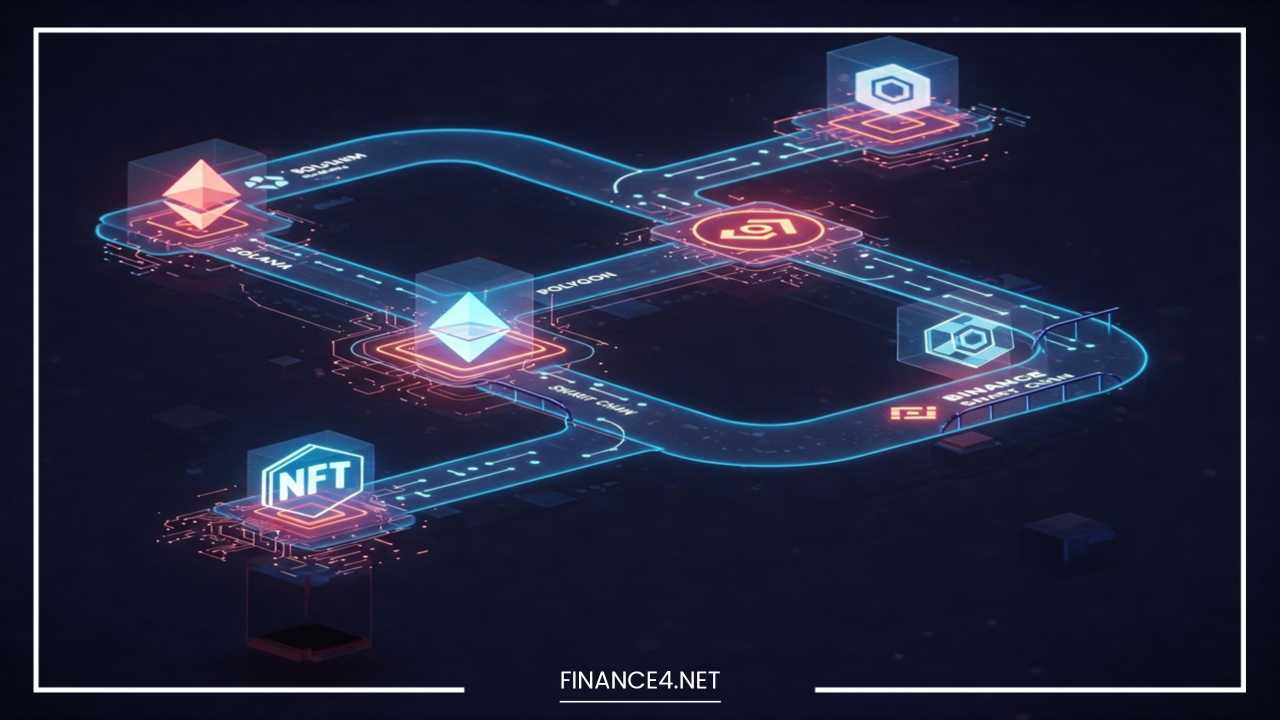
Secure Bridging Solutions for Crypto Newbies
 by
by 
Secure Crypto Bridging for Beginners: Safe Cross-Chain Transfers Explained
The decentralized finance landscape has evolved from a single dominant blockchain network into a vast, interconnected ecosystem comprising dozens of unique platforms. As alternative layer-one networks and advanced layer-two scaling solutions gain widespread traction, capital efficiency and platform variety have expanded dramatically. For someone entering the cryptocurrency market, the realization quickly sets in that digital assets are not automatically interchangeable across different networks. A token existing natively on one blockchain cannot spontaneously communicate with or move to another network without external assistance.
This infrastructure gap is resolved by blockchain bridges, which serve as the primary transport infrastructure connecting otherwise isolated networks. For instance, an investor may hold Ether on the Ethereum mainnet but wish to interact with a decentralized application operating on Arbitrum to minimize operational costs, or they might choose to deploy USD Coin on Polygon to tap into high-yield liquidity pools. Accomplishing these maneuvers requires crossing a digital bridge.
While these tools offer unprecedented mobility and utility, they also represent a highly complex and potentially volatile frontier within the decentralized finance arena. Beginners frequently navigate this space with a false sense of security, assuming that the underlying immutability of blockchain technology safeguards assets during transit. In reality, the bridging process introduces unique structural, technical, and operational vulnerabilities. Unwary users routinely lose capital not because blockchain technology fails, but because they interact with fraudulent platforms, succumb to malicious social engineering campaigns, or misconfigure their digital wallets.
Prioritizing asset preservation over transactional velocity or marginal yield optimization is paramount for newcomers. Navigating this landscape successfully requires an objective understanding of cross-chain infrastructure, structural vulnerabilities, and the specific safeguards engineered to shelter assets from predatory vectors.
What Is a Crypto Bridge?
To comprehend the necessity and functionality of a crypto bridge, one must understand that distinct blockchain networks operate like independent nations with separate legal frameworks, monetary systems, and languages. By default, Bitcoin cannot comprehend the data structures of Ethereum, and Solana remains entirely isolated from Avalanche. A blockchain bridge acts as an intermediary network or protocol that establishes an administrative pathway between these foreign systems, facilitating the secure transfer of information, data, and economic value.
The core objective of a bridging protocol is to replicate the value of an asset on a destination network while ensuring the original asset on the source network is appropriately managed. Blockchains cannot literally detach a token from one digital ledger and transmit it through the internet onto another ledger. Instead, bridges rely on specific cryptographic accounting models to simulate cross-chain migration.
The most prevalent architectural framework is the lock-and-mint mechanism. When a user routes an asset through a bridge, the protocol directs those tokens into a highly secure, automated smart contract on the source chain, where they are securely locked away. Simultaneously, the bridge transmits a verified cryptographic message to the destination blockchain, instructing a parallel smart contract to mint an identical quantity of wrapped assets. These wrapped assets serve as a claim check or a digital proxy, tracking the value of the underlying original token on a one-to-one basis.
When the user decides to return to the original ecosystem, the process is executed in reverse through a burn-and-release model. The user surrenders the wrapped proxy tokens to the destination smart contract, which systematically destroys or burns them. Upon receiving proof of this destruction, the source smart contract unlocks the original assets and returns them to the user’s wallet.
Bridges generally fall into three distinct operational classifications:
-
Native Bridges: These are purpose-built protocols developed directly by the engineering teams responsible for the underlying blockchain itself. Examples include the Arbitrum Bridge or the Optimism Standard Bridge. They rely on the inherent security assumptions of the target network, making them highly secure, though they are frequently slower and limited to moving assets strictly between that specific ecosystem and its primary base layer.
-
Third-Party Bridges: These are independent, cross-chain applications operating across dozens of distinct networks simultaneously. They rely on their own independent smart contracts and internal validation mechanisms to achieve exceptional transactional speed and broader asset coverage, though they introduce distinct trust assumptions.
-
Cross-Chain Messaging Protocols: Rather than merely shifting tokens via liquidity pools, these protocols provide foundational communication infrastructure that allows diverse smart contracts across separate networks to read and write data to one another seamlessly.
Prominent entities providing infrastructural frameworks across these domains include LayerZero Labs, Wormhole Foundation, Across Protocol, and Stargate Finance, each implementing distinct security and optimization standards to preserve systemic integrity.
Why Crypto Users Need Bridges
The programmatic necessity for cross-chain connectivity stems from several practical and economic motivations that directly impact the user experience of a market participant. The modern decentralized financial economy is highly fragmented, and bridges serve as the cohesive tissue enabling users to navigate this fragmentation efficiently.
Lower Fees
The primary catalyst driving everyday users to seek out bridging platforms is the pursuit of economic sustainability regarding network gas fees. The Ethereum mainnet, while exceptionally secure and highly decentralized, frequently experiences intense block space demand. During periods of heightened market activity, executing a basic token exchange or interacting with a lending protocol on Ethereum can cost significant sums in network transaction fees.
For users managing moderate portfolio balances, these transactional overhead costs can erode potential gains entirely. By utilizing a bridge to transition capital to layer-two rollups or low-cost layer-one networks, users can execute hundreds of transactions for a fraction of the cost of a single mainnet trade.
Faster Transactions
Transaction finality times vary significantly across different blockchain architectures. High-frequency traders and casual consumers alike frequently require near-instantaneous execution. Capital routing through a bridge into optimized layer-two frameworks allows users to achieve near-immediate settlement times, minimizing the risk of price slippage during volatile market shifts and providing a user experience that closely mirrors traditional web applications.
Access to Specialized Applications
The decentralized economy has fostered extreme specialization among various blockchains. Certain ecosystems have emerged as premier hubs for web-based gaming, while others focus on non-fungible token minting, decentralized prediction markets, or institutional-grade yield farming protocols. A user who isolates their capital within a single network is excluded from participating in innovative applications launched elsewhere. Bridges unlock global mobility, allowing capital to flow dynamically to where innovation and utility are highest.
Optimization of Capital Allocation
Different blockchain networks harbor distinct liquidity landscapes, which directly influences the yields available on stablecoin deposits or blue-chip asset staking. A secure bridge enables market participants to rapidly reallocate their portfolios across network boundaries to tap into superior compounding opportunities, maximize capital efficiency, and diversify platform-specific risks.
Despite these clear incentives, beginners are routinely confronted by severe operational friction. The user interfaces of many cross-chain applications require manual configurations that can easily overwhelm an uninitiated user. Selecting the wrong network parameters, failing to account for destination gas prerequisites, or inadvertently matching incompatible token standards represent common pain points that can complicate an otherwise straightforward transfer.
Security Risks of Blockchain Bridges
To safely utilize cross-chain infrastructure, a beginner must discard any assumptions of absolute protocol safety. Because bridges act as massive aggregate repositories of capital, consolidating immense reserves of tokens within source-chain smart contracts, they represent the single most lucrative target for sophisticated malicious actors globally. Understanding the exact vectors through which capital can be compromised is the first definitive line of defense for a novice investor.
Fake Bridge Websites and Phishing Architecture
The most common threat confronting everyday users does not involve highly sophisticated cryptographic breaches, but rather straightforward deceptive social engineering. Malicious entities routinely construct flawless, pixel-for-pixel visual duplicates of popular bridging platforms. These fraudulent websites are promoted through compromised social media accounts, search engine advertisement manipulation, or deceptive direct messages.
When an unsuspecting user connects their Web3 browser wallet to a phishing clone and attempts a transaction, the platform alters the destination logic. Instead of routing the funds to a legitimate bridge contract, the user inadvertently signs an absolute asset drainage exploit, instantly transferring their entire wallet balance to a criminal address.
Smart Contract Imperfections and Protocol Exploits
Bridges are built upon exceptionally intricate arrays of custom code that must concurrently manage the states of two entirely separate consensus mechanisms. This inherent complexity significantly expands the systemic attack surface. If an independent software developer introduces even a minor logical flaw or a variable oversight into the smart contract code, an attacker can exploit that vulnerability.
Historical incidents like the Ronin Network breach and the Wormhole security exploit resulted in catastrophic capital outflows totaling hundreds of millions of dollars. These events occurred because attackers managed to compromise validator cryptographic keys or bypass validation logic entirely, convincing the destination smart contract to mint massive quantities of assets without any corresponding collateral being deposited on the source network.
Misaligned Wallet Network Configuration
Blockchains are absolute and literal; they possess no integrated customer service mechanisms to reverse user error. A common mistake occurs when a beginner initiates a transfer but manually inputs a destination network that is completely unsupported by their receiving wallet software, or routes assets directly to a centralized exchange deposit address that cannot handle multi-chain wrapped tokens. When an asset is broadcast to an address on a network that cannot interpret or access that specific contract, those tokens are permanently orphaned on the ledger, rendering them unrecoverable.
Proliferation of Fraudulent Imitation Tokens
Because anyone can deploy a smart contract on an open, permissionless blockchain, bad actors frequently mint worthless tokens and assign them identical names and visual ticker symbols to prominent legitimate projects. A beginner attempting to bridge an asset may mistakenly select or accept a fraudulent variation of a token on a secondary chain. While the transfer itself may technically succeed from an engineering standpoint, the user arrives at the destination network holding a completely worthless counterfeit asset that possesses zero market liquidity.
Infinite Token Approval Exploits
Before a bridging protocol can interact with the assets stored inside a user’s private Web3 wallet, the user must explicitly sign an authorization transaction granting the application permission to spend those tokens. To maximize convenience and save on gas fees, many interfaces default to requesting an unlimited token approval allowance.
If a user grants a platform infinite access to their wallet balances and that bridging protocol is subsequently compromised by an exploit at a later date, the attacker can leverage that legacy permission to remotely extract assets directly out of the user’s wallet, long after the user has finished using the actual website.
Social Engineering and Fraudulent Support Infrastructure
When a user encounters a technical delay or a stuck transaction during a bridge operation, they frequently seek assistance via community communication channels such as Discord, Telegram, or X. Malicious actors continuously monitor these public forums, instantly impersonating official support personnel or help desks. These individuals use sophisticated psychological manipulation to convince distressed users to surrender their private recovery seed phrases or link their wallets to diagnostic tools that are designed to extract private keys.
Bridges remain uniquely attractive to attackers because they contain massive pools of locked liquidity, require highly complex smart contract connections, and depend heavily on the weakest link in their cross-chain security architecture.
What Makes a Bridge Secure?
Discerning the difference between an unverified, high-risk experimental protocol and an institutional-grade, resilient cross-chain solution requires a systematic evaluation of specific security frameworks. A beginner should look for clear institutional signals that indicate a platform has been constructed with structural integrity and proactive risk mitigation in mind.
Independent Third-Party Security Audits
A reputable bridging platform never deploys code directly to production without undergoing extensive evaluation by elite, independent cybersecurity firms. These comprehensive smart contract audits involve specialized code analysis, manual vulnerability verification, and rigorous economic simulations designed to identify hidden technical flaws.
A secure platform makes these multi-page documentation reports fully accessible to the public, detailing exactly which bugs were discovered and providing formal proof that every identified vulnerability was successfully patched before public deployment.
Open-Source Transparency
Trust in decentralized finance is maintained through absolute transparency. Secure bridging solutions maintain completely open-source code repositories, allowing independent developers, security researchers, and data analysts across the globe to review, verify, and stress-test their architecture continuously. Protocols that conceal their underlying software logic represent an immediate risk factor for the end user.
Diversified Validator Security Frameworks
The validation mechanism responsible for confirming that assets have truly been locked on a source chain before authorizing a minting event on a destination chain must be resilient against single points of failure. High-security bridges avoid relying on centralized or limited validation nodes. Instead, they implement robust multi-signature architectures, decentralized validator networks, or cryptographic proof verification mechanisms that require a diverse consortium of independent, reputable entities to sign off on every cross-chain state transition.
Algorithmic Rate Limiting and Protocol Circuit Breakers
Even the most thoroughly vetted smart contracts can harbor undiscovered anomalies. Elite bridging systems implement automated risk management layers, such as volume-based rate limiting and systemic circuit breakers. If an anomalous, uncharacteristic spike in asset outflows occurs within a brief temporal window, the protocol automatically pauses all cross-chain operations. This containment strategy isolates potential exploits and preserves the vast majority of pool liquidity while engineers investigate the system.
Clean, Descriptive User Interface
A major pillar of operational security is a user interface engineered to prevent human error. A secure, beginner-friendly bridge provides clear warning indicators regarding network selections, displays explicit estimates regarding transactional processing times, outlines precise fee breakdowns before authorization, and dynamically warns users if they are attempting to bridge into uninitialized asset addresses.
When evaluating trust assumptions, it is vital to contrast native systems with independent third-party ecosystems. Native architecture relies exclusively on the consensus security of the destination network, introducing few new structural risk parameters, whereas third-party platforms introduce an entirely separate layer of custom logic and independent validator networks that require an additional, distinct layer of trust from the end user. Novices should look toward long-standing, battle-tested options with extensive histories of successfully processed transaction volumes, such as Across Protocol, Portal Bridge, Orbiter Finance, or Synapse Protocol, to minimize unvetted infrastructural exposure.
How Beginners Can Bridge Crypto Safely
Executing a cross-chain asset migration without experiencing capital degradation requires adherence to a strict, structured operational protocol. By standardizing your approach to cross-chain transfers, you can systematically eliminate the vast majority of common exploit vectors.
Phase One: Pre-Bridging Security Routines
First, isolate the legitimate access point. Never utilize a search engine link, a social media advertisement, or a recommendation from an internet forum to access a bridging application. Manually navigate to trusted data aggregators such as CoinMarketCap or DeFiLlama, locate the official verified profile for the desired protocol, and bookmark the confirmed domain URL directly within your browser.
Second, deploy a minimum viable test transaction. Regardless of your overall portfolio size or the total amount of capital you intend to move, always initiate your bridging session with a nominal test transfer. Send the absolute minimum allowed quantity of tokens across the system first. Only when you have visually confirmed that these test tokens have successfully settled within your destination wallet should you consider moving larger amounts.
Third, audit chain compatibility and destination gas provisions. Verify that both your source wallet and your receiving wallet are completely compatible with the precise token contracts being deployed. Furthermore, acknowledge that every blockchain requires its native token to process transactions. If you bridge a stablecoin like USDC onto an alternative network, you will be unable to utilize those funds once they arrive unless your wallet already holds a small balance of that specific destination network’s native gas token to pay for future transfer approvals.
Phase Two: Active Execution Safeguards
First, perform multi-point destination verification. When your browser wallet presents the final confirmation overlay, slow down. Manually verify the exact contract addresses being interacted with, confirm the receiving wallet public key matches your own, and review the structural breakdown of gas fees.
Second, maintain operational patience. Cross-chain operations are inherently more complex than localized peer-to-peer transfers. Depending on network congestion, underlying consensus validation speeds, and bridge architectures, a transaction can take anywhere from a few minutes to several hours to fully execute. Avoid refreshing your browser window erratically, never disconnect your wallet mid-session, and do not attempt to submit duplicate transactions, which can compound gas overhead or create computational gridlocks within your wallet software.
Phase Three: Post-Execution Administrative Routines
First, perform independent ledger verification. Once a bridge indicates success, open an independent network block explorer, such as Etherscan or Polygonscan, and input your public wallet address. Review the token balances to confirm that the asset has been successfully credited to your ledger profile.
Second, manually inject token contract metadata. If your block explorer confirms the arrival of your assets but your wallet software displays a zero balance, do not panic. Wallets frequently fail to automatically track obscure or wrapped cross-chain token profiles. Copy the verified smart contract address of the token directly from a trusted aggregator and paste it into the “Import Custom Token” field within your wallet interface to force the software to display your assets.
Third, execute immediate revocation of spend approvals. Once your bridging operations are completed for the day, immediately navigate to a trusted security utility such as Revoke.cash or the integrated token approval scanner within your block explorer. Locate the specific permissions you granted to the bridging smart contract during your session and actively revoke those allowances. This simple administrative step breaks the access link between the external protocol and your private wallet, protecting your capital from any future upstream security compromises.
Best Beginner-Friendly Bridging Platforms
Navigating the cross-chain sector requires choosing platforms that actively prioritize user-centric design alongside robust structural security architectures. The following comparison table provides an objective evaluation of several prominent protocols currently offering bridging solutions optimized for various user objectives.
| Protocol Name | Primary Optimization Category | Beginner-Friendly Interface? | Foundational Structural Strength |
| Across Protocol | Rapid Transaction Processing | Highly Intuitive | Intent-based architectural design with minimal fee overhead structures |
| Stargate Finance | Unified Capital Liquidity | Moderate | Built upon LayerZero infrastructure enabling native asset transfers |
| Orbiter Finance | Layer-Two Scaling Networks | Highly Intuitive | Optimized specifically for rapid execution across rollup environments |
| Synapse Protocol | Diverse Multi-Chain Deployment | Moderate | Broad ecosystem coverage with deep integrated bridge routing tools |
Across Protocol
Across Protocol has earned an excellent reputation within the decentralized finance sector by pioneering an intent-based architecture. Instead of forcing users to wait for slow cross-chain validations, independent liquidity providers effectively lend the funds immediately to the user on the destination chain, absorbing the wait time themselves in exchange for a nominal fee. This structural approach makes Across exceptionally fast and highly cost-effective for newcomers moving capital between leading layer-two environments. The user interface is clean, minimal, and stripped of unnecessary technical jargon, presenting an exceptionally low barrier to entry for novice participants.
Stargate Finance
Stargate Finance represents a prominent bridge built directly upon LayerZero messaging infrastructure. It completely resolves the risk of synthetic token traps by utilizing a unified liquidity pool model that guarantees users receive native, unwrapped assets on the destination network whenever possible. While the user interface includes a variety of advanced financial options, such as staking pools and liquidity provisioning modules, the primary bridging portal remains straightforward to navigate. Its deep capital pools make it highly reliable for larger transaction sizes.
Orbiter Finance
Orbiter Finance distinguishes itself by specializing heavily in the layer-two ecosystem. By utilizing a decentralized network of automated makers, Orbiter facilitates near-instantaneous transfers of native assets like Ether across separate rollup platforms. The application completely eliminates the complex step of managing synthetic wrapped tokens, rendering the user experience as simple as executing a basic localized trade. Its fee structures are transparently displayed upfront, preventing unexpected costs from impacting a beginner’s portfolio.
Synapse Protocol
Synapse Protocol acts as a comprehensive cross-chain layer, supporting an expansive suite of both layer-two rollups and independent layer-one block architectures. Synapse utilizes an optimized asset swapping framework that allows users to seamlessly convert an asset on a source chain and receive an entirely different type of asset on the destination side in a single combined transaction. While the platform provides extensive flexibility, the interface requires a bit more care from beginners to ensure they are accurately selecting the appropriate networks and asset pools before signing execution contracts.
Common Crypto Bridging Mistakes
A highly effective method for preventing asset loss is to actively study the mistakes made by those who have navigated the cross-chain ecosystem previously. Novice investors consistently repeat a predictable set of mistakes, almost all of which are completely preventable through deliberate planning and discipline.
Committing an Entire Capital Balance to a Single Transaction
The most common mistake a beginner can make is attempting to transfer their entire portfolio balance across a bridge in their very first interaction. If an undetected configuration error exists, if the destination wallet is misconfigured, or if the website is an active phishing clone, the user lose their entire position instantly.
Treat every initial cross-chain interaction with extreme caution. The nominal gas cost associated with processing a small, preliminary test transaction is an essential insurance premium that validates the safety of your capital routing before committing significant funding.
Disregarding Destination Gas Requirements
A frustrating situation occurs when a user successfully bridges an asset, such as a stablecoin, to an alternative network, only to discover they are completely trapped upon arrival. To interact with that stablecoin on the new network, you must execute a transaction, which requires paying gas fees in that specific network’s native token.
If your destination wallet holds zero native gas tokens, you will be unable to move, swap, or return your bridged capital. You will remain stuck until you locate an external source to transmit a small fraction of native gas tokens to your new address.
Sourcing Platform Domain Links from Unverified Channels
Selecting bridge links from social media platforms, direct messages, or unverified chat rooms is an open invitation to financial loss. Malicious actors use automated software bots to continuously scan public networks for keywords like “bridge help” or “stuck transaction,” instantly replying with deceptive links designed to replicate legitimate protocols. Sourcing your entry points exclusively from institutional-grade directory resources remains a fundamental rule of digital asset management.
Forgetting to Toggle Desktop Wallet Networks
Many modern Web3 browser wallets require users to manually select the correct active blockchain network within the extension interface before interacting with a specific decentralized application. If your wallet application remains set to Ethereum while you attempt to execute a transaction on a bridge interface configured for Polygon, the software can experience data conflicts, stall out, or generate misleading error screens that provoke user panic. Always align your wallet’s internal network state with the operational parameters of the bridging website.
Reacting to Systemic Processing Delays with Impatience
When a blockchain network experiences sudden spikes in operational traffic, or when a bridging protocol’s internal validation pools encounter brief verification bottlenecks, a cross-chain transfer can experience a significant processing delay. Beginners frequently interpret these operational pauses as total structural failures.
Panicking often leads users to attempt desperate, unscripted actions, such as repeatedly clicking confirmation buttons, submitting competing high-fee transactions that can deadlock their wallet software, or rushing to unverified social forums where they easily fall prey to predatory support scams. When a bridge delay occurs, remain calm, locate your transaction hash on a public block explorer, and allow the automated infrastructure the time required to achieve finality naturally.
The Future of Cross-Chain Security
The decentralized finance sector acknowledges that the current operational UX regarding cross-chain asset migration introduces too much friction and risk for the average consumer. To achieve widespread global adoption, the technology must evolve to a point where network boundaries become completely invisible to the end user. Significant engineering resources are currently being deployed to develop next-generation structural models aimed at automating cross-chain safety.
Chain Abstraction and Unified Accounts
The most prominent architectural shift currently underway is the transition toward absolute chain abstraction. Under this design framework, a user no longer interacts with separate network dropdown menus, manually configures alternative RPC settings, or maintains distinct gas token balances across multiple platforms.
Instead, advanced smart-contract-based wallet architectures abstract the entire backend infrastructure away. The user simply interacts with a unified dashboard asset balance, while intelligent routing protocols automatically handle the underlying locking, minting, wrapping, and gas conversions across the various network layers entirely behind the scenes.
Intent-Based Operational Architectures
The industry is moving rapidly away from traditional rigid, manual bridging pathways and embracing intent-based economic networks. In an intent-driven framework, the user does not specify the exact technical steps required to execute a cross-chain migration. Instead, they simply sign an off-chain order detailing a clear desired outcome, such as needing a specific native asset on a target rollup while surrendering their original tokens on the base layer. Sophisticated, highly capitalized market competitors known as solvers then bid against one another to fulfill the user’s intent instantly using their own private capital reserves. This completely shifts the complex smart contract risk away from the everyday user and onto professional, institutional market operators.
Generalized Interoperability Communication Standards
The development of standardized cross-chain messaging formats aims to replace the disparate array of custom-coded bridges with a singular, highly secure foundational communication layer. By building open, universally accepted cryptographic protocols directly into the core consensus engines of major blockchain frameworks, the industry can drastically reduce the reliance on fragile, third-party smart contract pools, thereby neutralizing the single largest attack vector exploited by digital asset thieves.
Programmable Anti-Scam Verification and Machine Learning Auditing
Next-generation Web3 wallet architectures are increasingly integrating real-time cryptographic simulation engines driven by advanced security algorithms. Before a user signs any transaction approval, the wallet software executes a deterministic localized simulation of the code, clearly mapping out exactly what changes will occur to the user’s token balances.
If the simulation detects that a platform is attempting to drain an unlimited allowance, or if it discovers that the destination contract address matches a known phishing deployer database, the software intercepts the action and forces an explicit security warning, saving the user from devastating human errors.
Final Thoughts
The ability to seamlessly reallocate capital across diverse blockchain networks via crypto bridges is one of the most powerful innovations within the decentralized financial landscape. It democratizes access to low-cost transactions, high-efficiency yields, and cutting-edge decentralized applications that were once restricted by base-layer network constraints. However, this immense operational freedom introduces an entirely new paradigm of personal security responsibilities that no market participant can afford to ignore.
In the permissionless domain of Web3, there are no structural safety nets, no corporate recovery desks, and no recourse options to reverse a compromised transaction. Security cannot be viewed as a secondary consideration or a passive feature that you trust a third-party website to maintain on your behalf. It must be integrated directly into your personal operational habits as an active, unyielding discipline. Prioritizing safety over speed, approaching new protocols with rigorous skepticism, and executing meticulous administrative routines—such as test transactions and contract approval revocations—represent the foundational pillars of long-term capital preservation.
The cross-chain landscape is undergoing a massive engineering evolution, steadily moving toward a highly automated ecosystem where complex security configurations will eventually be handled natively behind intuitive user interfaces. Until that abstracted future state achieves absolute standardization across the industry, the safety of your digital assets depends entirely on your personal caution, structural awareness, and commitment to safe operational practices. In the cryptocurrency market, moving deliberately and securely is always infinitely more profitable than chasing the fastest transaction.
Frequently Asked Questions
What is the best crypto bridge for beginners?
The best crypto bridge for beginners is one that prioritizes safety, low fees, and an intuitive user interface over complex trading options. Protocols like Across and Orbiter Finance are highly recommended for newcomers because they offer exceptionally clean interfaces, support major networks, and focus heavily on user simplicity. If you are moving funds between Ethereum and major layer-two scaling networks, using native bridges like the Arbitrum Bridge or Optimism Gateway is also highly advisable due to their unparalleled structural security guarantees.
What is the safest crypto bridge to use?
Statistically, the safest crypto bridges are official native bridges built directly by the core engineering teams of the specific blockchain network, such as the Arbitrum Canonical Bridge. For multi-chain transfers, the safest third-party platforms are those that are open-source, have undergone multiple top-tier security audits, and feature integrated risk-mitigation layers like algorithmic rate limits. Always verify that a platform has a long, clean operational history with substantial historical transaction volume before trusting it with your capital.
How to bridge crypto without paying high fees?
To bridge crypto without paying high fees, you should avoid executing transactions directly on the Ethereum mainnet during peak hours of high network activity. Instead, utilize intent-based bridges like Across Protocol, which minimize gas consumption by settling orders through private liquidity providers. Another highly effective strategy is to route your transactions entirely within layer-two ecosystems (such as moving assets directly from Base to Polygon) instead of moving funds back down to layer-one Ethereum, which slashes your gas costs to pennies.
How long does a crypto bridge transaction take?
The time it takes for a crypto bridge transaction to complete varies from less than a minute to several hours, depending entirely on the bridge architecture and network congestion. Intent-based and liquidity-pool bridges can routinely settle transfers in under two minutes. However, native layer-two exit bridges can take anywhere from a few hours to seven days due to built-in cryptographic security challenge windows designed to prevent systemic fraud. Always check the estimated arrival time displayed on the user interface before confirming your transfer.
Can you lose money on a crypto bridge?
Yes, it is possible to lose money on a crypto bridge through smart contract hacks, phishing scams, or user operating errors. Because cross-chain bridges hold large repositories of locked tokens, they are prime targets for malicious exploits. Additionally, if you accidentally interact with a fraudulent clone website, input an incorrect destination wallet address, or send an unsupported token to a network that cannot process it, your funds can be permanently lost on the blockchain ledger with no option for recovery.