Top Bridging Aggregator for NFTs
 by
by 
Top Bridging Aggregator for NFTs | Best NFT Bridge Solutions
An NFT bridging aggregator is a platform that finds the most efficient and secure routes to move non-fungible tokens (NFTs) between different blockchains. These aggregators function like a travel search engine, comparing various individual NFT bridges to find the best option for a user’s specific needs, considering factors like gas fees, speed, and security. In a multichain world, where NFTs are no longer confined to a single network, these tools are essential for unlocking liquidity and utility.
The blockchain ecosystem has evolved from a single-chain paradigm, dominated by Ethereum, to a vibrant, multi-chain universe. With the emergence of layer-2 solutions like Arbitrum and Optimism and competing layer-1s such as Solana and Avalanche, the digital landscape is more fragmented than ever. In this diverse environment, the need for assets to move freely between chains has become paramount. This is where NFT bridges and, more recently, NFT bridging aggregators, come into play.
An NFT bridge is a protocol that facilitates the transfer of an NFT from one blockchain to another. It’s a critical piece of infrastructure that allows digital assets to exist on multiple networks while maintaining their unique, non-fungible properties. The core mechanism is typically a “lock-and-mint” or “burn-and-mint” process. In a “lock-and-mint” model, the original NFT is locked in a smart contract on the source chain, and a corresponding “wrapped” or “duplicate” NFT is minted on the destination chain. The ownership of this new NFT is tied to the locked original. When the user wants to move the NFT back, the wrapped version is burned on the destination chain, and the original is unlocked on the source chain. This process ensures the token’s uniqueness is preserved.
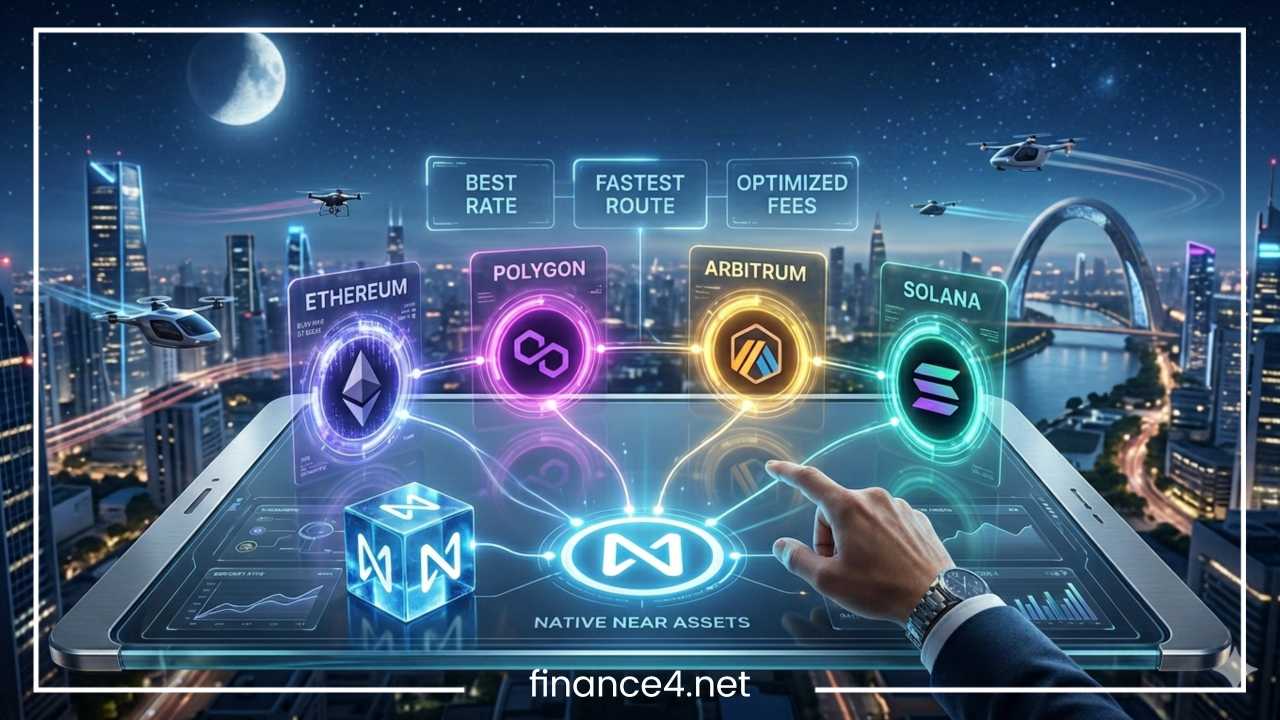
However, the proliferation of bridges has created a new problem for users: choice overload. Each bridge has different fees, speeds, supported chains, and security models. Navigating this fragmented landscape to find the optimal route is a complex and time-consuming task. This is the problem that a bridging aggregator solves. It acts as an orchestrator, connecting to multiple underlying bridges and liquidity networks. When a user requests to bridge an NFT, the aggregator’s smart routing engine analyzes all possible paths, providing the user with the best options based on their priorities, whether it’s the fastest route, the cheapest one, or the most secure.
The significance of interoperability in the NFT ecosystem cannot be overstated. Without it, NFTs are trapped in isolated islands of liquidity. An NFT minted on Ethereum might have a thriving community and high trading volume, but its utility could be severely limited if it’s needed for a game or application on a different chain with cheaper transactions and better scalability. Bridging aggregators are the key to unlocking this potential, creating a more cohesive and efficient ecosystem for creators, collectors, and builders.
Why NFT Bridging Matters in 2025
The relevance of NFT bridging has grown exponentially, fueled by several key trends in 2025. The first and most obvious is the continued growth and diversification of multichain ecosystems. While Ethereum remains the dominant force, networks like Polygon, Arbitrum, Solana, and Base have carved out significant niches. This has led to a natural distribution of NFT collections across different chains, often driven by factors like lower gas fees on L2s or the high transaction throughput of a chain like Solana.
Second, the rise of multichain NFT marketplaces like Magic Eden and Blur has made cross-chain trading a common user behavior. These platforms aggregate liquidity from various networks, but to truly participate, users need a seamless way to move their assets. Instead of being an edge case, bridging has become a fundamental user requirement for interacting with these marketplaces.
Furthermore, user demand for gas efficiency, speed, and liquidity is a primary driver. Ethereum’s high gas fees can make simple transactions, like minting or trading an NFT, prohibitively expensive for many. Bridging an NFT to a more affordable chain allows users to bypass these costs while still maintaining a connection to the primary liquidity of the mainnet. This has created a new class of arbitrage opportunities and a more dynamic market where NFTs can be traded where it’s most efficient.
Finally, specific NFT use cases are demanding interoperability. Blockchain gaming is a prime example. An in-game item, represented as an NFT, might be minted on a high-speed gaming-focused chain but needs to be bridged to Ethereum to be sold on a major marketplace. Similarly, metaverse assets and digital collectibles require the ability to move across platforms and virtual worlds, many of which are built on different blockchains. Bridging aggregators enable this kind of fluid, cross-chain utility, making them indispensable infrastructure for the future of Web3.
How NFT Bridging Aggregators Work
At its core, an NFT bridging aggregator is a sophisticated routing engine that operates on top of existing cross-chain bridges. Its architecture can be thought of as a two-layer system: the user-facing interface and the backend routing logic. When a user initiates a request to bridge an NFT, the aggregator doesn’t handle the transfer itself; instead, it queries and interacts with multiple underlying bridge protocols to identify the most suitable path.
The basic architecture involves several steps:
- Request Initiation: A user connects their wallet and selects an NFT to bridge, along with the source and destination chains.
- Route Discovery: The aggregator’s engine scans its integrated bridges and liquidity sources. It checks for supported chains, available liquidity, and real-time network conditions.
- Route Simulation & Analysis: The engine simulates potential routes through different bridges. It calculates the total cost (gas fees, bridge fees), estimated time, and potential risks for each option. Some aggregators may even split a transaction across multiple bridges for better efficiency.
- User Selection: The aggregator presents the user with a list of viable routes, often ranked by speed or cost, allowing the user to make an informed choice.
- Transaction Execution: Once a route is selected, the aggregator initiates the process, executing a series of smart contract calls to the chosen bridge.
The security models of these aggregators are a critical consideration. Most operate on a non-custodial basis, meaning the user’s funds and NFTs are never held by the aggregator itself. The aggregator simply orchestrates the transactions between the user’s wallet and the smart contracts of the chosen bridges. This design minimizes the risk of a single point of failure and reduces the potential for a large-scale hack. The security of the aggregator is therefore highly dependent on the security of the underlying bridges it integrates with.
An important benefit of aggregators is gas optimization and user UX. By abstracting the complexity of finding the best route, aggregators reduce the cognitive load for the user. They also often offer a “one-click” experience, where a single transaction signature can trigger the entire bridging process, even if it involves multiple steps across different protocols. This simplifies what would otherwise be a multi-step, technically challenging process for the average user, making cross-chain movement as straightforward as a single-chain swap.
Key Features to Look for in a Top NFT Bridging Aggregator
Choosing the right aggregator requires a careful look at several key features that dictate its performance, security, and utility.
- Chain Coverage (EVM & non-EVM chains): A top aggregator must support a wide range of blockchains, including the dominant Ethereum Virtual Machine (EVM) compatible chains (e.g., Polygon, Arbitrum, Optimism) as well as non-EVM chains like Solana, Cosmos, and Starknet. Broad coverage ensures that users can move their NFTs to where they’re most needed.
- Security Audits and Bridge Insurance: This is arguably the most critical factor. Aggregators should have a track record of successful, independent security audits. Additionally, some platforms are beginning to offer bridge insurance, which provides a layer of protection against potential exploits of the underlying bridges.
- Speed and Gas Efficiency: The aggregator’s smart routing engine should consistently identify the fastest and cheapest routes. This includes looking for opportunities to batch transactions and take advantage of off-peak network times to minimize gas fees.
- NFT Metadata and Ownership Preservation: A key technical challenge in NFT bridging is ensuring that the token’s metadata (e.g., image, traits, creator information) remains intact and verifiable on the destination chain. A robust aggregator ensures that the ownership and integrity of the NFT are preserved throughout the entire process.
- Integration with NFT Marketplaces: Seamless integration with major multichain marketplaces like Blur and Magic Eden is a huge plus. This allows users to initiate a bridge transaction directly from within the marketplace, streamlining the process of buying, selling, or listing a cross-chain NFT.
- User Interface and Developer APIs: A clean, intuitive user interface is crucial for a smooth user experience. For developers, a well-documented and robust API or SDK is vital for building cross-chain applications and services on top of the aggregator.
Top NFT Bridging Aggregators in 2025
The landscape of NFT bridging aggregators is dynamic, with new players and features emerging constantly. Here are five of the top players in 2025, each with a unique value proposition.
1. LI.FI
Overview and Founding Background: LI.FI is a leading bridge and DEX aggregator that has established itself as a key piece of Web3 infrastructure. Its focus is on providing a comprehensive, one-stop solution for developers and users to move assets and data across chains. LI.FI’s core product is its SDK, which allows dApps to easily integrate cross-chain functionality.
Supported Chains and Bridges: LI.FI boasts one of the most extensive lists of supported chains, including major EVM networks, Solana, and Cosmos chains. It aggregates dozens of bridges and DEXes, including top-tier protocols like Celer, Connext, and Stargate.
Unique Features: LI.FI’s primary strength is its developer-first approach. Its SDK and APIs make it simple for projects to add complex cross-chain routing directly into their applications. For NFTs, LI.FI’s technology ensures that the specific metadata and ownership structure of the token are correctly mapped across chains.
Security/Audit Status: LI.FI is non-custodial and has been audited by multiple reputable firms. It relies on the security of its integrated bridges and provides a risk-scoring system to help users choose the most secure routes.
Pros & Cons:
- Pros: Very broad chain and bridge coverage, excellent developer tools, robust routing engine.
- Cons: Can be complex for a first-time user without the context of a dApp widget, as the UI can present many options.
2. Rango Exchange
Overview and Founding Background: Rango Exchange is a cross-chain aggregator that prides itself on being a truly “anything-to-anything” protocol. It aggregates a vast network of bridges, DEXes, and even centralized exchanges to find the best route for any asset, including NFTs, across a wide range of blockchains.
Supported Chains and Bridges: Rango supports over 75 blockchains, including EVM, Cosmos, and UTXO-based chains like Bitcoin. It integrates with more than 130 bridges and DEX aggregators, such as Wormhole, Socket, and LI.FI itself, creating a multi-layered aggregation model.
Unique Features: Rango’s routing system is highly advanced, able to combine multiple protocols in a single route. For example, it might route a transaction from a DEX on one chain, through a bridge, and then to another DEX on the destination chain to optimize for price or speed. It’s also one of the few aggregators that handles swaps involving UTXO chains.
Security/Audit Status: Rango has a non-custodial architecture and has undergone multiple security audits. Its history of zero exploits since its inception is a strong testament to its security.
Pros & Cons:
- Pros: Unmatched chain coverage, highly optimized routing, robust security track record.
- Cons: The vast number of options can be overwhelming for new users, though the interface is generally clean.
3. Socket (Bungee)
Overview and Founding Background: Socket, formerly known as Bungee, is a modular interoperability protocol that focuses on enabling seamless asset and data transfers. It operates as a bridge aggregator and a developer toolkit, providing a powerful API for projects to build cross-chain dApps.
Supported Chains and Bridges: Socket supports a wide array of EVM-compatible networks. Its strength lies in its deep integration with Layer 2 solutions. It aggregates protocols like Connext, Hop, and across.
Unique Features: Socket’s “multi-tx” feature allows for complex cross-chain operations in a single transaction, greatly simplifying the user experience. Its modular design is also a key differentiator, allowing developers to pick and choose the specific components they need to build their applications.
Security/Audit Status: While Socket has a strong security focus, the protocol did experience a security exploit in early 2024, highlighting the inherent risks of even the most secure protocols. However, the Bungee front-end promptly addressed the issue and implemented additional security measures, and the design limited the impact of the exploit, as it did not request approvals by default.
Pros & Cons:
- Pros: Excellent user experience, a focus on Layer 2s, and strong developer tools.
- Cons: A past security incident may be a concern for some users, although the team has since fortified the protocol.
4. deBridge
Overview and Founding Background: deBridge is a cross-chain interoperability and messaging protocol designed for high-speed, secure value transfer. Unlike many protocols that rely on wrapped tokens and pooled liquidity, deBridge takes a different approach with its 0-TVL (Total Value Locked) architecture.
Supported Chains and Bridges: deBridge has extensive support for both EVM and non-EVM chains, with a strong focus on bridging between Ethereum and Solana.
Unique Features: The most significant feature of deBridge is its 0-TVL architecture. Instead of locking assets in a vulnerable smart contract, it uses a network of validators to relay messages and proofs between chains, allowing for a native-to-native asset transfer. This eliminates the risk of pooled liquidity hacks, a common attack vector in the crypto space. It also offers “instant finality,” with assets arriving in the destination wallet within seconds, even before a block is finalized on the origin chain.
Security/Audit Status: deBridge has an exceptional security track record, with over 27 audits and a history of zero security incidents. Its 0-TVL model is a fundamental security advantage.
Pros & Cons:
- Pros: Unparalleled security due to its 0-TVL model, blazingly fast transaction times, and native asset transfers.
- Cons: Can be more complex for developers to integrate with than other aggregators.
5. XY Finance
Overview and Founding Background: XY Finance is a cross-chain interoperability protocol and aggregator that offers a one-stop-shop for cross-chain swaps, bridges, and NFT transfers. It has built a reputation for its user-friendly interface and comprehensive support for a wide range of assets.
Supported Chains and Bridges: XY Finance supports more than 27 chains, including major EVM networks and non-EVM chains. It aggregates a number of bridges and DEXes to provide optimized routes.
Unique Features: XY Finance offers a dedicated xAsset bridge for NFTs, which is custom-made for the specific requirements of non-fungible tokens. It ensures that metadata and ownership are properly preserved. The platform also has a clean, user-friendly interface that makes it easy for even beginners to bridge assets.
Security/Audit Status: XY Finance has undergone multiple audits and has a good security record. It has a non-custodial design, meaning users retain control of their assets.
Pros & Cons:
- Pros: Very user-friendly, dedicated NFT bridge, strong chain coverage.
- Cons: The routing engine, while good, may not be as optimized as some of the more technically complex aggregators like Rango.
Emerging Players to Watch
The field of interoperability is continuously evolving, with new projects exploring innovative architectures. Keep an eye on new or experimental projects leveraging zero-knowledge proofs (ZKPs) to build more trust-minimized bridging layers. ZKPs can verify the state of one blockchain without revealing sensitive information, offering a powerful new primitive for secure, private cross-chain communication. Projects building on intent-based architectures are also worth watching. These platforms allow users to simply state their “intent” (e.g., “I want to bridge this NFT from Ethereum to Solana”), and the protocol handles all the complex, behind-the-scenes routing to fulfill that intent, abstracting away all the technical details.
Security Considerations & Risks of NFT Bridging
Despite the advancements in bridging technology, the security of cross-chain infrastructure remains the single most significant risk in Web3. The history of major bridge exploits, such as the $625 million Ronin Network hack, serves as a stark reminder of the vulnerabilities inherent in these protocols.
Common risks include:
- Smart Contract Vulnerabilities: Bridges rely on complex smart contracts, which can have bugs or flaws that are exploited by attackers to drain locked funds.
- Centralized Points of Failure: Many bridges rely on a small set of validators or multisig wallets, creating a single point of failure that can be compromised.
- Metadata Loss or Manipulation: When bridging an NFT, there’s a risk that the metadata, which defines the token’s uniqueness, could be lost, corrupted, or even maliciously altered.
- Liquidity Pool Exploits: Bridges that rely on pooled liquidity can be vulnerable to exploits that drain the pools, leading to a de-pegging of the wrapped tokens.
Bridging aggregators, while not directly holding user funds, must have robust mechanisms to mitigate these risks. This includes integrating only with bridges that have a strong security track record and have been rigorously audited. Many aggregators now provide a “risk score” for each route, helping users to make an informed decision. They also incorporate features like fallback routes to ensure a transaction can be rerouted if a primary bridge fails.
Future of NFT Bridging Aggregators
The future of NFT bridging will likely be defined by a movement towards seamless, abstracted, and highly secure interoperability. Key developments will include:
- Role of Cross-Chain Standards: The adoption of standardized messaging protocols like LayerZero and Chainlink CCIP will be crucial. These protocols provide a common language for blockchains to communicate, making it easier for new networks to connect and for developers to build truly “omnichain” applications. The ERC-5169 standard for cross-chain token transfers is a significant step in this direction, defining a standardized way to handle transfers.
- Interoperable Metaverses & Gaming Ecosystems: The growth of gaming and metaverse projects built on different chains will drive the demand for seamless bridging. Players will expect to move their in-game assets and characters across virtual worlds without friction.
- Potential for Abstracted Cross-Chain UX: The ultimate goal is to make the underlying blockchain invisible to the user. Future aggregators will not just be a front-end; they will be the core infrastructure layer that allows dApps to operate seamlessly across chains. A user might interact with a dApp on Solana, and the protocol automatically fetches an NFT from Ethereum, bridges it to Solana, and uses it in a single, abstracted transaction.
Final Thoughts
NFT bridging aggregators are not just a convenience; they are a necessary evolution for a fragmented Web3 landscape. They simplify the complex process of moving digital assets across chains, unlocking liquidity, and enabling new use cases in gaming, collectibles, and beyond. However, as with all things in Web3, the user must remain vigilant. Do Your Own Research (DYOR) is key. Understand the security model of the aggregator and its underlying bridges. The future of NFT ownership is inherently multichain, and bridging aggregators are the essential navigational tools for this new, interconnected world.