Top NFT Aggregator for AI-Generated Art
 by
by 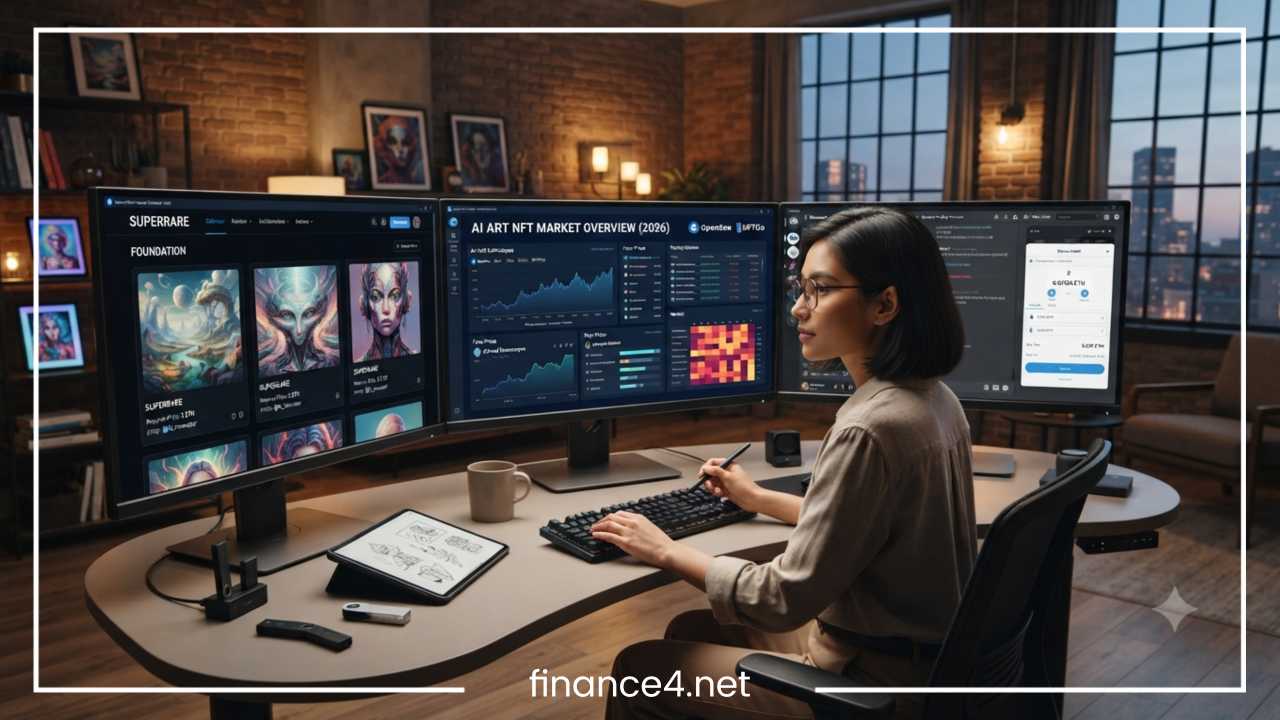
Top NFT Aggregator for AI-Generated Art | Discover & Trade
The convergence of artificial intelligence and blockchain technology has sparked a major renaissance in the digital art world. As generative models and neural networks empower creators to transcend traditional artistic boundaries, AI-generated NFT art has transformed from a niche subculture into a highly sought-after asset class for modern NFT collectors. Today, machine learning models like Stable Diffusion, Midjourney, and specialized Generative Adversarial Networks (GANs) are utilized by prominent creators to produce complex, visually striking, and conceptually deep digital art NFTs.
However, as the popularity of this medium grows, the market has fragmented across dozens of decentralized marketplaces. An AI artist might list their collection on an Ethereum-based curated platform, while another launches a generative series on Solana or Bitcoin Ordinals. For collectors attempting to discover AI NFTs, track historical floor prices, and buy AI NFTs efficiently, jumping between isolated storefronts is inefficient and costly.
This is where the specialized NFT aggregator for AI-generated art becomes indispensable. By consolidating data, listings, and liquidity from multiple decentralized networks into a unified dashboard, an NFT trading platform built on aggregation mechanics allows users to discover, evaluate, and trade AI-generated art with unprecedented ease.
What Is an NFT Aggregator?
To navigate the expanding ecosystem of digital collectibles, it is essential to understand the structural layout of Web3 trading. At its core, an NFT aggregator is a platform that compiles listings, pricing data, and transaction histories from numerous underlying marketplaces into a single, cohesive user interface. Rather than acting as a standalone marketplace that hosts its own exclusive smart contracts for listings, an aggregator acts as a search engine and fulfillment protocol layered over the entire Web3 ecosystem.
The core difference between a standard NFT marketplace and an NFT aggregator lies in liquidity and choice. When you visit a single marketplace, you only see the assets listed directly on that specific platform. If a particular AI-generated artwork is listed on an alternative platform for a lower price, you would miss it. An aggregator solves this problem by using advanced API routing to crawl the entire blockchain network, pulling active order books from every major marketplace simultaneously.
When a user purchases an asset through an aggregator, the platform utilizes smart contract routing to execute the transaction across whichever marketplace hosts the listing. For collectors of AI art NFTs, this means access to a unified pool of liquidity, comprehensive historical charting, and multi-marketplace price discovery without the friction of maintaining dozens of browser tabs or managing fragmented search terms.
Why AI-Generated Art Is Becoming a Major NFT Category
The explosion of generative AI art within the blockchain ecosystem is rooted in a natural technological synergy. Both artificial intelligence and blockchain technology depend on algorithms, computational execution, and digital-native environments. The rise of sophisticated AI image generators has lowered the technical barriers to complex visual production while elevating the importance of conceptual prompt engineering and algorithmic curating.
There is an important distinction to make between traditional generative art and AI-generated art. Traditional generative art typically relies on human-written code, scripts, and mathematical constraints (such as those built using p5.js) to generate geometric or abstract patterns directly on the blockchain. AI-generated art, by contrast, leverages deep learning models trained on massive datasets. The artist interacts with the model through prompts, iterative seed modifications, in-painting, and training custom model weights (LoRAs), resulting in highly complex, painterly, photorealistic, or surrealistic outputs that reflect a collaboration between human intent and machine synthesis.
For NFT collectors, the appeal of AI artist NFTs is tied directly to the concepts of ownership and provenance. Because an AI model can technically generate an infinite number of variations, the blockchain provides the crucial architecture needed to establish digital scarcity. By minting a specific output as an NFT, the creator cements its place in time, proving its authenticity and establishing an immutable record of ownership. This ensures that even if an image is replicated across the internet, the official, tokenized masterwork remains verifiable, singular, and tradeable.
Why Use an NFT Aggregator for AI-Generated Art?
Navigating the fast-moving landscape of AI-generated NFT art requires tools that maximize efficiency while minimizing transactional overhead. Utilizing a dedicated NFT aggregator for AI-generated art provides distinct operational advantages over standard marketplaces.
Better Discovery
Because AI art collections are distributed across a wide array of niche and mainstream platforms, finding a specific piece or discovering emerging AI artist NFTs can be incredibly difficult. An aggregator acts as a cross-market search index. It enables collectors to find AI art across many marketplaces simultaneously using comprehensive text searches, metadata filtering, and creator wallet tracking, ensuring that hidden gems are never overlooked.
Lower Prices
Prices for the same NFT can occasionally vary across different marketplaces due to differing platform fees, localized bidding wars, or outdated listings. An aggregator updates order books in real time, allowing collectors to compare listings instantly and purchase the asset from the specific marketplace offering the lowest true cost.
Time Savings
Manually searching through individual platforms to monitor the floor price of a specific AI art collection is incredibly time-consuming. An aggregator removes this administrative burden by gathering all relevant transaction data into a single screen, eliminating the need to browse multiple sites to execute a single trade.
Portfolio Management
Active collectors often own assets spread across various smart contracts and platforms. A robust aggregator provides a centralized portfolio dashboard where users can view their entire collection, analyze the real-time valuation of their AI NFTs, monitor offers received across different marketplaces, and manage their listings from one interface.
Better Liquidity
By pooling together the buyers and sellers of numerous platforms, aggregators tap into a much deeper liquidity reserve. This depth reduces slippage, allows for faster execution of trades, and creates a more efficient market environment for both high-end digital art NFTs and large-scale generative editions.
Key Features to Look for in an NFT Aggregator
When selecting the best NFT aggregator to discover and trade AI-generated art, collectors should evaluate platforms based on a specific set of technical features tailored to high-velocity and analytical trading.
-
Multi-market aggregation: The platform must aggregate data from all leading marketplaces, ensuring that no liquidity pools or active listings are excluded from the search queries.
-
AI art filters: Advanced tagging and filtering options that allow users to isolate AI-generated collections, filter by specific generative models, or sort by computational attributes.
-
Wallet integration: Native support for multiple browser wallets, hardware wallets, and institutional custody solutions to ensure secure and seamless connectivity.
-
Cross-chain support: The ability to browse and trade across multiple layer-1 and layer-2 blockchains from a unified interface, reflecting the multi-chain nature of modern AI art.
-
Bulk purchasing: A critical feature that allows collectors to “sweep the floor” or buy multiple AI NFTs across different marketplaces in a single blockchain transaction, significantly saving on network transaction costs.
-
Real-time price updates: Sub-second latency in updating price changes, new listings, and cancellations to give traders a competitive edge.
-
Collection analytics: Granular charts detailing historical floor price movements, volume distribution, listing depth, and holder retention rates.
-
Creator verification: Visual badges and smart contract verification tools that distinguish official AI artist NFTs from copycats or fraudulent reproductions.
-
Rare trait search: The capability to filter AI artwork based on rare metadata tags, prompt styles, color palettes, or generative iterations.
-
Gas optimization: Smart routing contracts engineered to minimize computational overhead on the blockchain, leading to lower gas fees during checkout.
Top NFT Aggregators for AI-Generated Art
Selecting the right NFT trading platform depends significantly on your technical requirements, blockchain preferences, and the specific style of AI art you wish to collect. Below is an in-depth analysis of the leading aggregators dominating the Web3 space.
Blur
Blur has established itself as a premier destination for pro traders and volume-focused collectors. Engineered specifically for speed and market depth, it operates primarily on the Ethereum blockchain, hosting a massive percentage of overall trading volume.
For collectors of AI art, Blur provides incredibly fast data feeds and an optimized interface designed for sweeping collections. Its real-time charts, depth visualizations, and instant listing updates make it highly effective for tracking high-volume AI art drops and secondary market movements.
-
Pros: Zero platform fees; incredibly fast data replication; highly advanced analytical tools; advanced bulk sweeping capabilities.
-
Cons: The interface can be overwhelming for casual collectors; primarily focused on Ethereum, leaving out alternative chains.
-
Best for: Professional traders and high-volume collectors looking to execute rapid sweeps of top-tier AI art collections.
OpenSea
While traditionally known as a native marketplace, OpenSea has integrated advanced aggregation mechanics directly into its core architecture, allowing users to view listings from a multitude of external platforms alongside its own order book.
OpenSea remains one of the largest hubs for discovering AI-generated NFT art due to its immense user base and historical significance. Its comprehensive search functionality and robust verification infrastructure make it an accessible entry point for discovering verified AI art NFTs.
-
Pros: Highly intuitive, user-friendly interface; extensive historical data for legacy collections; strong emphasis on creator safety and verification.
-
Cons: Platform fees can be higher than pro-focused aggregators; aggregation features can occasionally lag behind pure-play aggregators during high network traffic.
-
Best for: Casual collectors and newcomers who prioritize curation, ease of use, and verified creator profiles.
Magic Eden
Magic Eden began as the dominant marketplace on Solana but has since evolved into a powerful multi-chain aggregator supporting Ethereum, Polygon, Bitcoin, and Base.
Because many AI artists prefer Solana and layer-2 solutions due to their near-instant transaction finality and minimal fees, Magic Eden has become a vital cross-chain NFT aggregator for digital art NFTs. Its clean user interface makes switching between ecosystems simple, allowing collectors to track diverse portfolios easily.
-
Pros: Exceptional multi-chain integration; very strong presence in the Solana and Bitcoin Ordinals ecosystems; highly active community rewards program.
-
Cons: Analytical tools are less granular compared to platforms like Blur; interface can feel cluttered due to the massive volume of multi-chain assets.
-
Best for: Cross-chain collectors who want a unified hub for discovering AI art across multiple separate blockchains.
Gem (OpenSea Pro)
Originally launched as Gem and subsequently acquired and rebranded by OpenSea, this platform serves as an advanced trading engine designed to aggregate deep liquidity across the entire EVM (Ethereum Virtual Machine) ecosystem.
Gem provides detailed statistical analytics, gas-optimized routing smart contracts, and a highly customizable interface. For AI art enthusiasts, it represents an ideal middle ground between the hyper-technical environment of Blur and the extensive database of OpenSea, offering clean visuals alongside professional-grade tools.
-
Pros: Excellent gas optimization routines; clear visualization of rarity and trait distributions; reliable multi-marketplace routing.
-
Cons: Limited native support for non-EVM chains like Solana or Bitcoin; feature rollouts can occasionally tie closely to OpenSea corporate updates.
-
Best for: Analytical collectors who require deep data insights and optimized transaction routing within the Ethereum ecosystem.
Tensor
Tensor is the leading pro-level aggregator built natively for the Solana blockchain. It functions much like Blur does for Ethereum, offering trading charts, real-time order books, and advanced financial tooling for Solana-based digital assets.
Given that Solana hosts an active community of generative AI creators due to its cost-efficiency, Tensor is a foundational platform for finding affordable AI art NFTs. Its aggressive optimization allows users to monitor fast-moving mints and secondary trading activity with minimal latency.
-
Pros: Unmatched speed on the Solana network; deeply integrated AMM (Automated Market Maker) features; comprehensive reward tiers for active traders.
-
Cons: Completely restricted to the Solana ecosystem; steep learning curve for users unfamiliar with professional trading terminals.
-
Best for: Dedicated Solana collectors focused on day-trading or deeply analyzing generative AI collections with high turnover rates.
Rarible
Rarible operates as a decentralized marketplace protocol that aggregates listings from major competitor platforms while keeping a strong focus on community governance and decentralized architecture.
Rarible has historically championed creator rights, making it a favorite for independent AI artists who value customizable royalty enforcement. Its aggregation toolset allows collectors to view broad market listings while interacting with a protocol that actively defends artist monetization.
-
Pros: Deep commitment to multi-chain expansion; robust support for flexible creator royalties; decentralized governance framework.
-
Cons: Lower overall native volume compared to top-tier competitors; aggregation routing can occasionally be slower to update.
-
Best for: Mission-driven collectors who prioritize supporting creators and engaging with decentralized Web3 protocols.
OKX NFT Marketplace
The OKX NFT Marketplace is a highly integrated, multi-chain aggregator embedded within a broader Web3 ecosystem. It provides comprehensive aggregation across dozens of unique blockchains, including obscure layer-1 and layer-2 scaling solutions.
For AI art collectors seeking exposure to international markets and multi-chain ecosystems, OKX offers an extensive aggregate database. The platform requires no extra accounts if you use their decentralized wallet system, simplifying cross-chain exploration.
-
Pros: Massive selection of supported blockchains; zero platform trading fees; seamless integration with a powerful Web3 wallet.
-
Cons: Desktop interface can feel secondary to mobile app optimization; discovery filters for specific art sub-genres are less developed.
-
Best for: Mobile-first users and international collectors trading across highly diversified blockchain networks.
Unisat
Unisat is a specialized wallet and marketplace infrastructure built specifically for the Bitcoin blockchain, focusing heavily on Ordinals and BRC-20 inscriptions.
As digital art creators increasingly turn to Bitcoin Ordinals to achieve ultimate permanence (inscribing the artwork’s raw data directly on-chain rather than linking to external storage), Unisat acts as a crucial lookup index and aggregation hub for Bitcoin-native AI artwork.
-
Pros: Pioneer in Bitcoin Ordinals infrastructure; clean interface for inspecting raw on-chain data; high reliability on the Bitcoin network.
-
Cons: Restricted strictly to Bitcoin; network transaction speeds are bound by Bitcoin block times, which are slower than alternative chains.
-
Best for: Hardcore preservationists and collectors interested in high-value, permanently inscribed AI artwork on Bitcoin.
Comparison Table
| Aggregator | Chains | AI Art Support | Fees | Wallet Support | Best For |
| Blur | Ethereum | High (High Volume) | 0% | MetaMask, WalletConnect, Ledger | Professional High-Volume Traders |
| OpenSea | Multi-chain (EVM) | Comprehensive | Varies | Wide Range (Native + Web3) | Newcomers and Curation Focus |
| Magic Eden | Solana, ETH, Bitcoin | High (Multi-chain) | Varies | Phantom, MetaMask, Xverse | Cross-Chain Ecosystem Traders |
| Gem (OpenSea Pro) | Ethereum, L2s | High (Analytical) | 0% | MetaMask, Coinbase Wallet | Intermediate Data-Driven Collectors |
| Tensor | Solana | High (Solana Native) | 0% to 1% | Phantom, Solflare, Backpack | Solana-Focused Pro Traders |
| Rarible | Multi-chain | Moderate | Varies | MetaMask, Rainbow, Torus | Creator-Centric & Governance Collectors |
| OKX NFT Marketplace | Multi-chain (40+) | Moderate | 0% | OKX Wallet, MetaMask | Mobile-First Multi-Chain Explorers |
| Unisat | Bitcoin | Specialized | Varies | Unisat Wallet, Xverse | On-Chain Bitcoin Ordinals Purists |
How to Buy AI-Generated Art Using an NFT Aggregator
Purchasing digital art through an aggregator is a straightforward process, but it requires careful attention to detail regarding wallet configuration and network settings. Follow this step-by-step framework to execute your trades safely.
-
Choose a wallet: Select a secure digital wallet compatible with your chosen blockchain. For Ethereum and EVM-based networks, MetaMask or Rabby are industry standards. For Solana-based AI art, Phantom is widely recommended, while Unisat or Xverse are required for Bitcoin Ordinals.
-
Fund wallet: Purchase the native cryptocurrency of the network (such as ETH or SOL) through a trusted exchange and transfer it securely to your self-custody wallet address. Always ensure you keep extra funds to cover blockchain network gas fees.
-
Connect to aggregator: Navigate to your chosen NFT aggregator platform and select the option to connect your wallet. Approve the connection prompt within your wallet interface, ensuring you verify the platform’s official URL.
-
Search AI collections: Use the aggregator’s search architecture or navigation filters to look for generative AI art, specific artist names, or known collection smart contracts.
-
Compare prices: Analyze the listed items across the aggregated view. The platform will display which underlying marketplace hosts each listing, allowing you to select the option that offers the best value.
-
Verify creator: Before proceeding to checkout, check the collection’s verification status, historical trading volume, smart contract addresses, and links to official social profiles to confirm authenticity.
-
Buy NFT: Click the purchase button. If you are buying multiple assets, use the platform’s bulk sweeping basket feature. Review the estimated gas or network fees, then click confirm.
-
Store securely: Once the blockchain processes the transaction, the aggregator will route the asset directly to your connected wallet. Verify its presence in your portfolio dashboard and consider moving high-value assets to an offline hardware wallet for long-term storage.
Tips for Finding Valuable AI Art NFTs
The subjective nature of art combined with the volatility of digital asset markets means that finding truly valuable AI art NFTs requires a rigorous, analytical approach to research.
-
Verify creator profiles: Always cross-reference the NFT collection with the artist’s official website and social media handles. Authentic AI artists are transparent about their creative processes, model architectures, and project concepts.
-
Analyze collection history: Examine historical data trends rather than focusing solely on current listings. Look for stable floor price progression, steady volume distribution, and a healthy ratio of unique asset holders relative to the total supply.
-
Monitor trading volume: Consistent trading volume indicates a healthy, liquid secondary market. Beware of sudden, isolated spikes in volume followed by long periods of complete inactivity, which can indicate artificial market inflation.
-
Assess community activity: Evaluate the depth of the community surrounding the creator. Look for active, intellectually engaged discussions on Discord, X, and specialized art forums rather than superficial hype driven entirely by financial speculation.
-
Understand the technical utility: Some AI art collections grant holders exclusive access to proprietary AI generation tools, future mint whitelists, physical gallery print redemptions, or governance rights within digital art collectives.
-
Investigate royalty compliance: Look at whether the aggregator honors creator-set royalties. Supporting platforms that protect artist compensation helps ensure the long-term sustainability and growth of the creator’s career.
-
Confirm authenticity and provenance: Use reverse image lookup tools and analyze smart contract deployment dates to verify that the artwork is an original creation rather than a plagiarized copy of someone else’s algorithmic work.
-
Evaluate algorithmic rarity: In large-scale generative AI series, certain visual traits, text prompt outputs, or model seed characteristics are rarer than others. Use the aggregator’s trait sorting tools to identify undervalued pieces with rare features.
Risks of Buying AI-Generated Art NFTs
While the market for AI art NFTs offers incredible creative and financial opportunities, collectors must remain aware of several unique structural and legal risks.
-
Copyright concerns: The legal landscape surrounding AI training datasets remains complex. If a model was trained on copyrighted material without consent, subsequent commercialization via NFTs can face intellectual property disputes or takedown notices.
-
Fake collections: Due to the ease of generating digital images via AI, malicious actors frequently spin up low-effort, plagiarized collections or copy popular projects, listing them on unverified marketplaces to catch unsuspecting buyers.
-
Wash trading: Some illiquid collections suffer from wash trading, where a small group of wallets repeatedly buy and sell the same artwork among themselves to create an illusion of high demand and artificial value.
-
Market volatility: Digital art assets are highly speculative and subject to extreme, sudden price fluctuations driven by shifting trends, broader crypto market movements, and collector sentiment.
-
Smart contract risks: Interacting with aggregators involves trusting the integrity of their underlying smart contracts. If a vulnerability exists within the routing code or a connected marketplace, user funds can be exposed to security exploits.
-
Liquidity issues: Unlike fungible tokens, individual pieces of art can be highly illiquid. It can take days, weeks, or even months to find an interested buyer on the secondary market if you need to liquidate your position quickly.
-
Gas fees: During periods of extreme network congestion, the cost to execute smart contracts on layer-1 blockchains like Ethereum can spike dramatically, sometimes rivaling or exceeding the value of the artwork being traded.
Best Wallets for AI Art NFT Trading
To interact smoothly with an NFT aggregator for AI-generated art, you must deploy a reliable, feature-rich Web3 wallet that balances advanced security with convenient interface management.
-
MetaMask: The most widely adopted software wallet in existence, acting as the baseline standard for EVM networks. It offers native hardware wallet integration and comprehensive settings for manually adjusting gas fees.
-
Phantom: Originally designed for Solana, Phantom has expanded to offer native, side-by-side support for Ethereum and Bitcoin. It is highly praised for its excellent asset visualization, automatically showing your digital art NFTs cleanly inside the application.
-
Rabby: A security-first wallet designed specifically for power users interacting with decentralized applications (dApps). It simulates transactions before you sign them, warning you of potential smart contract vulnerabilities or malicious fishing links.
-
Coinbase Wallet: A highly accessible, self-custody wallet that links easily with mainstream exchange infrastructure. It provides a straightforward onboarding process for beginners while maintaining robust cross-chain connectivity.
-
Trust Wallet: A versatile mobile-first wallet option that supports an extensive list of separate blockchains, making it well-suited for collectors who prefer managing their digital art portfolio directly from mobile devices.
Future of AI-Generated Art and NFT Aggregators
The evolution of algorithmic art and blockchain architecture points toward a deeper integration of these two technological fields. As artificial intelligence models become increasingly sophisticated, we can anticipate a move toward dynamic NFTs. These are tokenized artworks that change their visual states in real time by reacting to external oracle data, on-chain transactions, or environmental factors, redefining what it means to own a piece of living digital art.
At the same time, NFT aggregators will continue to evolve past basic search indexers. Future platforms will likely feature embedded AI-powered recommendation engines that analyze your existing collection, trading history, and aesthetic preferences to surface highly personalized art discoveries. Cross-chain aggregation will become completely frictionless, utilizing advanced cross-chain messaging protocols to allow a collector to purchase a Solana AI NFT using funds held on an Ethereum layer-2 without manually bridging assets.
As fractional ownership protocols mature, high-value, museum-tier AI masterpieces will become accessible to broader audiences through tokenized fractional shares. Combined with automated systems that enforce creator royalties across all aggregate nodes, the next generation of Web3 platforms will provide a more equitable, deeply liquid, and highly connected space for artists and collectors alike.
Final Thoughts
The rise of artificial intelligence as a creative medium has permanently altered the landscape of digital expression, turning algorithmic concepts into valuable digital collectibles. Navigating this vast, rapidly diversifying ecosystem requires advanced tools capable of breaking down market barriers and gathering fragmented data. An NFT aggregator for AI-generated art serves as an essential component of modern collecting, offering a single interface to discover, track, and trade assets across the entire Web3 space.
Whether your priority is finding the absolute lowest price through real-time comparisons, managing a diverse multi-chain portfolio, or sweeping generative collections instantly, utilizing a dedicated aggregator enhances your trading efficiency while saving valuable time and capital. By combining robust analytical research with optimized trading protocols, collectors can safely engage with this historic creative movement, supporting visionary AI artists while systematically building their digital art portfolios.
Frequently Asked Questions
What is the best NFT aggregator for AI-generated art with low gas fees?
The best platform depends on your target blockchain. For Ethereum and its Layer-2 networks (like Base or Arbitrum), Blur and Gem (OpenSea Pro) offer highly optimized smart contracts that dramatically reduce gas fees when bulk-purchasing or sweeping collections. If your primary goal is to completely minimize transaction costs, using a Solana-focused aggregator like Tensor or a multi-chain platform like Magic Eden allows you to discover and trade AI art NFTs with near-zero gas overhead.
How do I verify the authenticity of an AI artist NFT collection?
To avoid fraudulent copies or unauthorized mints, always use an aggregator’s built-in creator verification tools to look for an official verification badge. Additionally, cross-reference the smart contract address listed on the aggregator with the links provided on the AI artist’s official website, verified social media channels, or art portfolio. Examining the transaction provenance on the blockchain scanner (like Etherscan or Solscan) to ensure the collection originated from the creator’s known public wallet address is the most definitive step.
Can you buy AI art NFTs across different blockchains using one wallet?
Yes, using a modern cross-chain NFT aggregator makes this possible, but you will need a multi-chain enabled wallet. Wallets like Phantom and Rabby allow you to hold assets and view digital art NFTs from Ethereum, Solana, and Bitcoin simultaneously. Multi-chain aggregators like Magic Eden let you browse these networks from a single dashboard, though you will still need to hold the specific native cryptocurrency (such as ETH or SOL) required by the underlying blockchain hosting the artwork to complete the transaction.
What is the difference between generative AI art and traditional generative code NFTs?
Traditional generative art NFTs rely on precise mathematical scripts and code (such as JavaScript or Solidity) written entirely by a human programmer to generate abstract or geometric patterns directly on-chain. In contrast, generative AI art utilizes deep learning neural networks (like Midjourney or Stable Diffusion) trained on massive visual datasets. The artist co-creates with the machine through complex prompt engineering, seed manipulation, and model training weights, resulting in highly organic, surrealistic, or painterly digital art NFTs.
How do NFT aggregators calculate the real-time rarity of AI-generated art?
Aggregators calculate trait rarity mathematically by scanning the metadata of every single token within a specific smart contract collection. The platform divides the number of times a specific visual attribute, prompt style, or background color appears by the total supply of the collection to generate a percentage score. Collectors can use these real-time rarity filters to identify undervalued AI art pieces that feature exceptionally rare computational or aesthetic characteristics.