How to Wrap Bridging Aggregator Tokens for Liquidity
 by
by 
How to Use Wrapped Bridging Aggregator Tokens for Liquidity Pools
The decentralized finance (DeFi) landscape is a vibrant, interconnected ecosystem, yet it faces a fundamental challenge: interoperability. Blockchains, by design, are often isolated, creating “silos” of liquidity. This fragmentation hinders the free flow of capital and limits the potential of DeFi protocols. Enter bridging aggregator tokens – a sophisticated solution designed to unlock and optimize liquidity across disparate blockchain networks.
This article will delve into the intricacies of wrapping these tokens for enhanced liquidity, exploring the mechanisms, benefits, strategies, and inherent risks involved.
Understanding the Interoperability Challenge in DeFi
Before we dive into wrapping, it’s crucial to grasp why cross-chain liquidity is so vital. Each blockchain operates with its own set of rules, consensus mechanisms, and token standards. A token native to Ethereum (an ERC-20 token) cannot natively exist or be used on the Binance Smart Chain (BSC) or Polygon without a mechanism to translate or represent it. This lack of native compatibility leads to:
- Fragmented Liquidity: Capital gets trapped on individual chains, leading to less efficient markets, higher slippage for large trades, and missed arbitrage opportunities.
- Limited Capital Efficiency: Assets sit idle on one chain while opportunities for lending, borrowing, or yield farming exist on another.
- Reduced User Experience: Users often have to navigate complex bridging processes, manage multiple wallets, and incur significant gas fees to move assets between chains.
- Siloed Innovation: Developers are restricted to building applications within the confines of a single blockchain, limiting the scope of truly decentralized and global financial products.
The Role of Bridging and Wrapped Tokens
To overcome these challenges, two key innovations have emerged: blockchain bridges and wrapped tokens.
Blockchain Bridges: These are protocols that facilitate the transfer of assets or data between different blockchain networks. They essentially act as a “translator” or “connector” between chains.
Wrapped Tokens: A wrapped token is a tokenized version of another cryptocurrency, pegged 1:1 to the value of the original asset. The original asset is typically locked in a smart contract on its native chain, and an equivalent amount of the wrapped token is minted on the target chain. This allows a non-native asset to function within a new blockchain’s ecosystem, adhering to its token standards (e.g., WBTC, Wrapped Bitcoin, is an ERC-20 representation of Bitcoin on the Ethereum blockchain).
While bridges enable the transfer of assets, wrapped tokens make those assets usable on the destination chain.
What are Bridging Aggregator Tokens?
Bridging aggregator tokens represent a further evolution in cross-chain interoperability. Instead of a user interacting directly with a single bridge, a bridge aggregator pools liquidity and routing options from multiple underlying bridges. This provides users with:
- Optimized Routes: The aggregator automatically finds the most efficient, cost-effective, and fastest route for a cross-chain transfer by analyzing various bridges.
- Enhanced Liquidity: By drawing from multiple bridges, aggregators can access deeper liquidity pools, reducing slippage for larger transactions.
- Improved User Experience: Users interact with a single interface, abstracting away the complexity of choosing and managing individual bridges.
- Resilience: If one bridge experiences issues, the aggregator can reroute through another, improving reliability.
A “bridging aggregator token” itself might not be a distinct token in the traditional sense, but rather the result of a cross-chain transfer facilitated by an aggregator. For instance, if you use a bridge aggregator to move ETH from Ethereum to Polygon, you’ll receive WETH (Wrapped ETH) on Polygon. The “aggregator” part refers to the intelligent routing service that gets you that WETH efficiently. However, some aggregators might issue their own governance or utility tokens that can accrue value from the fees generated by the aggregation service, or be used for staking to provide liquidity to the aggregator’s own routing pools. For the purpose of this article, we’ll focus on the wrapped tokens you receive through an aggregator, and how to utilize them for liquidity.
The “Wrapping” Aspect for Liquidity
When we talk about “wrapping bridging aggregator tokens for liquidity,” we’re essentially referring to the act of acquiring a wrapped token (e.g., WBTC, WETH, USDC.e) on a destination chain (via a bridge aggregator) and then deploying that wrapped token into various DeFi protocols to earn yield and provide liquidity.
The fundamental idea is to take an asset that was previously “stuck” on one chain and make it liquid and productive on another.
Benefits of Wrapping Aggregator Tokens for Liquidity
- Unlocking Trapped Capital: Assets like native BTC or ETH can be wrapped and brought into highly active DeFi ecosystems like Ethereum, Polygon, Avalanche, or Solana, where they can be lent, borrowed, or used in liquidity pools.
- Access to Diverse Yield Opportunities: Different blockchains and DeFi protocols offer varying yield opportunities. By wrapping and bridging assets, users can access the highest available yields across the multi-chain landscape.
- Enhanced Capital Efficiency: Instead of holding idle assets, wrapping allows them to be actively deployed, generating passive income through various DeFi strategies.
- Reduced Slippage and Better Execution: Aggregators ensure that the wrapped tokens are acquired at the best possible rates, and once on the target chain, these wrapped tokens can participate in deeper liquidity pools, leading to lower slippage for trades.
- Portfolio Diversification: Users can gain exposure to different ecosystems and their unique DeFi offerings without selling their original assets.
- Arbitrage Opportunities: Price discrepancies for wrapped tokens across different DEXs or chains can be exploited for profit.
Strategies for Wrapping Bridging Aggregator Tokens for Liquidity
Once you have your desired wrapped token on the target chain (e.g., WETH on Polygon, WBTC on Avalanche), a plethora of liquidity-providing strategies become available:
1. Liquidity Provision (LP) on Decentralized Exchanges (DEXs)
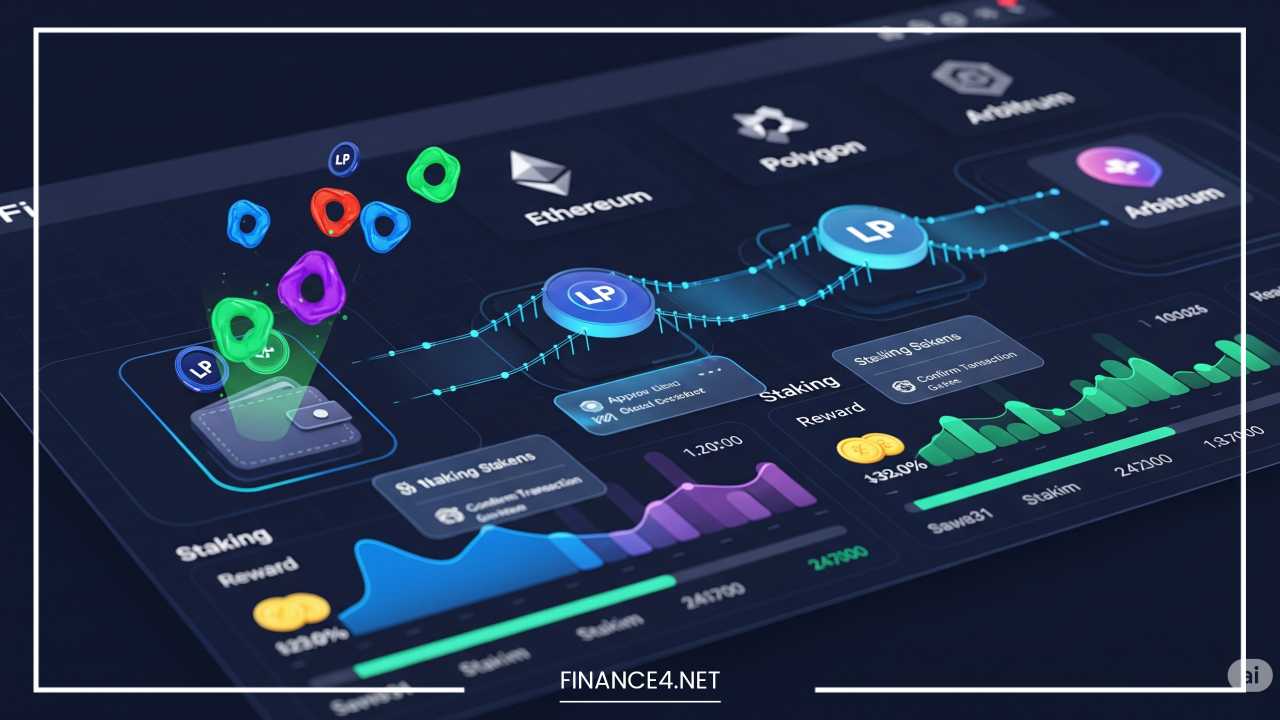
This is the most common and direct way to provide liquidity. You deposit a pair of wrapped tokens (e.g., WETH/USDC on Uniswap V3, WBTC/ETH on Curve) into a liquidity pool on a DEX. In return, you receive LP tokens, which represent your share of the pool. You earn trading fees generated by the swaps that occur within that pool.
Strategy considerations:
- Impermanent Loss: This is a key risk in LP. If the price ratio of the two assets in your pool diverges significantly, you may end up with less total value than if you had simply held the individual assets. Strategies like single-sided liquidity on concentrated liquidity pools (e.g., Uniswap V3) can mitigate this but introduce other complexities.
- Pool Selection: Choose pools with high trading volume and and acceptable impermanent loss risk. Stablecoin pairs (e.g., USDC/DAI) generally have lower impermanent loss.
- Fee Tier: DEXs often have different fee tiers for pools (e.g., 0.05%, 0.3%, 1%). Higher fees can mean more rewards but also higher slippage for traders.
- Concentrated Liquidity: Platforms like Uniswap V3 allow you to provide liquidity within a specific price range. This can significantly increase capital efficiency and fee earnings in stable markets, but requires active management to rebalance positions if prices move outside your range.
2. Lending and Borrowing Protocols
Platforms like Aave, Compound, or MakerDAO allow you to deposit your wrapped tokens as collateral to earn interest, or to borrow other assets against them.
Strategy considerations:
- Lending: Deposit your wrapped tokens (e.g., WBTC, WETH, bridged stablecoins like USDC.e) to earn a variable or fixed interest rate. This is generally lower risk than LP.
- Borrowing: You can borrow other assets against your wrapped tokens. This can be used for leverage (e.g., borrowing stablecoins to buy more wrapped tokens) or to access capital without selling your crypto holdings. Be mindful of liquidation risks.
- Interest Rates: Monitor lending and borrowing rates across different protocols to optimize your yield.
- Collateral Ratios: Understand the liquidation thresholds and maintain healthy collateral ratios to avoid forced liquidations.
3. Yield Farming and Farming Aggregators
Yield farming involves moving your LP tokens or deposited assets into a “farm” to earn additional rewards, often in the form of the protocol’s native token. Farming aggregators (e.g., Yearn Finance, Beefy Finance) automate this process, auto-compounding rewards and optimizing strategies across various farms.
Strategy considerations:
- High APY (Annual Percentage Yield): Yield farming often offers very attractive APYs, but these can be highly volatile and depend on the tokenomics of the farm’s native token.
- Token Inflation: Be aware that high APYs often come from inflationary token emissions, which can dilute the value of the farmed token.
- Smart Contract Risk: Always assess the security of the farming protocol and its smart contracts. Audits are crucial.
- Farming Aggregators: These can simplify yield farming, automatically rebalancing and compounding rewards, but they introduce an additional layer of smart contract risk.
4. Staking and Liquid Staking Derivatives (LSDs)
If your wrapped token is a liquid staking derivative (e.g., wstETH, rETH), you can often stake it directly or provide liquidity for its wrapped version to earn staking rewards. This applies to wrapped versions of native tokens that offer staking (e.g., wrapped versions of ETH on proof-of-stake chains).
Strategy considerations:
- Native Staking Rewards: Enjoy the underlying staking yield of the asset.
- DeFi Composability: LSDs allow your staked assets to remain liquid and be used in other DeFi protocols (e.g., lending or LP), unlike traditional staked assets that are often locked.
- De-peg Risk: There is a risk that the LSD might de-peg from its underlying asset, though mechanisms are in place to maintain the peg.
5. Structured Products and Vaults
Some DeFi protocols offer structured products or vaults that employ complex strategies (e.g., options selling, basis trading) to generate yield on your wrapped tokens. These are often managed by smart contracts or specialized teams.
Strategy considerations:
- Complexity: These products can be highly complex and may carry significant risks that are not immediately apparent.
- Higher Yield Potential: Often designed to generate higher yields than basic lending or LP.
- Requires Trust: While some are fully decentralized, others may involve an element of trust in the vault managers.
Practical Steps to Wrap Bridging Aggregator Tokens for Liquidity
Let’s outline a general flow:
- Identify Your Target Blockchain and Asset: Determine which blockchain ecosystem you want to engage with and which asset (e.g., BTC, ETH, USDC) you want to bring over.
- Choose a Reputable Bridge Aggregator: Research and select a reliable bridge aggregator (e.g., LI.FI, Socket, Connext, Wormhole if used through an aggregator, Synapse, Stargate). Consider factors like supported chains, fees, transaction speed, and security audits.
- Initiate the Bridging Process:
- Connect your wallet (e.g., MetaMask) to the aggregator’s interface.
- Select the source chain and the asset you want to bridge.
- Select the destination chain where you want to receive the wrapped token.
- The aggregator will display available routes, estimated fees, and time.
- Confirm the transaction in your wallet.
- Receive Wrapped Tokens: Once the transaction is complete, you will receive the wrapped version of your asset on the destination chain.
- Select a DeFi Protocol: Based on your risk appetite and yield goals, choose a DeFi protocol (DEX, lending platform, yield farm) on the target blockchain.
- Provide Liquidity:
- For DEXs: Deposit the wrapped token (and often another token in a pair) into a liquidity pool.
- For Lending Protocols: Deposit your wrapped token as collateral or for lending.
- For Yield Farms: Stake your LP tokens or deposited assets.
- Monitor and Manage: Regularly monitor your positions, impermanent loss (for LPs), liquidation thresholds (for borrowing), and yield performance. Rebalance or adjust your strategies as market conditions change.
Risks Associated with Wrapping Bridging Aggregator Tokens
While offering immense opportunities, wrapping and bridging aggregator tokens for liquidity come with inherent risks:
- Bridge Risk (Smart Contract Risk): The smart contracts underpinning bridges are complex and can be vulnerable to exploits. A hack on a bridge could lead to significant loss of locked assets. Bridge aggregators mitigate some of this by diversifying routes, but the underlying bridge risk remains.
- Custodian Risk (for Centralized Wraps): Some wrapped tokens (like WBTC) rely on centralized custodians to hold the underlying asset. This introduces counterparty risk and the need to trust the custodian. Decentralized wrapped tokens (like tBTC or renBTC) aim to minimize this by using decentralized multisig or MPC (multi-party computation) schemes.
- De-peg Risk: The wrapped token might lose its 1:1 peg to the underlying asset due to various factors like bridge congestion, liquidity imbalances, or, in extreme cases, a bridge exploit or custodian failure.
- Smart Contract Risk (DeFi Protocols): The DeFi protocols where you provide liquidity (DEXs, lending platforms, farms) are also susceptible to smart contract bugs or exploits.
- Impermanent Loss (for LPs): As discussed, this is a significant risk for liquidity providers, especially in volatile pairs.
- Liquidation Risk (for Borrowing): If you use wrapped tokens as collateral for a loan, a sudden drop in their value can lead to liquidation of your collateral.
- Slippage: While aggregators aim to minimize slippage, very large transactions, especially on less liquid routes or during volatile market conditions, can still incur significant slippage.
- Gas Fees: While bridge aggregators aim to find the most cost-effective routes, gas fees on certain blockchains (like Ethereum mainnet) can still be substantial, especially for multiple transactions (bridging, then providing liquidity, then claiming rewards).
- Regulatory Risk: The regulatory landscape for cross-chain activity and wrapped tokens is still evolving and could introduce unforeseen challenges.
The Future of Cross-Chain Liquidity
The future of DeFi undoubtedly lies in a multi-chain paradigm, and bridging aggregator tokens are a critical component of that future. Ongoing developments are focused on:
- Improved Bridge Security: More robust security models, formal verification of smart contracts, and decentralized governance for bridges.
- Enhanced User Experience: Streamlined interfaces and one-click solutions for cross-chain transfers and liquidity provision.
- Zero-Knowledge Proofs for Bridges: Leveraging ZK-proofs to enhance the security and privacy of cross-chain communication and asset transfers.
- Native Cross-Chain Communication Protocols: Projects like LayerZero and Chainlink CCIP aim to enable more direct and secure message passing between chains, potentially reducing the reliance on traditional lock-and-mint bridges.
- Interoperable Liquidity Networks: Development of networks that can seamlessly pool and manage liquidity across multiple chains without fragmentation.
Final Thoughts
Wrapping bridging aggregator tokens for liquidity is a powerful strategy for DeFi participants looking to maximize capital efficiency and access a broader range of yield opportunities across the fragmented blockchain landscape. By leveraging sophisticated bridge aggregators, users can efficiently move assets to different chains and deploy them into various DeFi protocols, unlocking new avenues for passive income and active participation.
However, this advanced strategy comes with inherent risks, primarily related to the security of bridges, smart contracts, and the potential for de-pegging or impermanent loss. A thorough understanding of these risks, combined with diligent research and responsible risk management, is paramount for anyone venturing into the exciting and rapidly evolving world of cross-chain liquidity. As the infrastructure continues to mature, bridging aggregator tokens will play an increasingly pivotal role in shaping a truly interconnected and liquid decentralized financial system.