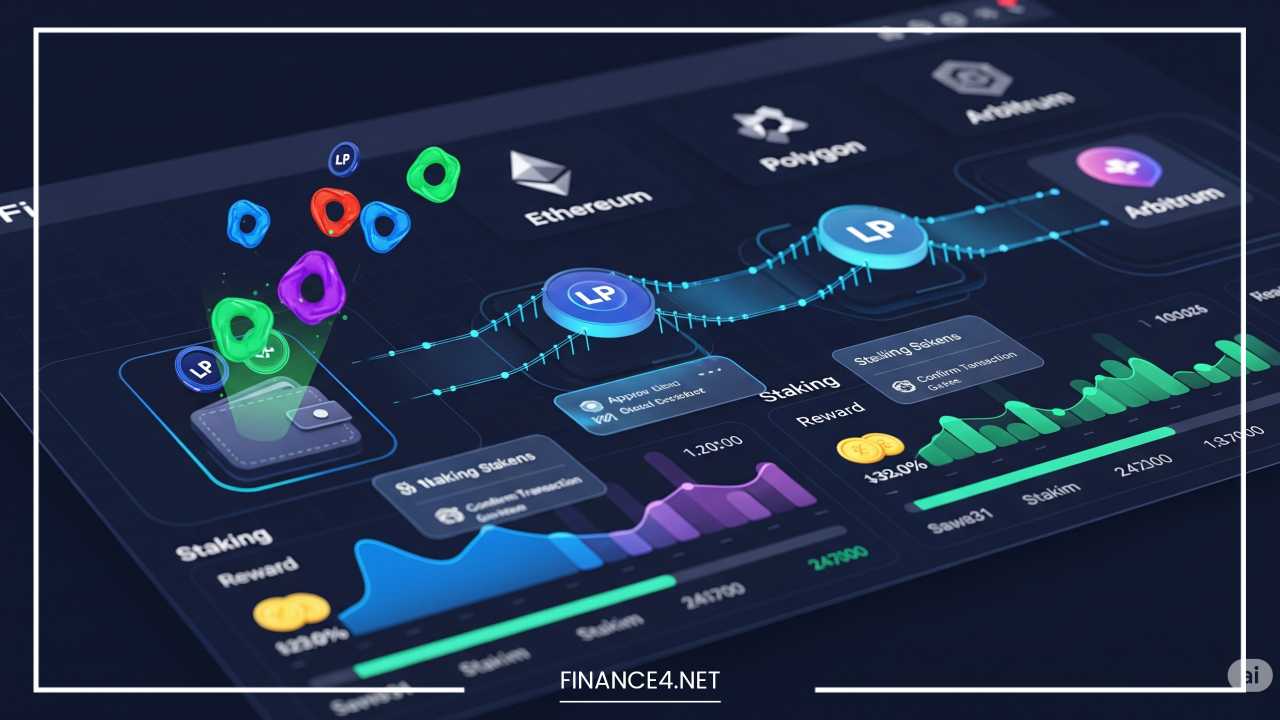
How to Stake Bridging Aggregator Governance Tokens | Step-by-Step Guide
The world of blockchain is rapidly evolving, with a growing need for seamless communication and asset transfer between disparate networks. This is where bridging aggregators come into play, offering solutions that streamline cross-chain interactions.
At the heart of many of these innovative platforms lie governance tokens, which not only facilitate their decentralized operation but also offer unique opportunities for active participation and potential rewards through staking.
This article delves into the intricate world of staking bridging aggregator governance tokens, providing a comprehensive guide for both seasoned crypto enthusiasts and curious newcomers. We’ll explore what these tokens are, why staking them is beneficial, the inherent risks, and practical steps to navigate this evolving landscape.
Understanding the Landscape: Bridging Aggregators and Their Governance Tokens
Before diving into staking, it’s crucial to grasp the fundamental concepts.
What are Blockchain Bridging Aggregators?
Imagine the blockchain ecosystem as a collection of independent cities, each with its own language, currency, and infrastructure (e.g., Ethereum, Solana, Polygon, Avalanche). While each city thrives, direct communication and trade between them can be cumbersome. This is where blockchain bridges emerge – protocols designed to facilitate the transfer of assets and information between different blockchains.
Bridging aggregators take this a step further. Instead of just providing a single bridge, they act as a “meta-bridge,” optimizing and combining various bridging solutions to offer users the most efficient, secure, and cost-effective way to move assets across chains. They analyze factors like transaction fees, speed, liquidity, and security to route transactions through the best available bridge at any given time.
Examples of bridging aggregators might include protocols that allow you to seamlessly swap assets from Ethereum to Polygon, or move liquidity from Binance Smart Chain to Avalanche, by leveraging multiple underlying bridges.
The Power of Governance Tokens
Most decentralized applications (dApps) and blockchain protocols, including bridging aggregators, are moving towards a decentralized autonomous organization (DAO) model. This means that instead of a centralized entity making all the decisions, the community of token holders collectively governs the protocol.
Governance tokens are the digital keys that unlock this participatory power. By holding these tokens, users gain the right to:
Vote on proposals: This includes critical decisions like protocol upgrades, changes to fee structures, treasury allocation, security measures, and the integration of new bridges or features.
Propose new ideas: Token holders can initiate proposals themselves, bringing forward ideas for the protocol’s development and improvement.
Influence the direction of the project: Their collective voting power shapes the future roadmap and strategic direction of the bridging aggregator.
In essence, governance tokens transform users from mere consumers of a service into active stakeholders with a vested interest in the protocol’s success.
The Allure of Staking: Why Lock Up Your Governance Tokens?
Staking, in the context of governance tokens, involves locking up your tokens for a specified period within the protocol’s smart contract. In return, you often receive rewards and, crucially, gain or amplify your voting power. Here’s a breakdown of the compelling reasons to stake your bridging aggregator governance tokens:
1. Earning Passive Income
This is often the primary driver for many stakers. By committing your tokens, you contribute to the security and operational efficiency of the protocol, and in exchange, you are rewarded with additional tokens. These rewards can come in various forms:
Native governance tokens: The most common form, directly increasing your holdings of the very token you’re staking.
Transaction fees: A share of the fees generated by the bridging aggregator’s operations.
Other tokens: Some protocols might reward stakers with a different token, often a stablecoin or a token from a partner project.
The Annual Percentage Yield (APY) or Annual Percentage Rate (APR) offered for staking can vary significantly depending on the protocol, market conditions, and the amount of tokens staked.
2. Participating in Decentralized Governance
Beyond financial rewards, staking empowers you to be a genuine participant in the evolution of a critical piece of Web3 infrastructure. Your staked tokens translate directly into voting power, allowing you to:
Shape the future of cross-chain interoperability: Influence which chains are supported, how bridges operate, and what new features are implemented.
Ensure protocol security: Vote on proposals related to security audits, bug bounties, and other measures to protect the integrity of the bridging solution.
Promote decentralization: By participating in governance, you help distribute decision-making power away from a few centralized entities, fostering a more robust and resilient ecosystem.
3. Supporting Network Security and Stability
While not directly contributing to blockchain consensus like Proof-of-Stake (PoS) networks, staking governance tokens indirectly enhances the security and stability of the bridging aggregator. By locking up tokens, it:
Reduces circulating supply: This can create upward price pressure on the token, benefiting all holders.
Incentivizes long-term holding: Staking encourages a longer-term investment horizon, reducing speculative selling pressure and contributing to price stability.
Aligns incentives: Stakers have a direct financial and governance interest in the success and security of the protocol, making them more likely to act in its best interest.
4. Potential for Exclusive Benefits
Some bridging aggregators offer additional perks for stakers, such as:
Reduced bridging fees: A discount on transaction fees when using the aggregator.
Priority access to new features: Early access to beta programs or new functionalities.
Airdrops: Eligibility for future token distributions from the protocol or its partners.
The Flip Side: Risks Associated with Staking Governance Tokens
The value of your staked governance tokens, and thus your rewards, is directly tied to the token’s market price. If the token’s value declines significantly, your overall returns, even with staking rewards, might be negative.
For those engaging in yield farming with governance tokens in liquidity pools, there’s the added risk of impermanent loss. This occurs when the price ratio of the tokens in a liquidity pool changes after you’ve deposited them. While not a “real” loss until you withdraw your liquidity, it means that the value of your assets might be less than if you had simply held them outside the pool.
2. Lock-up Periods and Reduced Liquidity
Many staking mechanisms involve a lock-up period, during which your tokens are inaccessible. This means you cannot sell or transfer them, even if the market price is plummeting or you need immediate access to your funds. The duration of these lock-up periods can vary from a few days to several months or even years.
3. Smart Contract Vulnerabilities
Staking protocols are powered by smart contracts. While audited, smart contracts can still contain bugs or vulnerabilities that could be exploited by malicious actors, leading to the loss of staked funds. Always choose reputable protocols with a strong track record of security audits.
4. Slashing Risk
While less common for pure governance token staking compared to validator staking in PoS networks, some protocols might implement “slashing” mechanisms. This means a portion of your staked tokens could be confiscated if the validator you’ve delegated to (or if you’re running a validator yourself) acts maliciously or fails to meet network requirements (e.g., prolonged downtime). Always research the specific slashing conditions of the protocol.
If a large portion of the token supply is concentrated in the hands of a few major stakers or delegators, it can lead to concerns about centralization of governance power. While staking aims to decentralize, apathetic voters can inadvertently lead to this outcome.
A Step-by-Step Guide to Staking Bridging Aggregator Governance Tokens
The exact process for staking will vary slightly between different protocols, but the general steps are as follows:
Step 1: Research and Choose a Bridging Aggregator and its Governance Token
This is the most critical step. Conduct thorough Due Diligence (DYOR) on:
Protocol’s Vision and Roadmap: Does the project have a clear purpose and a viable plan for the future of cross-chain interoperability?
Team and Advisors: Are they reputable and experienced in the blockchain space?
Tokenomics: Understand the token supply, distribution, inflation, and utility.
Staking Mechanism and Rewards: What are the APY/APR, lock-up periods, and reward distribution schedule?
Community Engagement: A strong and active community is often a good sign of a healthy project.
Security Audits: Check for independent security audits of the protocol’s smart contracts.
Liquidity and Trading Volume: Ensure the token is liquid enough for you to buy and sell when needed.
Look for bridging aggregators with a proven track record of security, efficiency, and a growing user base.
Step 2: Acquire the Governance Token
Once you’ve identified a suitable token, you’ll need to purchase it. This typically involves:
Centralized Exchanges (CEXs): Major exchanges like Binance, Coinbase, Kraken, etc., often list popular governance tokens.
Decentralized Exchanges (DEXs): If the token is newer or less widely adopted, you might find it on DEXs like Uniswap, PancakeSwap, or SushiSwap. You’ll need to have a compatible wallet (e.g., MetaMask) and sufficient cryptocurrency to swap for the governance token.
Step 3: Set Up a Compatible Wallet
You’ll need a non-custodial wallet that supports the blockchain on which the governance token resides. Popular choices include:
MetaMask: A widely used browser extension wallet for Ethereum and EVM-compatible chains.
Trust Wallet: A mobile-first wallet supporting a wide range of cryptocurrencies and blockchains.
Ledger or Trezor (Hardware Wallets): For enhanced security, especially for larger amounts, consider a hardware wallet.
Ensure your wallet is securely backed up (seed phrase) and never share your private keys.
Step 4: Navigate to the Staking Platform or DApp
Most bridging aggregators will have a dedicated section on their website or within their dApp for staking. This is where you’ll interact with the staking smart contract.
Step 5: Connect Your Wallet
Follow the on-screen prompts to connect your chosen wallet to the staking platform.
Step 6: Initiate the Staking Process
Select the amount: Enter the number of governance tokens you wish to stake.
Understand the terms: Carefully review the lock-up period, estimated rewards, and any associated fees or slashing risks.
Approve the transaction: Your wallet will prompt you to approve the transaction to lock your tokens in the smart contract. Be aware of gas fees (transaction costs) on the respective blockchain.
Step 7: Monitor Your Staked Assets and Claim Rewards
Once staked, you can typically monitor your staked balance and accumulated rewards on the platform’s dashboard. Rewards are usually distributed periodically (e.g., daily, weekly, or monthly) and you’ll have the option to claim them. Some platforms also offer automatic compounding, where rewards are automatically reinvested to earn more.
Step 8: Participate in Governance (Crucial!)
Don’t just set and forget! Actively engage in the governance process:
Stay informed: Follow the project’s official communication channels (Discord, Telegram, Twitter, forums) to stay updated on proposals and discussions.
Understand proposals: Before voting, read and comprehend the details of each proposal.
Vote: Cast your vote on proposals that align with your vision for the protocol’s future. Your vote holds weight proportionate to your staked tokens.
The Future of Bridging Aggregators and Their Governance
The demand for seamless cross-chain interactions is only going to grow as the blockchain ecosystem expands. Bridging aggregators are at the forefront of this evolution, striving to create a truly interconnected Web3.
The role of governance tokens within these aggregators will become even more pronounced. As these protocols mature, the community’s ability to steer development, adapt to new technologies, and address emerging challenges will be paramount. Staking will continue to be a vital mechanism for fostering active participation, aligning incentives, and ensuring the decentralized and resilient nature of these crucial infrastructure components.
We can expect to see further innovations in:
Improved Security Models: More robust mechanisms to prevent bridge exploits and enhance asset security.
Enhanced User Experience: Simpler and more intuitive interfaces for cross-chain transfers and staking.
Increased Efficiency: Faster and cheaper bridging solutions.
Greater Interoperability: Support for an even wider array of blockchains and asset types.
More Sophisticated Governance Models: Innovations in voting mechanisms and community engagement.
Final Thoughts
Staking bridging aggregator governance tokens presents a unique opportunity to earn passive income, actively participate in decentralized governance, and contribute to the growth and security of the broader blockchain ecosystem. While the allure of potential rewards is strong, it’s essential to approach staking with a clear understanding of the inherent risks, including market volatility, lock-up periods, and smart contract vulnerabilities.
By conducting thorough research, adopting best practices, and staying actively engaged in the governance process, you can navigate this exciting and evolving landscape with confidence. As bridging aggregators continue to bridge the divides between blockchains, staking their governance tokens offers a direct pathway to shaping the future of decentralized finance and true interoperability.

 by
by