Cross-Chain Stablecoin Bridging
 by
by 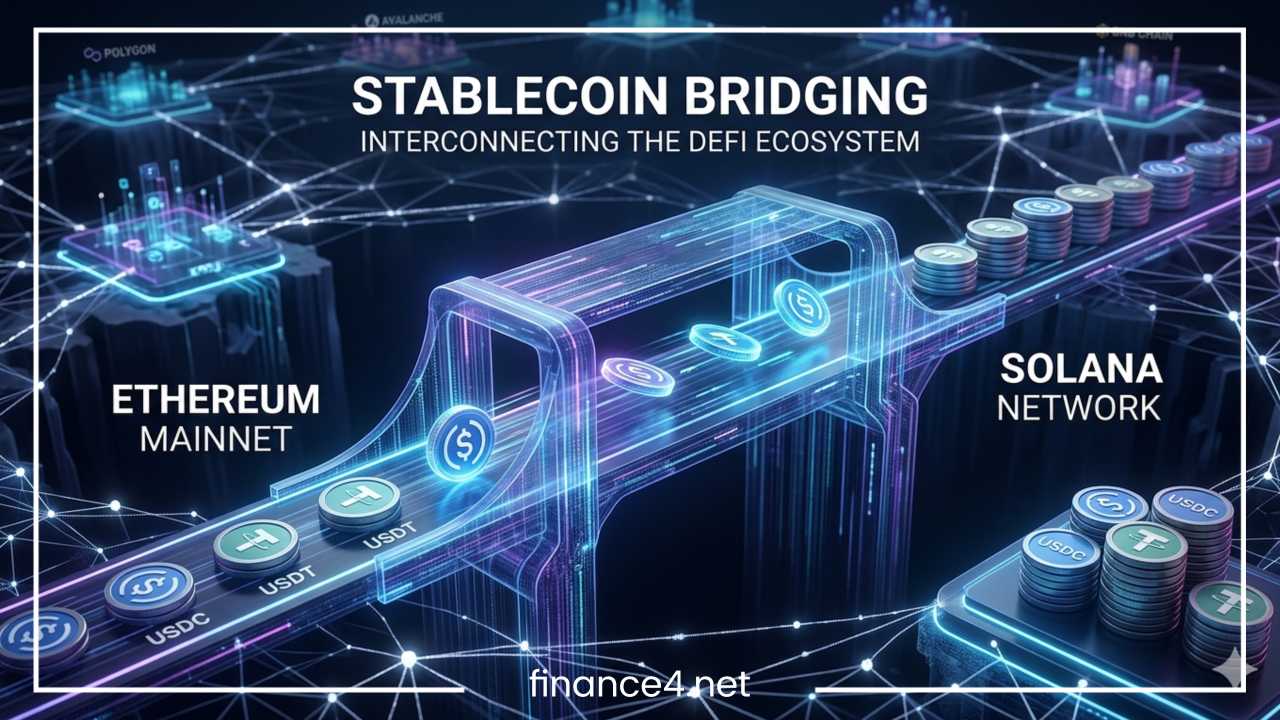
Cross-Chain Stablecoin Bridging: A Complete Guide
The digital asset landscape has evolved from a single-chain environment into a vast, interconnected web of independent blockchain networks. As ecosystems like Ethereum, Solana, and various Layer 2 solutions flourish, the need to move value between them has become a fundamental requirement for the decentralized economy. At the heart of this movement are stablecoins—the lifeblood of liquidity and the primary medium of exchange in decentralized finance (DeFi).
Cross-chain stablecoin bridging refers to the process of transferring stable-value assets from one blockchain to another. While blockchains are traditionally siloed, meaning they cannot inherently communicate with one another, bridges act as the vital infrastructure that links these isolated islands. This guide explores the mechanics, benefits, and risks of bridging stablecoins, providing a comprehensive look at how the industry is solving the problem of fragmentation to create a more unified global financial system.
Understanding Stablecoins
Before diving into the technicalities of bridging, it is essential to understand the assets being moved. Stablecoins are cryptocurrencies designed to maintain a stable value relative to a reference asset, most commonly the U.S. dollar. They provide the price stability of fiat currency while retaining the programmable, permissionless nature of blockchain technology.
There are three primary categories of stablecoins:
-
Fiat-backed Stablecoins: These are the most common and are backed 1:1 by traditional currency held in bank reserves. Examples include USDT (Tether) and USDC (USD Coin). Because they are issued by centralized entities, they are often considered the most liquid but come with custodial risk.
-
Crypto-collateralized Stablecoins: These maintain their peg through over-collateralization with other cryptocurrencies. DAI is the most prominent example. Smart contracts manage the issuance and liquidation to ensure the stablecoin remains backed even during market volatility.
-
Algorithmic Stablecoins: These use specialized algorithms and smart contracts to manage the supply of the token in response to changes in demand. While highly innovative and decentralized, they carry higher risks of de-pegging if the underlying incentive mechanisms fail.
Stablecoins dominate DeFi liquidity because they allow traders to hedge against volatility without exiting the blockchain ecosystem. They are used for everything from providing liquidity in decentralized exchanges (DEXs) to serving as the base currency for global remittances and high-yield lending protocols. Without a stable unit of account, complex financial activities like lending, borrowing, and long-term contracting would be nearly impossible due to the volatility of native tokens like ETH or SOL.
What Is Cross-Chain Bridging?
In the context of blockchain technology, interoperability is the ability of different networks to communicate and share data. However, blockchains are built on different architectures, consensus mechanisms, and coding languages. An asset created on Ethereum does not exist on Solana, and vice versa. Each blockchain is its own distributed ledger with its own set of rules; they do not share a common database.
A “bridge” is a protocol that facilitates the transfer of data or assets between two distinct blockchains. Without bridges, a user who wants to move their funds from one chain to another would be forced to go through a centralized exchange—selling their tokens on the first chain, withdrawing them to the second, and potentially incurring multiple fees, tax events, and withdrawal delays.
Types of Bridges
The architecture of a bridge determines its security, speed, and trust assumptions:
-
Custodial (Centralized) Bridges: These are operated by a central authority or a group of known entities that hold your assets and issue a corresponding token on the destination chain. While often user-friendly and offering high speeds, they require users to trust that the operator will not mismanage the funds.
-
Decentralized (Smart Contract-based) Bridges: These rely on automated code and decentralized validators to secure the transfer. They align more closely with the ethos of crypto but are subject to smart contract vulnerabilities. If the code has a bug, there is no “customer support” to recover funds.
-
Liquidity Networks: Instead of moving the actual token or minting new ones, these networks maintain pools of liquidity on both the source and destination chains. When you “bridge,” you deposit on one side and receive a payout from an existing pool on the other side. This is often the fastest method for stablecoins because it involves native assets rather than synthetic “wrapped” ones.
A helpful analogy is to think of blockchains as different countries with their own currencies and laws. A bridge acts as a currency exchange counter and a high-speed transport link combined, allowing you to move your purchasing power across borders with minimal friction.
How Stablecoin Bridging Works
The actual movement of stablecoins across chains is an intricate technical process. Since a token cannot literally “leave” its native chain, bridges use several methods to simulate this transfer.
Lock-and-Mint Mechanism
This is the most common method. When a user initiates a bridge transfer, their stablecoins on the source chain are “locked” in a smart contract. Once the bridge confirms the lock (usually after a certain number of block confirmations), it “mints” an equal amount of “wrapped” tokens on the destination chain. For example, if you bridge USDC from Ethereum to a new Layer 2, you might receive “wUSDC” (Wrapped USDC). If you want to move back, the wrapped tokens are burned, and the original tokens are unlocked on the source chain.
Burn-and-Release Mechanism
In this scenario, instead of locking tokens, the bridge permanently destroys (burns) the stablecoins on the source chain. A cryptographic proof of this burn is sent to the destination chain, which then triggers the issuance of native stablecoins on that network. This method is often preferred by issuers like Circle (for USDC) to maintain a clean supply across multiple networks without relying on “wrapped” versions. It prevents “liquidity fragmentation” because the asset on the destination chain is exactly the same as the one on the source chain.
Liquidity Pool-Based Bridging
Some bridges do not mint new tokens. Instead, they utilize pre-funded liquidity pools. If a user wants to move 1,000 USDT from BNB Chain to Polygon, they deposit their USDT into the bridge’s BNB Chain pool. The bridge then sends 1,000 USDT from its Polygon pool to the user’s wallet (minus a small fee). This is often faster but depends entirely on the bridge having enough liquidity on the destination side.
The Infrastructure Layer
For these mechanisms to work, the bridge relies on:
-
Validators: Nodes that monitor the source chain to verify that a transaction has occurred.
-
Relayers: Entities that pass the message or proof from the source chain to the destination chain.
-
Oracles: Services that provide external data (such as price or state updates) to the smart contracts involved.
Major Cross-Chain Bridge Protocols
As the demand for interoperability has grown, several key protocols have emerged as the standard infrastructure for stablecoin movement.
-
LayerZero: An “omnichain” interoperability protocol that enables cross-chain messaging. It allows applications to build bridges that are seamless, where the user doesn’t necessarily know they are interacting with multiple chains. It uses “Ultra Light Nodes” to provide the security of a light client with the cost-effectiveness of a relayer.
-
Wormhole: Originally built to connect Ethereum and Solana, it has expanded into a massive message-passing protocol used by many of the largest DeFi applications to move assets and data. It relies on a set of “Guardians” to observe and verify cross-chain messages.
-
Axelar: Provides a decentralized network and tools that connect various blockchain ecosystems. It acts as a translation layer, allowing chains with different “languages” to communicate. It features its own proof-of-stake blockchain to secure the bridging process.
-
Chainlink CCIP (Cross-Chain Interoperability Protocol): Leverages Chainlink’s existing decentralized oracle network to provide a highly secure standard for sending data and value between private and public blockchains. It includes a “Risk Management Network” that independently monitors for malicious activity.
-
Synapse: A cross-chain liquidity layer that focuses on providing fast and cheap stablecoin transfers by utilizing incentivized liquidity pools. It is popular for its ease of use and competitive pricing for large-volume stablecoin transfers.
These protocols differ in their security models. Some rely on a set of external validators, while others use “light clients” or zero-knowledge proofs to verify transactions more trustlessly.
Use Cases of Cross-Chain Stablecoin Bridging
Bridging is not just a technical novelty; it is a prerequisite for several high-value activities in the crypto economy.
DeFi Yield Farming
Interest rates for lending stablecoins vary wildly between chains. A user might find that they can earn 2% on USDC on Ethereum, but 8% on a newer Layer 2 that is incentivizing liquidity. Bridging allows users to chase higher yields quickly and efficiently, optimizing their capital across the entire decentralized landscape.
Arbitrage Trading
Stablecoin prices can fluctuate slightly between different decentralized exchanges (DEXs) on different chains. If USDC is trading at $0.999 on one chain and $1.001 on another, traders use bridges to move capital to the chain where the stablecoin is trading at a discount, buy it, and move it back to sell at a profit. This arbitrage process is crucial because it helps maintain the global peg of the asset.
Payments and Remittances
If a merchant only accepts payments on the Polygon network, but a user holds their savings on Ethereum, a bridge allows that user to pay for goods and services without needing a centralized intermediary. This is particularly useful for global workers receiving paychecks in stablecoins who need to move their funds to cheaper networks for everyday spending.
NFT and GameFi Economies
Many modern blockchain games are built on fast, low-fee chains to handle high transaction volumes. Players often need to bridge stablecoins from “storage” chains (like Ethereum) to “active” chains (like Ronin or Immutable) to purchase in-game assets, trade items, or participate in the game’s economy.
Liquidity Migration
When a new blockchain launches, it needs liquidity to survive. Projects often create “vampire attacks” or liquidity incentives to encourage users to bridge their stablecoins from established chains to the new ecosystem. Bridging is the primary mechanism that allows these migrations to happen.
Benefits of Stablecoin Bridging
The primary benefit of bridging is capital efficiency. In a fragmented world, your money is only useful where it currently sits. Bridging makes capital “liquid,” allowing it to flow to wherever it is most productive.
-
Lower Transaction Costs: Moving stablecoins to Layer 2 networks or sidechains allows users to interact with DeFi protocols for cents rather than the high gas fees often found on mainnets. This democratizes access to finance for users with smaller balances.
-
Chain Flexibility: Users are not locked into a single ecosystem. If a network experiences congestion, high fees, or a security concern, users can migrate their stablecoin holdings to a safer or faster alternative in minutes.
-
Better Capital Efficiency: Instead of having 100 USDT sitting idle on five different chains, a user can bridge them into a single pool to participate in a large-scale lending or staking opportunity.
-
Reduced Reliance on Centralized Exchanges: Bridging allows for a fully non-custodial experience. Users maintain control of their private keys throughout the entire process of moving funds between networks, adhering to the “not your keys, not your coins” philosophy.
Risks and Challenges
Despite the benefits, bridging is currently one of the most significant points of failure in the blockchain industry. According to industry reports, billions of dollars have been lost to bridge exploits over the last few years.
Bridge Hacks
Bridges are lucrative targets for hackers because they often hold massive amounts of “locked” collateral in a single smart contract (the “honey pot” effect). If the contract has a bug—or if the validator set is compromised—a hacker can drain the collateral on the source chain, leaving the “minted” tokens on the destination chain completely worthless because they are no longer backed by anything.
Smart Contract Vulnerabilities
The complexity of cross-chain communication increases the surface area for bugs. Bridging involves multiple smart contracts across different chains, often written in different languages. Even if a bridge is audited, the interaction between two different blockchain environments can create unforeseen edge cases that lead to lost funds.
Liquidity Fragmentation and Slippage
If a bridge does not have enough liquidity on the destination chain, users may experience “slippage,” where they receive significantly fewer tokens than they sent. In some cases, a transaction may “hang” or fail if the bridge runs out of funds on one side, requiring the user to wait for another user to bridge in the opposite direction.
Wrapped Token De-pegging
When you bridge a stablecoin via a lock-and-mint bridge, you aren’t holding the “real” stablecoin; you are holding a claim on it issued by the bridge. If the bridge is compromised, your “wrapped USDC” could lose its peg and trade for pennies, even if the “real” USDC issued by Circle is perfectly fine. This creates a secondary layer of risk beyond the stablecoin’s own peg.
Custodial Risk
Some bridges use a multisig (multiple signatures) approach to secure funds. If the majority of the signers are compromised or collude, they can steal the funds in the bridge. Users must research the “trust assumptions” of each bridge—specifically, who controls the keys.
Regulatory and Compliance Risk
Regulators are increasingly looking at bridges as “money transmitters” or “virtual asset service providers.” Future regulations may require bridges to implement KYC (Know Your Customer) checks or blacklisting features. This could lead to situations where a user’s funds are “stuck” in a bridge if they cannot pass a compliance check during the transfer.
Security Best Practices
To navigate the risks of bridging, users should follow a disciplined security protocol. Bridging is a high-risk activity and should be treated with caution.
-
Use Audited and Established Protocols: Prioritize bridges that have been operational for a long time, have significant Total Value Locked (TVL), and have undergone multiple third-party security audits from reputable firms.
-
Prioritize Native Bridging: Whenever possible, use native bridges provided by the asset issuer (like Circle’s CCTP for USDC) or the official bridge of the blockchain itself (e.g., the Arbitrum Bridge). Native bridges generally have fewer trust assumptions than third-party wrappers.
-
Start Small: Never bridge your entire portfolio in one go. Always send a small “test” transaction to ensure the bridge is functioning correctly, the fees are as expected, and that you understand the UI.
-
Check the Asset Contract Address: Be aware of what you are receiving. On some chains, there may be multiple versions of the same stablecoin (e.g., “USDC” vs “USDC.e”). Ensure the version you receive is the one accepted by the DeFi protocols you intend to use.
-
Monitor Network State: Check for network congestion or known issues on both the source and destination chains before initiating a transfer. Bridges often have “status pages” that indicate if a specific pathway is experiencing delays.
-
Revoke Permissions: After bridging, it is a good practice to use a tool to revoke the bridge’s permission to spend your tokens. This prevents a future bridge exploit from draining funds remaining in your wallet.
Future of Cross-Chain Stablecoin Infrastructure
The long-term goal of the industry is “chain abstraction.” In this future, the complexities of gas fees, bridges, and RPC settings will be hidden from the end user.
Omnichain Tokens
New token standards (like LayerZero’s OFT – Omnichain Fungible Token) are emerging where the stablecoin itself is “chain-agnostic.” Instead of being locked and minted, the token lives on all chains simultaneously. When moved, the token is burned on one chain and minted on another via a unified messaging layer. This eliminates the need for risky third-party wrapped tokens and solves liquidity fragmentation.
Chain Abstraction and Unified Accounts
In the future, users won’t need to manually bridge. They will simply see a total balance of “USD” in their wallet. When they go to buy an NFT on Solana or lend on Ethereum, the wallet will handle the background bridging and gas conversions automatically. This makes the user experience similar to traditional banking apps.
Zero-Knowledge Bridges (ZK Bridges)
The next generation of bridges will likely use zero-knowledge proofs to verify the state of a source chain on a destination chain. This allows for “trustless” bridging where the security is guaranteed by mathematics and cryptography rather than a set of human validators or a centralized entity.
Institutional Integration
As traditional financial institutions begin to issue their own stablecoins or “tokenized deposits,” they will require highly secure, regulated interoperability standards. Protocols like Chainlink CCIP are positioning themselves as the “SWIFT of blockchains,” providing a bridge between the legacy financial system and the decentralized web.
Final Thoughts
Cross-chain stablecoin bridging is the backbone of the modern multi-chain financial system. By allowing stable value to flow freely across diverse ecosystems, bridges enable a level of financial flexibility that was previously impossible. They turn isolated blockchains into a cohesive network, providing users with lower fees, better yields, and greater autonomy.
However, the technology is still in its maturing phase. The risks of smart contract exploits and liquidity fragmentation remain significant hurdles. As we move toward a future of “omnichain” assets and chain abstraction, the infrastructure will become more invisible and more secure. For now, users must balance the immense utility of bridging with a cautious, security-first mindset. Stablecoins are the internet’s money, and bridges are the highways that allow that money to reach every corner of the digital world. The journey toward a unified global liquidity layer is well underway, and stablecoin bridging is the primary vehicle making it possible.
Frequently Asked Questions
What is the cheapest way to bridge stablecoins between Ethereum and Layer 2s?
The cheapest way to bridge stablecoins is usually through Layer 2 native bridges or liquidity aggregators. While Ethereum mainnet gas fees can be high, using a liquidity network like Synapse or Hop Protocol allows you to swap assets across chains for a small flat fee rather than a full smart contract execution fee. To save the most money, always check the current gas prices and bridge during off-peak hours (typically late weekends).
Is it safe to use cross-chain bridges for large stablecoin transfers?
Safety depends entirely on the security model of the bridge. For large transfers, it is recommended to use “canonical” or native bridges (like the Arbitrum Bridge or Polygon PoS Bridge) rather than third-party wrappers. While no bridge is 100% risk-free, native bridges are generally considered the gold standard because they are maintained by the core developers of the destination network. For extremely large amounts, some users prefer “over-the-counter” (OTC) desks or centralized exchanges to avoid the risk of smart contract exploits entirely.
How long does it take to bridge USDC from Ethereum to Solana?
Bridging USDC typically takes between 10 to 20 minutes. This timeframe includes the time required for the source chain (Ethereum) to reach finality—which ensures the transaction cannot be reversed—and the time for the bridge validators (like those on the Wormhole or LayerZero networks) to verify and mint the asset on Solana. If you use a liquidity provider bridge, the process can sometimes be faster, depending on the available liquidity on the Solana side.
What is the difference between native USDC and bridged USDC?
Native USDC is issued directly by Circle on a specific blockchain, making it fully redeemable for US dollars via the issuer. Bridged USDC (often labeled as USDC.e or wUSDC) is a “wrapped” version created by a third-party bridge. If the bridge holding the collateral for the wrapped version is hacked, the bridged USDC could lose its value. Whenever possible, DeFi users should migrate to native versions of stablecoins to reduce “wrapper risk.”
Can I bridge stablecoins directly from a hardware wallet?
Yes, most major cross-chain bridges support hardware wallets like Ledger and Trezor through browser extensions like MetaMask or Phantom. Using a hardware wallet adds an essential layer of security, as you must physically sign the “approve” and “bridge” transactions, protecting your assets from potential malware on your computer during the bridging process.
Why did my stablecoin bridge transaction fail or get stuck?
A bridge transaction usually gets “stuck” due to one of three reasons:
-
Low Gas: You didn’t provide enough gas for the destination chain’s minting process.
-
Liquidity Crunch: The bridge has run out of the target stablecoin on the destination chain.
-
Network Congestion: High traffic on either the source or destination chain is delaying confirmation. In most cases, your funds are safe in the bridge’s smart contract and will be released once the network clears or more liquidity is added.
Are cross-chain bridges centralized or decentralized?
Bridges exist on a spectrum of decentralization. Some are fully centralized (custodial), where a single company manages the funds. Others are decentralized, governed by a distributed set of validators or secured by mathematical proofs (ZK-bridges). Most popular bridges today use a “Multisig” or “Guardian” model, which sits in the middle—requiring a majority of trusted nodes to approve a transfer.
Do I need the native gas token of the destination chain to bridge?
Usually, yes. Even if you are bridging a stablecoin like USDT, you will need a small amount of the destination chain’s native token (like ETH, MATIC, or SOL) to pay the “claim” or “gas” fee once the assets arrive. Some modern bridges now offer “gasless” bridging or “fuel” features, where they swap a tiny portion of your stablecoin into the native gas token for you during the transfer.