How to Start a Cross-Chain NFT Brand
 by
by 
Forging the Future: How to Start a Cross-Chain NFT Brand in 2025
The digital frontier is constantly expanding, and at its forefront lies the vibrant realm of Non-Fungible Tokens (NFTs). What began as a niche for digital art has rapidly evolved into a multifaceted industry encompassing gaming, fashion, music, and much more. As we navigate 2025, the narrative is shifting from isolated blockchain ecosystems to a deeply interconnected digital landscape. This evolution is driven by cross-chain interoperability, a technological leap that allows digital assets to seamlessly traverse different blockchain networks. For creators, entrepreneurs, and visionaries, this presents an unprecedented opportunity: to establish a cross-chain NFT brand and unlock a world of broader reach, enhanced liquidity, and unparalleled flexibility.
This article serves as your comprehensive guide to launching a successful cross-chain NFT brand in this dynamic new era. We will delve into the intricacies of cross-chain technology, explore strategic market research and branding, navigate the complexities of smart contract development and multi-chain deployment, and outline effective marketing and community-building strategies. By the end, you’ll have a clear roadmap to not just participate in, but to truly lead, the cross-chain NFT revolution.
Understanding Cross-Chain NFTs
Before embarking on this journey, a solid understanding of the foundational concepts is crucial.
What are NFTs?
NFTs, or Non-Fungible Tokens, are unique digital assets verifiable on a blockchain. Unlike cryptocurrencies, which are fungible (interchangeable), each NFT possesses distinct properties and a unique identifier, making it one-of-a-kind. This inherent uniqueness allows NFTs to represent ownership of digital or even physical items, ranging from digital art, music, and videos to in-game assets, virtual land, and even real estate. The underlying blockchain technology ensures immutable proof of ownership and authenticity.
What is cross-chain interoperability in blockchain?
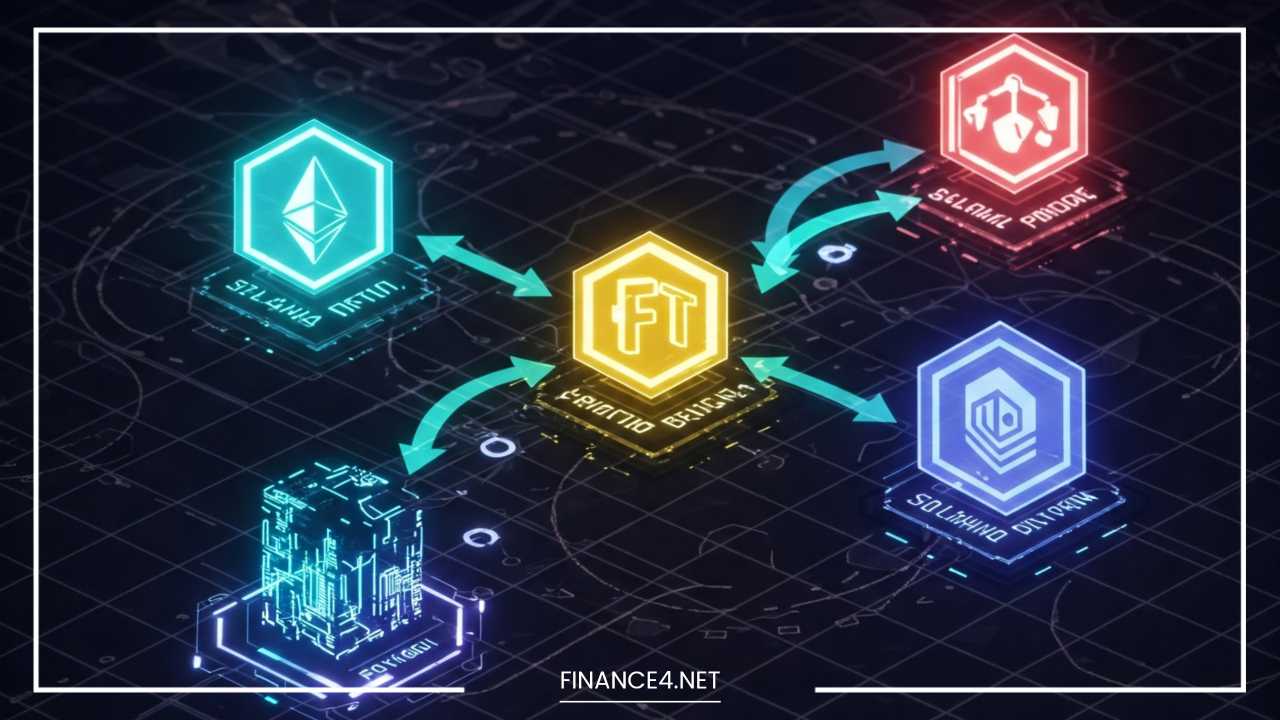
Historically, different blockchains operated as isolated silos. An NFT minted on Ethereum could not easily be transferred or used on Solana, for instance. Cross-chain interoperability is the technological capability that allows these disparate blockchain networks to communicate and exchange data and assets with each other. It breaks down these barriers, creating a more cohesive and accessible Web3 ecosystem.
Difference between single-chain and cross-chain NFTs.
A single-chain NFT exists exclusively on the blockchain where it was minted. Its utility, liquidity, and audience are confined to that specific network. A cross-chain NFT, on the other hand, is designed or enabled to exist and be utilized across multiple blockchain networks. This is typically achieved through various bridging mechanisms or interoperability protocols that “wrap” or “lock” the NFT on its original chain and issue a representation on a new chain.
Benefits of cross-chain NFTs:
The advantages of embracing a cross-chain approach for your NFT brand are significant:
- Broader Reach: By not being confined to a single blockchain, your NFTs can be exposed to a wider audience across different ecosystems. This significantly expands your potential market of collectors and users.
- Better Liquidity: Access to multiple marketplaces and communities on various chains can lead to increased trading volume and, consequently, better liquidity for your NFTs. More potential buyers and sellers mean more robust price discovery.
- More Flexibility: Creators and users gain flexibility. Creators can choose to mint on a chain with lower gas fees and then bridge their NFTs to a more liquid chain, or enable utility across different metaverses built on various networks. Users can transfer their NFTs to their preferred chain for specific applications or lower transaction costs.
Market Research & Branding
A compelling brand identity and a deep understanding of your market are paramount for success in the competitive NFT space.
Identifying your niche or theme:
The NFT market is diverse. To stand out, you need to identify a specific niche or theme that resonates with you and your target audience. Consider:
- Art: Unique digital creations, generative art, AI-generated art.
- Gaming: In-game assets, character skins, virtual land.
- Fashion: Digital wearables, branded collections for the metaverse.
- Collectibles: Limited edition digital items, PFP (profile picture) projects.
- Music: Tokenized songs, albums, fan experiences.
- Utility-focused NFTs: NFTs offering access to exclusive content, communities, or real-world benefits.
Your niche should align with your creative vision and what you genuinely want to build.
Understanding your target audience and communities on different chains:
Different blockchains attract different communities. Ethereum, for instance, has a strong presence in high-value art and DeFi, while Solana is known for its speed, low fees, and gaming applications. Polygon is often favored for its scalability and growing ecosystem of dApps. Research the demographics, interests, and typical spending habits of users on various chains. This will inform your choice of chains and your marketing strategy. Engage with these communities on platforms like Discord, X (formerly Twitter), and Telegram to understand their preferences and pain points.
Analyzing competitors and trends in the NFT space:
Study successful cross-chain NFT projects and single-chain projects that have achieved significant traction. Analyze:
- Their artistic style or utility.
- Their community engagement strategies.
- The blockchains they utilize.
- Their pricing models and sales strategies.
- Emerging trends like dynamic NFTs, fractionalized NFTs, and evolving metaverse integrations.
Staying abreast of these trends will help you innovate and differentiate your brand.
Developing your brand identity (name, logo, mission, story):
Your brand identity is more than just visuals; it’s the soul of your project.
- Name: Choose a memorable, unique, and relevant name that reflects your niche.
- Logo: Design a visually appealing and recognizable logo that can represent your brand across various platforms.
- Mission: Articulate a clear mission statement that defines your brand’s purpose and values. What problem are you solving? What unique experience are you offering?
- Story: Craft a compelling narrative around your brand. People connect with stories. What inspired your project? What journey do you want to take your community on? A strong brand story fosters connection and loyalty.
Choosing the Right Blockchains
Selecting the appropriate blockchain networks is a critical decision that impacts gas fees, community engagement, and technical capabilities.
Overview of popular NFT-compatible chains:
- Ethereum (ETH): The pioneer of NFTs, offering robust security and the largest developer and user base. However, it’s known for high gas fees, especially during peak times. Layer 2 solutions on Ethereum (like Arbitrum, Optimism) aim to address this.
- Solana (SOL): Renowned for its high transaction speed and significantly lower gas fees compared to Ethereum. It has a thriving ecosystem, particularly in gaming and DeFi.
- Polygon (MATIC): A popular Layer 2 scaling solution for Ethereum, offering low gas fees and fast transactions while benefiting from Ethereum’s security. It’s a strong choice for brands seeking scalability and broader adoption.
- BNB Chain (BNB): Operated by Binance, it offers lower transaction costs and faster processing times than Ethereum, with a large user base.
- Avalanche (AVAX): A fast, low-cost, and EVM-compatible blockchain with a growing NFT and DeFi ecosystem. Its subnet architecture offers customizability.
- Flow (FLOW): Specifically designed for consumer-facing applications, NFTs, and games, known for its user-friendly experience.
- Tezos (XTZ): An energy-efficient and upgradable blockchain, popular with artists due to its lower environmental impact and governance model.
Factors to consider:
- Gas Fees: This is a major consideration for both minting and subsequent trading. Lower fees can attract more users, especially for high-volume collections.
- Community Size and Activity: A larger, more active community generally translates to more potential buyers and and a more vibrant ecosystem.
- Developer Tools and Marketplace Support: Evaluate the availability of robust developer tools (SDKs, APIs, frameworks) and the presence of major NFT marketplaces (e.g., OpenSea, Magic Eden, Blur, Rarible) on the chosen chains.
- Cross-Chain Bridges and Protocols: The availability and reliability of existing cross-chain bridges and interoperability protocols are paramount for a seamless cross-chain experience.
Multichain support platforms:
To facilitate cross-chain functionality, you’ll leverage specialized platforms that enable seamless asset and message transfer.
- LayerZero: An omnichain interoperability protocol that allows smart contracts to read and write state to different blockchains. It enables the creation of Omnichain Fungible Tokens (OFTs) and Omnichain NFTs (ONFTs), allowing for canonical supply across chains.
- Wormhole: A generic message-passing protocol that enables communication between different blockchains, including the transfer of tokens and NFTs. It’s a widely used and robust bridging solution.
- Axelar: Provides a secure, programmable interoperability layer that connects various blockchains. It focuses on General Message Passing (GMP), allowing smart contracts to interact with each other across different chains, enabling complex cross-chain dApps and NFT functionalities.
These platforms act as the backbone for true cross-chain functionality, allowing your NFTs to exist and be recognized across multiple networks.
Smart Contract Development
The smart contract is the bedrock of your NFT brand, defining the rules and functionalities of your digital assets.
Importance of custom smart contracts for NFTs:
While some platforms offer no-code minting, a custom smart contract provides maximum control, flexibility, and the ability to implement unique features. This is especially crucial for cross-chain functionality, where specific logic might be needed to interact with bridges and other protocols. A custom contract allows you to define royalties, minting mechanics, future utility, and cross-chain compatibility precisely.
Overview of standards (ERC-721, ERC-1155, SPL tokens, etc.):
- ERC-721 (Ethereum): The most common standard for unique, non-fungible tokens. Each ERC-721 token is distinct, making it ideal for individual art pieces or collectibles.
- ERC-1155 (Ethereum): A multi-token standard that allows for both fungible and non-fungible tokens within a single contract. This is useful for collections with different rarities or for gaming assets where some items are unique and others are not.
- SPL Tokens (Solana): Solana’s equivalent of ERC-20 and ERC-721, enabling the creation of various token types, including NFTs.
- Other chains have their own token standards, but often offer EVM compatibility (meaning they can largely use Ethereum’s smart contract standards).
Building or outsourcing development of smart contracts:
This decision depends on your technical expertise and resources.
- In-house development: Requires a strong understanding of blockchain development, security best practices, and the specific programming languages (e.g., Solidity for EVM chains, Rust for Solana).
- Outsourcing: Engaging experienced blockchain developers or a specialized development studio can save time and ensure professional-grade, secure smart contracts, especially if cross-chain complexity is involved. Look for teams with a proven track record in NFT projects and cross-chain solutions.
Ensuring cross-chain compatibility using bridges or interoperability protocols:
This is where the chosen multichain platforms come into play. Your smart contract needs to integrate with these protocols. For instance:
- LayerZero’s ONFT standard: This standard allows NFTs to maintain a canonical supply across multiple chains, meaning an NFT is only ever “live” on one chain at a time, with its state transferable.
- Wormhole’s Portal Bridge: Allows for “wrapped” versions of NFTs to be created on a destination chain, while the original NFT is locked on the source chain.
- Axelar’s General Message Passing (GMP): Enables your smart contract on one chain to send a message to a smart contract on another chain, triggering actions like minting a new NFT or updating its metadata.
Your smart contract logic will need to incorporate functions for locking, unlocking, burning, and minting NFTs in conjunction with these bridging mechanisms. This often involves careful handling of contract addresses on different chains and verification of messages passed through the interoperability layer.
Tools and platforms:
- Solidity: The primary programming language for smart contracts on Ethereum and other EVM-compatible blockchains (Polygon, BNB Chain, Avalanche).
- Rust: The main programming language for smart contracts on Solana.
- Hardhat/Foundry (for EVM): Development environments for testing, deploying, and debugging Solidity smart contracts.
- Remix: A web-based IDE for Solidity development, useful for quick prototyping and learning.
- Truffle: Another popular development framework for Ethereum.
- Anchor (for Solana): A framework for building Solana programs.
- OpenZeppelin Contracts: A library of secure and audited smart contracts, providing a solid foundation for your NFT contracts and helping to prevent common vulnerabilities.
- Chainlink: Decentralized oracle network for bringing real-world data onto the blockchain, which can be useful for dynamic NFTs or utility that relies on external information.
Minting & Cross-Chain Deployment
Once your smart contract is ready, the next step is to mint your NFTs and deploy them across your chosen chains.
Options for minting (on-chain vs. lazy minting):
- On-chain minting: The NFT is created and recorded on the blockchain at the time of minting. This incurs gas fees upfront.
- Lazy minting: The NFT’s metadata is stored off-chain, and the NFT is only minted to the blockchain when it is purchased. This defers gas fees to the buyer or the platform, making it a cost-effective option for creators, especially for large collections.
Using platforms like thirdweb, Manifold, or custom dApps:
- thirdweb: Offers comprehensive tools for deploying smart contracts, minting NFTs, and building Web3 applications, often with multi-chain support and abstraction layers that simplify the process.
- Manifold: Focuses on creator-centric smart contracts, giving artists full ownership and control over their collections. They often provide tools for custom minting experiences.
- Custom dApps: For ultimate control and a highly branded experience, you can develop your own decentralized application (dApp) for minting. This requires more development effort but allows for tailored user flows and deeper integration with your brand.
Setting up cross-chain minting using platforms like LayerZero or Wormhole:
This is the core of your cross-chain strategy. Instead of minting directly on each chain, you’ll leverage interoperability protocols.
- LayerZero ONFTs: With an ONFT contract, you mint your NFTs on a single “canonical” chain. When a user wants to transfer it to another chain, the ONFT protocol handles the locking/burning on the source chain and minting/unlocking on the destination. This ensures a single, true representation of your NFT across the ecosystem.
- Wormhole-wrapped NFTs: You might mint on one chain and then use Wormhole to “wrap” the NFT, creating a representation on another chain. This creates a bridgeable asset.
The process often involves:
- Deploying your ONFT/bridged smart contract on your chosen “home” or canonical chain.
- Configuring your contract to interact with the LayerZero or Wormhole endpoints on other chains.
- Building a front-end interface (dApp) that allows users to initiate cross-chain minting or transfers. This interface would interact with your smart contract and the chosen interoperability protocol.
Managing metadata and on-chain/off-chain storage (e.g., IPFS, Arweave):
NFT metadata defines the properties of your NFT (e.g., name, description, image, traits).
- IPFS (InterPlanetary File System): A decentralized peer-to-peer network for storing and sharing data. It’s a common choice for off-chain storage of NFT metadata, ensuring data persistence and decentralization.
- Arweave: A decentralized storage network that allows for permanent storage of data. It’s an excellent option for ensuring your NFT metadata remains accessible forever.
- On-chain metadata: While possible, storing all metadata on-chain can be expensive due to gas fees. It’s typically reserved for critical properties or for smaller, highly valuable collections. A common approach is to store a URI (Uniform Resource Identifier) to the off-chain metadata in the smart contract, which points to the IPFS or Arweave hash.
NFT Marketplaces & Distribution
Reaching your audience requires strategic listing and distribution across various NFT marketplaces.
Listing on multiple marketplaces:
To maximize visibility and liquidity, list your NFTs on leading marketplaces:
- OpenSea: The largest and most established NFT marketplace, supporting Ethereum, Polygon, Klaytn, and others.
- Magic Eden: A dominant marketplace on Solana, now expanding to Ethereum and Bitcoin Ordinals.
- Blur: A rapidly growing marketplace with a focus on professional traders, offering advanced tools and incentives.
- Rarible: A community-governed marketplace supporting multiple blockchains (Ethereum, Flow, Tezos, Polygon, Immutable X).
- LooksRare: Another Ethereum-based marketplace offering trading rewards.
- Specialized marketplaces: Depending on your niche, consider platforms specific to gaming NFTs, fashion NFTs, or particular art styles.
How cross-chain compatibility affects visibility and trading:
Cross-chain compatibility is a game-changer. An NFT that can move between chains can be listed on marketplaces across those chains. This means:
- Increased discoverability: Your NFTs are visible to users on different blockchain ecosystems.
- Enhanced trading opportunities: Buyers and sellers on various chains can interact with your NFTs, potentially leading to more robust trading activity.
- Liquidity aggregation: While still evolving, true cross-chain liquidity aims to enable seamless trading of the same NFT across multiple chains without needing explicit bridging by the user for every transaction.
Royalties and how they’re handled across chains:
Royalties are a crucial income stream for creators, allowing them to earn a percentage of secondary sales. While royalty enforcement on a single chain is relatively straightforward (though some marketplaces have bypassed them), cross-chain royalties can be complex.
- On-chain royalties: Some smart contracts include on-chain royalty enforcement, meaning the royalty payment is automatically executed during a sale.
- Marketplace-enforced royalties: Many marketplaces enforce royalties through their own systems. When an NFT is bridged, the new marketplace needs to recognize and enforce the original royalty settings. Interoperability protocols are working on standardized ways to carry royalty information across chains.
- It’s vital to research how your chosen bridges and target marketplaces handle royalties to ensure your income streams are protected.
Marketplaces that support cross-chain NFTs:
While most marketplaces are built on a specific blockchain, many are evolving to support multiple chains or are integrating with cross-chain solutions. Look for marketplaces that explicitly state multi-chain support or have partnerships with LayerZero, Wormhole, or Axelar for seamless bridging. Magic Eden’s expansion beyond Solana, and OpenSea’s multi-chain support, are prime examples of this trend.
Marketing & Community Building
A strong cross-chain NFT brand thrives on vibrant communities and effective marketing across diverse ecosystems.
Building a community across different blockchain ecosystems:
Your community is your most valuable asset.
- Discord: Create a dedicated Discord server with channels for different blockchain communities, announcements, general chat, and support. Encourage discussion and engagement.
- X (formerly Twitter): Utilize X for real-time updates, announcements, engaging with the broader NFT community, and cross-promotion. Use relevant hashtags for different chains (e.g., #EthereumNFTs, #SolanaNFTs).
- Telegram: Another popular platform for crypto communities, particularly for instant updates and discussions.
- Reddit: Engage in relevant subreddits to share updates and foster discussion.
- Localized communities: If your project has a global appeal, consider engaging with communities in different languages and regions, especially if specific chains are popular there.
Creating hype before mint (whitelists, giveaways, early access):
- Whitelists: Offer early access or guaranteed minting spots to active community members, loyal supporters, or those who complete specific tasks. This builds anticipation and rewards early adopters.
- Giveaways: Run contests and giveaways of your NFTs or other incentives to generate excitement and grow your audience.
- Early Access: Provide a limited window for whitelisted members to mint before the public sale.
- Engaging content: Release teasers, behind-the-scenes content, and sneak peeks of your NFTs and future utility.
Collaborations with influencers and NFT projects on different chains:
Partnering can significantly amplify your reach.
- Influencer marketing: Collaborate with crypto and NFT influencers who have a genuine following and align with your brand’s values. Look for influencers active on the blockchains you are targeting.
- Cross-project collaborations: Partner with other NFT projects, especially those on different chains, for joint giveaways, AMAs (Ask Me Anything sessions), or co-created NFTs. This introduces your brand to new audiences.
Leveraging cross-chain communities for organic growth:
Don’t just broadcast; participate.
- Participate in relevant discussions: Engage in conversations on Discord servers, X Spaces, and Telegram groups of other projects and general blockchain communities.
- Educate and inform: Share valuable insights about your cross-chain approach, its benefits, and how users can interact with your NFTs across different networks.
- Host cross-chain events: Organize events that involve users from multiple chains, such as joint Twitter Spaces, Discord Q&As, or even metaverse events that span different platforms.
- Showcase cross-chain utility: Highlight how your NFTs can be used across various chains (e.g., an in-game asset on Solana that can also be displayed in an Ethereum-based metaverse).
Challenges and Security Considerations
Navigating the cross-chain landscape comes with inherent complexities and security risks that demand meticulous attention.
Security risks with cross-chain bridges and smart contracts:
Cross-chain bridges, while enabling interoperability, are often targeted by malicious actors.
- Bridge vulnerabilities: Bugs or design flaws in bridge contracts can lead to exploits and loss of assets. Centralized bridges are particularly vulnerable to single points of failure.
- Smart contract vulnerabilities: Flaws in your own NFT smart contract (e.g., reentrancy attacks, access control issues, integer overflows/underflows) can lead to unauthorized minting, theft of assets, or manipulation of contract logic.
- Oracle manipulation: If your NFT’s utility depends on external data feeds (oracles), manipulation of these feeds could lead to unintended consequences.
Common pitfalls:
- Rug pulls: Projects that vanish after collecting funds, leaving investors with worthless NFTs.
- Contract vulnerabilities: Unaudited or poorly coded smart contracts can be exploited, leading to significant financial losses.
- Bad UX (User Experience): Complex bridging processes or unintuitive dApps can deter users.
- Lack of clear communication: Failure to clearly explain cross-chain mechanics, fees, or potential risks to your community.
How to audit and secure your contracts (use of CertiK, OpenZeppelin, etc.):
Security should be a top priority from day one.
- Professional Smart Contract Audits: Engage reputable blockchain security firms (like CertiK, ConsenSys Diligence, Hacken) to conduct thorough audits of your smart contracts before deployment. These audits identify vulnerabilities and provide recommendations for remediation.
- OpenZeppelin Contracts: Utilize OpenZeppelin’s battle-tested and audited smart contract libraries as a foundation for your own contracts. This significantly reduces the risk of common errors.
- Multi-Signature Wallets (Multi-Sig): For critical operational wallets (e.g., treasury, deployer wallet), use multi-sig wallets that require multiple approvals for transactions. This prevents a single point of failure.
- Time-locks: Implement time-locks on critical contract upgrades or changes, giving the community a window to review and react.
- Decentralized Oracles: If your project relies on external data, use decentralized oracle networks like Chainlink to minimize the risk of single points of failure or manipulation.
- Continuous Monitoring: Even after deployment, monitor your contracts and the broader ecosystem for potential threats.
Future-Proofing & Scaling Your Brand
The NFT space is dynamic. To ensure long-term success, your brand needs to be adaptable and scalable.
Updating smart contracts and launching new collections:
Your initial NFT collection is just the beginning.
- Upgradeable Contracts: Design your smart contracts to be upgradeable. This allows you to introduce new features, fix bugs, or adapt to evolving standards without having to migrate your entire collection. Be transparent with your community about any upgrades.
- Roadmap and New Collections: Develop a clear roadmap for future collections, expansions, or utility additions. Regularly launching new collections or expanding existing ones keeps your community engaged and attracts new interest.
- Interoperability for new features: Consider how future features (e.g., new game integrations, metaverse experiences) will leverage cross-chain capabilities.
Leveraging tokenomics or DAO models for community governance:
Empowering your community can foster loyalty and long-term engagement.
- Tokenomics: Introduce a native token that offers utility within your ecosystem (e.g., staking, governance, access to exclusive content). This can create a deeper economic alignment with your brand.
- DAO (Decentralized Autonomous Organization) Models: Transition to a DAO structure where token holders can vote on key decisions related to the brand’s future, such as roadmap items, treasury spending, or new collaborations. This fosters a sense of ownership and collective responsibility.
Using analytics to guide future drops and expansions:
Data-driven decisions are crucial.
- Sales Data: Analyze sales volumes, floor prices, and secondary market activity across different chains and marketplaces.
- Community Engagement Metrics: Track activity on Discord, X, and other platforms. Identify which communities are most active and engaged.
- User Behavior: Understand how users interact with your NFTs across different chains – where are they bridging, what utilities are they using, and what features are they requesting?
- Market Trends: Stay updated on broader NFT market trends and adjust your strategy accordingly. Analytics platforms specific to NFTs can provide valuable insights.
Final Thoughts & Action Steps
Starting a cross-chain NFT brand in 2025 is a venture that requires foresight, technical prowess, and a deep understanding of community dynamics. The era of isolated blockchain ecosystems is giving way to a truly interconnected Web3, and those who embrace cross-chain interoperability will be best positioned for long-term success.
You’ve learned about the fundamental concepts of cross-chain NFTs, the importance of meticulous market research and branding, the complexities of smart contract development and multi-chain deployment, and the strategies for effective marketing and community building. We’ve also highlighted the critical challenges and security considerations that demand your vigilance.
The journey may seem daunting, but the opportunities are immense. By building a brand that transcends the limitations of a single blockchain, you unlock a global audience, enhanced liquidity, and a future-proof foundation for innovation.
Final Tips and Encouragement:
- Start small, iterate quickly: Don’t try to build everything at once. Launch a focused collection, gather feedback, and iterate based on community input and market trends.
- Prioritize security: Never compromise on security. Audits, best practices, and continuous monitoring are non-negotiable.
- Community first: Your community is your strongest asset. Engage authentically, listen to their feedback, and empower them.
- Stay informed: The blockchain and NFT spaces evolve rapidly. Continuously learn about new technologies, trends, and security practices.
- Be patient and persistent: Building a successful brand takes time, effort, and resilience.
Resources & Tools to Get Started:
- Development Frameworks: Hardhat (EVM), Anchor (Solana)
- Smart Contract Libraries: OpenZeppelin Contracts
- Interoperability Protocols: LayerZero Documentation, Wormhole Docs, Axelar Docs
- Minting Platforms: thirdweb, Manifold
- Storage Solutions: IPFS, Arweave
- Marketplaces: OpenSea, Magic Eden, Blur, Rarible
- Community Platforms: Discord, X (Twitter), Telegram
- Security Auditors: CertiK, ConsenSys Diligence
The cross-chain revolution is here. With careful planning, a strong vision, and a commitment to building for the future, your cross-chain NFT brand can not only thrive but also shape the next chapter of digital ownership.