How to Create Cross-Chain NFT Games
 by
by 
How to Create Cross-Chain NFT Games: Unlocking the Future of Decentralized Play
The gaming industry is undergoing a monumental transformation, driven by the emergence of blockchain technology and Non-Fungible Tokens (NFTs). What began as a niche concept of digital collectibles has evolved into a vibrant ecosystem where players can truly own, trade, and even earn from their in-game assets. However, the true potential of this revolution is being unlocked by cross-chain technology, allowing these valuable digital assets to transcend the confines of a single blockchain and usher in an era of unprecedented interoperability.
This article delves into the intricacies of creating cross-chain NFT games, exploring the foundational technologies, the developmental roadmap, inherent challenges, and the exciting monetization strategies that will shape the future of decentralized gaming.
Introduction to Cross-Chain Technology and NFTs
At the heart of the Web3 gaming revolution lie two pivotal concepts: NFTs and cross-chain technology. Understanding these is crucial for anyone looking to build the next generation of games.
What are NFTs?
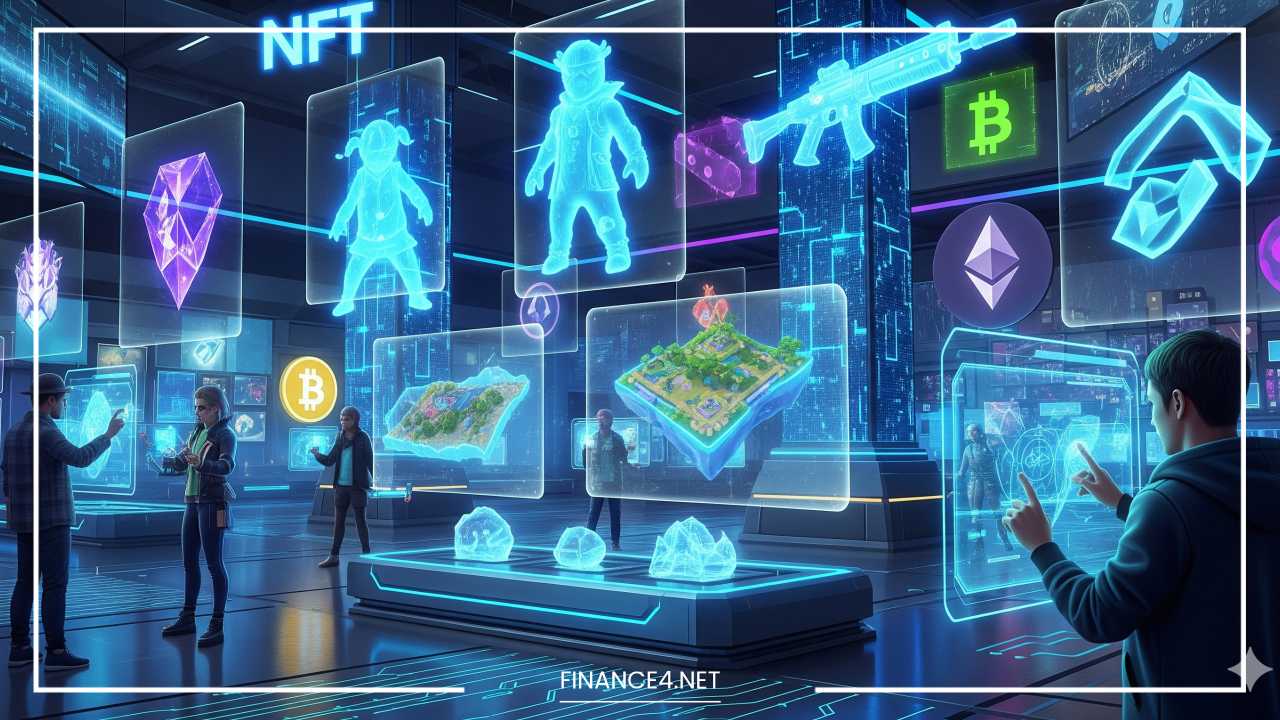
NFTs, or Non-Fungible Tokens, are unique digital assets secured by blockchain technology. Unlike traditional cryptocurrencies like Bitcoin or Ethereum, which are fungible (meaning each unit is identical and interchangeable), NFTs are distinct and possess unique properties. This makes them ideal for representing unique in-game items, characters, skins, virtual land, and other digital collectibles.
In the context of gaming, NFTs provide players with true ownership of their digital assets. Previously, in-game items were merely licenses granted by game developers, with no real-world value or transferability outside the game’s ecosystem. NFTs change this paradigm, giving players verifiable ownership, the ability to sell or trade their assets on open marketplaces, and even use them across different games (with cross-chain capabilities).
What is Cross-Chain Technology?
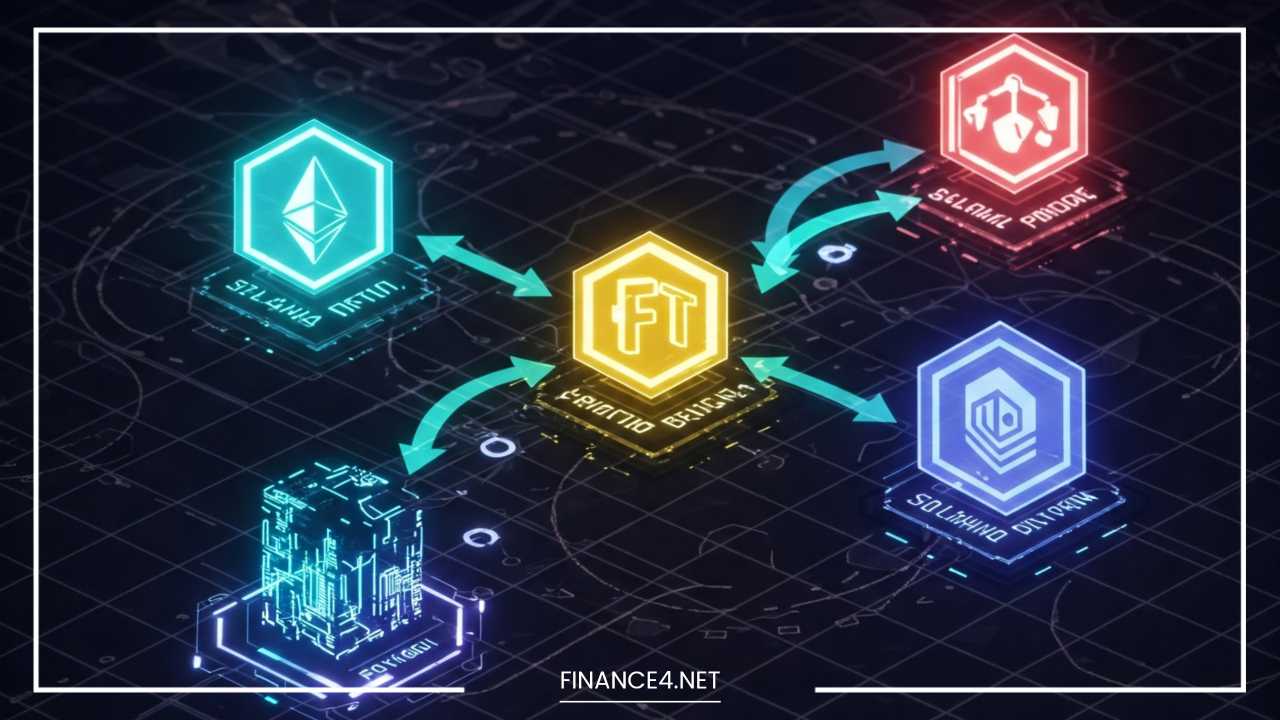
Cross-chain technology refers to the ability to transfer assets, data, and information between different blockchain networks. Imagine a bridge connecting two separate cities, allowing goods and people to move freely between them. Similarly, cross-chain technology acts as a bridge between disparate blockchains like Ethereum, Binance Smart Chain, Polkadot, Solana, and many others.
Without cross-chain technology, assets created on one blockchain would be isolated within that network. This creates fragmented ecosystems and limits the utility and liquidity of digital assets. Cross-chain solutions break down these silos, fostering a more interconnected and expansive blockchain landscape.
Importance of Cross-Chain in NFTs
The limitations of single-chain NFT games are significant. Building a game solely on one blockchain, such as Ethereum, often leads to:
- Scalability Issues: High transaction volumes on popular blockchains can lead to network congestion, slow transaction speeds, and high gas fees, hindering a smooth gaming experience.
- High Transaction Costs: Every in-game action that interacts with the blockchain (e.g., minting an NFT, trading an item) incurs a transaction fee, which can quickly become prohibitive for players, especially in games with frequent micro-transactions.
- Ecosystem Lock-in: Players and developers are confined to a single blockchain’s ecosystem, limiting access to a broader user base, diverse tools, and alternative marketplaces.
Cross-chain interoperability addresses these limitations directly. By enabling NFTs to move between different blockchains, it opens up a world of possibilities for game developers and players, fostering greater liquidity, accessibility, and innovation.
The Evolution of Blockchain in Gaming
Blockchain’s impact on gaming has been transformative, shifting power dynamics and introducing novel economic models.
Blockchain and Traditional Gaming
Traditional gaming has historically been a centralized industry, with game developers and publishers holding complete control over in-game economies, assets, and player experiences. While popular, this model often lacked transparency and true player ownership. Blockchain technology has disrupted this by:
- Enabling True Ownership: Players now genuinely own their in-game assets, recorded on an immutable ledger.
- Fostering Decentralized Economies: In-game marketplaces can operate without central intermediaries, allowing peer-to-peer trading.
- Introducing Transparency: All transactions and asset histories are publicly verifiable on the blockchain.
NFT Games
The advent of NFT games has pushed this disruption further. Games like CryptoKitties (one of the earliest), Axie Infinity, and Gods Unchained pioneered the concept of integrating NFTs directly into gameplay. Players collect, breed, battle, and trade unique digital assets, giving these items real-world value that extends beyond the game itself. This has created new monetization opportunities for both developers and players, leading to the rise of the “Play-to-Earn” (P2E) model.
Limitations of Single-Chain Games
Despite the initial success of single-chain NFT games, their inherent limitations became apparent as the ecosystem grew. Building exclusively on a single blockchain, particularly an older one like Ethereum, often resulted in:
- Scalability Bottlenecks: Ethereum’s proof-of-work consensus mechanism, while secure, struggled to handle the high transaction throughput required for complex gaming ecosystems, leading to frustrating delays and network congestion.
- Exorbitant Transaction Costs (Gas Fees): During periods of high network activity, gas fees on Ethereum could skyrocket, making small in-game transactions economically unfeasible for many players. This significantly hindered user adoption and engagement.
- Limited Ecosystem & Audience: Restricting a game to a single blockchain meant a smaller potential player base and a reliance on that specific chain’s infrastructure and community. This limited the potential for growth and cross-game collaboration.
Why Cross-Chain NFTs Are the Future of Gaming
Cross-chain technology is not just an improvement; it’s a fundamental shift that addresses the core limitations of single-chain gaming and unlocks a new era of possibilities.
Interoperability Across Multiple Blockchains
The primary advantage of cross-chain NFTs is their ability to move seamlessly between different blockchain networks. This means an NFT character minted on Ethereum could, in theory, be used in a game built on Polygon, traded on a Solana marketplace, or even staked on a Binance Smart Chain DeFi protocol. This fluid movement is achieved through various technical mechanisms, which we will explore later.
This interoperability breaks down the walled gardens of individual blockchains, creating a more cohesive and expansive metaverse where digital assets have utility and value across a multitude of platforms.
Benefits of Cross-Chain for Developers and Players
The advantages of cross-chain interoperability are profound for both the creators and consumers of games.
- For Developers:
- Increased User Base: By supporting multiple blockchains, developers can tap into a much larger pool of potential players who may prefer or already use other networks.
- Access to Diverse Ecosystems: Different blockchains offer unique features, developer tools, and communities. Cross-chain compatibility allows developers to leverage the strengths of various ecosystems, optimizing for specific aspects like low transaction fees (e.g., BSC, Polygon), high throughput (e.g., Solana), or robust developer communities (e.g., Ethereum).
- Better Scalability: By distributing game functions or NFT asset storage across multiple chains, developers can mitigate the scalability issues of a single blockchain, ensuring smoother gameplay even during peak demand.
- Enhanced Innovation: The ability to combine assets and functionalities from different chains fosters greater creativity and the development of more complex and innovative game mechanics.
- For Players:
- Greater Liquidity: Players can easily buy, sell, and trade their NFTs across various marketplaces on different blockchains, significantly increasing the liquidity and value of their in-game assets.
- Access to Assets Across Multiple Platforms: An NFT acquired in one game could potentially be used as an avatar in a metaverse on a different blockchain, or provide a bonus in another compatible game. This extends the utility and lifespan of digital assets.
- More Opportunities for Collaboration and Trade: Cross-chain functionality facilitates broader economic interactions, allowing players to participate in a wider range of DeFi activities (staking, lending) with their gaming NFTs, or engage in cross-game events and collaborations.
- Reduced Transaction Costs (Potentially): Players can choose to execute transactions on the most cost-effective blockchain at any given time, avoiding high fees associated with congested networks.
Case Studies of Cross-Chain NFT Projects
While truly seamless cross-chain NFT games are still evolving, several projects are actively pursuing or implementing cross-chain strategies:
- Gods Unchained: This popular digital collectible card game, initially built on Ethereum, has made strides toward improved scalability and user experience by migrating to Immutable X, an Ethereum Layer-2 scaling solution. Furthermore, they are planning a migration to Immutable zkEVM, which enhances cross-chain capabilities within the Immutable ecosystem and potentially with other chains in the future. This demonstrates a commitment to leveraging scaling and interoperability solutions for a better player experience.
- Axie Infinity: While primarily known for its Ronin sidechain (an Ethereum-linked custom blockchain built specifically for the game), Axie Infinity’s assets can be bridged back to Ethereum. This showcases a form of cross-chain functionality, enabling players to move their high-value Axie NFTs between the more scalable Ronin environment and the broader Ethereum ecosystem for greater liquidity.
- Other Examples: Projects like The Sandbox and Decentraland (both metaverse platforms) are constantly exploring and integrating solutions that enable cross-chain transfer of their virtual land and other NFT assets, aiming for a more interconnected metaverse experience. Many upcoming Web3 games are being built with multi-chain compatibility from the ground up, utilizing frameworks that inherently support cross-chain operations.
Key Technologies and Protocols Behind Cross-Chain NFT Games
Realizing cross-chain interoperability requires a sophisticated interplay of various technologies and protocols.
Blockchain Bridges
Blockchain bridges are the foundational infrastructure enabling cross-chain communication and asset transfers. They essentially “connect” two disparate blockchain networks, allowing assets or data to move from one to the other. There are various types of bridges, but most operate on a “lock and mint” or “burn and mint” mechanism.
- Polkadot: While not a traditional “bridge” in the sense of connecting two existing blockchains, Polkadot is a multi-chain framework designed for interoperability. Its Relay Chain acts as a central hub, enabling various parachains (individual blockchains) to communicate and share security, inherently facilitating cross-chain asset transfers within its ecosystem.
- Cosmos: Similar to Polkadot, Cosmos is an ecosystem of interconnected blockchains (called “zones” or “app-chains”) that communicate via the Inter-Blockchain Communication (IBC) protocol. This allows for seamless and secure transfer of assets and data between Cosmos SDK-based chains.
- Chainlink: While primarily an oracle network, Chainlink’s Cross-Chain Interoperability Protocol (CCIP) is a powerful, secure framework designed to facilitate arbitrary cross-chain communication, enabling complex interactions beyond simple asset transfers. This could be crucial for future sophisticated cross-chain game mechanics.
Wrapped Tokens and NFT Bridges
To enable NFTs to exist and be traded on a different blockchain than where they were originally minted, two common mechanisms are employed:
- Wrapped Tokens: This concept is more common for fungible tokens but can be applied to NFTs. When an NFT is “wrapped,” it is locked on its original blockchain, and an equivalent “wrapped” version of that NFT is minted on the target blockchain. This wrapped NFT represents a claim on the original asset. When the wrapped NFT is burned on the target chain, the original NFT is unlocked on its native chain.
- NFT Bridges: These are specialized smart contracts and protocols that facilitate the transfer of NFTs between blockchains. The process typically involves:
- Locking: The original NFT is locked in a smart contract on the source blockchain.
- Verification: A network of validators or relayers verifies the lock event.
- Minting: An identical, wrapped, or canonical representation of the NFT is minted on the destination blockchain.
- Burning/Unlocking: When the NFT is moved back, the minted NFT on the destination chain is burned, and the original NFT is unlocked on the source chain.
Interoperability Protocols
Beyond specific bridges, underlying protocols define how blockchains communicate and interoperate.
- Wormhole: A generic message-passing protocol that enables communication between various blockchains, including Solana, Ethereum, BSC, Polygon, and Avalanche. It allows for the transfer of tokens and arbitrary data, making it highly versatile for cross-chain NFT games.
- LayerZero: A new interoperability protocol that focuses on ultra-light message passing between chains. It aims to provide a secure and efficient way for decentralized applications to communicate across multiple blockchains without the overhead of maintaining full light nodes on each chain.
- IBC (Inter-Blockchain Communication): The cornerstone of the Cosmos ecosystem, IBC is a standardized protocol that enables secure and reliable communication between independent sovereign blockchains. It allows for direct token transfers and data exchange, fostering a highly interconnected network of application-specific blockchains.
Steps to Create Cross-Chain NFT Games
Developing a cross-chain NFT game is a complex undertaking that requires careful planning and execution. Here’s a step-by-step guide:
Step 1: Choose a Cross-Chain Framework
The first crucial decision is selecting the underlying cross-chain framework or strategy. This choice will heavily influence your game’s architecture, scalability, and future interoperability.
- Polkadot/Substrate: Ideal for building application-specific blockchains (parachains) that are inherently interoperable within the Polkadot ecosystem and benefit from its shared security. Offers high customizability.
- Cosmos SDK/IBC: Great for building sovereign, interconnected blockchains optimized for specific applications (like games). Leverages the robust IBC protocol for seamless cross-chain communication.
- Ethereum Layer-2 Solutions (e.g., Polygon, Arbitrum, Optimism, Immutable X): These are scaling solutions built on top of Ethereum, offering faster transactions and lower fees while still benefiting from Ethereum’s security. While not “true” cross-chain to other Layer-1s, they provide excellent interoperability within the Ethereum ecosystem and often have bridges to other chains.
- Dedicated Bridge Solutions (e.g., Wormhole, LayerZero): If you plan to deploy your game on a single Layer-1 but want to enable asset movement to other Layer-1s, integrating with existing bridge protocols like Wormhole or LayerZero might be the way to go.
Consider factors like development complexity, existing community, transaction costs, security, and the specific needs of your game.
Step 2: Decide on the Type of Game and NFTs
Before diving into technicalities, define your game’s core concept and how NFTs will be integrated.
- Game Design: What genre will your game be? (e.g., strategy, RPG, battle royale, collectible card game). How will gameplay mechanics leverage the unique properties of NFTs?
- NFTs: What in-game assets will be NFTs? (e.g., unique characters, weapons, armor, virtual land, rare consumables, cosmetic skins). Will they have evolving attributes, rarity tiers, or specific utility within the game? How will they be minted (e.g., through gameplay, purchases, breeding)?
Step 3: Select Blockchain Networks for Cross-Chain Support
Based on your chosen framework and game design, decide which specific blockchain networks you want to support for cross-chain functionality.
- Ethereum: For its robust ecosystem, strong developer community, and high security (though with higher fees). Often used as a primary chain for high-value NFTs.
- Solana: Known for its high transaction throughput and low fees, making it suitable for games requiring rapid, frequent transactions.
- Binance Smart Chain (BSC): Offers relatively low fees and fast transaction times, with EVM compatibility, making it accessible for Ethereum developers.
- Polygon (Matic): A popular Ethereum Layer-2 solution offering scalability, low fees, and a growing ecosystem.
- Immutable X: A Layer-2 specific to NFTs on Ethereum, offering gas-free minting and trading, ideal for NFT-heavy games.
Your selection should consider scalability, security, transaction costs, developer tools, and the existing user base on each chain.
Step 4: Integrate Blockchain Bridges and NFT Wrapping Mechanisms
This is where the cross-chain magic happens. You’ll need to set up the infrastructure to allow your game’s NFTs to move between the chosen blockchains.
- Bridge Selection: Choose reliable and audited blockchain bridges that connect your selected networks. This might involve using a dedicated bridge protocol (like Wormhole) or leveraging the native bridging capabilities of a chosen framework (like IBC for Cosmos SDK chains, or Polygon Bridge for Polygon).
- NFT Wrapping/Minting Logic: Implement the smart contract logic that governs the locking of original NFTs on one chain and the minting of their wrapped or canonical counterparts on the destination chain, and vice versa. This requires careful consideration of security and atomicity.
- Front-End Integration: Develop the user interface (UI) and user experience (UX) for players to initiate cross-chain transfers. This should be as intuitive and seamless as possible, abstracting away the underlying complexity of the bridging process.
Step 5: Smart Contracts and Protocols Development
Smart contracts are the backbone of your NFT game and its cross-chain capabilities.
- NFT Smart Contracts: Develop ERC-721 (for unique NFTs) or ERC-1155 (for semi-fungible tokens) compliant smart contracts for minting, transferring, and managing your in-game NFTs on each supported blockchain.
- Game Logic Smart Contracts: Implement the core game logic that interacts with these NFTs, such as battling, crafting, breeding, or leveling up. These contracts will need to be aware of the NFT’s location (which chain it’s currently on).
- Cross-Chain Communication Protocols: Implement the necessary logic within your smart contracts to interact with the chosen blockchain bridges and interoperability protocols (e.g., listening for cross-chain messages, initiating transfers).
- Decentralized Marketplace Contracts: If you’re building an in-game marketplace, develop smart contracts for buying, selling, and auctioning NFTs, ensuring they can handle cross-chain assets.
Step 6: Testing and Security Audits
Thorough testing and robust security audits are paramount, especially given the complexities and high-value assets involved in cross-chain operations.
- Unit and Integration Testing: Rigorously test all smart contracts, game logic, and bridge functionalities. Simulate various scenarios, including high transaction volumes and edge cases.
- Cross-Chain Transfer Testing: Test the complete end-to-end flow of NFT transfers between all supported blockchains to ensure assets arrive safely and correctly.
- Security Audits: Engage reputable third-party blockchain security firms to conduct comprehensive audits of all your smart contracts, bridges, and protocols. This is critical to identify and mitigate vulnerabilities such as reentrancy attacks, front-running, and potential exploits of bridge mechanisms (which have been targets in the past).
- Bug Bounty Programs: Consider launching a bug bounty program to incentivize white-hat hackers to find and report vulnerabilities before deployment.
Challenges of Developing Cross-Chain NFT Games
While the promise of cross-chain NFT games is immense, developers must navigate a range of significant challenges.
Technical Challenges
- Ensuring Transaction Finality: Different blockchains have varying transaction finality times. Ensuring that an NFT is truly locked on one chain before it’s minted on another, and handling potential reorgs (blockchain reorganizations), can be complex.
- Synchronization Between Chains: Maintaining a consistent state of game assets and user data across multiple, asynchronous blockchains is a formidable task. This requires robust indexing, oracle solutions, or dedicated cross-chain data synchronization protocols.
- Maintaining Asset Integrity: Ensuring that the unique properties and metadata of an NFT are preserved accurately when it moves between chains is crucial for its utility and value.
- Smart Contract Complexity: Developing secure and efficient smart contracts that handle cross-chain interactions adds a layer of complexity to an already intricate development process.
Security Concerns
Cross-chain bridges have historically been major targets for exploits due to their nature as central points of value transfer.
- Double-Spending: Preventing a malicious actor from spending the same NFT on two different chains simultaneously is a critical security concern that bridge designs must address.
- Asset Theft: Vulnerabilities in bridge smart contracts or the underlying validation mechanisms can lead to the theft of locked assets.
- Blockchain Reorganization (Reorgs): If a blockchain undergoes a reorg, a transaction that was thought to be final might be reversed, potentially leading to inconsistencies in cross-chain asset states.
- Validator Collusion: In some bridge designs, a cartel of validators could collude to approve fraudulent transactions.
Mitigating these risks requires robust security measures, frequent audits, and decentralized bridge architectures where possible.
User Experience Issues
The current state of cross-chain technology can be daunting for the average user.
- Complexity of Multiple Wallets and Interfaces: Players might need to manage different wallets for different blockchains, switch networks frequently, and understand the nuances of various bridging interfaces. This can be a significant barrier to entry.
- Confusing Transaction Flows: The multi-step process of bridging an NFT can be confusing, especially with varying gas fees and transaction times across networks.
- Lack of Seamless Integration: Achieving a truly seamless experience where a player doesn’t even realize they’re interacting with multiple blockchains is the ultimate goal but remains a significant UX challenge.
Scalability and Network Congestion
While cross-chain solutions aim to alleviate single-chain scalability issues, scaling a truly multi-chain game still presents challenges.
- Inter-Chain Latency: Even with efficient bridges, there will always be some latency when transferring assets between chains, which can impact real-time gameplay.
- Cumulative Congestion: While individual chains might be more scalable, a highly popular cross-chain game could still put cumulative pressure on the bridge infrastructure itself, potentially leading to congestion at the bridging points.
- Data Storage and Retrieval: Storing and retrieving large amounts of game data across distributed, disparate blockchains efficiently can be complex.
Monetization Strategies for Cross-Chain NFT Games
Cross-chain interoperability significantly amplifies the monetization potential of NFT games, going beyond traditional in-game purchases.
In-Game Purchases and Marketplace Integration
The most direct monetization method is selling NFTs directly within the game or through an integrated marketplace.
- Initial Sales: Selling initial NFT drops (e.g., limited edition characters, genesis items) to fund development.
- Secondary Market Royalties: Implementing royalties on secondary sales of NFTs. Every time an NFT is resold on any integrated marketplace (across any supported chain), a percentage of the sale can go back to the game developers, creating a sustainable revenue stream.
- Marketplace Fees: Charging a small fee for transactions on the game’s official marketplace. Cross-chain marketplaces enhance this by pooling liquidity from various chains.
Play-to-Earn (P2E) Models
Cross-chain interoperability enhances the P2E model by making earned assets more liquid and valuable.
- Multi-Chain Earnings: Players can earn NFTs or native tokens that are not confined to a single blockchain. This means assets earned in your game can be readily traded on marketplaces across Ethereum, Solana, BSC, or other integrated networks, increasing their real-world value and appeal.
- Cross-Game Utility: Imagine earning a rare weapon NFT in your game that can also be used as a cosmetic item in another, completely different, cross-chain enabled metaverse. This adds significant utility and perceived value to earned assets.
- Enhanced Earning Opportunities: Players might be able to participate in P2E activities on one chain where transaction fees are low, then easily bridge their high-value earned assets to a chain with greater liquidity or more diverse trading options.
Staking, Yield Farming, and Liquidity Pools
Integrating DeFi mechanisms can create additional layers of monetization and economic activity within your game’s ecosystem.
- NFT Staking: Players can stake their NFTs (e.g., characters, land parcels) to earn passive income in the form of native game tokens, governance tokens, or even other NFTs. Cross-chain staking pools could allow players to stake NFTs from one chain to earn rewards on another.
- Yield Farming: Players can provide liquidity to decentralized exchanges (DEXs) for your game’s native tokens (paired with other cryptocurrencies) and earn rewards. Cross-chain liquidity pools could facilitate trading of your game’s tokens across multiple chains, further decentralizing and strengthening its economy.
- NFT Collateralization/Lending: Players could use their valuable in-game NFTs as collateral to borrow other cryptocurrencies across various DeFi platforms, creating new financial use cases for their digital assets.
Future of Cross-Chain NFT Games
The landscape of cross-chain NFT games is rapidly evolving, with several exciting trends shaping its future.
Emerging Trends
- Multi-chain Ecosystems: The future will likely see a proliferation of multi-chain ecosystems where games are designed from the ground up to operate across several blockchains, offering players maximum flexibility and choice.
- Metaverse Integration with Cross-Chain NFTs: As the metaverse concept matures, cross-chain NFTs will be crucial for creating truly interoperable virtual worlds. Your game’s character NFT could be your avatar in Decentraland, while your sword NFT could be used in a different combat game, all seamlessly transferred between metaverses and underlying blockchains.
- Integration with DAOs (Decentralized Autonomous Organizations): Cross-chain DAOs could govern multi-chain NFT games, allowing communities to collectively make decisions about game development, treasury management, and asset distribution across various networks.
- Layer-0 and Universal Interoperability Protocols: The development of more robust and secure “Layer-0” or universal interoperability protocols will simplify cross-chain development and enhance security, making seamless asset transfers more commonplace.
The Role of Cross-Chain Technology in the Growth of NFT Games
Cross-chain technology is not just a feature; it’s an accelerator for the entire NFT gaming space. By breaking down barriers and fostering true interoperability, it will:
- Increase Adoption: Lowering the technical hurdles and reducing costs will attract a wider audience of traditional gamers.
- Drive Innovation: Developers will be empowered to create more complex, interconnected, and dynamic gaming experiences.
- Enhance Asset Value and Utility: The ability to use NFTs across multiple games and platforms will significantly increase their perceived and actual value.
- Foster a More Decentralized Future: By reducing reliance on single points of failure (individual blockchains), cross-chain technology contributes to a more resilient and decentralized gaming ecosystem.
Regulatory and Legal Challenges
As with any nascent technology dealing with digital assets and real-world value, cross-chain NFTs face evolving regulatory and legal scrutiny.
- Jurisdictional Complexity: When an NFT moves across blockchains located in different jurisdictions, which laws apply? This creates a complex regulatory environment.
- Classification of NFTs: Are NFTs considered securities, collectibles, or something else? Their classification can impact how they are regulated and taxed.
- AML/KYC Requirements: Ensuring compliance with Anti-Money Laundering (AML) and Know Your Customer (KYC) regulations for cross-chain transactions is a challenge, especially in a decentralized environment.
- Consumer Protection: Regulators are increasingly concerned with protecting consumers from scams, rug pulls, and other fraudulent activities in the NFT space. Cross-chain operations add another layer of complexity to these efforts.
Developers must stay informed about these evolving regulations and seek legal counsel to ensure compliance.
Final Thoughts
The creation of cross-chain NFT games marks a pivotal moment in the evolution of decentralized play. By overcoming the inherent limitations of single-chain environments, cross-chain technology promises a future where digital assets are truly fluid, where game economies are vibrant and interconnected, and where players wield unprecedented ownership and utility over their in-game possessions.
While the journey to building truly seamless cross-chain NFT games is fraught with technical and security challenges, the potential rewards for developers and players are immense. As infrastructure matures, security practices strengthen, and user experiences become more intuitive, cross-chain NFT games will undoubtedly lead the charge in defining the next generation of immersive, player-owned, and economically empowering digital worlds. For developers, embracing cross-chain technologies is not merely an option; it is a necessity for contributing to and shaping the truly decentralized and interoperable future of gaming. The time to build is now.